









Staatsoper Unter den Linden (Berlin State Opera) 6 November 2021 - Orfeo ed Euridice | GoComGo.com

Orfeo ed Euridice

Staatsoper Unter den Linden (Berlin State Opera), Staatsoper Unter den Linden, Berlin, Germany
All photos (12)
Select date and time
7:30 PM

E-tickets: Print at home or at the box office of the event if so specified. You will find more information in your booking confirmation email.

You can only select the category, and not the exact seats.
If you order 2 or 3 tickets: your seats will be next to each other.
If you order 4 or more tickets: your seats will be next to each other, or, if this is not possible, we will provide a combination of groups of seats (at least in pairs, for example 2+2 or 2+3).

Important Info
Type: Opera
City: Berlin, Germany
Starts at: 19:30
Duration: 1h 20min
Sung in: German
Titles in: English,German

E-tickets: Print at home or at the box office of the event if so specified. You will find more information in your booking confirmation email.

You can only select the category, and not the exact seats.
If you order 2 or 3 tickets: your seats will be next to each other.
If you order 4 or more tickets: your seats will be next to each other, or, if this is not possible, we will provide a combination of groups of seats (at least in pairs, for example 2+2 or 2+3).

Overview

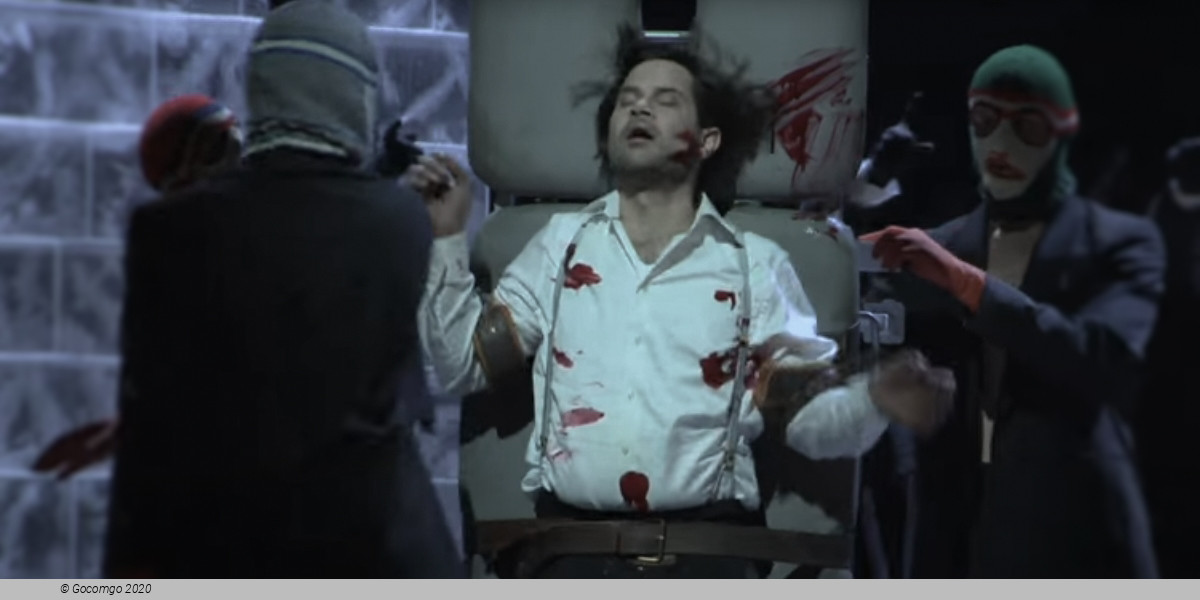
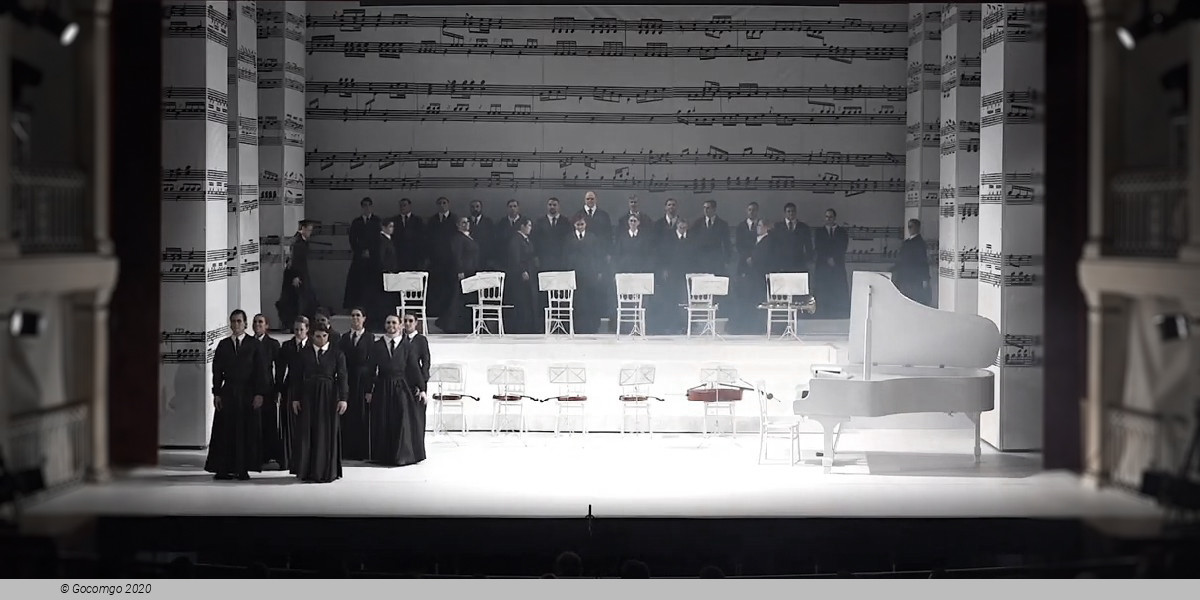
Few works have had such a profound influence on the development of opera as Christoph Willibald Gluck’s "Orfeo ed Euridice", which premiered in Vienna in 1762. It exemplifies a whole host of contemporary operatic reforms. The traditional "opera seria" was challenged and to a certain extent superseded by Gluck’s "azione teatrale", which emphasised natural, authentic expression by the characters.

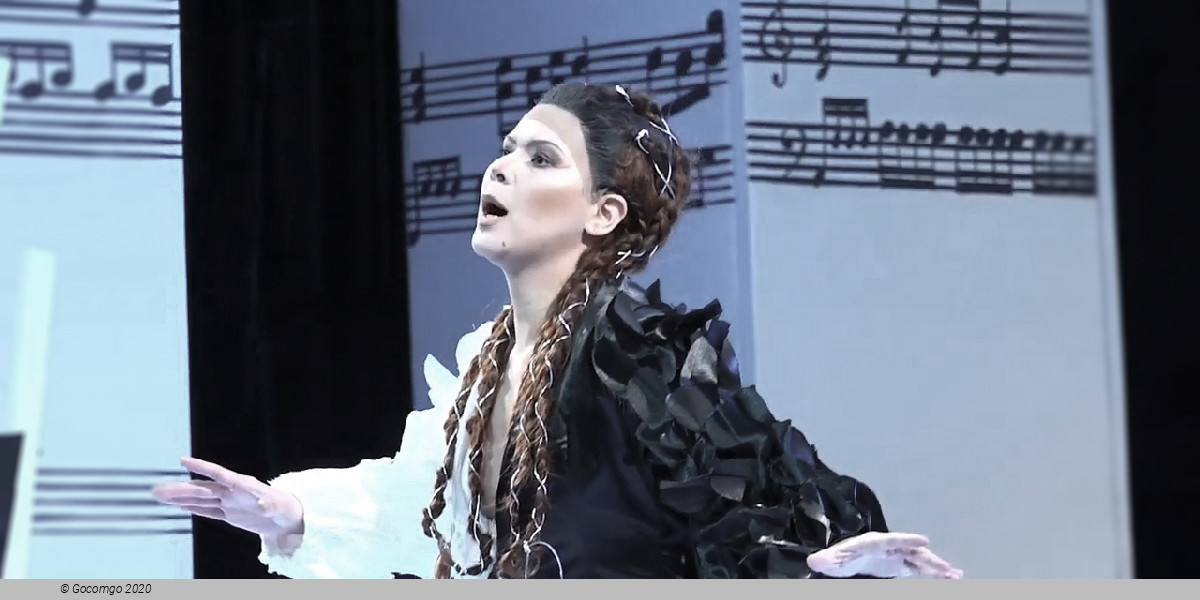
The opera tells the story of Orpheus, who charms the gods of the underworld with his song in order to persuade them to bring his beloved Eurydice back to life. The myth of Orpheus has been one of the most popular themes in opera from the genre’s origins right through to the present day. Gluck’s version presented the story in a completely new way, with an unprecedented dramatic realism that allowed audiences to enter deeply into the characters’ emotional worlds.

History
Premiere of this production: 05 October 1762, Burgtheater in Vienna

Orfeo ed Euridice is an opera composed by Christoph Willibald Gluck, based on the myth of Orpheus and set to a libretto by Ranieri de' Calzabigi. It belongs to the genre of the azione teatrale, meaning an opera on a mythological subject with choruses and dancing.

Synopsis

The first lines of arias, choruses, etc., are given in Italian (1762 version) and French (1774 version).

Act 1

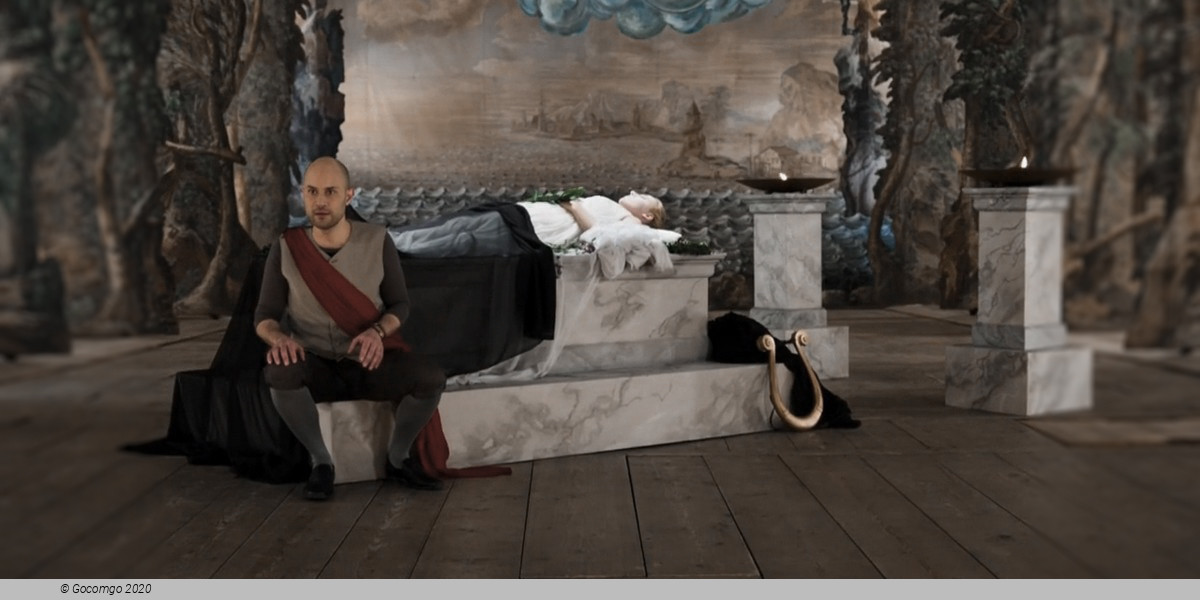
A chorus of nymphs and shepherds join Orfeo around the tomb of his wife Euridice in a solemn chorus of mourning; Orfeo is only able to utter Euridice's name (Chorus and Orfeo: "Ah, se intorno"/"Ah! Dans ce bois"). Orfeo sends the others away and sings of his grief in the aria "Chiamo il mio ben"/"Objet de mon amour", the three verses of which are preceded by expressive recitatives. This technique was extremely radical at the time and indeed proved overly so for those who came after Gluck: Mozart chose to retain the unity of the aria. Amore (Cupid) appears, telling Orfeo that he may go to the Underworld and return with his wife on the condition that he not look at her until they are back on earth (1774 only: aria by Amour, "Si les doux accords"). As encouragement, Amore informs Orfeo that his present suffering shall be short-lived with the aria "Gli sguardi trattieni"/"Soumis au silence". Orfeo resolves to take on the quest. In the 1774 version only he delivers an ariette ("L'espoir renaît dans mon âme") in the older, showier, Italian style, originally composed for an occasional entertainment, Il Parnaso confuso (1765), and subsequently re-used in another one, Le feste d'Apollo (1769).

Act 2

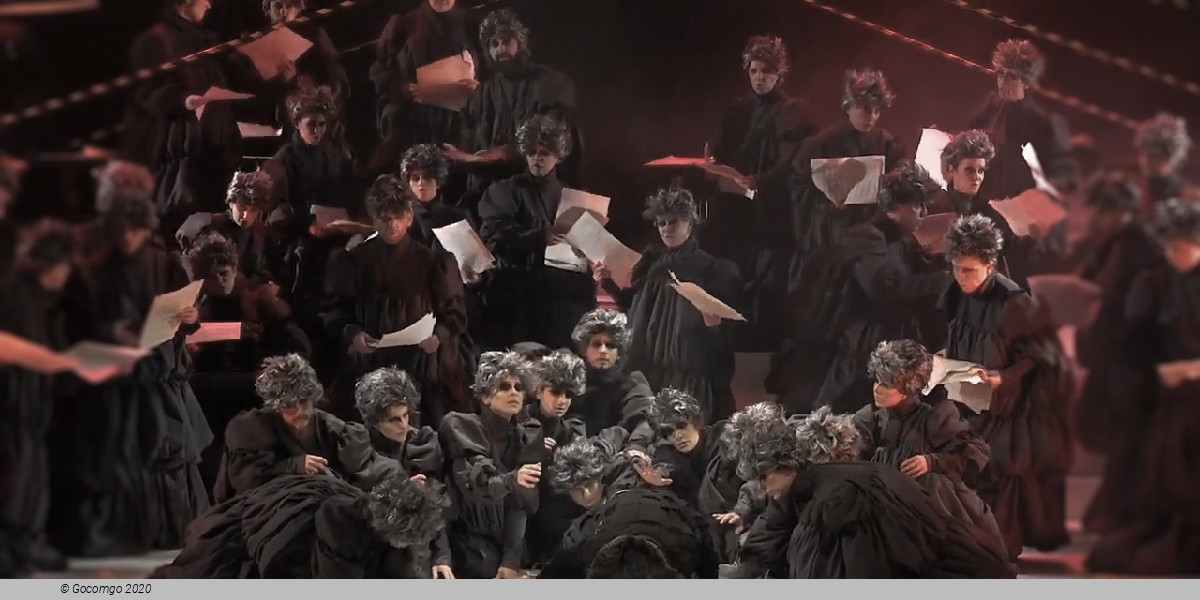
In a rocky landscape, the Furies refuse to admit Orfeo to the Underworld, and sing of Cerberus, its canine guardian ("Chi mai dell’Erebo"/"Quel est l'audacieux"). When Orfeo, accompanied by his lyre (represented in the opera by a harp), begs for pity in the aria "Deh placatevi con me"/"Laissez-vous toucher", he is at first interrupted by cries of "No!"/"Non!" from the Furies, but they are eventually softened by the sweetness of his singing in the arias "Mille pene"/"Ah! La flamme" and "Men tiranne"/"La tendresse", and let him in ("Ah, quale incognito affetto"/"Quels chants doux"). In the 1774 version, the scene ends with the "Dance of the Furies" (No. 28).

The second scene opens in Elysium. The brief ballet of 1762 became the four-movement "Dance of the Blessed Spirits" (with a prominent part for solo flute) in 1774. This is followed (1774 only) by a solo which celebrates happiness in eternal bliss ("Cet asile"), sung by either an unnamed Spirit or Euridice, and repeated by the chorus. Orfeo arrives and marvels at the purity of the air in an arioso ("Che puro ciel"/"Quel nouveau ciel"). But he finds no solace in the beauty of the surroundings, for Euridice is not yet with him. He implores the spirits to bring her to him, which they do (Chorus: "Torna, o bella"/"Près du tendre objet").

Act 3

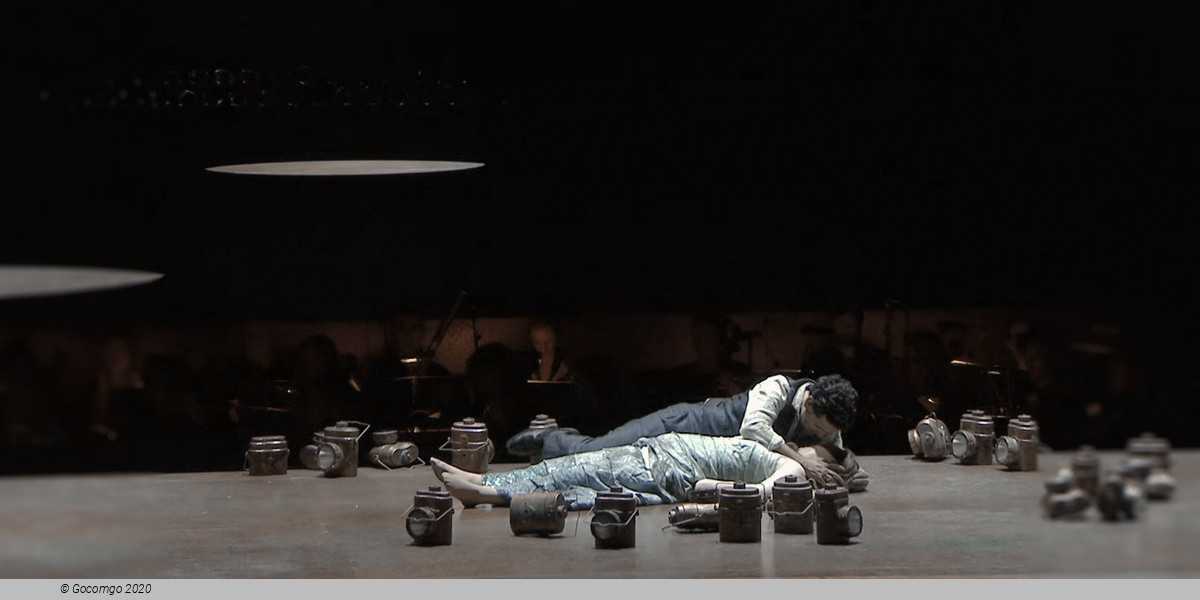
On the way out of Hades, Euridice is delighted to be returning to earth, but Orfeo, remembering the condition related by Amore in act 1, lets go of her hand and refusing to look at her, does not explain anything to her. She does not understand his action and reproaches him, but he must suffer in silence (Duet: "Vieni, appaga il tuo consorte"/"Viens, suis un époux"). Euridice takes this to be a sign that he no longer loves her, and refuses to continue, concluding that death would be preferable. She sings of her grief at Orfeo's supposed infidelity in the aria "Che fiero momento"/"Fortune ennemie" (in 1774, there is a brief duet before the reprise). Unable to take any more, Orfeo turns and looks at Euridice; again, she dies. Orfeo sings of his grief in the famous aria "Che farò senza Euridice?"/"J’ai perdu mon Eurydice" ("What shall I do without Euridice?"/"I have lost my Euridice") Orfeo decides he will kill himself to join Euridice in Hades, but Amore returns to stop him (1774 only: Trio: "Tendre Amour"). In reward for Orfeo's continued love, Amore returns Euridice to life, and she and Orfeo are reunited. After a four-movement ballet, all sing in praise of Amore ("Trionfi Amore"). In the 1774 version, the chorus ("L’Amour triomphe") precedes the ballet, to which Gluck had added three extra movements.

Venue Info

Staatsoper Unter den Linden (Berlin State Opera) - Berlin
Location   Unter den Linden 7

The Staatsoper Unter den Linden is one of the oldest and largest musical theaters in Germany. Founded in 1742 as the Royal Court Opera (German: Königliche Hofoper) under Frederick II. Located in Berlin, on the main street Unter den Linden.

King Frederick II of Prussia shortly after his accession to the throne commissioned the original building on the site. Construction work began in July 1741 with what was designed by Georg Wenzeslaus von Knobelsdorff to be the first part of a "Forum Fredericianum" on present-day Bebelplatz. Although not entirely completed, the Court Opera (Hofoper) was inaugurated with a performance of Carl Heinrich Graun's Cesare e Cleopatra on December 7, 1742. This event marked the beginning of the successful, 250-year co-operation between the Staatsoper and the Staatskapelle Berlin, the state orchestra, whose roots trace back to the 16th century.

In 1821, the Berlin Opera—hosted at the Schauspielhaus Berlin—gave the premiere of Weber's Der Freischütz. In 1842, Wilhelm Taubert instituted the tradition of regular symphonic concerts. In the same year, Giacomo Meyerbeer succeeded Gaspare Spontini as General Music Director. Felix Mendelssohn also conducted symphonic concerts for a year.

On August 18, 1843 the Linden Opera was destroyed by fire. The reconstruction of the building was supervised by architect Carl Ferdinand Langhans, and the Königliches Opernhaus (Royal Opera House) was inaugurated the following autumn by a performance of Meyerbeer's Ein Feldlager in Schlesien. In 1849, Otto Nicolai's Die lustigen Weiber von Windsor was premiered at the Royal Opera House, conducted by the composer.

1945: The Lindenoper was once again destroyed on February 3. The concerts were relocated to the Admiralspalast and the Schauspielhaus. On 18 February, Karajan conducted his last symphonic concert with the Staatskapelle in the Beethoven hall.

The second rebuilding took a long time. From 1945, the opera company played in the former Admiralspalast (today's Metropoltheater). From 1949, the company served as the state opera of East Germany. It moved back to its original home after the rebuilding in freely adapted baroque forms was finally completed in 1955. The newly rebuilt opera house was opened, again, with Wagner's Die Meistersinger von Nürnberg. The capacity is now about 1,300. After the Berlin Wall was built in 1961, the Opera was somewhat isolated, but still maintained a comprehensive repertoire that featured the classic and romantic period together with contemporary ballet and operas.

After reunification, the Linden Opera rejoined the operatic world. Important works that had already performed in the past were rediscovered and discussed anew within the framework of a "Berlin Dramaturgy". Baroque Opera in particular was at the center of attention, with Graun's Cleopatra e Cesare, Keiser's Croesus, Florian Leopold Gassmann's L'opera seria and Scarlatti's Griselda. These works were performed by Belgian conductor René Jacobs together with the Akademie für Alte Musik Berlin and the Freiburger Barockorchester on period instruments. In the 1990s, the opera was officially renamed Staatsoper Unter den Linden.

In 1992, the Argentine-Israeli conductor Daniel Barenboim was appointed Music Director. In 2000, the orchestra (according to its official website) elected Barenboim "conductor for life." During the 2002 Festtage, he led a Wagner cycle in ten parts, a production created in collaboration with director Harry Kupfer.

Since 2009, the Berlin State Opera has been undergoing considerable renovation work led by German architect HG Merz. The roof of the opera building was raised and the proscenium prolonged to improve the acoustics. Other renovation and extension works include the director's building, the below-ground connection building and the depot building. The latter will house the new rehearsal center.

The house was reopened in 2017 with premieres of Humperdinck's Hänsel und Gretel and Monteverdi's L'incoronazione di Poppea on one weekend.

Important Info
Type: Opera
City: Berlin, Germany
Starts at: 19:30
Duration: 1h 20min
Sung in: German
Titles in: English,German
Top of page