
Staatsoper Unter den Linden (Berlin State Opera) 10 November 2019 - Akademie für Alte Musik Berlin & Fabio Biondi | GoComGo.com

Akademie für Alte Musik Berlin & Fabio Biondi

Staatsoper Unter den Linden (Berlin State Opera), Berlin, Germany
All photos (1)
Select date and time
11 AM
Request for Tickets
Important Info
Type: Oratorio
City: Berlin, Germany
Starts at: 11:00
Acts: 2
Intervals: 1
Duration:

E-tickets: Print at home or at the box office of the event if so specified. You will find more information in your booking confirmation email.

You can only select the category, and not the exact seats.
If you order 2 or 3 tickets: your seats will be next to each other.
If you order 4 or more tickets: your seats will be next to each other, or, if this is not possible, we will provide a combination of groups of seats (at least in pairs, for example 2+2 or 2+3).

Overview

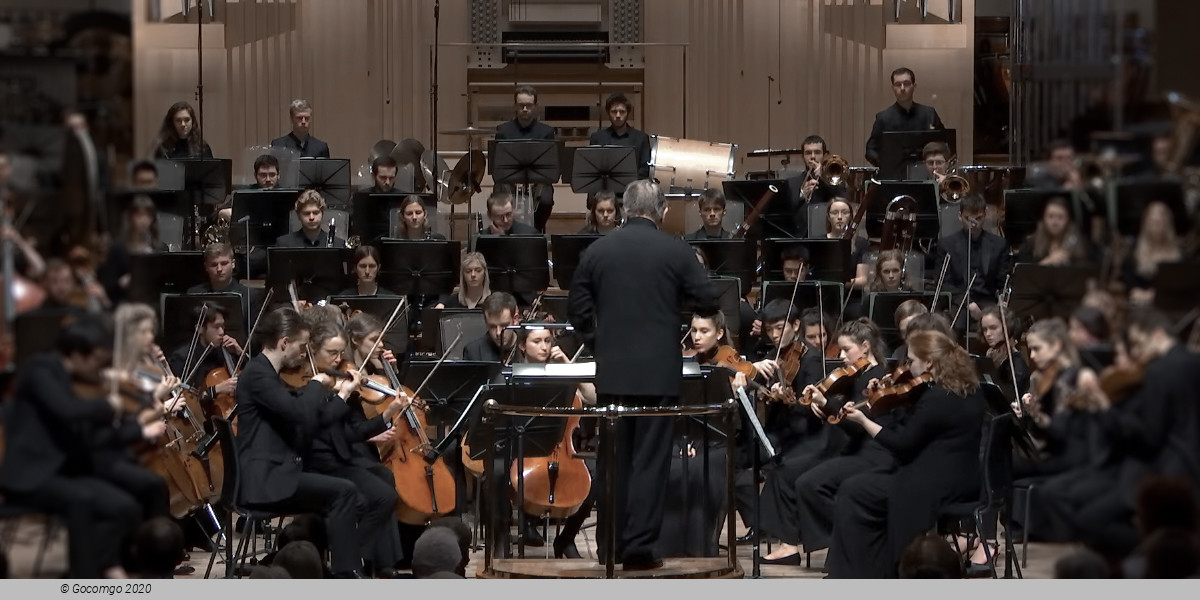
The German ensemble of ancient music, led by the Italian conductor, specialist in Baroque music and violinist Fabio Biondi, presents an opera in two parts by the Italian composer Alessandro Scarlatti. Together at the Staatsoper Unter den Linden, they will perform Il Dolore di Maria Vergine, an oratorio for soloists (SSAT), flute, oboe, trumpet, strings, and basso continuo.

History

Oratory for 4 soloists (SSAT), flute, oboe, trumpet, strings and continuous bass with music by Alessandro Scarlatti and anonymous libretto attributed to Andrea Di Luna d'aragona, premiered on 23 March 1717 at the palace of Carlo Carmignano in Naples.

Work of maturity and final oratory by Alessandro Scarlatti written in 1717 and of melodramatic character in which the accompaniment of the string and the slow arias predominates.

the libretto is based on The Passion of Christ: arrest of Jesus in the garden of Gethsemane, Jesus before Pilate and the Sanhedrin, flagellation and coronation of thorns, death sentence, Jesus carrying the cross to Calvary, crucifixion and death. The story is narrated by four characters who contemplate the scene: John the evangelist, the Virgin Mary Mother of Jesus, Nicodemus the Pharisee favorable to Jesus and Annas contrary to Jesus.

Several manuscripts of the score are preserved in Rome, Bruxelles and Naples (incomplete). This oratory already interested Charles Burney in the 18th century, who included a fragment of it in his General History of Music (1776-1789). In the 19th century, musicologist Françoise Auguste Gevaert gave him the title of the Vergine Addolorata, a title that is also known today. In S XX Andrea Della Corte and Guido Pannain included examples of this oratory in his Storia della Musica (1936-1964).

Synopsis

Part One

  • Sinfonia: Vivace - Adagio - Allegro
  • Recitativo accompagnato (San Giovanni) - "Ove corro, ove vado"
  • Aria (San Giovanni) - "Fra dirupi negl'antri profondi"
  • Recitativo (Maria Vergine) - "Qual novello dolore"
  • Aria (Maria Vergine) - "Il mio figlio ov'è?"
  • Recitativo (San Giovanni, Maria Vergine) - "Madre, infelice madre"
  • Aria (Maria Vergine) - "Non è nuova"
  • Recitativo (San Giovanni, Maria Vergine) - "Da un discepolo infido"
  • Recitativo accompagnato (Maria Vergine) - "Ecco, l'acciaro acuto"
  • Aria (Maria Vergine) - "Ecco suona la tromba ferale"
  • Recitativo (San Giovanni, Maria Vergine) - "Di quanto t'ho narrato"
  • Aria (Maria Vergine) - "Col suo flebil mormorio"
  • Recitativo composto (San Giovanni, Maria Vergine, Nicodemo, Onia) - "Madre, raffrena il pianto?"
  • Duetto doppio (Nicodemo, Onia)/(Maria Vergine, San Giovanni) - "Apri/E qual sperar poss'io"
  • Recitativo (Nicodemo, Onia) - "E seduttor tu chiami"
  • Aria (Nicodemo) - "Questo è quel tanto bramato"
  • Recitativo (Maria Vergine, Onia, Nicodemo) - "Lascia, lascia Giovanni"
  • Aria (Onia) - "Non punir l'indegno e l'empio"
  • Recitativo (Maria Vergine, San Giovanni, Nicodemo, Onia) - "Signor, ciò che s'impone"
  • Aria (Onia) - "Spira o ciel nel petto mio"
  • Recitativo (Nicodemo, Maria Vergine) - "Inutili miei sforzi!"
  • Aria (Maria Vergine in eco) - "Ti perderò sì, sì"
  • Recitativo (Nicodemo, San Giovanni) - "Vergine, è vano il pianto"
  • Aria (Nicodemo) - "Dà tregua al pianto"
  • Recitativo (San Giovanni, Maria Vergine) - "A gran speranza"
  • Aria (Maria Vergine) - "Aura lieve di speranza"
  • Recitativo (San Giovanni, Maria Vergine) - "Padre del ciel deh"
  • Duetto (San Giovanni, Maria Vergine) - "Tu piangi/Io piango"

Part Two

  • Ritornello e Recitativo (Nicodemo, Maria Vergine, San Giovanni) - "Maria, Giovanni"
  • Aria (San Giovanni) - "Soffri costante"
  • Recitativo (Maria Vergine, San Giovanni, Nicodemo) - "A penare e soffrire"
  • Aria (Nicodemo) - "Non sei tu sola"
  • Recitativo composto (Maria Vergine, Onia) - "Dite, dite voi"
  • Aria (Onia) - "Quella tromba"
  • Recitativo (Maria Vergine) - "Ancor, ancor sazio non sei"
  • Aria (Maria Vergine) - "Saziati!"
  • Recitativo (Onia, Nicodemo, Maria Vergine, San Giovanni) - "Donna qual sii t'inganni"
  • Recitativo composto (Maria Vergine, San Giovanni) - "E in si misero stato"
  • Aria (Maria Vergine) - "Figlio, a morte tu t'en vai"
  • Recitativo (Nicodemo, San Giovanni, Maria Vergine) - "Maria, io dir non posso"
  • Terzetto (Maria Vergine, San Giovanni, Nicodemo) - "Se il mio cor"
  • Recitativo (Onia, Maria Vergine, San Giovanni, Nicodemo) - "Or ch'il reo Nazzareno"
  • Aria (San Giovanni) - "Madre eccelsa, afflitta"
  • Recitativo composto (Nicodemo, Maria Vergine) - "Nell'alte mani"
  • Recitativo accompagnato (Onia) - "Ma, ma qual moto improvviso"
  • Aria (Onia) - "Sotto il piè"
  • Recitativo (San Giovanni, Maria Vergine, Nicodemo) - "ah, non è sazia ancora"
  • Aria (San Giovanni) - "Scintillante d'eterni splendori"
  • Recitativo composto (Nicodemo, San Giovanni, Maria Vergine) - "Ma, dal legno penoso"
  • Terzetto (Maria Vergine, San Giovanni, Nicodemo) - "Io ti bacio/Io t'adoro"
Venue Info

Staatsoper Unter den Linden (Berlin State Opera) - Berlin
Location   Unter den Linden 7

The Staatsoper Unter den Linden is one of the oldest and largest musical theaters in Germany. Founded in 1742 as the Royal Court Opera (German: Königliche Hofoper) under Frederick II. Located in Berlin, on the main street Unter den Linden.

King Frederick II of Prussia shortly after his accession to the throne commissioned the original building on the site. Construction work began in July 1741 with what was designed by Georg Wenzeslaus von Knobelsdorff to be the first part of a "Forum Fredericianum" on present-day Bebelplatz. Although not entirely completed, the Court Opera (Hofoper) was inaugurated with a performance of Carl Heinrich Graun's Cesare e Cleopatra on December 7, 1742. This event marked the beginning of the successful, 250-year co-operation between the Staatsoper and the Staatskapelle Berlin, the state orchestra, whose roots trace back to the 16th century.

In 1821, the Berlin Opera—hosted at the Schauspielhaus Berlin—gave the premiere of Weber's Der Freischütz. In 1842, Wilhelm Taubert instituted the tradition of regular symphonic concerts. In the same year, Giacomo Meyerbeer succeeded Gaspare Spontini as General Music Director. Felix Mendelssohn also conducted symphonic concerts for a year.

On August 18, 1843 the Linden Opera was destroyed by fire. The reconstruction of the building was supervised by architect Carl Ferdinand Langhans, and the Königliches Opernhaus (Royal Opera House) was inaugurated the following autumn by a performance of Meyerbeer's Ein Feldlager in Schlesien. In 1849, Otto Nicolai's Die lustigen Weiber von Windsor was premiered at the Royal Opera House, conducted by the composer.

1945: The Lindenoper was once again destroyed on February 3. The concerts were relocated to the Admiralspalast and the Schauspielhaus. On 18 February, Karajan conducted his last symphonic concert with the Staatskapelle in the Beethoven hall.

The second rebuilding took a long time. From 1945, the opera company played in the former Admiralspalast (today's Metropoltheater). From 1949, the company served as the state opera of East Germany. It moved back to its original home after the rebuilding in freely adapted baroque forms was finally completed in 1955. The newly rebuilt opera house was opened, again, with Wagner's Die Meistersinger von Nürnberg. The capacity is now about 1,300. After the Berlin Wall was built in 1961, the Opera was somewhat isolated, but still maintained a comprehensive repertoire that featured the classic and romantic period together with contemporary ballet and operas.

After reunification, the Linden Opera rejoined the operatic world. Important works that had already performed in the past were rediscovered and discussed anew within the framework of a "Berlin Dramaturgy". Baroque Opera in particular was at the center of attention, with Graun's Cleopatra e Cesare, Keiser's Croesus, Florian Leopold Gassmann's L'opera seria and Scarlatti's Griselda. These works were performed by Belgian conductor René Jacobs together with the Akademie für Alte Musik Berlin and the Freiburger Barockorchester on period instruments. In the 1990s, the opera was officially renamed Staatsoper Unter den Linden.

In 1992, the Argentine-Israeli conductor Daniel Barenboim was appointed Music Director. In 2000, the orchestra (according to its official website) elected Barenboim "conductor for life." During the 2002 Festtage, he led a Wagner cycle in ten parts, a production created in collaboration with director Harry Kupfer.

Since 2009, the Berlin State Opera has been undergoing considerable renovation work led by German architect HG Merz. The roof of the opera building was raised and the proscenium prolonged to improve the acoustics. Other renovation and extension works include the director's building, the below-ground connection building and the depot building. The latter will house the new rehearsal center.

The house was reopened in 2017 with premieres of Humperdinck's Hänsel und Gretel and Monteverdi's L'incoronazione di Poppea on one weekend.

Important Info
Type: Oratorio
City: Berlin, Germany
Starts at: 11:00
Acts: 2
Intervals: 1
Duration:
Top of page