

Staatsoper Unter den Linden (Berlin State Opera) 22 December 2021 - Jewels | GoComGo.com

Jewels

Staatsoper Unter den Linden (Berlin State Opera), Staatsoper Unter den Linden, Berlin, Germany
All photos (9)
Select date and time
7:30 PM
Request for Tickets
Important Info
Type: Ballet
City: Berlin, Germany
Starts at: 19:30
Intervals: 2
Duration: 2h 20min

E-tickets: Print at home or at the box office of the event if so specified. You will find more information in your booking confirmation email.

You can only select the category, and not the exact seats.
If you order 2 or 3 tickets: your seats will be next to each other.
If you order 4 or more tickets: your seats will be next to each other, or, if this is not possible, we will provide a combination of groups of seats (at least in pairs, for example 2+2 or 2+3).

Overview

With his purist approach, George Balanchine led ballet into the modern age and, through his impeccable taste, became a style icon of neoclassical ballet. In his choreographies, he plays with the dancers' virtuosity and skills; the ballerina's flair; the music's structure and mood. Understatement and elegance are trademarks of his choreographic style.

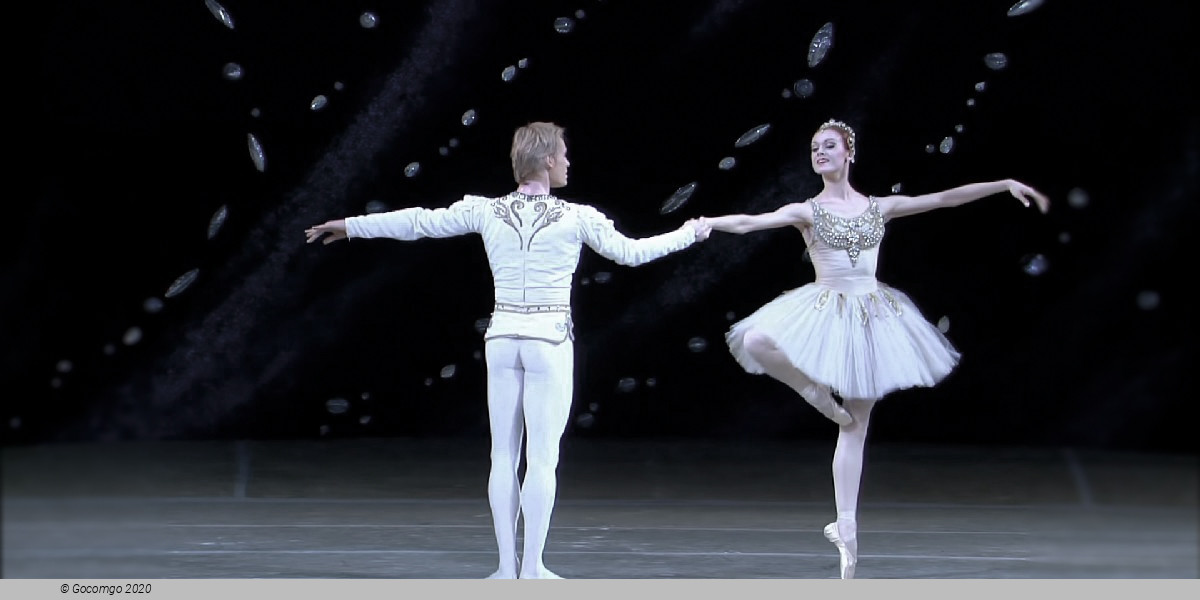
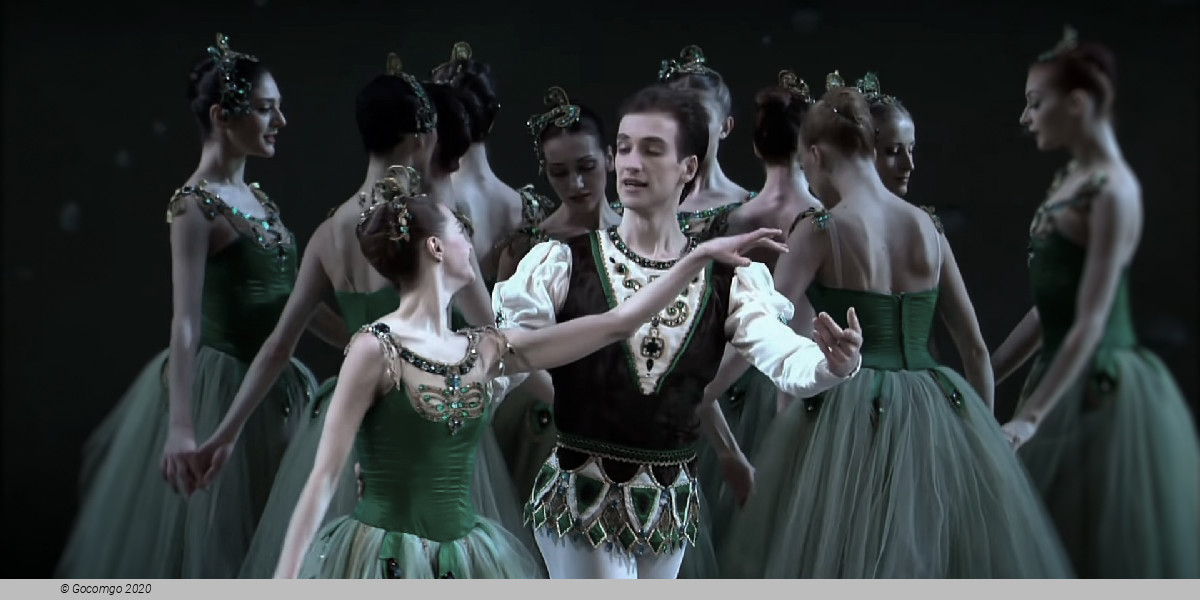
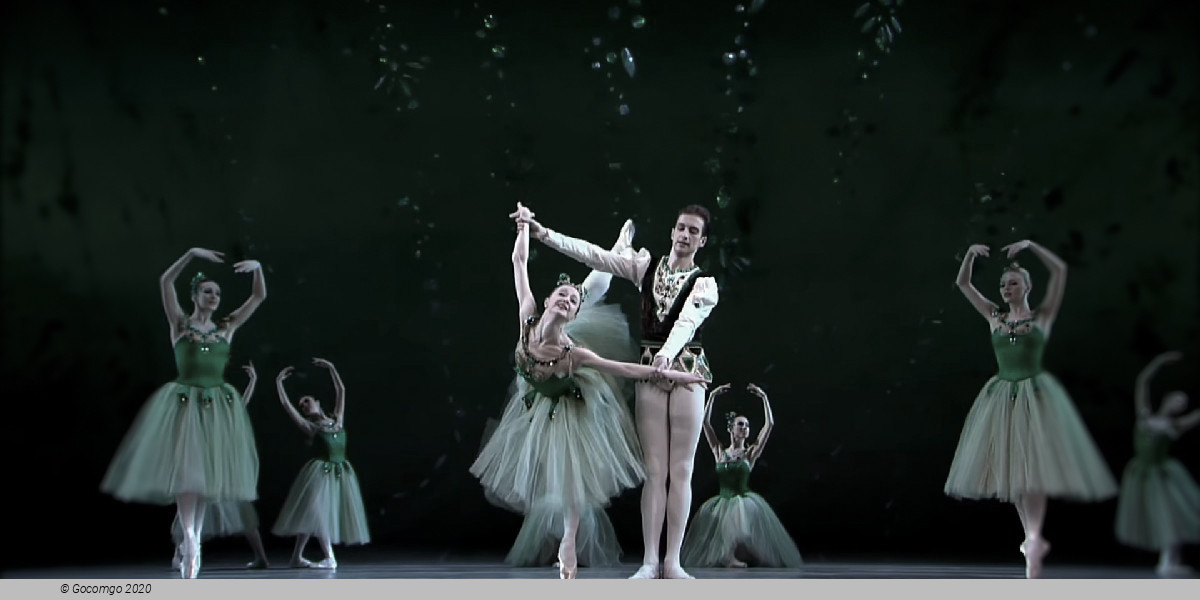
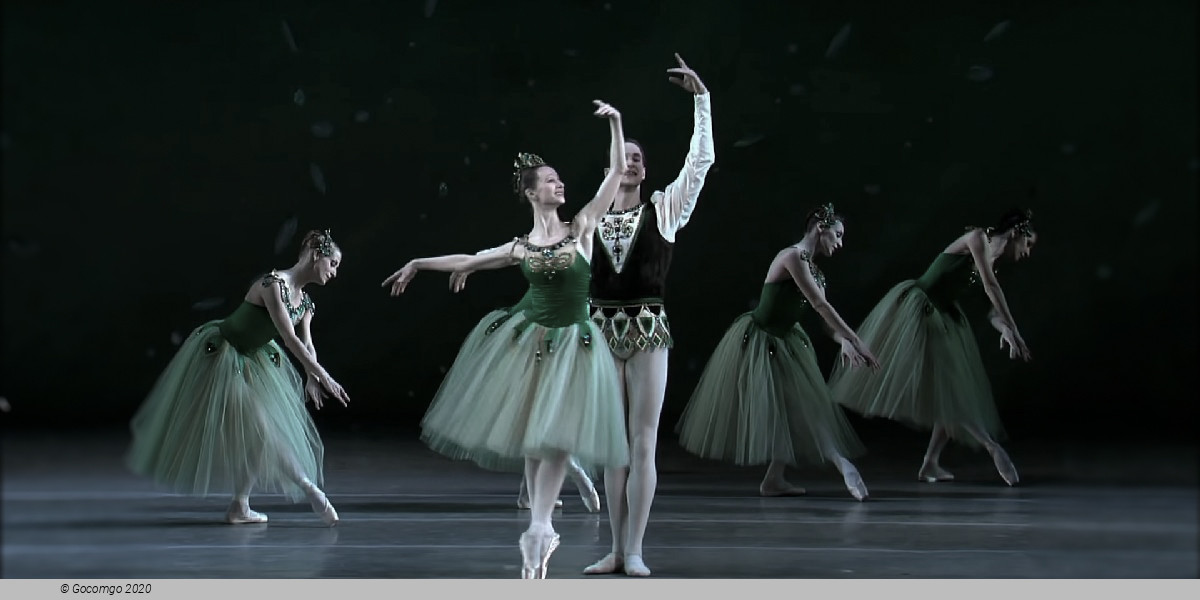
The window display of a legendary jeweller on New York's Fifth Avenue sparked the idea for George Balanchine's 1967 ballet JEWELS. The opulent arrangements of jewellery inspired the titles of all of his choreography's three parts: EMERALDS, RUBIES and DIAMONDS. Each of the three gems evoked different associations which Balanchine translated into brilliant dance compositions that have found their way into repertories across the globe. Balanchine's personal notes on the development and meaning of his creation are habitually laconic and make his priorities clear: the music's flavour is his point of origin.

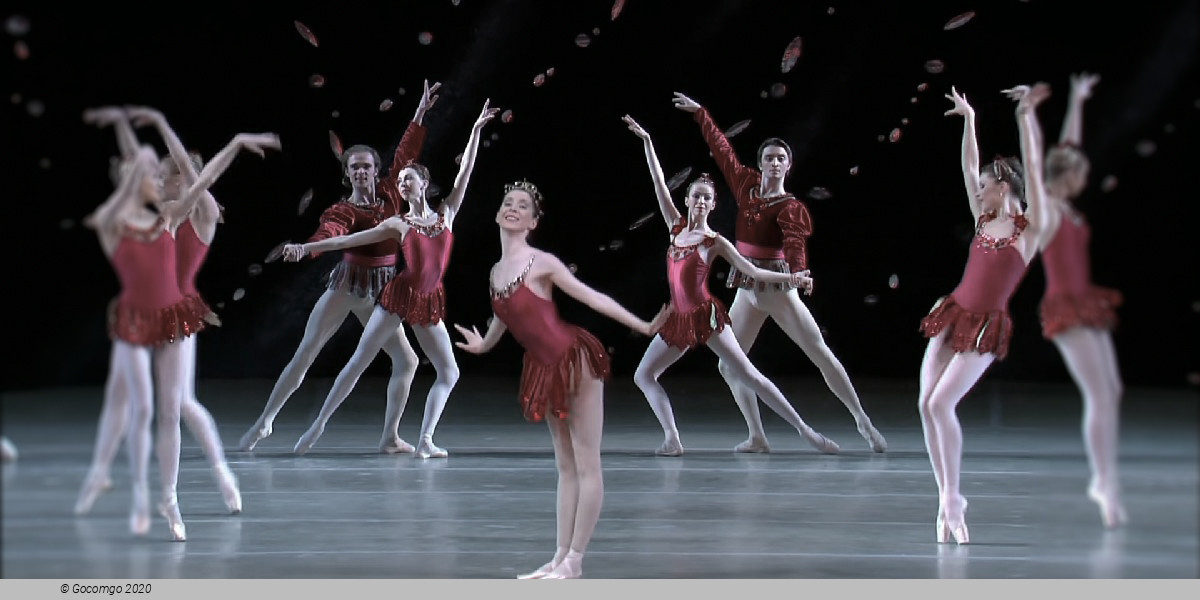
EMERALDS is based on music by Gabriel Fauré whose composition Balanchine associated with an ethereal French dance style. As energetic, vital and athletic, he interprets RUBIES through a composition by Igor Stravinsky. DIAMONDS puts the imperial brilliance of the Russian ballet tradition in focus from which he himself originated and which he closely connects to the compositions of Peter I. Tchaikovsky. His Third Symphony inspired Balanchine to contribute his own interpretation of "grandeur and clarity."

First performed on 13 April 1967 in New York, Jewels represents the first full-length “abstract ballet” by George Balanchine. The three parts of the ballet, „Emeralds“ (to music by Gabriel Fauré), „Rubies“ (to music by Igor Stravinsky) and „Diamonds“ (to music by Peter Ilich Tchaikovsky) are loosely connected by the idea of gems or jewels; a meeting with the jeweller Claude Arpels was a significant stimulus to Balanchine to create the work. Through the choice of the different composers, the ballet also forms a kind of geographical retrospective of the life of George Balanchine, who spent periods of time in France, the United States and Russia. Manuel Legris’ time as director is also closely connected with the work: after „Rubies“ (2010/2011) and „Diamonds“ (Pas de deux, 2017/2018), the complete work now appears on the programme as his period of office in Vienna draws to a close.

Jewels is a three-act ballet created for the New York City Ballet by co-founder and founding choreographer George Balanchine. It premièred on Thursday, 13 April 1967 at the New York State Theater, with sets designed by Peter Harvey and lighting by Ronald Bates.

Jewels has been called the first full-length abstract ballet. It has three related movements: Emeralds, Rubies, and Diamonds (usually separated by intermissions). It can also be seen as three separate ballets, linked by their jewel-colored costumes. Balanchine commented: "The ballet had nothing to do with jewels. The dancers are just dressed like jewels." Each of the three acts features the music of a different composer: Emeralds is set to the music of Gabriel Fauré, Rubies to the music of Igor Stravinsky and Diamonds to music by Pyotr Ilyich Tchaikovsky.

Costumes

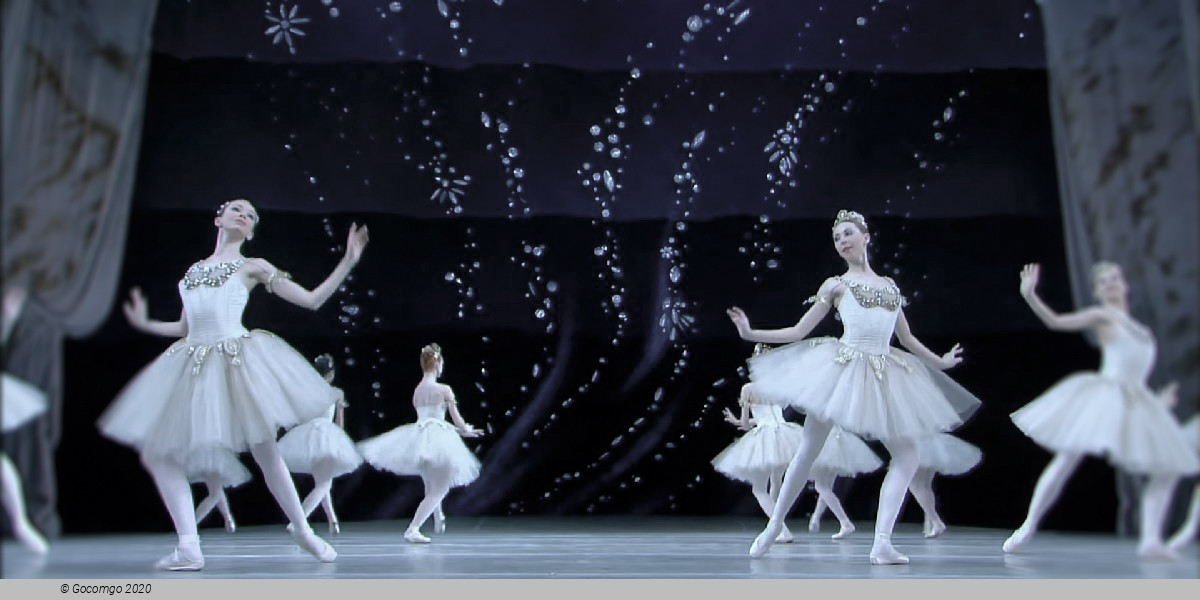
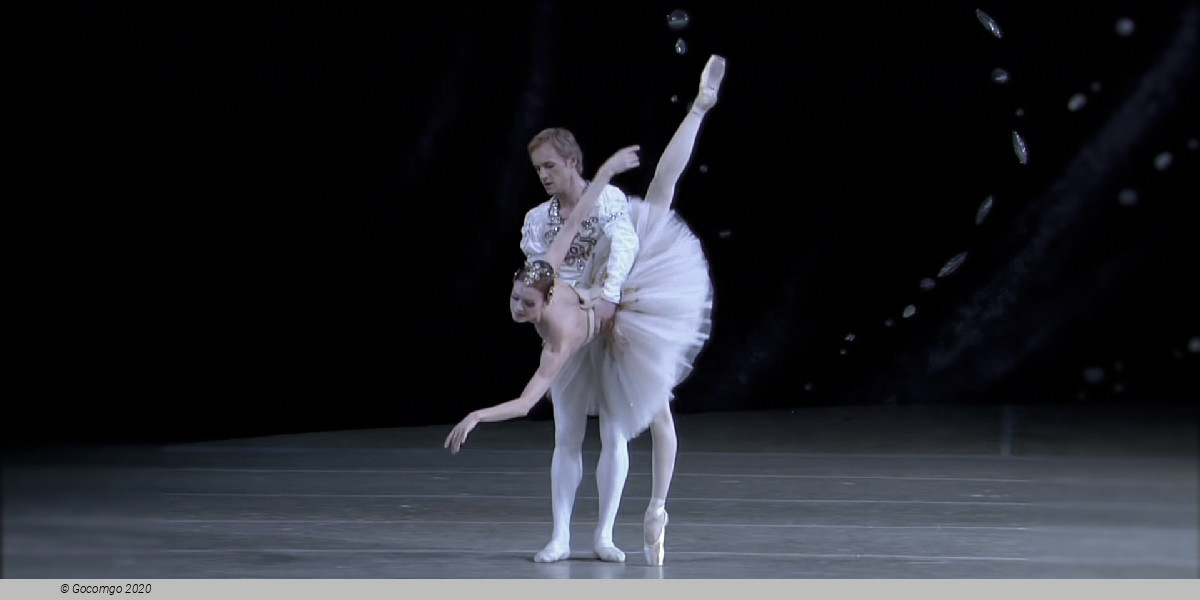
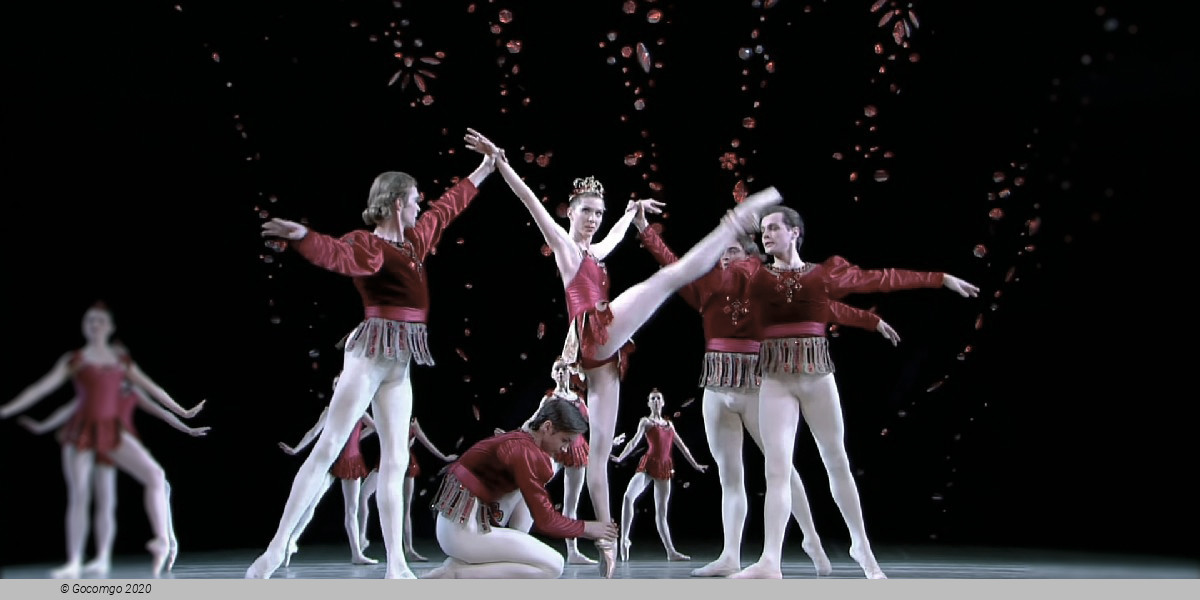
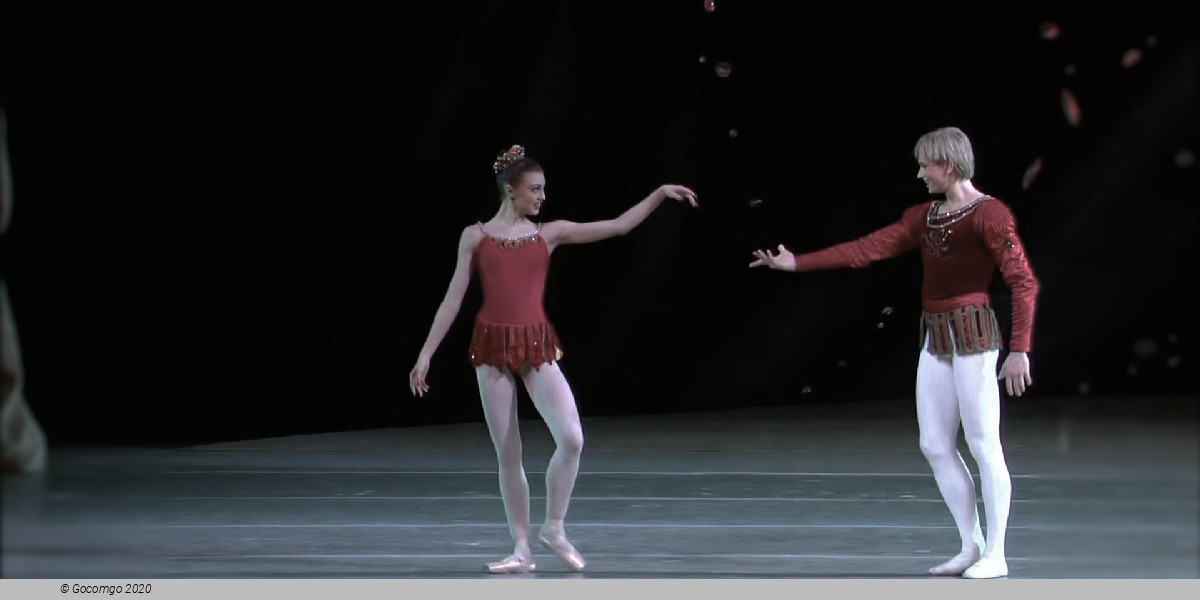
The costumes were created by Balanchine's long-time collaborator Barbara Karinska, who created a distinct look for each different act: romantic, calf-length tulle skirts for Emeralds, fabric that flared at the hips of both men and women in Rubies, and the flat, classical tutu of the Imperial Russian Ballet for Diamonds. The costumes were such finely crafted pieces of art in their own right that some of them have been exhibited in museums and in theatre lobbies. Even Claude Arpels of Van Cleef & Arpels, who suggested the idea of a ballet based on gems to the choreographer, was impressed with her attention to finding the finest trim that would accurately represent the true glitter of genuine gemstones. Additionally, Karinska's painstaking work is credited with making the costumes last despite the sweat and strain of dancing in them. Her designs, needlework and choice in fabrics made them both durable and danceable, illustrating that the bodies inside the costumes were deserving of her utmost respect. When questioned about her attention to her almost extravagant detail she replied, "I sew for girls and boys who make my costumes dance; their bodies deserve my clothes."

History
Premiere of this production: 13 April 1967, New York State Theater

Jewels is a three-act ballet created for the New York City Ballet by co-founder and founding choreographer George Balanchine. It premièred on Thursday, 13 April 1967 at the New York State Theater, with sets designed by Peter Harvey and lighting by Ronald Bates.

Venue Info

Staatsoper Unter den Linden (Berlin State Opera) - Berlin
Location   Unter den Linden 7

The Staatsoper Unter den Linden is one of the oldest and largest musical theaters in Germany. Founded in 1742 as the Royal Court Opera (German: Königliche Hofoper) under Frederick II. Located in Berlin, on the main street Unter den Linden.

King Frederick II of Prussia shortly after his accession to the throne commissioned the original building on the site. Construction work began in July 1741 with what was designed by Georg Wenzeslaus von Knobelsdorff to be the first part of a "Forum Fredericianum" on present-day Bebelplatz. Although not entirely completed, the Court Opera (Hofoper) was inaugurated with a performance of Carl Heinrich Graun's Cesare e Cleopatra on December 7, 1742. This event marked the beginning of the successful, 250-year co-operation between the Staatsoper and the Staatskapelle Berlin, the state orchestra, whose roots trace back to the 16th century.

In 1821, the Berlin Opera—hosted at the Schauspielhaus Berlin—gave the premiere of Weber's Der Freischütz. In 1842, Wilhelm Taubert instituted the tradition of regular symphonic concerts. In the same year, Giacomo Meyerbeer succeeded Gaspare Spontini as General Music Director. Felix Mendelssohn also conducted symphonic concerts for a year.

On August 18, 1843 the Linden Opera was destroyed by fire. The reconstruction of the building was supervised by architect Carl Ferdinand Langhans, and the Königliches Opernhaus (Royal Opera House) was inaugurated the following autumn by a performance of Meyerbeer's Ein Feldlager in Schlesien. In 1849, Otto Nicolai's Die lustigen Weiber von Windsor was premiered at the Royal Opera House, conducted by the composer.

1945: The Lindenoper was once again destroyed on February 3. The concerts were relocated to the Admiralspalast and the Schauspielhaus. On 18 February, Karajan conducted his last symphonic concert with the Staatskapelle in the Beethoven hall.

The second rebuilding took a long time. From 1945, the opera company played in the former Admiralspalast (today's Metropoltheater). From 1949, the company served as the state opera of East Germany. It moved back to its original home after the rebuilding in freely adapted baroque forms was finally completed in 1955. The newly rebuilt opera house was opened, again, with Wagner's Die Meistersinger von Nürnberg. The capacity is now about 1,300. After the Berlin Wall was built in 1961, the Opera was somewhat isolated, but still maintained a comprehensive repertoire that featured the classic and romantic period together with contemporary ballet and operas.

After reunification, the Linden Opera rejoined the operatic world. Important works that had already performed in the past were rediscovered and discussed anew within the framework of a "Berlin Dramaturgy". Baroque Opera in particular was at the center of attention, with Graun's Cleopatra e Cesare, Keiser's Croesus, Florian Leopold Gassmann's L'opera seria and Scarlatti's Griselda. These works were performed by Belgian conductor René Jacobs together with the Akademie für Alte Musik Berlin and the Freiburger Barockorchester on period instruments. In the 1990s, the opera was officially renamed Staatsoper Unter den Linden.

In 1992, the Argentine-Israeli conductor Daniel Barenboim was appointed Music Director. In 2000, the orchestra (according to its official website) elected Barenboim "conductor for life." During the 2002 Festtage, he led a Wagner cycle in ten parts, a production created in collaboration with director Harry Kupfer.

Since 2009, the Berlin State Opera has been undergoing considerable renovation work led by German architect HG Merz. The roof of the opera building was raised and the proscenium prolonged to improve the acoustics. Other renovation and extension works include the director's building, the below-ground connection building and the depot building. The latter will house the new rehearsal center.

The house was reopened in 2017 with premieres of Humperdinck's Hänsel und Gretel and Monteverdi's L'incoronazione di Poppea on one weekend.

Important Info
Type: Ballet
City: Berlin, Germany
Starts at: 19:30
Intervals: 2
Duration: 2h 20min
Top of page