The story of the opera “Betrothal in a Monastery” as told in the libretto.
The action takes place in 18th century Seville.
FIRST ACT
A square in front of the house of Don Jerome. Mendoza, a fish merchant, promises Don Jerome, a venerable nobleman, huge profits in joint trade. The deal will be sealed with the betrothal of Mendoza to Don Jerome’s daughter, Luisa. Don Jerome effusively describes the beauty of his daughter. Meanwhile, Mendoza is no less eloquent about the merits of the various fish presented by his servants.
Don Jerome’s son, Ferdinand, dreams of the beautiful and wayward Clara d’Almanza, and is already jealous of every man he encounters.
At dusk, Antonio finds himself outside Don Jerome’s house. He is in love with Don Jerome’s daughter Luisa and sings a serenade at her window. Both declare their love for each other, but the lovers’ interlude is interrupted by the voice of the angry father. The distressed Don Jerome, fed up with taking care of a daughter of marrying age, decides the marriage of Luisa and Mendoza will happen immediately. The lights in the streets go out. Seville plunges into sleep.
SECOND ACT
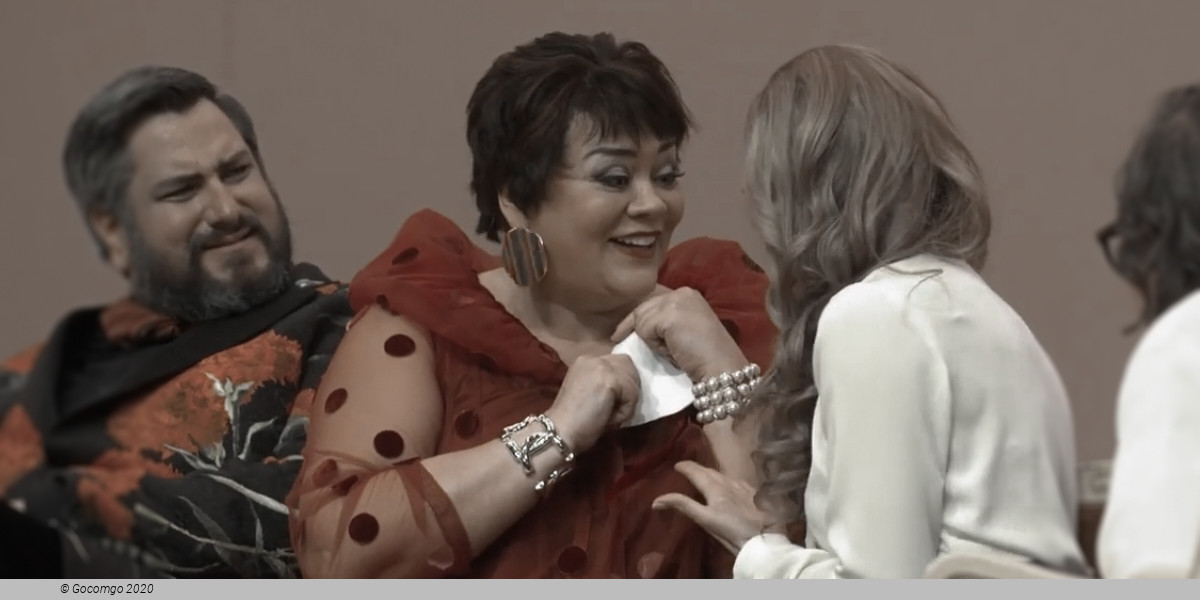
Luisa dreams of a happy life with Antonio. Mendoza, chosen by her father as her betrothed, disgusts her, but the obstinate Don Jerome has vowed not to let his daughter out of the house until she does as he says. In vain, Ferdinand tries to defend his sister, but Don Jerome is difficult to convince. Duenna, Luisa's nanny, comes to her rescue. Having conspired with her ward, she tries to deliver in secret a letter from Antonio. Don Jerome intercepts the letter and, in fury, orders the nanny to leave the house. This was exactly the women’s plan: disguised in Duenna’s clothes, Luisa leaves, eluding her father.
Lively trade takes place at the marketplace of Seville. Mendoza is content; things are going his way. Mendoza’s friend Don Carlos does not share his friend’s unwavering enthusiasm. He dreams of affairs worthy of a real knight.
Having escaped from home, Luisa meets her friend Clara d’Almanza, who has also run away, freeing herself from her evil stepmother. They develop a plan for further action: Luisa will take Clara’s name. Clara, not believing the sincerity of Ferdinand’s feelings, is angry with her lover and hopes to find shelter in St. Catherine’s monastery. Meanwhile Luisa, calling herself Clara, asks Mendoza, passing by, to help find Antonio. A fair maid’s plea pleases Mendoza. He believes that this way he will be able to divert Antonio’s attention away from his future bride, Luisa. He sends the faux Clara, accompanied by Don Carlos, to his home and promises to find Antonio.
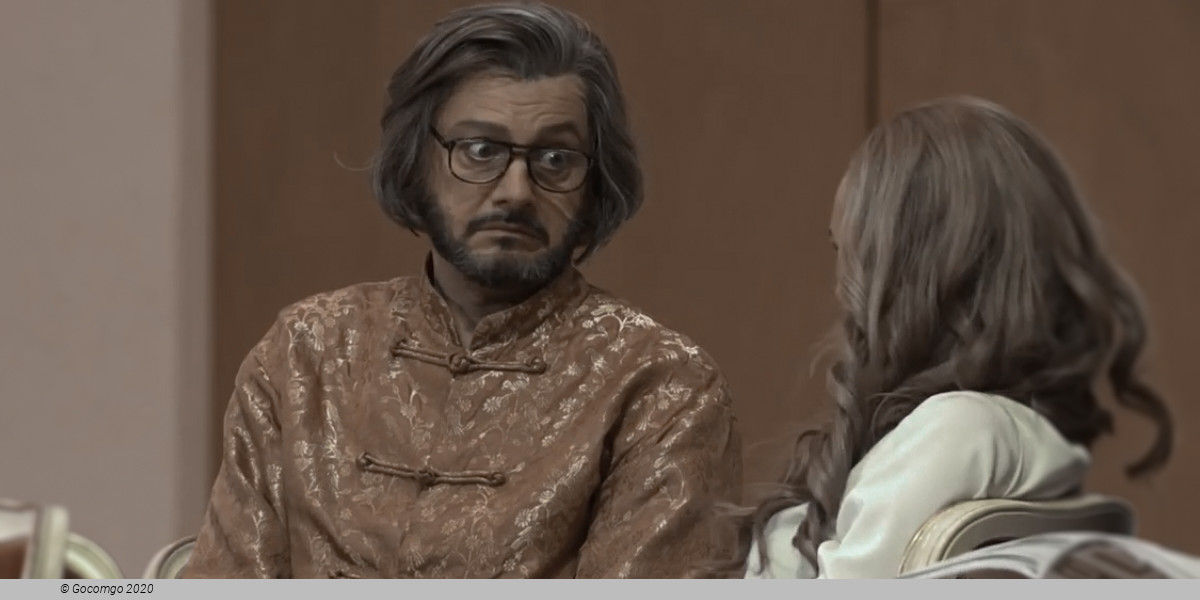
With trepidation, Mendoza awaits meeting his future bride. But for some reason, Luisa is capricious and does not want to meet the groom in the presence of her father, so Don Jerome is forced to leave. Duenna enters, disguised as Luisa. Mendoza, stammering with excitement, asks the beautiful woman to throw back the veil and … turns speechless: the bride is too old and scary! Immediately, the cunning Duenna takes the lead. She praises Mendoza’s beard, his courageous look. Her flattery charms the groom, and he is ready to ask for the blessing of Don Jerome. But Duenna keeps on with her convoluted intrigues: Mendoza must abduct her from her parents' house. He consents to everything. The rendezvous is over, and the unsuspecting Don Jerome congratulates Mendoza on his victory.
THIRD ACT
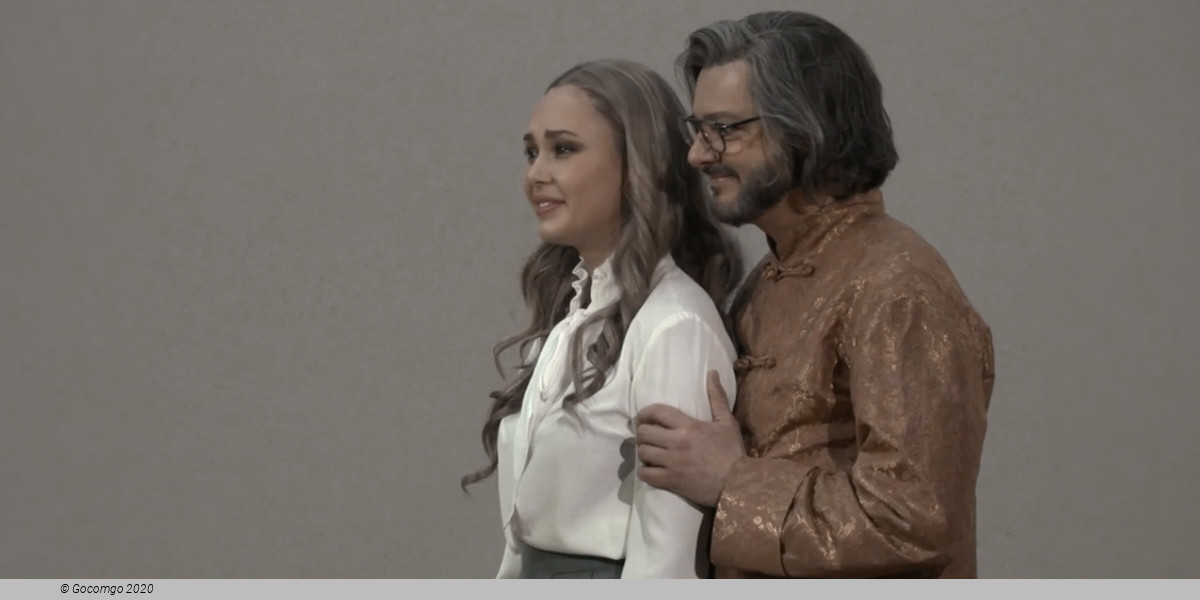
At Mendoza’s house, Luisa, whom Mendoza believes is Clara, waits for the arrival of Antonio. As was agreed, Mendoza brings him in. Antonio wonders why Clara, the beloved of his friend Ferdinand, seeks a meeting with him. Mendoza pushes Antonio into another room where Luisa is waiting for him. The lovers can’t hold back their joy. The deceived Mendoza is pleased, too, assuming that he has gotten rid of his rival. Joyfully he tells of his bride and the upcoming abduction. Luisa and Antonio wickedly agree.
Don Jerome revels in playing music, performing a minuet with his fellow musicians. But it does not go well. Don Jerome can’t comprehend why his daughter secretly fled with a man who was promised to her. Don Carlos brings a letter from Mendoza asking him to forgive and bless him. A message with a similar request arrives from Luisa. Don Jerome is puzzled by the eccentricity of his daughter – why two separate letters? – but blesses both, calling for a ceremonial dinner in honor of the couple.
Clara is on a lonely stroll around the old, abandoned convent garden: is she meant to stay forever here, among the nuns? The enraged Ferdinand runs in. Mendoza has told him about the “affair” between Antonio and Clara, so he has decided to find Antonio and take revenge. Blind with the thought of vengeance, Ferdinand does not recognize Clara who is in front of him dressed as a nun. From afar, he sees Antonio holding a girl’s hand and, assuming her to be Clara, rushes after them. Ferdinand's jealousy has made Clara finally believe the sincerity of his feelings, and she follows him, wanting to unite her fate with her beloved’s.
FOURTH ACT
Life at the monastery passes in drunken rampage, but at the sudden appearance of Antonio and Mendoza, the monks revert to singing pious psalms. The men have come to ask to be wed to their lovers. They drop a wallet full of money, the sound of which has a magical effect: the abbot agrees to hold a wedding ceremony. Luisa arrives in panic, followed by Ferdinand. Not recognizing his sister, Ferdinand rushes towards Antonio and accuses him of a dishonest liaison with Clara. The duel ends when Ferdinand sees Clara in the doorway. He is confused. The abbot blesses all three couples.
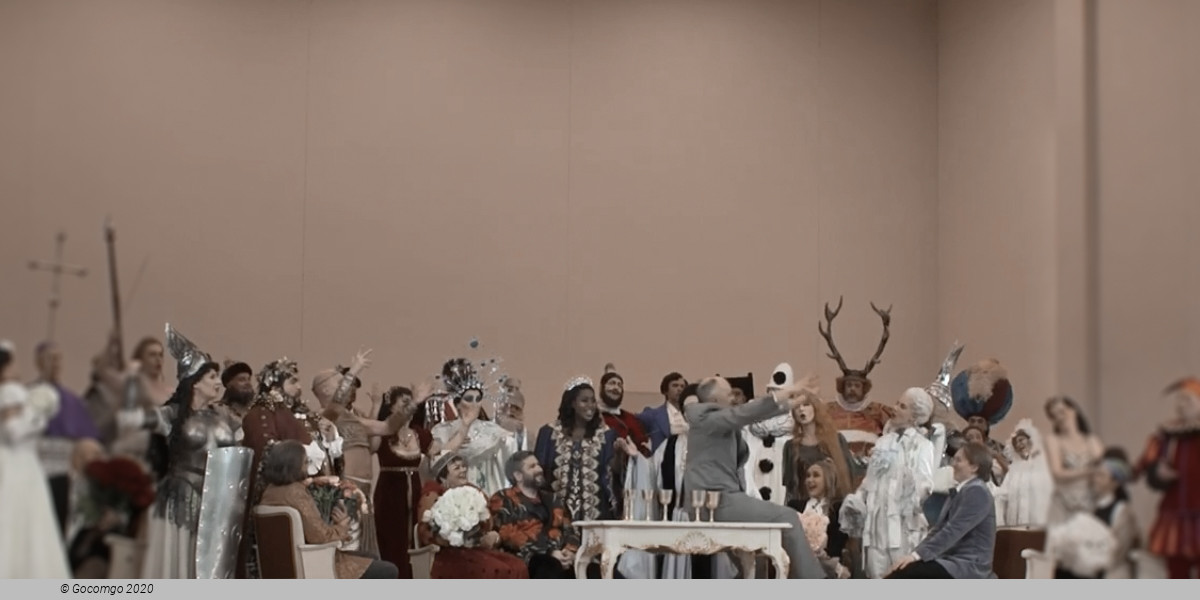
Guests arrive at the festively lit house of Don Jerome. But the owner pays little attention to them: Luisa and Mendoza have not arrived yet, and Ferdinand has disappeared somewhere. But then a happy Mendoza arrives. His wife jumps up to embrace “daddy” and, to his horror, Don Jerome recognizes Duenna. Luisa and Antonio appear and present the marriage permission signed by Don Jerome. Before Don Jerome can recover from the shock, Ferdinand and the nun fall on their knees in front of him. Don Jerome is completely confused, but then recognizes his son’s girlfriend as Clara d’Almanza. She is one of the richest girls in Seville. Having lost money on his daughter's marriage, he can compensate with his son’s. And the fooled Mendoza can be happy with Duenna. All merry and relieved, Don Jerome raises his glass and lets the party begin.
Dmitri Tcherniakov
(translated from Russian)
Act 1
Don Jerome intends his daughter Louisa to marry the vain, wealthy and ugly fish merchant Mendoza. However, she loves instead Antonio, who is poor, though noble in spirit. Furthermore, Don Ferdinand, son of Don Jerome and prone to fits of jealousy, wants to marry Clara d'Almanza, who is a virtual prisoner of her stepmother.
Act 2
Don Jerome locks up Louisa in her room to force her to marry Mendoza. Louisa's nurse (the Duenna) provokes the fury of Don Jerome by pretending to be a messenger between Antonio and Louisa. Jerome dismisses her - but the Duenna exchanges clothes with Louisa who makes her escape in this disguise.
By the quayside - where fisherwomen are praising the quality of the fish caught in Mendoza's boats - Louisa encounters her friend Clara, who has also run away from home and intends to seek sanctuary at the nunnery. Louisa asks to borrow Clara's name for a day - Clara assents. Enter Mendoza and his courtly friend Don Carlos. Mendoza is recognized by Louisa but he has never seen her. She therefore approaches Mendoza claiming to be Clara and asks him to take her under his protection and find Antonio with whom she is in love. Mendoza is attracted by this idea as a means to rid himself of his rival Antonio by marrying him off to 'Clara'. Don Carlos escorts 'Clara' to Mendoza's house.
Mendoza visits the house of Don Jerome to meet 'Louisa' (the Duenna in disguise); whilst 'Louisa' is not as young and beautiful as Mendoza had been led to believe, her dowry is sufficient attraction. they agree to elope that evening.
Act 3
The mystified Antonio arrives at Mendoza's house; while he is offstage meeting 'Clara', Mendoza and don Carlos congratulate themselves on their cunning. Still unwitting, they agree to help the pair get married.
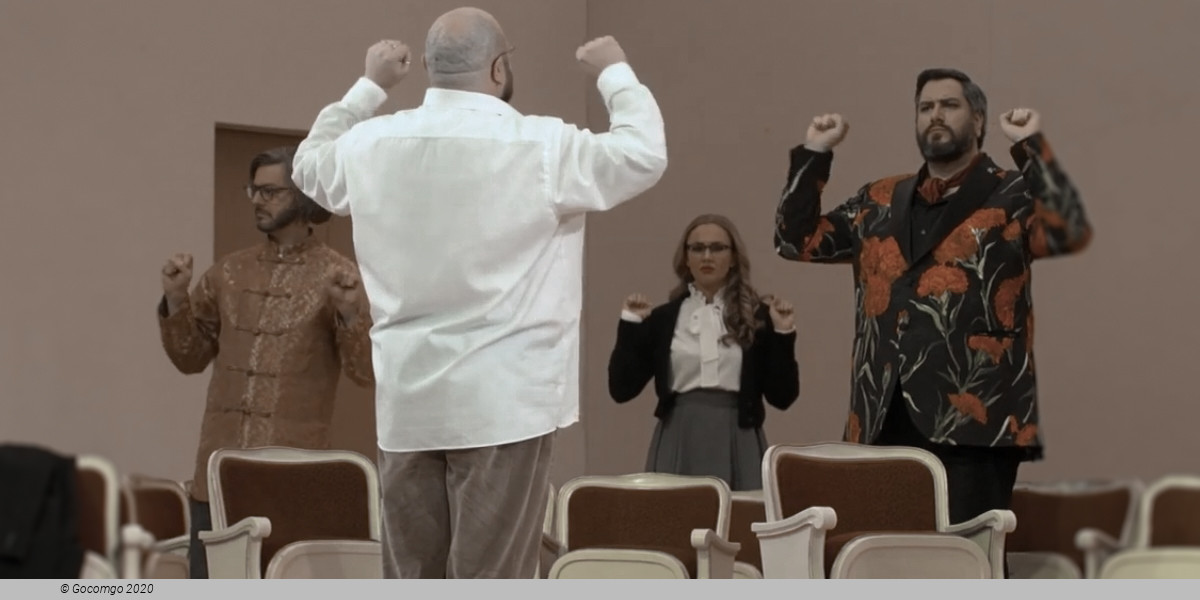
Don Jerome is rehearsing some amateur musicians (A trio of trumpet, clarinet and bass drum). He receives two messages- one from Mendoza saying he has eloped with Louisa, which delights him, and another from the real Louisa who asks for his blessing on her marriage, which he neglects to read carefully. He sends back his consent with both messengers and arranges for a great feast later that evening to celebrate.
At the monastery, Clara meets with Antonio and Luisa and laments her apparent loss of Ferdinand. Enter Ferdinand, who mistaking Clara for a nun exclaims that he is chasing his false friend Antonio who has run off with his beloved Clara. Clara is secretly overjoyed at this demonstration of Ferdinand's passion.
Act 4
The act opens with a drinking song for the monks in the monastery where the marriages are to be performed. The monks then switch to a hymn that extols fasting and abstinence, to a tune that is a slower variant of the earlier drinking song. Enter Mendoza and Antonio who by lavish bribery gain the monks consent to marry them to their loves. Enter Ferdinand who challenges Antonio to a duel, but the genuine Clara arrives and Ferdinand now understands the true situation. The three marriages are agreed.
At Don Jerome's feast, the host is increasingly amazed, exasperated and infuriated as the successive arrival of the newly-weds makes it clear that his plans have gone completely awry. He is slightly compensated by the likely size of Clara's dowry. He sings a drinking song, accompanying himself on a set of tuned glasses.



 Unter den Linden 7