



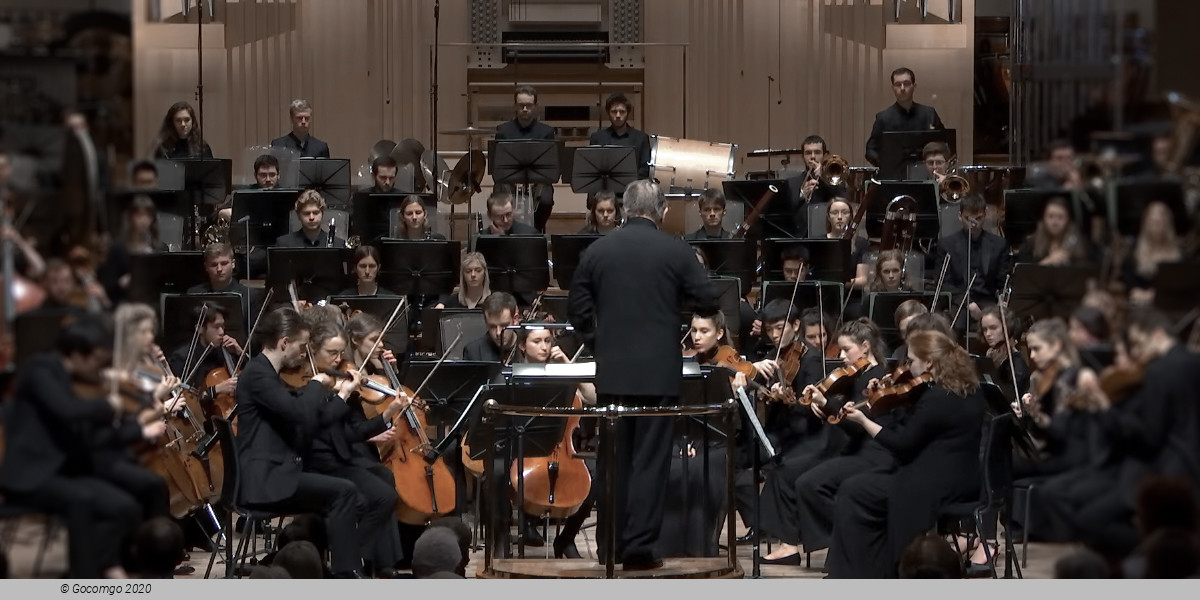
Salle des Combins is the Verbier Festival’s main concert hall. It normally seats 1,419. Each row is on a separate tier, which guarantees an excellent view of the stage. Improvements to the soundproofing and heat insulation make this a very high-quality non-permanent venue. All of the Festival’s symphonic concerts, operas, large world music, jazz, dance events and some recitals are presented here.
Yunchan Lim
Salle des Combins,
Verbier, Switzerland
All photos (1)
Select date and time
6:30 PM
From
US$ 136
E-tickets: Print at home or at the box office of the event if so specified. You will find more information in your booking confirmation email.
You can only select the category, and not the exact seats.
If you order 2 or 3 tickets: your seats will be next to each other.
If you order 4 or more tickets: your seats will be next to each other, or, if this is not possible, we will provide a combination of groups of seats (at least in pairs, for example 2+2 or 2+3).
Important Info
E-tickets: Print at home or at the box office of the event if so specified. You will find more information in your booking confirmation email.
You can only select the category, and not the exact seats.
If you order 2 or 3 tickets: your seats will be next to each other.
If you order 4 or more tickets: your seats will be next to each other, or, if this is not possible, we will provide a combination of groups of seats (at least in pairs, for example 2+2 or 2+3).
Festival
Verbier Festival 2026
The Verbier Festival 2026 invites you to experience classical music at its most vibrant, set against the breathtaking backdrop of the Swiss Alps. Each summer, this unique gathering transforms the alpine village of Verbier into a global meeting point for the world’s finest musicians and the next generation of rising stars — a place where tradition meets discovery, and every performance feels alive with possibility.
Programme
Franz Schubert: Piano Sonata no. 17 in D major "Gasteiner", D.850
Alexander Scriabin: Piano Sonata no. 2 "Sonata Fantasy" in G sharp minor, Op.19
Alexander Scriabin: Piano Sonata no. 3 in F sharp minor, Op.23
Alexander Scriabin: Piano Sonata no. 4 in F sharp major, Op.30
Overview
First recital at the Salle des Combins, following his triumphs at the Église (those historic Goldberg Variations in 2025!) for Yunchan Lim.
A worldwide phenomenon — and rightfully so — as this young artist moves us deeply with his sound. Schubert's luminous "Gasteiner" Sonata opens the evening with joyous exuberance and irresistible vitality. In the second half, three Scriabin sonatas: the "Fantasy" Sonata, the "gothic" Sonata No. 3 nicknamed "States of Soul", and the radiant Fourth which he described as "man's flight towards the star, symbol of happiness".
The “Gasteiner” Sonata is one of Schubert’s works that fills us with an irrepressible joy. Without presenting any immediately identifiable melodic material, the work relies on its unexpected structure and surprise effects.
The atmosphere that pervades Scriabin’s works is quite different. The short Second Sonata, for example, evokes a miniature sea storm. The Third Sonata, aptly named “States of Mind”,is true programme music, with each movement evoking the human soul subjected to the passions and vicissitudes of life. As for the Fourth Sonata, it seems to foreshadow a calming of the composer’s thoughts, abandoning the precepts of Romanticism to immerse himself body and soul in philosophy. Despite their differences, these works are driven by the composers’ desire to reflect their states of mind, but also by profound and complex structural principles: a considerable challenge for Yunchan Lim, whose pianism has entered a new dimension in recent years.
Venue Info
Salle des Combins - Verbier
 Chemin de Plan Pra
Chemin de Plan Pra
Important Info
Festival: Verbier Festival 2026
Type: Classical Concert
City: Verbier, Switzerland
Starts at: 18:30