

Salle des Combins is the Verbier Festival’s main concert hall. It normally seats 1,419. Each row is on a separate tier, which guarantees an excellent view of the stage. Improvements to the soundproofing and heat insulation make this a very high-quality non-permanent venue. All of the Festival’s symphonic concerts, operas, large world music, jazz, dance events and some recitals are presented here.
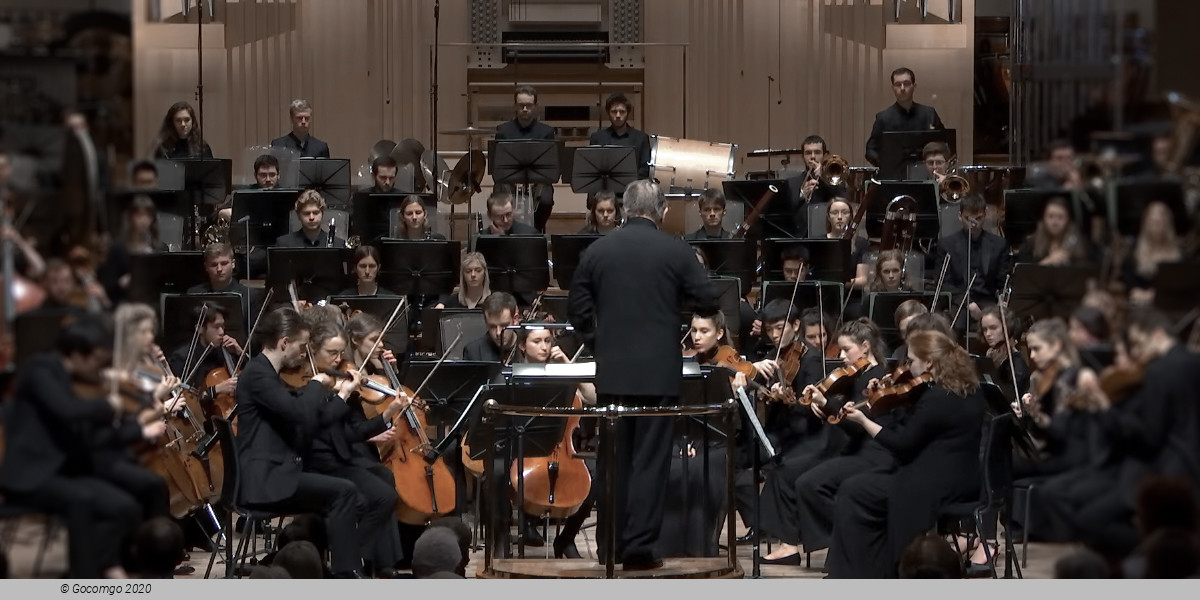
Vasily Petrenko, Alexandre Kantorow and Verbier Festival Orchestra
Salle des Combins,
Verbier, Switzerland
All photos (1)
Select date and time
6:30 PM
From
US$ 152
E-tickets: Print at home or at the box office of the event if so specified. You will find more information in your booking confirmation email.
You can only select the category, and not the exact seats.
If you order 2 or 3 tickets: your seats will be next to each other.
If you order 4 or more tickets: your seats will be next to each other, or, if this is not possible, we will provide a combination of groups of seats (at least in pairs, for example 2+2 or 2+3).
Important Info
Festival: Verbier Festival 2026
Type: Classical Concert
City: Verbier, Switzerland
Starts at: 18:30
Duration: 2h
E-tickets: Print at home or at the box office of the event if so specified. You will find more information in your booking confirmation email.
You can only select the category, and not the exact seats.
If you order 2 or 3 tickets: your seats will be next to each other.
If you order 4 or more tickets: your seats will be next to each other, or, if this is not possible, we will provide a combination of groups of seats (at least in pairs, for example 2+2 or 2+3).
Cast
Festival
Verbier Festival 2026
The Verbier Festival 2026 invites you to experience classical music at its most vibrant, set against the breathtaking backdrop of the Swiss Alps. Each summer, this unique gathering transforms the alpine village of Verbier into a global meeting point for the world’s finest musicians and the next generation of rising stars — a place where tradition meets discovery, and every performance feels alive with possibility.
Programme
Alexey Shor: Crystal Palace: Suite
Pyotr Tchaikovsky: Piano Concerto no. 2 in G major, Op.44
Sergei Prokofiev: Romeo and Juliet, excerpts from Suites No. 1 and 2 Op. 64
Overview
To close the 2026 edition, a concert of dazzling grandeur: the Concerto that earned Alexandre Kantorow the First Prize at the Tchaikovsky Competition, followed by the Suite from the most beloved Russian ballet of the 20th century — Romeo and Juliet — conducted by Vasily Petrenko, one of the foremost Tchaikovsky specialists.
‘Romeo and Juliet’ almost never saw the light of day. Rejected by the two great Russian ballet authorities (the Bolshoi, which considered the work unworthy of being performed, and the Mariinsky, which rejected the argument), it has since enjoyed a veritable renaissance thanks to the three Suites that the composer wrote from it, as well as the variety of choreographies (from Lavrovsky’s original to Nureyev’s French version) that today do justice to the score’s rhythmic inventiveness and melodic genius.
The fate of Tchaikovsky’s Second Concerto was quite different: initially destined for great success, it was ultimately met with a lukewarm reception and never managed to emerge from the shadow of the first. It has to be said that its symphonic dimensions and the complexity of its developments discouraged many pianists. It took courage for Alexandre Kantorow to defend this work in front of the jury of the competition dedicated to the composer. But the success was beyond measure, propelling the young pianist onto all the major international stages.
Venue Info
Salle des Combins - Verbier
 Chemin de Plan Pra
Chemin de Plan Pra
Important Info
Festival: Verbier Festival 2026
Type: Classical Concert
City: Verbier, Switzerland
Starts at: 18:30
Duration: 2h