








Royal Swedish Opera tickets 15 November 2026 - Premiere Così fan tutte | GoComGo.com

Premiere
Così fan tutte

Royal Swedish Opera, Stockholm, Sweden
All photos (6)
Select date and time
3 PM
From
US$ 210

E-tickets: Print at home or at the box office of the event if so specified. You will find more information in your booking confirmation email.

You can only select the category, and not the exact seats.
If you order 2 or 3 tickets: your seats will be next to each other.
If you order 4 or more tickets: your seats will be next to each other, or, if this is not possible, we will provide a combination of groups of seats (at least in pairs, for example 2+2 or 2+3).

Important Info
Type: Opera
City: Stockholm, Sweden
Starts at: 15:00
Duration: 3h 5min
Sung in: Italian
Titles in: Swedish

E-tickets: Print at home or at the box office of the event if so specified. You will find more information in your booking confirmation email.

You can only select the category, and not the exact seats.
If you order 2 or 3 tickets: your seats will be next to each other.
If you order 4 or more tickets: your seats will be next to each other, or, if this is not possible, we will provide a combination of groups of seats (at least in pairs, for example 2+2 or 2+3).

Cast
Performers
Conductor: Alan Gilbert
Tenor: David Portillo (Ferrando)
Baritone: Jeremy Carpenter (Don Alfonso)
Mezzo-Soprano: Johanna Rudström (Dorabella)
Soprano: Julia Sporsén (Fiordiligi)
Baritone: Kyle Miller
Creators
Composer: Wolfgang Amadeus Mozart
Directed: Clara Svärd
Librettist: Lorenzo Da Ponte
Set Designer: Marika Feinsilber
Overview

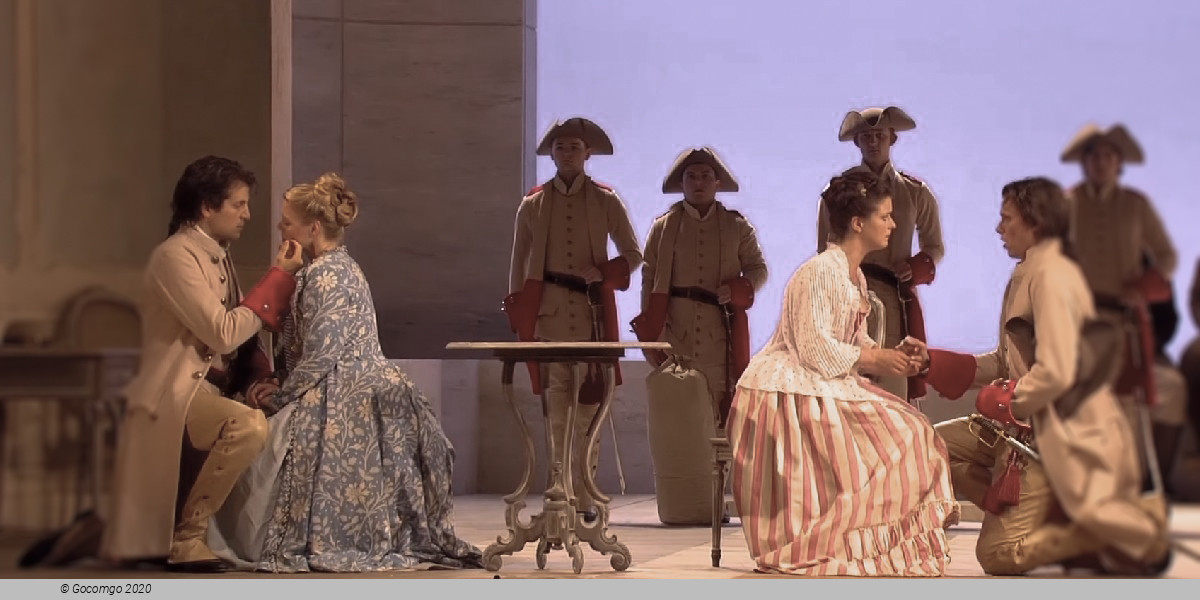
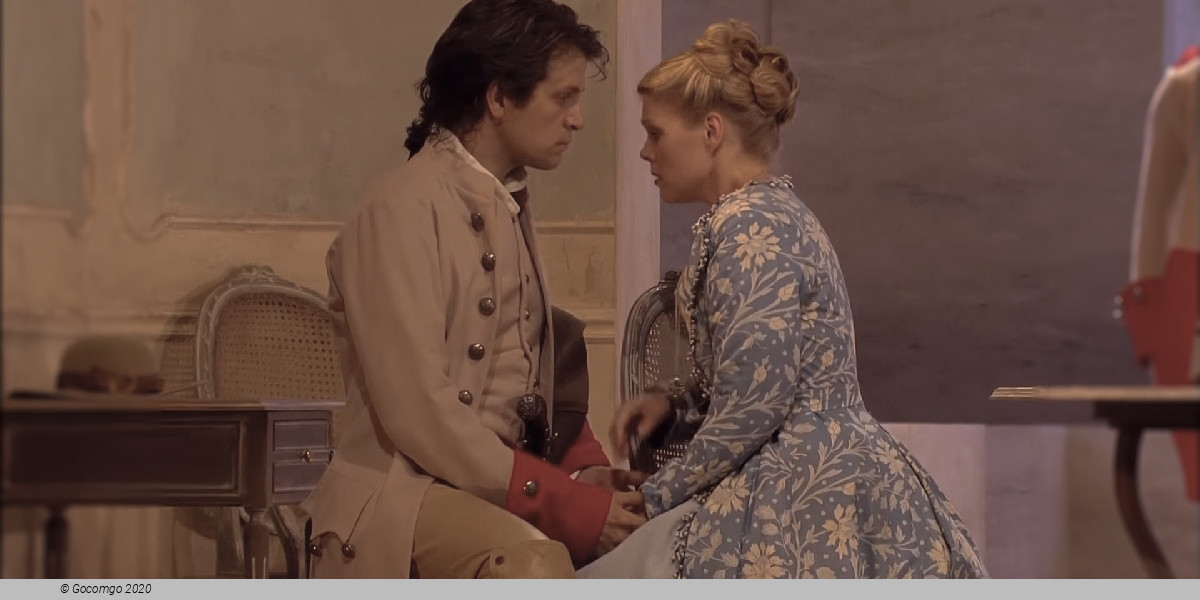
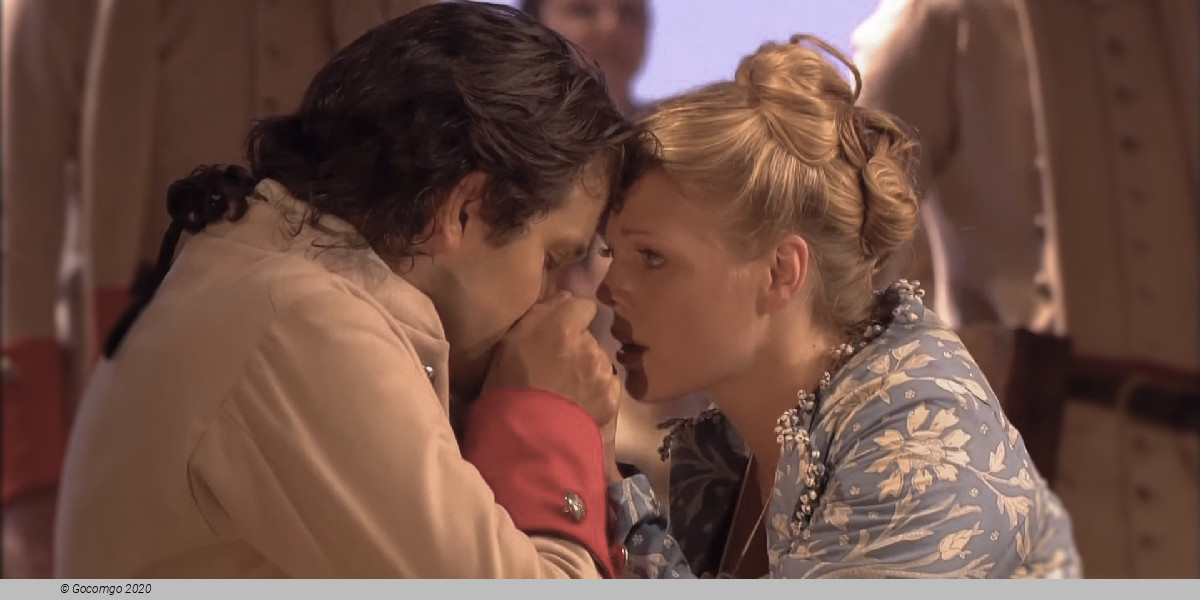
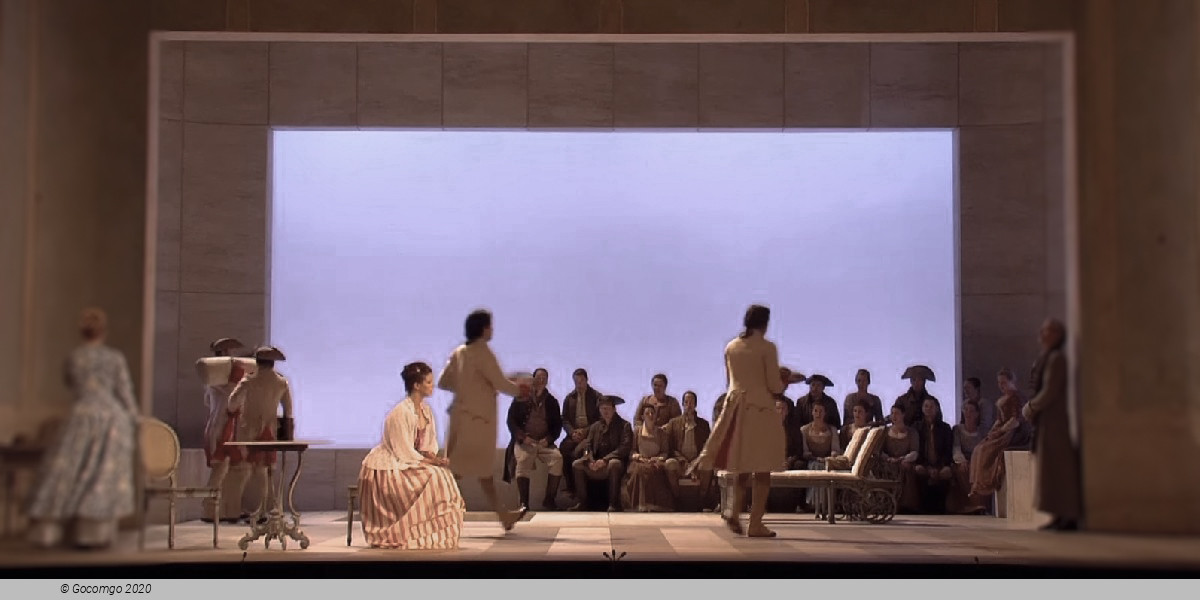
What starts as a wager spirals into a dangerous game that puts love and friendship at risk. The title, which is Italian for ‘Women are like that’, leads us into a story about testing the limits of fidelity. With an underlying seriousness, the comedy navigates its way between complicated situations. Director Clara Svärd places the action in a 1960s-evoking artist’s studio, where a charismatic philosopher subjects four young people to a psychological experiment that sends their emotions reeling. Two young couples have the opportunity to explore new sides of themselves, dipping their toes into the unknown. But how is love affected by the experiment? This is an opera that provokes, fascinates and entertains.

Così fan tutte (“Thus Do They All”) is one of Wolfgang Amadeus Mozart’s most refined and psychologically insightful operas. With a libretto by Lorenzo Da Ponte, the work blends comedy with subtle emotional depth.

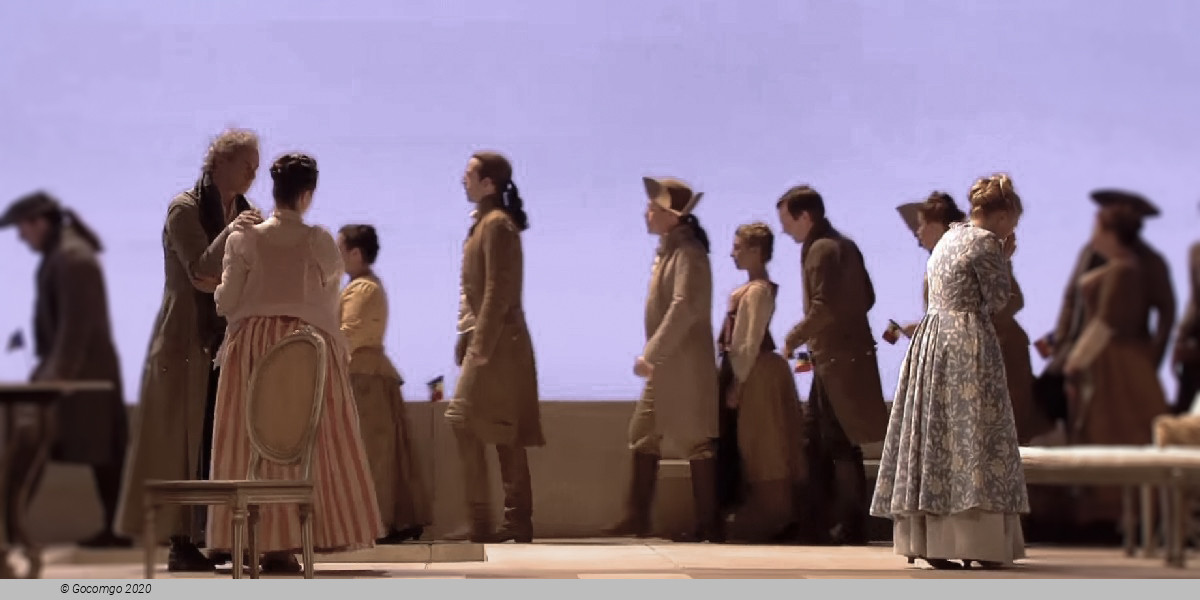
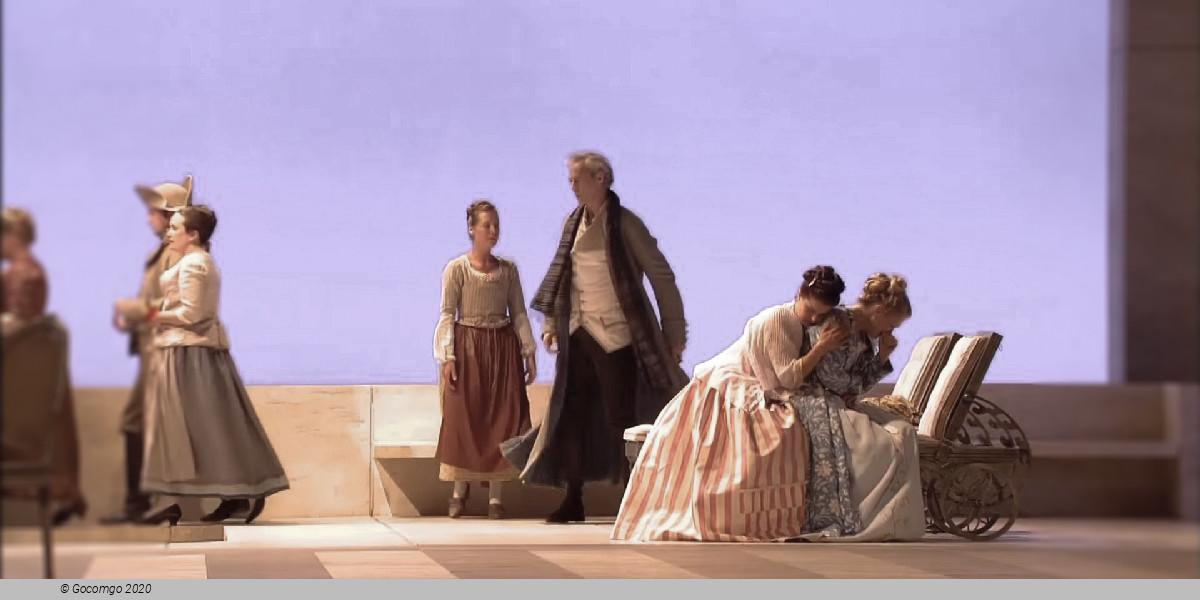
In this production by the Royal Swedish Opera, the story unfolds with elegance and clarity, highlighting the delicate balance between humor and emotional complexity. The staging often emphasizes modern or timeless elements, allowing the audience to connect with the characters’ dilemmas.

The music is filled with exquisite ensembles, lyrical arias, and sparkling orchestration. Mozart masterfully captures shifting emotions—playfulness, jealousy, tenderness, and confusion—through his richly expressive score.

This production invites audiences to reflect on the nature of love and fidelity, wrapped in a charming and sophisticated theatrical experience.

History
Premiere of this production: 26 January 1790, Burgtheater, Vienna

Così fan tutte, ossia La scuola degli amanti (All Women Do It, or The School for Lovers), is an Italian-language opera buffa in two acts by Wolfgang Amadeus Mozart first performed on 26 January 1790 at the Burgtheater in Vienna, Austria. The libretto was written by Lorenzo Da Ponte who also wrote Le nozze di Figaro and Don Giovanni.

Synopsis

Mozart and Da Ponte use the theme of "fiancée swapping", which dates back to the 13th century; notable earlier versions are found in Boccaccio's Decameron and Shakespeare's play Cymbeline. Elements from Shakespeare's The Taming of the Shrew are also present. Furthermore, it incorporates elements of the myth of Procris as found in Ovid's Metamorphoses, vii.

Place: Naples
Time: the 18th century

Act 1
Scene 1: A coffeehouse

In a cafe, Ferrando and Guglielmo (two officers) express certainty that their fiancées (Dorabella and Fiordiligi, respectively) will be eternally faithful. Don Alfonso expresses skepticism and claims that there is no such thing as a faithful woman. He lays a wager with the two officers, claiming he can prove in a day's time that those two, like all women, are fickle. The wager is accepted: the two officers will pretend to have been called off to war; soon thereafter they will return in disguise and each attempt to seduce the other's lover. The scene shifts to the two women, who are praising their men (duet: "Ah guarda sorella"—"Ah look sister"). Alfonso arrives to announce the bad news: the officers have been called off to war. Ferrando and Guglielmo arrive, brokenhearted, and bid farewell (quintet: "Sento, o Dio, che questo piede è restio"—"I feel, oh God, that my foot is reluctant"). As the boat with the men sails off to sea, Alfonso and the sisters wish them safe travel (trio: "Soave sia il vento"—"May the wind be gentle"). Alfonso, left alone, gloatingly predicts that the women (like all women) will prove unfaithful (arioso: "Oh, poverini, per femmina giocare cento zecchini?"—"Oh, poor little ones, to wager 100 sequins on a woman").

Scene 2: A room in the sisters' home

Despina, the maid, arrives and asks what is wrong. Dorabella bemoans the torment of having been left alone (aria: "Smanie implacabili"—"Torments implacable"). Despina mocks the sisters, advising them to take new lovers while their betrotheds are away (aria: "In uomini, in soldati, sperare fedeltà?"—"In men, in soldiers, you hope for faithfulness?"). After they leave, Alfonso arrives. He fears Despina will recognize the men through their disguises, so he bribes her into helping him to win the bet. The two men then arrive, dressed as mustachioed Albanians (sextet: "Alla bella Despinetta"—"Meet the pretty Despinetta"). The sisters enter and are alarmed by the presence of strange men in their home. The "Albanians" tell the sisters that they were led by love to them (the sisters). However, the sisters refuse to give in. Fiordiligi asks the "Albanians" to leave and pledges to remain faithful (aria: "Come scoglio"—"Like a rock"). The "Albanians" continue the attempt to win over the sisters' hearts, Guglielmo going so far as to point out all of his manly attributes (aria: "Non siate ritrosi"—"Don't be shy"), but to no avail. Ferrando, left alone and sensing victory, praises his love (aria: "Un'aura amorosa"—"A loving breath").

Scene 3: A garden

The sisters are still pining. Despina has asked Don Alfonso to let her take over the seduction plan. Suddenly, the "Albanians" burst in the scene and threaten to poison themselves if they are not allowed the chance to woo the sisters. As Alfonso tries to calm them, they drink the "poison" and pretend to pass out. Soon thereafter, a "doctor" (Despina in disguise) arrives on the scene and, using magnet therapy, is able to revive the "Albanians". The men, pretending to hallucinate, demand a kiss from Dorabella and Fiordiligi (whom the "Albanians" call goddesses) who stand before them. The sisters refuse, even as Alfonso and the doctor (Despina) urge them to acquiesce.

Act 2
Scene 1: The sisters' bedroom

Despina urges them to succumb to the "Albanians"' overtures (aria: "Una donna a quindici anni"—"A fifteen year old woman"). After she leaves, Dorabella confesses to Fiordiligi that she is tempted, and the two agree that a mere flirtation will do no harm and will help them pass the time while they wait for their lovers to return (duet: "Prenderò quel brunettino"—"I will take the brunette one").

Scene 2: The garden

Dorabella and the disguised Guglielmo pair off, as do the other two. The conversation is haltingly uncomfortable, and Ferrando departs with Fiordiligi. Now alone, Guglielmo attempts to woo Dorabella. She does not resist strongly, and soon she has given him a medallion (with Ferrando's portrait inside) in exchange for a heart-shaped locket (duet: "Il core vi dono"—"I give you my heart"). Ferrando is less successful with Fiordiligi (Ferrando's aria: "Ah, lo veggio"—"Ah, I see it" and Fiordiligi's aria: "Per pietà, ben mio, perdona"—"Please, my beloved, forgive"), so he is enraged when he later finds out from Guglielmo that the medallion with his portrait has been so quickly given away to a new lover. Guglielmo at first sympathises with Ferrando (aria: "Donne mie, la fate a tanti"—"My ladies, you do it to so many"), but then gloats, because his betrothed is faithful.

Scene 3: The sisters' room

Dorabella admits her indiscretion to Fiordiligi ("È amore un ladroncello"—"Love is a little thief"). Fiordiligi, upset by this development, decides to go to the army and find her betrothed. Before she can leave, though, Ferrando arrives and continues his attempted seduction. Fiordiligi finally succumbs and falls into his arms (duet: "Fra gli amplessi"—"In the embraces"). Guglielmo is distraught while Ferrando turns Guglielmo's earlier gloating back on him. Alfonso, winner of the wager, tells the men to forgive their fiancées. After all: "Così fan tutte"—"All women are like that".

Scene 4:

The scene begins as a double wedding for the sisters and their "Albanian" grooms. Despina, in disguise as a notary, presents the marriage contract, which all sign. Directly thereafter, military music is heard in the distance, indicating the return of the officers. Alfonso confirms the sisters' fears: Ferrando and Guglielmo are on their way to the house. The "Albanians" hurry off to hide (actually, to change out of their disguises). They return as the officers, professing their love. Alfonso drops the marriage contract in front of the officers, and, when they read it, they become enraged. They then depart and return moments later, half in Albanian disguise, half as officers. Despina has been revealed to be the notary, and the sisters realize they have been duped. All is ultimately forgiven, as the entire group praises the ability to accept life's unavoidable good times and bad times.

Venue Info

Royal Swedish Opera - Stockholm
Location   Gustav Adolfs torg 2

Royal Swedish Opera is Sweden's major national stage for opera and ballet. Famous singers who have been part of the opera's ensemble have included Jussi Björling, Gösta Winbergh, Nicolai Gedda, Peter Mattei, Jenny Lind, Birgit Nilsson, Elisabeth Söderström, Fritz Arlberg, Anne Sofie von Otter, Katarina Dalayman and Nina Stemme.

The orchestra of the Royal Swedish Opera, the Royal Swedish Orchestra, Kungliga Hovkapellet, dates back to 1526. Royal housekeeping accounts from 1526 mention twelve musicians including wind players and a timpanist but no string players. Consequently, the Royal Swedish Orchestra is one of the oldest orchestras in Europe.

Armas Järnefelt was on the music staff from 1905, rising to become chief conductor between 1923–1933 and 1938–1946. The Royal Swedish Ballet, Kungliga Baletten, was founded by Gustav III of Sweden in 1773.

The building is located in the center of Sweden's capital Stockholm in the borough of Norrmalm, on the eastern side of Gustav Adolfs torg across from the former Arvfurstens Palats, now Ministry for Foreign Affairs. It lies on the north side of the Norrström river and is connected to the Royal Palace through the Norrbro bridge.

The opera company was founded by King Gustav III and its first performance, Thetis and Phelée with Carl Stenborg and Elisabeth Olin, was given on January 18, 1773; this was the first native speaking opera performed in Sweden.

But the first opera house was not opened until 1782 and served for a century before being replaced at the end of the 19th century. Both houses are officially called the "Royal Opera", however the terms "The Gustavian Opera" and "The Oscarian Opera", or the "Old" and "New" Opera are used when distinction is needed.

The Gustavian Opera
The original Stockholm Opera House, the work of architect Carl Fredrik Adelcrantz was commissioned by King Gustav III, a strong adherent of the ideal of an enlightened absolutism and as such was a great patron of the arts. The Swedish Opera company had first been located in Bollhuset, but there was a need to separate the Opera from the theatre and give them separate buildings. Construction began in 1775 and the theatre was inaugurated on 30 September 1782 with a performance of the German composer Johann Gottlieb Naumann's Cora och Alonzo. It was also the place for public masquerade balls, events inspired from the famous opera-balls in Paris, which was open for everyone wearing a mask at a cheap cost and somewhat ill-reputed.

The building was very imposing with its centre Corinthian tetrastyle portico supporting four statues and topped by the royal crown. The four-tiered auditorium was oval in shape, had excellent acoustics and sight lines. The sumptuous foyer contained neoclassic medallions and pilasters.

It was in the foyer of the opera house where the king met his fate: during a masquerade on March 16, 1792, he was shot by Jacob Johan Anckarström, and died 7 days later. (In turn, this event inspired the operas Gustave III by Daniel Auber and Un ballo in maschera by Verdi.) Following the assassination, the opera house was closed until 1 November 1792, when it was opened again, which by some was considered shocking. The son of Gustav III, King Gustav IV Adolf of Sweden, did not like the Opera, possibly because of the murder of his father, and disliked the fact that the scene of his father's murder was used as a place of amusement and leisure, and when a frivolous play was performed for his queen Frederica of Baden in 1806, he decided to close it down. It remained closed until 1809, and when the king was deposed, it took until May 1812, before it was organised enough to be fully opened again.

The Oscarian Opera, Operan

The old opera was demolished in 1892 to give way to the construction of a new Opera drawn by Axel Johan Anderberg, which was finished seven years later and inaugurated by King Oscar II with a production of a Swedish opera (that tradition having been quite firmly established during the 19th century), Franz Berwald's Estrella de Soria.

The new house had the letters Kungl. Teatern, literally "Royal Theatre" (which caused the later-founded Royal Dramatic Theatre to add the distinction "dramatic" to its name). The building is now simply called Operan ("The Opera"), written in golden letters above the middle arch on the front facade. It is a majestic neo-classical building with a magnificent gold foyer (Guldfoajén) and elegant marble grand staircase leading to a three-tiered auditorium somewhat smaller than the old theatre. It presently seats 1,200. Most productions are now sung in the original language (with Swedish subtitles), with only a few in Swedish.

The Royal Swedish Family of King Carl XVI Gustaf keeps the Royal Box reserved, located in the first tier in the auditorium above the orchestra pit.

The current general manager of the Royal Swedish Opera is the Swedish mezzo-soprano Birgitta Svendén. In November 2011, the Dutch conductor Lawrence Renes was named the next chief conductor of the company, as of the 2012–13 season, with an initial contract through the 2016–17 season.

Important Info
Type: Opera
City: Stockholm, Sweden
Starts at: 15:00
Duration: 3h 5min
Sung in: Italian
Titles in: Swedish
Top of page