National Opera and Ballet of Bulgaria 12 June 2022 - Turandot | GoComGo.com

Turandot

National Opera and Ballet of Bulgaria, Main Hall, Sofia, Bulgaria
All photos (9)
Select date and time
7 PM
Request for Tickets
Important Info
Type: Opera
City: Sofia, Bulgaria
Starts at: 19:00
Acts: 3
Intervals: 2
Duration: 2h 40min
Sung in: Italian
Titles in: Bulgarian,English

E-tickets: Print at home or at the box office of the event if so specified. You will find more information in your booking confirmation email.

You can only select the category, and not the exact seats.
If you order 2 or 3 tickets: your seats will be next to each other.
If you order 4 or more tickets: your seats will be next to each other, or, if this is not possible, we will provide a combination of groups of seats (at least in pairs, for example 2+2 or 2+3).

Overview

God only knows when, but to be sure long, long ago, as in every fairy-tale once upon a time there was the icy princess Turandot.

For the first time the Persian author Nizami, somewhere he is indicated as Azerbaijan writer, told in the 12th century the saying about the Chinese princess Turandot. Later, in the 18th century she appeared in different collections of Persian fairy-tales, where from the Italian dramaturge Carlo Gozzi created his “Tales for the Theatre”.

Forty years later, Friedrich Schiller “retold” the written by Gozzi in the spirit of the traditions of “Comedia del arte” amusing story, but already with emphasized dramatic tension of the action, with consolidation and differentiation of the nature ofthe characters, importing some mystic and tension in the central scene with Turandot’s riddles.

In 1919 Puccini visited a spectacle of “Deutsche Theater” in Berlin, where was presented Schiller’s play “Turandot”. Let’s remind us of another similar good fortune – in the life of Puccini, it was as if they were predetermined, when 20 years ago, in 1899 he saw Sarah Bernardt in Paris, in the play by Victorien Sardou “Tosca”, which became the occasion for the creation of his masterpiece, the opera “Tosca”.

And again the same result – the idea about an opera. Together with the librettists, the dramaturge Giuseppe Adami and the poet Renato Simone, Puccini took part directly in the development of the libretto, with concrete views of the scenic situations, of the movement schemes, the interweaving of the dramatic motives.

In his verses of that time he wrote:
“I am trudging bent/ my old age is heavy for me/ before me gapes an abyss/ and death is stalking me”.

In such an inconsolable and gloomy mood he began writing “Turandot”!  

The work was difficult; it advanced, but very slowly.

Significantly slower than the fatal disease – cancer of the throat. At the hospital, where the surgeons implanted him special radium nails in the throat, Puccini turned himself to them with a notice – give me just 20 more days!

The disease didn’t defeat him, but alas – it left him behind.

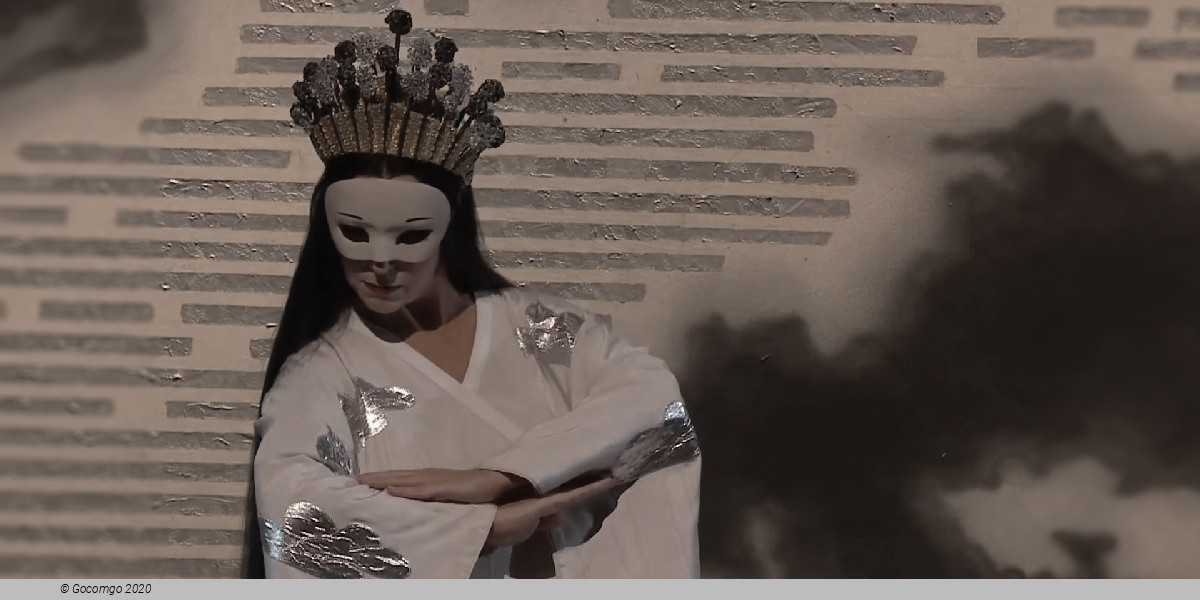
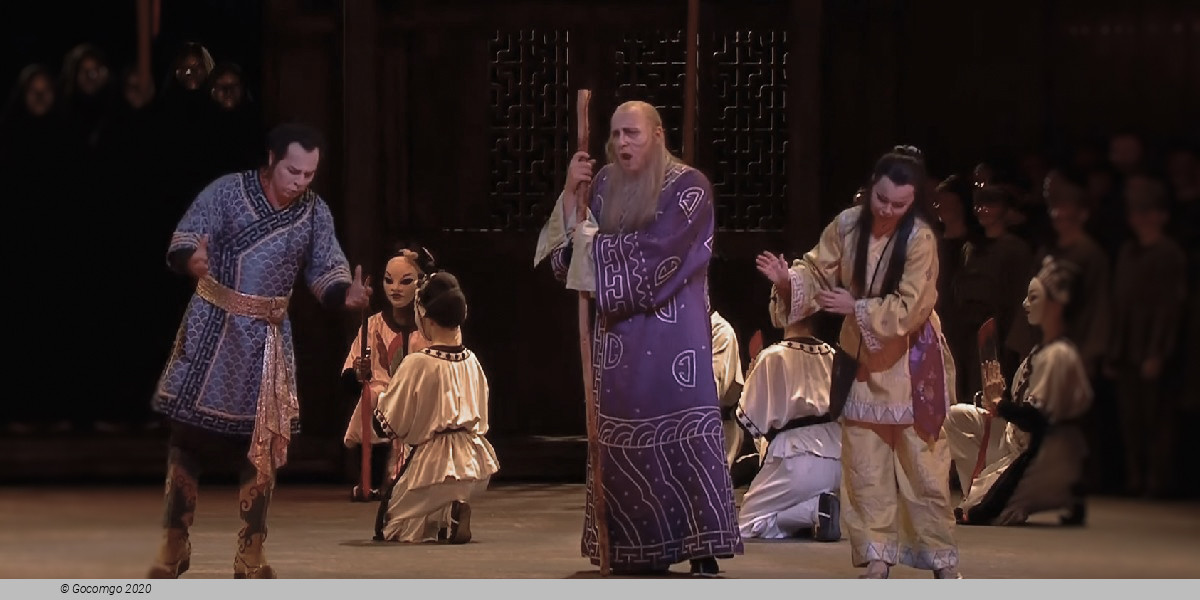
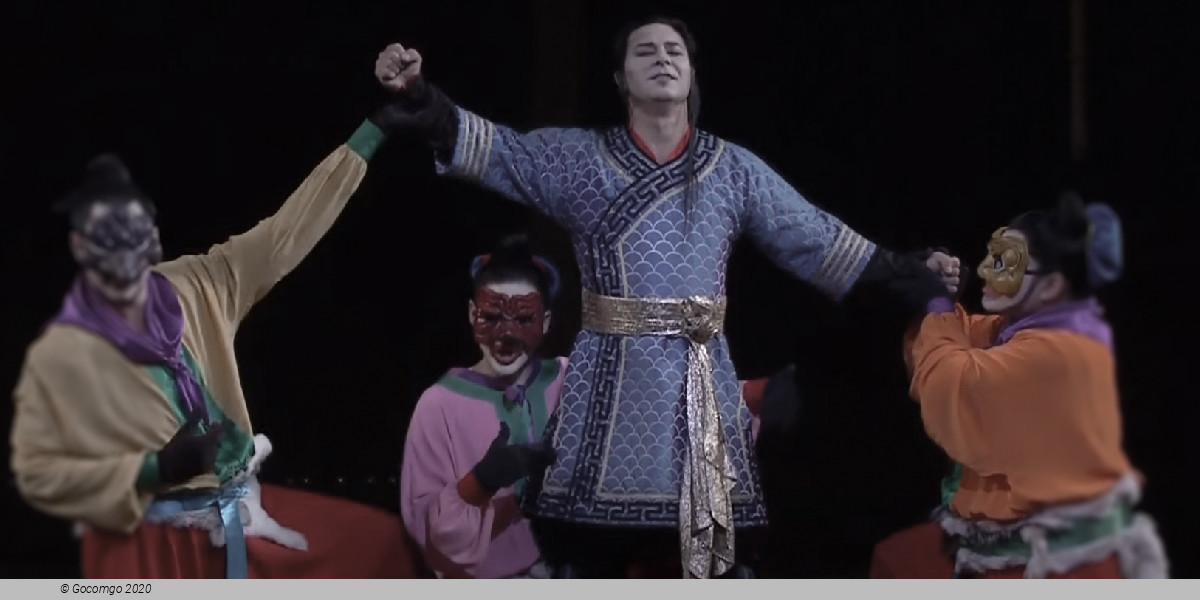
The action of the opera takes place in Peking, the time is legendary. The place is on the square in front of the Imperial Palace. Princess Turandot has announced that she would marry the one who will answer her three riddles, but the one who tries without succeeding, will have to give up his life. Many young men have already become victim of her cruelty. The crowd is expecting the next execution of a young Persian prince and is begging the princess to spare his life. On the square is also the unknown prince Calàf. The guards appear, they disperse the crowd. One old man falls on the ground and a young girl is asking for help. Calàf comes to the aid and discovers, that it was his father, the dethroned Tartarian king Timur, accompanied by the faithful girl slave Liù, who falls in love with Calàf. At that moment appears the dazzling Turandot and when Calàf sees her, he is overcome by strong love and he has already taken his decision – he will win Turandot or pay with his life. In spite of the supplications of his father, of Liù and of the three ministers Ping, Pang and Pong, who are quite interesting and important characters for the action, Calàf rushes to the gong and announces his decision with three strikes.

Everybody spends an anxious night, filled with tormenting questions – what will bring the new day, wedding or death. Will at last come somebody who would answer Turandot’s riddles. The decisive moment comes, everybody is again on the square and they again plead Calàf to give up. Turandot appears, she tells a tragic story, which happened to her in her childhood and which was the reason for her hatred for all men, and after that she begins boldly with her questions.
The first riddle is – What is this bright vision, which is born each night and locks men and dies each dawn, in order to arise again in the night?

This is hope, after short reflection replies Calàf.

A quiet wave of hope spreads among the crowd. The court of seniors acknowledges the answer. Confused, Turandot asks her second question – What burns like a flame, but is not a flame: when man deceases, it gets cold, and when one wins – it glitters like the sun?

Calàf thinks for a moment – This is blood!

Turandot, seized with rage, asks her third, last riddle –

What is this, which seems like ice, but freezes by fire, if you are free, it keeps you in slavery, and if you become its slave, you turn into a king?  

Calàf is confused, Turandot triumphs and already sees herself as winner. You will give up your life too, foreigner! But Calàf replies –

This is you, Turandot!

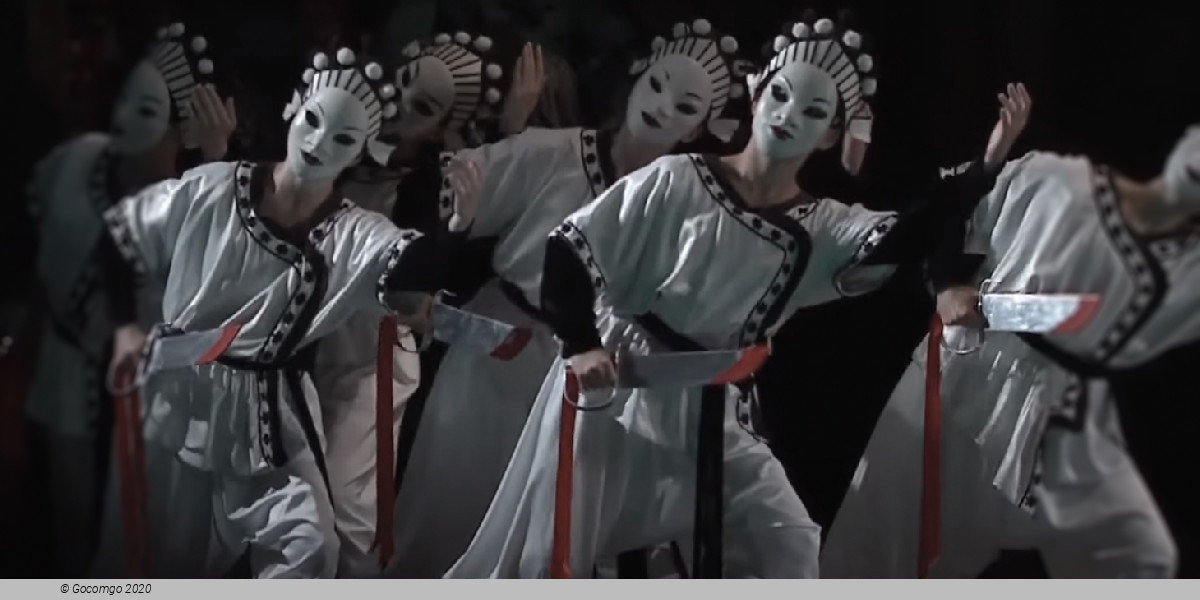
The wise men acknowledge the answer, Turandot is shocked by the unexpected victory of the unknown prince. Having lost her haughtiness, she begs her father not to give her to him for wife, but the emperor refuses. In that moment Calàf decides to ask Turandot his own riddle – if Turandot learns until dawn his name, she can take his head. Night has come, everyone supplicates Calàf to leave the capital. The guards bring in the palace Calàf’s father and Liù, in order to learn something from them. In this moment Liù grasps the knife from the butcher’s belt and stabs herself in the heart, in order to save her beloved one. The butchers carry away the next dead body of Turandot. In the east appear the first sunbeams, Calàf holds out his hand to Turandot, which she rejects. Then he takes her into his arms and the miracle has happened, his kiss melts the ice in Turandot. He tells her his name and they both set out for the emperor’s palace.
Love is the light of the world, with these words ends the opera.

“I would like to write an opera about love, life and death, said Puccini. I would like to give vent to all my pain, inspiration and philosophy, I am seeking the words and melodies, which will ascend in heaven”.

“Turandot” is a drama of the strong passions, shown on a picturesque colourful background, where bizarrely are combining the east splendour and exuberance with the bloody cruelty, the reality with the symbols. The miniature lyric vocal expressions, painting the experiences of the main characters alternate with imposing mass scenes with powerfully sounding choruses /something not so usual for him/, brightly tinted orchestral episodes. The musical language of the opera is complex. The composer relied on the modern achievements of harmony, on polytonality in some moments, on the breaking up of the rhythm. In a great extent on the exceptional voice qualities of Turandot and Calàf. Which unequivocally inspired the great desire of Puccini to create the perfect opera.  

During the days of the long-expected and sometimes painful meetings with the librettists for the next scene, he ceaselessly corrected something from Act one, some accord or one single note. Everything had to be perfect. He studied most carefully the Chinese folklore, the Chinese instruments, which he used subsequently in the orchestra.

At that time he listened much to the radio. Everywhere, on all radio stations sounded his operas. In a certain moment he stopped listening to them, overtaken only by the music of Turandot, as if obsessed by the despotic daughter of the Chinese emperor.

Even at night in his sleep, he was writing and saw her on the balcony with her snow white face, covered with diamonds, looking at him with a smile, with which she was as if giving him a sign, that he must go, to strike three times the glittering gong. So wishes Turandot! So wishes Calàf, heard he in his sleep.

He saw them, talked with them, lived with them. Nobody else was able to be so inspired as Puccini, to live in continuous thrill, with enthusiasm, with such tempo, with so much fantasy.  

Sometimes he shifted his feelings on Liù, in some moments he was even in love with her. The little Liù, said he, who sacrificed her life for the happiness of her beloved. Liù, who together with Manon, Mimi, Butterfly, Angelica... didn’t do acts of heroism, were not dressed in luxury, didn’t carry expensive jewellery, but they did everything, they even sacrificed their proud in the name of their love.

This was the indomitable credo of Puccini, his philosophy, which he firmly defended – the bad must be requited, the good – to have all our respects!

On 29 November 1924 La Scala di Milano met the dawn with an enormous black crape on the facade. The great Giacomo is dead, the news about Puccini’s dead spread quickly. It is incredible: the enthusiastic, fallen in love with life Giacomo, in whom passion was burning isn’t there anymore, were whispering the passers-by. Whole Milan went into mourning, whole Italy was grieving, the world was lamenting for him. At the opera houses the spectacles were put off, the singers stopped singing, the conductors stopped conducting. “That was the kindest person” said his thousands friends. “He was our composer”. During his whole life he protected the poor ones, the pursued ones.

In the beginning of September of the same year, Puccini met Arturo Toscanini. At this meeting he played the opera scores, even helping himself with his ill voice. Anticipating his end and the short time left for completing Turandot, he showed him 36 pages with notes about the music of the missing final and asked Toscanini to give them to Franco Alfano, his student, who completed the work.

And it happened so.

On 26 April 1926 took place the premiere of Turandot at La Scala di Milano. What a premiere! The house was filled with sad faces, the men with black neckties, the women in dark dresses, no jewellery, no flowers. Toscanini went to the conductor’s stand, the opera began. After the end of Act I, instead of applauses cries could be heard. By the end of Act III, after Liù’s death aria, Toscanini sank his arms, the orchestra stopped, he turned to the audience and said: “At this place death took away the pen from the hands of the maestro”.

Everybody was roused, there was dead silence. Toscanini left the stage.

The world has hardly ever seen such a spectacle.

History
Premiere of this production: 25 April 1926, Teatro alla Scala, Milan

Turandot is an opera in three acts by Giacomo Puccini, completed by Franco Alfano, and set to a libretto in Italian by Giuseppe Adami and Renato Simoni.

Synopsis

Place: Peking, China
Time: Legendary times

Act 1

In front of the imperial palace

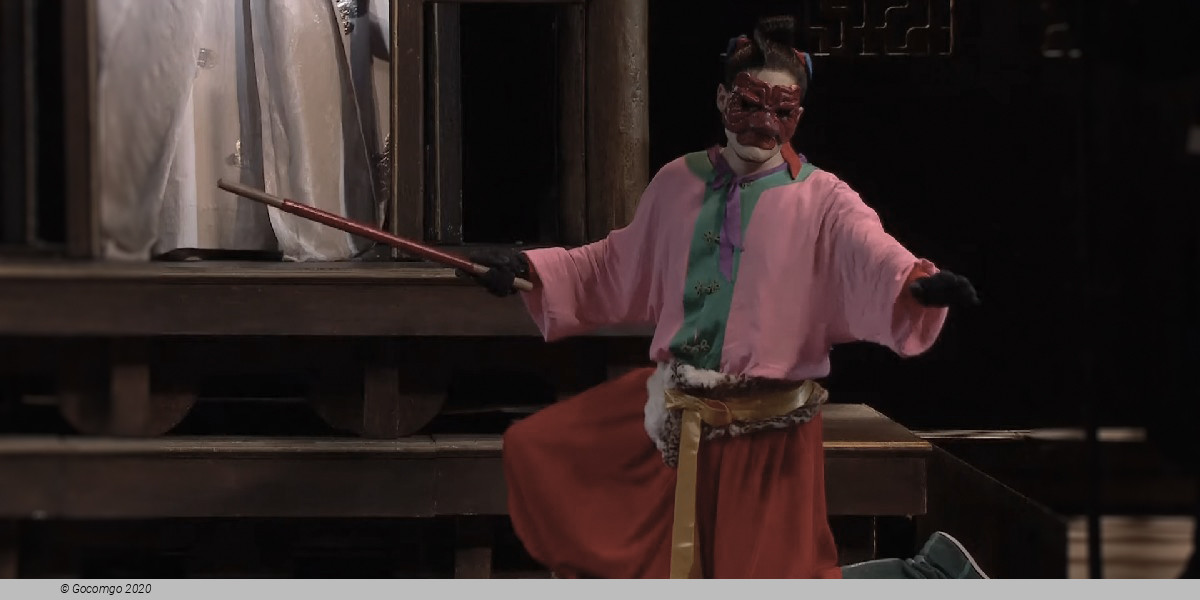
In China, beautiful Princess Turandot will only marry a suitor who can answer three secret riddles. A Mandarin announces the law of the land (Aria – Popolo di Pechino! – "People of Peking!"). The Prince of Persia has failed to answer the three riddles, and he is to be beheaded at the next rising moon. As the crowd surges towards the gates of the palace, the imperial guards brutally repulse them, causing a blind old man to be knocked to the ground. The old man's slave-girl, Liù, cries out for help. A young man hears her cry and recognizes that the old man is his long-lost father, Timur, the deposed king of Tartary. The young Prince of Tartary is overjoyed at seeing Timur alive, but still urges Timur to not speak his name because he is afraid that the Chinese rulers, who have conquered Tartary, may kill or harm them. Timur then tells his son that, of all his servants, only Liù has remained faithful to him. When the Prince asks her why, she tells him that once, long ago in the palace, the Prince had smiled at her (Trio with chorus – The crowd, Liù, Prince of Tartary, Timur: Indietro, cani! – "Back, dogs!").

The moon rises, and the crowd's cries for blood dissolve into silence. The doomed Prince of Persia, who is on his way to be executed, is led before the crowd. The young Prince is so handsome and kind that the crowd and the Prince of Tartary decide that they want Turandot to act compassionately, and they beg Turandot to appear and spare his life (Aria – The crowd, Prince of Tartary: O giovinetto! – "O youth!"). She then appears, and with a single imperious gesture, orders the execution to continue. The Prince of Tartary, who has never seen Turandot before, falls immediately in love with her, and joyfully cries out Turandot's name three times, foreshadowing the riddles to come. Then the Prince of Persia cries out Turandot’s name one final time, mirroring the Prince of Tartary. The crowd, horrified, screams out one final time and the Prince of Persia is beheaded.

The Prince of Tartary is dazzled by Turandot's beauty. He is about to rush towards the gong and to strike it three times – the symbolic gesture of whoever wishes to attempt to solve the riddles so that he can marry Turandot – when the ministers Ping, Pang, and Pong appear. They urge him cynically to not lose his head for Turandot and to instead go back to his own country (Fermo, che fai?). Timur urges his son to desist, and Liù, who is secretly in love with the Prince, pleads with him not to attempt to solve the riddles (Signore, ascolta! – "Lord, hear!"). Liù's words touch the Prince's heart. He begs Liù to make Timur's exile more bearable by not abandoning Timur if the Prince fails to answer the riddles (Non piangere, Liù – "Do not cry, Liù"). The three ministers, Timur, and Liù then try one last time to stop the Prince (Ah! Per l'ultima volta! – "Ah! For the last time!") from attempting to answer the riddles, but he refuses to heed their advice.

He calls Turandot's name three times, and each time Liù, Timur, and the ministers reply, "Death!" and the crowd declares, "We're already digging your grave!" Rushing to the gong that hangs in front of the palace, the Prince strikes it three times, declaring himself to be a suitor. From the palace balcony, Turandot accepts his challenge, as Ping, Pang, and Pong laugh at the Prince's foolishness.

Act 2

Scene 1: A pavilion in the imperial palace. Before sunrise

Ping, Pang, and Pong lament their place as ministers, poring over palace documents and presiding over endless rituals. They prepare themselves for either a wedding or a funeral (Trio – Ping, Pang, Pong: Ola, Pang!). Ping suddenly longs for his country house in Honan, with its small lake surrounded by bamboo. Pong remembers his grove of forests near Tsiang, and Pang recalls his gardens near Kiu. The three share their fond memories of their lives away from the palace (Trio – Ping, Pang, Pong: Ho una casa nell'Honan – "I have a house in Honan"). They turn their thoughts back to how they have been accompanying young princes to their deaths. As the palace trumpet sounds, the ministers ready themselves for another spectacle as they await the entrance of their Emperor.

Scene 2: The courtyard of the palace. Sunrise

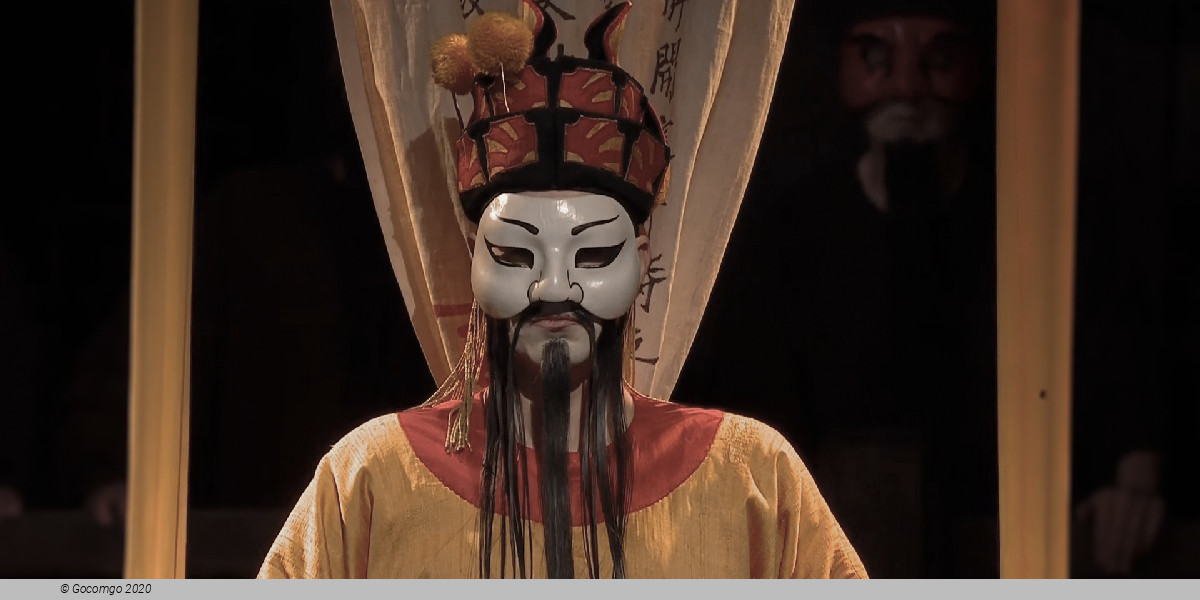
The Emperor Altoum, father of Turandot, sits on his grand throne in his palace. Weary of having to judge his isolated daughter's sport, he urges the Prince to withdraw his challenge, but the Prince refuses (Aria – Altoum, the Prince: Un giuramento atroce – "An atrocious oath"). Turandot enters and explains (In questa reggia – "In this palace") that her ancestress of millennia past, Princess Lo-u-Ling, reigned over her kingdom "in silence and joy, resisting the harsh domination of men" until she was raped and murdered by an invading foreign prince. Turandot claims that Lo-u-Ling now lives in her, and out of revenge, Turandot has sworn to never let any man wed her. She warns the Prince to withdraw but again he refuses. The Princess presents her first riddle: Straniero, ascolta! – "What is born each night and dies each dawn?" The Prince correctly replies, Speranza – "Hope." The Princess, unnerved, presents her second riddle (Guizza al pari di fiamma – "What flickers red and warm like a flame, but is not fire?") The Prince thinks for a moment before replying, Sangue – "Blood". Turandot is shaken. The crowd cheers the Prince, provoking Turandot's anger. She presents her third riddle (Gelo che ti da foco – "What is ice which gives you fire and which your fire freezes still more?"). He proclaims, "It is Turandot! Turandot!"

The crowd cheers for the triumphant Prince. Turandot throws herself at her father's feet and pleads with him not to leave her to the Prince's mercy. The Emperor insists that an oath is sacred and that it is Turandot's duty to wed the Prince (Duet – Turandot, Altoum, the Prince: Figlio del cielo). She cries out in despair, "Will you take me by force? (Mi porterai con la forza?) The Prince stops her, saying that he has a riddle for her: Tre enigmi m'hai proposto – "You do not know my name. Tell me my name before sunrise, and at dawn, I will die." Turandot accepts. The Emperor then declares that he hopes that he will be able to call the Prince his son when the sun next rises.

Act 3

Scene 1: The palace gardens. Night

In the distance, heralds call out Turandot's command: Cosi comanda Turandot – "This night, none shall sleep in Peking! The penalty for all will be death if the Prince's name is not discovered by morning". The Prince waits for dawn and anticipates his victory: Nessun dorma – "Let no one sleep!"

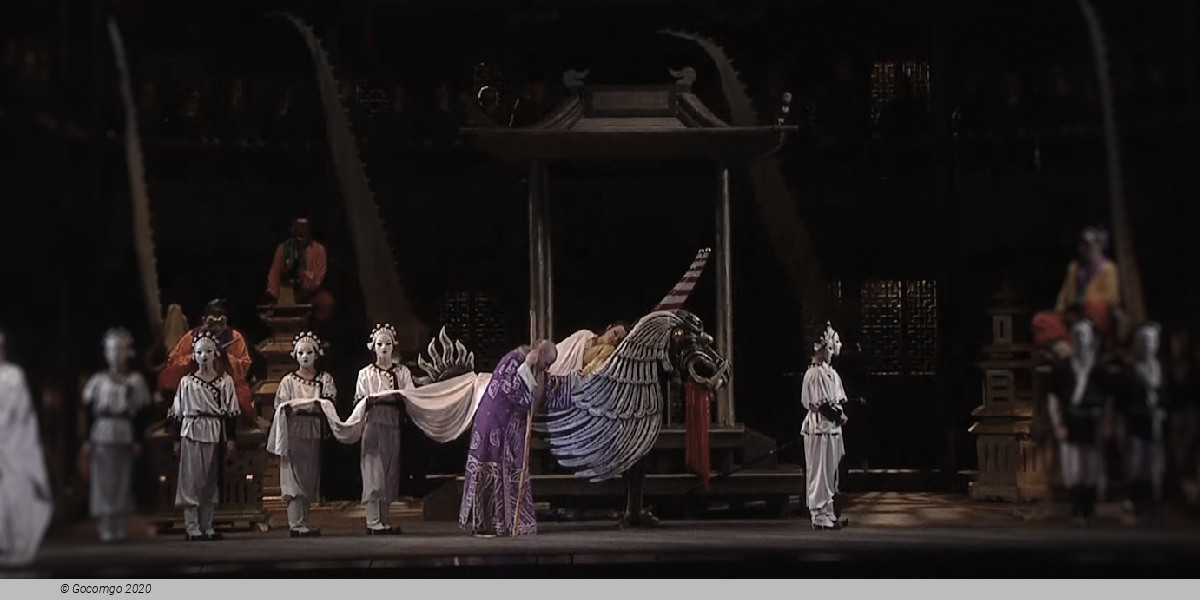
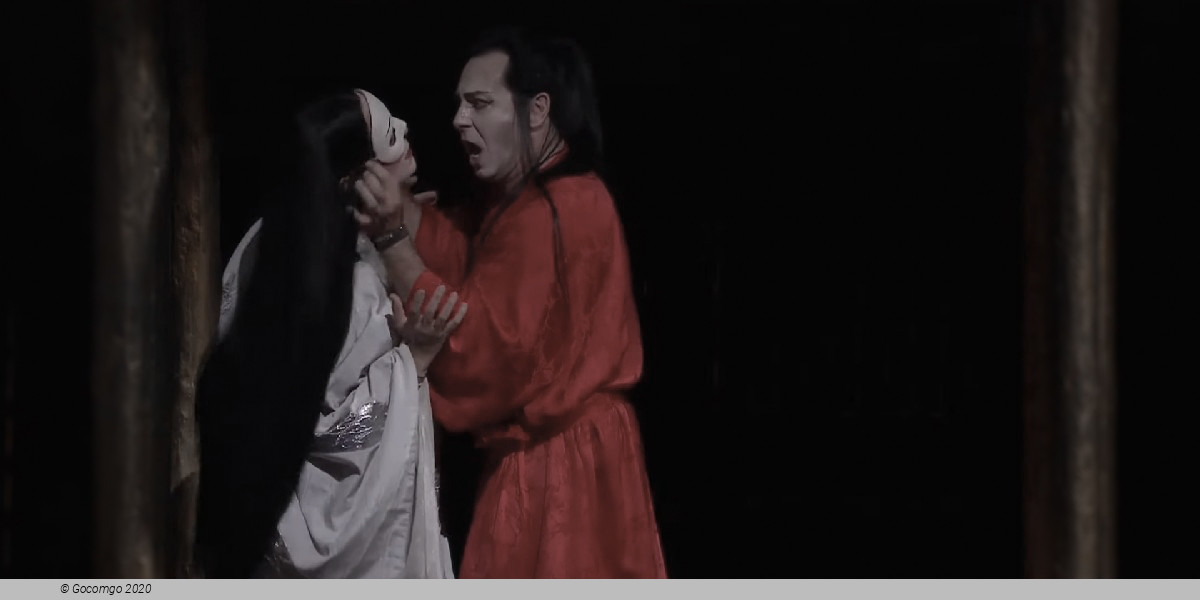
Ping, Pong, and Pang appear and offer the Prince women and riches if he will only give up Turandot (Tu che guardi le stelle), but he refuses. A group of soldiers then drag in Timur and Liù. They have been seen speaking to the Prince, so they must know his name. Turandot enters and orders Timur and Liù to speak. The Prince feigns ignorance, saying they know nothing. But when the guards begin to treat Timur harshly, Liù declares that she alone knows the Prince's name, but she will not reveal it. Ping demands the Prince's name, and when Liù refuses to say it, she is tortured. Turandot is clearly taken aback by Liù's resolve and asks Liù who or what gave her such a strong resolve. Liù answers, "Princess, love!" (Principessa, amore!). Turandot demands that Ping tear the Prince's name from Liù, and Ping orders Liù to be tortured even more. Liù counters Turandot (Tu che di gel sei cinta – "You who are encircled by ice"), saying that Turandot too will learn the exquisite joy of being guided by caring and compassionate love. Having spoken, Liù seizes a dagger from a soldier's belt and stabs herself. As she staggers towards the Prince and falls dead, the crowd screams for her to speak the Prince's name. Since Timur is blind, he must be told about Liù's death, and he cries out in anguish. When Timur warns that the gods will be offended by Liù's death, the crowd becomes subdued, very afraid and ashamed. The grieving Timur and the crowd follow Liù's body as it is carried away. Everybody departs, leaving the Prince and Turandot alone. He reproaches Turandot for her cruelty (Duet – The Prince, Turandot: Principessa di morte – "Princess of death"), then takes her in his arms and kisses her in spite of her resistance.

The Prince tries to persuade Turandot to love him. At first, she feels disgusted, but after he kisses her, she feels herself becoming more ardently desiring to be held and compassionately loved by him. She admits that ever since she met the Prince, she realized she both hated and loved him. She asks him to ask for nothing more and to leave, taking his mystery with him. The Prince, however, then reveals his name: "Calaf, son of Timur – Calaf, figlio di Timur", thereby placing his life in Turandot's hands. She can now destroy him if she wants (Duet – Turandot, Calaf: Del primo pianto).

Scene 2: The courtyard of the palace. Dawn

Turandot and Calaf approach the Emperor's throne. She declares that she knows the Prince's name: Diecimila anni al nostro Imperatore! – "It is ... love!" The crowd sings and acclaims the two lovers (O sole! Vita! Eternità).


Venue Info

National Opera and Ballet of Bulgaria - Sofia
Location   bul. Kniaz Aleksandar Dondukov 30

The National Opera and Ballet is a national cultural institution in Bulgaria that covers opera and ballet. It is based in an imposing building in Sofia, the capital of Bulgaria. The first opera company in Bulgaria was founded in 1890 as part of the Capital Opera and Drama Company. The two sections split in 1891 to form the Salza i Smyah theatrical company and the Capital Bulgarian Opera. It was, however, disbanded the next year due to lack of government funding and financial difficulties.

The Bulgarian Opera Society was established in 1908 and staged its first test performance. The first full opera was performed in 1909 — Pagliacci by Leoncavallo. The first Bulgarian opera works were also presented in the period, including Siromahkinya by Emanuil Manolov, Kamen i Tsena by Ivan Ivanov and Václav Kaucký, Borislav by Georgi Atanasov and Tahir Begovitsa by Dimitar Hadzhigeorgiev.

As the company evolved under the ensemble system and style, the permanent troupe of soloists, choir, orchestra, ballet, technical and production teams produced up to 10 opera and ballet premieres a year, in addition to concert programs. Gradually, the basic repertory of world opera classics was established at the same time as the theatre began to attract Bulgarian composers who created new national works. 20th Century performers such as Nicolai Ghiaurov, Nicola Ghiuselev, and Ghena Dimitrova began their careers within the structure of the National Opera, as did later singers such as Irena Petkova and Kiril Manolov.

The institution became a national one in 1922 and changed its name to National Opera. A ballet company was established and gave its first performance in 1928. The opera ceased its activity for a while after the 1944 bombing of Sofia, but was restored shortly afterward with a significant increase of government funding.

The National Opera and Ballet's building was designed in 1921 and built for the most part between 1947 and its opening in 1953.

In 2000, the company co-organized the Boris Christoff Twelfth International Competition for Young Opera Singers with the idea of attracting a younger audience and supporting young and upcoming singers.

The repertoire historically tended to favour the Italian and French repertoire with little Wagnerian tradition, although since 2010, the artistic director of the opera company Plamen Kartaloff began a Ring Cycle with entirely Bulgarian casts. Following the entry of Parsifal and Tristan und Isolde into the repertoire, the complete cycle was performed both in Moscow and Sofia during 2018.

Important Info
Type: Opera
City: Sofia, Bulgaria
Starts at: 19:00
Acts: 3
Intervals: 2
Duration: 2h 40min
Sung in: Italian
Titles in: Bulgarian,English
Top of page