ACT I
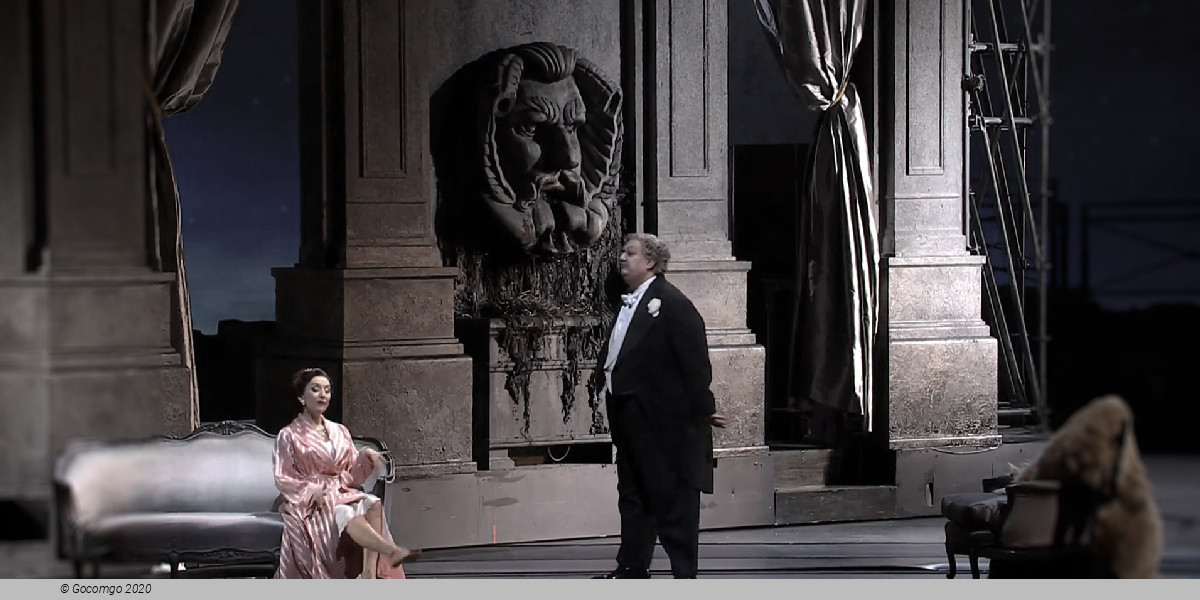
Don Pasquale expects with trepidation Dr Malatesta. The old man wanted to marry his nephew a descent girl, from a well-to-do family, but Ernesto is in love with the widow Norina. He has refused the arranged by his uncle marriage. Pasquale doesn‘t approve this choice and decides that it would be better for him himself to get married. The physician has taken upon himself the task to find him an appropriate wife. What Pasquale dosen’t know is that Malatesta has concocted a plan, with which to help his friend Ernesto. He declares with confidence that he had discovered a wonderful woman for wife of the old man. She is young, very beautiful, humble, she went out from a monastery, where she had led a secluded life, and the most important, she is sister of Malatesta himself – Sofronia. Don Pasquale is more than content. After seeing off the doctor, he begins dreaming of the future and the heirs, who he would leave. Ernesto enters and his uncle starts a conversation, in which he informs him that because he doesn’t agree to part from Norina and to enter into the arranged marriage, Pasquale himself would pass under the marriage ceremony. He has the intention to leave Ernesto without inheritance and even urges him to leave his home. When the young man understands that at the far end of this stands his closest friend, Ernesto is feeling betrayed and broken. In her home, Norina expects news from her beloved. When she receives the letter, in which he informs her about his uncle’s decision, she is strongly worried. At her door appears Malatesta, who reveals his plan to her. She would present herself for Sofronia and with her wild temper she would make Don Pasquale give up the matrimonial life. Norina agrees.
ACT II
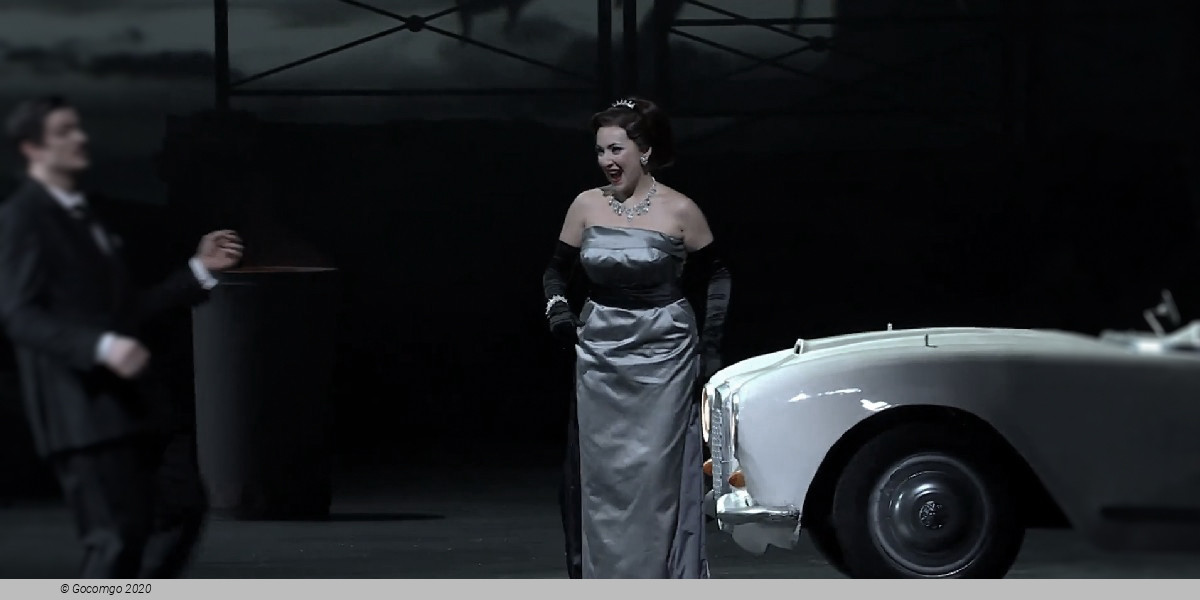
Ernesto is alone. He mourns over his fate and is about to depart, leaving his home and love. He sets off, just before Pasquale enters the room. The old man is dressed with his Sunday clothes and expects with keen anticipation Malatesta and his future wife. He gives instructions to his servants to let nobody else in the house and tries to assume a younger and fresher air. Malatesta arrives together with Norina, who he presents as his sister. The young woman presents herself as an exceptionally humble and innocent girl, who is not moved by social life and prefers the quietness and cosiness of home. Pasquale is struck by her beauty and immediately begs his friend to ask her whether she would marry him. She, of course, agrees at once, and Malatesta has prepared himself and invites a “notary”, with whom he has in advance arranged the pretended marriage. The Notary writes a premarital contract, the conditions of which are dictated by Don Pasquale, who grants Sofronia the rights to dispose of his entire property. The man puts his signature and just before his future wife to sign too in the room enters Ernesto. Utter confusion is caused. Malatesta is trying to calm down his friend, assuring him that everything which they were doing, was for his good. Right after the signing of the contract, Sofronia shows her “real” face. She rejects the caresses of her husband and declares that she doesn’t wish him to accompany her outside, because he was old. The woman gathers the servants and increases their salaries, she gives them orders, which would cost to Don Pasquale an entire fortune and turns upside down his home for minutes, because she didn’t like the old-fashioned furniture and decorations. Pasquale is lost in astonishment and after the wild scandal he is feeling faint.
ACT III
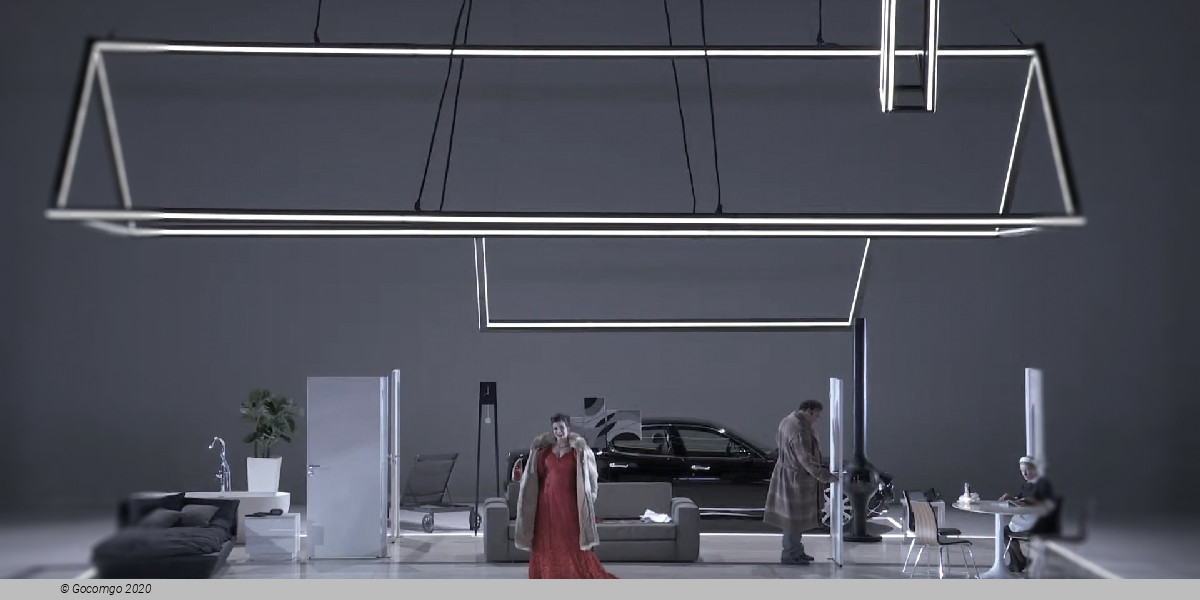
Pasquale is in his home, surrounded by expensive dresses and ornaments. His servants are running around, each one of them with the tsk, given to him or her by the mistress. Don Pasquale decides to show courage and to oppose to his tyrannical wife, because from the bills and the invoices, which he is looking at, becomes visible that she is on the way to ruin him. Sofronia enters the room by him. She is wearing an expensive dress and declares that she intended to go to the theatre an at that without the company and the consent of her husband. Pasquale thinks that this is a convenient occasion to tell her not to come back at all, but his wife responds mockingly. Between both of them breaks out a scandal in the culmination of which Norina slaps him in the face. When she goes out, she on purpose lets fall on the floor a note with an invitation from another man to meet themselves during the night in the garden. Shocked, Pasquale orders to call Malatesta. The servants are also not content with the lot of work, which the new mistress has ordered to them. When Malatesta comes, Ernesto receives him. The physician reminds the young man of his plan and sends him in the garden, where to wait for Norina. Don Pasquale enters at the end of his tether. He wants to expose in public the unfaithful Sofronia, but Malatesta succeeds to calm him down and to offer him another plan. Both would hide themselves at the arranged place of the meeting and would waylay the lovers. In the garden. Don Pasquale and Malatesta find Sofronia with her lover, but Ernesto covers himself with the mantle and runs away into the house. Pasquale stands in front of his wife with the intention to chase her away. Sofronia is unflinching, but then interferes Malatesta, who tells the betrayed husband that if he agrees to marry Ernesto and Norina, Sofronia wouldn’t be glad at all and this way he would get rid of her. Don Pasquale is ready to “give thousands of Norinas” to his nephew, if only this would set him free from Sofronia’s chains.
Pasquale calls Ernesto and let him bring his beloved. In this moment all of them reveal the truth to the old man. The plan has succeeded, Don Pasquale forgives them and gives his blessing to both lovers.
Time: Early 19th century
Place: Rome
Overture
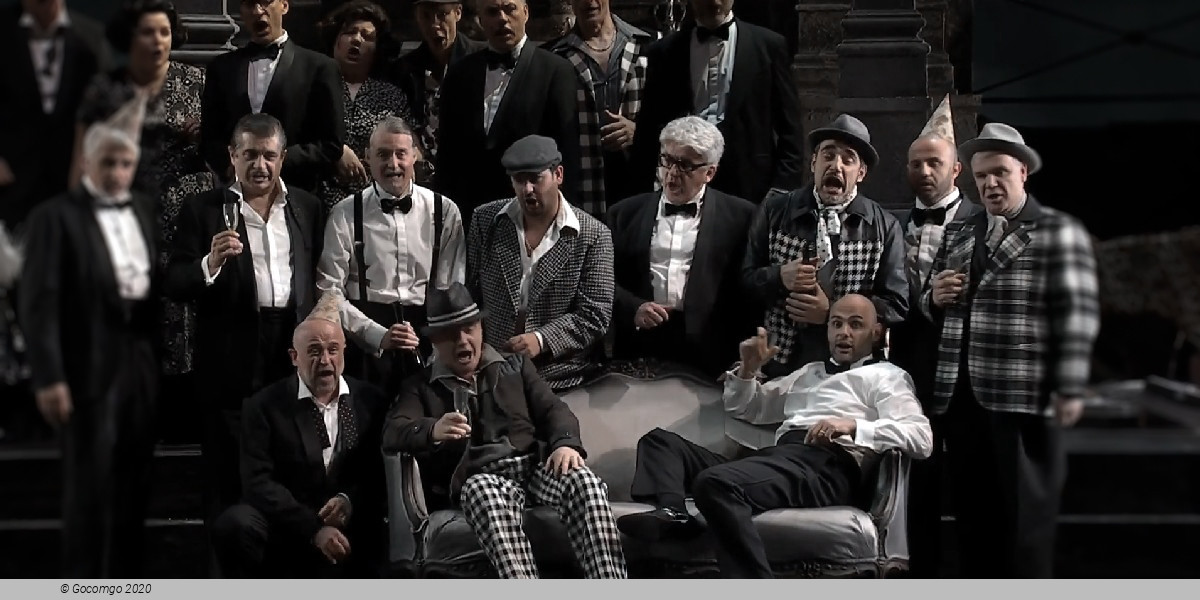
The music is suggestive of a comic opera; bright and lively, it starts with plenty of percussion and brass instruments. After a while, the ambience changes to suggesting a party, and the overture ends with a finale.
Act 1
Scenes 1–3: A room in the home of Don Pasquale, at 9 o'clock
Ernesto has refused the woman that his uncle Don Pasquale had found for him, and as a result is to be disinherited. Ernesto declares his devotion to the young – but poor – widow Norina. In view of Ernesto's determination, Don Pasquale decides to marry in old age to produce his own heir, and anxiously awaits the arrival of his physician, Dr. Malatesta, who is determined to teach Don Pasquale how foolish he is being, but has been pretending to search for a suitable bride. Malatesta, confronted with Pasquale's impatience, mutters that he is a buffoon, but proceeds to describe the attributes of the bride-to-be (Bella siccome un angelo – "Beautiful like an angel"). Honest, modest and sweet – when pressed, Malatesta reveals she is in fact his sister. Overcome with joy, Pasquale demands to meet her at once, and sends Malatesta to fetch her, before singing of the love that has gripped him (Ah, un foco insolito – "A sudden fire").
Ernesto comes back and pleads with the Don to consult with his friend Malatesta – when he hears that Malatesta supposedly supports Pasquale, he is amazed at this apparent betrayal (Mi fa il destino mendico – "Fate has made a beggar of me"). Ernesto determines to elope and writes to tell Norina that all is lost.
Scenes 4–5: An apartment in the home of Norina
Norina sits alone, reading a book. She recites a passage, before laughing at the situation described and reflecting on her own temperament (So anch'io la virtù magica – "I too know your magical virtues"). She is in cahoots with Dr. Malatesta and impatiently waits for him to come and explain his plan at which he had only hinted. A servant delivers the letter from Ernesto, which she quickly reads and is instantly dismayed.
Malatesta arrives to explain the stratagem, but Norina cuts him off and hands him the letter, which he reads aloud: Ernesto has announced his intention to leave Rome, and Europe altogether. Malatesta reassures her, saying that he has adapted his plan: Norina shall play the part of Malatesta's sister. Having arranged for his cousin to act as a notary, they will easily deceive the Don. Norina consents to play her part in the deception, and they discuss her strategies in a lively duet (Pronta son; purch'io non manchi – "I am ready; if I do not miss").
Act 2
A salon in the home of Don Pasquale
Ernesto is alone: lamenting his fate, he considers his decision to leave Rome (Cercherò lontana terra – "I shall seek a distant land"). He leaves the room just as Pasquale enters, dressed in his outdated finery, along with his servants, to whom he gives instructions to admit Malatesta on his arrival. He parades around in his grand costume, hoping it will conceal his advancing years.
Malatesta arrives with Norina in tow, and introduces her to Pasquale as his sister, Sofronia, fresh out of the convent. Pasquale is smitten, and Norina plays the part of a dutiful, modest and submissive lady, to Pasquale's satisfaction. Norina consents to the proposed marriage, which delights Pasquale. He wants to send for the notary to conduct the ceremony straight away – conveniently, Malatesta has brought one along, who waits in the antechamber.
Malatesta fetches the supposed notary, as servants arrange a table. Taking his seat, the "notary" writes out a marriage contract as dictated by Malatesta and Pasquale (Fra da una parta – "Between, on one hand"), where the Don bequeaths all his estate to be administrated by Sofronia. The contract is quickly drawn up: Pasquale signs but, before Norina can affix her signature, Ernesto bursts in. Intending to say a final farewell, he is amazed to see Norina about to marry Pasquale. However, Malatesta persuades him not to say anything (Figliol non mi far scene – "Son, don't make a scene"), and he is forced to act as the final witness much to Don Pasquale's delight.
As soon as the contract is signed, Norina abandons her pretence of docility, and refuses Pasquale's embrace. She announces her intention to teach him manners, and to have Ernesto as a gallant to accompany her on evening strolls. Pasquale is horrified at this transformation, while Malatesta and Ernesto can barely conceal their amusement (È rimasto là impietrato – "He stands there, petrified"). Summoning the household staff, Norina recites a long list of demands – more servants (young and handsome at that), carriages and horses, furniture – and instructs them to spare no expense doubling all their wages. Pasquale is stricken at his misfortune, so Malatesta urges him to go to bed.
Act 3
Scenes 1–5: A room in the home of Don Pasquale
Pasquale sits in a room, surrounded by piles of newly purchased jewels, dresses and the like, as the servants bustle in and out of Norina's apartment (I diamanti presto presto – "The diamonds, quickly, quickly"). Dismayed by the piles of bills and invoices, the Don summons the courage to confront his tyrannical new wife. Norina emerges, dressed to go out. He attempts to reason with her, but she pays little heed (Signorina, in tanta fretta – "Madam, where are you off to in such a hurry"). He suggests that if she leaves, he may not allow her to return, an idea that she meets with patronising insincerity (Via, caro sposino – "There, there, dear little husband") but the discussion ends in her slapping him. As she exits, she drops a note which Pasquale picks up and reads. The note is addressed to Sofronia, arranging a meeting in the garden with its unnamed, admiring author. Pasquale calls for a servant to summon Malatesta, before leaving the room.
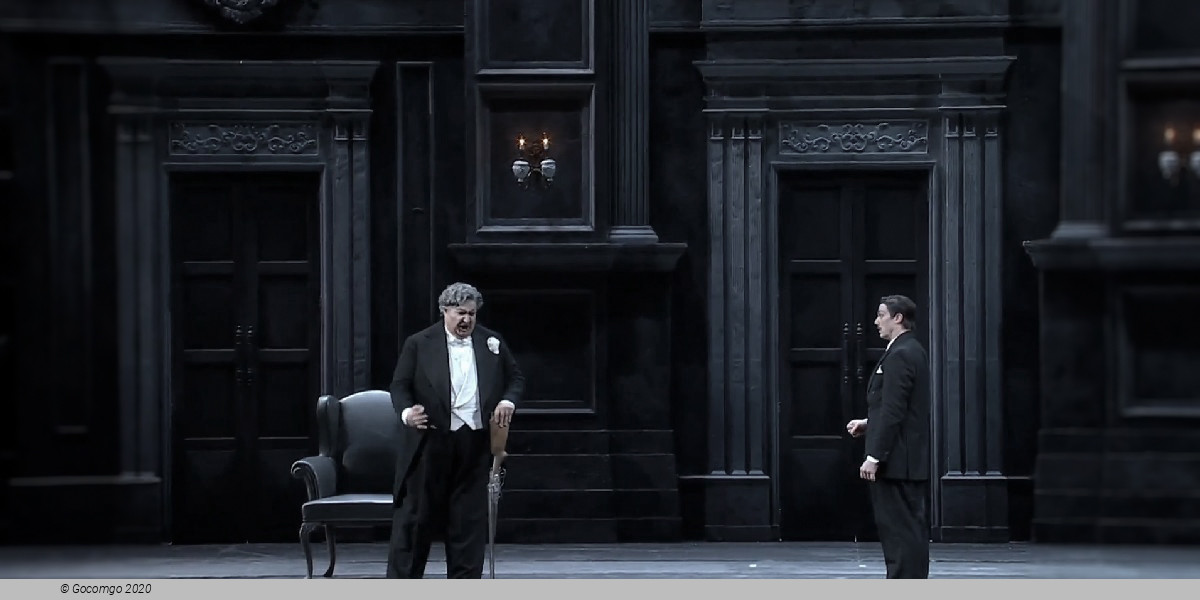
The servants return and, amongst themselves, at once complain at the amount of work they are being made to do, and reveal how much they are enjoying the farcical drama developing between Pasquale and his new wife (Che interminabile andirivieni! – "Such endless coming and going!"). At the approach of Malatesta and Ernesto, however, they exit, assured of more entertainment to come. Malatesta reminds Ernesto of the finer points of their plan, and the latter leaves. The doctor moves forward to greet Don Pasquale, who tells him of Norina's intended assignation, and his own plan to expose her unfaithfulness before a magistrate. Malatesta persuades him to moderate his plan and Pasquale, believing him an ally, consents to his conditions, while plotting his revenge on Norina (Aspetta, aspetta, cara sposina – "Wait, wait, dear little wife").
Scenes 6–7: The garden, adjoining Pasquale's house
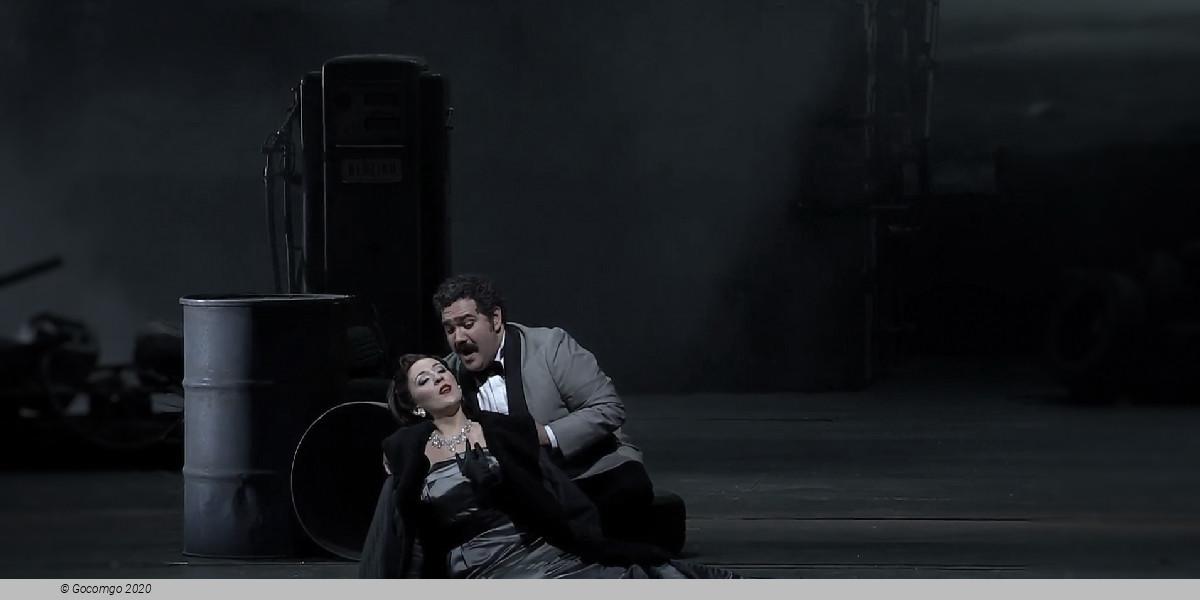
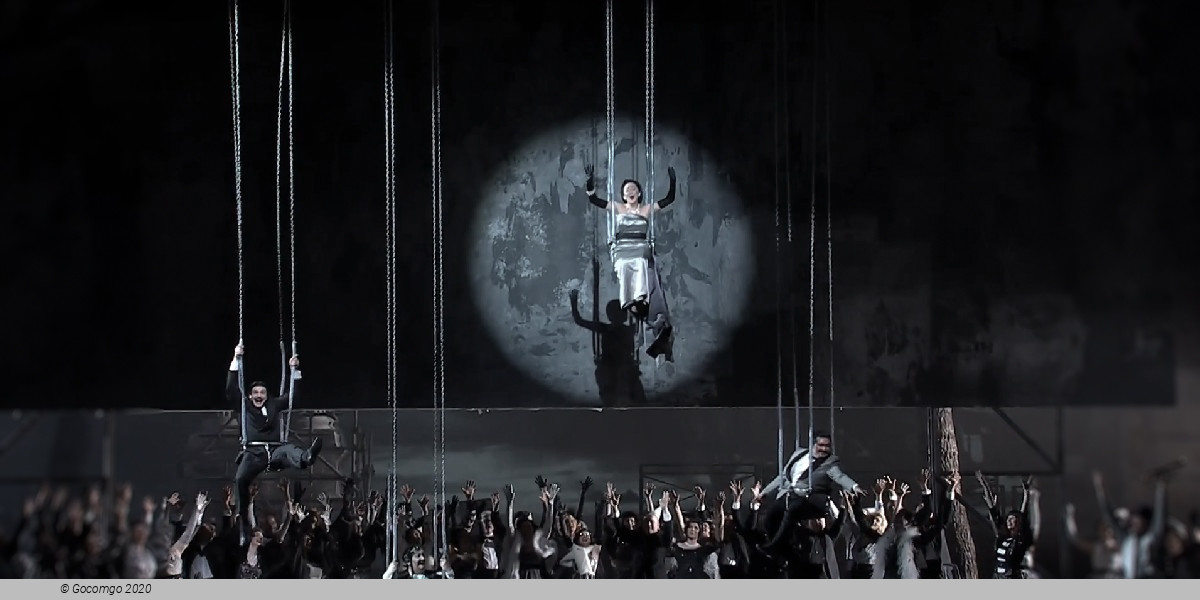
In the garden, as night draws in, Ernesto sings of his love for Norina, as he waits for her arrival (Com'è gentil – "How lovely"). At last, Norina emerges, and they express their love: (Tornami a dir che m'ami – "Tell me once more that you love me"). Don Pasquale and Malatesta have observed and, as they reveal themselves, Ernesto covers himself with a cloak and runs to the house. Pasquale tries to confront Norina – he has caught her in flagrante – but this only provokes a fight that leaves the Don spluttering. She refuses to leave at his demand, so Malatesta, as per his agreement with Pasquale, takes over. Pretending to negotiate with Norina/Sofronia, he tells Pasquale that the only way to make her leave will be to allow Ernesto to marry his beloved, whom "Sofronia" apparently despises. Pasquale consents, and calls out to the house, from which Ernesto and the servants emerge. He instructs Ernesto to send for his would-be bride, but Malatesta reveals that Norina is in fact the woman Pasquale thinks he married, while the real Sofronia remains in a convent. All are reconciled, and the moral of the story – not to marry in old age – is revealed in a playful quartet (La moral di tutto questo – "The moral of all this").




 bul. Kniaz Aleksandar Dondukov 30