
National Opera and Ballet of Bulgaria 5 June 2022 - La Cenerentola | GoComGo.com

La Cenerentola

National Opera and Ballet of Bulgaria, Main Hall, Sofia, Bulgaria
All photos (6)
Select date and time
4 PM
Request for Tickets
Important Info
Type: Opera
City: Sofia, Bulgaria
Starts at: 16:00
Acts: 2
Intervals: 1
Duration: 2h 45min
Sung in: Italian
Titles in: Bulgarian,English

E-tickets: Print at home or at the box office of the event if so specified. You will find more information in your booking confirmation email.

You can only select the category, and not the exact seats.
If you order 2 or 3 tickets: your seats will be next to each other.
If you order 4 or more tickets: your seats will be next to each other, or, if this is not possible, we will provide a combination of groups of seats (at least in pairs, for example 2+2 or 2+3).

Overview

“La Cenerentola, ossia La bontà in trionfo” (“Cinderella, or Goodness Triumphant”) is an operatic drama giocoso in two acts by Gioachino Rossini. The libretto was written by Jacopo Ferretti and it was borrowed from Charles Perrault’s fairy-tale of the same name.

The first performance of the opera was on 25 January 1817 at Teatro Valle in Rome.

Rossini was 25-years old, when he wrote “La Cenerentola”, but he had already behind him a series of opera pearls like “Il Barbiere di Siviglia”, “Tancredi”, “L’Italiana in Algeri” and others.

The opera “La Cenerentola” is considered to be one of the most exquisite scores for vocal and ensemble. Because of the usual lack of time, way, terms and tempi of composition, the whole opera was finished in three weeks. For this reason, Rossini used in it the overture from “La Gazetta”, an opera buffa, written several years before, as well as a part of an aria from “Il Barbiere di Siviglia”. Some help Rossini received by Luca Agolini, who wrote the “dry” recitatives, as well as three other excerpts – of Alidoro, Clorinda and the chorus scene “Ah, della bella incognita”. Rossini changed and added different scenes and items on several occasions of next performances like these in 1818 and 1820.

The overture of the opera “La Cenerentola” is being often performed in concert programmes and takes part in the “standard” orchestra repertoire still since its creation, together with most of his overtures.

The first performance met certain hostility, but soon it gained great popularity in Italy and other countries in Europe, among which Lisbon (1819), London (1820), New York (1826). Almost during the entire 19. Century, its popularity competed with the one of “Il Barbiere di Siviglia”, but because of its exceptional vocal requirements and the difficulties in the contralto part, as it was written in original, gradually it dropped away from the theatres’ repertoire and turned into rarity.

In the ’60s of the 20. Century, Rossini’s music enjoyed a real Renaissance. The new generation mezzo-sopranos and contraaltos returned the popularity of “La Cenerentola” and it has been again on the stage.

There are also some changes in the fairy-tale itself, mainly because of Rossini’s choice of the visual realistic solutions, and not of the magical sorceries, as it is in the original, due to the evident limitations and the lack of “special effects” at his time.

In the last decades, numerous sound recordings of the opera were realized, and in the standard list of the most often performed operas it holds the 28th position among several hundred titles from the active opera repertoire!

Ognyan Stamboliev

History
Premiere of this production: 25 January 1817, Teatro Valle, Rome

La Cenerentola, ossia La bontà in trionfo (Cinderella, or Goodness Triumphant) is an operatic dramma giocoso in two acts by Gioachino Rossini. The libretto was written by Jacopo Ferretti, based on the fairy tale Cendrillon by Charles Perrault. The opera was first performed in Rome's Teatro Valle on 25 January 1817.

Synopsis

In this variation of the fairy tale, the wicked stepmother is replaced by a stepfather, Don Magnifico. The Fairy Godmother is replaced by Alidoro, a philosopher and tutor to the Prince. Cinderella is identified not by a glass slipper but by her bracelet. The supernatural elements that traditionally characterize the Cinderella story were removed from the libretto, simply for ease of staging.

Time: Late 18th century – early 19th century
Place: Salerno (Italy)

Act 1

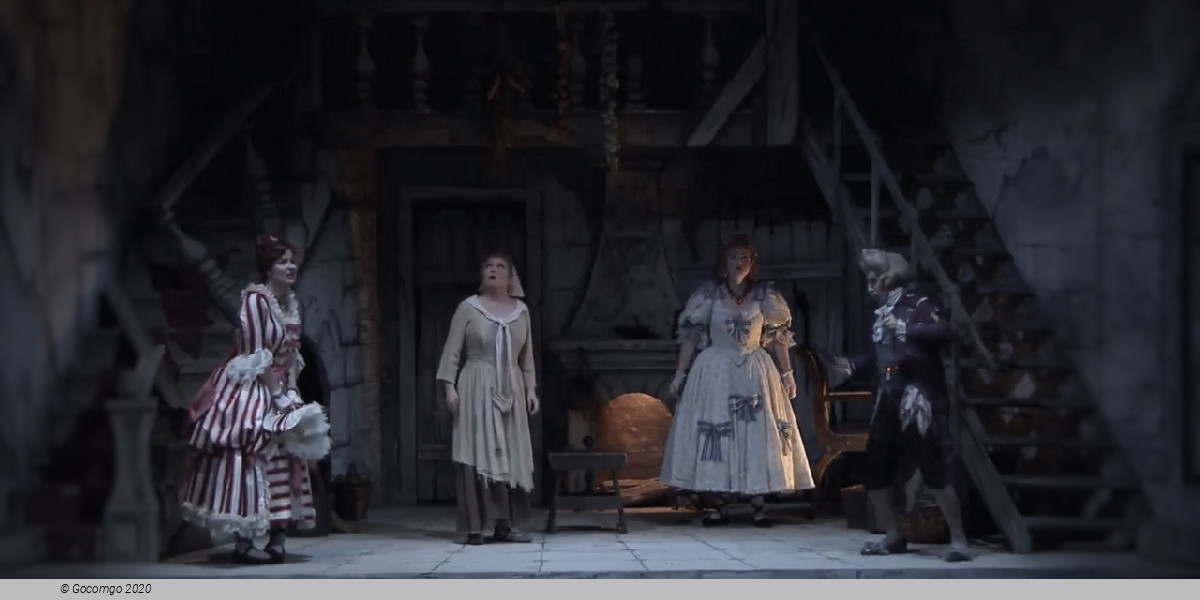
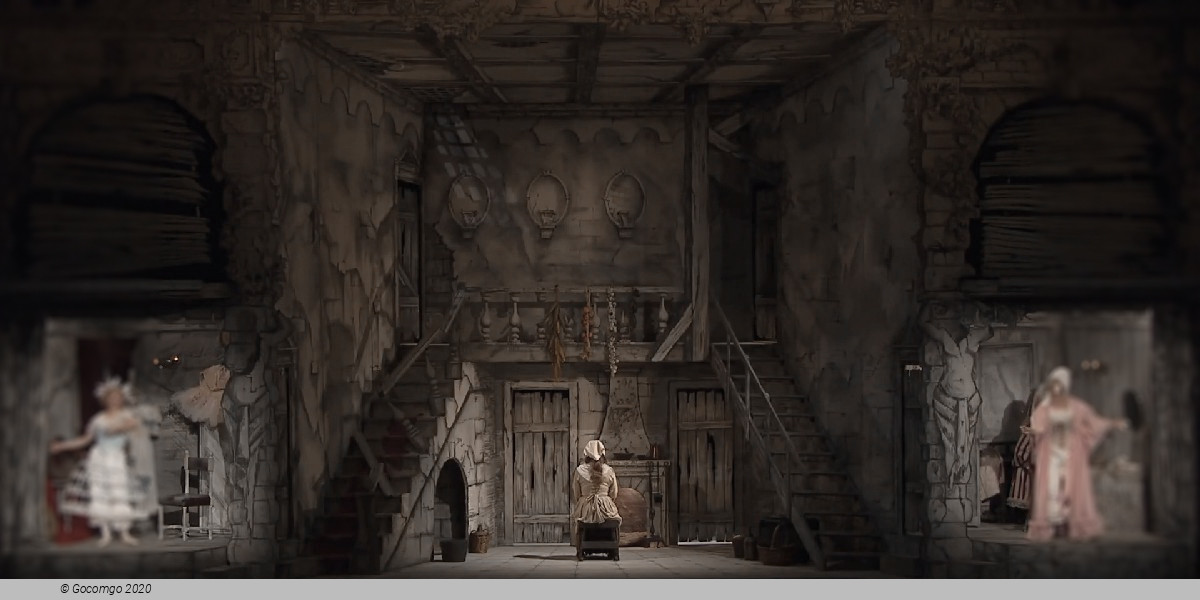
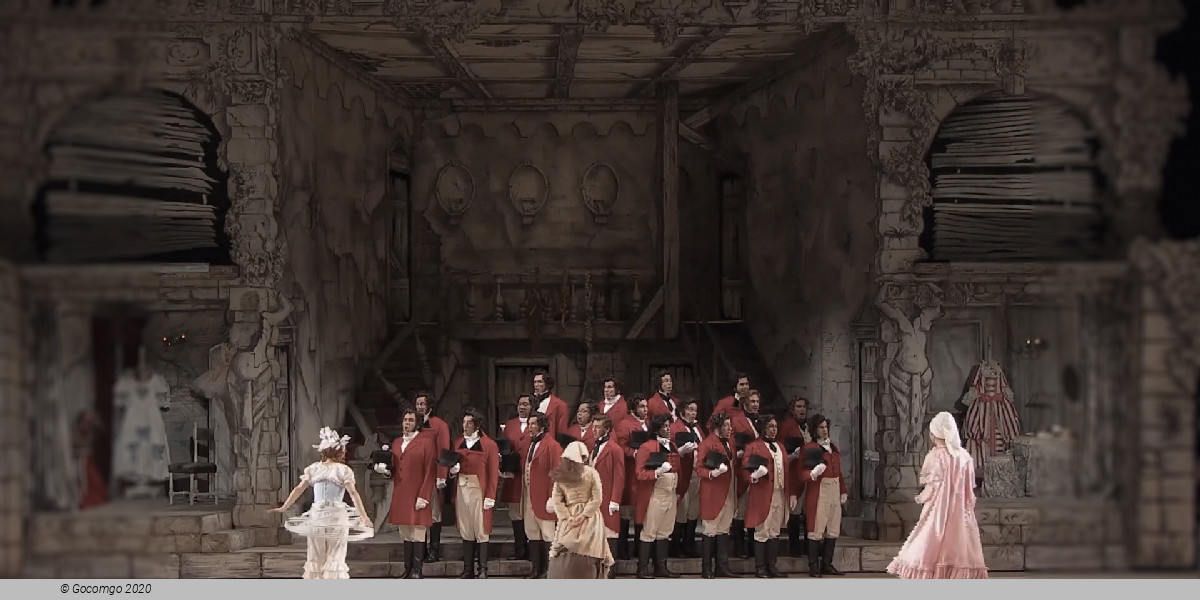
Angelina, known to her stepfather and stepsisters as "Cenerentola", is forced to serve as the maid in her own home. She sings of a king who married a common girl ("Una volta c’era un rè"). A beggar arrives; her stepsisters, Clorinda and Tisbe, want to send him away, but Cenerentola gives him bread and coffee. Courtiers follow, announcing that Prince Ramiro will come to visit while he searches for the most beautiful girl in the land to wed. Cenerentola's stepfather, Don Magnifico, hopes to use this as an opportunity to save his own failing fortune.

When the room is empty, Ramiro enters alone, disguised as a valet. The "beggar" - in fact, his tutor, Alidoro - has informed him of a goodhearted young woman spotted here. Ramiro intends to find her incognito. Cenerentola returns, and she and Ramiro are attracted to each other (duet: "Un soave non-so che"), but when he asks who she is, she's overwhelmed and flees.

Finally, the "prince" arrives – the real valet, Dandini, who has taken his master's place - and Magnifico, Clorinda, and Tisbe fall over themselves to flatter him. He invites the family to a ball that evening, where he plans to find his bride; Cenerentola asks to join them, but Magnifico refuses (quintet: "Signor, una parola"). This callousness isn't lost on Ramiro. Alidoro, still in his rags, returns to inquire after a third daughter in the house; Magnifico claims she has died. Left alone with Cenerentola, Alidoro promises to take her to the ball himself, and that God will reward her kindness ("Là del ciel nell’arcano profondo").

The prince and his valet have retired to Ramiro's country house in some confusion, as neither of Magnifico's daughters resembled the worthy bride Alidoro had described. When Clorinda and Tisbe arrive, Dandini gives them a little test: he offers his "valet" to whichever sister the "prince" does not marry. The ladies are outraged at the idea of marrying a servant. Alidoro then arrives with a beautiful, unknown lady who strangely resembles Cenerentola. Unable to make sense of the situation, they all sit down to supper, feeling as if they are in a dream.

Act 2

Magnifico frets over the competition his daughters now face from the strange lady ("Sia qualunque delle figlie"), but Cenerentola isn't interested in the "prince," saying she's fallen in love with his servant. An overjoyed Ramiro steps forward; however, Cenerentola tells him that she's going home and doesn't want him to follow her. If he really cares for her, she says, he will find her, giving him one of a matching pair of bracelets. The prince determines to do exactly that ("Sì, ritrovarla io giuro").

Meanwhile, Magnifico confronts the disguised Dandini, insisting that he choose one of his daughters to marry. Dandini tries to stall, but is forced to admit that he's actually the valet and not the prince at all (duet: "Un segreto d’importanza").

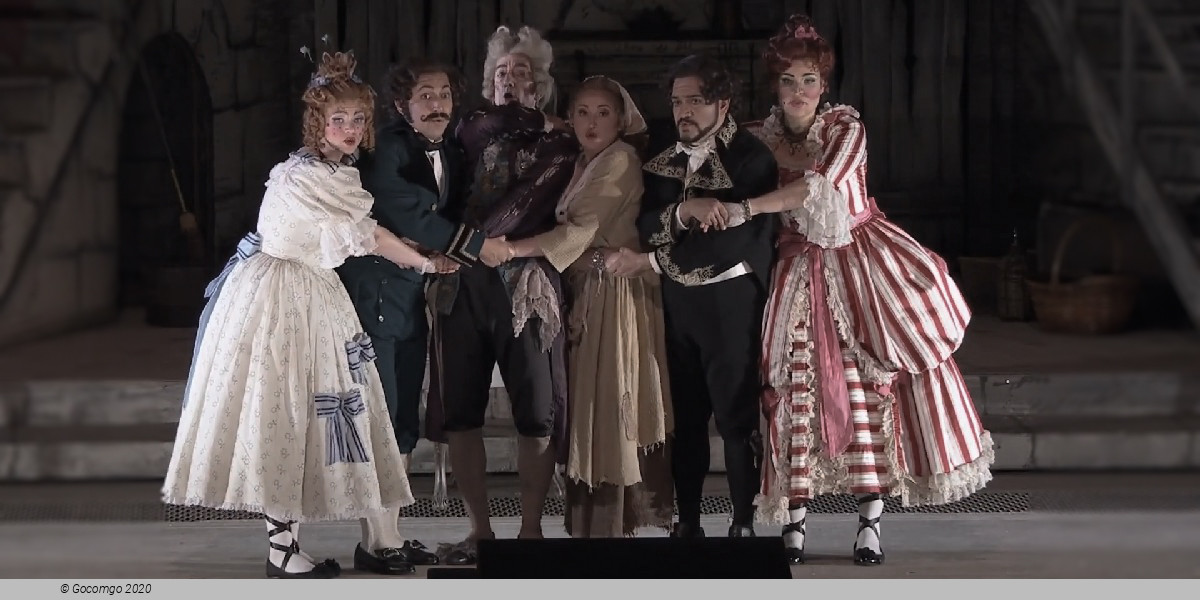
A furious Magnifico and his daughters return home, where they order Cenerentola, back in rags, to serve them. A storm is thundering outside. Alidoro sabotages Ramiro's carriage so that it breaks down in front of Magnifico's manor, forcing the prince to take refuge within. Cenerentola and Ramiro recognize each other's bracelets; the others comment on the situation (sextet: "Siete voi?"). When Ramiro threatens Cenerentola's recalcitrant family, she asks him to forgive them.

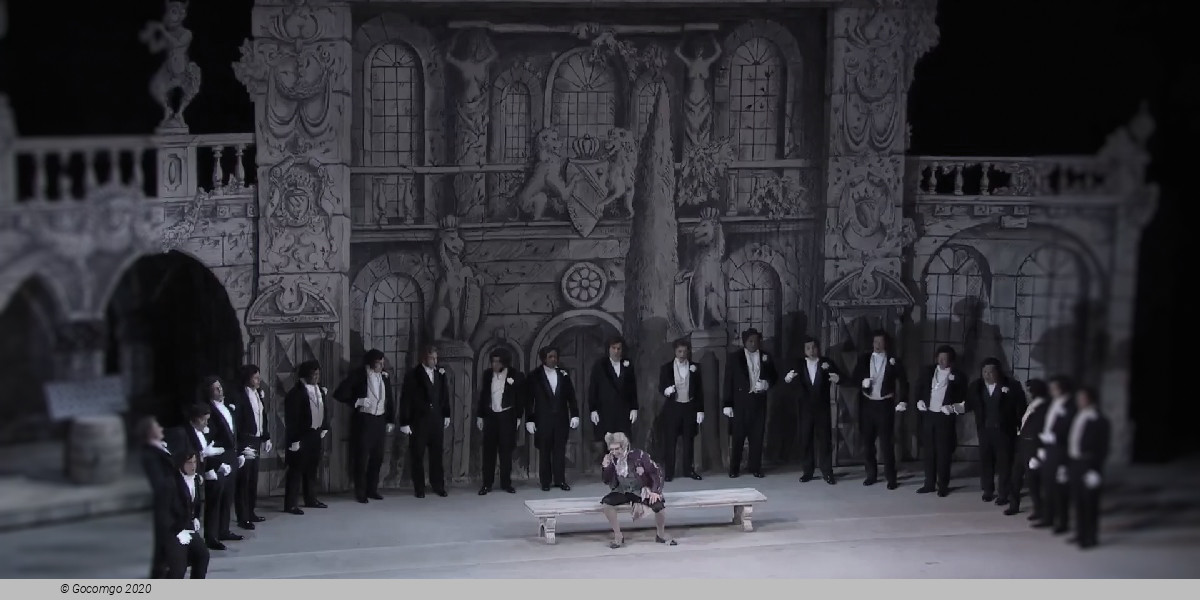
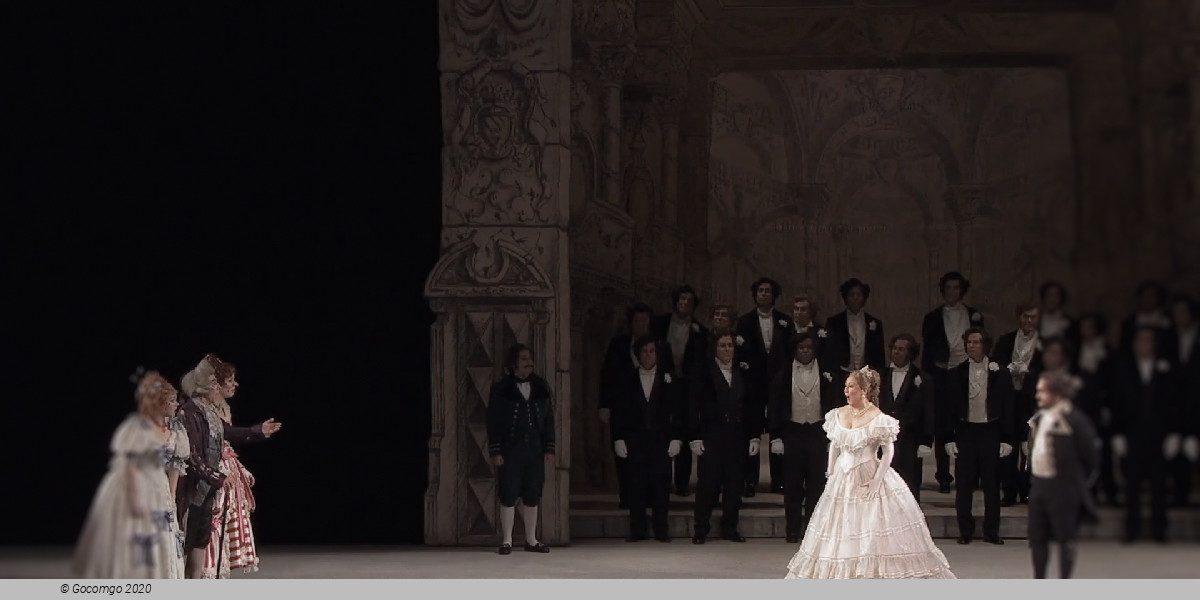
Ramiro and Cenerentola are married, and celebrate their wedding at the palace. Magnifico tries to win the favor of the new princess, but she asks only to be acknowledged, at last, as his daughter. She reflects on the misfortune to which she was born and the sudden reversal of her fate, then forgives her family for all her past unhappiness, adding that her days of sitting sadly by the fire are over ("Nacqui all'affanno... Non più mesta"). Everyone present acknowledges that she truly is worthy of the throne.

Venue Info

National Opera and Ballet of Bulgaria - Sofia
Location   bul. Kniaz Aleksandar Dondukov 30

The National Opera and Ballet is a national cultural institution in Bulgaria that covers opera and ballet. It is based in an imposing building in Sofia, the capital of Bulgaria. The first opera company in Bulgaria was founded in 1890 as part of the Capital Opera and Drama Company. The two sections split in 1891 to form the Salza i Smyah theatrical company and the Capital Bulgarian Opera. It was, however, disbanded the next year due to lack of government funding and financial difficulties.

The Bulgarian Opera Society was established in 1908 and staged its first test performance. The first full opera was performed in 1909 — Pagliacci by Leoncavallo. The first Bulgarian opera works were also presented in the period, including Siromahkinya by Emanuil Manolov, Kamen i Tsena by Ivan Ivanov and Václav Kaucký, Borislav by Georgi Atanasov and Tahir Begovitsa by Dimitar Hadzhigeorgiev.

As the company evolved under the ensemble system and style, the permanent troupe of soloists, choir, orchestra, ballet, technical and production teams produced up to 10 opera and ballet premieres a year, in addition to concert programs. Gradually, the basic repertory of world opera classics was established at the same time as the theatre began to attract Bulgarian composers who created new national works. 20th Century performers such as Nicolai Ghiaurov, Nicola Ghiuselev, and Ghena Dimitrova began their careers within the structure of the National Opera, as did later singers such as Irena Petkova and Kiril Manolov.

The institution became a national one in 1922 and changed its name to National Opera. A ballet company was established and gave its first performance in 1928. The opera ceased its activity for a while after the 1944 bombing of Sofia, but was restored shortly afterward with a significant increase of government funding.

The National Opera and Ballet's building was designed in 1921 and built for the most part between 1947 and its opening in 1953.

In 2000, the company co-organized the Boris Christoff Twelfth International Competition for Young Opera Singers with the idea of attracting a younger audience and supporting young and upcoming singers.

The repertoire historically tended to favour the Italian and French repertoire with little Wagnerian tradition, although since 2010, the artistic director of the opera company Plamen Kartaloff began a Ring Cycle with entirely Bulgarian casts. Following the entry of Parsifal and Tristan und Isolde into the repertoire, the complete cycle was performed both in Moscow and Sofia during 2018.

Important Info
Type: Opera
City: Sofia, Bulgaria
Starts at: 16:00
Acts: 2
Intervals: 1
Duration: 2h 45min
Sung in: Italian
Titles in: Bulgarian,English
Top of page