Prologue
It is Paris, in the year 1905.
The Paris Opera House hosts an auction of old theatre memorabilia. Among the attendees is the elderly Vicomte Raoul de Chagny, who purchases a papier-mâché music box with a monkey figurine. The auctioneer then presents a shattered chandelier renovated with electrical wiring, alluding to a connection with "the strange affair of the Phantom of the Opera, a mystery never fully explained." As the porters remove the drop cloth covering the fixture, it flickers to life and ascends to the ceiling ("Overture").
Act I
It is now 1881 and the cast of a new production, Hannibal, are rehearsing onstage when they learn that new owners, Firmin and André, are taking over the Paris Opera House ("Hannibal Rehearsal"). Carlotta, the Opéra's resident soprano prima donna, begins to perform an aria for the new managers when a backdrop inexplicably falls from the flies, barely missing her and prompting anxious chorus girls to whisper, "He's here! The Phantom of the Opera!". The managers try to downplay the incident, but Carlotta angrily insists that such things have been happening for "three years" and she storms out, leaving the show. Madame Giry, the Opéra's ballet mistress, and her dancer daughter Meg inform Firmin and André that Christine Daaé, a chorus girl and orphaned daughter of a prominent violinist, has been "well taught" and can sing Carlotta's role. With cancellation of the sold-out show being their only other alternative, the managers reluctantly audition her and are surprised to discover that she is indeed talented. As Christine sings the aria during the evening performance, the Opéra's new patron, Raoul, the Vicomte de Chagny, recognises her as his childhood friend and playmate ("Think of Me").
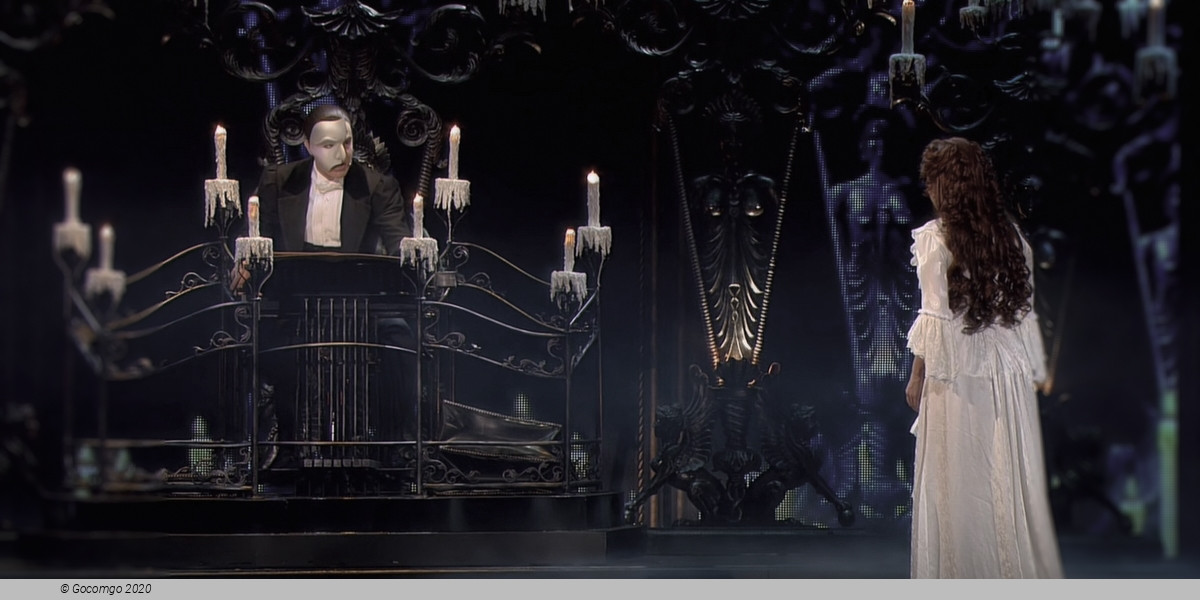
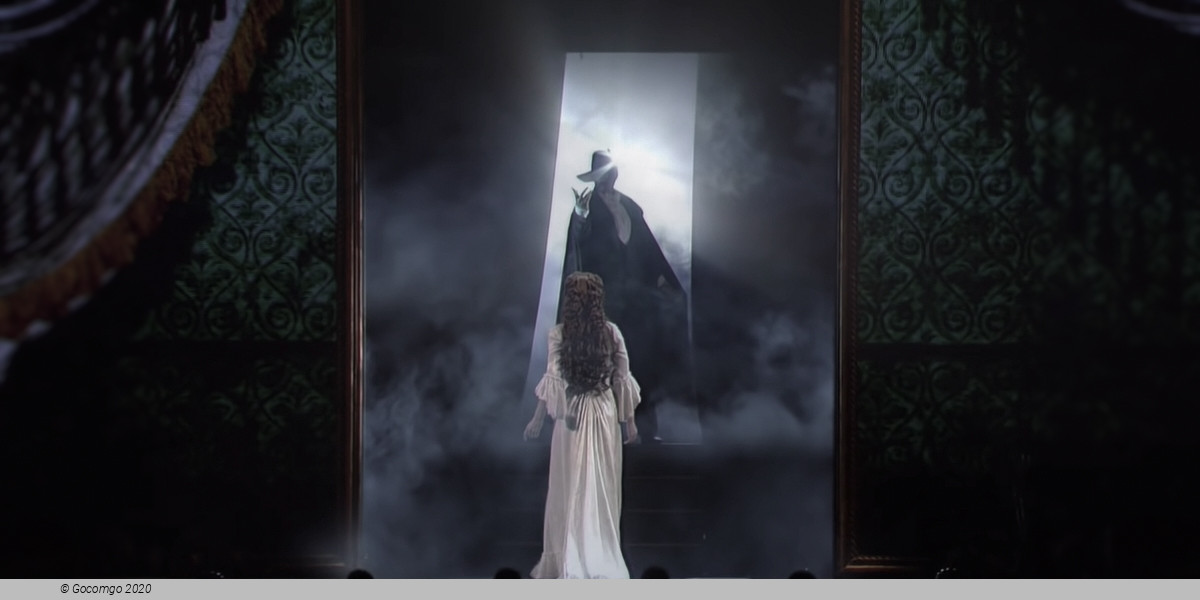
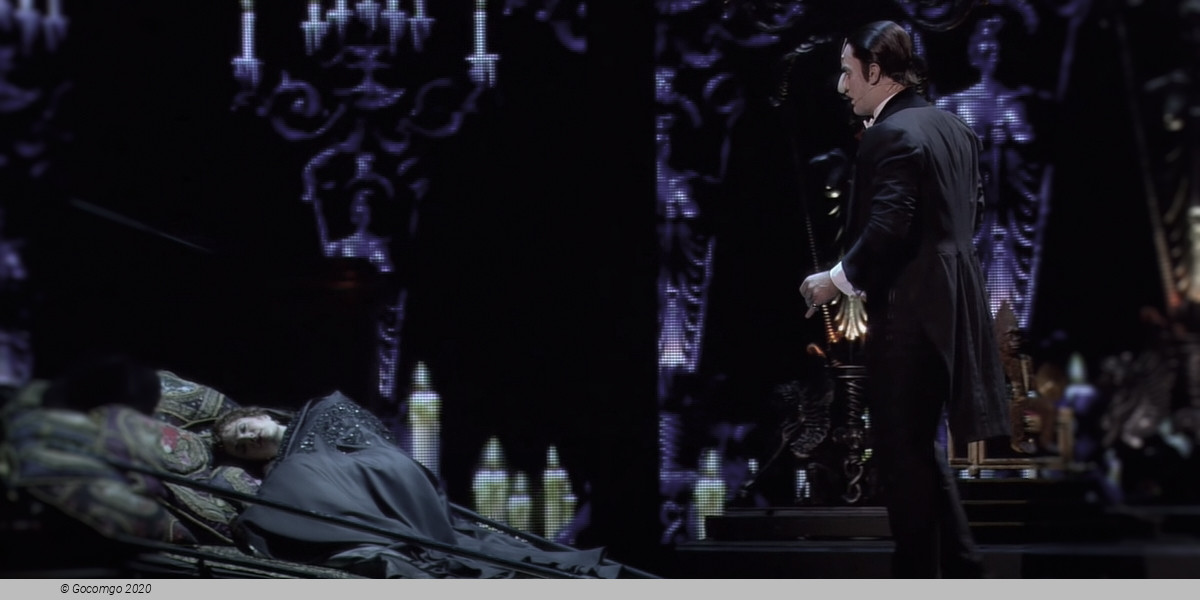
Backstage after her triumphant début, Christine confesses to her friend Meg that her singing has been inspired by an unseen tutor she knows only as the "Angel of Music" ("Angel of Music"). Raoul pays a visit to Christine's dressing room and the two reminisce about "Angel of Music" stories that her late father used to tell them. Christine confides that the Angel has visited her and taught her to sing ("Little Lotte"). Raoul indulges what he assumes are fantasies and insists on taking Christine to dinner. When Raoul leaves to fetch his hat, Christine hears the jealous Phantom's voice and entreats him to reveal himself. The Phantom obliges by appearing as a ghostly, partially masked face in her mirror ("The Mirror/Angel of Music (Reprise)"). Believing him to be the Angel of Music sent by her deceased father, Christine is irresistibly drawn through the mirror to the Phantom, who leads her down into the shadowy sewers below the Opéra house. The two board a small boat and cross a subterranean lake to his secret lair ("The Phantom of the Opera"). The Phantom explains that he has chosen Christine to sing his musical compositions. When he reveals a mirror that reflects an image of her in a wedding dress, the figure in the mirror gestures to Christine, and she faints from shock. The Phantom then covers her tenderly with his cloak and puts her on a bed ("The Music of the Night").
The next morning, as the Phantom is composing music at his organ, Christine awakens to the sound of the Phantom's monkey music box ("I Remember"). Overcome with curiosity, she slips behind the Phantom, lifts his mask, and beholds his grotesquely disfigured face. The Phantom rails at her prying gesture, and Christine runs in fear. He then ruefully expresses his longing to be loved ("Stranger Than You Dreamt It"). Moved by pity, Christine returns the mask to the Phantom, and he escorts her back above ground.
Meanwhile, Joseph Buquet, the Opéra's chief stagehand, regales the chorus girls with tales of the "Opéra Ghost" and his terrible Punjab lasso (a reference directly from the novel). Madame Giry arrives and warns Buquet to exercise restraint or face the Phantom's wrath ("Magical Lasso"). In the manager's office, André and Firman read notes from the Phantom and are interrupted by Raoul, who accuses them of sending him a note saying that he should make no attempt to see Christine again. Carlotta and Piangi then burst in, demanding to know who sent Carlotta a note warning that her "days at the Opéra Populaire are numbered". As André and Firmin try to calm Carlotta, Madame Giry delivers another note from the Phantom: he demands that Christine replace Carlotta as the Countess in the new opera, Il Muto, and that Box Five is to be kept empty for him. The managers are warned they will face a "disaster beyond imagination" if these demands are not met ("Notes"). Firmin and André assure the furious Carlotta that she will remain their star and Christine will play the Pageboy, a silent role ("Prima Donna").
The première of Il Muto initially goes well, until the voice of the Phantom suddenly cuts through the performance, enraged that Box Five was not kept empty for him as he had directed. As Christine whispers that she knows the Phantom is near, Carlotta reminds her that her role is silent, calling her a "little toad". The Phantom states that it is Carlotta who is the toad and enchants the diva's voice, reducing it to a frog-like croak. Firmin rushes to defuse the situation by announcing to the audience that Christine will take over the starring role, and he instructs the conductor to bring the ballet forward to keep the audience entertained. Suddenly, the corpse of Joseph Buquet drops from the rafters, hanging from the Punjab lasso. Firmin and André plead for calm as mayhem erupts and the Phantom's sinister laugh is heard throughout the auditorium ("Poor Fool, He Makes Me Laugh").
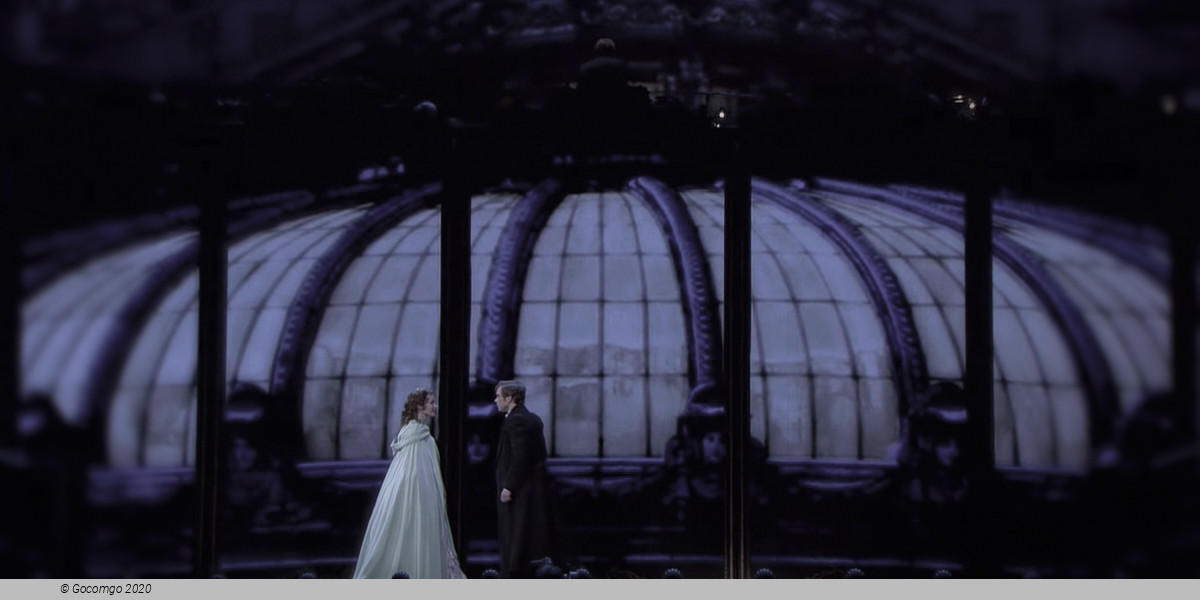
In the ensuing chaos after "Il Muto", Christine escapes with Raoul to the roof and tells him about her subterranean encounter with the Phantom ("Why Have You Brought Me Here?/Raoul, I've Been There"). Raoul is sceptical but promises to love and protect her; Christine reciprocates his vow ("All I Ask of You"). Christine and Raoul go back inside, unaware that the Phantom has overheard their conversation the whole time. Heartbroken at this, the Phantom swears revenge ("All I Ask of You (reprise)"), then returns to the auditorium and crashes the chandelier onto the stage during the curtain call.
Act Il
Six months later, the Opera house hosts a masquerade ball. The Phantom, who has been conspicuously absent since the chandelier disaster, suddenly reappears in costume as the Red Death. He announces that he has written an opera entitled Don Juan Triumphant during his absence, and demands that it be produced with Christine (who is now secretly engaged to Raoul) in the lead role, and he warns of dire consequences if his demands are not met. Noticing an engagement ring on a chain around Christine's neck, the Phantom angrily pulls it from her and vanishes in a blinding flash of light ("Masquerade/Why So Silent").
As the masquerade attendees scatter in fear, Raoul accosts Madame Giry and demands that she reveal what she knows about the Phantom. Madame Giry reluctantly explains that the Phantom is actually a brilliant scholar, magician, architect, inventor, and composer who was born with a terrifyingly deformed face and was ostracised for it. Feared and reviled by society, he was cruelly exhibited in a cage as part of a travelling fair until he eventually escaped and disappeared. He subsequently took refuge beneath the opera house, which has now become his home.
The Opera managers, believing they have no choice, reluctantly plan to produce the Phantom's opera. Before rehearsals begin, Raoul plots to use the première of Don Juan Triumphant as a trap to capture the Phantom and put an end to his reign of terror. Carlotta falsely accuses Christine of being the mastermind, suggesting that it is all a ploy to make her the star. Christine angrily defends herself, explaining that she is his victim just like everyone else. Raoul, knowing of the Phantom's obsession with his fiancée, asserts that the Phantom will attend the opera's première and begs a reluctant Christine to help lure the Phantom into the trap, but she refuses ("Notes/Twisted Every Way"). During rehearsal, Piangi is unable to sing his part in the new opera, causing frustration and chaos for everyone. The piano suddenly begins to play the piece by itself (having been possessed by the Phantom) and the entire company immediately sings the proper notes in unison.
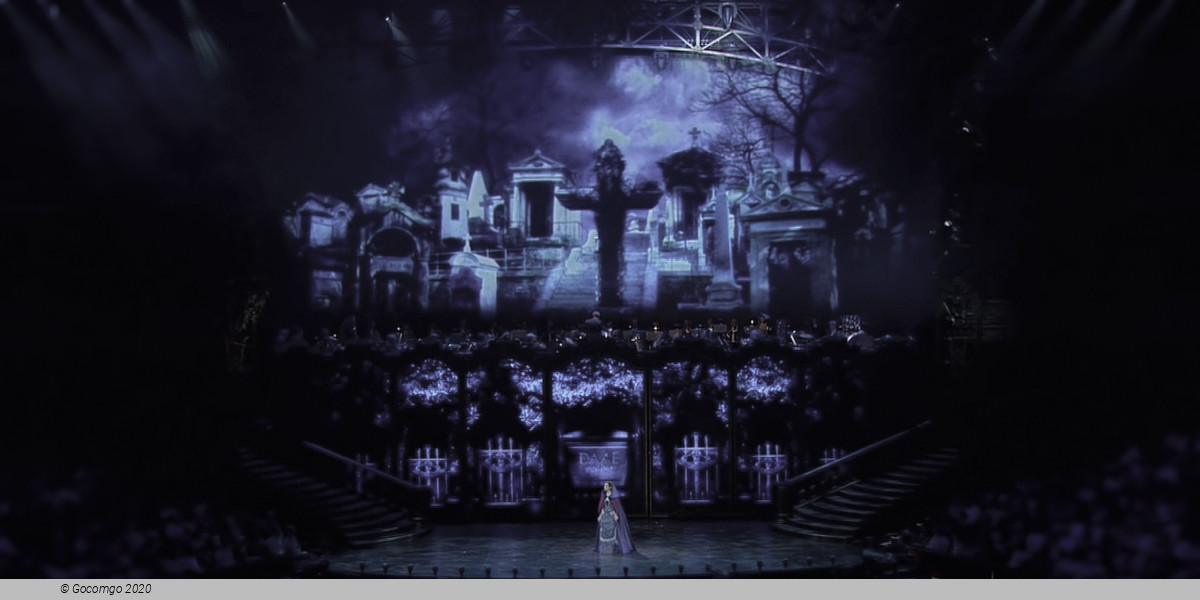
Torn between her love for Raoul and her awe of the Phantom, Christine visits her father's grave, longing for his guidance ("Wishing You Were Somehow Here Again"). The Phantom appears atop the mausoleum, again under the guise of the Angel of Music ("Wandering Child"). The weary Christine begins to succumb to the Phantom's influence, but Raoul arrives to rescue her. The Phantom taunts Raoul, hurling fire balls at him until Christine begs Raoul to leave with her. Furious, the Phantom declares war upon them both and causes flames to spring up around the mausoleum ("Bravo Monsieur").
With armed policemen having secured the auditorium and watching for the Phantom, Don Juan Triumphant premieres with Christine and Piangi singing the lead roles. During Don Juan's and Aminta's duet, Christine comes to the sudden realisation that the Phantom has somehow replaced Piangi ("Don Juan Triumphant/The Point of No Return"). Mimicking Raoul's vow of devotion on the rooftop, the Phantom once again expresses his love for Christine and forces his ring onto her finger. Christine rips off his mask, showing his horrifically deformed face to the shocked audience. Exposed, the Phantom hurriedly drags Christine off the stage and back to his lair. Piangi's garrotted body is revealed backstage and the opera house plunges into chaos. An angry mob, vowing vengeance for the murders of Buquet and Piangi, search for the Phantom. Madame Giry tells Raoul how to find the Phantom's subterranean lair and warns him to beware the magical lasso. ("Down Once More/Track Down This Murderer").
Down in the lair, the Phantom has compelled Christine to don a wedding dress. In a moment of epiphany, she explains that she is not fearful of his physical appearance, but rather his inner nature. Raoul reaches the lair and attempts to persuade the Phantom to spare Christine and begs him for compassion. The Phantom retorts that the world had never shown him any and ensnares Raoul in the Punjab lasso. The Phantom offers Christine an ultimatum: if she will stay with him, he will spare Raoul, but if she refuses, Raoul will die ("The Point of No Return Reprise"). As the Phantom and Raoul both vie for Christine, she sadly asks the Phantom what life he has been forced to live. Finally, she tells the Phantom that he is not alone and kisses him, showing him compassion for the first time in his life.
Having experienced kindness at last, the Phantom realises that he cannot win Christine by force, and frees Raoul. The Phantom makes them swear to never tell and yells for them to leave before falling down in tears. Raoul hurries Christine out of the lair, but she returns alone to give the Phantom back his ring. The Phantom finally tells Christine he loves her and she tearfully exits the lair to rejoin Raoul. As the angry search mob closes in, the Phantom huddles on his throne beneath his cloak. Meg is first to reach the lair and finds no one there. She approaches the throne with curiosity and quickly pulls away the Phantom's cloak, but finds only his mask. She lifts it up into the light and gazes at it in wonder as the curtain comes down ("Finale").






 Erzsébet krt. 29-33