

Hungarian State Opera House 10 May 2023 - Iphigenia in Tauris | GoComGo.com

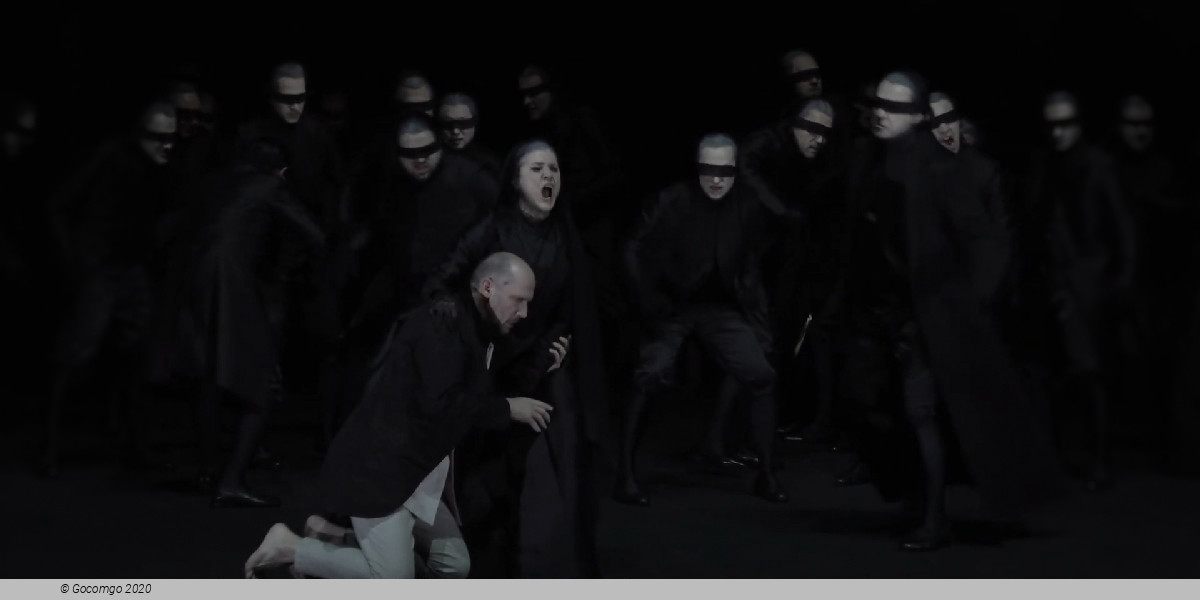
Iphigenia in Tauris

Hungarian State Opera House, Opera House, Budapest, Hungary
All photos (4)
Select date and time
7 PM

E-tickets: Print at home or at the box office of the event if so specified. You will find more information in your booking confirmation email.

You can only select the category, and not the exact seats.
If you order 2 or 3 tickets: your seats will be next to each other.
If you order 4 or more tickets: your seats will be next to each other, or, if this is not possible, we will provide a combination of groups of seats (at least in pairs, for example 2+2 or 2+3).

Important Info
Type: Opera
City: Budapest, Hungary
Starts at: 19:00
Acts: 3
Duration: 3h
Sung in: German
Titles in: Hungarian,English

E-tickets: Print at home or at the box office of the event if so specified. You will find more information in your booking confirmation email.

You can only select the category, and not the exact seats.
If you order 2 or 3 tickets: your seats will be next to each other.
If you order 4 or more tickets: your seats will be next to each other, or, if this is not possible, we will provide a combination of groups of seats (at least in pairs, for example 2+2 or 2+3).

Overview

After visiting Aulis, star actress of Greek road movie winds up in Tauris. Star’s brother – unrecognised fordramaturgical reasons – also shows up with his amigo. Awkward discourse reveals that he had killed their mother in retaliation for murdering the father of both children (and mother’s husband). Further intensifying a plotline typical of families in Greek mythology, Title Character is about to kill brother when amigo arrives with a handy warship. Siblings flee to Mycenae, leaving everyone waiting for the sequel.

History
Premiere of this production: 18 May 1779, Paris Opéra

Iphigénie en Tauride (Iphigenia in Tauris) is a 1779 opera by Christoph Willibald Gluck in four acts. It was his fifth opera for the French stage. The libretto was written by Nicolas-François Guillard. The drama is ultimately based on the play Iphigenia in Tauris by the ancient Greek dramatist Euripides which deals with stories concerning the family of Agamemnon in the aftermath of the Trojan War.

Synopsis

Act 1
Scene: The entrance hall of the temple of Diana in Tauris.

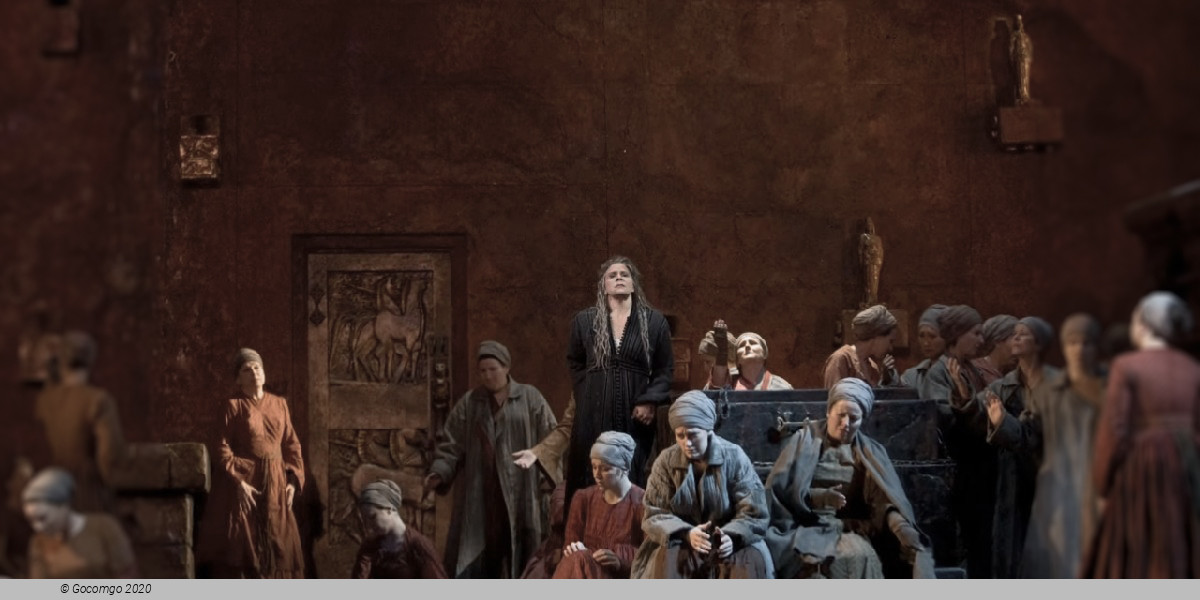
There is no overture; the opera begins with a short passage evoking calm before turning into a depiction of a great storm at sea. Iphigenia, sister of Orestes, is the high priestess of Diana in the temple of Tauris, having been transported there magically by the goddess when her father Agamemnon attempted to offer her as a sacrifice. Iphigenia and her priestesses beg the gods to protect them from the storm (Grands dieux! soyez nous secourables).

Although the storm dies down, Iphigenia remains troubled by a dream she has had, in which she envisioned her mother Clytaemnestra murdering her father, then her brother Orestes killing her mother, and finally her own hand stabbing her brother. She prays to Diana to reunite her with Orestes (Ô toi qui prolongeas mes jours). Thoas, King of Tauris, enters. He too is obsessed with dark thoughts (De noirs pressentiments): the oracles, he tells her, predict doom for him if a single stranger escapes with his life. (The custom of the Scythians, who inhabit Tauris, is to ritually sacrifice any who are shipwrecked on their shores).

A chorus of Scythians comes bringing news of two young Greeks who have just been found shipwrecked, demanding their blood (Il nous fallait du sang). After Iphigenia and the priestesses depart, Thoas brings in the Greeks, who turn out to be Orestes and his friend Pylades. After asking them for what purpose they came (they have come to retrieve Diana's statue and return it to Greece, though they do not divulge this), Thoas promises them death and has them taken away.

Act 2
Scene: An inner chamber of the temple

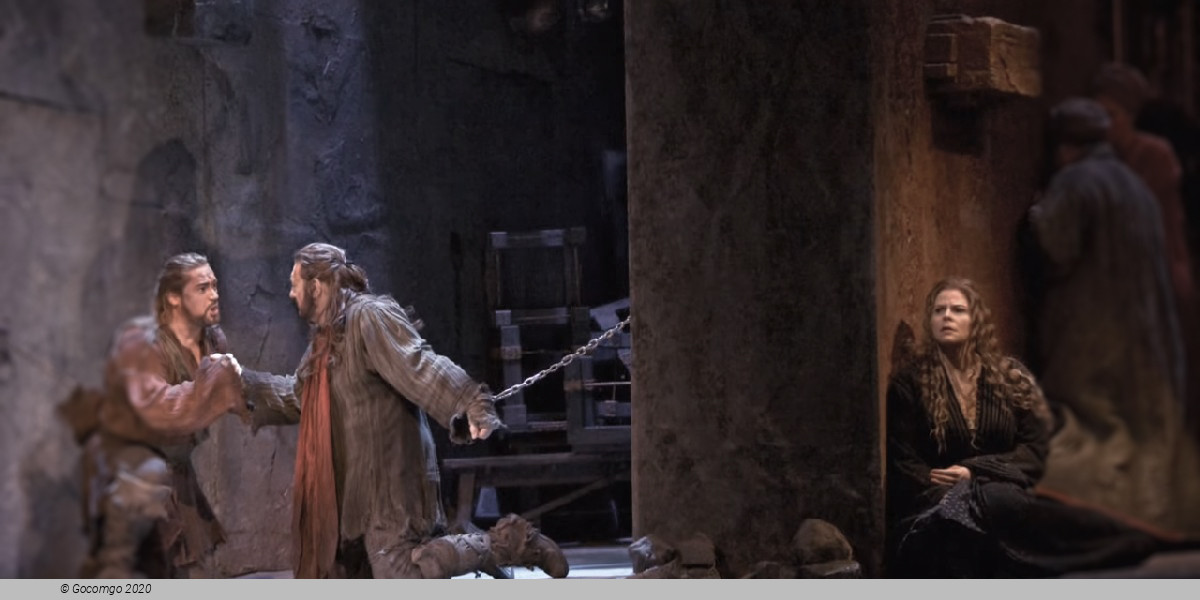
Orestes and Pylades languish in chains. Orestes berates himself for causing the death of his dear friend (Dieux qui me poursuivez), but Pylades assures him that he does not feel dispirited because they will die united (Unis dès la plus tendre enfance). A minister of the sanctuary comes to remove Pylades. Orestes half falls asleep (Le calme rentre dans mon coeur), but he is tormented by visions of the Furies, who wish to avenge his slaying of his mother (whom Orestes killed for murdering his father Agamemnon).

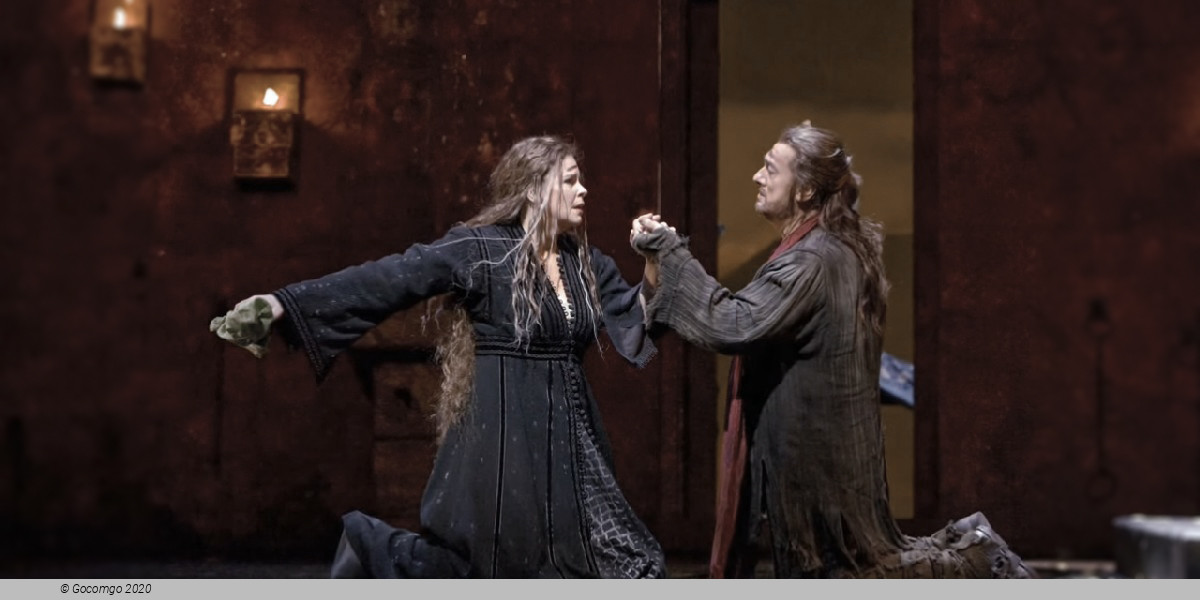
Iphigenia enters and, although the two do not recognize each other, Orestes sees an astonishing likeness between her and the slain Clytaemnestra seen in his dream. She questions him further, asking him the fate of Agamemnon and all Greece, and he tells her of Agamemnon's murder by his wife, and the wife's murder by her son. In agitation, she asks of the fate of the son, and Orestes says that the son found the death he had long sought, and that only their sister Electra remains alive. Iphigenia sends Orestes away and with her priestesses laments the destruction of her country and the supposed death of her brother (Ô malheureuse Iphigénie). She and the priestesses perform a funeral ceremony for Orestes (Contemplez ces tristes apprêts).

Act 3
Scene: Iphigenia's chamber

Iphigenia is drawn to the stranger who reminds her of her brother Orestes (D'une image, hélas! trop chérie). She tells Orestes and Pylades she can persuade Thoas to save one of them from the sacrifice (Je pourrais du tyran tromper la barbarie) and asks the one who is spared to carry word of her fate to her sister Electra in Argos. Both men readily agree, and Iphigenia chooses Orestes to survive.

But on her exit, Orestes insists that Pylades agree to switch places with him as Orestes cannot bear the thought of his friend's death and sees dying as an escape from his own madness; Pylades, on the contrary, is glad at the thought of dying so Orestes can live (Duet: Et tu prétends encore que tu m'aimes and aria for Pylades: Ah! mon ami, j'implore ta pitié!). When Iphigenia returns, Orestes insists that she reverse her decision, threatening to kill himself before her eyes if she does not. Reluctantly, she agrees to spare Pylades instead and sends him to carry her message to Electra. Everyone but Pylades departs, and he closes the act by promising to do everything possible to save Orestes (Divinité des grandes âmes!).

Act 4
Scene: Inside the temple of Diana

Iphigenia wonders how she can ever carry out the killing of Orestes, since somehow her soul shrinks from the thought of it. She asks the goddess Diana to help her steel herself for the task (Je t'implore et je tremble). The priestesses bring in Orestes, who has been prepared for sacrifice (Chorus: Ô Diane, sois nous propice). He tells her not to lament him, but to strike, telling her it is the will of the gods. The priestesses sing a hymn to Diana as they lead Orestes to the altar (Chorus: Chaste fille de Latone). While she wields the knife, Orestes exclaims Iphigenia's name, leading her and the priestesses to recognize him and stop the ritual slaughter.

The happy reunion of sister and brother is cut short at news that Thoas is coming, having heard that one of the captives was released and intent on the blood of the other. The king enters wildly, ordering his guards to seize Orestes and promising to sacrifice both him and his sister. At that moment Pylades enters with a band of Greeks, cutting down Thoas where he stands.

The resulting rout of the Scythians by the Greeks is halted by a dea ex machina appearance of Diana, who commands the Scythians to restore her statue to Greece (Arrêtez! Écoutez mes décrets éternels). She also issues pardon to Orestes for murdering his mother, sending him to be king over Mycenae and bidding him restore Iphigenia to her country. As Diana is carried back into the clouds, everyone sings a concluding chorus of rejoicing at having the favor of earth and heaven restored to them (Les dieux, longtemps en courroux).

Venue Info

Hungarian State Opera House - Budapest
Location   Andrássy út 22

The Hungarian State Opera House (Hungarian: Magyar Állami Operaház) is a neo-Renaissance opera house located in central Budapest, on Andrássy út. The Hungarian State Opera House is the main opera house of the country and the second largest opera house in Budapest and in Hungary. Today, the opera house is home to the Budapest Opera Ball, a society event dating back to 1886. The Theatre was designed by Miklós Ybl, a major figure of 19th-century Hungarian architecture.

Construction began in 1875, funded by the city of Budapest and by Emperor Franz Joseph I of Austria-Hungary, and the new house opened to the public on the 27 September 1884. Before the closure of the "Népszínház" in Budapest, it was the third largest opera building in the city; today it is the second largest opera house in Budapest and in Hungary.

Touring groups had performed operas in the city from the early 19th century, but as Legány notes, "a new epoch began after 1835 when part of the Kasa National Opera and Theatrical Troupe arrived in Buda". They took over the Castle Theatre and, in 1835, were joined by another part of the troupe, after which performances of operas were given under conductor Ferenc Erkel. By 1837 they had established themselves at the Magyar Színház (Hungarian Theatre) and by 1840, it had become the "Nemzeti Színház" (National Theatre). Upon its completion, the opera section moved into the Hungarian Royal Opera House, with performances quickly gaining a reputation for excellence in a repertory of about 45 to 50 operas and about 130 annual performances. 

Many important artists were guests here including the composer Gustav Mahler, who was director in Budapest from 1888 to 1891 and Otto Klemperer, who was music director for three years from 1947 to 1950.

It is a richly decorated building and is considered one of the architect's masterpieces. It was built in neo-Renaissance style, with elements of Baroque. Ornamentation includes paintings and sculptures by leading figures of Hungarian art including Bertalan Székely, Mór Than, and Károly Lotz. Although in size and capacity it is not among the greatest, in beauty and the quality of acoustics the Budapest Opera House is considered to be amongst the finest opera houses in the world.

The auditorium holds 1,261 people. It is horseshoe-shaped and – according to measurements done in the 1970s by a group of international engineers – has the third best acoustics in Europe after La Scala in Milan and the Palais Garnier in Paris. Although many opera houses have been built since the Budapest Opera House is still among the best in terms of acoustics.

In front of the building are statues of Ferenc Erkel and Franz Liszt. Liszt is the best-known Hungarian composer. Erkel composed the Hungarian national anthem, and was the first music director of the Opera House; he was also the founder of the Budapest Philharmonic Orchestra.

Each year the season lasts from September to the end of June and, in addition to opera performances, the House is home to the Hungarian National Ballet.

There are guided tours of the building in six languages (English, German, Spanish, French, Italian, and Hungarian) almost every day.

Important Info
Type: Opera
City: Budapest, Hungary
Starts at: 19:00
Acts: 3
Duration: 3h
Sung in: German
Titles in: Hungarian,English
Top of page