Before the opera begins, Agamemnon has sacrificed Iphigenia on the ruse that she is to be married, and subsequently goes off to war against Troy. Iphigenia's mother Klytaemnestra has thus come to hate her husband. After his return, with the help of her paramour Aegisthus, she murders her husband and now is afraid that her crime will be avenged by her other children, Elektra, Chrysothemis, and their banished brother Orest. Elektra has managed to send her brother away while remaining behind to keep her father's memory alive, but all the while, suffering the scorn of her mother and the entire court.
The action
"Wo bleibt Elektra?" ("Where is Elektra?")
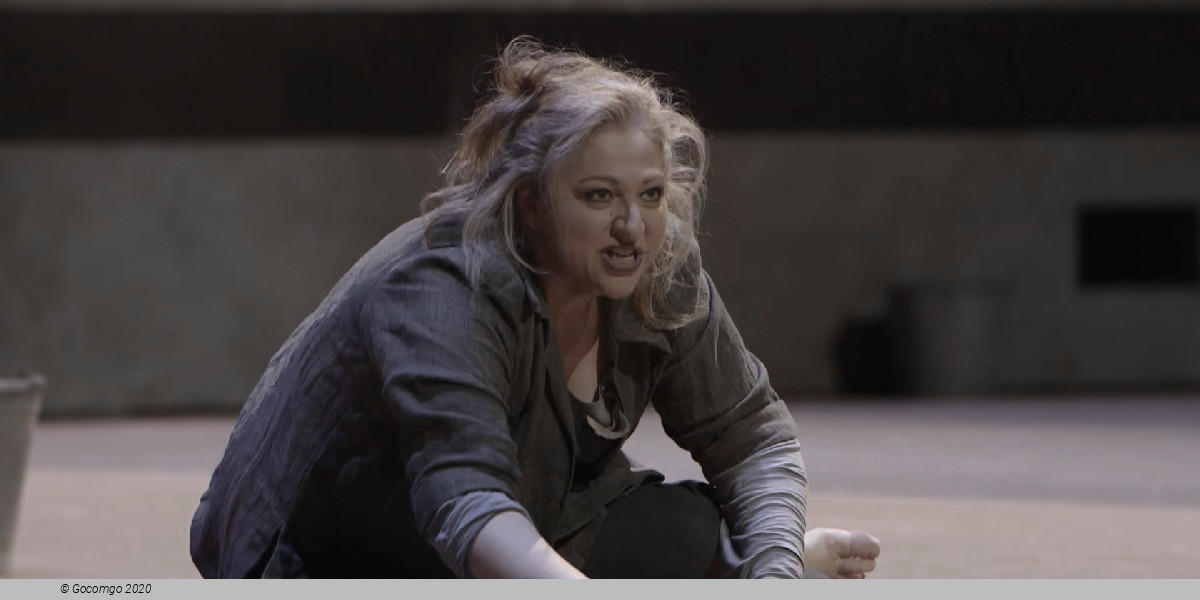
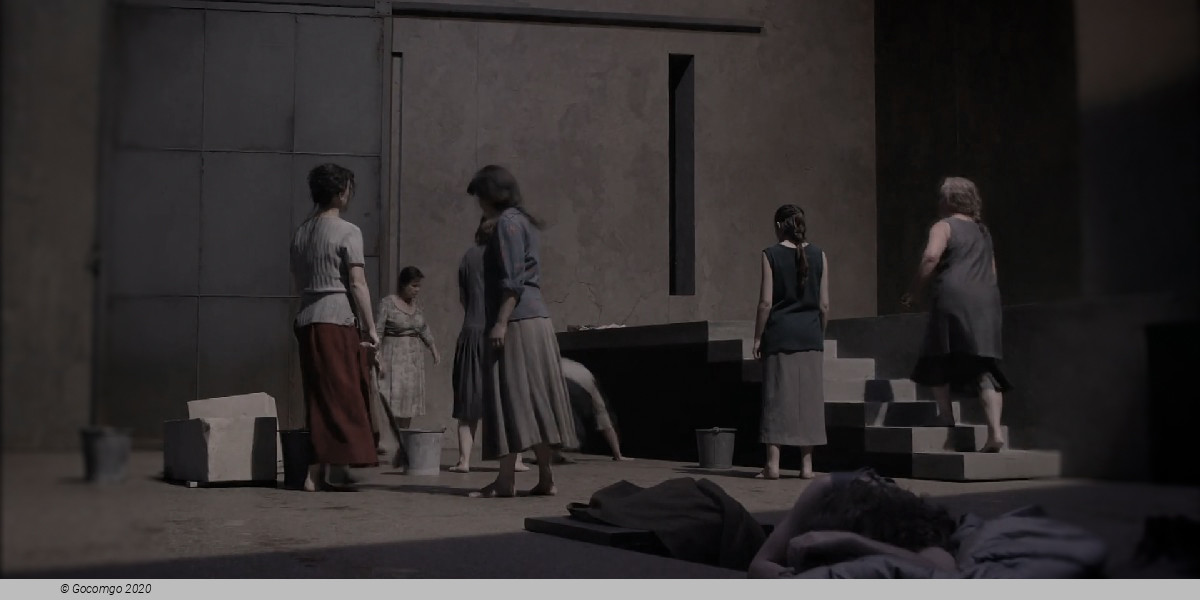
Five servants try to wash the courtyard of the palace in Mycenae. While they do their work, they ask where can Elektra be, and she emerges from the shadows with a wild look on her face. The servants continue commenting how she came to be in that state and talk about how they taunt her only to receive insults from her. Only one servant shows sympathy for her, but she is taken away by the overseer to be flogged.
"Allein! Weh, ganz allein." ("Alone! Alas, all alone.")
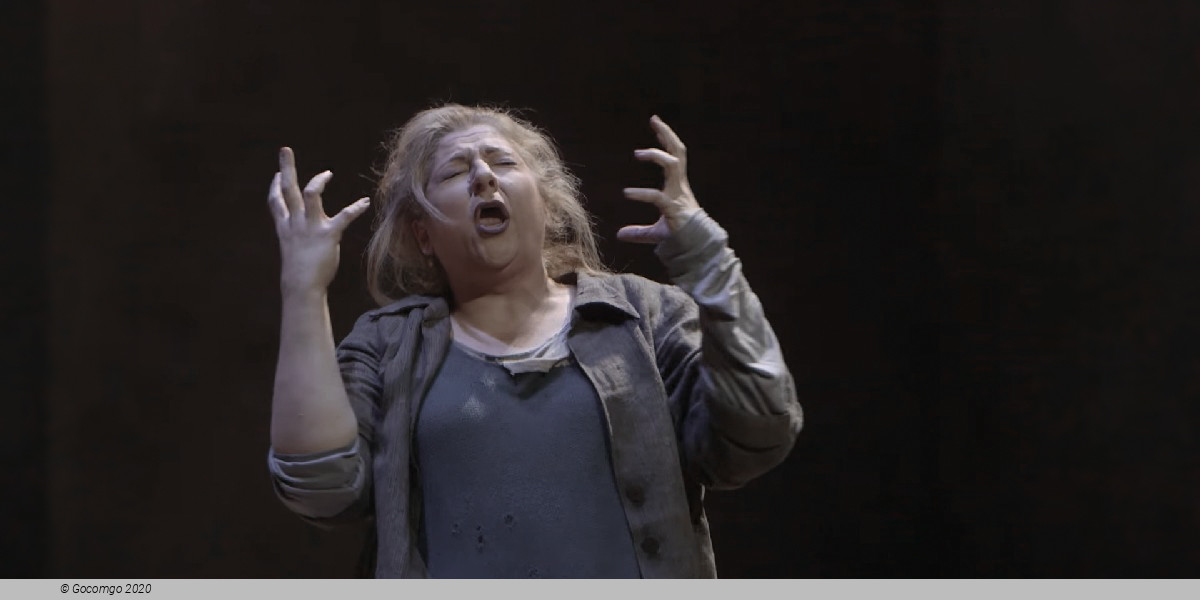
Elektra comes back for her daily ritual in memory of her father, who upon his return from Troy was killed while bathing by Klytaemnestra and Aegisth and dragged out into the courtyard. Elektra now starts imagining the day when her father will be avenged and then of the ensuing celebration in which she will lead the triumphal dance.
"Elektra!"
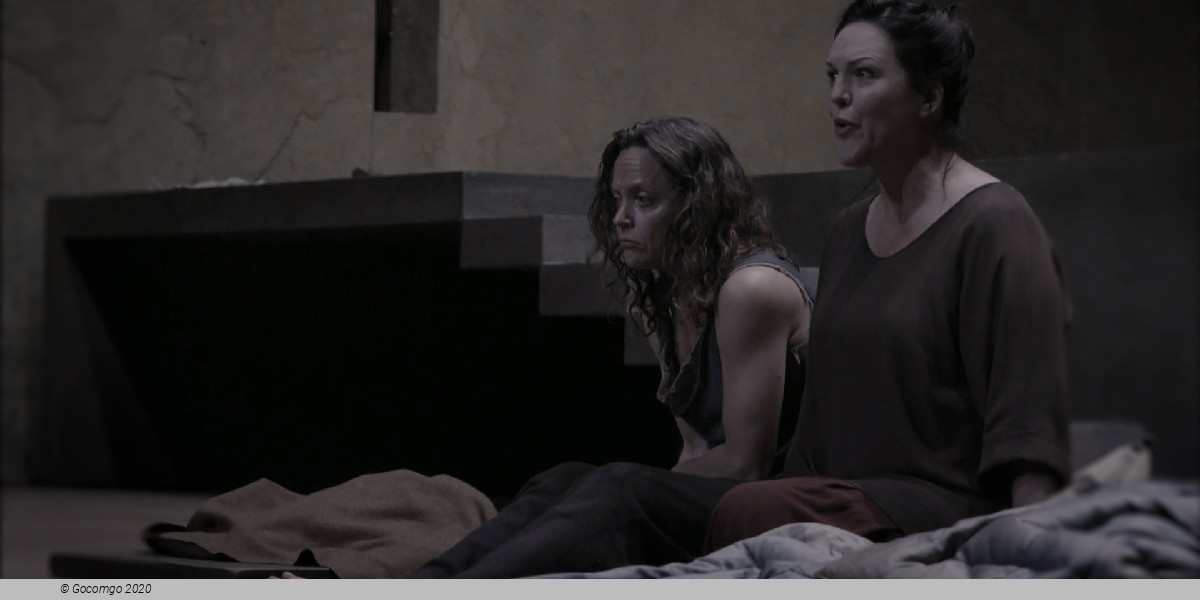
Chrysothemis leaves the palace but, unlike Elektra, she is meek and accommodating, and has remained on good terms with Klytaemnestra and Aegisth; she enjoys the privileges that come with being a princess. She warns her sister that their mother plans to lock Elektra in a tower, but she is rebuffed.
"Ich kann nicht sitzen und ins Dunkel starren." ("I can not sit and stare into the darkness.")
Chrysothemis does not wish to go on living a half-death in her own house: she wants to leave, marry and raise children.
"Es geht ein Lärm los." ("What tumult is this?")
As loud sounds are heard inside, Elektra mocks her sister that it is her wedding party.
"Was willst du? Seht doch, dort!" ("What do you want? Behold, there!")
In reality, Klytaemnestra has yet again been awakened by her own nightmares of being killed by Orest. Chrysothemis begs Elektra to leave, wishing only to speak to her mother. Followed by her retinue, Klytaemnestra comes to make another sacrifice to appease the gods, but she stops at the sight of Elektra and wishes that she were not there to disturb her. She asks the gods for the reason for her burdens, but Elektra appeases her by telling her mother that she is a goddess herself.
"Ich will nichts Hören!" ("I will not listen!")
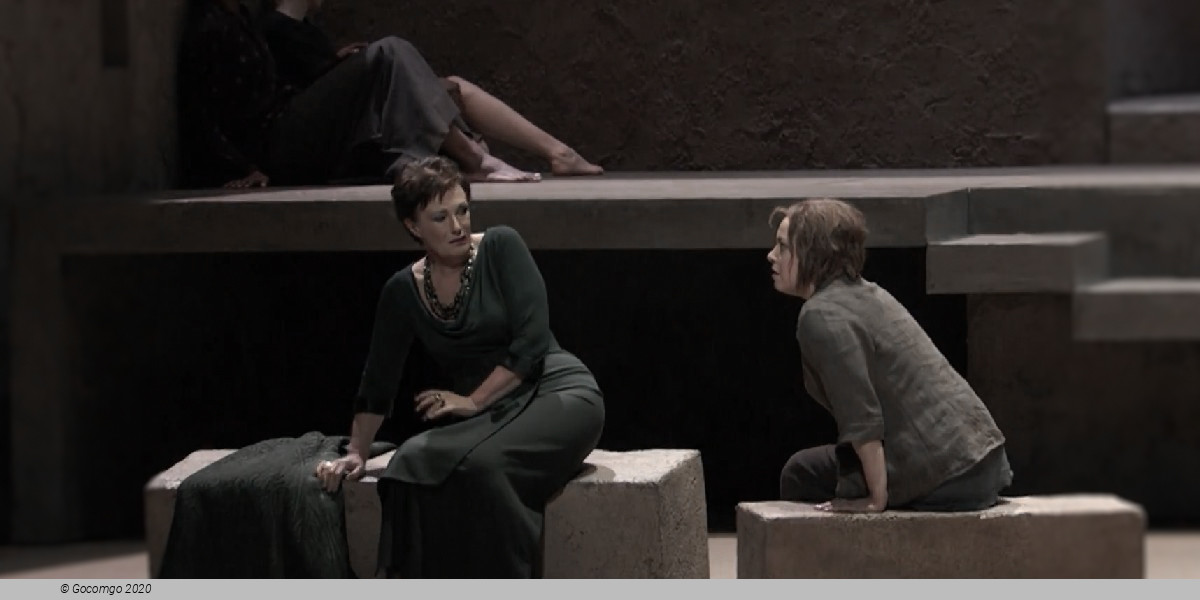
Despite the protests of the Trainbearer and Confidante, Klytaemnestra climbs down to talk to Elektra.
"Ich habe keine guten Nächte." ("I have no good nights.")
Klytaemnestra confides to her daughter that she has been suffering nightmares every night and that she still has not found the way to appease the gods. But, she claims, once that happens, she will be able to sleep again.
"Wenn Das rechte Blutopfer unterm Beile fällt." ("When the right blood under the hatchet flows.")
Elektra teases her mother with little pieces of information about the right victim that must be slain, but she changes the conversation to her brother and why he is not allowed back. To Elektra's horror, Klytaemnestra says that he has become mad and keeps company with animals. She responds that this is not true and that all the gold that her mother has sent was not being used to support her son but to have him killed.
"Was bluten muß? Dein eigenes Genick." ("Who must bleed? Your own throat.")
Then Elektra reveals who is to be the actual victim: it is Klytaemnestra herself. She goes on to describe how the gods must be appeased once and for all. She must be awakened and chased around the house just like an animal that is being hunted. Only when she wishes that all was over and after envying prisoners in their cells, she will come to realize that her prison is her own body. At that time, the axe with which she killed her husband and which will be handed to Orest by Elektra, will fall on her. Only then the dreams will stop.
"Lichter! Mehr Lichter" ("Lights! More lights!")
The Trainbearer and Confidante enter and whisper to her. Klytaemnestra laughs hysterically and, mocking Elektra, leaves. Elektra wonders what has made her mother laugh.
"Orest! Orest ist tot!" ("Orest! Orest is dead!")
Chrysothemis comes to tell her: two messengers have arrived with the news that Orest is dead, trampled by his own horses.
"Platz da! Wer lungert so vor einer Tür?" ("Give way! Who spies thus upon the threshold?")
As a young servant comes out of the house to fetch the master, he trips over Elektra and Chrysothemis.
"Nun muß es hier von uns geschehn." ("It is for us to act now.")
Elektra does not relent and a terrified Chrysothemis listens as her sister demands that she help her to avenge their father.
"Wie stark du bist." ("How strong you are.")
Elektra goes on to praise her sister and her beauty, promising that Elektra shall be her slave at her bridal chamber in exchange for the assistance in her task. Chrysothemis fights off her sister and flees. Elektra curses her.
"Nun denn, allein!" ("Well, alone!")
Determined to do it alone, she digs for the axe that killed her father, but is interrupted by a mysterious man who comes into the courtyard.
"Was willst du, fremder Mensch?" ("What do you want, stranger?")
She hears that he is expecting to be called from within the palace because he has a message for the lady of the house. He claims to be a friend of Orest, and says that he was with him at the time of his death.
"Wer bist denn du?" ("Who are you?")
Elektra grieves. The man first guesses that she must be a blood relative of Orest and Agamemnon, then, upon asking her name, discovers she is Elektra.
"Orest!"
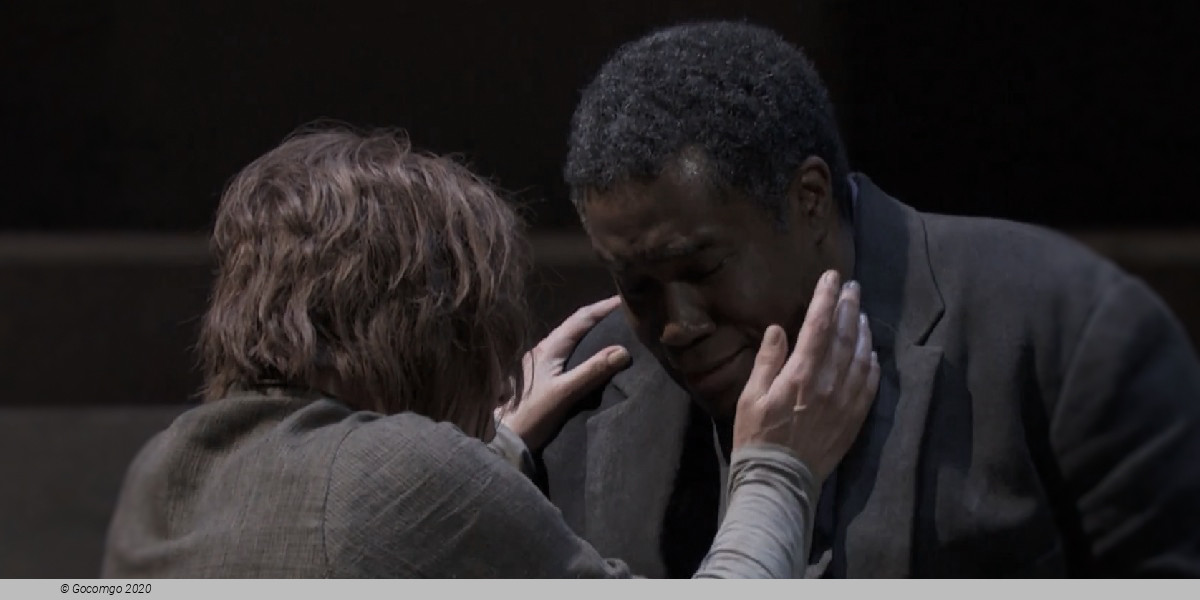
Then, taken aback, she recognizes him: it is Orest who has come back in disguise. Elektra is initially ecstatic, but also ashamed of what she has become and how she has sacrificed her own royal state for the cause.
"Du wirst es tun? Allein? Du armes Kind?" ("You'll do it? Alone? Poor child?")
Orest's Tutor comes and interrupts the siblings; their task is dangerous and anything can jeopardize it. The Trainbearer and Confidante come out of the palace and lead Orest in.
"Ich habe ihm das Beil nicht geben können!" ("I could not give him the axe!")
A shriek is heard from within the palace, then a grim moan. Elektra smiles brightly, knowing that Orest has killed their mother.
"He! Lichter!" ("Torches there!")
Aegisth arrives. He is ecstatic to have heard that Orest is dead and wishes to speak with the messengers. Elektra happily ushers him inside the palace.
"Helft! Mörder!" ("Help! Murder!")
As Aegisth screams and calls for help, Elektra replies: "Agamemnon can hear you."
"Elektra! Schwester!" ("Elektra! Sister!")
Chrysothemis comes out of the palace stating that Orest is inside and that he has killed Klytaemnestra and Aegisth. A massacre has begun with Orest's followers killing those who supported Aegisth and the Queen.
"Ob ich nicht höre?" ("If I do not hear?")
Elektra is ecstatic and wants to lead the crowd to dance but at first cannot.
"Hörst du denn nicht." ("You do not hear because.")
Chrysothemis and Elektra praise their brother's feat.
"Schweig, und tanze." ("Be silent and dance.")
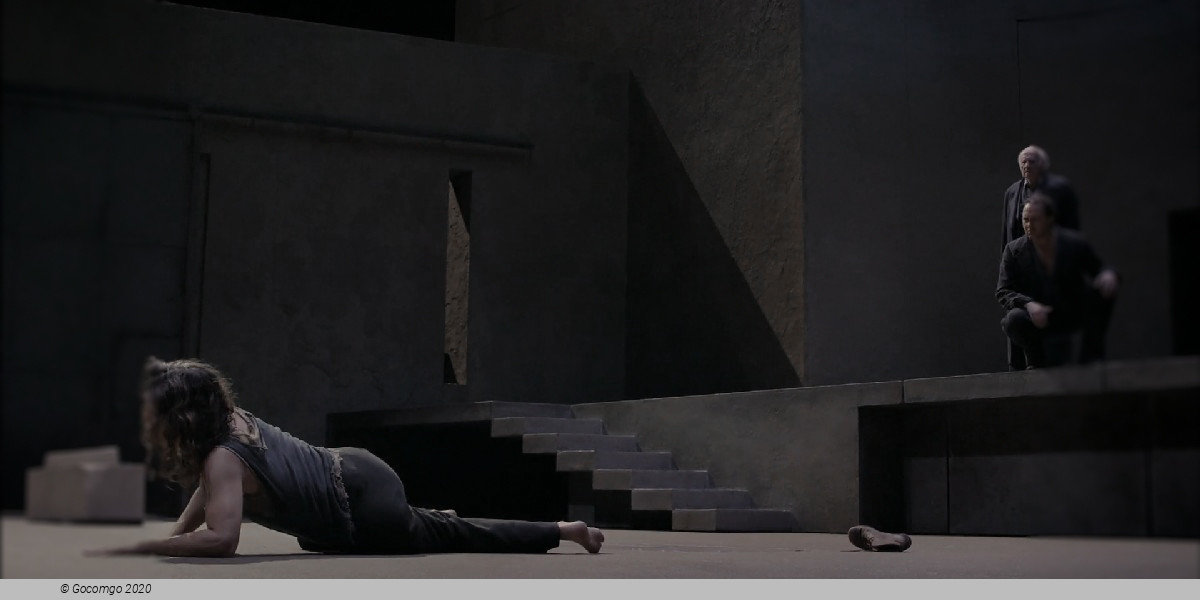
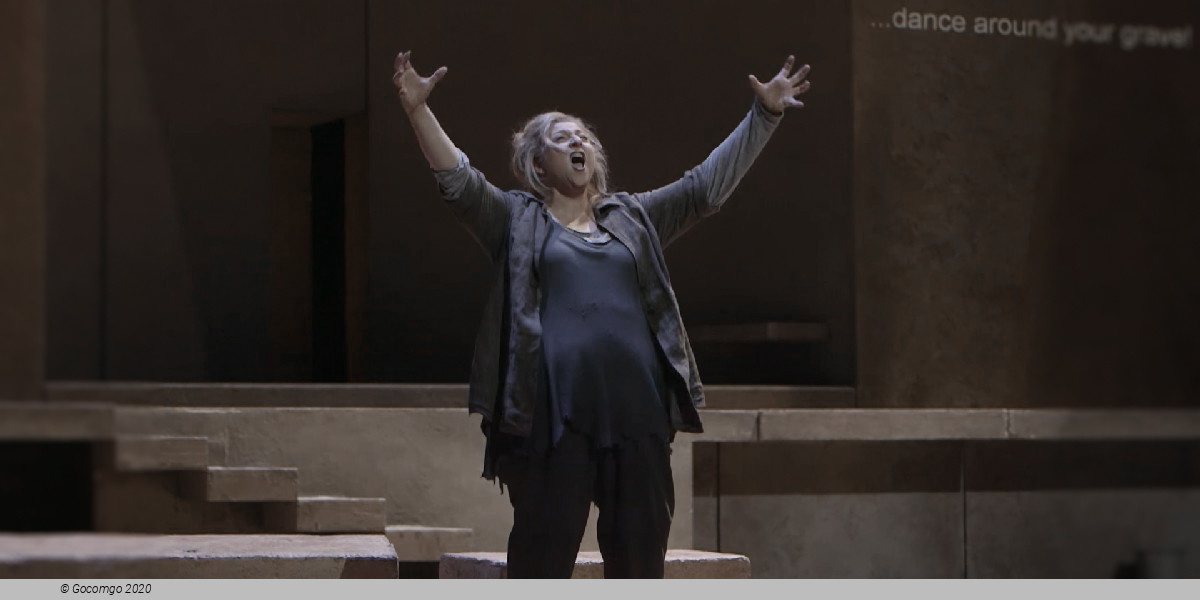
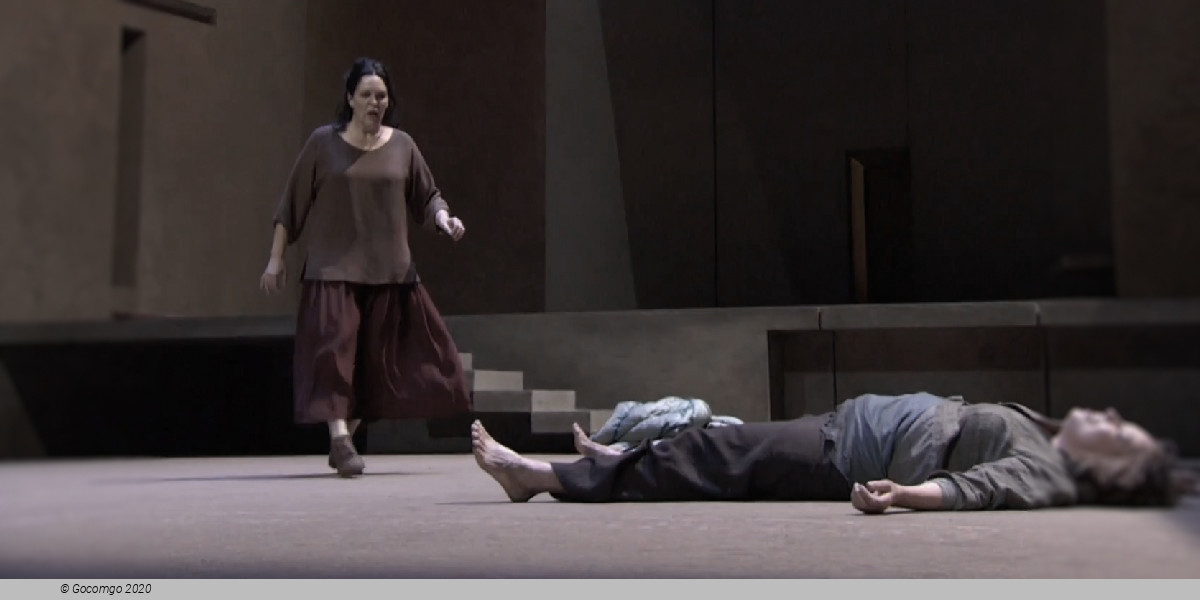
At last Elektra begins to dance. As she reaches the climax of her dance, she falls to the ground: Elektra is dead. Chrysothemis goes into the palace to be with her brother. Banging on the palace door, she calls for her brother. There is no answer.










 Andrássy út 22