

Gallery
About
Ravello Festival 2027 is the main event of the year with the participation of world classical music stars.
If you are interested in this schedule leave a request. As soon as the playbill is announced, we will let you know immediately, and you will be the first to get the tickets.
In each section, you will get the best seats for the same price - centrally located and in front rows.
We provide seats with the best acoustics only.
Even in the world's best concert halls and opera houses, the listening conditions can vary greatly, and some seats are better than others. Sometimes nearby seats have very different viewing and listening conditions.
Usually, these seats are sold out soon and available for early bookers only. We guarantee that you will receive full-view seats only.
Detailed information about the 2026 Festival will be added later.
Please read about the previous Ravello Festival 2026:
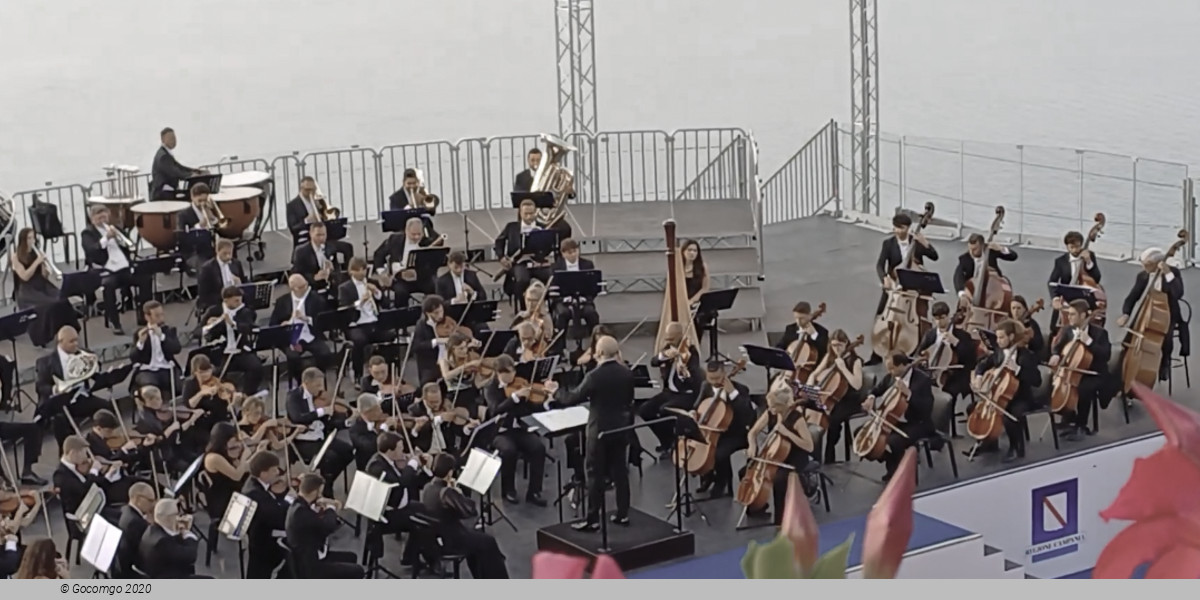
The Ravello Festival 2026 invites you into a world where music and landscape exist in perfect harmony. Suspended between the sea and the sky on the breathtaking Amalfi Coast, the festival transforms the gardens and terraces of Villa Rufolo into one of the most enchanting open-air stages in Europe. From July 4 to September 5, 2026, Ravello becomes a sanctuary of sound, where every concert unfolds against panoramic views that once inspired Richard Wagner himself.
The 74th edition of the festival presents an exceptional classical music programme, bringing together some of the world’s most celebrated orchestras, conductors, and soloists. The artistic vision of the season embraces symphonic repertoire, Baroque masterpieces, chamber music, and rare musical discoveries, creating a refined dialogue between tradition and innovation.
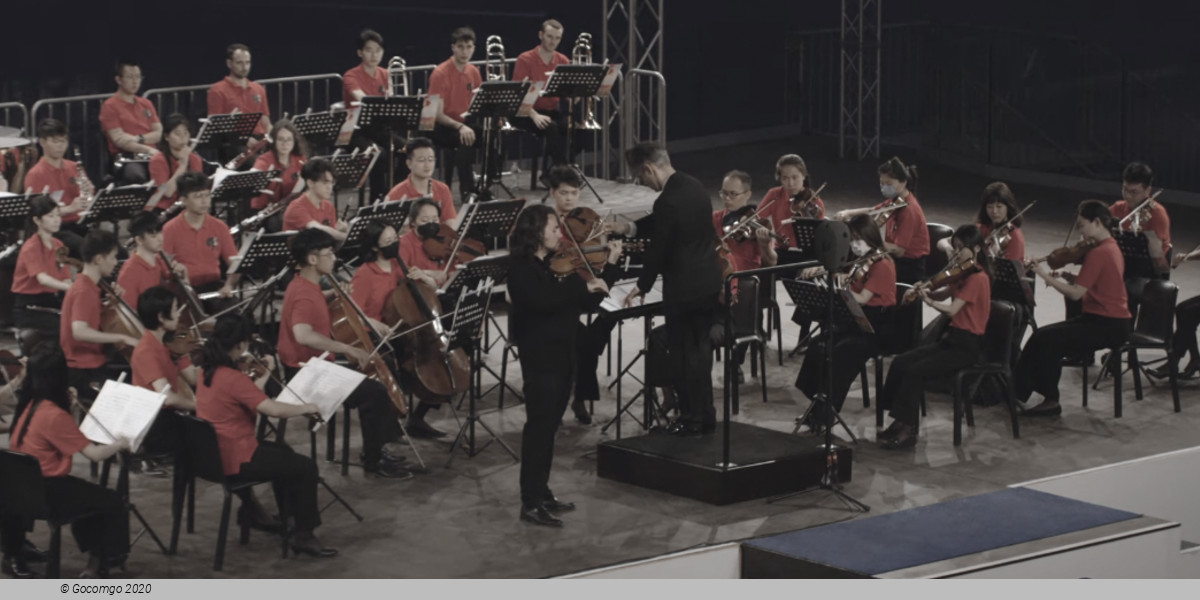
Among the major highlights are performances by the Orchestra del Maggio Musicale Fiorentino, Freiburger Barockorchester and the Dresdner Philharmonie — ensembles renowned for their distinctive artistic identities and extraordinary musical precision.
The constellation of artists appearing in Ravello 2026 is equally remarkable. Conductors such as Simon Rattle, Daniele Gatti, Kent Nagano and John Eliot Gardiner shape the festival with artistic depth and visionary interpretation.
Soloists of international stature add brilliance and individuality to the programme. Violinist Isabelle Faust and cellist Giovanni Sollima enrich the festival with refined artistry and emotional intensity.
One of the festival’s most magical traditions returns once again — the legendary Dawn Concert, where music accompanies the first light of day above the Amalfi Coast. As the sun rises over the sea and the orchestra performs on the Belvedere of Villa Rufolo, the experience becomes almost unreal in its beauty.
What makes the Ravello Festival truly unforgettable is its atmosphere. Here, music is inseparable from nature, architecture, and light. Every performance feels intimate yet monumental, shaped by the scent of lemon gardens, the warmth of the Mediterranean evening, and the timeless elegance of Ravello itself.
The Ravello Festival 2026 is more than a concert series — it is an invitation to experience classical music through beauty, emotion, and the poetry of place.
The Ravello Festival 2026 invites you into a world where music and landscape exist in perfect harmony. Suspended between the sea and the sky on the breathtaking Amalfi Coast, the festival transforms the gardens and terraces of Villa Rufolo into one of the most enchanting open-air stages in Europe. From July 4 to September 5, 2026, Ravello becomes a sanctuary of sound, where every concert unfolds against panoramic views that once inspired Richard Wagner himself.
The 74th edition of the festival presents an exceptional classical music programme, bringing together some of the world’s most celebrated orchestras, conductors, and soloists. The artistic vision of the season embraces symphonic repertoire, Baroque masterpieces, chamber music, and rare musical discoveries, creating a refined dialogue between tradition and innovation.
Among the major highlights are performances by the Orchestra del Maggio Musicale Fiorentino, Freiburger Barockorchester and the Dresdner Philharmonie — ensembles renowned for their distinctive artistic identities and extraordinary musical precision.
The constellation of artists appearing in Ravello 2026 is equally remarkable. Conductors such as Simon Rattle, Daniele Gatti, Kent Nagano and John Eliot Gardiner shape the festival with artistic depth and visionary interpretation.
Soloists of international stature add brilliance and individuality to the programme. Violinist Isabelle Faust and cellist Giovanni Sollima enrich the festival with refined artistry and emotional intensity.
One of the festival’s most magical traditions returns once again — the legendary Dawn Concert, where music accompanies the first light of day above the Amalfi Coast. As the sun rises over the sea and the orchestra performs on the Belvedere of Villa Rufolo, the experience becomes almost unreal in its beauty.
What makes the Ravello Festival truly unforgettable is its atmosphere. Here, music is inseparable from nature, architecture, and light. Every performance feels intimate yet monumental, shaped by the scent of lemon gardens, the warmth of the Mediterranean evening, and the timeless elegance of Ravello itself.
The Ravello Festival 2026 is more than a concert series — it is an invitation to experience classical music through beauty, emotion, and the poetry of place.
About the Ravello Festival
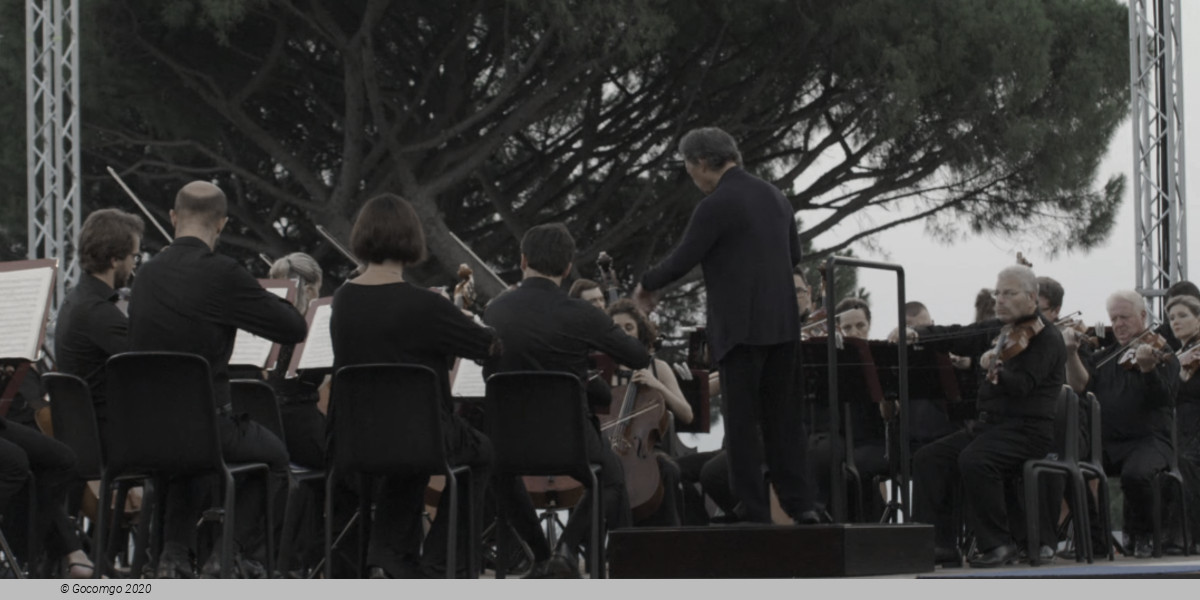
Villa Rufolo is located on a natural terrace approximately 340 meters above sea level, overlooking the Gulf of Salerno. Surrounding the complex of buildings is a lush garden created through the botanical passion of Francis Nevile Reid: a garden rich with exotic plants, flowers, palms, pine trees, and cypresses that, for more than fifty years, have provided the natural backdrop for the concerts of the Ravello Festival, the oldest festival in Italy after the Maggio Musicale Fiorentino.
It is not known who first conceived this daring structure: perhaps Girolamo Bottiglieri and Paolo Caruso, who created the “Wagnerian Concerts in Klingsor’s Garden.” The first two concerts were organized by the EPT on the seventieth anniversary of the death of Richard Wagner. The first took place on June 18, 1953, with the San Carlo Orchestra conducted by Hermann Scherchen. The second was held on June 21 with the same orchestra conducted by William Steinberg. In both cases, the musicians were positioned among the flower beds. Even two years later, as shown in a photograph from 1955, the orchestra was still situated in the garden. The immediate success of this brilliant initiative encouraged the organizers to create more seating for the audience. Thus arose the idea of using all the free space between the garden flower beds as a parterre and constructing, beyond the parapet and seemingly suspended in midair, a stage capable of accommodating soloists, orchestra, and choir.
The space chosen for the stage was identified in the Belvedere area overlooking the sea, consisting of a tower from whose summit two symmetrical staircases descend, overcoming a height difference of approximately five meters and leading to a terrace about six meters wide. This terrace, in turn, is connected to the lower part of the gardens by stairways and access ramps.
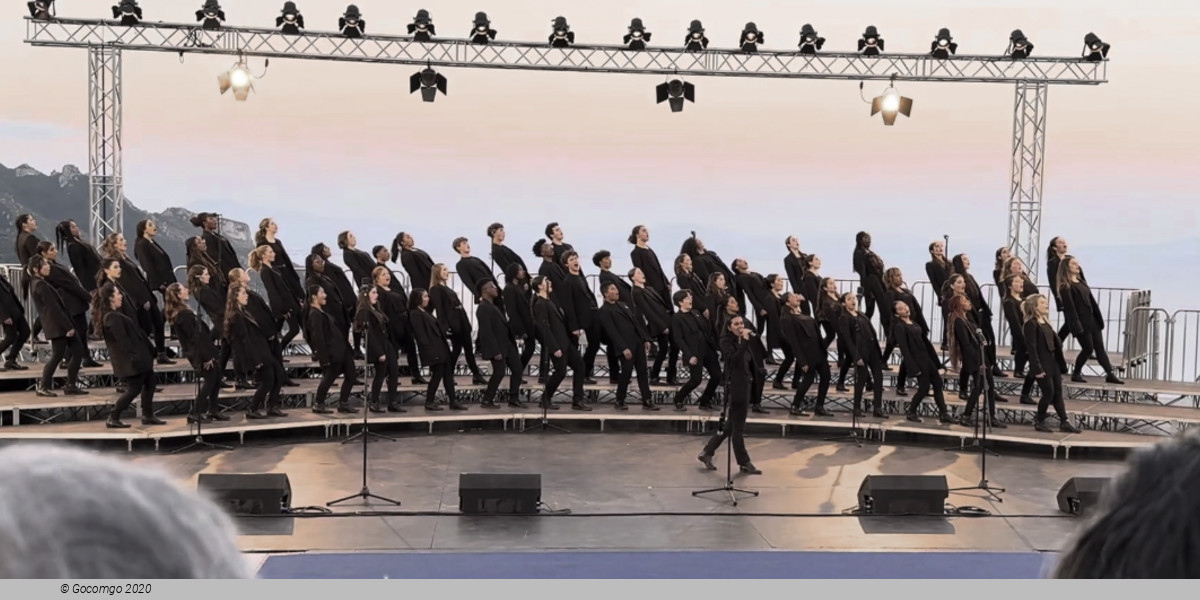
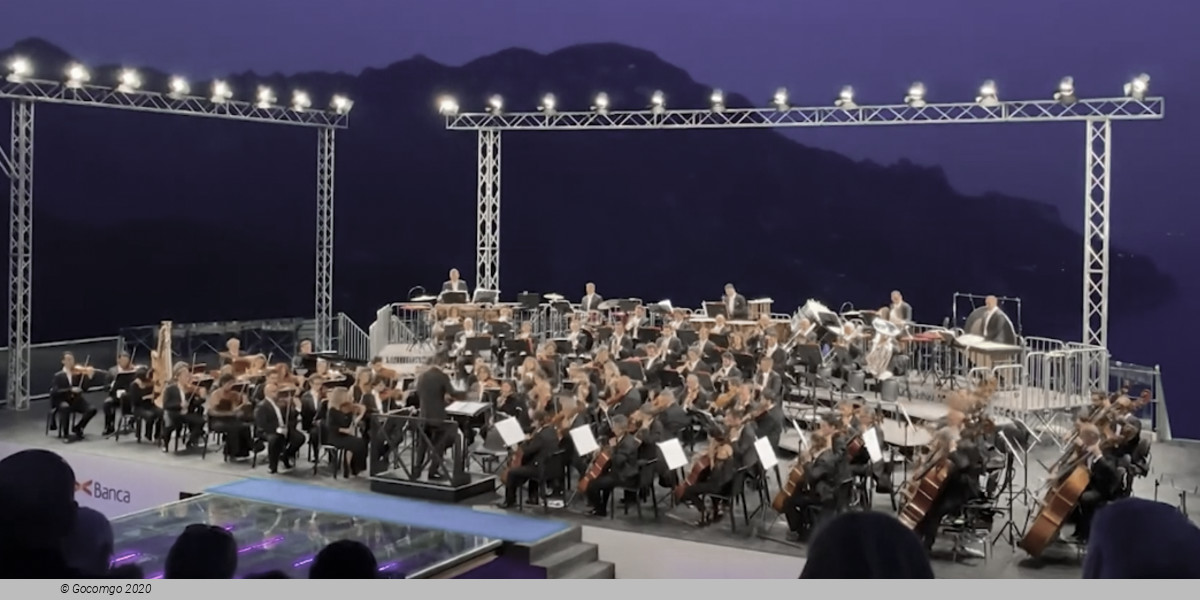
The stage is literally built “in the void”: the tubular structure resting on the lower terrace rises fifteen meters to reach the level of the gardens. This gives the stage an appearance of lightness, as though it were floating in the air. “What can one say about this stage?” wrote Francesco Paolantoni. “It is not a stage… it is a cloud in the sky upon which angels are resting.”
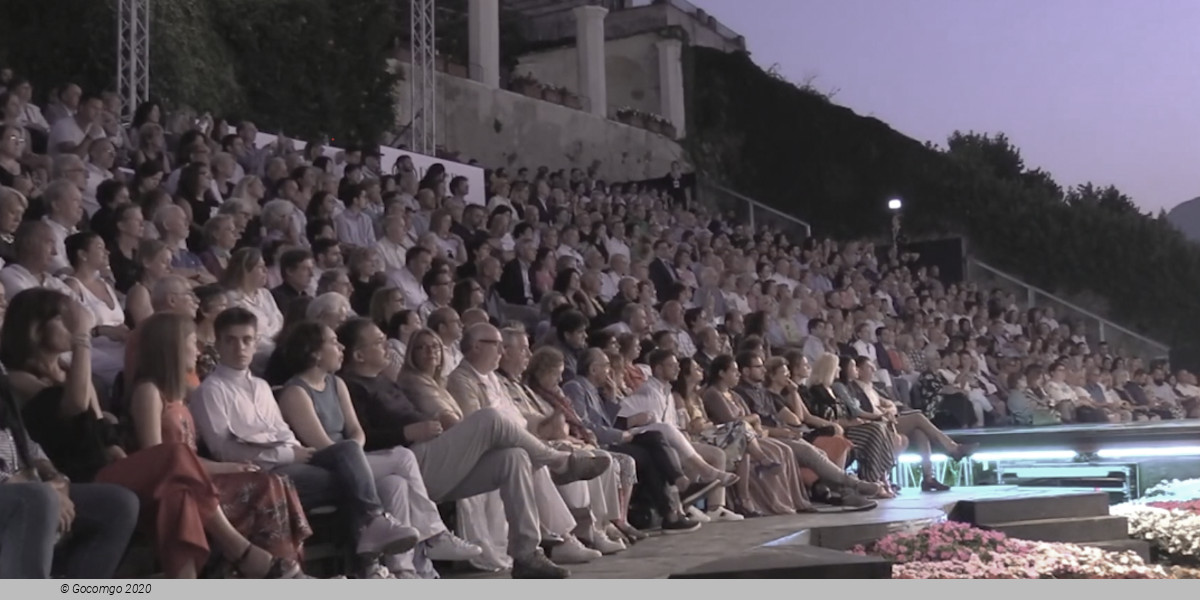
At first, the audience was seated among the flower beds. As attendance grew and the garden could no longer accommodate everyone, elevated stands became necessary. Over the years, several technical solutions were developed that both complied with regulations concerning outdoor public performance venues and allowed the gardens to remain accessible during the days of the Festival with minimal visual intrusion.
Thus, the design evolved from a grandstand that completely covered the Belvedere — even swallowing up the octagonal columns — to a structure centered around the Belvedere tower itself, making it the focal point for welcoming the audience and offering them a breathtakingly emotional panorama.
The terrain, characterized by asymmetrical forms and significant variations in elevation, makes the study, design, and construction of both the stage and the grandstands particularly challenging. Equally difficult is the logistics of access, as the spaces are so narrow that they prevent the use of modern mechanical equipment.
For many editions of the Festival, the grandstands, the supporting structure of the stage, and the stage itself were constructed using wooden poles. As one can imagine, assembling them required extraordinary craftsmanship and a great deal of time both for construction and dismantling. Many still remember the sounds of axes and hammers with which the carpenters engaged in this acrobatic construction broke the silence of Ravello for days on end. However, as the prestige of the Festival grew alongside technological progress, about twenty years ago the daring structure of the stage and stands replaced the dense framework of wooden poles with the classic system of metal tubes and joints supporting wooden platforms.
Finally, the wooden chairs were replaced with more comfortable resin seats, while the acoustics were significantly improved through carefully designed plastic panels created to enhance musical performance without sacrificing the beauty of the surrounding landscape.
The enchantment of the open-air concerts and dance performances held every year at Villa Rufolo depends in no small part on the extraordinary stage upon which orchestras, ballet companies, and solo artists perform. Indeed, it is an exceptionally daring construction projecting beyond the garden parapet over a sheer fifteen-meter drop. The effect is breathtaking and has greatly contributed to the success of the Festival.