Act 1
In front of the house there is an ice-skating rink and a vendor of roasted chestnuts. One after the other, the guests arrive to celebrate together with the family.
The Christmas party
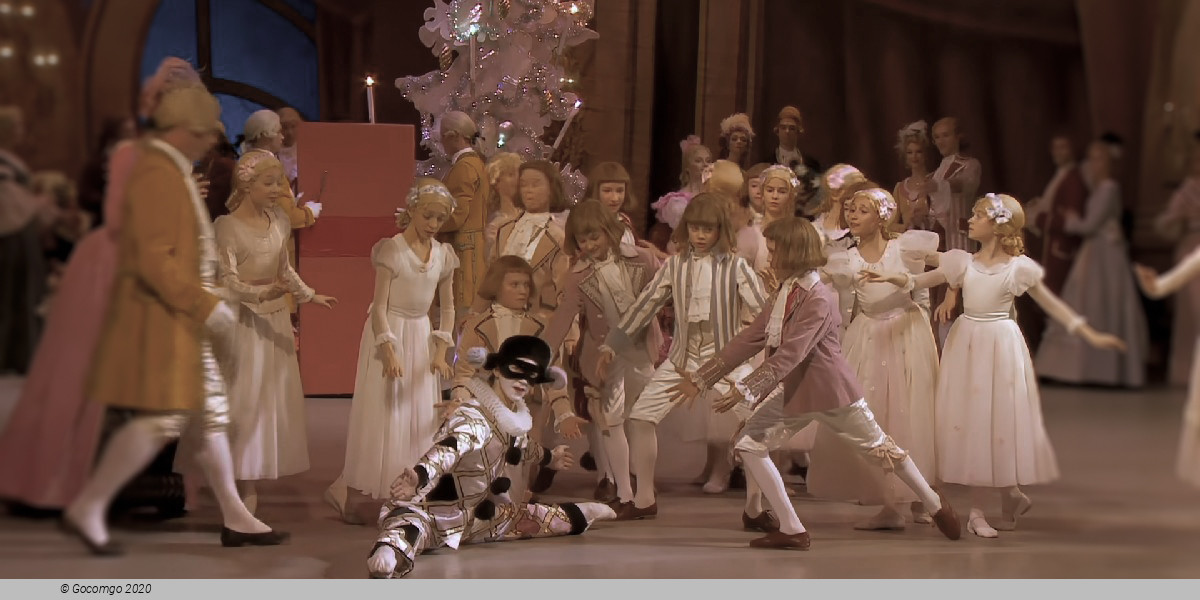
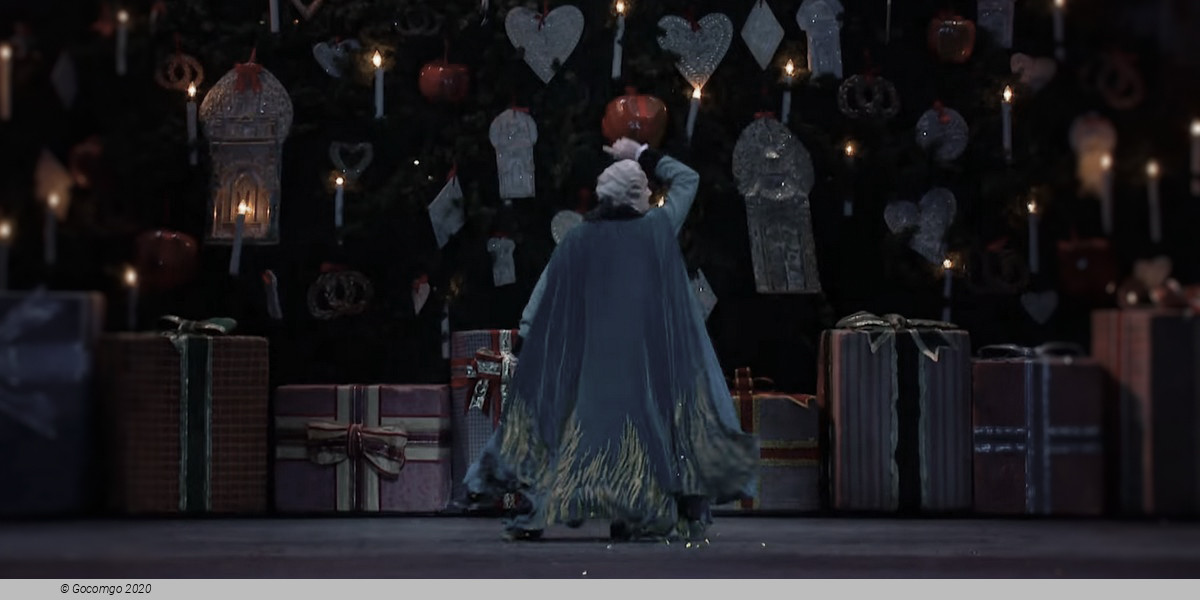
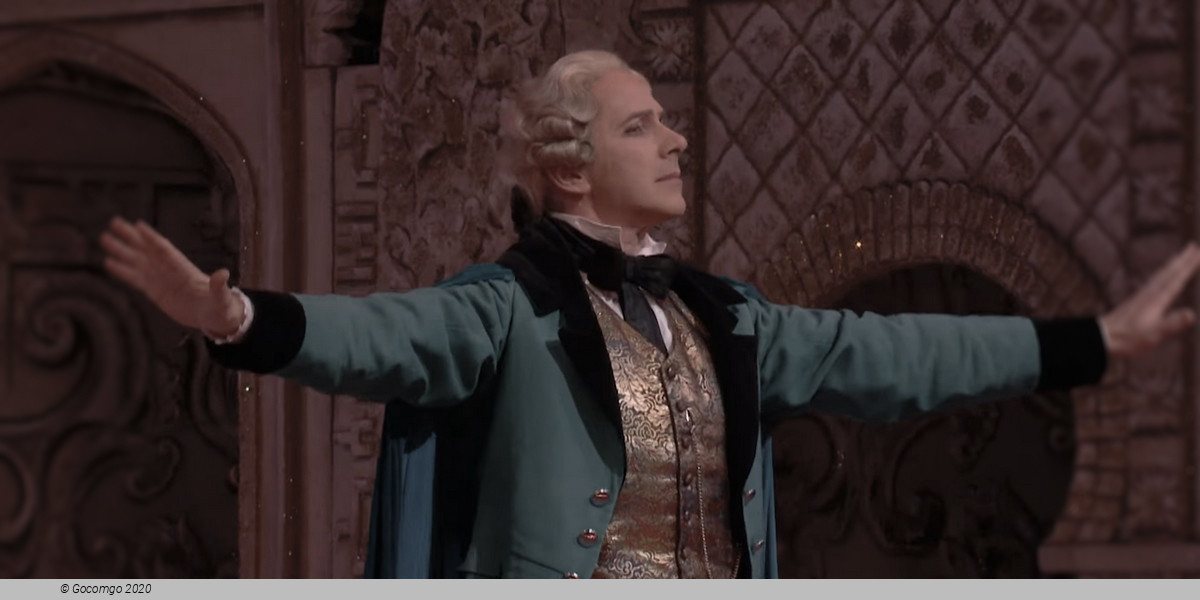
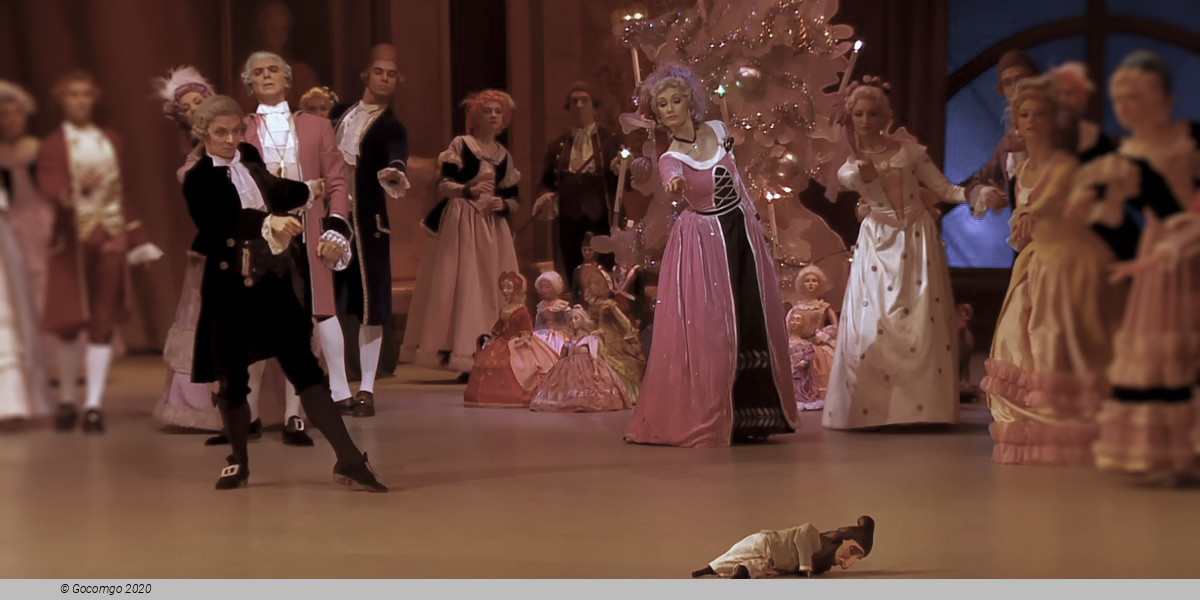
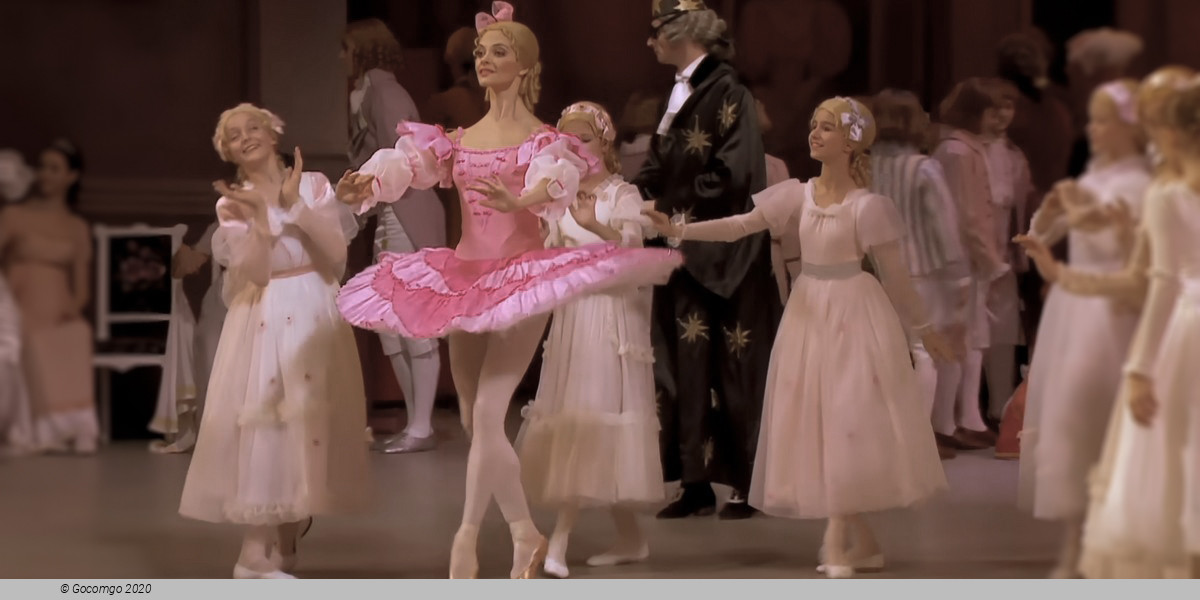
The guests gather around the beautifully decorated Christmas tree, where a great number of presents are waiting for the children. Marie's Uncle Drosselmeier also arrives, accompanied by his nephew, and entertains the guests with a little home puppet show. The performance is about the battle fought between the Nutcracker and the Mouse King over the Princess (who is portrayed by Marie's sister, Louise). Drosselmeier gives the nutcracker doll to Marie, who happily dances with her new favourite. Fritz thoughtlessly grabs the nutcracker doll from Marie, breaking it. Fortunately, Drosselmeier is able to fix the toy. The Christmas festivities close with everybody joining in a dance. The guests go home, and the children get ready to retire for the night. Marie goes to bed holding her new toy.
Act 2
Marie's room
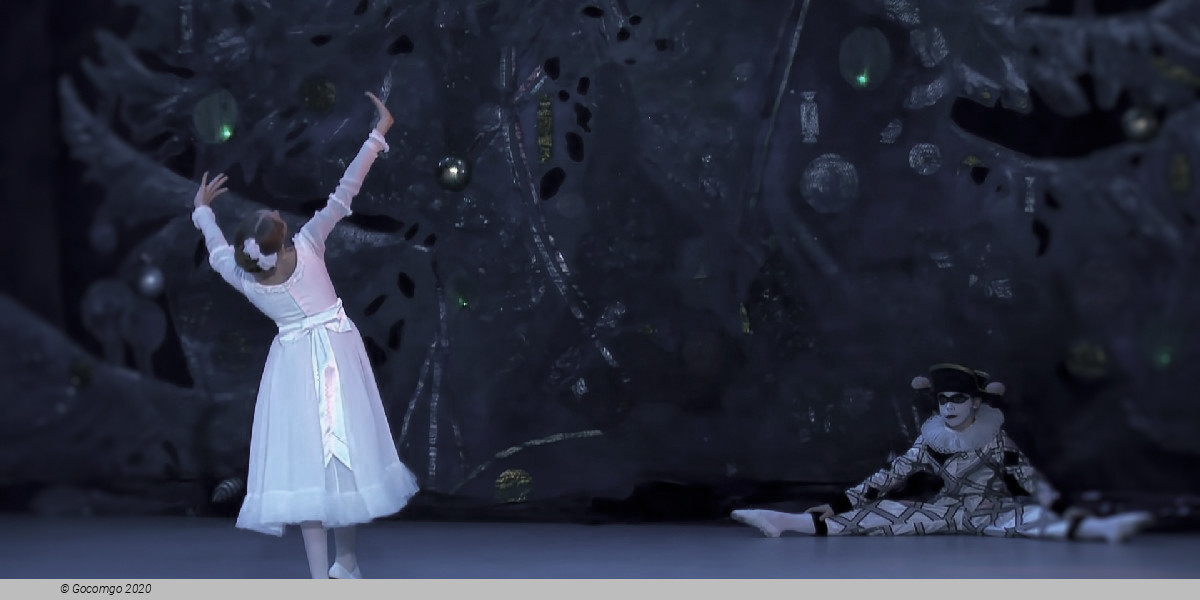
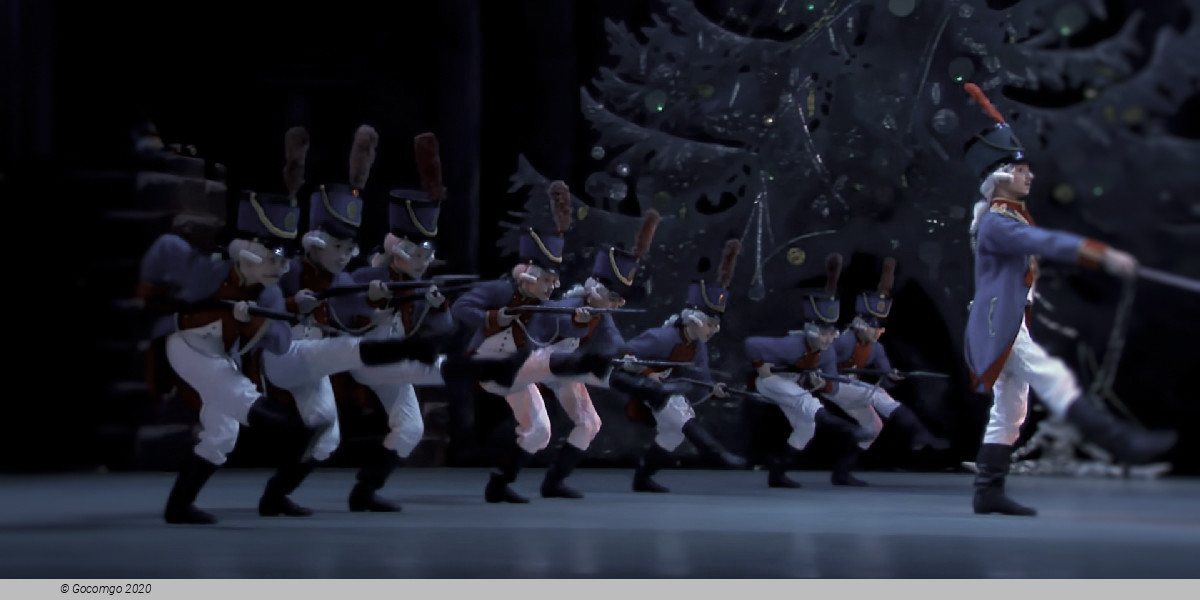
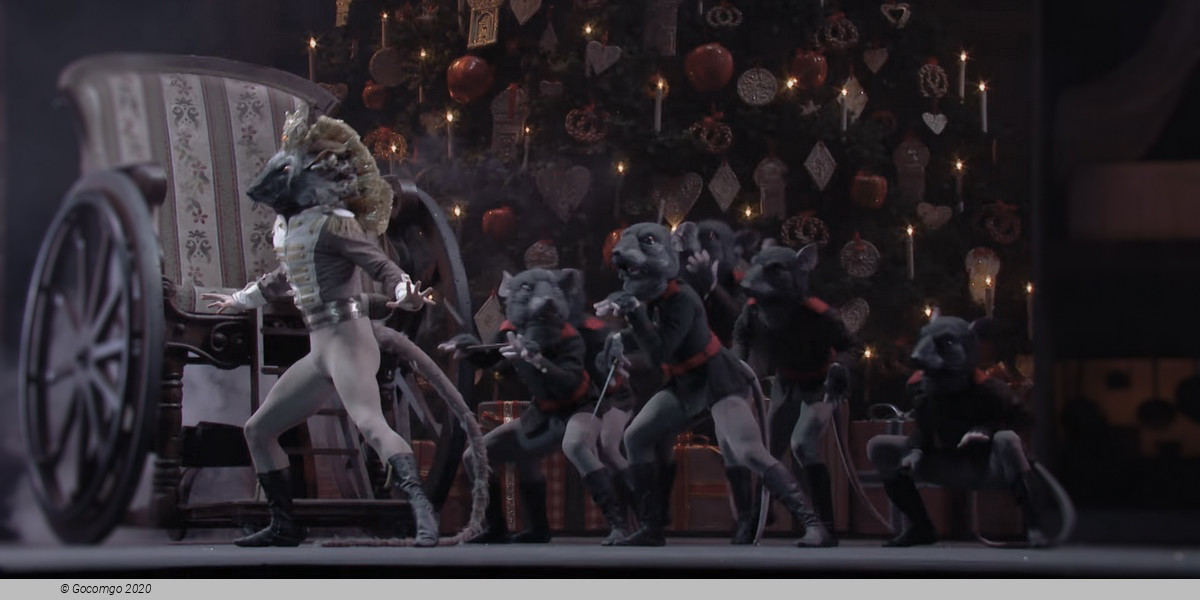
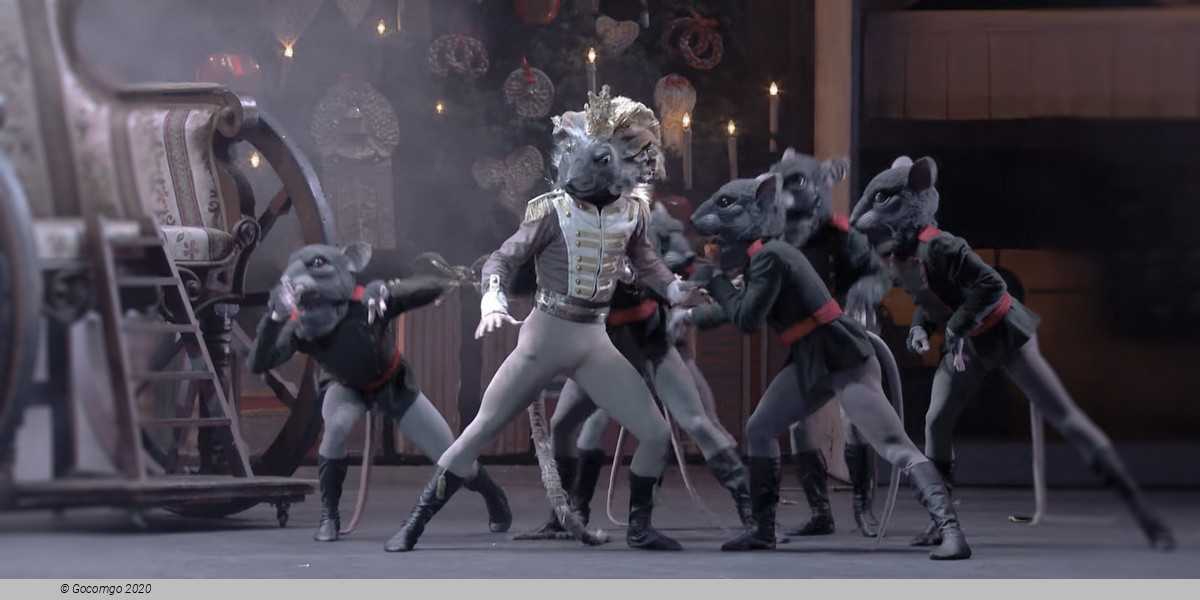
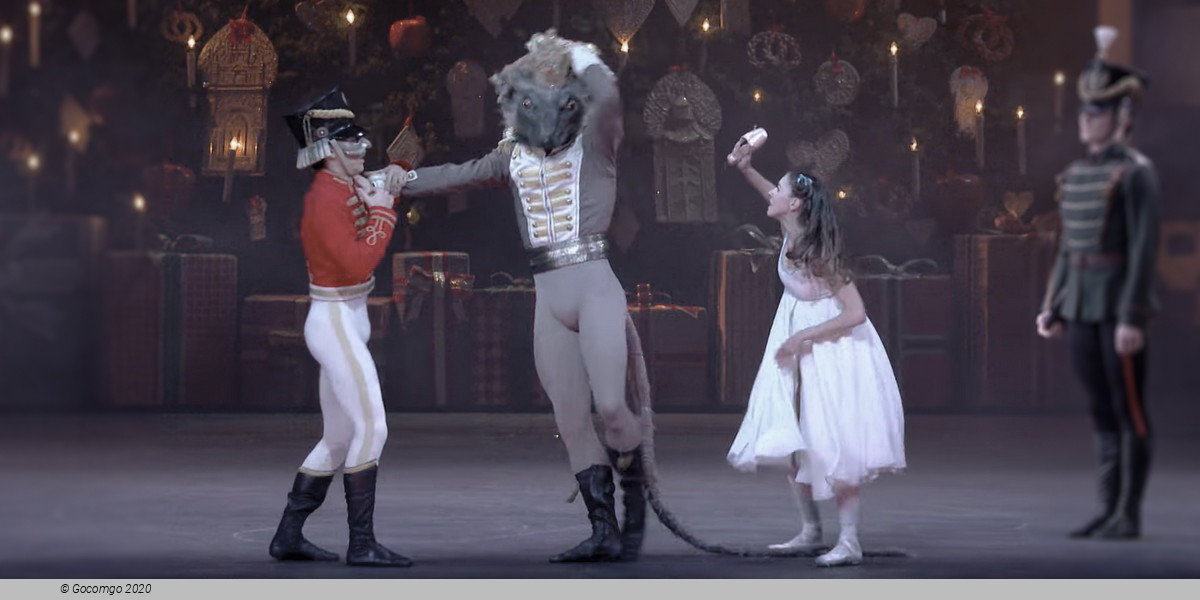
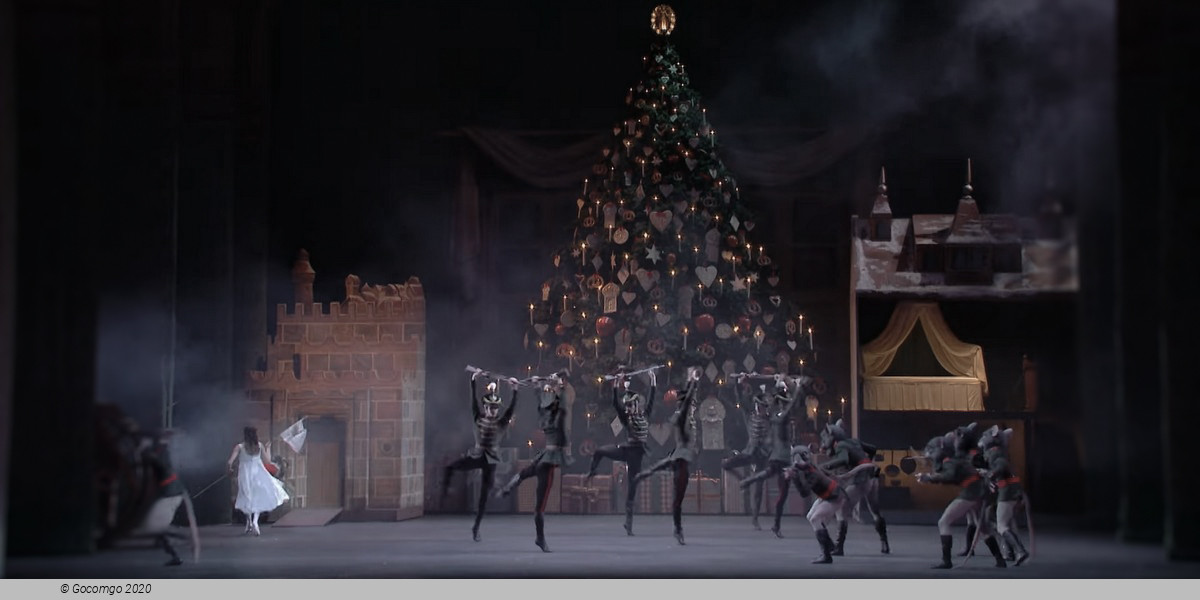
Full of happiness and joy, Marie falls sound asleep in the children's room, naturally with the Nutcracker doll she has received beside her. The clock strikes midnight. As Marie dreams, everything seems to grow to an enormous size: the Christmas tree, the gifts, and the furniture. Even Marie herself is transformed: into a Princess. The puppet show comes to life. The Mouse King leads mice and rats in preparations to attack the house and Christmas tree. In her fright, Marie hopes that the Nutcracker (who is none other than the Nephew) will come to her aid. At the head of an army of lead soldiers who have come to life, the Nutcracker defeats the Mouse King.
Journey to the Land of Snow
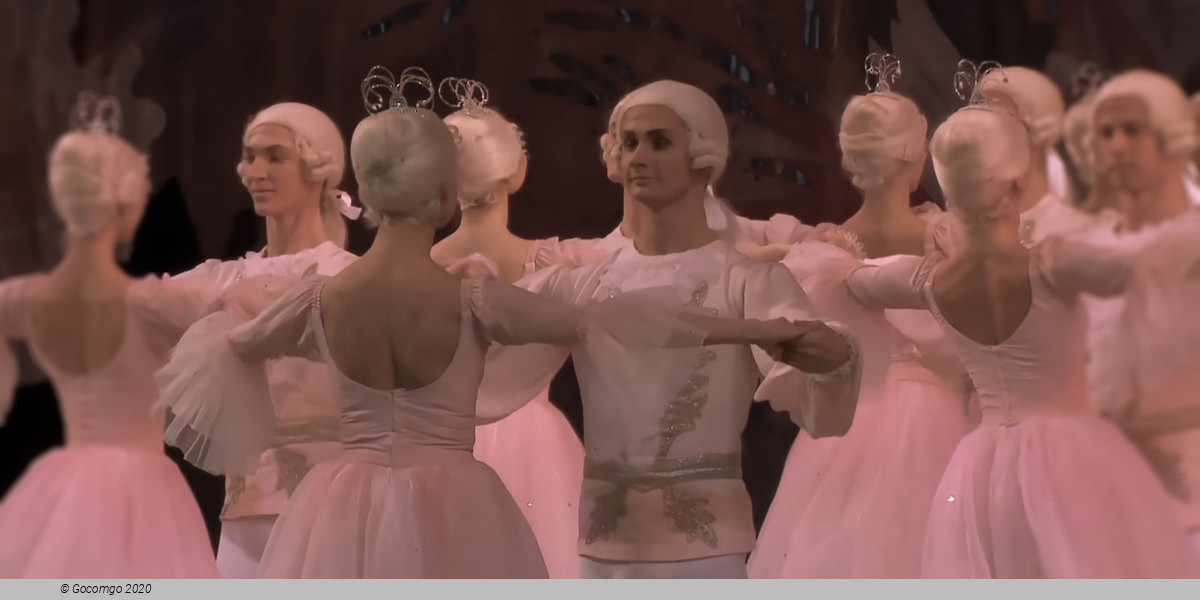
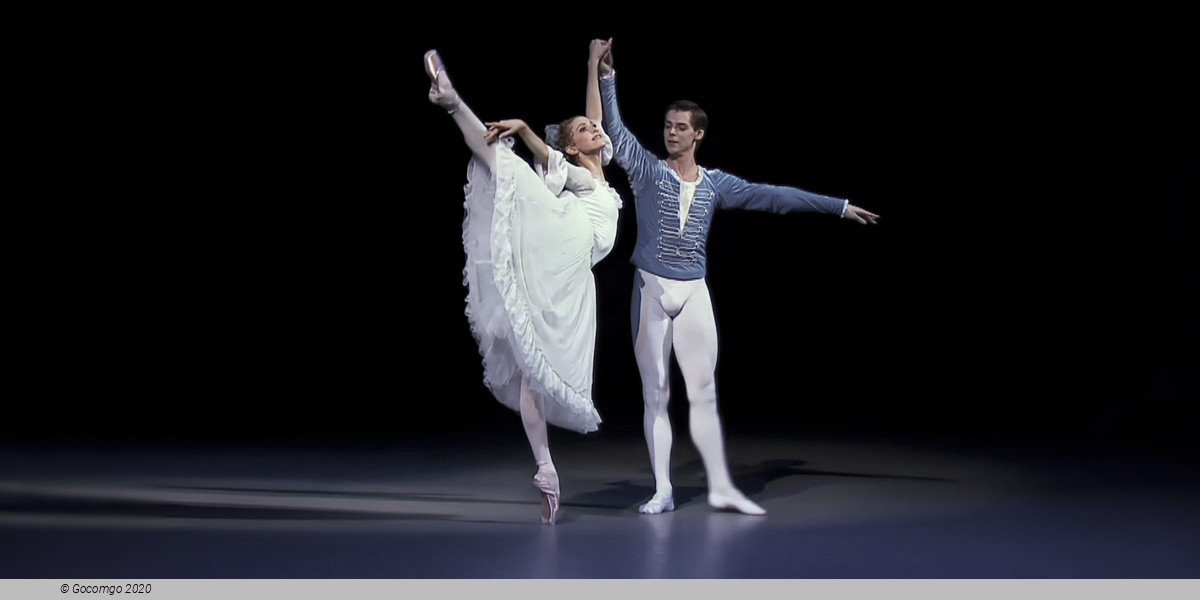
The room and the house transform into a forest winter wonderland. Marie – now Princess Marie – and the Nutcracker Prince delight in the Waltz of the Snowflakes together and then dance a lovely, lyrical duet to show their feelings for each other. They then bid farewell to the flurrying snowflakes.
Act 3
Journey
Drosselmeier accompanies the Princess and the Nutcracker Prince to the Snow Crystal Palace.
The Snow Crystal Palace
The inhabitants of the fairy-tale realm adoringly welcome the prince and his bride, Marie, to Drosselmeier's Snow Crystal Palace. A series of dance divertissements, in which the "residents" of the realm introduce themselves, ensues. A lively Spanish trio is followed by an Oriental snake-charming dance. Three Chinese dancers then entertain the guests with jumps and fast spins before the magnificent Russian dance is opened with a male solo.
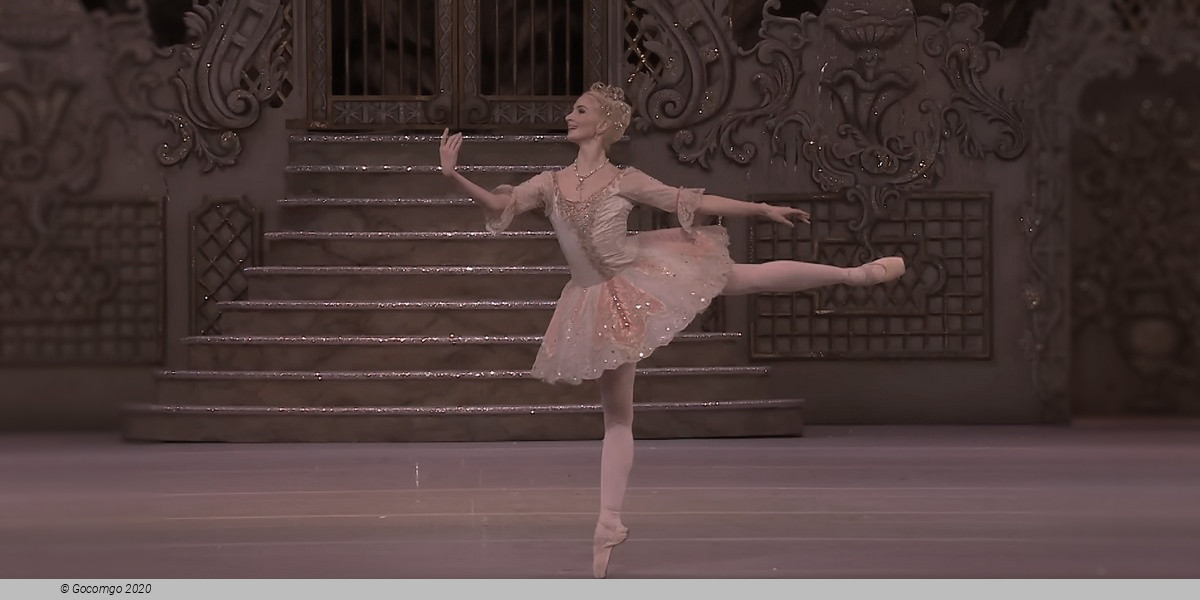
In this version, the pas de trois is a brilliant variation for “rococo” ballerinas, which leads, as the greetings conclude, to the climax of these divertissements: the Waltz of the Flowers.
After the waltz comes the grand pas de deux between Princess Marie and the Nutcracker Prince, a duet constructed in keeping with classical tradition as an adagio, two variations and a coda testifying to the fulfilment of their love. In the finale, they are joined by the entire corps de ballet and the enchantingly lovely inhabitants of the Snow Crystal Palace.
But as this marvellous and dizzying dream ends, we are returned to Marie’s room, where it is Christmas morning. Fritz rushes in to join her, and they tell each other their dreams.
Marie herself is unable to say whether the Christmas magic was something she dreamed or actually experienced.
Plot
Below is a synopsis based on the original 1892 libretto by Marius Petipa. The story varies from production to production, though most follow the basic outline. The names of the characters also vary. In the original E. T. A. Hoffmann story, the young heroine is called Marie Stahlbaum and Clara (Klärchen) is her doll's name. In the adaptation by Dumas on which Petipa based his libretto, her name is Marie Silberhaus. In still other productions, such as Baryshnikov's, Clara is Clara Stahlbaum rather than Clara Silberhaus.
Act I
Scene 1: The Stahlbaum Home
It is Christmas Eve. Family and friends have gathered in the parlor to decorate the beautiful Christmas tree in preparation for the party. Once the tree is finished, the children are sent for. They stand in awe of the tree sparkling with candles and decorations.
The party begins. A march is played. Presents are given out to the children. Suddenly, as the owl-topped grandmother clock strikes eight, a mysterious figure enters the room. It is Drosselmeyer, a local councilman, magician, and Clara's godfather. He is also a talented toymaker who has brought with him gifts for the children, including four lifelike dolls who dance to the delight of all. He then has them put away for safekeeping.
Clara and Fritz are sad to see the dolls being taken away, but Drosselmeyer has yet another toy for them: a wooden nutcracker carved in the shape of a little man. The other children ignore it, but Clara immediately takes a liking to it. Fritz, however, breaks it, and Clara is heartbroken.
During the night, after everyone else has gone to bed, Clara returns to the parlor to check on her beloved nutcracker. As she reaches the little bed, the clock strikes midnight and she looks up to see Drosselmeyer perched atop it. Suddenly, mice begin to fill the room and the Christmas tree begins to grow to dizzying heights. The nutcracker also grows to life size. Clara finds herself in the midst of a battle between an army of gingerbread soldiers and the mice, led by their king. They begin to eat the soldiers.
The nutcracker appears to lead the soldiers, who are joined by tin soldiers, and by dolls who serve as doctors to carry away the wounded. As the Mouse King advances on the still-wounded nutcracker, Clara throws her slipper at him, distracting him long enough for the nutcracker to stab him.
Scene 2: A Pine Forest
The mice retreat and the nutcracker is transformed into a handsome Prince. He leads Clara through the moonlit night to a pine forest in which the snowflakes dance around them, beckoning them on to his kingdom as the first act ends.
Act II
Scene 1: The Land of Sweets
Clara and the Prince travel to the beautiful Land of Sweets, ruled by the Sugar Plum Fairy in the Prince's place until his return. He recounts for her how he had been saved from the Mouse King by Clara and transformed back into himself. In honor of the young heroine, a celebration of sweets from around the world is produced: chocolate from Spain, coffee from Arabia, tea from China, and candy canes from Russia all dance for their amusement; Danish shepherdesses perform on their flutes; Mother Ginger has her children, the Polichinelles, emerge from under her enormous hoop skirt to dance; a string of beautiful flowers perform a waltz. To conclude the night, the Sugar Plum Fairy and her Cavalier perform a dance.
A final waltz is performed by all the sweets, after which the Sugar Plum Fairy ushers Clara and the Prince down from their throne. He bows to her, she kisses Clara goodbye, and leads them to a reindeer drawn sleigh. It takes off as they wave goodbye to all the subjects who wave back.
In the original libretto, the ballet's apotheosis "represents a large beehive with flying bees, closely guarding their riches". Just like Swan Lake, there have been various alternative endings created in productions subsequent to the original.






 II. János Pál pápa tér 30