Background
Thanks to their good relations with the pashas, the Barinkay family of southern Hungary succeeded in amassing a huge fortune during the Turkish occupation of their country. However, when the Turks were expelled from the land, Gáspár Barinkay also had to flee. The landlord hid his treasure somewhere on the estate, went into hiding and died. With the estate then being confiscated by the emperor, Barinkay's wife also fled and raised their son, Sándor, alone in the Balkans. Years pass, and in the time of Maria Theresa, a general amnesty is announced for the exiles, with the estates returning to their rightful heirs. After travelling the world trying to make a living as a circus performer, the young Sándor Barinkay wakes up one fine day to learn that he is now the lord of a 16,000 acre estate in the Banat of Temes. All he has to do is settle down there.
Act 1
Sándor Barinkay is accompanied to his estate by Count Carnero, an Imperial counsellor and third vice chairman of the Commission on Public Morality in Vienna, who ceremonially returns the land to him by the grace of the empress. The manor, however, has been replaced by a swamp, while the ruined Barinkay Castle has been occupied by the filthy rich pig dealer Zsupán and his daughter, Arsena. Of the famous treasure there is no trace. Two witnesses are required as a formality, so first they knock on the door of the Gypsy woman Czipra, who lives nearby. The woman predicts that Barinkay will soon be a happy man: a dream on his wedding night will shed light on where his father hid the treasure. Called to act as the second witness is Zsupán, to whom Barinkay immediately begins to complain about his castle. Finally, the young man makes him an offer: if Zsupán's daughter really is pretty and will marry him, then he'll be willing to drop the lawsuit. Next to arrive is the girl's governess, Mirabella, who is greatly surprised to find Carnero, her long-lost husband: 24 years earlier, during the Battle of Belgrade, fate separated them when Mirabella was taken prisoner by a Turkish pasha. Their son, Ottokar, works as a music teacher in the Zsupán household, showering Arsena, the daughter of the “pork king” with tender emotions. The stunning girl herself arrives, and Barinkay asks her to marry him. Arsena, however, is in love with Ottokar and, wishing to avoid a forced marriage, states that the man who seeks her hand in marriage must be at least a baron in rank. Barinkay is left alone, discouraged at being greeted at his estate by nothing but a swamp and a haughtily recalcitrant bride.
Saffi, Czipra's daughter, arrives and utterly enchants Barinkay with her singing. The other Gypsies also arrive and elect Barinkay their “vajda”, or chieftain. The young man wakes up the Zsupán household to let the pompous inhabitants know that he has been made a baron – a Gypsy baron – but that instead of marrying Arsena, he takes Saffi for his wife. The Gypsies and the members of the Zsupán household face off antagonistically.
Act 2
Barinkay and Saffi have consummated their love. On their wedding night, Czipra dreamed about where Barinkay will find the treasure he is lawfully entitled to, which indeed proves to be where the valuables are hidden.
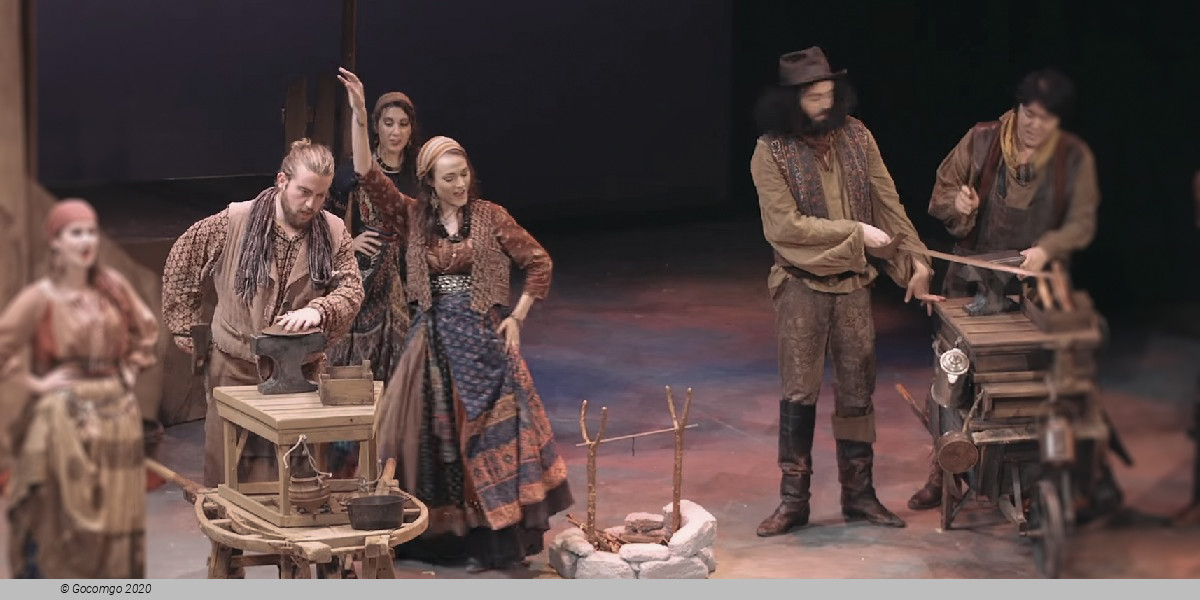
At dawn the Gypsies get to work forging weapons, as the empire is at war. Zsupán's people appear, maintaining that Barinkay's marriage to the gypsy girl is both immoral and illegal. Barinkay nevertheless affirms that Saffi is his wife. When questioned, they relate that they were married not by a priest, but by a pair of storks. General mayhem breaks out when Zsupán and his people notice the magnificent necklace on Saffi's neck and suddenly realise that Barinkay and his companions have found the famous treasure!
Right then, Colonel Homonnay marches in at the head of a troop of hussars, there to recruit soldiers for the army of Empress Maria Theresa. Carnero reports Barinkay to Homannay for concealing treasure from the authorities, but then is forced to eat his words when Barinkay voluntarily hands over his treasure for use by Maria Theresa's army. Nevertheless, Carnero continues with his accusations, citing the landlord for letting himself be seduced by a Gypsy girl. Czipra won't stand for any more of this censure and produces a document that reveals that she is not in fact Saffi's mother. Instead, the girl is the daughter of the pasha of Temes, meaning that she was born a princess! Homonnay marches out together with his newly recruited soldiers: Barinkay and the Gypsies, joined by Zsupán and Ottokar, who have unwittingly drunk from the recruiter's wine and thus now must go to war.
Act 3
In the fabulous city of Vienna, news reaches Mirabella, Carnero and Arsena that the hussars have triumphed, and the war is over. Maria Theresa herself personally greets the troops returning home from battle. Homonnay praises his soldiers one by one: Zsupán, who did a fine job of lining his pockets on the battlefield, Ottokar, who bucked up the troops with his singing, and Barinkay and his Gypsies, whose blacksmithing work repairing the damaged cannons proved an invaluable service. Maria Theresa gives Barinkay a triple award for giving up his fortune and his love in order to serve the empire. She'll return Barinkay's entire fortune, make him a baron and give him a wife. Barinkay gratefully declines, asking to remain a simple Gypsy baron. He again asks for Arsena's hand – but not for himself: he asks for her to be Ottokar's wife. Then Princess Saffi appears – she is now a lady-in-waiting to Maria Theresa. Barinkay sadly informs the empress that although he loves Saffi, the life of a baron or prince is not the one for him, so he'd prefer to return to the wandering life of a circus performer. Saffi also happily chooses the life of the circus over the glittering world of the Imperial court.
Overview: The story, of the marriage of a landowner (returned from exile) and a gypsy girl who is revealed as the daughter of a Turkish pasha, and the rightful owner of a hidden treasure, involves a fortune-telling Romany queen, a self-important mayor, a rascally commissioner, a military governor, a band of gypsies and a troop of hussars.
Place: Hungary
Time: Late 18th century
Act 1
A swampy riverside region near the town of Timișoara
The distant scene is dominated by a derelict castle. In the foreground is a partly deserted village with only one reasonably prosperous-looking house. In a particularly disreputable hut there lives an old gypsy woman named Czipra. The boatmen can be heard singing at their work. Ottokár, son of Mirabella who is governess to Arsena (daughter of a miserly old farmer Zsupán) is digging for treasure which he fondly believes to be buried somewhere around. This is his daily routine, and the more he looks without success, the worse his temper becomes. Czipra looks out of her window and makes fun of his efforts. She has been watching him for weeks and has a low opinion of his wasting time on this activity while the other Gypsies are out doing an "honest" day's work. She tells him that if he continues with this fruitless quest, he will end up penniless and never marry, as he hopes, Arsena.
Sándor Barinkay, son of the late owner of the castle, arrives accompanied by Conte Carnero, Commissioner for Oaths, who is here to sort things out for him. The Commissioner suggests they get on with the job and call on Czipra as a witness. They send for Zsupán. In the meantime he tells Barinkay of the beautiful Arsena. To pass time Czipra tells their fortunes and reveals to Sándor Barinkay that there is happiness and fortune in store for him. He will marry a faithful wife who will, in a dream, discover where the treasure is hidden. Carnero is also told that he will recover a treasure that he has lost, which leaves him slightly puzzled as he cannot remember having had one.
Zsupán arrives and tells everyone that he is a highly successful pig-breeder adding that he lives for sausages and wine and has little time for art. He agrees to witness Barinkay's claims but warns him that he can be a contentious neighbour. Barinkay suggests that he might marry Zsupán's daughter and Arsena is sent for. But it is Mirabella, the governess, who first appears. It seems that she is Carnero's long-lost wife, so part of Czipra's prediction is immediately realised. Carnero shows little sign of delight and a rather joyless reunion takes place. Mirabella says that she had believed her husband to have been killed at the Battle of Belgrade.
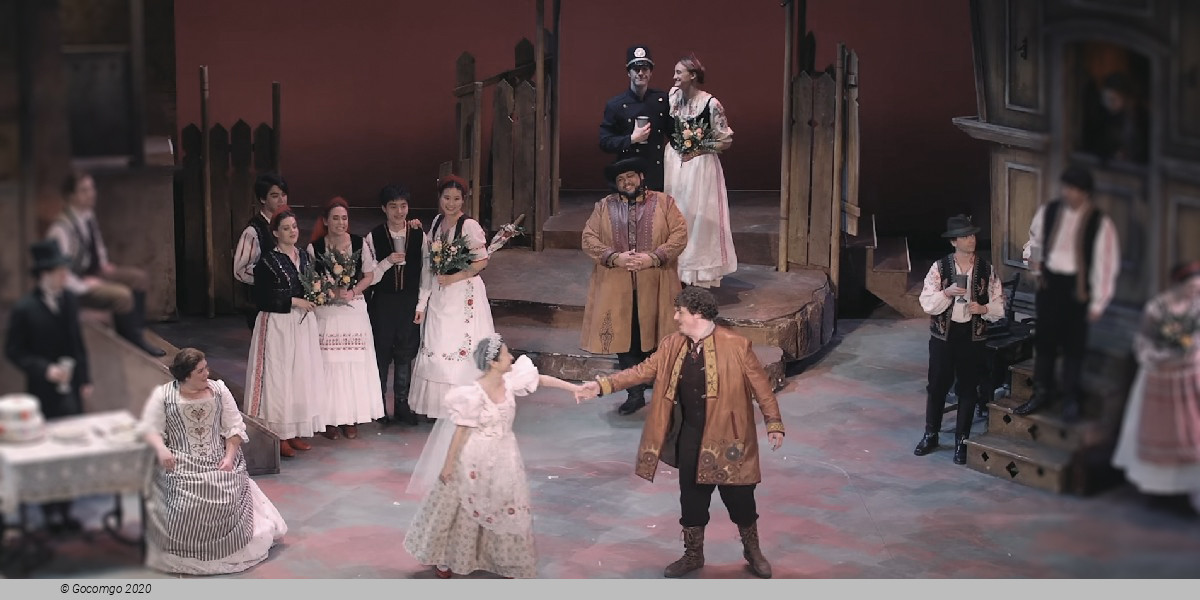
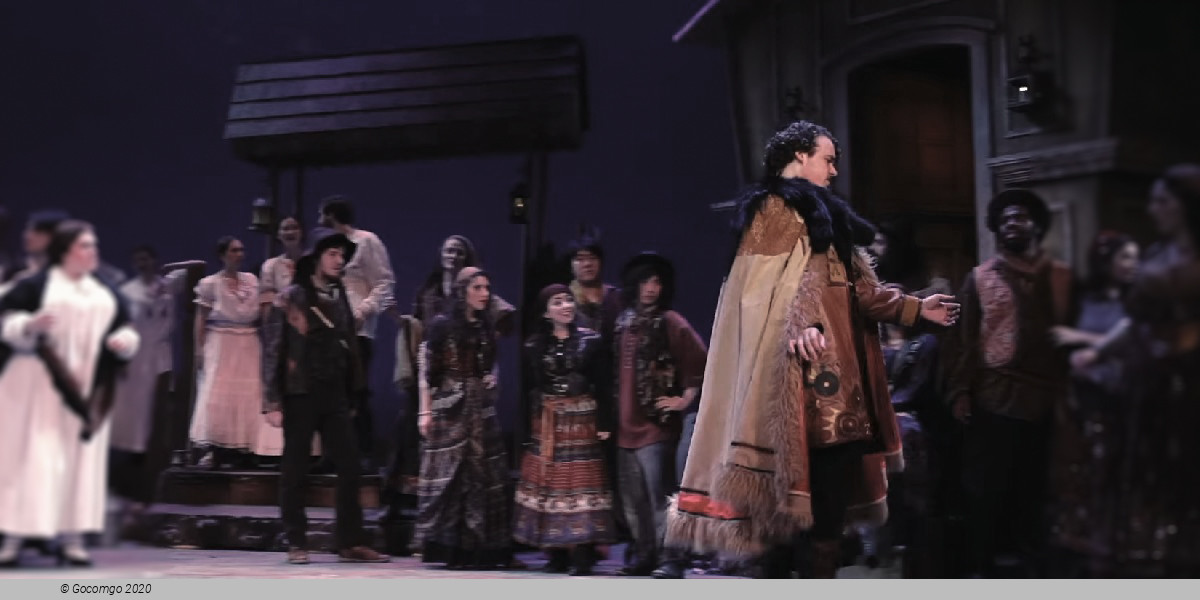
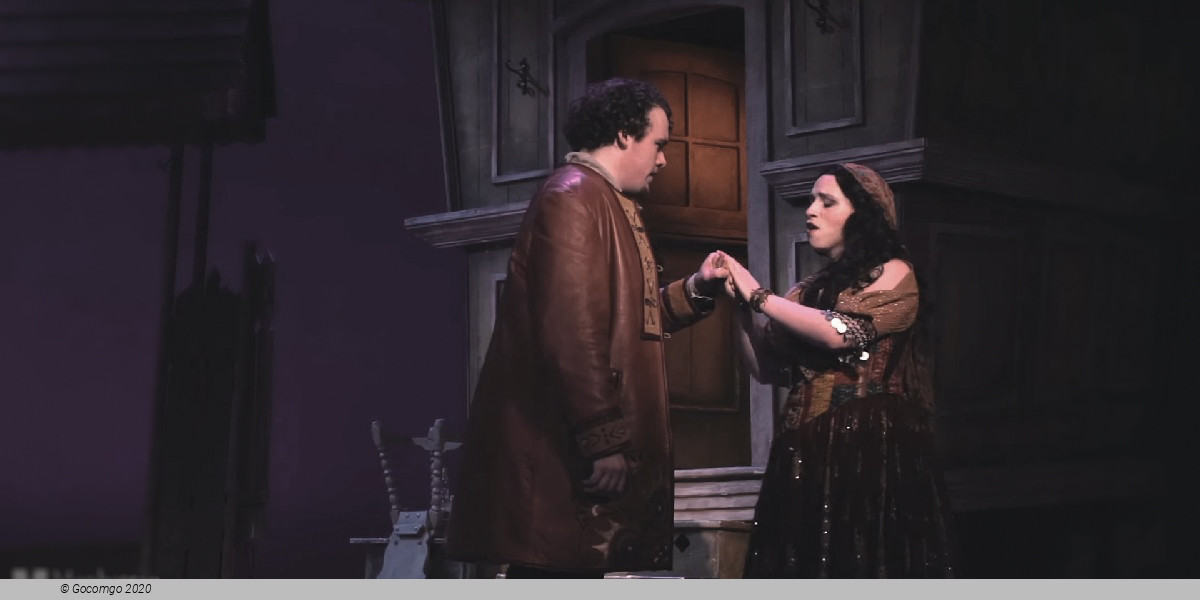
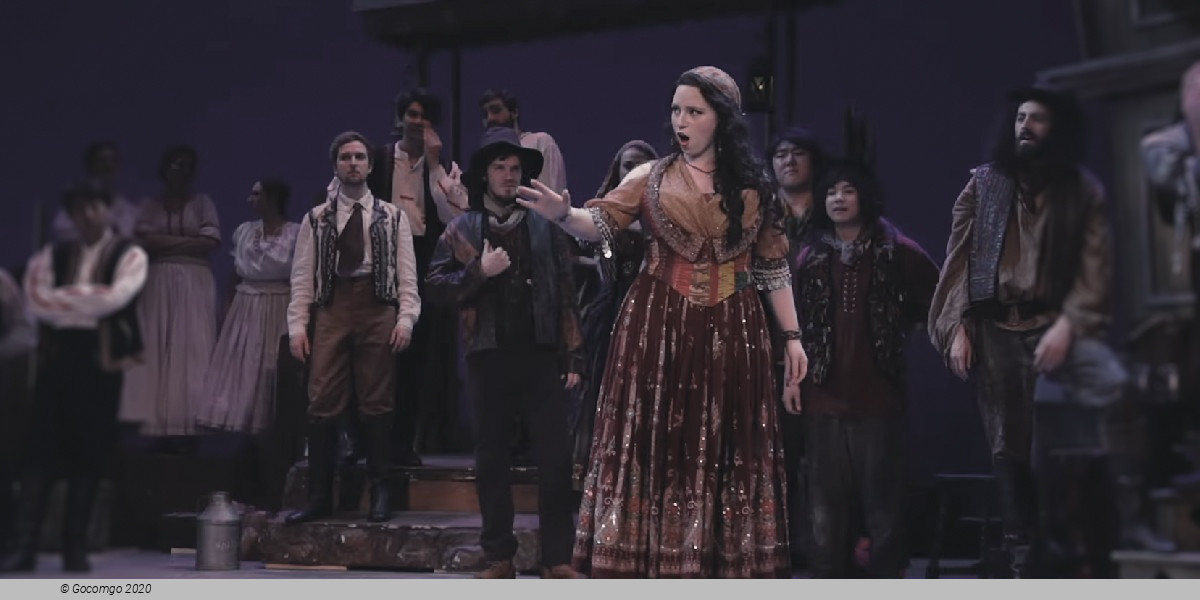
Arsena arrives, heavily veiled, but though the chorus hail the bride-elect she is not so co-operative. She is in love with Ottokár. Barinkay makes a formal proposal but Arsena tells him that she is descended from the aristocracy and can only marry someone of noble birth. Zsupán and the others tell Barinkay that he must do something about this. He is left brooding but hears a gypsy girl singing a song which praises the loyalty of the Gypsies to their friends. It is Saffi, daughter of Czipra, and Barinkay is immediately attracted by her dark beauty and accepts an invitation to dine with her and Czipra. Unaware of the others watching, Ottokár meets Arsena and they vow their eternal love for each other. He gives her a locket at which point Barinkay pretends to be most indignant. The Gypsies return from their work and Czipra introduces Barinkay as their new local squire. They elect him chief of the Gypsies. Now affirmed as a gypsy baron he calls on Zsupán and asserts his noble right of the hand of Arsena. Zsupán is not all that impressed. Saffi welcomes Barinkay back to his inheritance. Ever the opportunist, Barinkay now says that he would like to marry Saffi who is as delighted as her gypsy friends. Zsupán and Arsena are now rather indignant at this turn of events and threaten reprisals.
Act 2
The castle at dawn the following day'
Czipra reveals to Barinkay that Saffi has dreamed of the location of the treasure. They start to search and find it hidden, as she has dreamed, under a nearby rock. As they depart the Gypsies arise to start their day's work. Zsupán appears and tells them that his cart has stuck in the mud. He orders the Gypsies to come and help him. They resent his order and steal his watch and money. His cries for help bring Carnero, Mirabella, Ottokár and Arsena on the scene, followed by Barinkay, now dressed as a gypsy baron, and Saffi. Barinkay introduces Saffi as his wife but Carnero is not satisfied that all the legal requirements have been met. They tell him the stars have guided them and the birds have witnessed their vows. This is not quite what the law demands and Mirabella and Zsupán adopt a highly moral tone about the whole affair. At this point Ottokár discovers a few of the gold coins that Barinkay has left behind and is highly excited. Barinkay soon disillusions him by telling him that the treasure has already been found. At this moment, a recruiting party arrives under the command of Barinkay's old friend, Count Peter Homonay. He is looking for recruits to fight in the war against Spain. Zsupán and Ottokár are press-ganged into the army. Carnero calls on Homonay to give his official support to the view that Barinkay and Saffi's marriage is illegal but Homonay supports Barinkay. Further complications, however, are revealed. Czipra tells them that Saffi is not really her daughter but the child of the last Pasha of Hungary, a real princess. Barinkay is once more deflated, realising that he cannot marry anyone of such exalted rank, though Saffi says that she will always love him. Barinkay decides that he too will join the Hussars and the men march away leaving behind three broken hearted ladies.
Act 3
Vienna
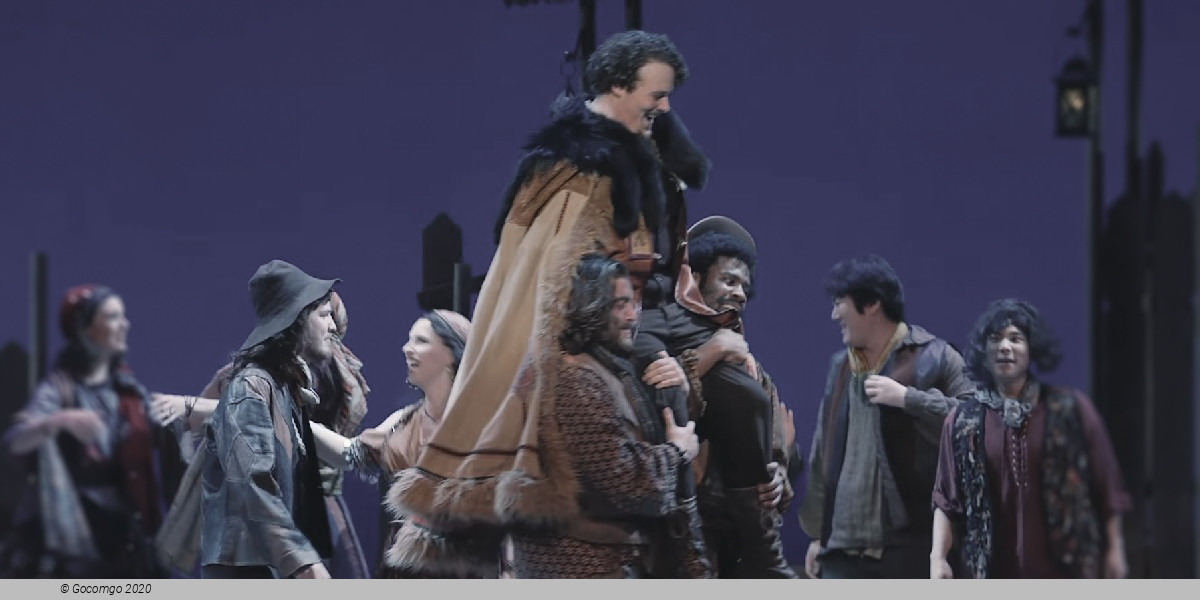
Everyone is celebrating after a victorious battle. Zsupán appears and tells of his own, somewhat inglorious, exploits in Spain. Homonay, Barinkay and Ottokár reveal that they are heroes of battle and have been made into genuine noblemen. There is now no objection to the marriage of Saffi and Barinkay or Ottokár and Arsena. It is a truly happy ending.






 II. János Pál pápa tér 30