


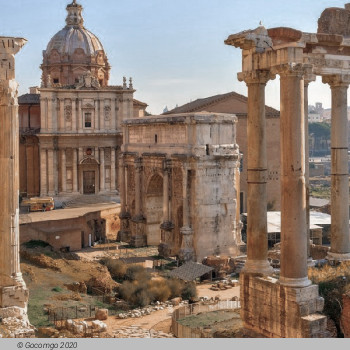
The Église de Verbier hosts morning, afternoon and evening concerts. It is the Verbier Festival’s primary venue for solo, chamber music and vocal recitals.
Nikolaj Szeps-Znaider and Kirill Gerstein
Eglise de Verbier,
Verbier, Switzerland
All photos (1)
Select date and time
11 AM
From
US$ 102
E-tickets: Print at home or at the box office of the event if so specified. You will find more information in your booking confirmation email.
You can only select the category, and not the exact seats.
If you order 2 or 3 tickets: your seats will be next to each other.
If you order 4 or more tickets: your seats will be next to each other, or, if this is not possible, we will provide a combination of groups of seats (at least in pairs, for example 2+2 or 2+3).
Important Info
Festival: Verbier Festival 2026
Type: Classical Concert
City: Verbier, Switzerland
Starts at: 11:00
Duration: 1h 30min
E-tickets: Print at home or at the box office of the event if so specified. You will find more information in your booking confirmation email.
You can only select the category, and not the exact seats.
If you order 2 or 3 tickets: your seats will be next to each other.
If you order 4 or more tickets: your seats will be next to each other, or, if this is not possible, we will provide a combination of groups of seats (at least in pairs, for example 2+2 or 2+3).
Cast
Creators
Composer:
Franz Schubert
Composer:
Fritz Kreisler
Composer:
Johannes Brahms
Festival
Verbier Festival 2026
The Verbier Festival 2026 invites you to experience classical music at its most vibrant, set against the breathtaking backdrop of the Swiss Alps. Each summer, this unique gathering transforms the alpine village of Verbier into a global meeting point for the world’s finest musicians and the next generation of rising stars — a place where tradition meets discovery, and every performance feels alive with possibility.
Programme
Franz Schubert: Violin Sonata (Sonatina) in D major, D.384
Johannes Brahms: Violin Sonata no. 1 in G major, Op.78
Fritz Kreisler: Selection of Melodies
Overview
One is a violinist and conductor, the other a pianist and teacher, and both enjoy remarkable careers across the globe. These exceptional artists come together for the first time at Verbier for a recital dedicated to the great Romantic masters, Schubert and Brahms, and to Kreisler’s dazzling virtuosity
The fullness that emanates from Brahms’s First Sonata contrasts with the fiery temperament of his other compositions. Finding in it a simplicity that is also present in his Trio Op.8, even its Finale, with its deceptively threatening airs, ends in gentleness and comfort.
Schubert’s adorable Sonatina retains this same simplicity, pouring it into a humorous form reminiscent of Mozart. Freed from its virtuoso dimension, the writing returns to the essentials: a playful exchange between two instruments, where the beauty of the melody and rhetoric take centre stage.
This impeccable gallant style has survived the years, reaching Fritz Kreisler, the irresistible Viennese virtuoso and true star of the violin of his time. From his famous Liebesleid to Caprice Viennois, he speaks the language of the violin better than anyone else. Perhaps, with Nikolaj Szeps-Znaider and Kirill Gerstein, we will sense the shadow of the legendary duo that Kreisler formed with a certain Rachmaninoff some 100 years earlier.
Venue Info
Eglise de Verbier - Verbier
 Chemin de l’Église
Chemin de l’Église
Important Info
Festival: Verbier Festival 2026
Type: Classical Concert
City: Verbier, Switzerland
Starts at: 11:00
Duration: 1h 30min