
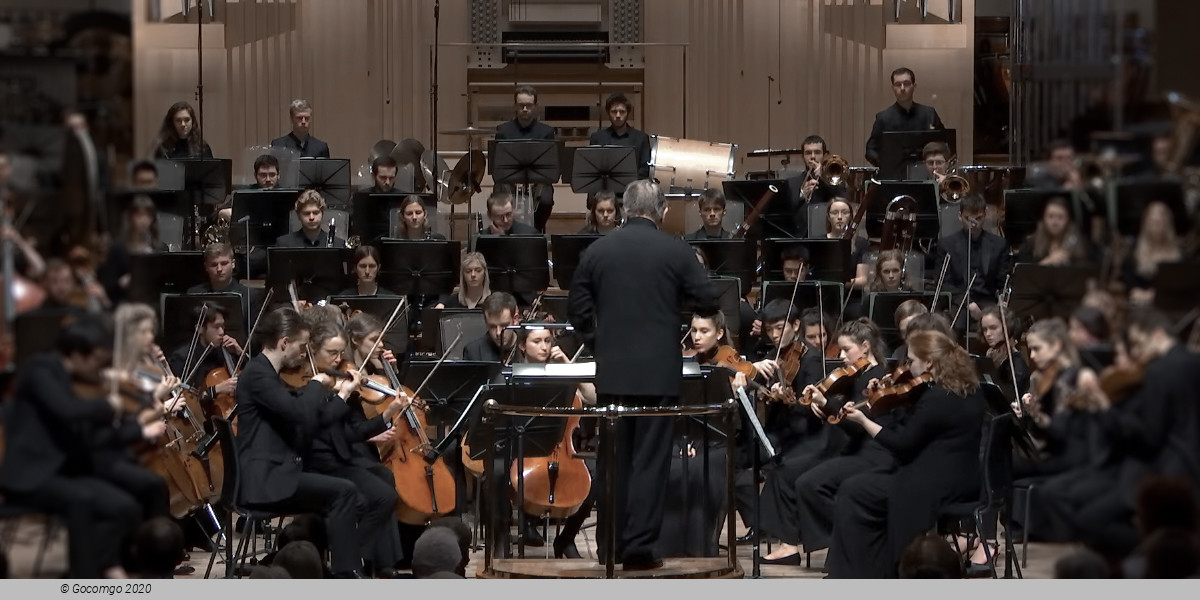
The Église de Verbier hosts morning, afternoon and evening concerts. It is the Verbier Festival’s primary venue for solo, chamber music and vocal recitals.
Rencontres Inédites V
Eglise de Verbier,
Verbier, Switzerland
All photos (1)
Select date and time
7:30 PM
From
US$ 138
E-tickets: Print at home or at the box office of the event if so specified. You will find more information in your booking confirmation email.
You can only select the category, and not the exact seats.
If you order 2 or 3 tickets: your seats will be next to each other.
If you order 4 or more tickets: your seats will be next to each other, or, if this is not possible, we will provide a combination of groups of seats (at least in pairs, for example 2+2 or 2+3).
Important Info
Festival: Verbier Festival 2026
Type: Classical Concert
City: Verbier, Switzerland
Starts at: 19:30
Duration: 2h
E-tickets: Print at home or at the box office of the event if so specified. You will find more information in your booking confirmation email.
You can only select the category, and not the exact seats.
If you order 2 or 3 tickets: your seats will be next to each other.
If you order 4 or more tickets: your seats will be next to each other, or, if this is not possible, we will provide a combination of groups of seats (at least in pairs, for example 2+2 or 2+3).
Cast
Performers
Piano:
Alexandre Kantorow
Violin:
Clara-Jumi Kang
Violin:
Leonidas Kavakos
Cello:
Pablo Ferrández
Viola:
Timothy Ridout
Creators
Composer:
Antonín Dvořák
Composer:
César Franck
Festival
Verbier Festival 2026
The Verbier Festival 2026 invites you to experience classical music at its most vibrant, set against the breathtaking backdrop of the Swiss Alps. Each summer, this unique gathering transforms the alpine village of Verbier into a global meeting point for the world’s finest musicians and the next generation of rising stars — a place where tradition meets discovery, and every performance feels alive with possibility.
Programme
Antonín Dvořák: Terzetto in C major for 2 violins and viola, Op.74
César Franck: Violin Sonata in A major
Antonín Dvořák: Piano Quartet in E flat major, Op.87
Overview
A true Carte Blanche offered to Leonidas Kavakos, one of the most loyal friends of the Verbier Festival for 25 years. The programme features Franck’s famous Sonata with Alexandre Kantorow at the piano, as well as works by Dvořák with their inimitable Romanticism and energy.
Unusually, Dvořák’s Terzetto features two violins and a viola, that, stripped of its basses, can fly on its own wings. Humour and wit are the order of the day in this work, to which the joyful energy of Leonidas Kavakos, Clara-Jumi Kang and Timothy Ridout will lend all its cheerfulness.
Another masterpiece is Franck’s Sonata, in which the composer infuses all the dramatic depth and theatricality of operatic music, while the piano unfolds in undulating, vaporous movements, foreshadowing the impressionism of the Debussy or Fauré school.
A jewel of Romanticism, Dvořák’s Second Piano Quartet unfolds in melancholic waltzes, deceptively placid conclusions that rush forward at the last moment to deceive the listener, with accompaniments full of poetry and rhythmic vitality that anticipate Bartók: a delight for the fiery Alexandre Kantorow, the mischievous Timothy Ridout, and the dazzling sound of Leonidas Kavakos.
Venue Info
Eglise de Verbier - Verbier
 Chemin de l’Église
Chemin de l’Église
Important Info
Festival: Verbier Festival 2026
Type: Classical Concert
City: Verbier, Switzerland
Starts at: 19:30
Duration: 2h