

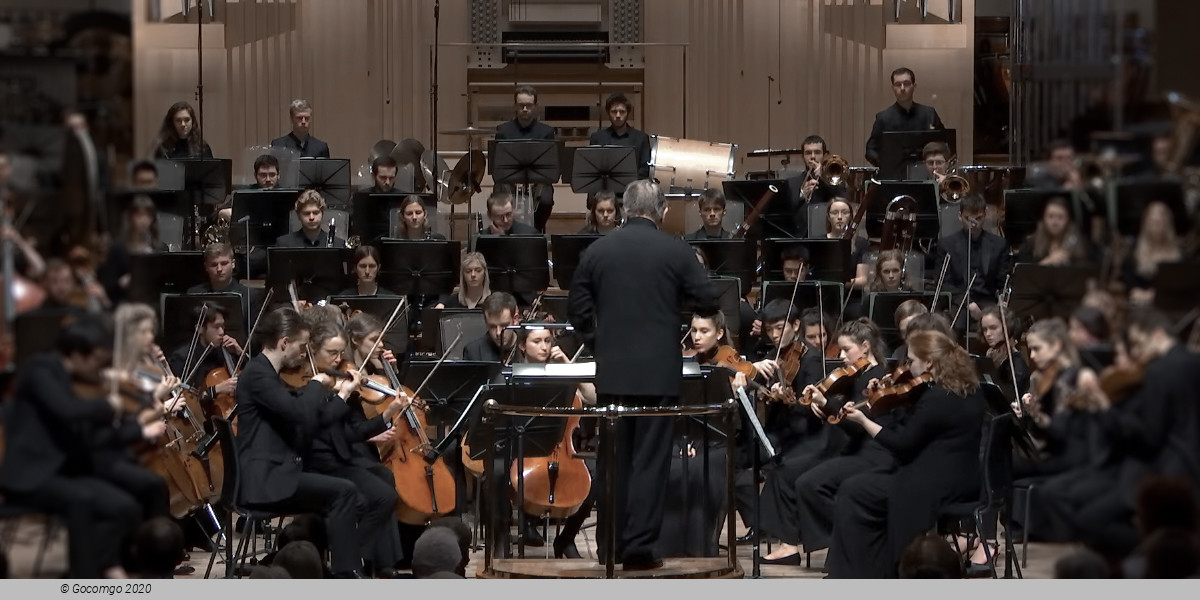
The Église de Verbier hosts morning, afternoon and evening concerts. It is the Verbier Festival’s primary venue for solo, chamber music and vocal recitals.
Rencontres Inédites II
Eglise de Verbier,
Verbier, Switzerland
All photos (1)
Select date and time
11 AM
From
US$ 155
E-tickets: Print at home or at the box office of the event if so specified. You will find more information in your booking confirmation email.
You can only select the category, and not the exact seats.
If you order 2 or 3 tickets: your seats will be next to each other.
If you order 4 or more tickets: your seats will be next to each other, or, if this is not possible, we will provide a combination of groups of seats (at least in pairs, for example 2+2 or 2+3).
Important Info
Festival: Verbier Festival 2026
Type: Classical Concert
City: Verbier, Switzerland
Starts at: 11:00
Duration: 1h 30min
E-tickets: Print at home or at the box office of the event if so specified. You will find more information in your booking confirmation email.
You can only select the category, and not the exact seats.
If you order 2 or 3 tickets: your seats will be next to each other.
If you order 4 or more tickets: your seats will be next to each other, or, if this is not possible, we will provide a combination of groups of seats (at least in pairs, for example 2+2 or 2+3).
Cast
Performers
Violin:
Joshua Bell
Cello:
Steven Isserlis
Viola:
Blythe Teh Engstroem
Violin:
Irène Duval
Piano:
Mao Fujita
Creators
Composer:
Franz Schubert
Composer:
Gabriel Fauré
Festival
Verbier Festival 2026
The Verbier Festival 2026 invites you to experience classical music at its most vibrant, set against the breathtaking backdrop of the Swiss Alps. Each summer, this unique gathering transforms the alpine village of Verbier into a global meeting point for the world’s finest musicians and the next generation of rising stars — a place where tradition meets discovery, and every performance feels alive with possibility.
Programme
Gabriel Fauré: String Quartet in E minor, Op.121
Franz Schubert: Piano Trio no. 2 in E flat major, D.929
Overview
2026 marks the grand return of Joshua Bell to the Festival, with several concerts including this Rencontre Inédite alongside, among others, pianist Mao Fujita and cellist Steven Isserlis. On the program: Schubert’s tragic and moving Trio No. 2 in E-flat major, Op. 100, and Fauré’s final masterpiece, composed just weeks before his death.
Like Beethoven, Fauré ended his life deaf. A heartbreaking witness to the progression of the disease, the range of each of his compositions shrank to a bare minimum, corresponding to the frequencies that the master could still hear. The composer’s last opus, Fauré’s Quartet evolves in a rare abstraction, anticipating the artistic revolutions of the entire twentieth century.
Another unfathomable masterpiece by a composer on the brink of death, the Trio Op.100 has gone down in history thanks to its slow movement, probably inspired by a traditional Swedish song, whose accompaniment evokes the icy climate of Winter’s Journey. Schubert, in a spirit that has carried him since the death of Beethoven, wrote one of his most unforgettable scores, with artistic genius abounding with a naturalness and consistency that music history has rarely known. The inner turmoil of Steven Isserlis, Joshua Bell and Mao Fujita is one that should take this legendary work to new heights.
Venue Info
Eglise de Verbier - Verbier
 Chemin de l’Église
Chemin de l’Église
Important Info
Festival: Verbier Festival 2026
Type: Classical Concert
City: Verbier, Switzerland
Starts at: 11:00
Duration: 1h 30min