
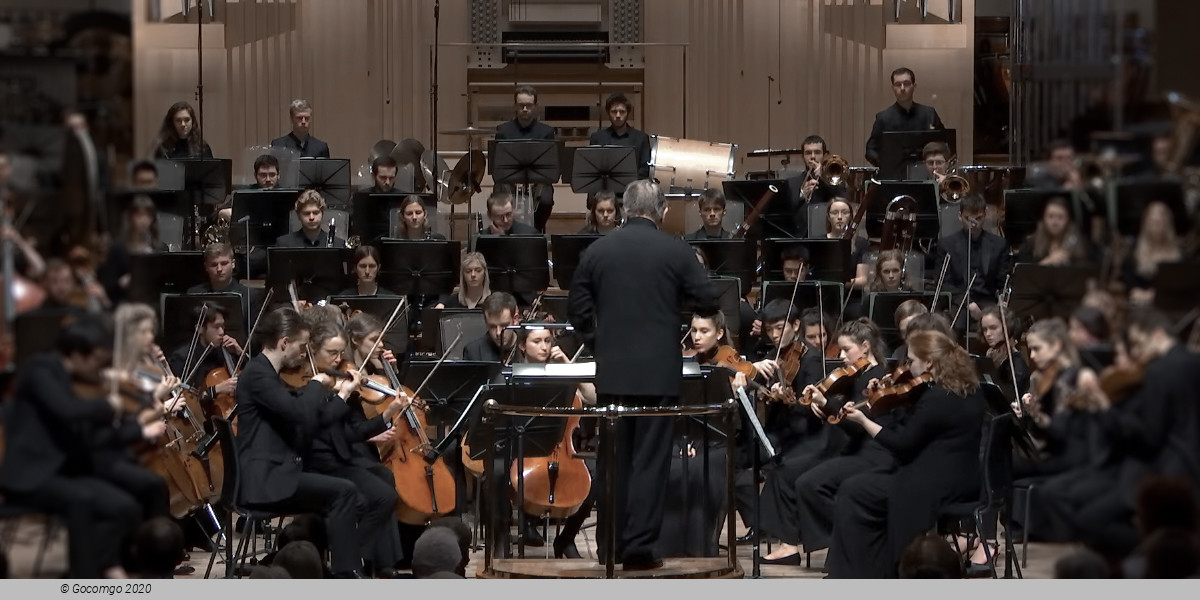
The Église de Verbier hosts morning, afternoon and evening concerts. It is the Verbier Festival’s primary venue for solo, chamber music and vocal recitals.
Rencontres Inédites VII
Eglise de Verbier,
Verbier, Switzerland
All photos (1)
Select date and time
7:30 PM
From
US$ 101
E-tickets: Print at home or at the box office of the event if so specified. You will find more information in your booking confirmation email.
You can only select the category, and not the exact seats.
If you order 2 or 3 tickets: your seats will be next to each other.
If you order 4 or more tickets: your seats will be next to each other, or, if this is not possible, we will provide a combination of groups of seats (at least in pairs, for example 2+2 or 2+3).
Important Info
Festival: Verbier Festival 2026
Type: Classical Concert
City: Verbier, Switzerland
Starts at: 19:30
Duration: 1h
E-tickets: Print at home or at the box office of the event if so specified. You will find more information in your booking confirmation email.
You can only select the category, and not the exact seats.
If you order 2 or 3 tickets: your seats will be next to each other.
If you order 4 or more tickets: your seats will be next to each other, or, if this is not possible, we will provide a combination of groups of seats (at least in pairs, for example 2+2 or 2+3).
Cast
Performers
Violin:
Clara-Jumi Kang
Cello:
Jens Peter Maintz
Piano:
Minsoo Sohn
Cello:
Pablo Ferrández
Violin:
Stephen Waarts
Viola:
Timothy Ridout
Creators
Composer:
Robert Schumann
Festival
Verbier Festival 2026
The Verbier Festival 2026 invites you to experience classical music at its most vibrant, set against the breathtaking backdrop of the Swiss Alps. Each summer, this unique gathering transforms the alpine village of Verbier into a global meeting point for the world’s finest musicians and the next generation of rising stars — a place where tradition meets discovery, and every performance feels alive with possibility.
Programme
Robert Schumann: Piano Trio no. 2 in F major, Op.80
Robert Schumann: Piano Quartet in E flat Major, Op.47
Overview
The promise of a perfect exploration of German Romanticism with one of its most brilliant creators, Robert Schumann, performed by exceptional artists gathered around pianist Minsoo Sohn, one of the revelations of the 2025 Verbier Festival.
Far from Schumann’s usual melancholy, the Second Trio displays a Mozartean freshness. The waltz-like third movement is a case in point, as is the tranquil atmosphere that pervades the first. The reference to classicism is also expressed in the thematic material, which is relatively sparing and plays on the rhetorical devices of imitation.
The melody of its slow movement has brought the Piano Quartet by the same Schumann to great acclaim. It has to be said that it is based on two of the most moving devices in musical writing: the descending march and the interval of the seventh, a gentle dissonance that is avoided and then repeated before landing on a delicate chromaticism. This masterpiece should not obscure the other marvels that abound in this singular Quartet: the ingenious opening chorale and the frenzied march in the Finale.
Venue Info
Eglise de Verbier - Verbier
 Chemin de l’Église
Chemin de l’Église
Important Info
Festival: Verbier Festival 2026
Type: Classical Concert
City: Verbier, Switzerland
Starts at: 19:30
Duration: 1h