









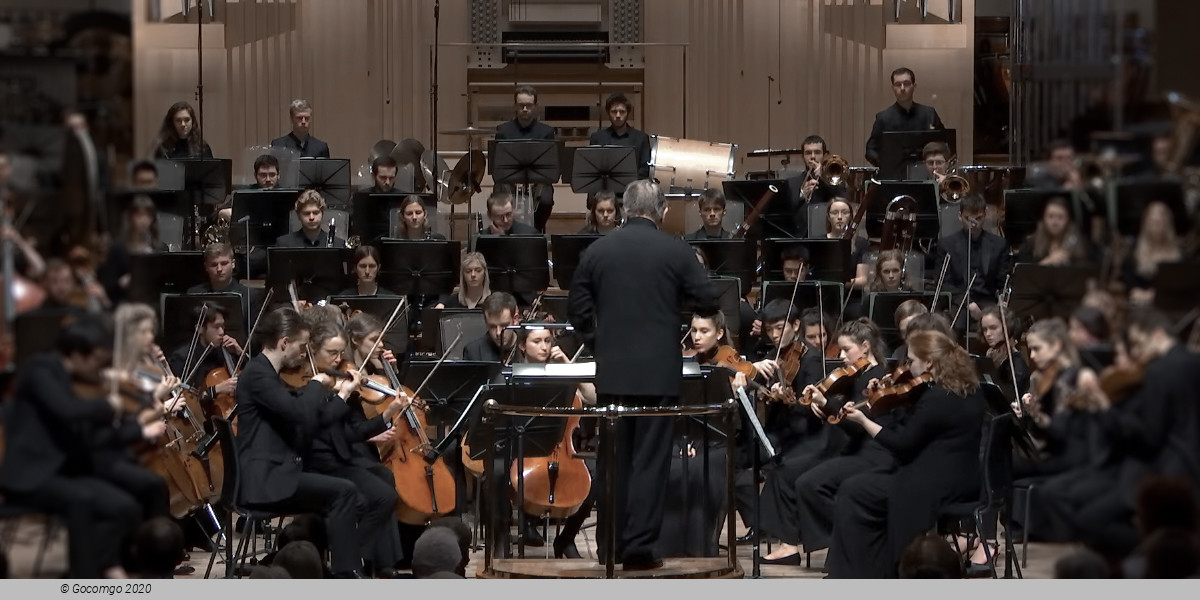
The Église de Verbier hosts morning, afternoon and evening concerts. It is the Verbier Festival’s primary venue for solo, chamber music and vocal recitals.
Marc Bouchkov, Daniel Lozakovich, Yamen Saadi and others
Eglise de Verbier,
Verbier, Switzerland
All photos (1)
Select date and time
11 AM
From
US$ 102
E-tickets: Print at home or at the box office of the event if so specified. You will find more information in your booking confirmation email.
You can only select the category, and not the exact seats.
If you order 2 or 3 tickets: your seats will be next to each other.
If you order 4 or more tickets: your seats will be next to each other, or, if this is not possible, we will provide a combination of groups of seats (at least in pairs, for example 2+2 or 2+3).
Important Info
E-tickets: Print at home or at the box office of the event if so specified. You will find more information in your booking confirmation email.
You can only select the category, and not the exact seats.
If you order 2 or 3 tickets: your seats will be next to each other.
If you order 4 or more tickets: your seats will be next to each other, or, if this is not possible, we will provide a combination of groups of seats (at least in pairs, for example 2+2 or 2+3).
Cast
Performers
Violin:
Daniel Lozakovich
Double Bass:
Brendan Kane
Piano:
Julien Quentin
Violin:
Marc Bouchkov
Cello:
Pablo Ferrández
Violin:
Stephen Waarts
Violin:
Yamen Saadi
Creators
Composer:
Antonín Dvořák
Composer:
Dmitri Shostakovich
Composer:
Gioachino Rossini
Composer:
Sergei Prokofiev
Festival
Verbier Festival 2026
The Verbier Festival 2026 invites you to experience classical music at its most vibrant, set against the breathtaking backdrop of the Swiss Alps. Each summer, this unique gathering transforms the alpine village of Verbier into a global meeting point for the world’s finest musicians and the next generation of rising stars — a place where tradition meets discovery, and every performance feels alive with possibility.
Programme
Antonín Dvořák: Bagatelles (Malickosti), Op.47
Gioachino Rossini: Duetto for cello and double bass
Sergei Prokofiev: Sonata for two Violins, Op. 56
Dmitri Shostakovich: Five pieces for two violins and piano (arrangement by Levon Atovmian)
Overview
A virtuosic fireworks of a concert featuring the finest violinists of the young generation (Daniel Lozakovich, Marc Bouchkov, Yamen Saadi, Stephen Waarts), who will perform in dialogue with renowned chamber musicians and Verbier regulars such as pianist Julien Quentin and double bassist Brendan Kane.
Among Dvořák’s most famous pieces, the Bagatelles were originally written for harmonium, an instrument similar to the organ with popular origins. The piano version retains the warm, old-fashioned spirit of the original arrangement.
Uniting the two low strings of the orchestra in an original way, Rossini’s Duo rediscovers the specificities of early 19th-century Italian composition: lyrical elegance and virtuosity that seeks to push the boundaries measure after measure.
Prokofiev’s Sonata for Two Violins has a completely different intention. Subtly employing the compositional techniques of Baroque music, the composer blends his characteristic parodic spirit with a gravity typical of his country’s music.
In contrast, a breath of lightness blows through Shostakovich’s Five Pieces, a gem from his early work in which the artist transforms outdated dances into a game of ironic elegance.
Venue Info
Eglise de Verbier - Verbier
 Chemin de l’Église
Chemin de l’Église
Important Info
Festival: Verbier Festival 2026
Type: Classical Concert
City: Verbier, Switzerland
Starts at: 11:00