








Deutsche Oper Berlin tickets 11 March 2026 - L’Italiana in Algeri | GoComGo.com

L’Italiana in Algeri

Deutsche Oper Berlin, Main Stage, Berlin, Germany
All photos (6)
Select date and time
7:30 PM
From
US$ 100

E-tickets: Print at home or at the box office of the event if so specified. You will find more information in your booking confirmation email.

You can only select the category, and not the exact seats.
If you order 2 or 3 tickets: your seats will be next to each other.
If you order 4 or more tickets: your seats will be next to each other, or, if this is not possible, we will provide a combination of groups of seats (at least in pairs, for example 2+2 or 2+3).

Important Info
Type: Opera
City: Berlin, Germany
Starts at: 19:30
Acts: 2
Intervals: 1
Duration: 3h
Sung in: Italian
Titles in: German,English

E-tickets: Print at home or at the box office of the event if so specified. You will find more information in your booking confirmation email.

You can only select the category, and not the exact seats.
If you order 2 or 3 tickets: your seats will be next to each other.
If you order 4 or more tickets: your seats will be next to each other, or, if this is not possible, we will provide a combination of groups of seats (at least in pairs, for example 2+2 or 2+3).

Cast
Performers
Mezzo-Soprano: Aigul Akhmetshina (Isabella)
Conductor: Alessandro De Marchi
Mezzo-Soprano: Arianna Manganello (Zulma)
Chorus: Chorus of the Deutsche Oper Berlin
Soprano: Hye-Young Moon (Elvira)
Tenor: Jonah Hoskins (Lindoro)
Ballet company: Opera Ballet of the Deutsche Oper Berlin
Orchestra: Orchestra of the Deutsche Oper Berlin
Baritone: Tommaso Barea (Mustafà)
Creators
Director: Rolando Villazón
Composer: Gioachino Rossini
Composer: Luigi Mosca
Poet: Angelo Anelli
Overview

Following on from Puccini’s LA RONDINE and Johann Strauss’s DIE FLEDERMAUS, Rolando Villazón returns to the Deutsche Oper Berlin to tackle one of the great comedies of the bel canto genre and demonstrate that he can do humour.

L’ITALIANA IN ALGERI remains one of the most popular works by Gioacchino Rossini, who is said to have dashed the piece off in less than a month and was a tender 21 years of age when the opera premiered at Venice’s Teatro San Benedetto in 1813. It’s a testament to Rossini’s boldness that he chose material that had been set to music only a few years before by his more experienced colleague Luigi Mosca. His audacity paid off, with the subsequent triumph bringing him immediate fame across Italy and widespread popularity soon afterwards throughout Europe.

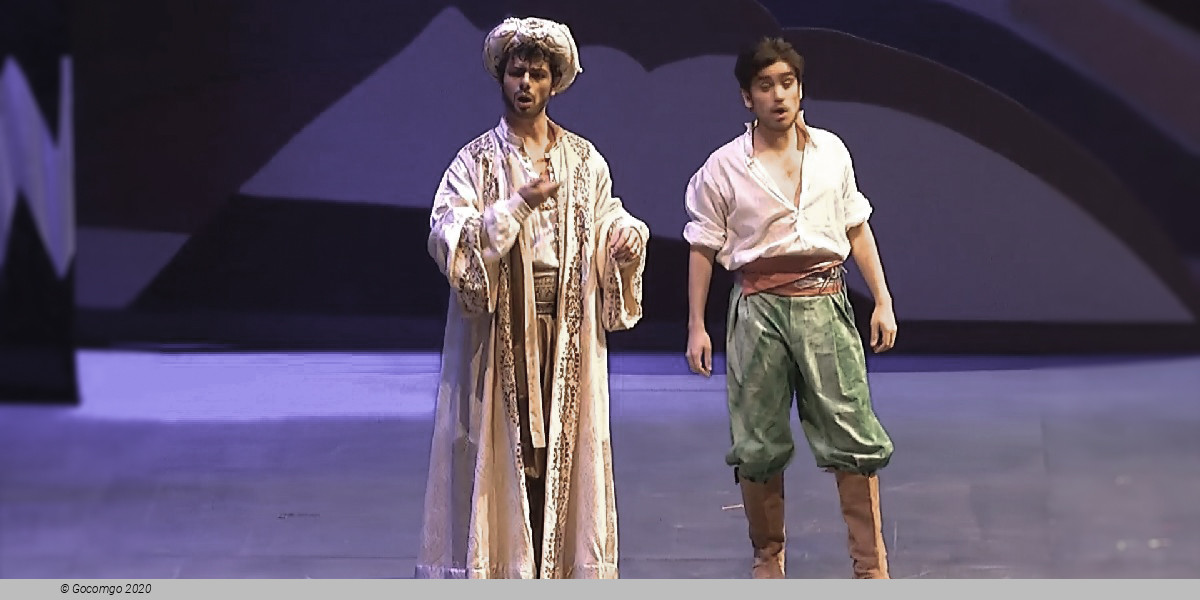
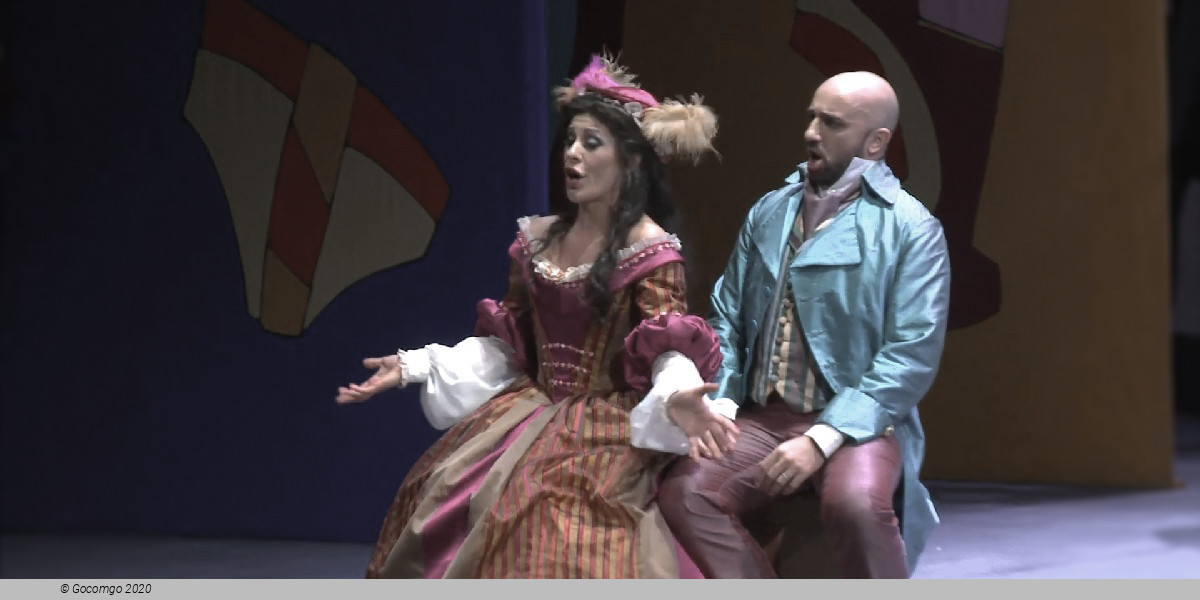
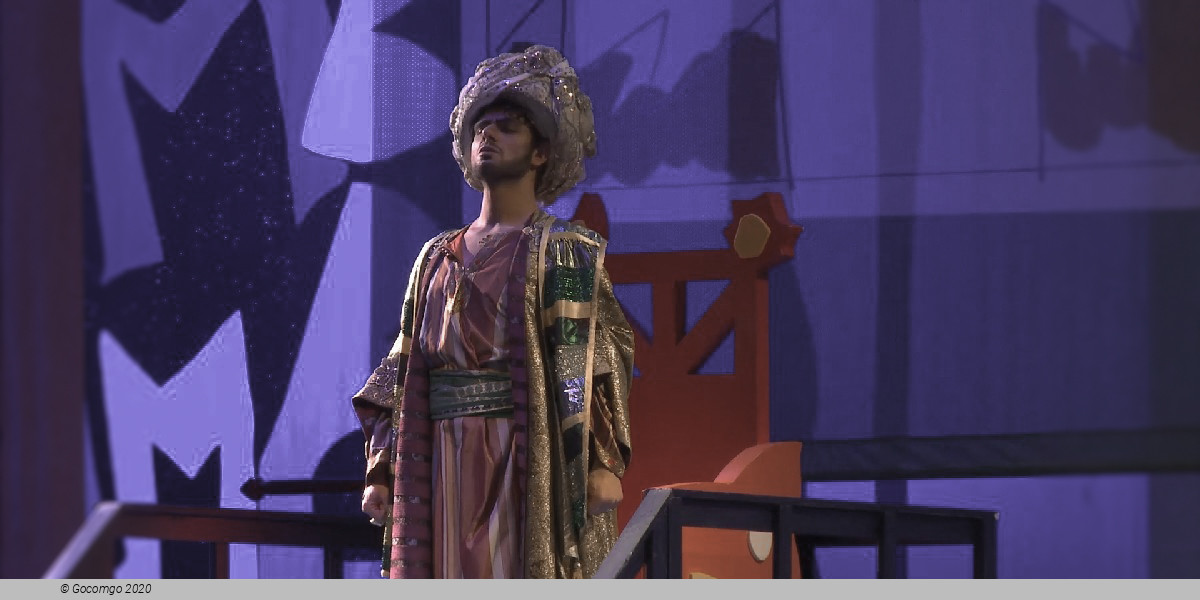
Mustafa, the Bey of Algiers, has grown weary of his wife Elvira. This wry tale of his amorous extramarital aspirations and the schemes of the reunited lovers Lindora and Isabella to thwart him, coupled with the exotic setting, resonated strongly with audiences of the day. The rising fascination since the 18th century for non-European cultures was finding artistic expression and making inroads into the world of opera. That said, it is undoubtedly thanks to Rossini’s musical sophistication that L’ITALIANA continues to excite operagoers today and the maestro remains the undisputed king of opera buffa. Many of the solo numbers are straight out of the bel canto playbook – renditions such as Lindoro’s sweeping cavatina “Languir per una bella”, which pushes even the best tenor to the limit, and Isabella’s famous introductory aria “Cruda sorte” with its rich plunges and rousing coloraturas. So it was that Rossini found a style with L’ITALIANA which earns him the reverence of fans to this day.

Spotlight
Aigul Akhmetshina was only 21 when she gave her breakout international performance as Carmen at the Royal Opera in London, a role that she has gone on to sing at the Salzburg Festival and venues such as the Arena di Verona, the Wiener Staatsoper, the New York Metropolitan Opera and the Deutsche Oper Berlin. The mezzo-soprano also thrilled Bismarckstrasse audiences with her Rosina – another signature role of Akhmetshina’s - in Katharina Thalbach’s much-loved production of Rossini’s BARBIERE DI SIVIGLIA. Her many accolades include the 2023 International Opera Award as Female Singer of the Year and the 2025 OPER! AWARD for her acclaimed first solo album. She now makes her debut as Isabella in a brand-new production of L’ITALIANA IN ALGERI.

History
Premiere of this production: 22 May 1813, Teatro San Benedetto, Venice

L'Italiana in Algeri (The Italian Girl in Algiers) is an operatic dramma giocoso in two acts by Gioachino Rossini to an Italian libretto by Angelo Anelli, based on his earlier text set by Luigi Mosca. It premiered at the Teatro San Benedetto in Venice on 22 May 1813. The music is characteristic of Rossini's style, remarkable for its fusion of sustained, manic energy with elegant, pristine melodies.

Synopsis

Place: Algiers
Time: The past

Act 1

The palace of the Bey of Algiers

Elvira accompanied by her slave Zulma regrets the loss of the love of her husband, the Turkish Bey Mustafà. Left alone with Haly (since the Italian 'h' is silent, this corresponds to the name Ali, more familiar in the English-speaking world), Captain of the Corsairs, Mustafà reveals his plan to marry Elvira off to Lindoro, his Italian slave. The Bey is bored with his submissive harem, desiring a new challenge to his virility: he wants an Italian girl, and Haly must find one! Lindoro enters alone and sings about Isabella, his true love (Languir per una bella). Mustafà comes in to explain Lindoro's impending marriage. The enthusiastic Bey describes the attractions of the match, while Lindoro struggles to refuse (Se inclinassi a prender moglie).

The seashore

A ship has been wrecked in a storm. Its passengers include Isabella, in search of Lindoro, and Taddeo, her travelling companion and would-be lover. Isabella enters with a sorrowful cavatina Cruda sorte! Amor tiranno!, however she is not afraid (Già so per pratica) and will master the situation. Haly and his men take them prisoner. She passes off Taddeo as her uncle. Haly is delighted to learn she is an Italian – exactly what the Bey wanted! Left to consider their fate, Isabella is irritated by Taddeo's jealousy of Lindoro (Ai capricci della sorte), but they resolve to join forces.

The palace

Back in the palace, Lindoro and Elvira do not wish to marry, but Mustafà offers Lindoro passage on a ship returning to Italy if he takes Elvira. Lindoro agrees, admitting a vague possibility of marrying her in Italy. Haly enters with news of the arrival of the Italian beauty. Mustafà is elated (Già d'insolito ardore nel petto agitare).

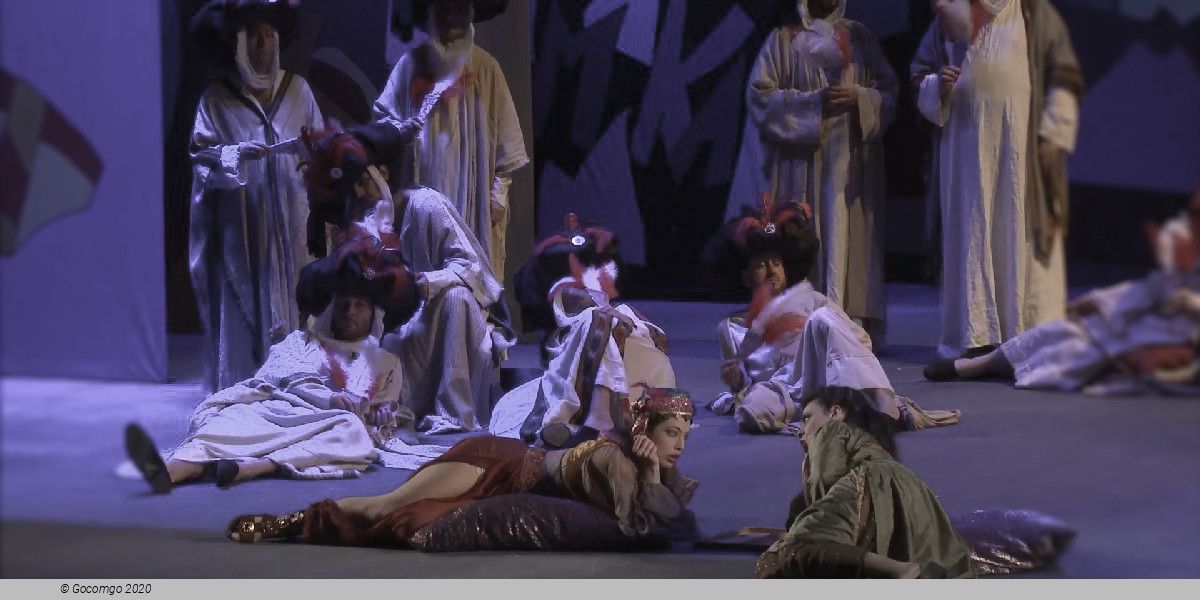
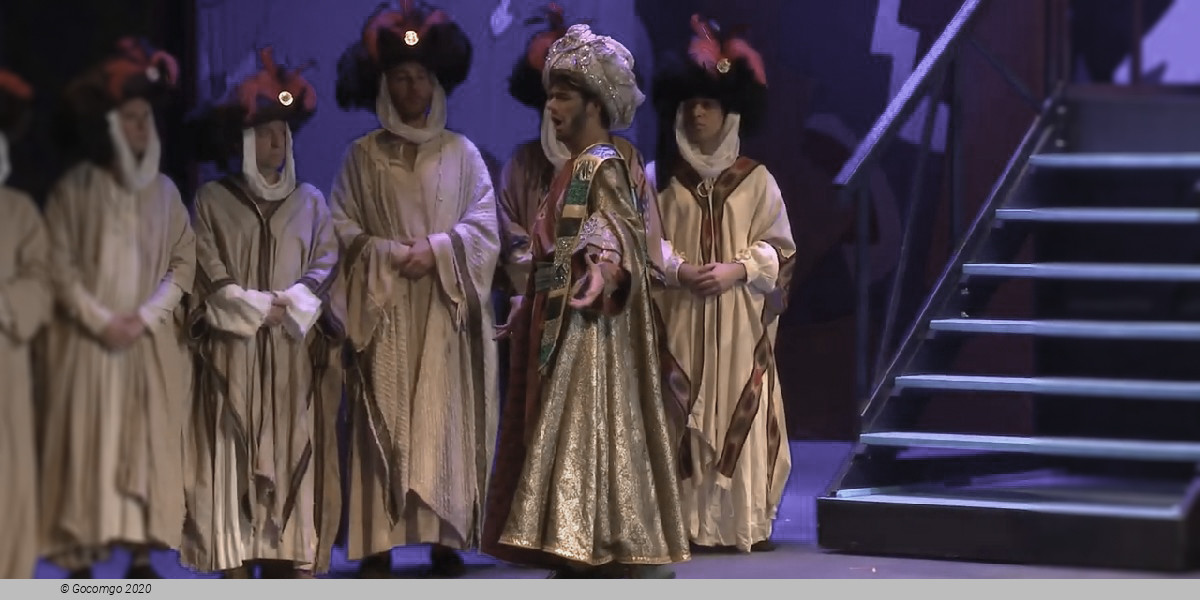
Surrounded by eunuchs (Viva, viva il flagel delle donne), Mustafà receives Isabella in a grand hall. He is enchanted, though she is rather amused by his appearance (Oh! Che muso, che figura!). At that moment, Lindoro, Elvira and Zulma arrive to say goodbye to Mustafà (Pria di dividerci da voi, Signore). Lindoro and Isabella are astonished to come face to face. Recovering herself, Isabella asks about Elvira, learning she is Mustafà's ex-wife, to be remarried to Lindoro! The act ends with an ensemble of confusion (Confusi e stupidi).

Act 2

In the palace

Elvira and Zulma (who have remained in Algiers after all) note Isabella's skill with men. Mustafà reveals his strategy for seducing Isabella: he installs Lindoro as Isabella's servant and his informer, and Taddeo will also be induced to help. Elvira and Zulma must tell Isabella he is coming to take coffee with her.

Isabella and Lindoro are alone. He explains that he had no intention of marrying Elvira. They agree to escape together and Lindoro sings of his happiness (Ah come il cor di giubilo). Mustafà enters with a reluctant Taddeo, acclaimed by the Turks as "Lord Kaimakan" (Viva il grande Kaimakan). He dislikes interceding with Isabella for the Bey, but is frightened to refuse (Ho un gran peso sulla testa).

In her apartment

Isabella is dressing in Turkish style. Zulma and Elvira deliver Mustafà's message: he is coming for coffee. Isabella orders three cups. Elvira should wait in a side room. As Mustafà approaches, Isabella sings a romantic cavatina, Per lui che adoro - she will receive him. Mustafà tells Taddeo to leave when he sneezes (Ti presento di mia man). Isabella greets Mustafà warmly and he sneezes, but Taddeo ignores the signal. Isabella calls for coffee and then – to Mustafà's horror and amazement – invites Elvira to join them.

Elsewhere in the palace

Haly sings in praise of the women of Italy (Le femmine d'Italia). The Italians enter, and Taddeo reveals to a surprised Lindoro that he is not her uncle but her lover (he himself is unaware of the other man's true identity). Lindoro tells Mustafà that Isabella will declare him her adored pappataci (literally a "silent eater": a man unable to resist the opposite sex). This, as Lindoro explains (Pappataci! Che mai sento!), is an Italian custom and a great honour, as the pappataci enjoy an idyllic life dedicated to eating, drinking and sleeping. Zulma and Haly speculate about Isabella's real intentions and the quantity of alcohol ordered for the ceremony.

Isabella's apartment

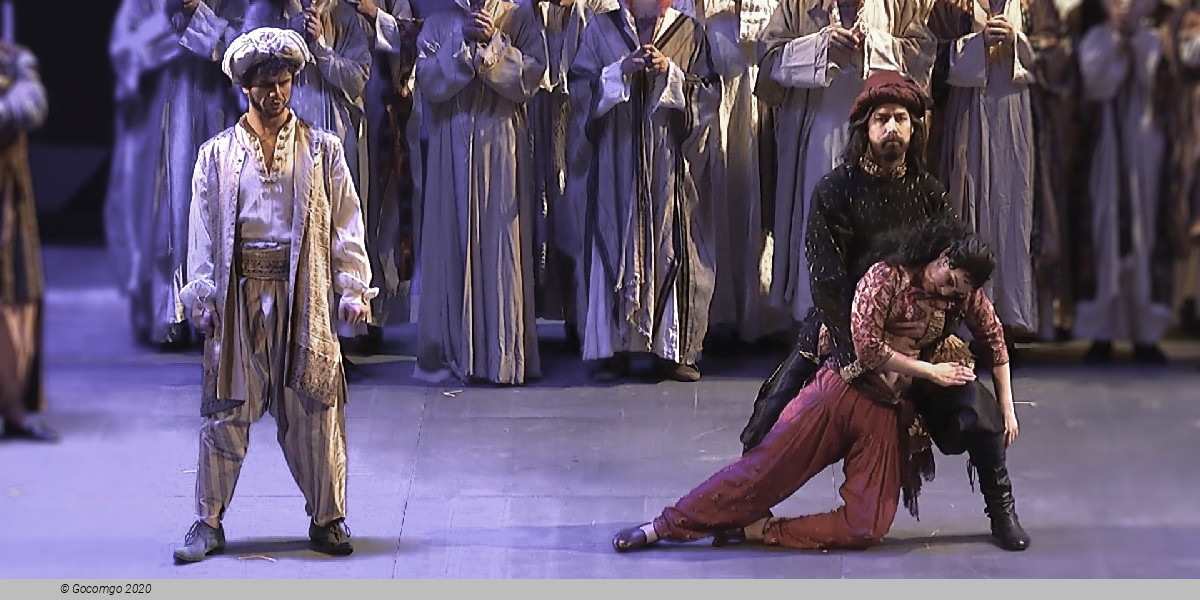
She addresses the Italian slaves who will be pappataci in the ceremony - she will lead them to freedom (Pensa alla patria). The ceremony begins (Dei pappataci s'avanza il coro); Mustafà is delighted with his new honour and changes into appropriate costume. Isabella explains his obligations. He must swear an oath of eating, drinking, and keeping silent, repeating the words after Taddeo. Following that his oath is tested, under provocation by Isabella and Lindoro.

A European ship lies alongside the palace: time to escape! Taddeo finally realizes who Lindoro is, but decides to go along with them anyway. Elvira, Zulma and Haly find the Bey still acting as a mad pappataci. Suddenly recovering his sanity, Mustafà calls his troops but they are all drunk. The Italians bid farewell and Mustafà begs Elvira's forgiveness. No more Italian girls for him!

Venue Info

Deutsche Oper Berlin - Berlin
Location   Bismarckstraße 35

Venue's Capacity: 1698

The Deutsche Oper Berlin is an opera company located in the Charlottenburg district of Berlin, Germany. The resident building is the country's second-largest opera house and also home to the Berlin State Ballet. Since 2004 the Deutsche Oper Berlin, like the Staatsoper Unter den Linden (Berlin State Opera), the Komische Oper Berlin, the Berlin State Ballet, and the Bühnenservice Berlin (Stage and Costume Design), has been a member of the Berlin Opera Foundation.

The company's history goes back to the Deutsches Opernhaus built by the then independent city of Charlottenburg—the "richest town of Prussia"—according to plans designed by Heinrich Seeling from 1911. It opened on November 7, 1912 with a performance of Beethoven's Fidelio, conducted by Ignatz Waghalter. In 1925, after the incorporation of Charlottenburg by the 1920 Greater Berlin Act, the name of the resident building was changed to Städtische Oper (Municipal Opera).

With the Nazi seizure of power in 1933, the opera was under control of the Reich Ministry of Public Enlightenment and Propaganda. Minister Joseph Goebbels had the name changed back to Deutsches Opernhaus, competing with the Berlin State Opera in Mitte controlled by his rival, the Prussian minister-president Hermann Göring. In 1935, the building was remodeled by Paul Baumgarten and the seating reduced from 2300 to 2098. Carl Ebert, the pre-World War II general manager, chose to emigrate from Germany rather than endorse the Nazi view of music, and went on to co-found the Glyndebourne opera festival in England. He was replaced by Max von Schillings, who acceded to enact works of "unalloyed German character". Several artists, like the conductor Fritz Stiedry and the singer Alexander Kipnis, followed Ebert into emigration. The opera house was destroyed by a RAF air raid on 23 November 1943. Performances continued at the Admiralspalast in Mitte until 1945. Ebert returned as general manager after the war.

After the war, in what was now West Berlin, the company, again called Städtische Oper, used the nearby Theater des Westens; its opening production was Fidelio, on 4 September 1945. Its home was finally rebuilt in 1961 but to a much-changed, sober design by Fritz Bornemann. The opening production of the newly named Deutsche Oper, on 24 September, was Mozart's Don Giovanni.

Past Generalmusikdirektoren (GMD, general music directors) have included Bruno Walter, Kurt Adler, Ferenc Fricsay, Lorin Maazel, Gerd Albrecht, Jesús López-Cobos, and Christian Thielemann. In October 2005, the Italian conductor Renato Palumbo was appointed GMD as of the 2006/2007 season. In October 2007, the Deutsche Oper announced the appointment of Donald Runnicles as their next Generalmusikdirektor, effective August 2009, for an initial contract of five years. Simultaneously, Palumbo and the Deutsche Oper mutually agreed to terminate his contract, effective November 2007.

On the evening of 2 June 1967, Benno Ohnesorg, a student taking part in the German student movement, was shot in the streets around the opera house. He had been protesting against the visit to Germany by the Shah of Iran, who was attending a performance of Mozart's The Magic Flute.

In 1986 the American Berlin Opera Foundation was founded.

In April 2001, the Italian conductor Giuseppe Sinopoli died at the podium while conducting Verdi's Aida, at age 54.

In September 2006, the Deutsche Oper's Intendantin (general manager) Kirsten Harms drew criticism after she cancelled the production of Mozart's opera Idomeneo by Hans Neuenfels, because of fears that a scene in it featuring the severed heads of Jesus, Buddha and Muhammad would offend Muslims, and that the opera house's security might come under threat if violent protests took place. Critics of the decision include German Ministers and the German Chancellor Angela Merkel. The reaction from Muslims has been mixed — the leader of Germany's Islamic Council welcomed the decision, whilst a leader of Germany's Turkish community, criticising the decision, said:

This is about art, not about politics ... We should not make art dependent on religion — then we are back in the Middle Ages.

At the end of October 2006, the opera house announced that performances of Mozart's opera Idomeneo would then proceed. Kirsten Harms, after announcing in 2009 that she would not renew her contract beyond 2011, was bid farewell in July of that year.

Important Info
Type: Opera
City: Berlin, Germany
Starts at: 19:30
Acts: 2
Intervals: 1
Duration: 3h
Sung in: Italian
Titles in: German,English
Top of page