

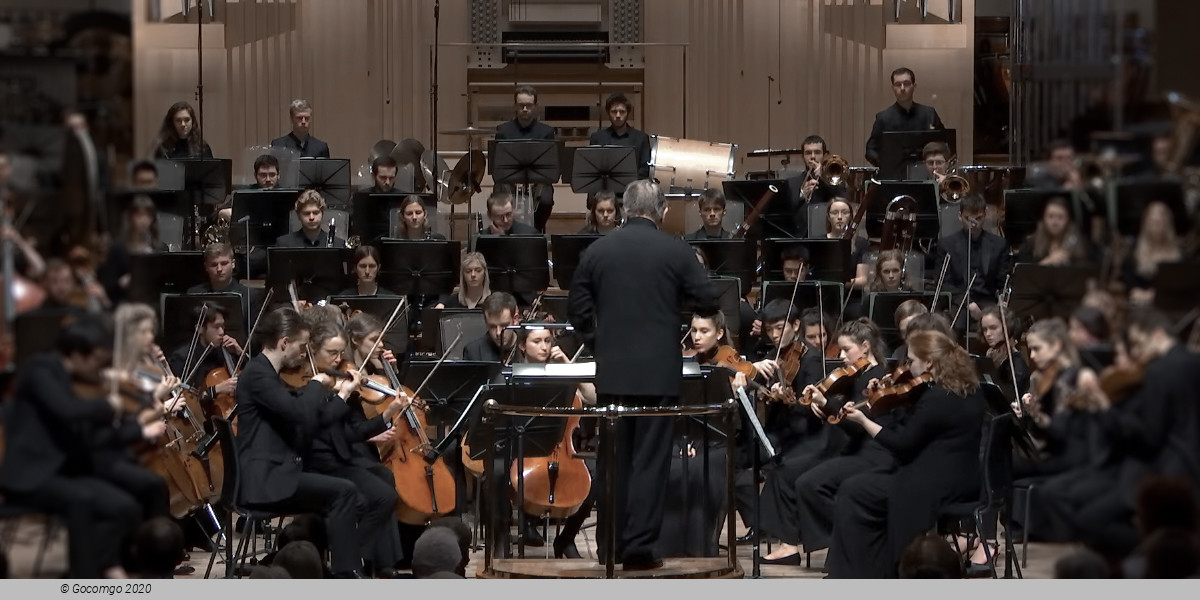
The Congress Center Villach is one of the most innovative and attractive conference venues in Austria and beyond. Organizers of national and international congresses and conferences, business events, presentations as well as cultural and large-scale social events appreciate the unequalled combination of modern architecture, cutting-edge technology, award-winning gastronomy and 4* superior hotel facilities. The Congress Center Villach hosts concerts as part of the Carinthian Summer Music Festival.
Rudolf Buchbinder
Congress Center Villach,
Villach, Austria
All photos (1)
Select date and time
7:30 PM
Request for Tickets
Important Info
Festival: Carinthian Summer Music Festival
Type: Classical Concert
City: Villach, Austria
Starts at: 19:30
E-tickets: Print at home or at the box office of the event if so specified. You will find more information in your booking confirmation email.
You can only select the category, and not the exact seats.
If you order 2 or 3 tickets: your seats will be next to each other.
If you order 4 or more tickets: your seats will be next to each other, or, if this is not possible, we will provide a combination of groups of seats (at least in pairs, for example 2+2 or 2+3).
Festival
Carinthian Summer Music Festival
The team of the Carinthian Summer Music Festival is looking forward to offering you an exciting festival program again in 2023. Join for in discovering the diversity and unsurpassed quality of music from every conceivable genre and style at Carinthian Summer Music Festival: be it classical, jazz, folk and world music, music of the 21st century, the Lebenszeichen, CS under 30, Stars & Strings or Perspektiven formats and much more.
Programme
Wolfgang Amadeus Mozart: 12 Variations in C major on "Ah vous dirai-je, maman", K265 (K300e)
Franz Schubert: Four Impromptus, D.935
Ludwig van Beethoven: Piano Sonata no. 23 in F minor "Appassionata", Op.57
Overview
In the 51st year since his first appearance at the Carinthian Summer Music Festival, Rudolf Buchbinder continues his decades-long exploration of Beethoven’s piano works.
This year, Rudolf Buchbinder presents Beethoven’s Piano Sonata No. 23 in F minor, a work that was viewed with scepticism when it was first published in 1807 – “In the first movement of this sonata, he has once again released many evil spirits, as one is already familiar with from other great sonatas of his”, was famously grumbled by a critic in the Allgemeine Musikalische Zeitung. Beethoven himself, however, considered the piece one of his best. At the very latest, thanks to an enterprising publisher who gave it the epithet “Appassionata” in 1838, it went on to become regarded as the epitome of pianistic virtuosity and expressivity.
The melody of the French folk song “Ah, vous dirai-je, Maman” is known in German-speaking countries as the song “Morgen kommt der Weihnachtsmann”. In English, we are familiar with it as the tune behind “Baa, Baa, Black Sheep”. In the original, a beautiful brunette confesses her love of a certain Silvandre to her mother. What begins as an easy-to-sing-along folk song becomes a succession of pianistic challenges and surprises in Mozart’s Twelve Variations – the longing for love included – that finally culminate in a virtuoso finale. Schubert’s last four impromptus are also considerably more complex than the term first suggests, denoting a short improvisation or a surprising idea. Robert Schumann even thought he recognised a four-movement sonata in the four individual pieces composed by Schubert about a year before his death.
Venue Info
Congress Center Villach - Villach
 Europaplatz 1
Europaplatz 1
Important Info
Festival: Carinthian Summer Music Festival
Type: Classical Concert
City: Villach, Austria
Starts at: 19:30