

Concertgebouw 30 January 2021 - Karina Canellakis conducts Jenůfa | GoComGo.com

Karina Canellakis conducts Jenůfa

Concertgebouw, Main Hall, Amsterdam, Netherlands
All photos (10)
Select date and time
1:30 PM
Request for Tickets
Important Info
Type: Classical Concert
City: Amsterdam, Netherlands
Starts at: 13:30
Intervals: 1
Duration:

E-tickets: Print at home or at the box office of the event if so specified. You will find more information in your booking confirmation email.

You can only select the category, and not the exact seats.
If you order 2 or 3 tickets: your seats will be next to each other.
If you order 4 or more tickets: your seats will be next to each other, or, if this is not possible, we will provide a combination of groups of seats (at least in pairs, for example 2+2 or 2+3).

Programme
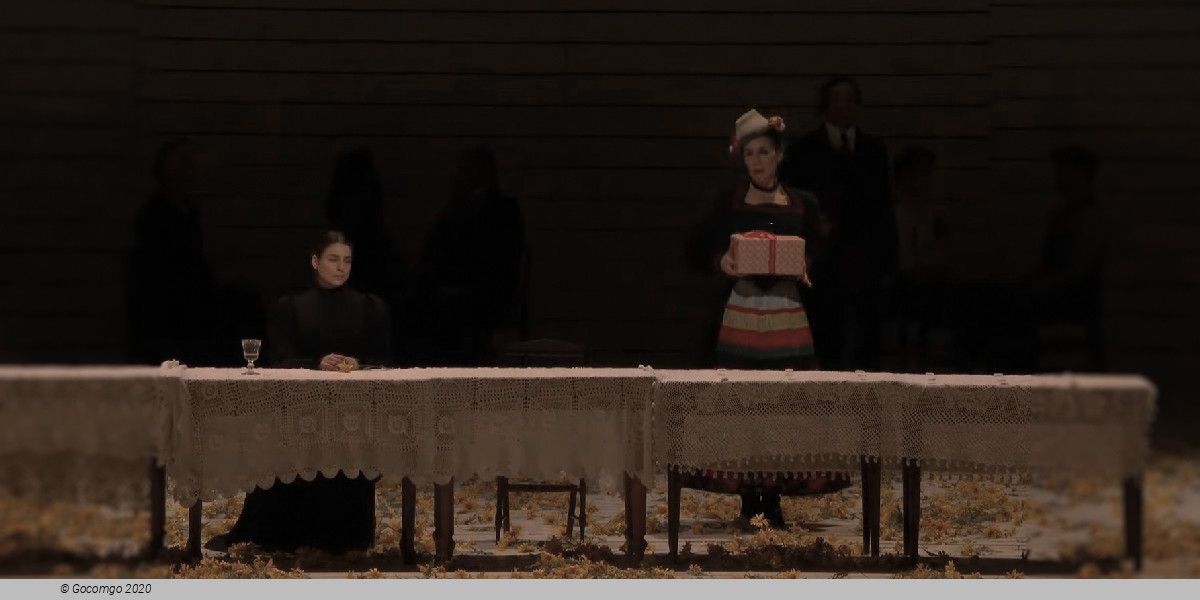
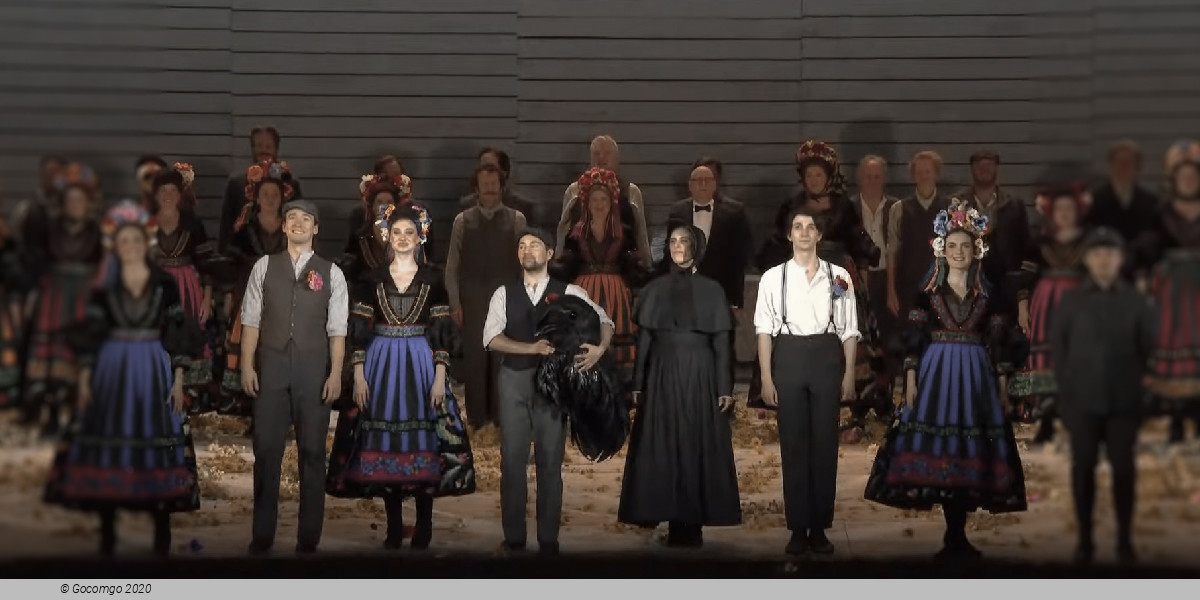
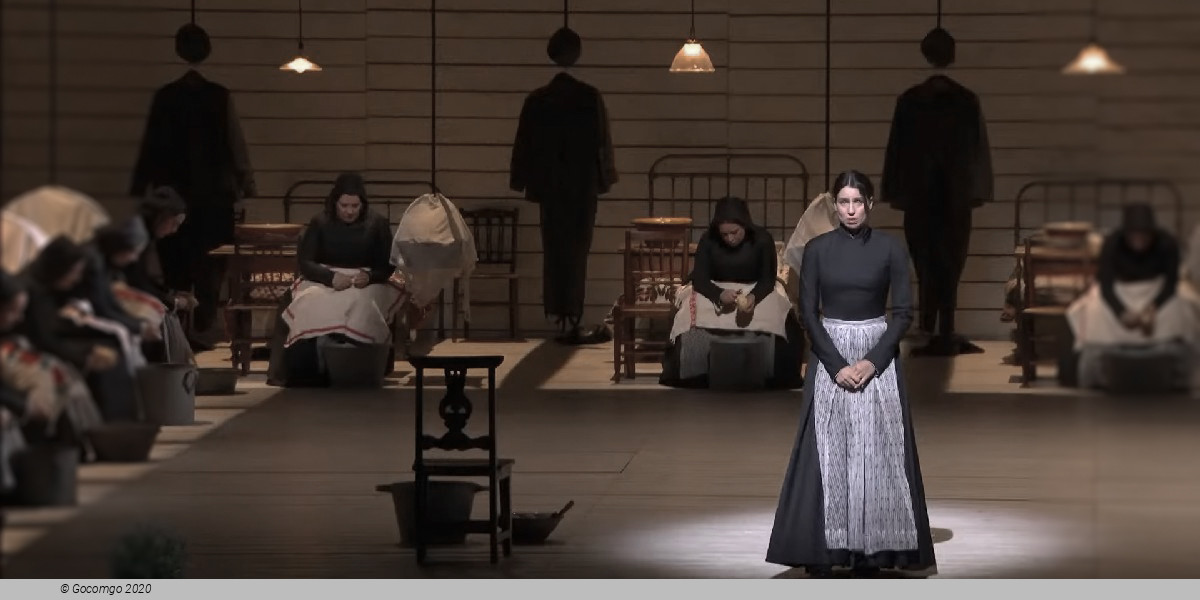
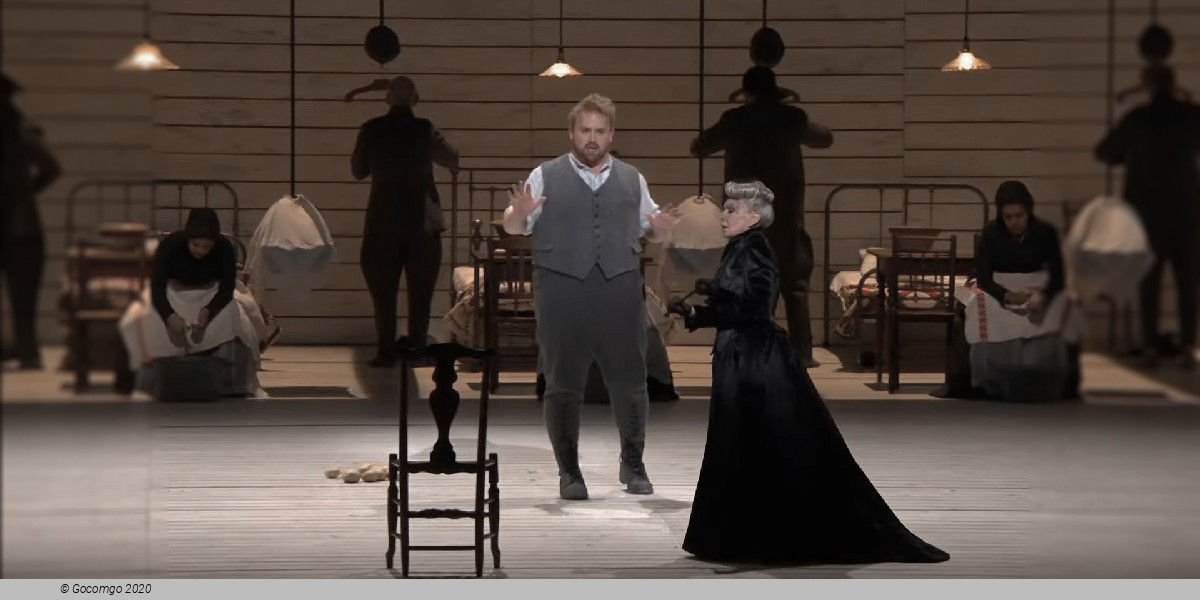
Leoš Janáček: Karina Canellakis conducts Jenůfa
Overview

Organiser: Saturday Matinee

An unforgettable musical experience
The Concertgebouw’s famous Main Hall is one of the best concert halls in the world, well-known for its exceptional acoustics and special atmosphere. In the Main Hall, you will feel history. Here, Gustav Mahler conducted his own compositions, as did Richard Strauss and Igor Stravinsky. Sergei Rachmaninoff played his own piano concertos in the Main Hall. This is also where musicians such as Leonard Bernstein, Vladimir Horowitz and Yehudi Menuhin gave legendary performances. Right up to now, the Main Hall offers a stage to the world’s best orchestras and musicians. 

History
Premiere of this production: 21 January 1904, National Theatre, Brno

Jenůfa ("Her Stepdaughter" in Czech) is an opera in three acts by Leoš Janáček to a Czech libretto by the composer, based on the play Její pastorkyňa by Gabriela Preissová. It was first performed at the National Theatre, Brno on 21 January 1904. Composed between 1896 and 1902, it is among the first operas written in prose.

Synopsis

Place:  A Moravian village
Time: the nineteenth century

The plot depends on a tangled set of village relationships. Before the opera begins, the mill-owner Grandmother Buryja's two sons have both married twice, fathered children, and died. Their wives have also died, except for the Kostelnička (widow of the churchwarden), the younger son's second wife and Jenůfa's stepmother. Custom dictates that only Števa, the elder son's child by his first marriage, will inherit the mill, leaving his half-brother Laca and cousin Jenůfa to earn their livings.

Act 1

Jenůfa, Laca, and Grandmother Buryja wait for Števa to return home. Jenůfa, in love with Števa and secretly pregnant with his child, worries that he may have been drafted into the army. Laca, in love with Jenůfa, expresses bitterness against his half-brother's favored position at home. As he complains he plays with a knife and, finding it blunt, gives it to the mill foreman to be sharpened.

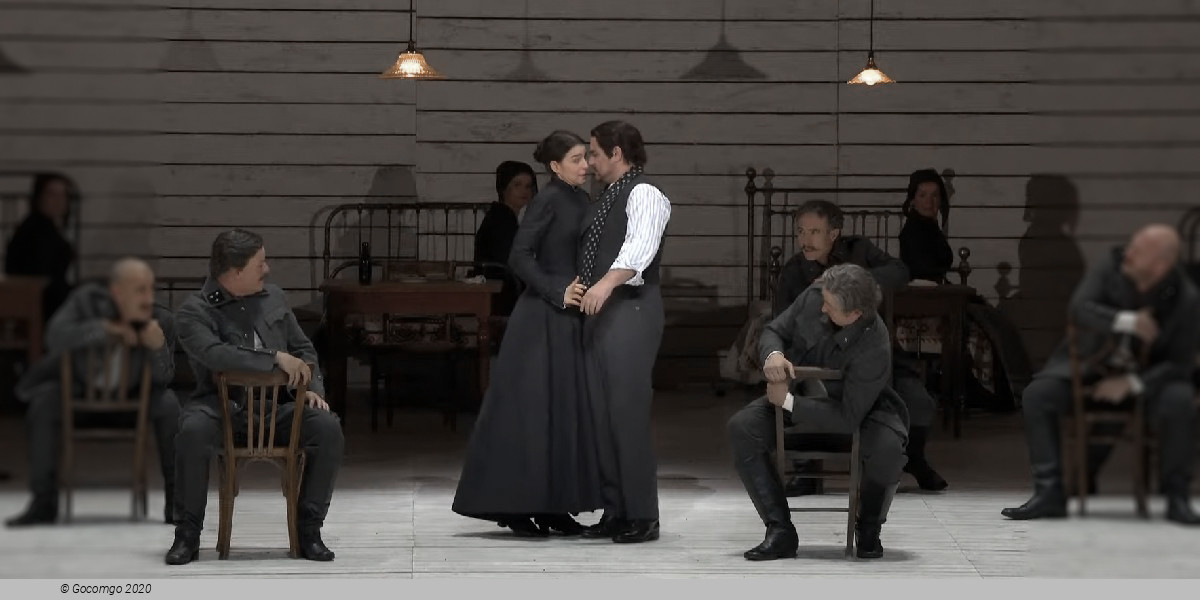
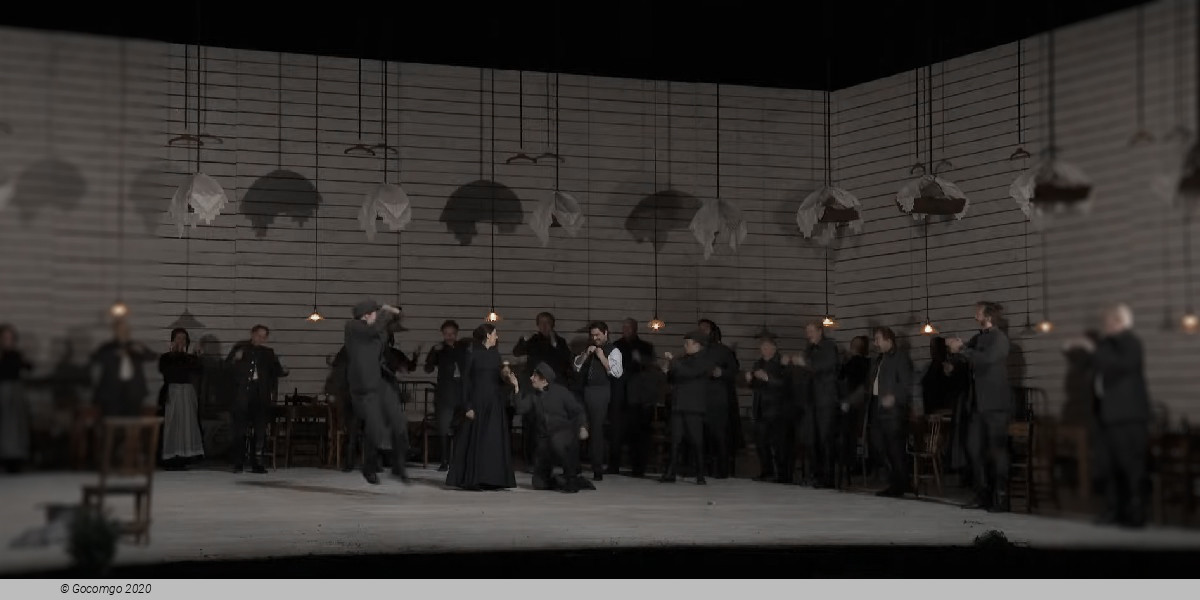
The foreman informs the family that Števa has not been drafted, to Jenůfa's relief and Laca's increased frustration. The others leave, and Jenůfa waits to greet Števa. He appears with a group of soldiers, drunk and boasting of his prowess with the girls. He calls for music and drags the miserable Jenůfa into dancing with him.

Then Kostelnička steps into this rowdy scene, silences the musicians and, shocked by Števa's behavior, forbids him to marry Jenůfa until he can stay sober for one full year. The soldiers and the family leave Števa and Jenůfa alone, and she begs him to love her, but he, unaware of her pregnancy, gives her casual answers and leaves.

Laca returns, as bitter as ever. He attempts to goad Jenůfa into criticizing Števa, but she takes her lover's side despite everything. Laca rages that Števa would never even look at her if it weren't for her rosy cheeks, then slashes her across the cheek with his knife.

Act 2

Months later, it is winter. The baby has been born, but Števa has not yet come to visit his child. Jenůfa's face is still disfigured, but she is happy in her love for the baby. While Jenůfa sleeps, the Kostelnička summons Števa and demands that he take responsibility. He answers that while he will provide money in secret, no one must know the baby is his. His love for Jenůfa died when Laca spoiled her beauty, and he is now engaged to marry Karolka, the mayor's pretty daughter.

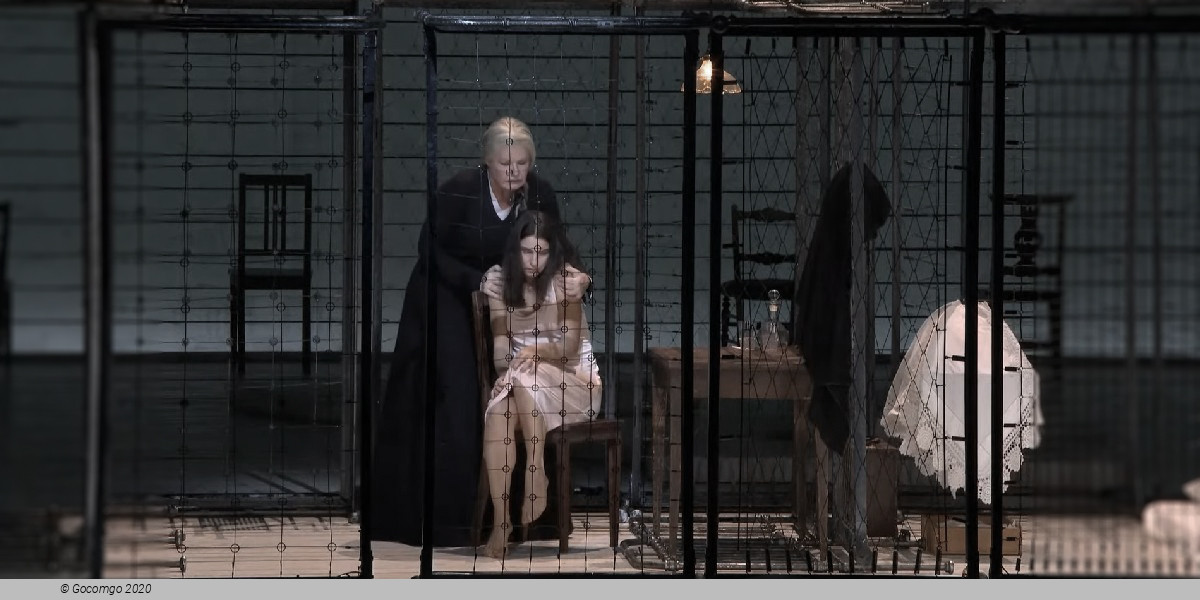
Števa leaves, and Laca enters. He still doesn't know the truth about the baby, and when the Kostelnička tells him, his first reaction is disgust at the thought of taking Števa's child under his wing. Fearful that Jenůfa will be left with no one to marry, Kostelnička hastily lies that the baby is dead. Laca leaves, and the Kostelnička is faced with the necessity of making the lie true. She wraps the baby in a shawl and leaves the house.

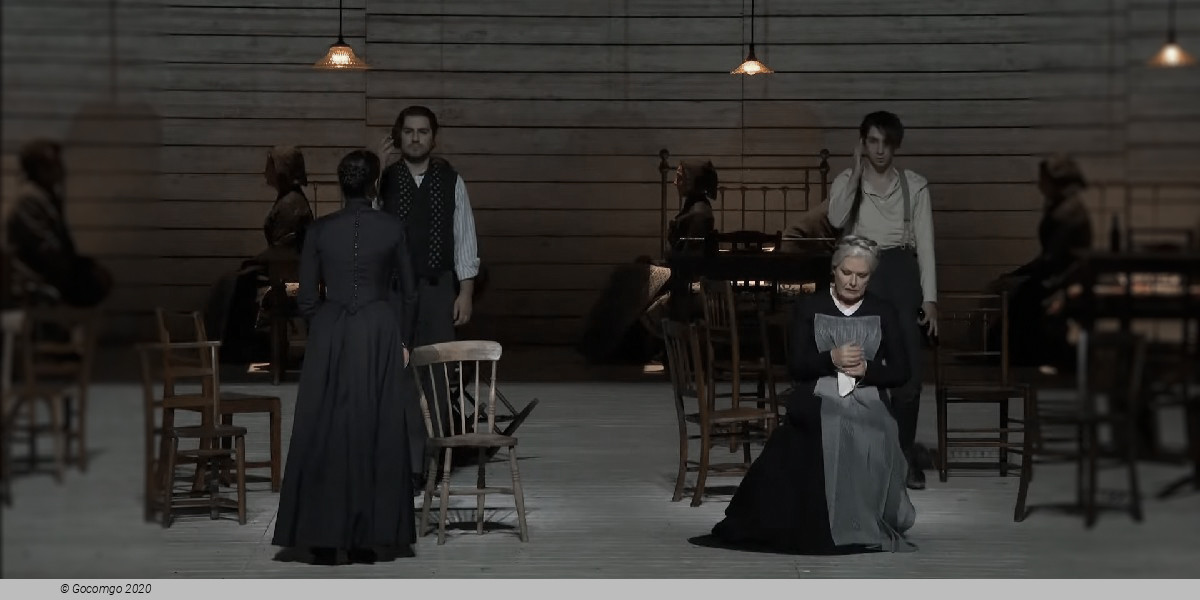
Jenůfa wakes up and says a prayer for her child's future, but the Kostelnička, returning, tells her that the baby died while she slept. Laca appears and comforts Jenůfa gently, asking that they spend the rest of their lives together. Seeing the tenderness of the couple, the Kostelnička tries to convince herself that she has acted for the best.

Act 3

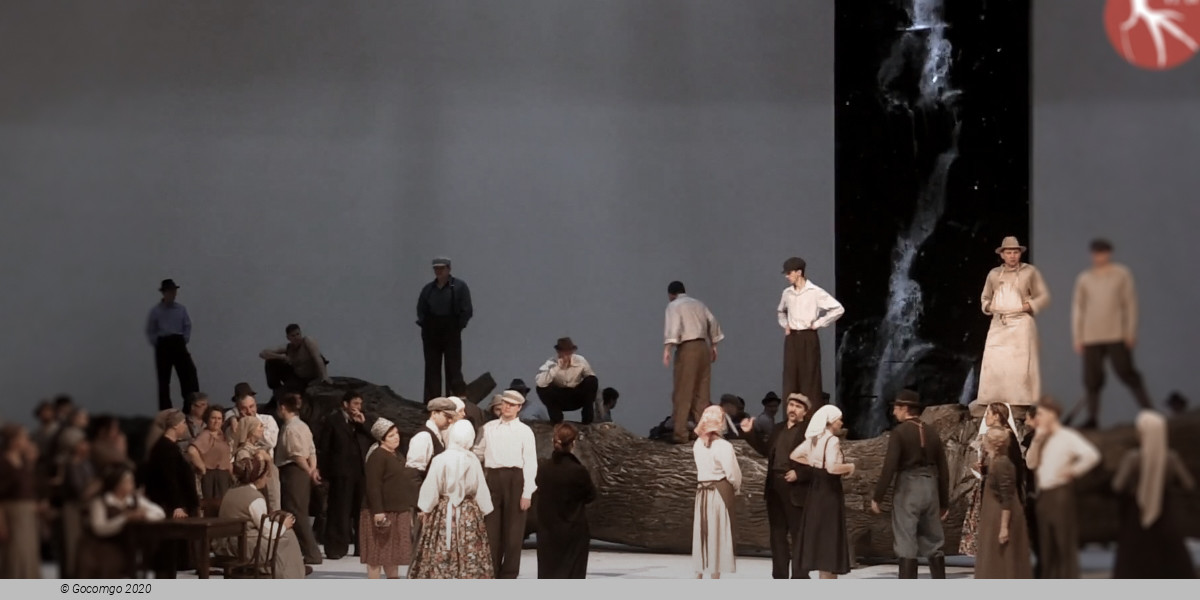
It is now spring, and Laca and Jenůfa's wedding day. All seems right again, except that the Kostelnička is a nervous wreck. Števa and Karolka visit, and a chorus of village girls sings a wedding song. Just then, screams are heard. The body of the baby has been discovered in the mill-stream under the melting ice. Jenůfa immediately says that the baby is hers, and in her grief appears guilty of the murder. The village is ready to exact immediate justice against Jenůfa, but the Kostelnička calms them and says that the crime is hers. Hearing the whole story, Jenůfa forgives her stepmother. The crowd takes the Kostelnička off to jail. Jenůfa and Laca are left alone. Jenůfa asks Laca to leave her, as she cannot expect him to marry her now. He replies that he will not leave her, and that he wishes to spend the rest of his life with her.

Venue Info

Concertgebouw - Amsterdam
Location   Concertgebouwplein 10

The Royal Concertgebouw is a concert hall in Amsterdam, Netherlands. The Dutch term "concertgebouw" literally translates into English as "concert building". On 11 April 2013, on occasion of the building's 125th anniversary, Queen Beatrix bestowed the Royal Title "Koninklijk" upon the building, as she did previously (in 1988) to the Royal Concertgebouw Orchestra. Because of its highly regarded acoustics, the Concertgebouw is considered one of the finest concert halls in the world, along with places such as Boston's Symphony Hall and the Musikverein in Vienna.

The architect of the building was Adolf Leonard van Gendt, who was inspired by the Gewandhaus in Leipzig, built two years earlier (and destroyed in 1943).

Construction began in 1883 in a pasture that was then outside the city, in Nieuwer-Amstel, a municipality that in 1964 became Amstelveen. A total of 2,186 piles of length twelve to thirteen metres (40 to 43 ft) were sunk into the soil. The Concertgebouw was completed in late 1886, however due to the difficulties with the municipality of Nieuwer-Amstel - filling in a small canal, paving the access roads and installing street lights - the grand opening of the building was delayed.

The hall opened on 11 April 1888 with an inaugural concert, in which an orchestra of 120 musicians and a chorus of 500 singers participated, performing works of Wagner, Handel, Bach, and Beethoven. The resident orchestra of the Concertgebouw is the Royal Concertgebouw Orchestra (Koninklijk Concertgebouworkest), which gave its first concert in the hall on 3 November 1888, as the Concertgebouw Orchestra (Concertgebouworkest). For many decades the Netherlands Philharmonic Orchestra and the Radio Filharmonisch Orkest have also been regular performers in the Concertgebouw.

The Main Hall (Grote Zaal) seats 1,974, and is 44 metres (144 ft) long, 28 metres (92 ft) wide, and 17 metres (56 ft) high. Its reverberation time is 2.8 seconds without audience, 2.2 seconds with, making it ideal for the late Romantic repertoire such as Mahler. Although this characteristic makes it largely unsuited for amplified music, groups such as Led Zeppelin, Pink Floyd and The Who did perform there in the 1960s. It hosts not only orchestral and operatic performances, but also jazz and world music.

A smaller, oval-shaped venue, the Recital Hall (Kleine Zaal), is located behind the Main Hall. The Recital Hall is 20 metres (66 ft) long and 15 metres (50 ft) wide. Its more intimate space is well-suited for chamber music and Lieder. The Recital Hall has 437 seats.

When the Concertgebouw was built, acoustics were something of a black art. As in shipbuilding, designers drew upon what had worked in the past without entirely understanding the underlying science. When the building was completed, the acoustics were not perfect, and a lot of effort went into fine-tuning the aural ambience. During later restorations, particular care has been taken not to alter the materials used for interior decoration with this in mind.

In 1983, the Concertgebouw was found to be sinking into the damp Amsterdam earth, with several inch-wide cracks appearing in the walls, so the hall embarked on extensive fundraising for renovations. Its difficult emergency restoration started in 1985, during which the 2,186 rotting wooden pilings were replaced with concrete pillars. Pi de Bruijn, Dutch architect designed a modern annex for a new entrance and a basement to replace cramped dressing and rehearsal space.

Today, some nine hundred concerts and other events per year take place in the Concertgebouw, for a public of over 700,000, making it one of the most-visited concert halls in the world.

As of February 2014, the managing director of the Concertgebouw is Simon Reinink and the artistic director is Anneke Hogenstijn.

The organ was built in 1890 by the organ builder Michael Maarschalkerweerd from Utrecht, and was renovated in the years 1990 to 1993 by the organ builder Flentrop. It has 60 registers on three divisions and pedal.

Important Info
Type: Classical Concert
City: Amsterdam, Netherlands
Starts at: 13:30
Intervals: 1
Duration:
Top of page