Bolshoi Theatre tickets 8 January 2026 - Nutcracker | GoComGo.com

Nutcracker

Bolshoi Theatre, Historic Stage, Moscow, Russia
All photos (5)
Select date and time
12 PM 7 PM
Request for Tickets
Important Info
Type: Ballet
City: Moscow, Russia
Starts at: 19:00
Acts: 2
Intervals: 1
Duration: 2h 15min

E-tickets: Print at home or at the box office of the event if so specified. You will find more information in your booking confirmation email.

You can only select the category, and not the exact seats.
If you order 2 or 3 tickets: your seats will be next to each other.
If you order 4 or more tickets: your seats will be next to each other, or, if this is not possible, we will provide a combination of groups of seats (at least in pairs, for example 2+2 or 2+3).

Cast
Performers
Ballet company: Bolshoi Ballet
Orchestra: Bolshoi Theatre Orchestra
Creators
Composer: Pyotr Tchaikovsky
Music Director: Gennady Rozhdestvensky
Author: Ernst Theodor Amadeus Hoffmann
Choreography: Marius Petipa
Lighting Designer: Mikhail Sokolov
Sets & costumes designer: Simon Virsaladze
Librettist: Yury Grigorovich
Choreography: Yury Grigorovich
Overview

Ideas from the scenario by Marius Petipa used

When, just over a hundred years ago, they were rehearsing for the first night of Nutcracker at Petersburg's Maryinsky Theatre, no one predicted such a happy stage life for the ballet. The all-powerful autocrat of Petersburg ballet ‘off-loaded’ his production onto his deputy, Lev Ivanov who did not dare ditch Petipa’s plan, and squeezed his imagination into an alien scheme.

In those places where Ivanov faithfully followed Petipa’s scenario, the action grinded to a laborious halt: the ballet master failed to see the charm of the colorful details of this family festivity. Only in separate fragments, did Ivanov rise to the challenge of Tchaikovsky’s music and break out into the open spaces it afforded. Ten years were to pass and Ivanov's Snowflake waltz was acknowledged to be a masterpiece and ballerinas competed for the honor of dancing the role of the Sugar-plum Fairy, which consisted of just one pas de deux.

In the 20th century it would appear that not one choreographer – from the great classic George Balanchine to the super-avant-gardist, Mark Morris – has been able to resist the temptation of plunging into the languorous strains of Tchaikovsky’s music. For some it represented a sweet memory of childhood, for others – attempts to locate a fairytale in the prosaic hurly-burly of modern life, for yet others – mind-boggling star turns. But there were few who managed to create a choreography that was equivalent to Tchaikovsky's agitated and infinitely tragic music. .

Vasily Vaynonen, who created his own version of Nutcracker in 1934 (the premiere was likewise held at Leningrad's Kirov Theatre of Opera and Ballet) conceived of a production that was ideal for children. In it there were magical tricks, and colorful dolls and a brightly lit Christmas tree, designed by Vladimir Dmitriev. In accordance with the principles of ballet-drama then in vogue, Vaynonen differentiated between the realistic party scenes at the Stahlbaums’ home, and Marie’s fabulous dream which remained a vivid – though devoid of content – divertissement. The poetic scale of Tchaikovsky’s music was embodied in this somewhat down-to-earth and ingenuous production by the young Galina Ulanova who danced at the premiere.

This dazzling show by Bolshoi legend Yuri Grigorovich

Since the middle of the 20th century, Grigorovich’s name has been synonymous to Bolshoi, the most important theatre of Moskow. Serving as its artistic director for 31 years, Grigorovich remains an indefatigable choreographer and teacher. The most important living choreographer of Russian classical ballet, Grigorovich celebrates this year his 90th birthday, and theatres worldwide pay tribute to his legendary choreographies.

History
Premiere of this production: 06 December 1892, Imperial Mariinsky Theatre in Saint Petersburg

The Nutcracker (Russian: Shchelkunchik, Balet-feyeriya About this soundlisten is a two-act ballet, originally choreographed by Marius Petipa and Lev Ivanov with a score by Pyotr Ilyich Tchaikovsky (Op. 71). The libretto is adapted from E. T. A. Hoffmann's story "The Nutcracker and the Mouse King".

Although the original production was not a success, the 20-minute suite that Tchaikovsky extracted from the ballet was. However, the complete Nutcracker has enjoyed enormous popularity since the late 1960s and is now performed by countless ballet companies, primarily during the Christmas season, especially in North America. Major American ballet companies generate around 40% of their annual ticket revenues from performances of The Nutcracker. The ballet's score has been used in several film adaptations of Hoffmann's story.

Tchaikovsky's score has become one of his most famous compositions. Among other things, the score is noted for its use of the celesta, an instrument that the composer had already employed in his much lesser known symphonic ballad The Voyevoda.

Synopsis

Act I

Guests are gathering for a Christmas party at the Stahlbaum home. Among them are Drosselmeyer, godfather to Marie and Fritz, the Stahlbaums’ children. He has brought them a wonderful present: a funny Nutcracker.

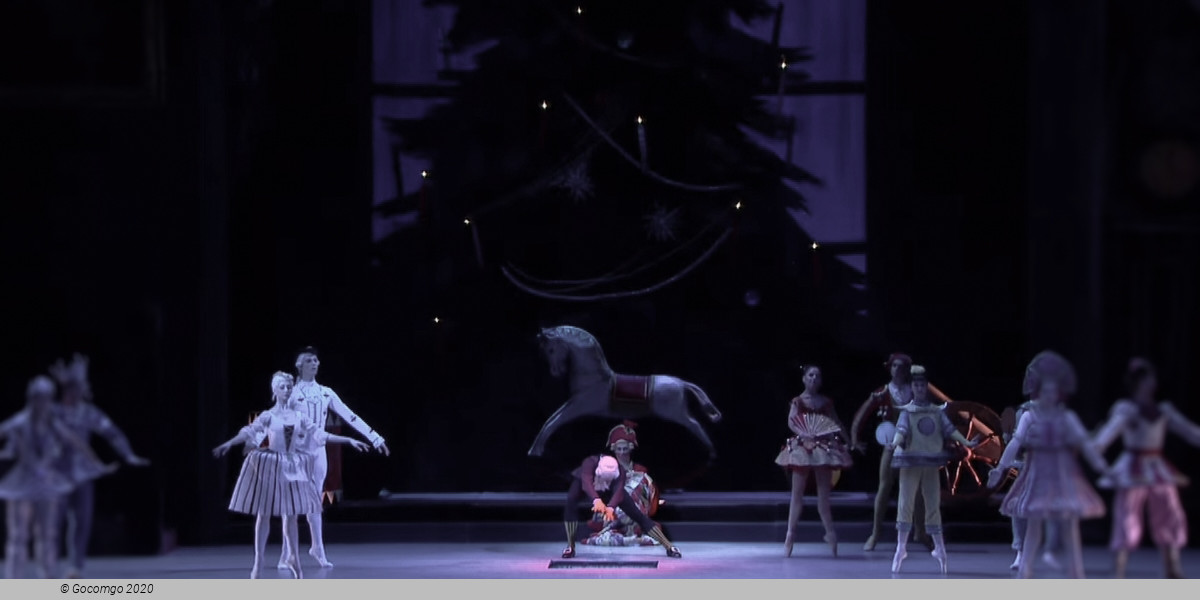
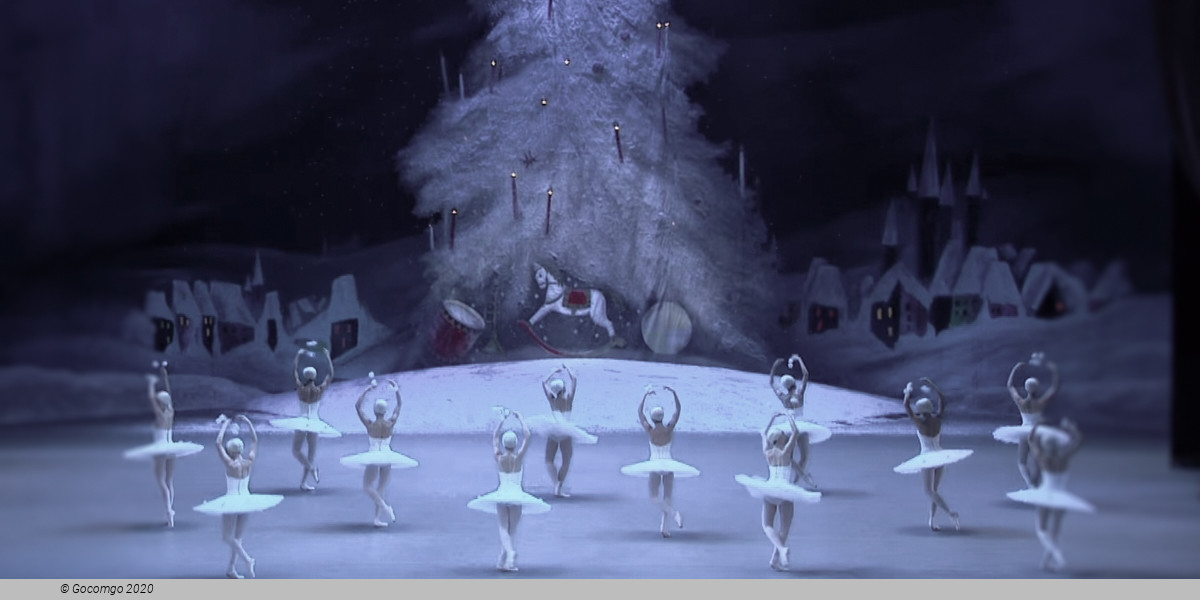
The children wait with impatience for when at long last they will be shown the Christmas tree and the presents. The long awaited moment comes: the handsomely adorned Christmas tree is presented tothe assembled company.

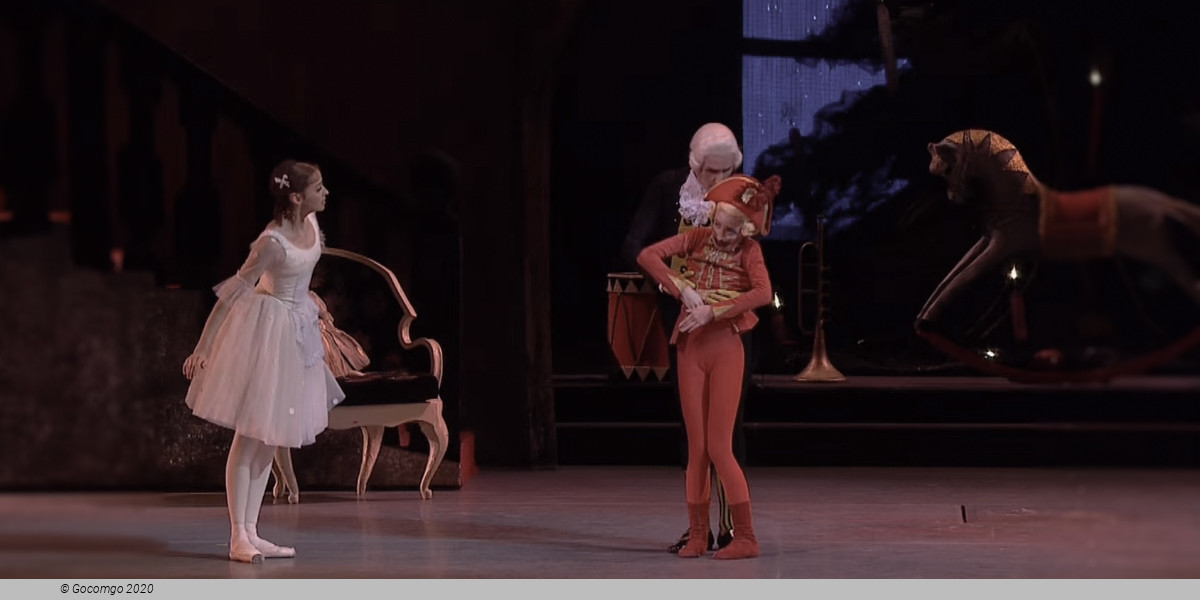
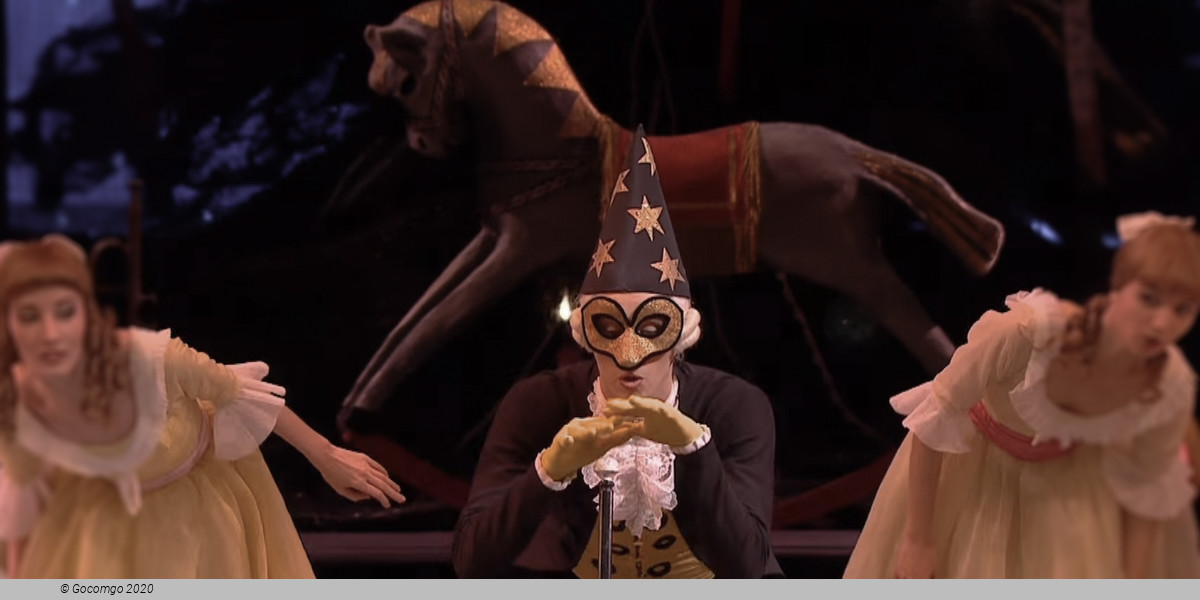
Drosselmeyer suddenly appears disguised as a magician: he is not recognized by the children. Their unknown guest’s ability to make their toys come alive delights the children but, as everything that is clad in mystery, it involuntarily arouses their fear. In order to calm them down, Drosselmeyer takes off his mask and the chil­dren now recognize their beloved godfather. Marie wants to play with the wonderful dolls which have come alive, but they have already been tidied away. To comfort Marie, Drosselmeyer gives her the Nutcracker-Doll. Marie takes a great liking to this awkward, funny creature.

Marie’s brother Fritz, who is a great tease and very naughty, acci­dentally breaks the doll. With great tenderness, Marie comforts her injured Nutcracker and rocks it backwards and forwards. Fritzand his friends now put on mouse masks and tease poor Marie.

The guests appear from an adjoining room. After the final, ceremonial Grossvater dance, they all leave.
At night the room where the Christmas tree stands is bathed in moonlight. It looks mysterious and full of magical secrets. Overcoming her fears, Marie has come to the room to visit her ‘sick’Nutcracker-Doll. She kisses the doll and rocks it.

Drosselmeyer now appears. But instead of her kind godfather, he has turned into a wizard. At a wave of his hand everything around them is transformed: the walls of the room slide back, the Christmastree starts to grow. And all the toys come alive and grow together with the tree.

Suddenly, mice creep out from under the floor­boards, led by the Mouse King. The dolls are panic-stricken and thrown into confusion. The Nutcracker’s quick wits and bravery save the day: lining upthe lead soldiers, he boldly leads them out to do battle with the mice forces.

However, the forces are unequal, the advantage is on the side of the evil mice. The Nutcracker is left alone to face the Mouse King and his suite. Marie is out of her mind with worry over the danger that threatens her doll. At this very moment, Drosselmeyer hands her a lighted candle and she throws it at the mice who scurry away helter-skelter.

The battle field empties. The only person left here is the Nutcracker who lies without moving on the floor. Marie, together with the dolls, hurries to his rescue. And now a miracle occurs... BeforeMarie stands a handsome youth, the Nutcracker-Prince. He walks forward to meet her.

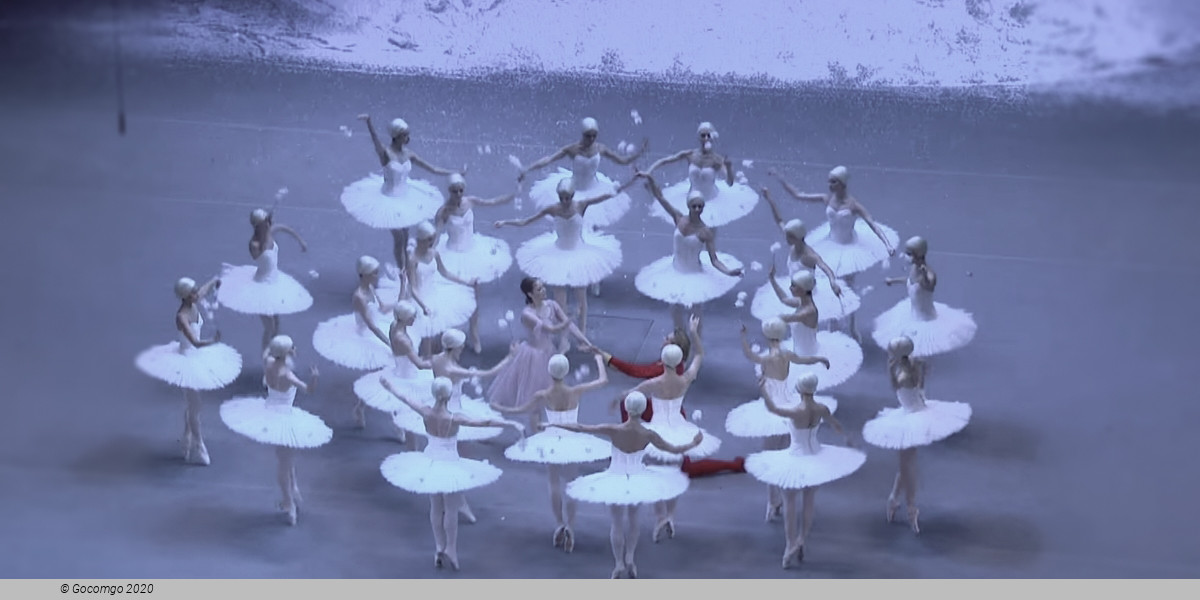
The walls of the house disappear. Marie and her friends are standing under a star-studded sky, by a fairy-tale Christmas tree. Snowflakes go round in a magical dance. Marie and her Nutcracker-Prince,beckon, as if to a beautiful dream, to the twinkling star at the top of the Christmas tree. They climb into a magic boat and set off for the top of the tree. The dolls follow behind them.

Act II

Marie and Nutcracker-Prince are sailing in their magic boat through the Christmas tree kingdom. There are their friends, the dolls with them. The shining star is getting closer and closer. They are just about to reach the top of the tree when they are suddenly attacked by the mice and the Mouse King who have crept up behind them. Once again, theNutcracker-Prince goes boldly into battle. Horribly frightened, Marie and the dolls watch the fight. The Nutcracker-Prince vanquishes the enemy. Joyous victory celebrations are underway. The dolls dance, the candles burn even brighter, the Christmas tree comes alive. The evil mice have been defeated. Marie and the Nutcracker-Prince are radiant with happiness — they have reached the kingdom of their dreams! But it appears all this was just a dream. Christmas Eve is over and with it all wonderful reveries. Marie, still in the thrall of the fabulous dream, is sitting at home by the Christmas tree, with the Nutcracker-Doll on her lap.

Act I
On Christmas Eve, young Clara attends a festive party at her family’s home, where the mysterious toymaker Drosselmeyer gives her a nutcracker doll. After the guests leave and the house grows quiet, Clara returns to the tree and falls into a magical dream. The room transforms, the Christmas tree grows to enormous size, and toys come alive. A fierce battle erupts between the Nutcracker and the Mouse King, ending with the Nutcracker’s victory. He transforms into a Prince and leads Clara through the snowy forest, where the Snow Queen and her shimmering Snowflakes dance in a swirling winter landscape.

Act II
Clara and the Prince arrive in the radiant Kingdom of Sweets, ruled by the Sugar Plum Fairy. In their honor, dancers from many lands perform enchanting divertissements, each representing sweets or treats from around the world. The celebration culminates in the grand pas de deux of the Sugar Plum Fairy and her Cavalier. As the festivities conclude, Clara’s magical journey fades, and she awakens back at home, unsure whether her adventure was a dream — or something wonderfully real.


Venue Info

Bolshoi Theatre - Moscow
Location   Teatralnaya Square 1

The Bolshoi Theatre is one of the world’s most iconic cultural landmarks, renowned for its grandeur, history, and artistic excellence. Located in the heart of Moscow, this legendary theatre has been home to unforgettable performances of opera and ballet for over two centuries. Its majestic architecture, world-class acoustics, and rich tradition make every event at the Bolshoi a truly unforgettable experience.

On 28 March (17 according to the old style) 1776, Catherine II granted the prosecutor, Prince Pyotr Urusov, the "privilege" of "maintaining" theatre performances of all kinds, including masquerades, balls and other forms of entertainment, for a period of ten years. And it is from this date that Moscow’s Bolshoi Theatre traces its history.

The Bolshoi building, which for many years now has been regarded as one of Moscow’s main sights, was opened on 20 October 1856, on Tsar Alexander II’s coronation day.

On 29 October 2002 the Bolshoi was given a New Stage and it was here it presented its performances during the years the Main Stage was undergoing massive reconstruction and refurbishment.

The reconstruction project lasted from l July 2005 to 28 October 2011. As a result of this reconstruction, many lost features of the historic building were reinstated and, at the same time, it has joined the ranks of most technically equipped theatre buildings in the world.

The Bolshoi Theatre is a symbol of Russia for all time. It was awarded this honor due to the major contribution it made to the history of the Russian performing arts. This history is on-going and today Bolshoi Theatre artists continue to contribute to it many bright pages.

The Bolshoi Ballet and Bolshoi Opera are among the oldest and best known ballet and opera companies in the world. It is by far the world's biggest ballet company, with more than 200 dancers.

Important Info
Type: Ballet
City: Moscow, Russia
Starts at: 19:00
Acts: 2
Intervals: 1
Duration: 2h 15min
Top of page