

Berliner Philharmonie 19 September 2019 - Deutsches Symphonie-Orchester Berlin | GoComGo.com

Deutsches Symphonie-Orchester Berlin

Berliner Philharmonie, Main Auditorium, Berlin, Germany
All photos (5)
Select date and time
7 PM
Request for Tickets
Important Info
Type: Opera
City: Berlin, Germany
Starts at: 19:00
Acts: 3
Duration:

E-tickets: Print at home or at the box office of the event if so specified. You will find more information in your booking confirmation email.

You can only select the category, and not the exact seats.
If you order 2 or 3 tickets: your seats will be next to each other.
If you order 4 or more tickets: your seats will be next to each other, or, if this is not possible, we will provide a combination of groups of seats (at least in pairs, for example 2+2 or 2+3).

Festival

Musikfest Berlin 2019

From 30 August to 19 September 2019, the concert season in Berlin will be launched by Musikfest Berlin, hosted by Berliner Festspiele in cooperation with the Foundation Berliner Philharmoniker. Over 21 days, 26 events at the Philharmonie, its Chamber Music Hall and at Konzerthaus Berlin will present 65 works by around 25 composers, featuring 22 instrumental and vocal ensembles and more than 50 soloists from the international music scene.

Overview

Start of the season and finale of the Musikfest Berlin

With this concertante performance of Dvořák’s “Rusalka” – an opera of distinctive figures of sound and themes, vivid harmonics and masterful orchestration – the 2019 Musikfest Berlin will enter its finale.

Concert Programme
Rusalka op. 114 
Opera in 3 acts 
Concert performance


Musikfest Berlin began with a grand opera in a semi-staged performance. And it will end with a grand opera in a concertante presentation. Our exploration of the Paris of Hector Berlioz will be complemented by a glance towards the Prague of Antonín Dvořák. As on 1 September (“Die Frau ohne Schatten”), we will once more travel beyond Wagner – in an aesthetic location not easily found by composers of the late 19th century. Dvořák, who had recently returned from a longer mission to America, composed four Symphonic Poems on his way towards his penultimate opera, experiencing a time-lapse version of a development similar to that of his younger German colleague Richard Strauss. Like in his Symphonic Poems, he chose a fairy-tale narrative that has its own Czech tradition, but is also told in other languages: the story of the mermaid who falls in love and yearns for a human life, only to be cast out of her new society by her master’s infidelity with no hope of returning to her old life. Her soul cannot find peace; it is condemned to restless wanderings. As well as the technique of characterising basic motifs – an tremendous stylisation of Wagner’s principle of the leitmotif – Dvořák also expanded the art of generating succinct sound and topical figures from the melos. His vivid harmonies and masterful orchestration, which had gained in power and transparency throughout the composition of nine symphonies and countless tone poems, demonstrated the composer’s journey towards new qualities of musical expression and form. Some critics hold that Dvořák took the scenic route through forests and along the rivers rather than the expressway towards modernity, which allowed him to make many discoveries lost his more speedy colleagues – and perhaps they are right.

History
Premiere of this production: 31 March 1901, Prague

Rusalka is an opera by Antonín Dvořák. The Czech libretto was written by the poet Jaroslav Kvapil (1868–1950) based on the fairy tales of Karel Jaromír Erben and Božena Němcová. A rusalka is a water sprite from Slavic mythology, usually inhabiting a lake or river. Rusalka is one of the most successful Czech operas and represents a cornerstone of the repertoire of Czech opera houses.

Synopsis

Act 1

A meadow by the edge of a lake

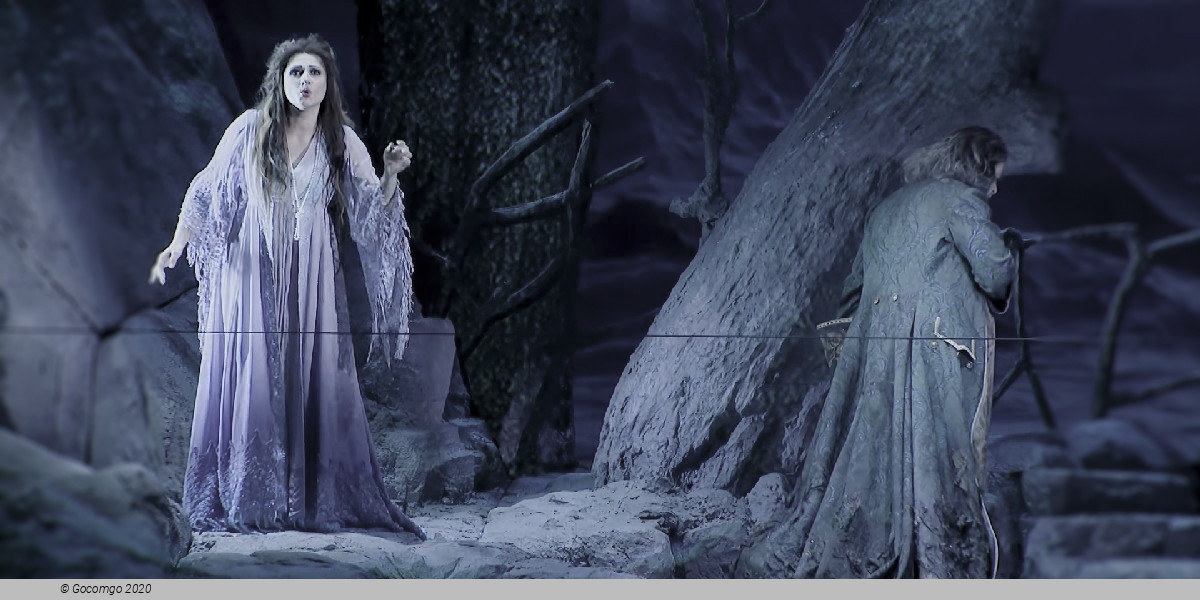
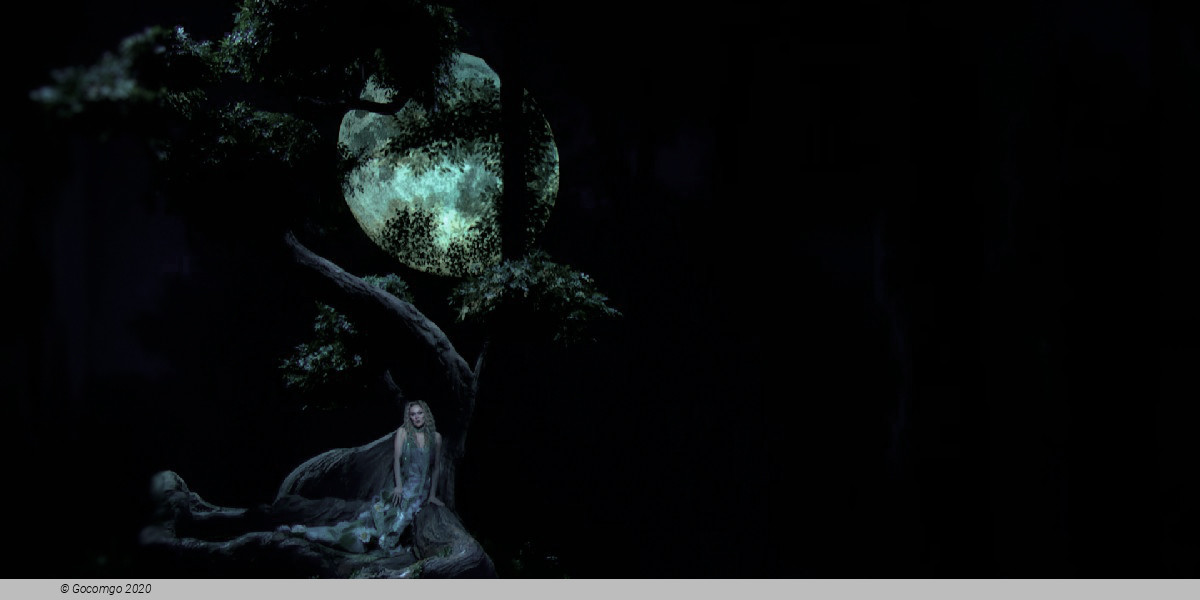
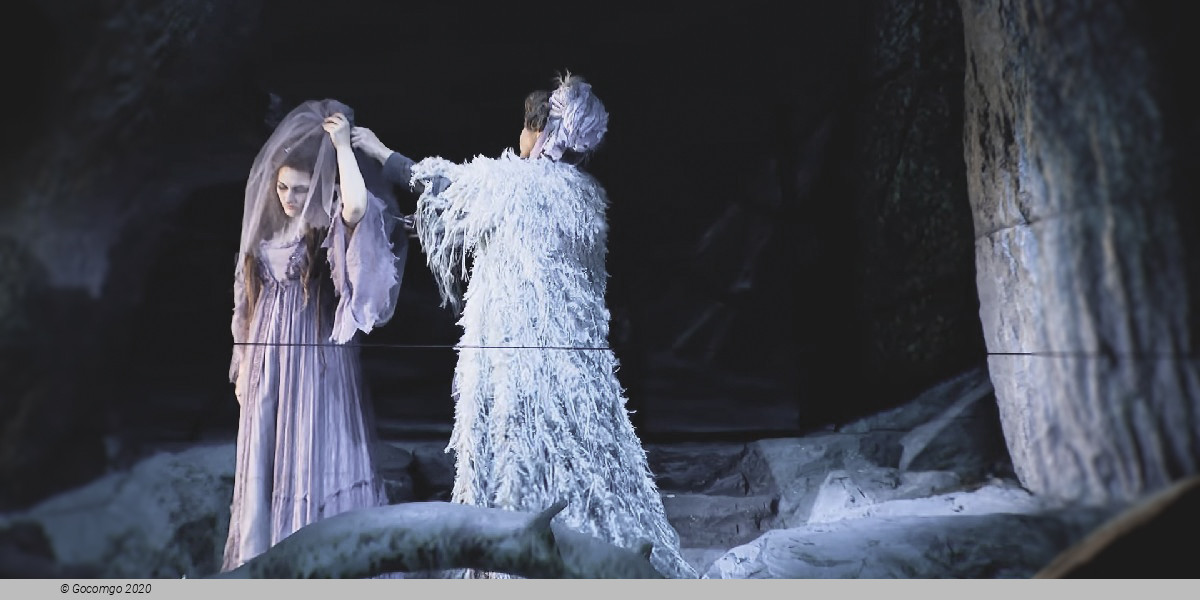
Three wood-sprites tease the Water-Gnome, ruler of the lake. Rusalka, the Water-Nymph, tells her father she has fallen in love with a human Prince who comes to hunt around the lake, and she wants to become human to embrace him. He tells her it is a bad idea, but nonetheless steers her to a witch, Ježibaba, for assistance. Rusalka sings her "Song to the Moon", asking it to tell the Prince of her love. Ježibaba tells Rusalka that, if she becomes human, she will lose the power of speech and immortality; moreover, if she does not find love with the Prince, he will die and she will be eternally damned. Rusalka agrees to the terms and drinks a potion. The Prince, hunting a white doe, finds Rusalka, embraces her, and leads her away, as her father and sisters lament.

Act 2

The garden of the Prince's castle

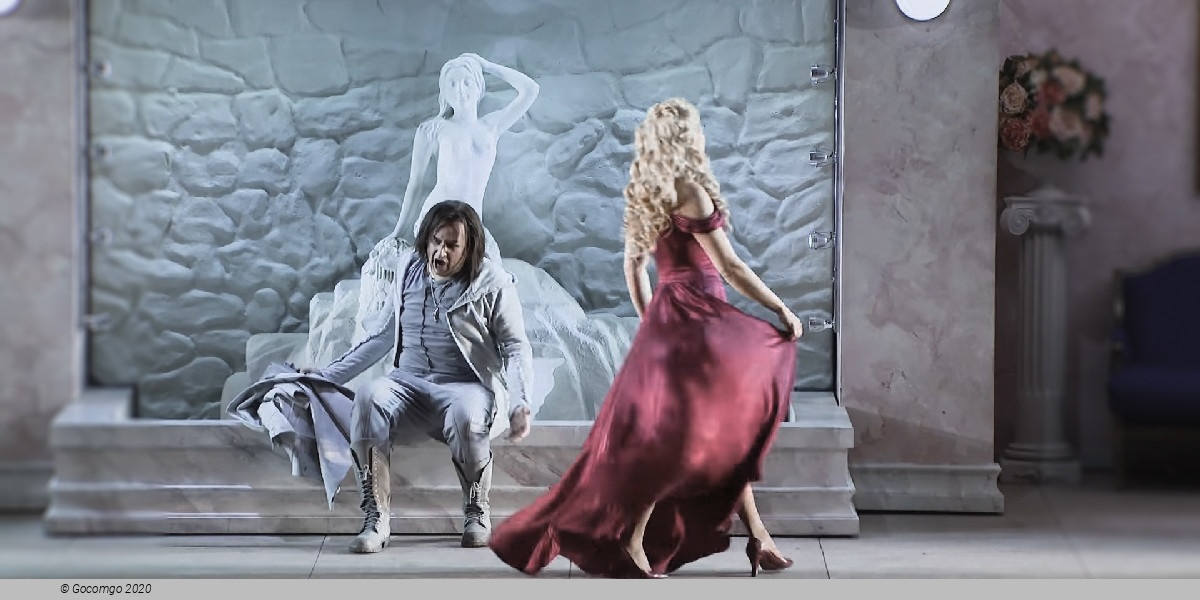
A Gamekeeper and his nephew, the Kitchen-Boy, note that the Prince is to be married to a mute and nameless bride. They suspect witchcraft and doubt it will last, as the Prince is already lavishing attentions on a Foreign Princess who is a wedding guest. The Foreign Princess, jealous, curses the couple. The prince rejects Rusalka. Rusalka then goes back to the lake with her father the Water Gnome. Though she has now won the Prince's affections, the Foreign Princess is disgusted by the Prince's fickleness and betrayal and she scorns him, telling him to follow his rejected bride to Hell.

Act 3

A meadow by the edge of a lake

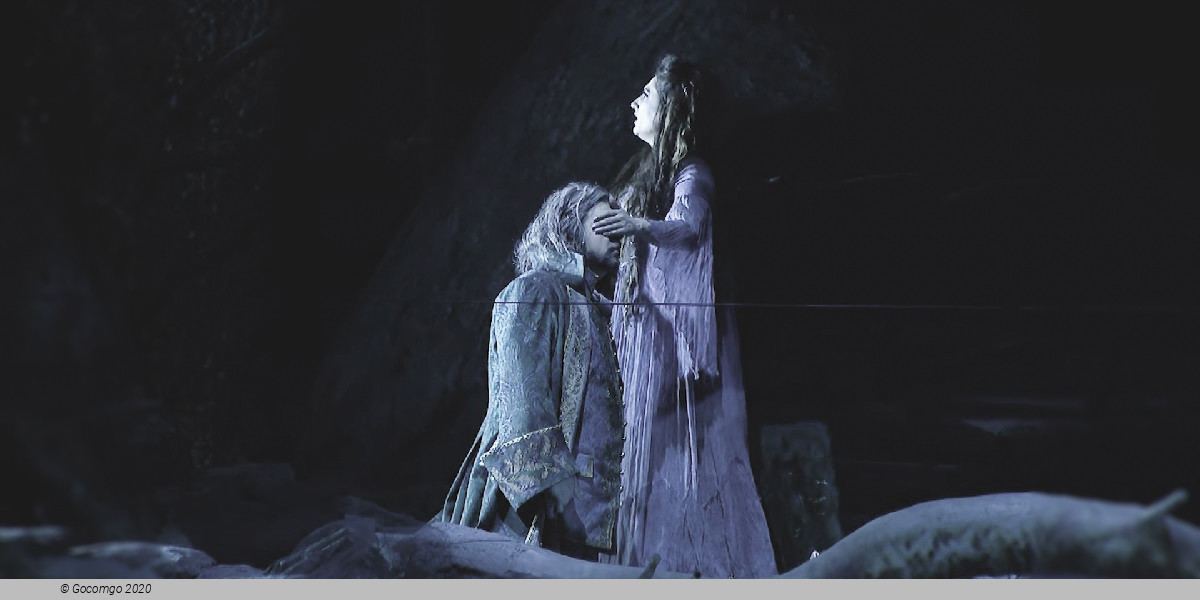
Rusalka asks Ježibaba for a solution to her woes and is told she can save herself if she kills the Prince with the dagger she is given. Rusalka rejects this, throwing the dagger into the lake. Rusalka becomes a bludička, a spirit of death living in the depths of the lake, emerging only to lure humans to their deaths. The Gamekeeper and the Kitchen Boy consult Ježibaba about the Prince, who, they say, has been betrayed by Rusalka. The Water-Goblin says that it was actually the Prince that betrayed Rusalka. The wood-sprites mourn Rusalka's plight. The Prince, searching for his white doe, comes to the lake, senses Rusalka, and calls for her. He asks her to kiss him, even knowing her kiss means death and damnation. They kiss and he dies; and the Water-Goblin comments that "All sacrifices are futile." Rusalka thanks the Prince for letting her experience human love, commends his soul to God, and returns to her place in the depths of the lake as a demon of death.

Venue Info

Berliner Philharmonie - Berlin
Location   Herbert-von-Karajan-Str. 1

The Berliner Philharmonie is a concert hall in Berlin, Germany and home to the Berlin Philharmonic Orchestra. The Philharmonie lies on the south edge of the city's Tiergarten and just west of the former Berlin Wall. The Philharmonie is on Herbert-von-Karajan-Straße, named for the orchestra's longest-serving principal conductor. The building forms part of the Kulturforum complex of cultural institutions close to Potsdamer Platz.

The Philharmonie consists of two venues, the Grand Hall (Großer Saal) with 2,440 seats and the Chamber Music Hall (Kammermusiksaal) with 1,180 seats. Though conceived together, the smaller hall was opened in the 1980s, some twenty years after the main building.

Hans Scharoun designed the building, which was constructed over the years 1960–1963. It opened on 15 October 1963 with Herbert von Karajan conducting Beethoven's 9th Symphony. It was built to replace the old Philharmonie, destroyed by British bombers on 30 January 1944, the eleventh anniversary of Hitler becoming Chancellor. The hall is a singular building, asymmetrical and tentlike, with the main concert hall in the shape of a pentagon. The height of the rows of seats increases irregularly with distance from the stage. The stage is at the centre of the hall, surrounded by seating on all sides. The so-called vineyard-style seating arrangement (with terraces rising around a central orchestral platform) was pioneered by this building, and became a model for other concert halls, including the Sydney Opera House (1973), Denver's Boettcher Concert Hall (1978), the Gewandhaus in Leipzig (1981), Walt Disney Concert Hall in Los Angeles (2003), and the Philharmonie de Paris (2014).

Jazz pianist Dave Brubeck and his quartet recorded three live performances at the hall; Dave Brubeck in Berlin (1964), Live at the Berlin Philharmonie (1970), and We're All Together Again for the First Time (1973). Miles Davis's 1969 live performance at the hall has also been released on DVD.

On 20 May 2008 a fire broke out at the hall. A quarter of the roof suffered considerable damage as firefighters cut openings to reach the flames beneath the roof. The hall interior sustained water damage but was otherwise "generally unharmed". Firefighters limited damage using foam. The cause of the fire was attributed to welding work, and no serious damage was caused either to the structure or interior of the building. Performances resumed, as scheduled, on 1 June 2008 with a concert by the San Francisco Symphony Youth Orchestra.

The main organ was built by Karl Schuke, Berlin, in 1965, and renovated in 1992, 2012 and 2016. It has four manuals and 91 stops. The pipes of the choir organs and the Tuba 16' and Tuba 8' stops are not assigned to any group and can be played from all four manuals and the pedals.

Important Info
Type: Opera
City: Berlin, Germany
Starts at: 19:00
Acts: 3
Duration:
Top of page