

Berliner Philharmonie 12 September 2019 - Daniel Harding conducts Berlioz’s “Roméo et Juliette” | GoComGo.com

Daniel Harding conducts Berlioz’s “Roméo et Juliette”

Berliner Philharmonie, Berlin, Germany
All photos (1)
Select date and time
8 PM
Request for Tickets
Important Info
Type: Classical Concert
City: Berlin, Germany
Starts at: 20:00
Duration:

E-tickets: Print at home or at the box office of the event if so specified. You will find more information in your booking confirmation email.

You can only select the category, and not the exact seats.
If you order 2 or 3 tickets: your seats will be next to each other.
If you order 4 or more tickets: your seats will be next to each other, or, if this is not possible, we will provide a combination of groups of seats (at least in pairs, for example 2+2 or 2+3).

Programme
Daniel Harding conducts Berlioz’s “Roméo et Juliette”
Hector Berlioz: Romeo and Juliet, Dramatic Symphony, op. 17
Overview

“My dear friend, Beethoven being dead, only Berlioz can make him live again; and I who have heard your divine compositions […] humbly beg you to accept, as a token of my homage, twenty thousand francs.” None other than the violin virtuoso Niccolò Paganini, often described by his contemporaries as miserly, addressed these lines to Hector Berlioz in 1838. He in turn felt honoured and pleased – in his time, he was notoriously broke. He was above all glad about the considerable financial donation. “After paying off my debts, I was still left with a large sum of money, and I thought only of using it for musical purposes,” the composer chronicled in later years. “After hesitating for quite some time, I settled on a symphony with chorus [and] vocal soloists.”

Thus the idea of Roméo et Juliette was born. For seven months, according to his own testimony, Berlioz worked on the piece inspired by Shakespeare’s tragedy, which he named a “Symphonie dramatique” after completing the score. In fact, the composition does not constitute a cantata or opera concertante, but rather is aligned by Berlioz with the tradition of Beethoven’s Ninth Symphony: as a cyclical instrumental composition that expands classical boundaries by using vocal voices. Thus, one can read in the foreword to the score of Roméo et Juliette: “The reason there is singing almost from the start is to prepare the listener’s mind for the dramatic scenes where the feelings and passions are to be expressed by the orchestra.” Putting it simply, one could say today: the programme is not to be read in an accompanying brochure, but rather is composed into the work in the form of solo voices and choir. This also explains why key moments of the Shakespearean action, such as for instance the famous balcony scene, are structured not as operatic vocal numbers, but as instrumental atmospheric pictures. In his memoirs, Berlioz pointed out the difficulties “inherent in the form and in the style” and emphasised that for a performance of Roméo et Juliette one would need above all “first-rate performers”.

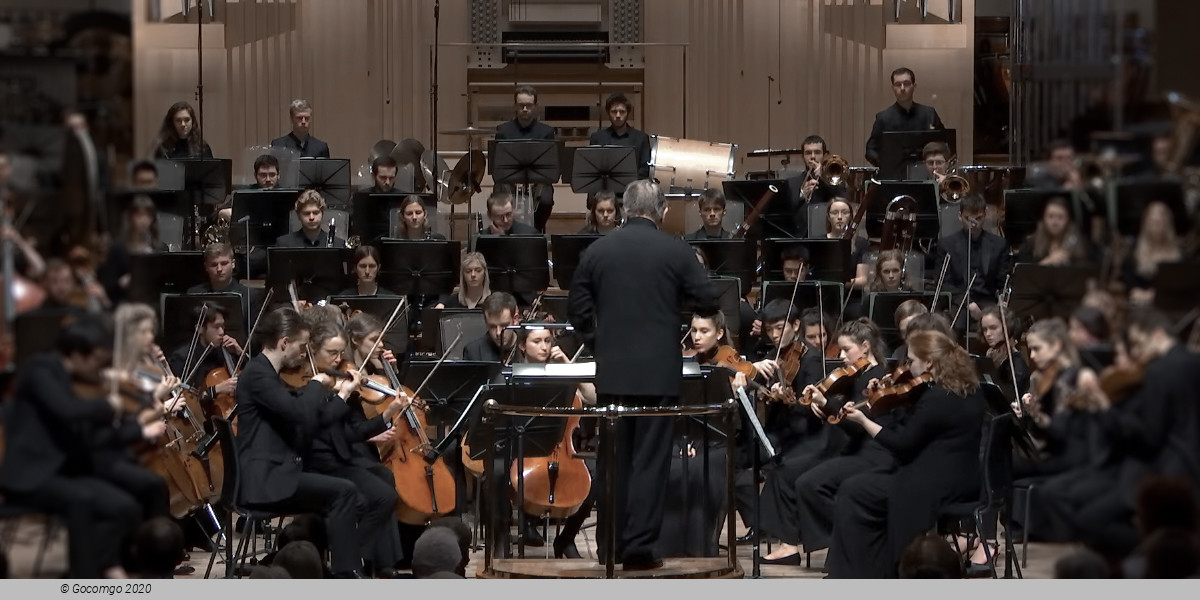
And these will without a doubt be mustered when Daniel Harding, who was promoted as a young man by Sir Simon Rattle and Claudio Abbado and is now acclaimed on all concert stages around the world, brings Berliozʼs unique composition to life at the Musikfest Berlin with the Berliner Philharmoniker, the Rundfunkchor Berlin and renowned vocal soloists.

Although love is the all-encompassing theme in Romeo and Juliet, there are many more emotional states to experience: a gloriously festive atmosphere, the hatred of a family feud and, of course, sadness and horror in the face of a tragic double suicide. In Berlioz’ version – part symphony, part cantata – he captures all of this with drama, opulence and invention. The conductor of this performance is Daniel Harding, who has been exploring the work for many years.

Venue Info

Berliner Philharmonie - Berlin
Location   Herbert-von-Karajan-Str. 1

The Berliner Philharmonie is a concert hall in Berlin, Germany and home to the Berlin Philharmonic Orchestra. The Philharmonie lies on the south edge of the city's Tiergarten and just west of the former Berlin Wall. The Philharmonie is on Herbert-von-Karajan-Straße, named for the orchestra's longest-serving principal conductor. The building forms part of the Kulturforum complex of cultural institutions close to Potsdamer Platz.

The Philharmonie consists of two venues, the Grand Hall (Großer Saal) with 2,440 seats and the Chamber Music Hall (Kammermusiksaal) with 1,180 seats. Though conceived together, the smaller hall was opened in the 1980s, some twenty years after the main building.

Hans Scharoun designed the building, which was constructed over the years 1960–1963. It opened on 15 October 1963 with Herbert von Karajan conducting Beethoven's 9th Symphony. It was built to replace the old Philharmonie, destroyed by British bombers on 30 January 1944, the eleventh anniversary of Hitler becoming Chancellor. The hall is a singular building, asymmetrical and tentlike, with the main concert hall in the shape of a pentagon. The height of the rows of seats increases irregularly with distance from the stage. The stage is at the centre of the hall, surrounded by seating on all sides. The so-called vineyard-style seating arrangement (with terraces rising around a central orchestral platform) was pioneered by this building, and became a model for other concert halls, including the Sydney Opera House (1973), Denver's Boettcher Concert Hall (1978), the Gewandhaus in Leipzig (1981), Walt Disney Concert Hall in Los Angeles (2003), and the Philharmonie de Paris (2014).

Jazz pianist Dave Brubeck and his quartet recorded three live performances at the hall; Dave Brubeck in Berlin (1964), Live at the Berlin Philharmonie (1970), and We're All Together Again for the First Time (1973). Miles Davis's 1969 live performance at the hall has also been released on DVD.

On 20 May 2008 a fire broke out at the hall. A quarter of the roof suffered considerable damage as firefighters cut openings to reach the flames beneath the roof. The hall interior sustained water damage but was otherwise "generally unharmed". Firefighters limited damage using foam. The cause of the fire was attributed to welding work, and no serious damage was caused either to the structure or interior of the building. Performances resumed, as scheduled, on 1 June 2008 with a concert by the San Francisco Symphony Youth Orchestra.

The main organ was built by Karl Schuke, Berlin, in 1965, and renovated in 1992, 2012 and 2016. It has four manuals and 91 stops. The pipes of the choir organs and the Tuba 16' and Tuba 8' stops are not assigned to any group and can be played from all four manuals and the pedals.

Important Info
Type: Classical Concert
City: Berlin, Germany
Starts at: 20:00
Duration:
Top of page