Act I
In the library of the von und zu Lippert-Weylersheim residence …
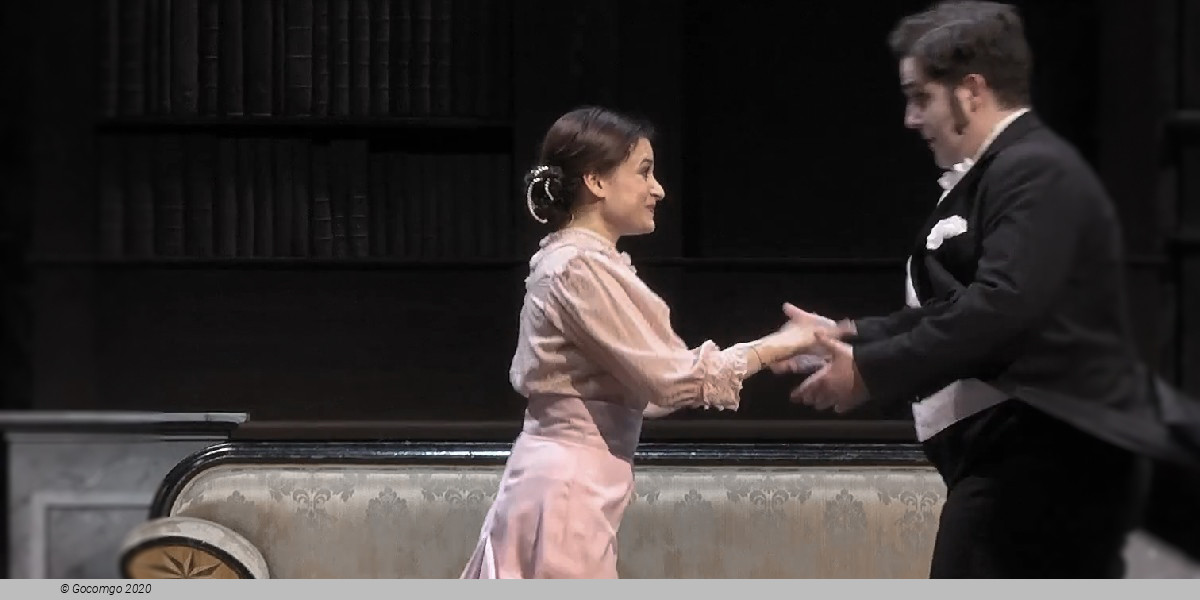
… Countess Stasi and the young Prince Edwin are bored at the prospect of their betrothal being announced today. Edwin’s mother Anhilte, on the other hand, is full of eager anticipation. In his dreams, Edwin escapes into the not so distant past and his passionate relationship with the cabaret singer Sylva Varescu …
At the Orpheum Theatre in Budapest, a few weeks previously
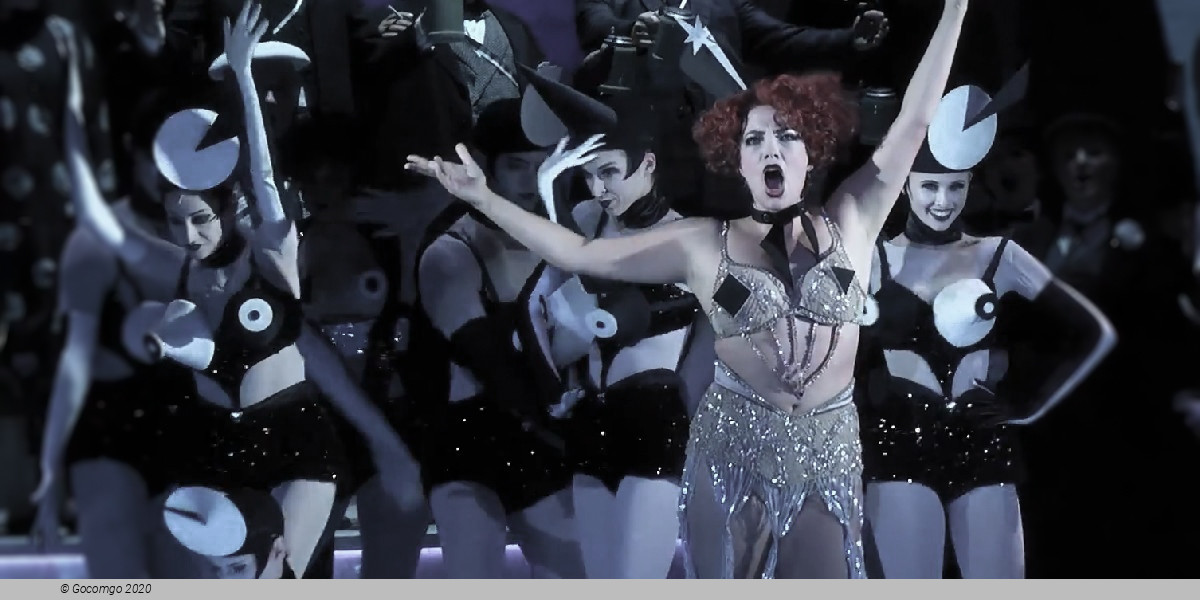
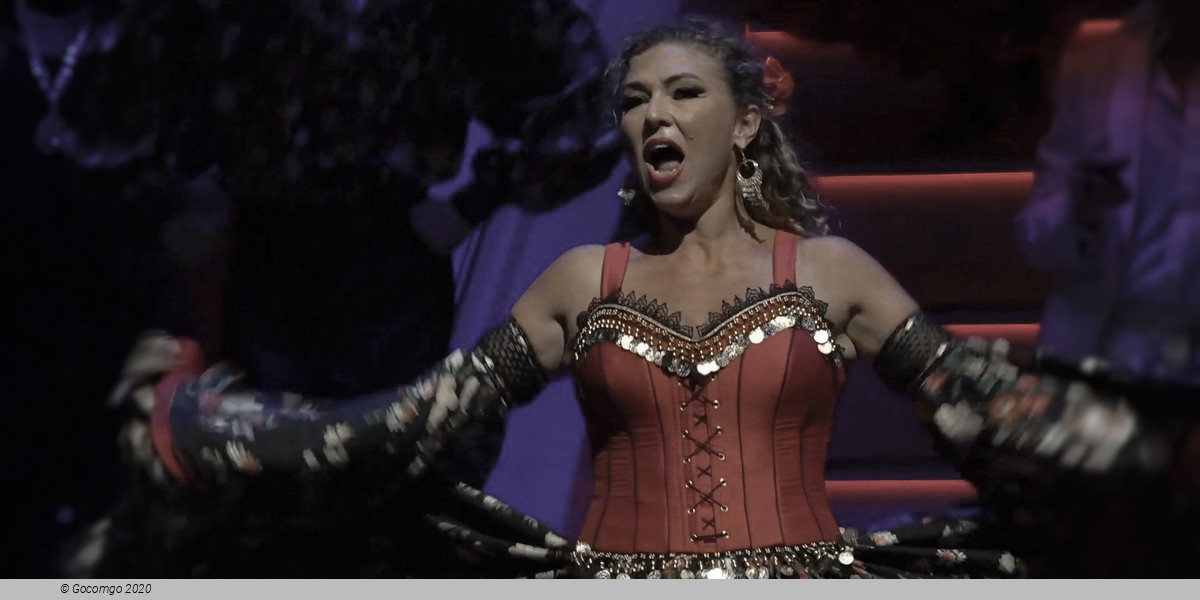
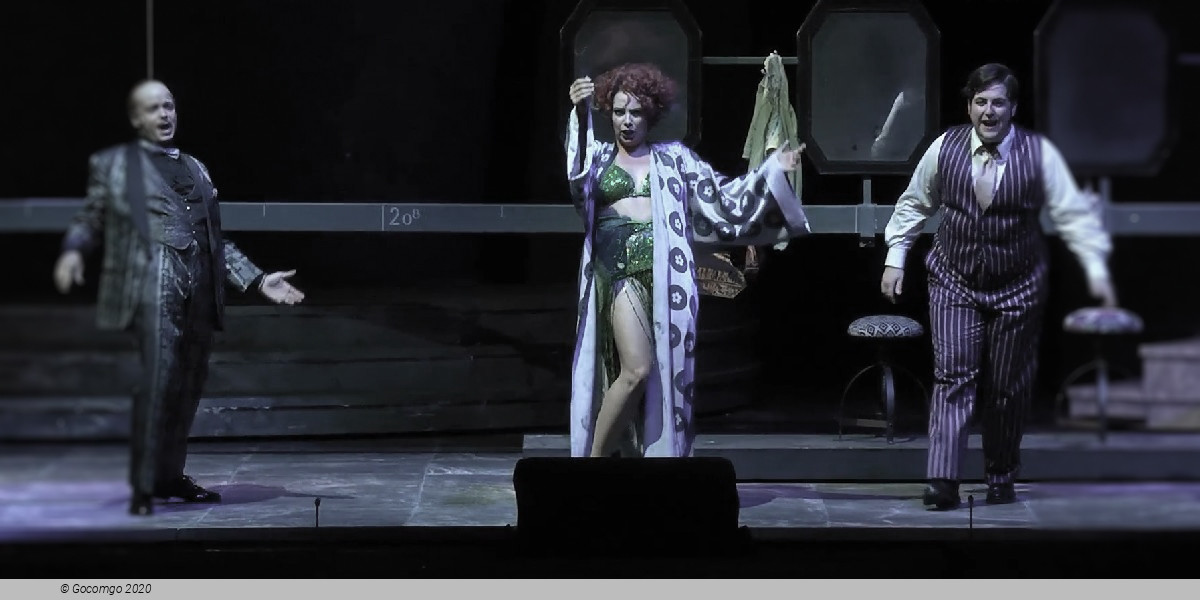
Sylva, the star of the Budapest variety theatre, is to give her farewell performance this evening before embarking on an American tour. The Orpheum audience all adore her, but only Edwin disappears with her into her dressing-room. Count Boni Káncsiánu and Ferenc (“Feri”) von Kerekes, two long-term patrons of the Orpheum, remain outside. Feri wistfully remembers his great love, the dazzling “Kupfer-Hilda” of the Orpheum in Miskolcz”, while Boni favours a regular succession of “Mädis vom Chantant”.Edwin loves Sylva almost to the point of madness and wants to stop her going on tour. Sylva is also truly in love with Edwin, but she knows that there is little chance of their relationship ever coming to anything: a von und zu Lippert-Weylersheim is never going to be allowed to marry a girl from the music hall.
Boni and Feri invite the couple to the grand farewell supper with the entire ensemble. During the party, the celebrations are interrupted by disturbing news: Eugen von Rohnsdorff, Edwin’s cousin, presents a call-up order: Edwin must report to the Commandant in two days’ time.
When Boni and Rohnsdorff are alone, Rohnsdorff reveals a secret: Edwin’s parents have officially announced his betrothal to Countess Stasi.
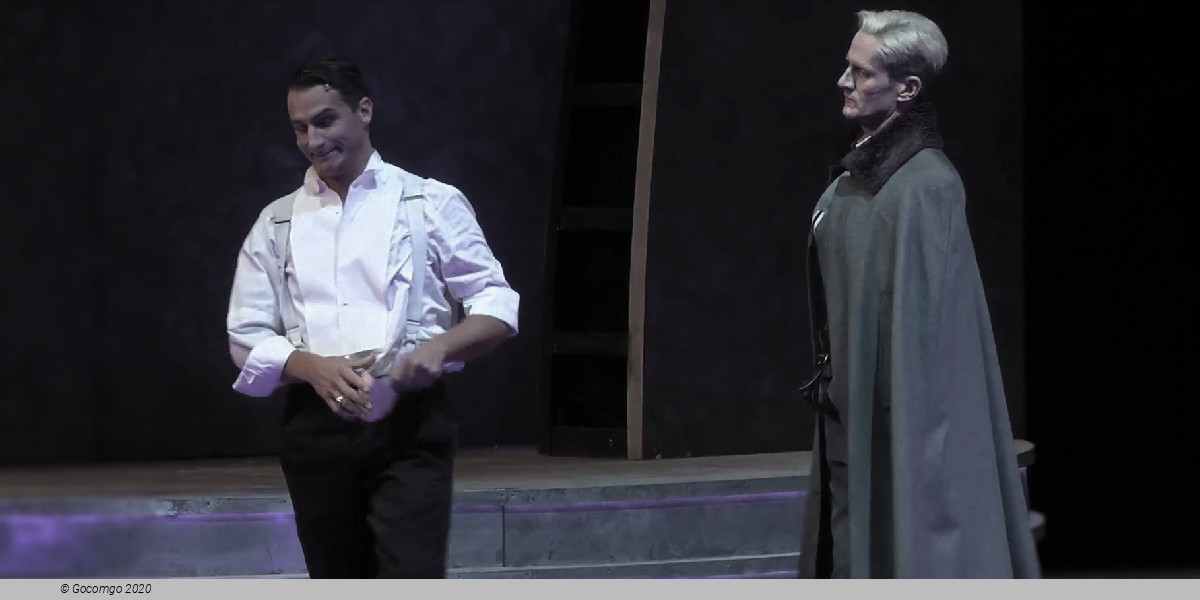
Edwin summons a notary and gives Sylva a written promise that he will marry her “within eight weeks”. She is overjoyed and decides to cancel her tour. Edwin follows Rohnsdorff to Vienna.
Boni shows Sylva the betrothal announcement. She feels that she has been deceived, and she sets off on her trip to America after all.
Interval
Act II
In the library of the von und zu Lippert-Weylersheim residence …
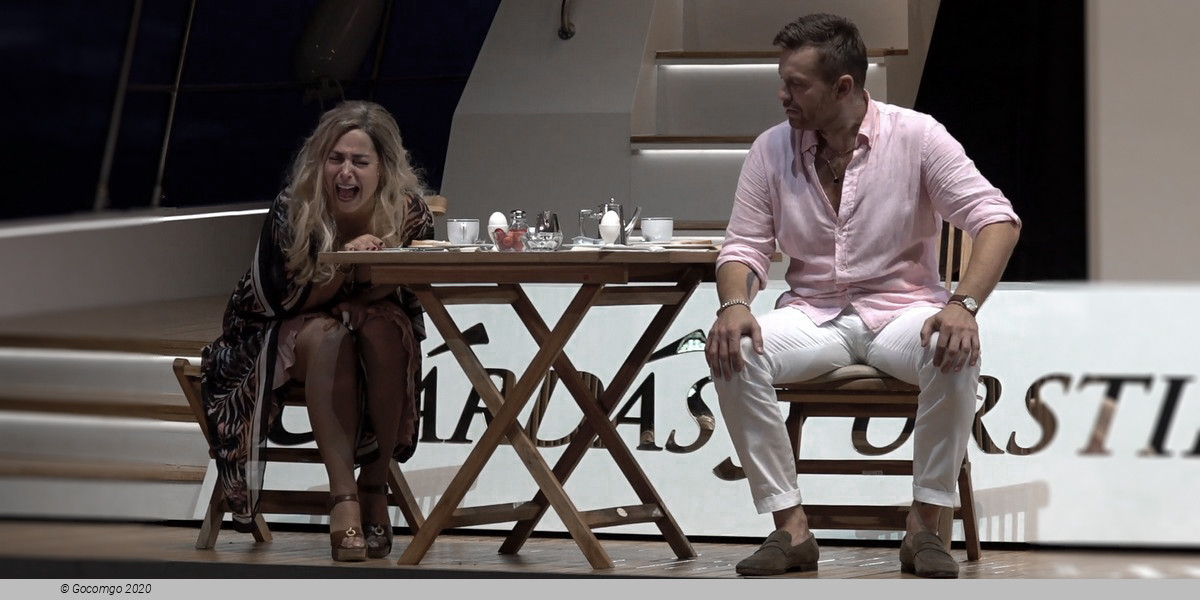
… Edwin and Countess Stasi are still bored. Suddenly Stasi breaks the silence. She is very well informed about Edwin’s love affair and knows that for the past eight weeks Edwin has been waiting in vain for a message from Sylva. Nevertheless, Countess Stasi is a clear-headed woman and is prepared to marry Edwin.
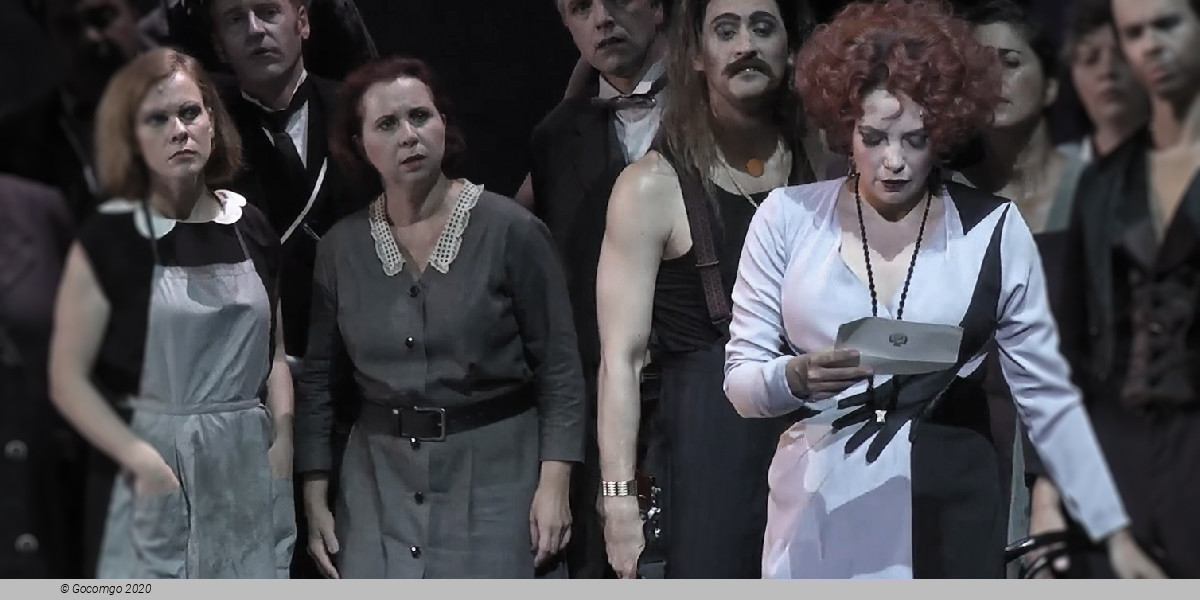
The betrothal feast begins. Surprisingly, Boni also makes an appearance, even more surprisingly he is accompanied by Sylva. She has asked Boni to be introduced as his wife so that she can see Edwin once more. Princess Anhilte and in particular Prince Leopold Maria are very taken with the “Countess Káncsiánu”. Only Rohnsdorff recognises her as Edwin’s beloved, the “gypsy princess”.
A new pair of lovers is on the scene: Boni is falling head over heels in love with Stasi. The love between Edwin and Sylva is also rekindled. He seeks her hand once again; after she has divorced Boni she will be a countess, “Countess Káncsiánu”, and it will be perfectly in order for her to marry a von und zu Lippert-Weylersheim.
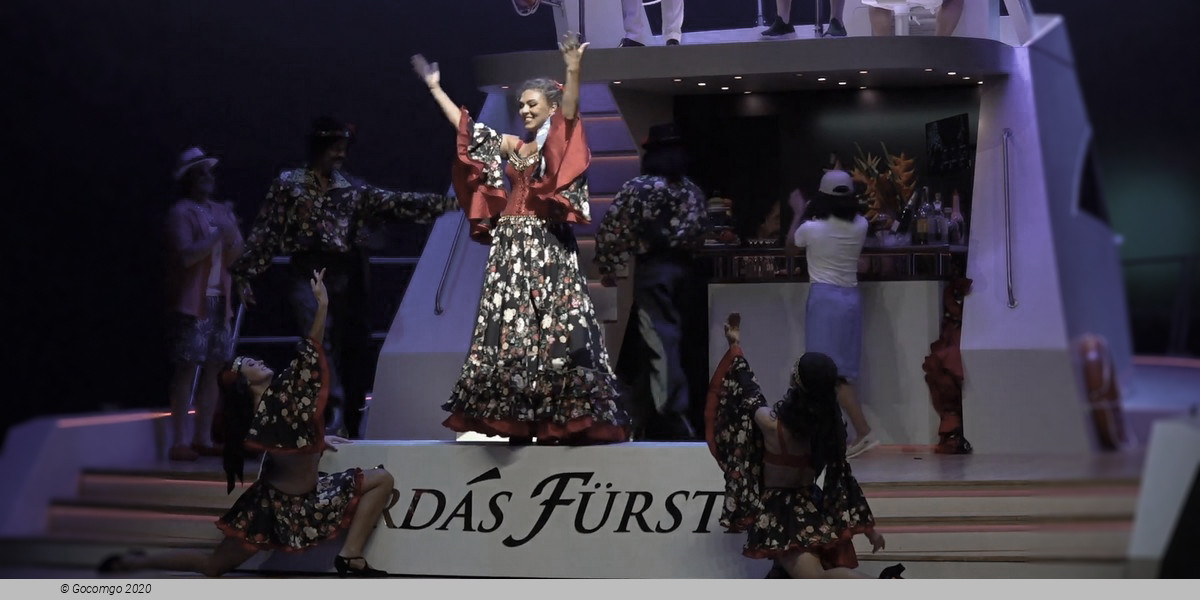
But Sylva will hear nothing of such a pretence. She announces that she is not married to Boni and reveals herself as the “gypsy princess”. In front of the entire company she tears up the marriage contract and leaves the party.
Act III
The same evening, in the bar of the Hotel Residence in Vienna
The world war has taken Edwin to the front and Sylva to the variety ensemble. Sylva comforts herself with her old friends Feri and Boni. They must have a good time today, because “Who knows how long the world will go on turning? Tomorrow it may be too late."
Edwin has left the brigade without leave in order to see Sylva, but she will no longer have anything to do with him. Countess Stasi has arrived with Edwin’s parents. Anhilte has learned from Rohnsdorff that Edwin has deserted and wants to make her son see sense. Prince Leopold Maria – unusually – manages to overrule his wife and goes to have a private talk with his son.
Feri recognises Anhilte as the great love of his youth, the “Kupfer-Hilda” of the Orpheum in Miskolcz! When the Prince realises that his own wife is a former “cabaret diva”, he gives up all opposition to his son’s marriage to Sylva. All turns out well for Stasi and Boni too. For one brief moment, love has triumphed. And a thousand little angels sing: “Love each other … even if the whole world goes to rack and ruin, I still have you!”
Place: Budapest and Vienna
Time: shortly before the outbreak of the First World War
Act 1
Silva Varescu, a self-sufficient and professionally successful cabaret performer from Budapest, is about to embark on a tour of America. Three of her aristocratic admirers, named Edwin, Feri and Boni, prefer her to stay. Edwin, unaware that his parents have already arranged a marriage for him back home in Vienna, orders a notary to prepare a promissory note of his expected marriage to Silva within ten weeks. Silva then leaves on her American tour, and Edwin leaves for peacetime military duty.
Act 2
Just at the time this promissory note is about to expire, Silva visits Edwin's palace in Vienna, pretending to have married Boni as her entrée into his family's society. Edwin is about to be engaged to Stasi, who does not care for him and wishes only an arranged marriage. Boni falls in love with Stasi and Edwin regrets not keeping his promise to Silva sooner. However, Edwin makes the faux pas of informing Silva that his parents would accept Silva only if she pretends to have been divorced from Boni and therefore already entered society via an earlier marriage. Edwin's father separately informs Silva that if she marries Edwin without first having achieved noble rank through some other route, her role in society could be merely that of a Gypsy Princess. Silva realizes that she is better than they and has a brighter future than they have. She purposefully embarrasses Edwin and his father, turning her back on them and leaving in the presence of their assembled friends.
Act 3
The act is set in a Viennese hotel to which Feri has accompanied the cabaret troupe from Budapest, who is about to sail on another American tour with Sylva. As everyone shows up and recognizes each other, Feri recognizes Edwin's mother as a retired cabaret singer from Budapest whose star once shone prior to Sylva's time. Edwin's mother joins the two couples, Sylva/Edwin and Boni/Stasi, all unwittingly heading to safety on this American tour.










 Währinger Strasse 78