
Vienna State Opera tickets 17 December 2026 - Premiere La Damnation de Faust | GoComGo.com

Premiere
La Damnation de Faust

Vienna State Opera, Main Stage, Vienna, Austria
All photos (6)
Select date and time
7 PM
From
US$ 133

E-tickets: Print at home or at the box office of the event if so specified. You will find more information in your booking confirmation email.

You can only select the category, and not the exact seats.
If you order 2 or 3 tickets: your seats will be next to each other.
If you order 4 or more tickets: your seats will be next to each other, or, if this is not possible, we will provide a combination of groups of seats (at least in pairs, for example 2+2 or 2+3).

Important Info
Type: Opera
City: Vienna, Austria
Starts at: 19:00
Acts: 4
Sung in: French

E-tickets: Print at home or at the box office of the event if so specified. You will find more information in your booking confirmation email.

You can only select the category, and not the exact seats.
If you order 2 or 3 tickets: your seats will be next to each other.
If you order 4 or more tickets: your seats will be next to each other, or, if this is not possible, we will provide a combination of groups of seats (at least in pairs, for example 2+2 or 2+3).

Cast
Performers
Conductor: Bertrand de Billy
Tenor: John Osborn (Faust)
Baritone: Christian Van Horn (Méphistophélès)
Mezzo-Soprano: Eve-Maud Hubeaux (Marguerite)
Bass: Simonas Strazdas (Brander)
Choir: Vienna State Opera Chorus
Creators
Composer: Hector Berlioz
Librettist: Johann Wolfgang von Goethe
Director: Lydia Steier
Overview

The outsider Faust loses the joy of life and wants to take his own life. Mephisto appears and promises him power, happiness and pleasure.

As if in a feverish dream, Faust embarks with him on a quest for self-realization. In a world of soldiers, students and fantastic beings, a destructive relationship develops with Marguerite. In order to save her, Faust gives his soul to Mephisto and plunges into hell, while Marguerite finds redemption.

Berlioz was only loosely inspired by Goethe's Faust drama, which he had already read in the popular French prose translation by Gérard de Nerval in the 1820s and set to music with great enthusiasm in 1829 for his later withdrawn opus 1 Huit scènes de Faust. Berlioz drew on some of these compositions, such as Marguerite's song Le roi de Thulé (The King of Thule), for the setting of La Damnation de Faust.

The concert premiere of La Damnation de Faust in Vienna took place almost 160 years to the day before the premiere date of this new production, on December 16, 1866, under the baton of the composer himself and with the participation of the Vienna Singverein. In Lydia Steier's new production, La Damnation de Faust receives its staged premiere at the Vienna State Opera.

History
Premiere of this production: 06 December 1846, Opéra-Comique in Paris

La damnation de Faust (English: The Damnation of Faust) is a work for four solo voices, full seven-part chorus, a large children's chorus and orchestra by the French composer Hector Berlioz. He called it a "légende dramatique" (dramatic legend). It was first performed at the Opéra-Comique in Paris on 6 December 1846.

Synopsis

Part I

The aging scholar Faust contemplates the renewal of nature. Hearing peasants sing and dance, he realizes that their simple happiness is something he will never experience. An army marches past in the distance (Hungarian March). Faust doesn't understand why the soldiers are so enthusiastic about glory and fame.

Part II
Depressed, Faust has returned to his study. Even the search for wisdom can no longer inspire him. Tired of life, he is about to commit suicide when the sound of church bells and an Easter hymn remind him of his youth, when he still had faith in religion. Suddenly Méphistophélès appears, ironically commenting on Faust's apparent conversion. He offers to take him on a journey, promising him the restoration of his youth, knowledge, and the fulfillment of all his wishes. Faust accepts.

Méphistophélès and Faust arrive at Auerbach's tavern in Leipzig, where Brander, a student, sings a song about a rat whose high life in a kitchen is ended by a dose of poison. The other guests offer an ironic "Amen", and Méphistophélès continues with another song about a flea that brings his relatives to infest a whole royal court (Song of the Flea). Disgusted by the vulgarity of it all, Faust demands to be taken somewhere else.

On a meadow by the Elbe, Méphistophélès shows Faust a dream vision of a beautiful woman named Marguerite, causing Faust to fall in love with her. He calls out her name, and Méphistophélès promises to lead Faust to her. Together with a group of students and soldiers, they enter the town where she lives.

Part III

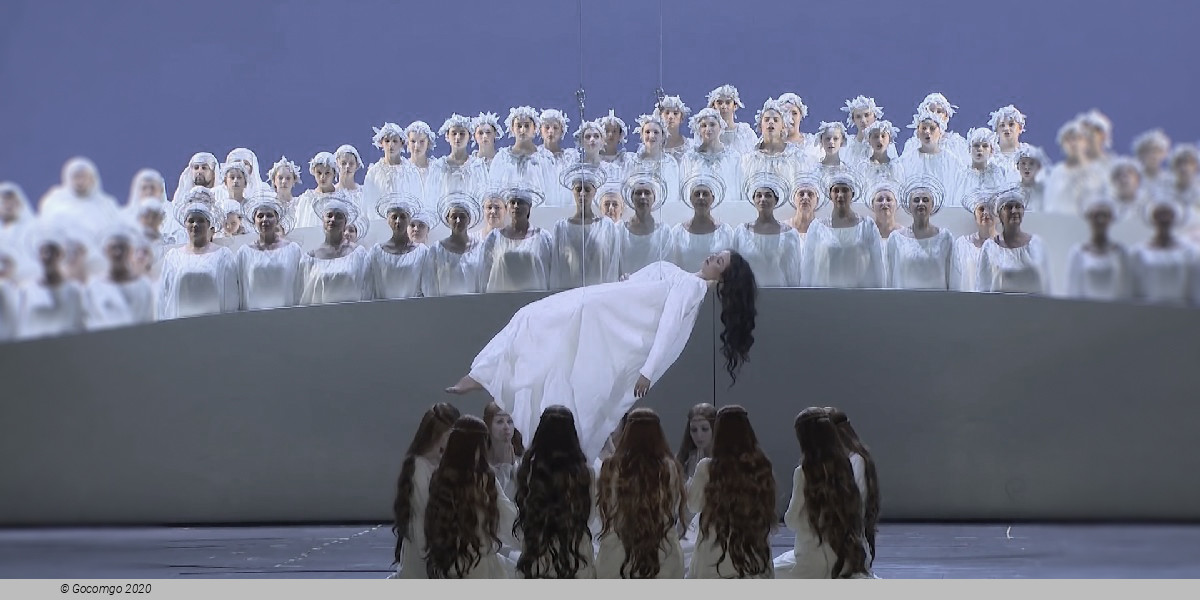
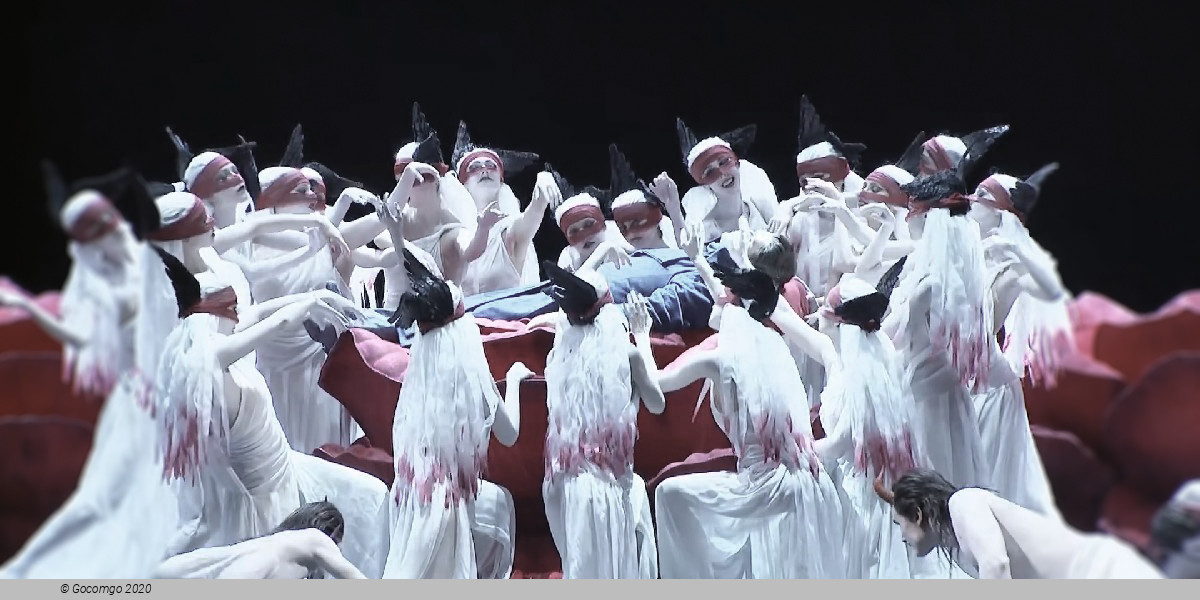
Faust and Méphistophélès hide in Marguerite's room. Faust feels that he will find in her, his ideal of a pure and innocent woman ("Merci, doux crépuscule!"). Marguerite enters and sings a ballad about the King of Thule, who always remained sadly faithful to his lost love ("Autrefois, un roi de Thulé"). Méphistophélès summons spirits to enchant and deceive the girl and sings a sarcastic serenade outside her window, predicting her loss of innocence. When the spirits have vanished, Faust steps forward. Marguerite admits that she has dreamed of him, just as he has dreamed of her, and they declare their love for each other. Just then, Méphistophélès bursts in, warning them that the girl's reputation must be saved: the neighbors have learned that there is a man in Marguerite's room and have called her mother to the scene. After a hasty goodbye, Faust and Méphistophélès escape.

Part IV

Faust has seduced, then abandoned Marguerite, who still awaits his return ("D'amour l'ardente flamme"). She can hear soldiers and students in the distance, which reminds her of the night Faust first came to her house. But this time he is not among them.

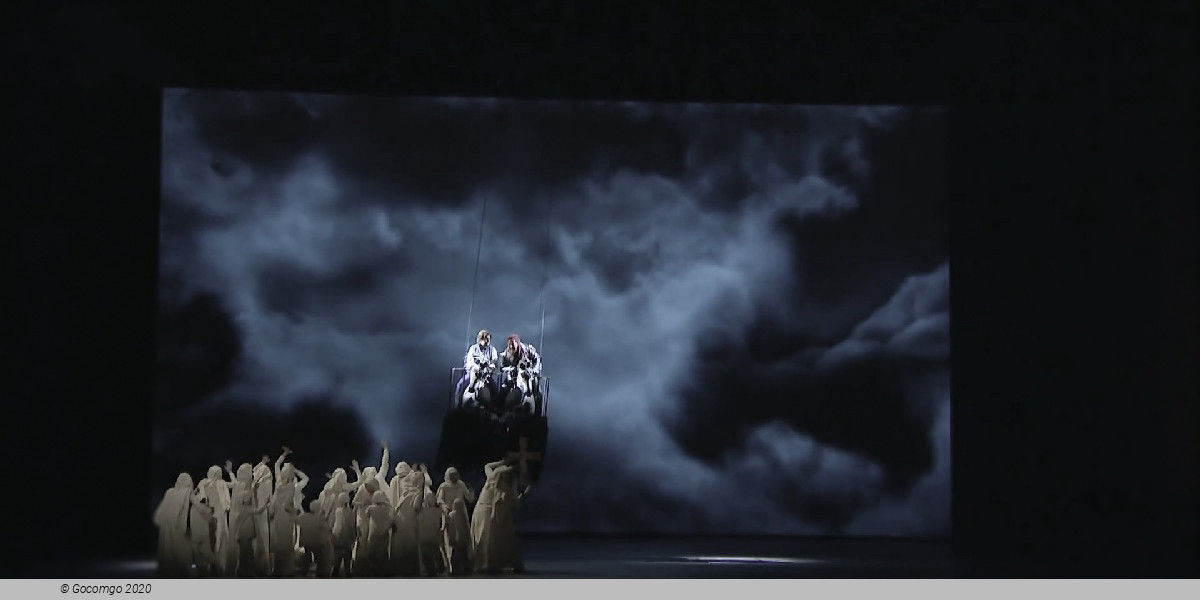
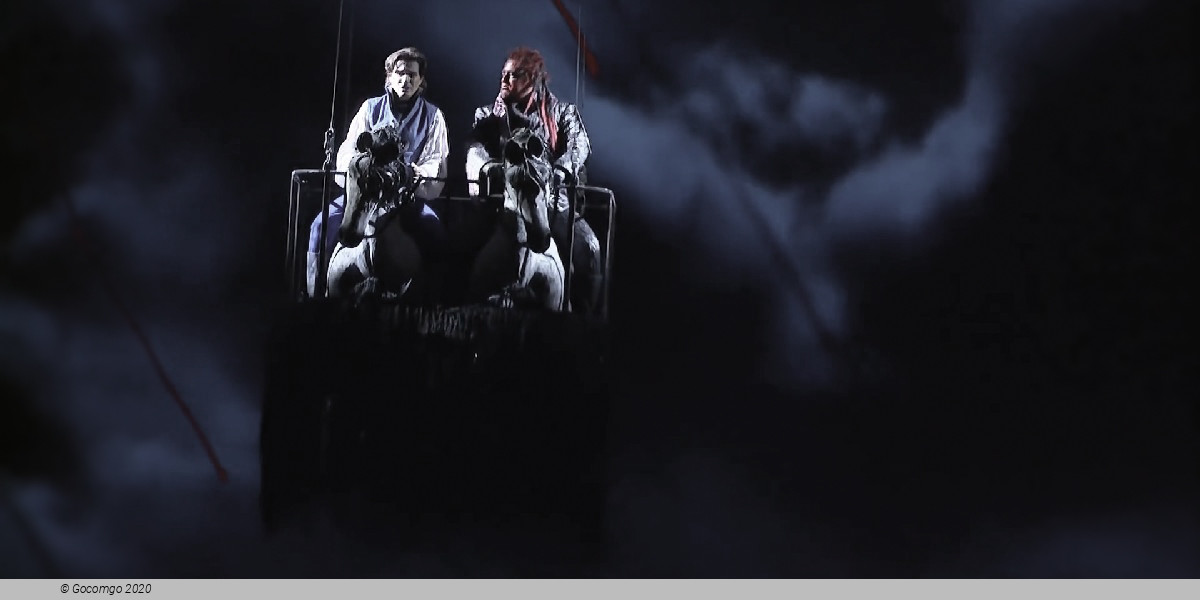
Faust calls upon nature to cure him of his world-weariness ("Nature immense, impénétrable et fière"). Méphistophélès appears and tells him that Marguerite is in prison. While awaiting Faust's return, she has given her mother the sleeping potion Faust had previously provided to calm her mother during their nights of love, and used it so often that she has killed the old woman, and now is to be hanged the next day. Faust panics, but Méphistophélès claims he can save her—if Faust relinquishes his soul to him. Unable to think of anything but saving Marguerite, Faust agrees. The two ride off on a pair of black horses.

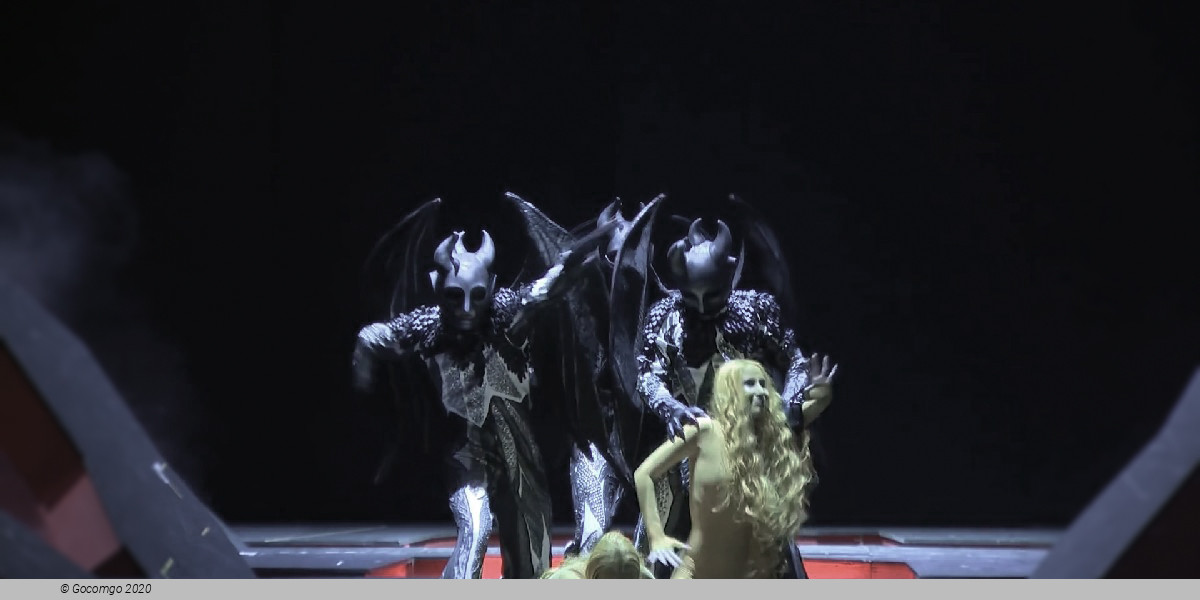
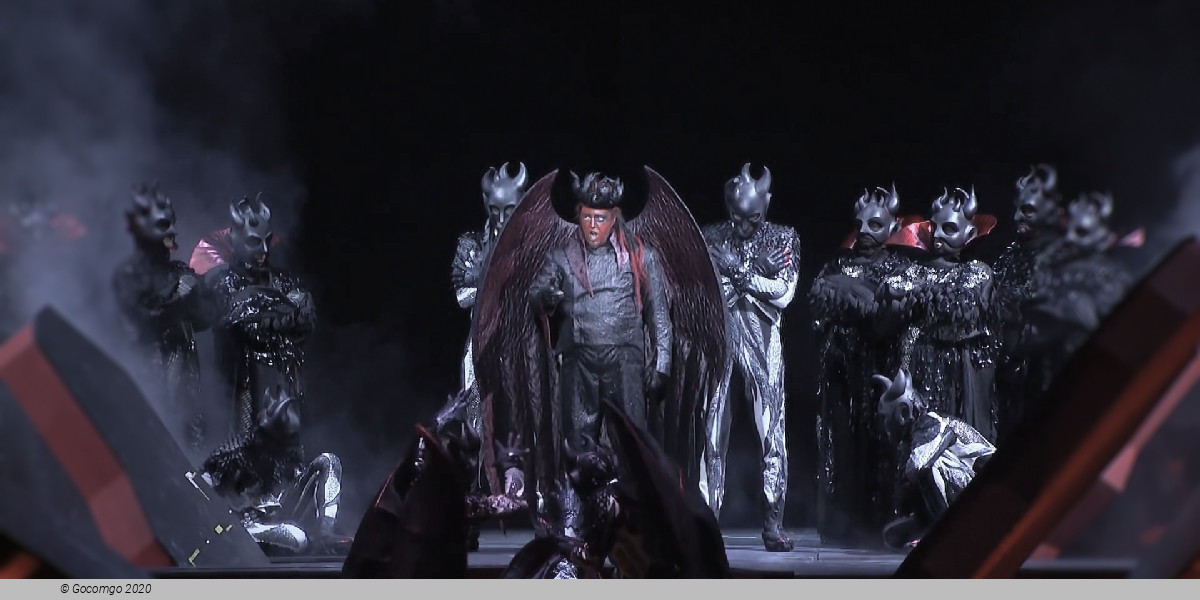
Thinking they are on their way to Marguerite, Faust becomes terrified when he sees demonic apparitions. The landscape becomes more and more horrible and grotesque, and Faust finally realizes that Méphistophélès has taken him directly into hell. Demons and damned spirits greet Méphistophélès in a mysterious infernal language and welcome Faust among them.

Hell has fallen silent after Faust's arrival—the torment he suffers is unspeakable. Marguerite is saved and welcomed into heaven.

Venue Info

Vienna State Opera - Vienna
Location   Opernring 2

The Vienna State Opera is one of the leading opera houses in the world. Its past is steeped in tradition. Its present is alive with richly varied performances and events. Each season, the schedule features 350 performances of more than 60 different operas and ballets. The members of the Vienna Philharmonic are recruited from the Vienna State Opera's orchestra. The building is also the home of the Vienna State Ballet, and it hosts the annual Vienna Opera Ball during the carnival season.

The 1,709-seat Renaissance Revival venue was the first major building on the Vienna Ring Road. It was built from 1861 to 1869 following plans by August Sicard von Sicardsburg and Eduard van der Nüll, and designs by Josef Hlávka. The opera house was inaugurated as the "Vienna Court Opera" (Wiener Hofoper) in the presence of Emperor Franz Joseph I and Empress Elisabeth of Austria. It became known by its current name after the establishment of the First Austrian Republic in 1921. The Vienna State Opera is the successor of the Vienna Court Opera, the original construction site chosen and paid for by Emperor Franz Joseph in 1861.

The opera house was the first major building on the Vienna Ringstrasse commissioned by the Viennese "city expansion fund". Work commenced on the house in 1861 and was completed in 1869, following plans drawn up by architects August Sicard von Sicardsburg and Eduard van der Nüll. It was built in the Neo-Renaissance style by the renowned Czech architect and contractor Josef Hlávka.

Gustav Mahler was one of the many conductors who have worked in Vienna. During his tenure (1897–1907), Mahler cultivated a new generation of singers, such as Anna Bahr-Mildenburg and Selma Kurz, and recruited a stage designer who replaced the lavish historical stage decors with sparse stage scenery corresponding to modernistic, Jugendstil tastes. Mahler also introduced the practice of dimming the lighting in the theatre during performances, which was initially not appreciated by the audience. However, Mahler's reforms were maintained by his successors.

Herbert von Karajan introduced the practice of performing operas exclusively in their original language instead of being translated into German. He also strengthened the ensemble and regular principal singers and introduced the policy of predominantly engaging guest singers. He began a collaboration with La Scala in Milan, in which both productions and orchestrations were shared. This created an opening for the prominent members of the Viennese ensemble to appear in Milan, especially to perform works by Wolfgang Amadeus Mozart and Richard Strauss.

Ballet companies merge

At the beginning of the 2005–2006 season, the ballet companies of the Staatsoper and the Vienna Volksoper were merged under the direction of Gyula Harangozó.

From the 2010–2011 season a new company was formed called Wiener Staatsballet, Vienna State Ballet, under the direction of former Paris Opera Ballet principal dancer Manuel Legris. Legris eliminated Harangozós's policy of presenting nothing but traditional narrative ballets with guest artists in the leading roles, concentrated on establishing a strong in-house ensemble and restored evenings of mixed bill programs, featuring works of George Balanchine, Jerome Robbins, Jiří Kylián, William Forsythe, and many contemporary choreographers, as well as a reduced schedule of the classic ballets.

Opera ball

For many decades, the opera house has been the venue of the Vienna Opera Ball. It is an internationally renowned event, which takes place annually on the last Thursday in Fasching. Those in attendance often include visitors from around the world, especially prominent names in business and politics. The opera ball receives media coverage from a range of outlets.

Important Info
Type: Opera
City: Vienna, Austria
Starts at: 19:00
Acts: 4
Sung in: French
Top of page