
Vienna State Opera tickets 11 September 2026 - Adriana Lecouvreur | GoComGo.com

Adriana Lecouvreur

Vienna State Opera, Main Stage, Vienna, Austria
All photos (7)
Select date and time
7 PM
From
US$ 115

E-tickets: Print at home or at the box office of the event if so specified. You will find more information in your booking confirmation email.

You can only select the category, and not the exact seats.
If you order 2 or 3 tickets: your seats will be next to each other.
If you order 4 or more tickets: your seats will be next to each other, or, if this is not possible, we will provide a combination of groups of seats (at least in pairs, for example 2+2 or 2+3).

Important Info
Type: Opera
City: Vienna, Austria
Starts at: 19:00
Acts: 4
Intervals: 2
Duration: 3h 15min
Sung in: Italian

E-tickets: Print at home or at the box office of the event if so specified. You will find more information in your booking confirmation email.

You can only select the category, and not the exact seats.
If you order 2 or 3 tickets: your seats will be next to each other.
If you order 4 or more tickets: your seats will be next to each other, or, if this is not possible, we will provide a combination of groups of seats (at least in pairs, for example 2+2 or 2+3).

Cast
Performers
Conductor: Marco Armiliato
Mezzo-Soprano: Elīna Garanča (Princess de Bouillon)
Soprano: Ermonela Jaho (Adriana Lecouvreur (Adrienne Lecouvreur))
Tenor: Luciano Ganci (Maurizio (Maurice de Saxe))
Baritone: Roberto Frontali (Michonnet)
Creators
Composer: Francesco Cilea
Librettist: Arturo Colautti
Director: David McVicar
Overview

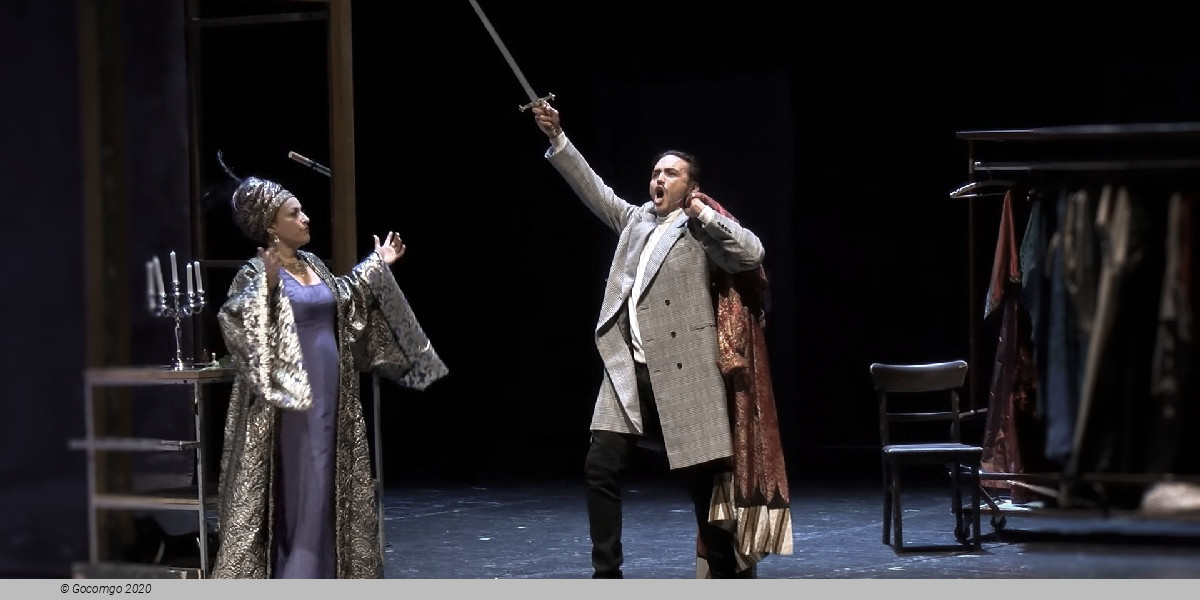
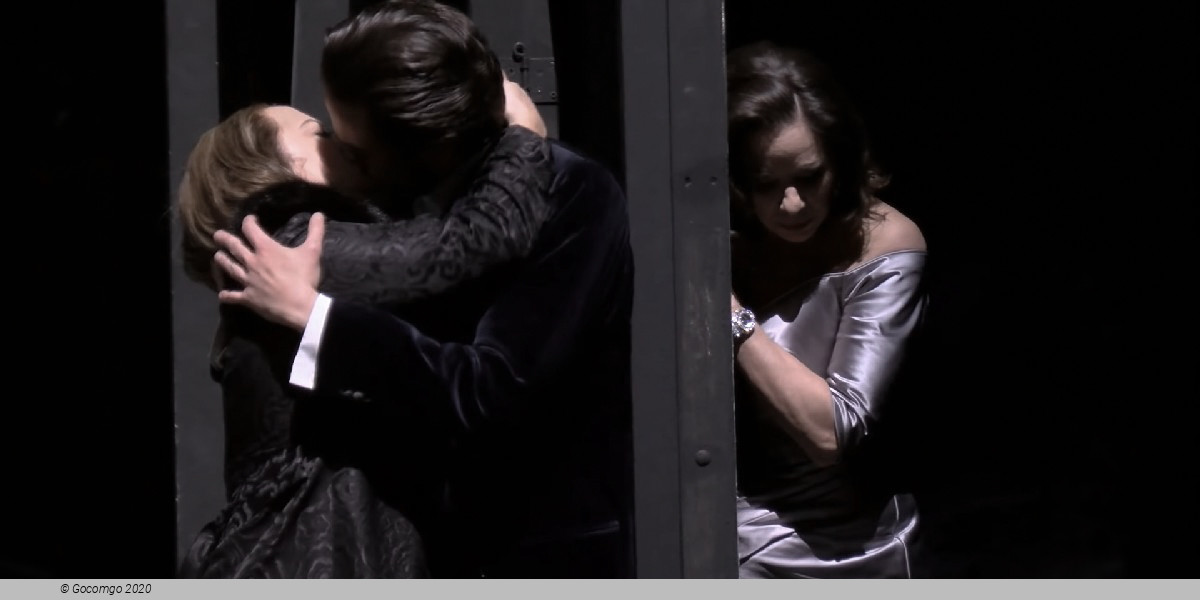
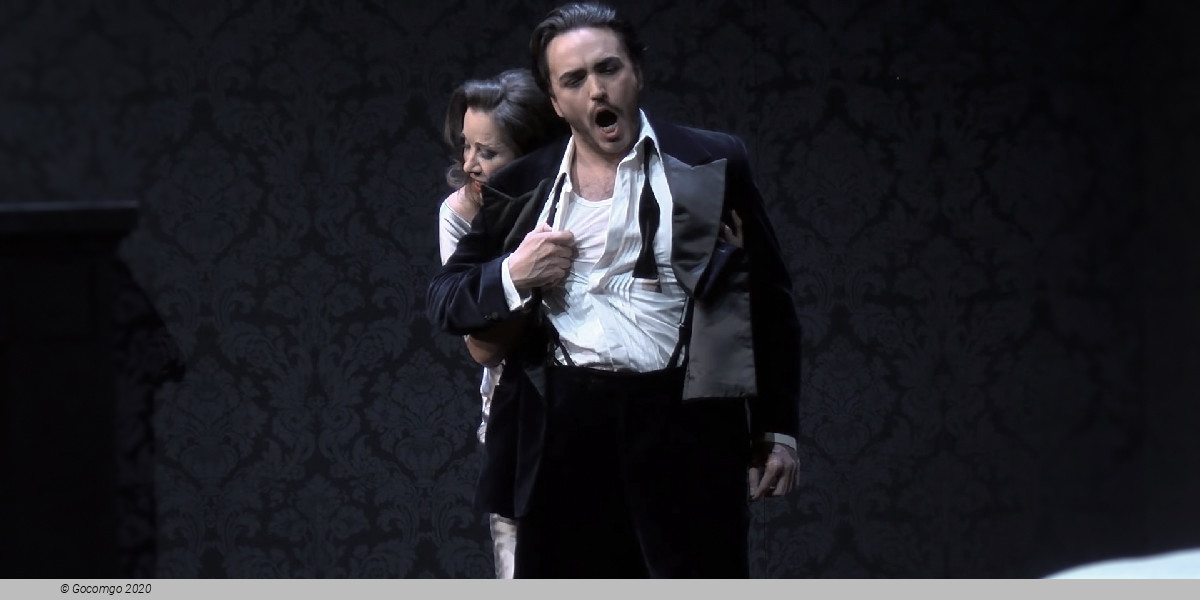
The celebrated actress Adriana Lecouvreur loves Count Maurizio, who keeps his relationship with her a secret. The Princess of Bouillon also desires him.

Out of jealousy, she sends Adriana a poisoned bouquet of violets. Intrigues and misunderstandings come to a head while Maurizio stands between the women. Adriana realizes too late the origin of the gift and dies from its effects, believing in Maurizio's love.

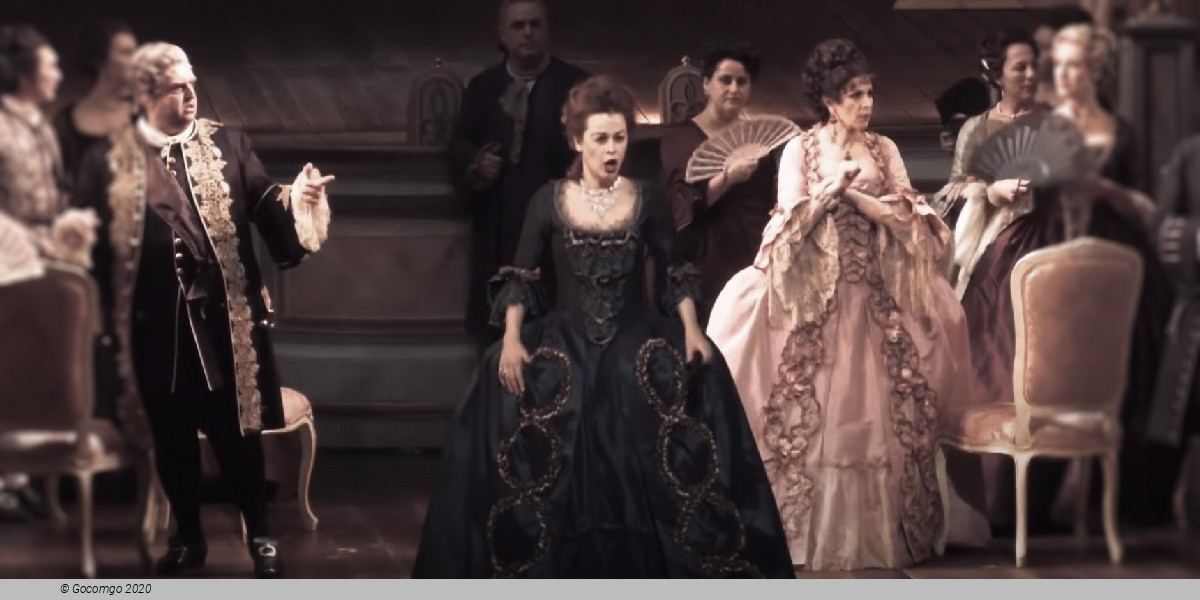
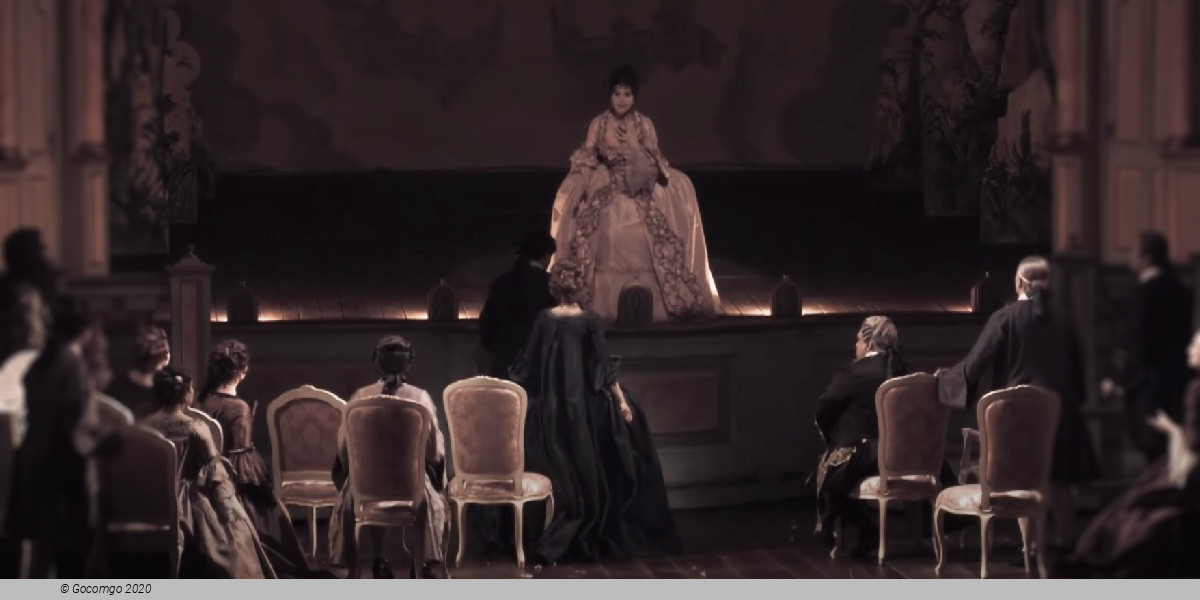
Sir David McVicar's production is set in the original period of the plot, i.e. Paris in 1730. The director deliberately avoided any transformation into another era, as in his opinion this would only damage or render incomprehensible both the story and the constellations and types of characters. Accordingly, the audience is also visually transported to a late baroque era and thus witnesses a long lost world.

There are artists who have made a lasting mark on cultural history with just a single work. The Italian composer Francesco Cilea is one of them. Even though he had a number of stage works to his name, his name will always be associated with his most important opera Adriana Lecouvreur. Cilea, a contemporary of Puccini and a musical beacon of hope in Italy at the end of the 19th century, scored the success of his life with this four-act opera.

Based on Italian verismo, the composer Francesco Cilea uses melodrama as a stylistic device that is effective and coherent in a theatrical context, in addition to a pointed, refined and ramified tonal language and languorous, shaded melodic power. He places prominent islands such as Adriana's famous aria "Io son l'umile ancella" or the equally well-known, dark "Acerba voluttà" of the poisonous Bouillon in the through-composed form - highlights that have also proven themselves in numerous concert programs.

A co-production with the Royal Opera House Covent Garden, the Gran Teatre del Liceu, the Ópera National de Paris and the San Francisco Opera.

History
Premiere of this production: 06 November 1902, Teatro Lirico, Milan

Adriana Lecouvreur is an opera in four acts by Francesco Cilea to an Italian libretto by Arturo Colautti, based on the 1849 play Adrienne Lecouvreur by Eugène Scribe and Ernest Legouvé. It was first performed on 6 November 1902 at the Teatro Lirico in Milan.

Synopsis

Place: Paris, France
Time: 1730

Act 1
Backstage at the Comédie-Française

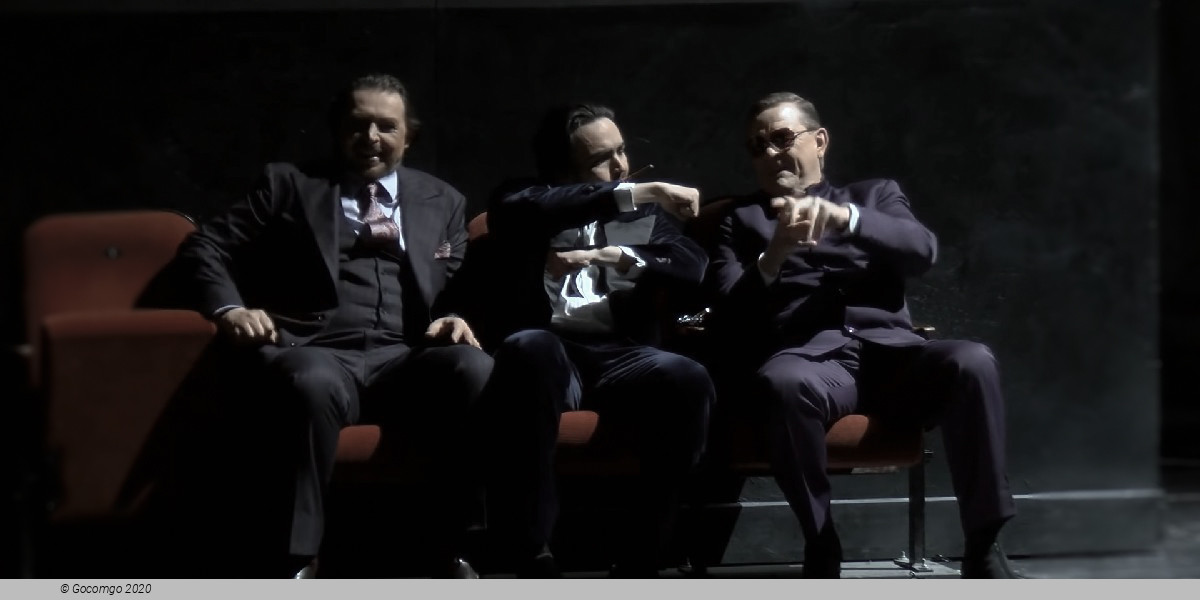
The company is preparing for a performance and bustling around Michonnet, the stage manager. The Prince de Bouillon, admirer and patron of the actress Duclos, is also seen backstage with his companion, the Abbé. Adriana enters, reciting, and replies to the others' praise with 'Io son l'umile ancella' ("I am the humble servant of the creative spirit"). Left alone with Adriana, Michonnet wants to express his love for her. However, Adriana explains that she already has a lover: Maurizio, a soldier of the Count of Saxony. Maurizio enters and declares his love for Adriana, 'La dolcissima effigie.' They agree to meet that night, and Adriana gives him some violets to put in his buttonhole. The Prince and the Abbé return. They have intercepted a letter from Duclos, in which she requests a meeting with Maurizio later that evening at the Prince's villa. The Prince, hoping to expose the tryst, decides to invite the entire troupe there after the performance. On receiving Duclos's letter, Maurizio cancels his appointment with Adriana, who in turn opts to join the Prince's party.

Act 2
A villa by the Seine

The Princess de Bouillon, not the actress Duclos (who was only acting as her proxy), is anxiously waiting for Maurizio ("Acerba voluttà, dolce tortura"). When Maurizio enters, she sees the violets and asks how he came by them. Maurizio presents them to her, but confesses that he no longer loves her. She deduces that he loves someone else, but soon she's forced to hide when the Prince and the Abbé suddenly arrive. Maurizio realizes that they think he is with Duclos. Adriana enters and learns that Maurizio isn't a soldier at all, but the disguised Count of Saxony himself. He tells Adriana the assignation was political, and that they must arrange the escape of a woman who is in hiding nearby. Adriana trusts him and agrees to help. During the intermezzo that follows, the house is darkened, and Adriana tells the Princess that this is her opportunity to escape. However, the two women are mutually suspicious, and the rescue attempt turns into a blazing quarrel before the Princess finally leaves. Michonnet, the stage manager, discovers a bracelet dropped by the Princess, which he gives to Adriana.

Act 3
The Hôtel de Bouillon

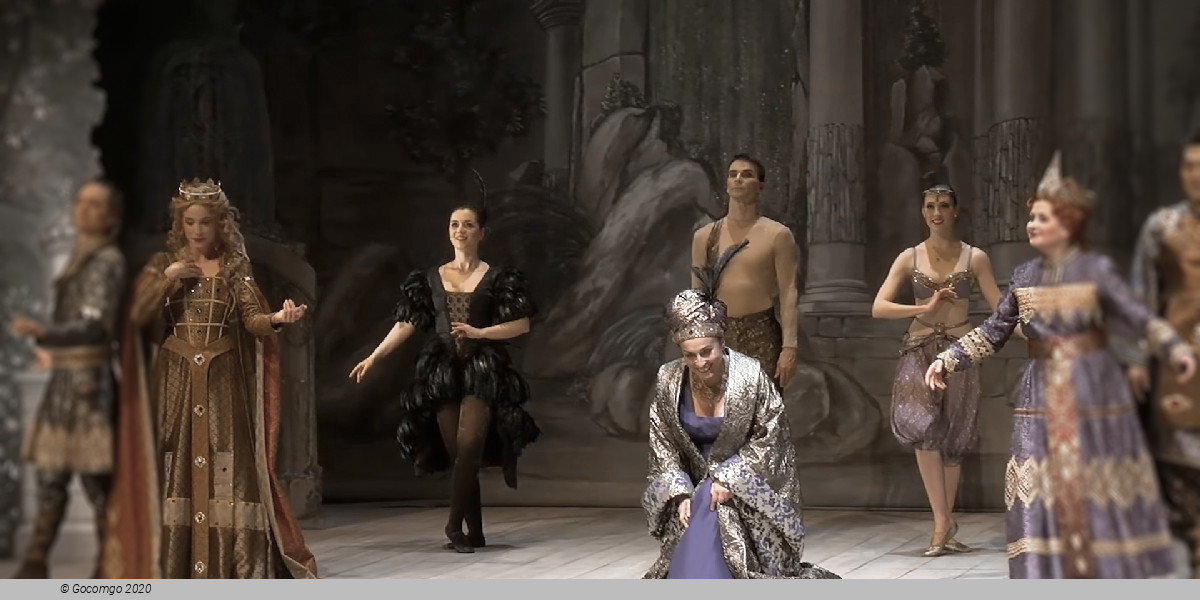
The Princess is desperate to discover the identity of her rival. The Prince, who has an interest in chemistry, is storing a powerful poison that the government has asked him to analyze. The couple host a reception, at which guests note the arrival of Michonnet and Adriana. The Princess thinks she recognizes the latter's voice, and announces that Maurizio has been wounded in a duel. Adriana faints. Soon afterwards, however, when Maurizio enters uninjured, Adriana is ecstatic. He sings of his war exploits ("Il russo Mencikoff"). A ballet is performed: the 'Judgement of Paris.' Adriana learns that the bracelet Michonnet found belongs to the Princess. Realizing that they are rivals for Maurizio's affection, the Princess and Adriana challenge each other. When the former pointedly suggests that Adriana should recite a scene from 'Ariadne Abandoned', the Prince asks instead for a scene from 'Phèdre'. Adriana uses the final lines of the text to make a headstrong attack on the Princess, who swears to have her revenge.

Act 4
A room in Adriana's house

It's Adriana's name day, and Michonnet is waiting in her home for her to awaken. Adriana is consumed with anger and jealousy. Her colleagues come to visit, bringing her gifts and trying to persuade her to return to the stage. One of these gifts is a diamond necklace, recovered by Michonnet, which Adriana had pawned to help pay off Maurizio's debts. A small casket arrives. It contains a note from Maurizio, along with the violets Adriana had given him at the theater. Adriana, hurt, kisses the flowers ("Poveri fiori") and throws them into the fire. Maurizio enters, hoping to marry her. They embrace, and he notices that she's shaking. She quickly becomes deranged, and Michonnet and Maurizio - who'd presented the violets to the Princess - realize that Adriana has been poisoned. For a moment, she becomes lucid again ("Ecco la luce"), then dies.

Venue Info

Vienna State Opera - Vienna
Location   Opernring 2

The Vienna State Opera is one of the leading opera houses in the world. Its past is steeped in tradition. Its present is alive with richly varied performances and events. Each season, the schedule features 350 performances of more than 60 different operas and ballets. The members of the Vienna Philharmonic are recruited from the Vienna State Opera's orchestra. The building is also the home of the Vienna State Ballet, and it hosts the annual Vienna Opera Ball during the carnival season.

The 1,709-seat Renaissance Revival venue was the first major building on the Vienna Ring Road. It was built from 1861 to 1869 following plans by August Sicard von Sicardsburg and Eduard van der Nüll, and designs by Josef Hlávka. The opera house was inaugurated as the "Vienna Court Opera" (Wiener Hofoper) in the presence of Emperor Franz Joseph I and Empress Elisabeth of Austria. It became known by its current name after the establishment of the First Austrian Republic in 1921. The Vienna State Opera is the successor of the Vienna Court Opera, the original construction site chosen and paid for by Emperor Franz Joseph in 1861.

The opera house was the first major building on the Vienna Ringstrasse commissioned by the Viennese "city expansion fund". Work commenced on the house in 1861 and was completed in 1869, following plans drawn up by architects August Sicard von Sicardsburg and Eduard van der Nüll. It was built in the Neo-Renaissance style by the renowned Czech architect and contractor Josef Hlávka.

Gustav Mahler was one of the many conductors who have worked in Vienna. During his tenure (1897–1907), Mahler cultivated a new generation of singers, such as Anna Bahr-Mildenburg and Selma Kurz, and recruited a stage designer who replaced the lavish historical stage decors with sparse stage scenery corresponding to modernistic, Jugendstil tastes. Mahler also introduced the practice of dimming the lighting in the theatre during performances, which was initially not appreciated by the audience. However, Mahler's reforms were maintained by his successors.

Herbert von Karajan introduced the practice of performing operas exclusively in their original language instead of being translated into German. He also strengthened the ensemble and regular principal singers and introduced the policy of predominantly engaging guest singers. He began a collaboration with La Scala in Milan, in which both productions and orchestrations were shared. This created an opening for the prominent members of the Viennese ensemble to appear in Milan, especially to perform works by Wolfgang Amadeus Mozart and Richard Strauss.

Ballet companies merge

At the beginning of the 2005–2006 season, the ballet companies of the Staatsoper and the Vienna Volksoper were merged under the direction of Gyula Harangozó.

From the 2010–2011 season a new company was formed called Wiener Staatsballet, Vienna State Ballet, under the direction of former Paris Opera Ballet principal dancer Manuel Legris. Legris eliminated Harangozós's policy of presenting nothing but traditional narrative ballets with guest artists in the leading roles, concentrated on establishing a strong in-house ensemble and restored evenings of mixed bill programs, featuring works of George Balanchine, Jerome Robbins, Jiří Kylián, William Forsythe, and many contemporary choreographers, as well as a reduced schedule of the classic ballets.

Opera ball

For many decades, the opera house has been the venue of the Vienna Opera Ball. It is an internationally renowned event, which takes place annually on the last Thursday in Fasching. Those in attendance often include visitors from around the world, especially prominent names in business and politics. The opera ball receives media coverage from a range of outlets.

Important Info
Type: Opera
City: Vienna, Austria
Starts at: 19:00
Acts: 4
Intervals: 2
Duration: 3h 15min
Sung in: Italian
Top of page