Théâtre des Champs-Elysées 30 June 2021 - La Fille de Madame Angot | GoComGo.com

La Fille de Madame Angot

Théâtre des Champs-Elysées, Paris, France
All photos (5)
Select date and time
7:30 PM
Request for Tickets
Important Info
Type: Opera
City: Paris, France
Starts at: 19:30
Sung in: French
Titles in: French,English

E-tickets: Print at home or at the box office of the event if so specified. You will find more information in your booking confirmation email.

You can only select the category, and not the exact seats.
If you order 2 or 3 tickets: your seats will be next to each other.
If you order 4 or more tickets: your seats will be next to each other, or, if this is not possible, we will provide a combination of groups of seats (at least in pairs, for example 2+2 or 2+3).

Overview

Lecocq’s Madame Angot was a triumph when it was created, then it was forgotten. A talented team of French singers is putting her back in the spotlight with great enthusiasm.

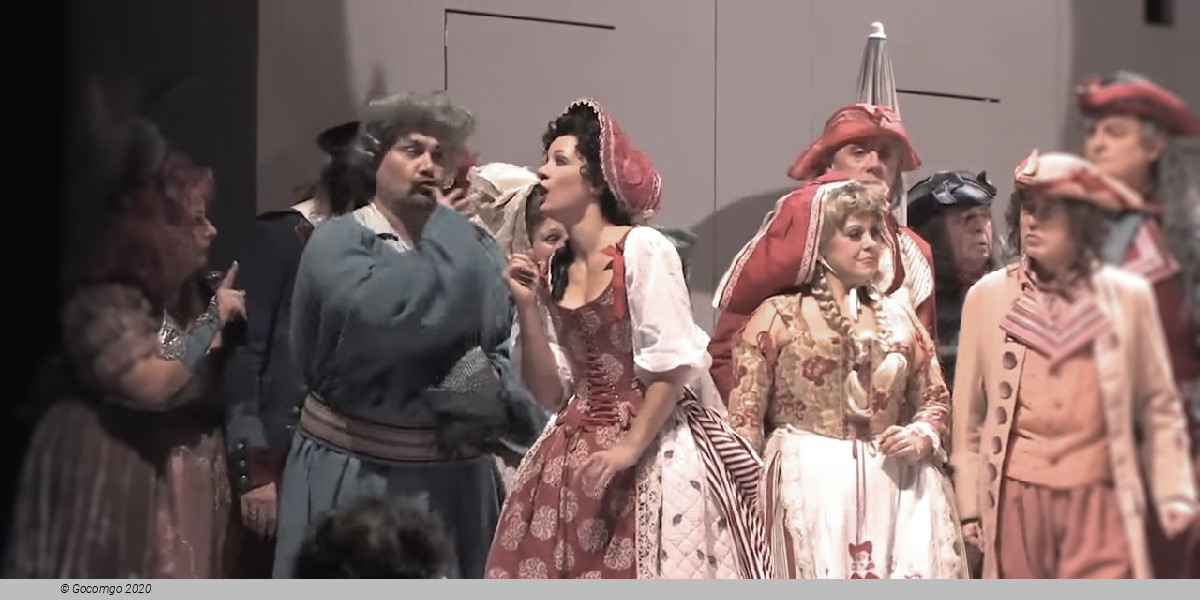
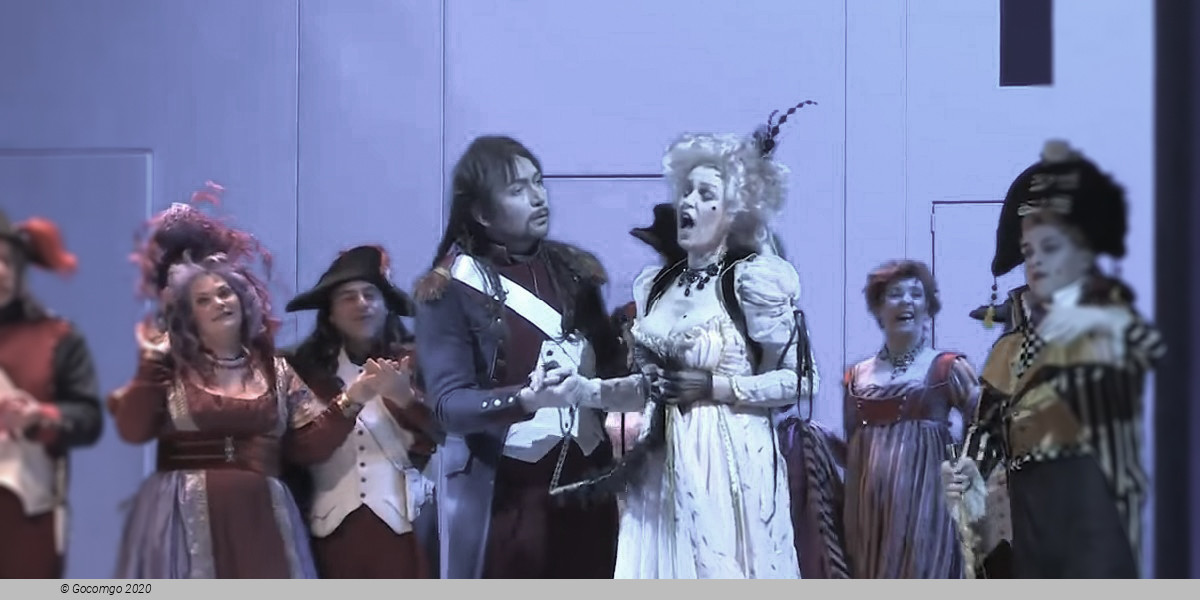
In 1872, Charles Lecocq, a worthy heir of Offenbach and an unfortunate rival of Bizet, placed the action of his Madame Angot’s Daughter under the Directoire, just after the Terror, a time when a frenzy seized French society. At that time, people were thirsty to sing and dance to forget. The musician was inspired by the legendary character of Madame Angot, a sort of merchant from Les Halles who had made her fortune, to evoke with brilliance and truculence the Paris of the time. This lively, fresh, and delicate work is rightly regarded as the musician's masterpiece. In fact, at the time of its creation, it had no less than 411 consecutive performances. People laugh, cry, dance... But as Saint-Saëns said, "It's much more serious than you think". A talented team of French singers, including Anne-Catherine Gillet, Véronique Gens, Mathias Vidal, Yann Beuron, Matthieu Lécroart, and Ingrid Perruche, welcome us tonight to rediscover this little gem of the repertoire that has been missing from the Parisian stage since 1984.

COPRODUCTION Palazzetto Bru Zane / Théâtre des Champs-Elysées / Orchestre de chambre de Paris Dans le cadre du 9e Festival Palazzetto Bru Zane Paris

History
Premiere of this production: 04 December 1872, Fantaisies-Parisiennes, Brussels

La fille de Madame Angot (Madame Angot's Daughter) is an opéra comique in three acts by Charles Lecocq with words by Clairville, Paul Siraudin and Victor Koning. It was premiered in Brussels in December 1872 and soon became a success in Paris, London, New York and across continental Europe.

Synopsis

Act 1
The scene of the opera is Directoire Paris, 1794; the Reign of Terror is over, but Paris is still a dangerous place for opponents of the government. The heroine is a charming young florist called Clairette. She is the daughter of Madame Angot, a former market woman of Les Halles, who was famous for her beauty, her amorous adventures, and her sharp tongue. She died when Clairette was three, and the child was brought up by multiple adoptive parents from Les Halles and given a fine education at a prestigious school.

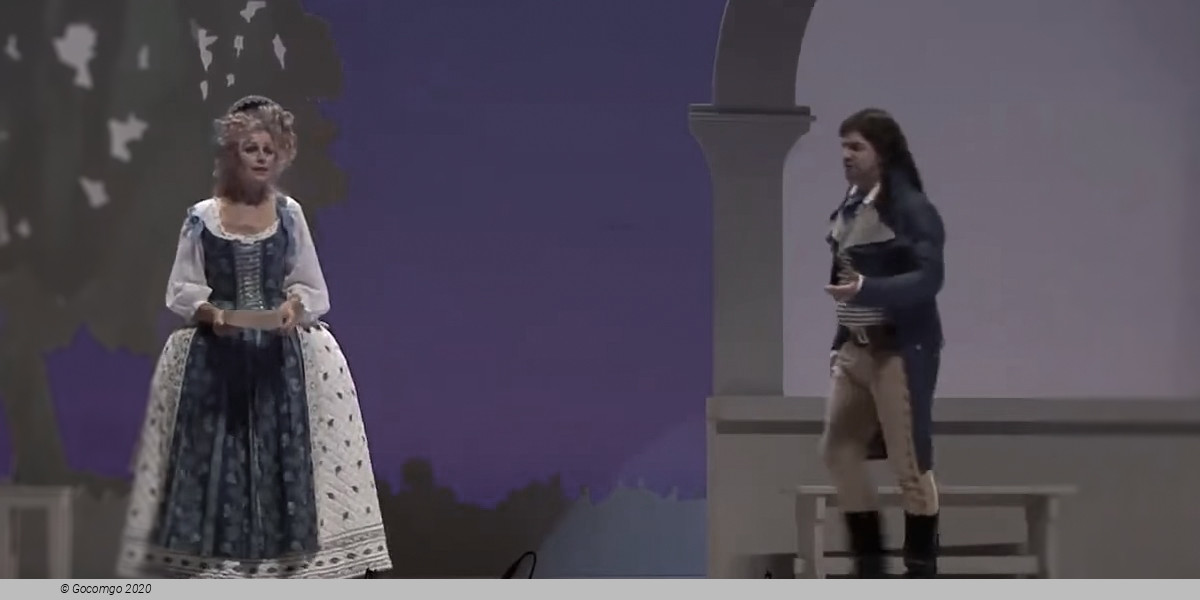
A marriage with Pomponnet, a sweet and gentle hairdresser, has been arranged for her against her wishes, for she is in love with Ange Pitou, a dashing poet and political activist, who is continually in trouble with the authorities. His latest song lyric, "Jadis les rois", satirizes the relations between Mlle. Lange – an actress and the mistress of Barras – and Barras's supposed friend Larivaudière. The latter has paid Pitou to suppress the song but Clairette gets to hold of it and, to avoid her marriage with Pomponnet, sings it publicly and is, as she expects, arrested so that her wedding is unavoidably postponed.

Act 2
Lange summons the girl to learn the reason for her attack and is surprised to recognize her as an old-school friend. The component loudly protests Clairette's innocence and says that Ange Pitou is the author of the verses. Lange already knows of Pitou and is not unmindful of his charms. He has been invited to her presence and arrives while Clairette is there and the interview is marked with more than cordiality. The jealous Larivaudière appears meanwhile and, to clear herself, Lange declares that Pitou and Clairette are lovers and have come to the house to join in a meeting of anti-government conspirators to be held at midnight. Clairette discovers that she does not enjoy a monopoly of Pitou's affections and that he is dallying with Lange.

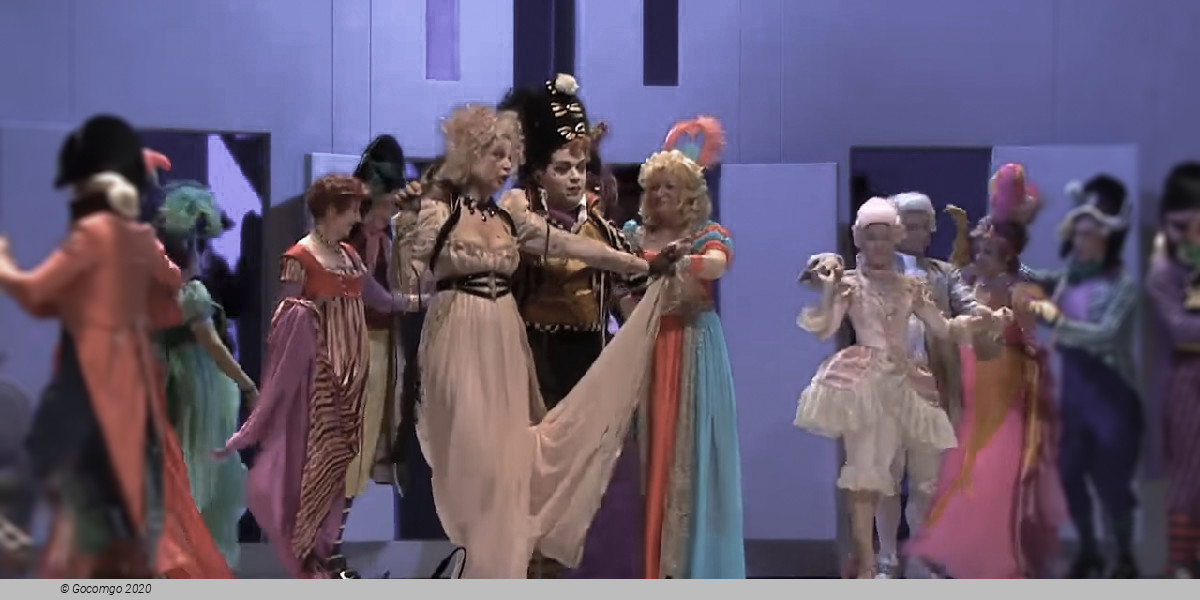
The conspirators arrive in due time, but in the middle of proceedings, the house is surrounded by Hussars; Lange hides the badges of the conspirators, "collars black and tawny wigs", and the affair takes on the appearance of nothing more dangerous than a ball. The Hussars join gaily in the dance.

Act 3
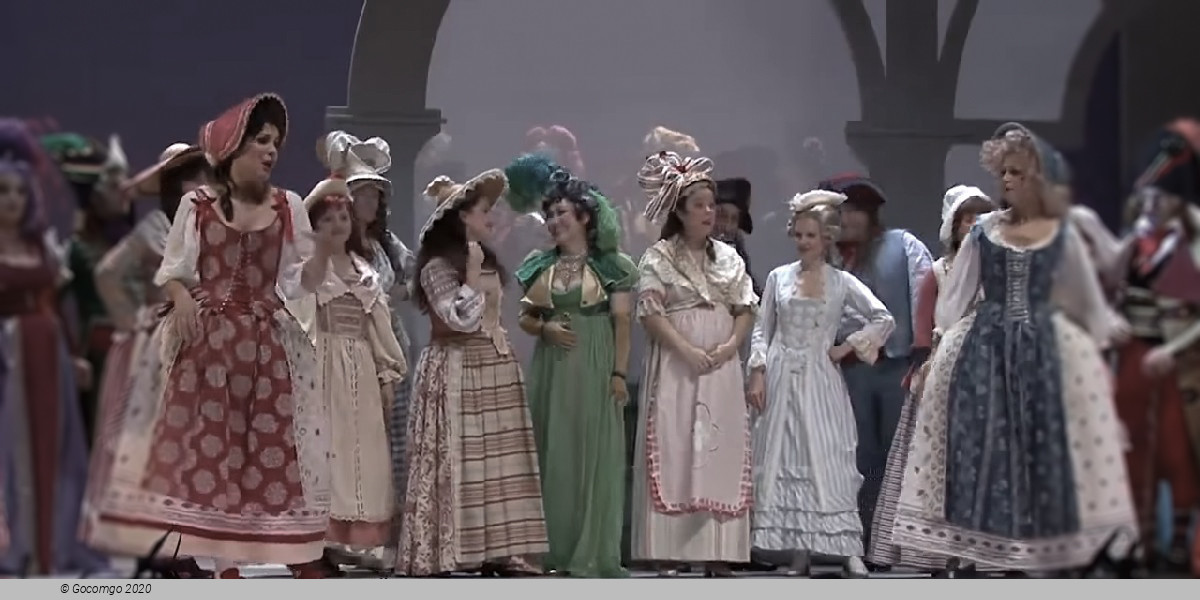
To avenge herself, Clairette invites all of Les Halles to a ball, to which she lures Lange and Pitou by writing each a forged letter, seemingly signed by the other. At the ball Pitou and Lange are unmasked, Larivaudière is enraged, but realizes he must hush matters up to save Barras from scandal. After a lively duet in which the two young women quarrel vigorously, there is a general mêlée, ended by Clairette who extends a hand to her friend and declares that she truly prefers the faithful Pomponnet to the fickle Pitou. Remembering Madame Angot's amorous flights, Pitou remains hopeful that Clairette will take after her mother and may one day be interested in him again.


Venue Info

Théâtre des Champs-Elysées - Paris
Location   15 Avenue Montaigne

The Théâtre des Champs-Élysées is an entertainment venue situated near Avenue des Champs-Élysées, from which it takes its name. Its eponymous main hall may seat up to 1,905 people.

Commissioned by impresario Gabriel Astruc, the theatre was built from 1911 to 1913 upon the designs of brothers Auguste Perret and Gustave Perret following a scheme by Henry van de Velde, and became the first example of Art Deco architecture in the city. Less than two months after its inauguration, the Théâtre hosted the world premiere of the Ballets Russes' Rite of Spring, which provoked one of the most famous classical music riots.

At present, the theatre shows about three staged opera productions a year, mostly baroque or chamber works more suited to the modest size of its stage and orchestra pit. It also houses an important concert season. It is the home venue of the Orchestre National de France and the Orchestre Lamoureux and serves as a French base for the Vienna Philharmonic Orchestra as well.

The Orchestre Philharmonique de Radio France, the Orchestre des Champs-Élysées and Ensemble orchestral de Paris play most of their concerts here too, along with other dance, chamber music, recital, and pop events.

Important Info
Type: Opera
City: Paris, France
Starts at: 19:30
Sung in: French
Titles in: French,English
Top of page