

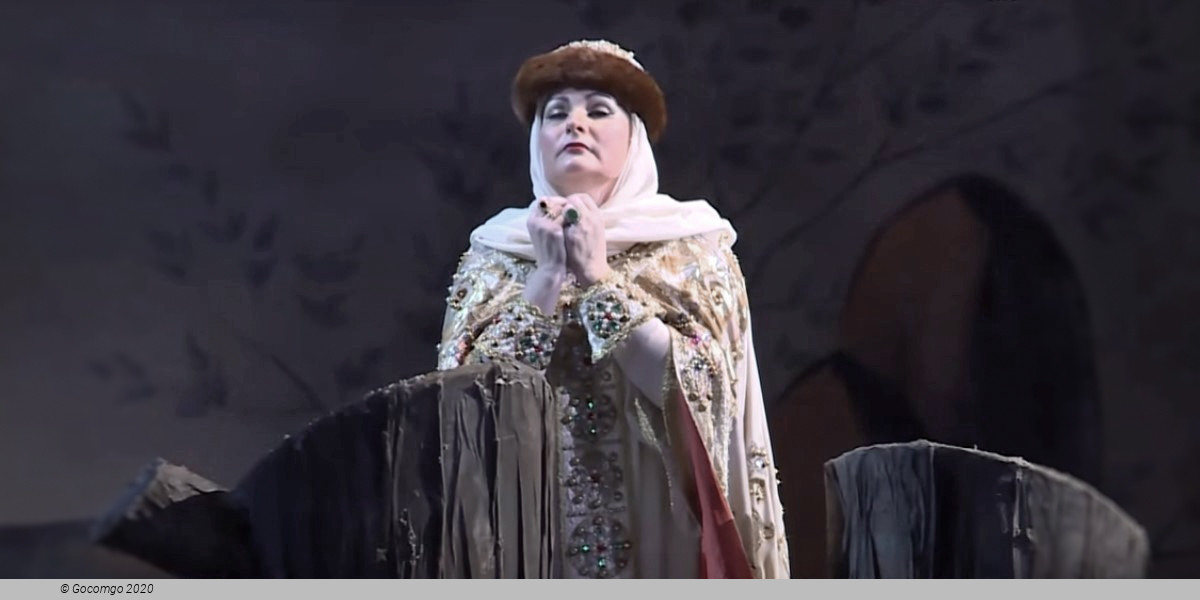
Opera National de Paris: Prince Igor Tickets | Event Dates & Schedule | GoComGo.com

Prince Igor Tickets

Opera National de Paris, Paris, France
Important Info
Type: Opera
City: Paris, France
Duration: 3h 45min with 1 interval
Acts: 4
Intervals: 1
Sung in: Russian
Titles in: French,English

E-tickets: Print at home or at the box office of the event if so specified. You will find more information in your booking confirmation email.

You can only select the category, and not the exact seats.
If you order 2 or 3 tickets: your seats will be next to each other.
If you order 4 or more tickets: your seats will be next to each other, or, if this is not possible, we will provide a combination of groups of seats (at least in pairs, for example 2+2 or 2+3).

Cast
Performers
Choose the date to see the peformers
Overview

Opéra Bastille - from 25 November to 26 December 2019

Creative team

  • Orchestre et Choeurs de l’Opéra national de Paris
History
Premiere of this production: 04 November 1890, Mariinsky Theatre, Saint Petersburg

Prince Igor is an opera in four acts with a prologue, written and composed by Alexander Borodin. The composer adapted the libretto from the Ancient Russian epic The Lay of Igor's Host, which recounts the campaign of Rus' prince Igor Svyatoslavich against the invading Cuman ("Polovtsian") tribes in 1185.

Synopsis

Time: The year 1185

Place: The city of Putivl (prologue, Acts 1 and 4); a Polovtsian camp (Acts 2 and 3)

Note: As discussed in this article, Borodin's final decision on the order of the first two acts is unclear. The traditional grouping presented here is that of the Rimsky-Korsakov-Glazunov edition. In many productions, Act 3 is omitted.

Prologue
The cathedral square in Putivl

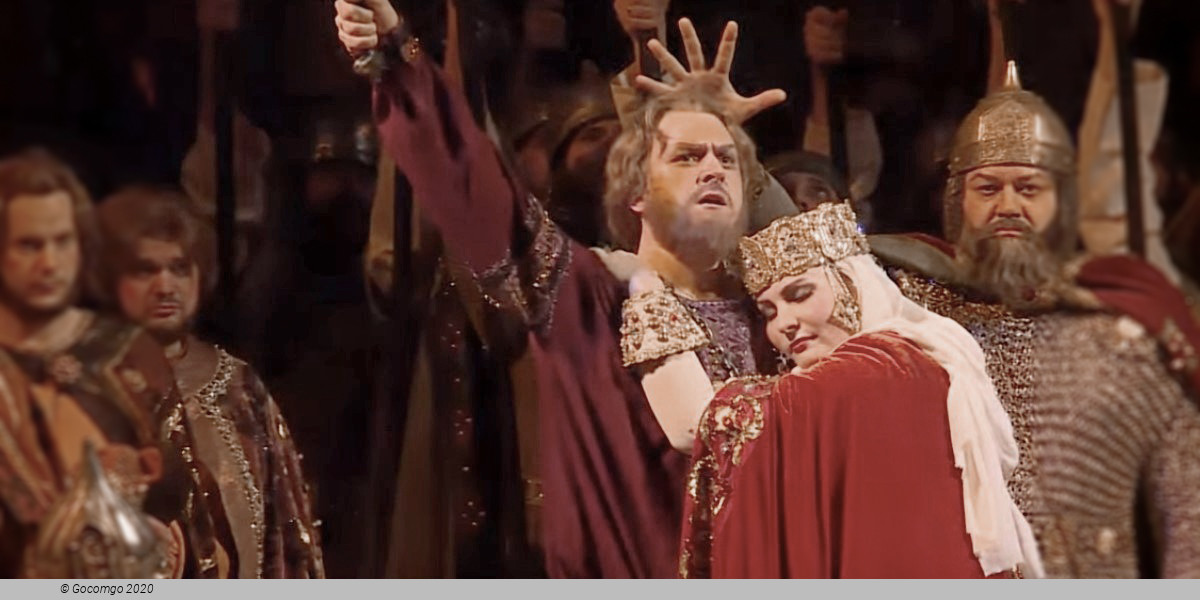
Prince Igor is about to set out on a campaign against the Cumans/Polovtsy and their Khans who have previously attacked the Russian lands. The people sing his praise and that of his son, the other leaders and the army (Chorus: "Glory to the beautiful Sun"). A solar eclipse takes place to general consternation. Two soldiers Skula and Yeroshka desert feeling sure that Vladimir Yaroslavich, Prince Galitsky, will offer them work more to their liking. Although Yaroslavna, Igor's wife, takes the eclipse for a bad omen, Igor insists that honour demands that he go to war. He leaves her to the care of her brother, Prince Galitsky, who tells of his gratitude to Igor for sheltering him after he was banished from his own home by his father and brothers. The people sing a great chorus of praise (Chorus: "Glory to the multitude of stars") as the host sets out on their campaign against the Polovtsy.

Act 1
Scene 1: Vladimir Galitsky's court in Putivl

Galitsky's followers sing his praise. Skula and Yeroshka are now working as gudok-players. They entertain the followers and all sing of how Galitsky and his men abducted a young woman and how she pleaded to be allowed to return to her father without being dishonoured. The prince arrives and sings of how, if he were Prince of Putivl, he would drink and feast all day while dispensing judgment and have the prettiest maidens with him all night (Galitsky's Song). The treasury would be spent on himself and his men while his sister would be praying in a monastery. A group of young women beg the prince to restore their abducted friend. He threatens them and drives them away, saying how she now lives in luxury in his quarters and does not have to work. The prince returns to his rooms having sent for wine for his followers. The gudok players and the prince's followers mock the women. They wonder what might happen if Yaroslavna hears of what happens, but then realise she would be helpless with all her men gone to war. They sing of how they are all drunkards and are supported by Galitsky. The men decide to go to the town square to declare Galitsky the Prince of Putivl, leaving just the two drunk musicians behind.

Scene 2: A room in Yaroslavna's palace

Yaroslavna is alone worrying about why she has not heard from Igor and his companions (Yaroslavna's Arioso). She sings of her tearful nights and nightmares and reminisces about when she was happy with Igor by her side. The nurse brings in the young women who tell Yaroslavna of their abducted friend. They are reluctant at first to reveal the culprit but eventually name Galitsky and talk of how he and his drunken followers cause trouble around Putivl. Galitsky enters and the women run away. Yaroslavna questions him as to the truth of their story and he mocks her saying she should treat him as a guest in her house. She threatens him with what Igor will do on his return, but Galitsky replies that he can seize the throne whenever he wants. Yaroslavna accuses him of repeating the betrayal that he carried out against their father, but he replies that he was only joking and asks if she has a lover now her husband is away. She threatens him with sending him back to their father. He replies that he will return the girl but will take another later and leaves. The council of boyars arrive to inform Yaroslavna that the Polovtsy under Khan Gzak are about to attack Putivl. Igor's army has been utterly destroyed and he has been wounded and captured with his son and brother. After a moment of faintness, Yaroslavna orders messengers sent to the city's allies, but the Boyars report that the roads are cut, some towns are in revolt and their princes will be captured. The Boyars say that they will organise the defence but Galitsky returns with his followers to demand that a new Prince be chosen. His retinue say it should be him as he is Yaroslavna's brother and Igor's brother-in-law. The boyars refuse. The argument is interrupted by the sight of flames and the sound of crying women. Some of the boyars flee; some join the battle, others guard the Princess. They call the attack God's judgment.

Act 2
Evening in the Polovtsian Camp

Polovtsian maidens sing comparing love to a flower that droops in the heat of the day and is revived by night. They dance together (Dance of the Polovtsian Maidens). Konchakovna joins in the singing hoping that her own lover will join her soon (Konchakovna's Cavatina). The Russian prisoners arrive from their day's work and express their gratitude when fed by Konchakovna and the maidens. Their guards retire for the night leaving just Ovlur, a Christian, in charge. Vladimir, son of Igor, sings of his hope that his love will soon join him now that the day is fading (Vladimir's Cavatina). His love is Konchakovna. She comes and the two sing of their love and their desire to marry (Love Duet). While her father will consent to the marriage, they know that his will not. They part when they hear Igor coming. He sings of his disgrace and torment at being captured with his followers dead (Prince Igor's Aria). Only his wife, he feels, will be loyal. He hopes for the chance to regain his honour. Ovlur urges Igor to escape and the prince agrees to think about it. Khan Konchak asks him if all is well (Konchak's Aria) and he replies that the falcon cannot live in captivity. Konchak says that as Igor did not ask for mercy he is not a prisoner but an honoured guest equal to a Khan. Igor reminds him that he too knows what it is to be a captive. Konchak offers Igor freedom if he will promise not to wage war on him again, but he refuses saying he cannot lie. Konchak regrets that they were not born to be allies. They would then have captured all of Russia. He summons the Polovtsian slaves to entertain Igor and himself and offers Igor his choice of them. As the slaves dance the Polovtsy sing of Konchak's glory (Polovtsian Dances).

Act 3
The Polovtsian camp

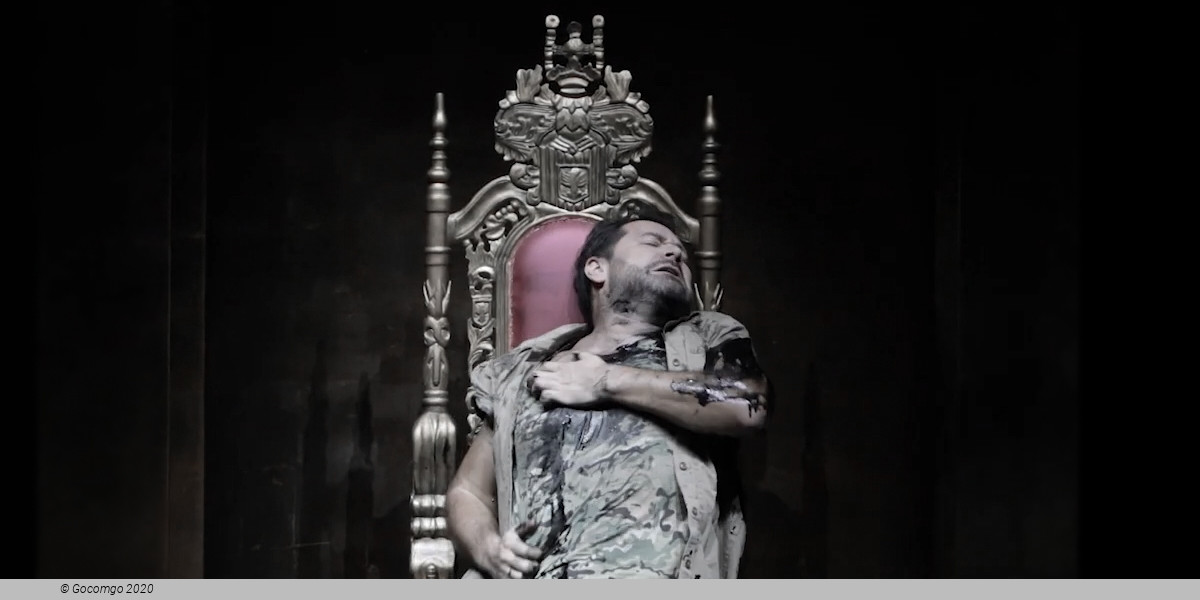
The Polovtsian army returns in triumph singing the praise of Khan Gzak (Polovtsian March). Konchak sings of the sack of Putivl and other victories and confidently predicts that they will soon capture all of Russia. Igor and his son Vladimir have their worst fears confirmed by the new captives. Vladimir and the other prisoners urge Igor to escape, but he is at first reluctant, singing of his shame and saying that it is the duty of the other Russian princes to save the homeland (Igor's Monologue, Mariinsky edition only). Ovlur now arrives to say that he has prepared horses for Igor and Vladimir and Igor now agrees to escape. The distressed Konchakovna comes, challenging Vladimir to show his love by either taking her with him or by staying. Igor urges his son to come, but Vladimir feels unable to leave Konchakovna who threatens to wake the camp. Eventually Igor flees alone and Konchakovna sounds the alarm. She and her father refuse to let the Polovtsy kill Vladimir. Instead Konchak orders the death of the guards and marries Vladimir to his daughter. As for Igor, Konchak thinks more of him for his escape.

Act 4
Dawn in Putivl

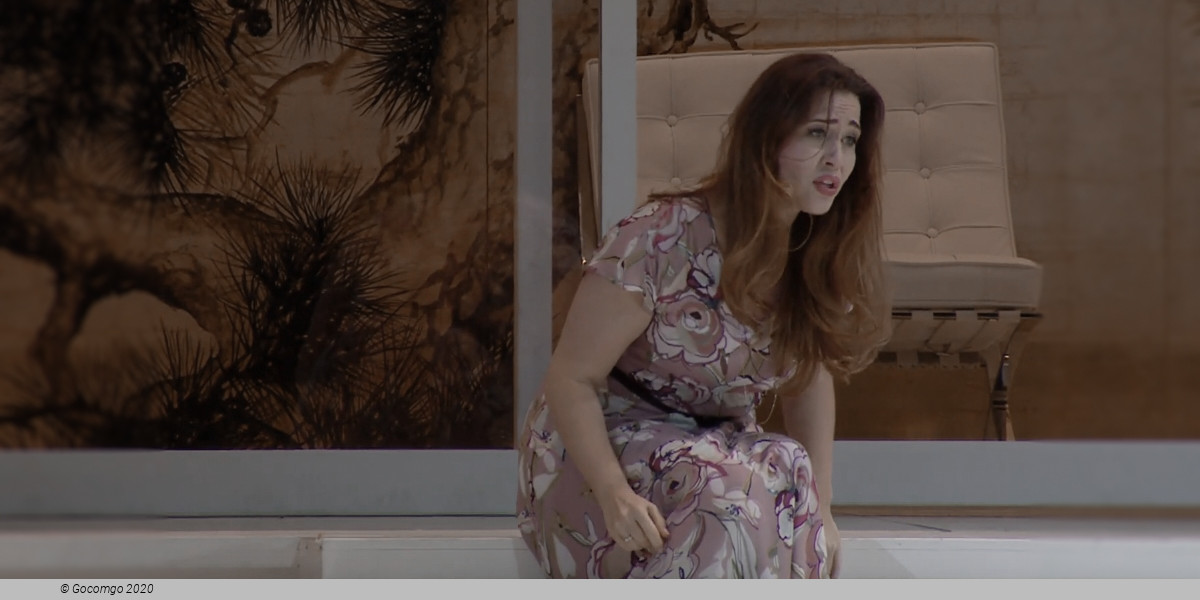
Yaroslavna weeps at her separation from Igor and the defeat of his army, blaming the very elements themselves for helping the enemy (Yaroslavna's Lament). Peasant women blame not the wind but Khan Gzak for the devastation. As Yaroslavna looks around to acknowledge the destruction, she sees two riders in the distance who turn out to be Igor and Ovlur. The two lovers sing of their joy of being reunited and of the expectation that Ivan will lead the Russians to victory against the Khan. Unaware of Igor's return, Skula and Yeroshka, the drunken gudok players, sing a song that mocks him. Then they notice him in the distance. After a moment of panic about what will happen to them, Skula says that they should rely on their cunning and decides on a plan that will save them. They ring the church bells to summon a crowd. Although people at first treat them with suspicion, the gudok players manage to convince the crowd that Igor has returned and the boyars that they are loyal followers of the true prince and not Galitsky. All joyously celebrate Igor's return.

Time: The year 1185
Place: The city of Putivl (prologue, Acts 1 and 4); a Polovtsian camp (Acts 2 and 3)

Prologue
The cathedral square in Putivl

Prince Igor is about to set out on a campaign against the Cumans/Polovtsy and their Khans who have previously attacked the Russian lands. The people sing his praise and that of his son, the other leaders and the army (Chorus: "Glory to the beautiful Sun"). A solar eclipse takes place to general consternation. Two soldiers Skula and Yeroshka desert feeling sure that Vladimir Yaroslavich, Prince Galitsky, will offer them work more to their liking. Although Yaroslavna, Igor's wife, takes the eclipse for a bad omen, Igor insists that honour demands that he go to war. He leaves her to the care of her brother, Prince Galitsky, who tells of his gratitude to Igor for sheltering him after he was banished from his own home by his father and brothers. The people sing a great chorus of praise (Chorus: "Glory to the multitude of stars") as the host sets out on their campaign against the Polovtsy.

Act 1
Scene 1: Vladimir Galitsky's court in Putivl

Galitsky's followers sing his praise. Skula and Yeroshka are now working as gudok-players. They entertain the followers and all sing of how Galitsky and his men abducted a young woman and how she pleaded to be allowed to return to her father without being dishonoured. The prince arrives and sings of how, if he were Prince of Putivl, he would drink and feast all day while dispensing judgment and have the prettiest maidens with him all night (Galitsky's Song). The treasury would be spent on himself and his men while his sister would be praying in a monastery. A group of young women beg the prince to restore their abducted friend. He threatens them and drives them away, saying how she now lives in luxury in his quarters and does not have to work. The prince returns to his rooms having sent for wine for his followers. The gudok players and the prince's followers mock the women. They wonder what might happen if Yaroslavna hears of what happens, but then realise she would be helpless with all her men gone to war. They sing of how they are all drunkards and are supported by Galitsky. The men decide to go to the town square to declare Galitsky the Prince of Putivl, leaving just the two drunk musicians behind.

Scene 2: A room in Yaroslavna's palace

Yaroslavna is alone worrying about why she has not heard from Igor and his companions (Yaroslavna's Arioso). She sings of her tearful nights and nightmares and reminisces about when she was happy with Igor by her side. The nurse brings in the young women who tell Yaroslavna of their abducted friend. They are reluctant at first to reveal the culprit but eventually name Galitsky and talk of how he and his drunken followers cause trouble around Putivl. Galitsky enters and the women run away. Yaroslavna questions him as to the truth of their story and he mocks her saying she should treat him as a guest in her house. She threatens him with what Igor will do on his return, but Galitsky replies that he can seize the throne whenever he wants. Yaroslavna accuses him of repeating the betrayal that he carried out against their father, but he replies that he was only joking and asks if she has a lover now her husband is away. She threatens him with sending him back to their father. He replies that he will return the girl but will take another later and leaves. The council of boyars arrive to inform Yaroslavna that the Polovtsy under Khan Gzak are about to attack Putivl. Igor's army has been utterly destroyed and he has been wounded and captured with his son and brother. After a moment of faintness, Yaroslavna orders messengers sent to the city's allies, but the Boyars report that the roads are cut, some towns are in revolt and their princes will be captured. The Boyars say that they will organise the defence but Galitsky returns with his followers to demand that a new Prince be chosen. His retinue say it should be him as he is Yaroslavna's brother and Igor's brother-in-law. The boyars refuse. The argument is interrupted by the sight of flames and the sound of crying women. Some of the boyars flee; some join the battle, others guard the Princess. They call the attack God's judgment.

Act 2
Evening in the Polovtsian Camp

Polovtsian maidens sing comparing love to a flower that droops in the heat of the day and is revived by night. They dance together (Dance of the Polovtsian Maidens). Konchakovna joins in the singing hoping that her own lover will join her soon (Konchakovna's Cavatina). The Russian prisoners arrive from their day's work and express their gratitude when fed by Konchakovna and the maidens. Their guards retire for the night leaving just Ovlur, a Christian, in charge. Vladimir, son of Igor, sings of his hope that his love will soon join him now that the day is fading (Vladimir's Cavatina). His love is Konchakovna. She comes and the two sing of their love and their desire to marry (Love Duet). While her father will consent to the marriage, they know that his will not. They part when they hear Igor coming. He sings of his disgrace and torment at being captured with his followers dead (Prince Igor's Aria). Only his wife, he feels, will be loyal. He hopes for the chance to regain his honour. Ovlur urges Igor to escape and the prince agrees to think about it. Khan Konchak asks him if all is well (Konchak's Aria) and he replies that the falcon cannot live in captivity. Konchak says that as Igor did not ask for mercy he is not a prisoner but an honoured guest equal to a Khan. Igor reminds him that he too knows what it is to be a captive. Konchak offers Igor freedom if he will promise not to wage war on him again, but he refuses saying he cannot lie. Konchak regrets that they were not born to be allies. They would then have captured all of Russia. He summons the Polovtsian slaves to entertain Igor and himself and offers Igor his choice of them. As the slaves dance the Polovtsy sing of Konchak's glory (Polovtsian Dances).

Act 3
The Polovtsian camp

The Polovtsian army returns in triumph singing the praise of Khan Gzak (Polovtsian March). Konchak sings of the sack of Putivl and other victories and confidently predicts that they will soon capture all of Russia. Igor and his son Vladimir have their worst fears confirmed by the new captives. Vladimir and the other prisoners urge Igor to escape, but he is at first reluctant, singing of his shame and saying that it is the duty of the other Russian princes to save the homeland (Igor's Monologue, Mariinsky edition only). Ovlur now arrives to say that he has prepared horses for Igor and Vladimir and Igor now agrees to escape. The distressed Konchakovna comes, challenging Vladimir to show his love by either taking her with him or by staying. Igor urges his son to come, but Vladimir feels unable to leave Konchakovna who threatens to wake the camp. Eventually Igor flees alone and Konchakovna sounds the alarm. She and her father refuse to let the Polovtsy kill Vladimir. Instead Konchak orders the death of the guards and marries Vladimir to his daughter. As for Igor, Konchak thinks more of him for his escape.

Act 4
Dawn in Putivl

Yaroslavna weeps at her separation from Igor and the defeat of his army, blaming the very elements themselves for helping the enemy (Yaroslavna's Lament). Peasant women blame not the wind but Khan Gzak for the devastation. As Yaroslavna looks around to acknowledge the destruction, she sees two riders in the distance who turn out to be Igor and Ovlur. The two lovers sing of their joy of being reunited and of the expectation that Igor will lead the Russians to victory against the Khan. Unaware of Igor's return, Skula and Yeroshka, the drunken gudok players, sing a song that mocks him. Then they notice him in the distance. After a moment of panic about what will happen to them, Skula says that they should rely on their cunning and decides on a plan that will save them. They ring the church bells to summon a crowd. Although people at first treat them with suspicion, the gudok players manage to convince the crowd that Igor has returned and the boyars that they are loyal followers of the true prince and not Galitsky. All joyously celebrate Igor's return.

Venue Info

Opera National de Paris - Paris
Location   Palais Garnier: Place de l’Opéra, 75009 Paris; Opéra Bastille: Place de la Bastille, 75012 Paris

The Paris Opera is the primary opera and ballet company of France. It was founded in 1669 by Louis XIV as the Académie d'Opéra, and shortly thereafter was placed under the leadership of Jean-Baptiste Lully and officially renamed the Académie Royale de Musique, but continued to be known more simply as the Opéra. Classical ballet as it is known today arose within the Paris Opera as the Paris Opera Ballet and has remained an integral and important part of the company. Currently called the Opéra National de Paris, it mainly produces operas at its modern 2700-seat theatre Opéra Bastille which opened in 1989, and ballets and some classical operas at the older 1970-seat Palais Garnier which opened in 1875. Small scale and contemporary works are also staged in the 500-seat Amphitheatre under the Opéra Bastille.

The company's annual budget is in the order of 200 million euros, of which 100 million come from the French state and 70 million from box office receipts. With this money, the company runs the two houses and supports a large permanent staff, which includes the orchestra of 170, a chorus of 110 and the corps de ballet of 150.

Each year, the Opéra presents about 380 performances of opera, ballet and other concerts, to a total audience of about 800,000 people (of whom 17% come from abroad), which is a very good average seat occupancy rate of 94%. In the 2012/13 season, the Opéra presented 18 opera titles (two in a double bill), 13 ballets, 5 symphonic concerts and two vocal recitals, plus 15 other programmes. The company's training bodies are also active, with 7 concerts from the Atelier Lyrique and 4 programmes from the École de Danse.

The Opera under Louis XIV
Pierre Perrin

The poet Pierre Perrin began thinking and writing about the possibility of French opera in 1655, more than a decade before the official founding of the Paris Opera as an institution. He believed that the prevailing opinion of the time that the French language was fundamentally unmusical was completely incorrect. Seventeenth-century France offered Perrin essentially two types of organization for realizing his vision: a royal academy or a public theater. In 1666 he proposed to the minister Colbert that "the king decree 'the establishment of an Academy of Poetry and Music' whose goal would be to synthesize the French language and French music into an entirely new lyric form."

Even though Perrin's original concept was of an academy devoted to discussions of French opera, the king's intention was in fact a unique hybrid of royal academy and public theatre, with an emphasis on the latter as an institution for performance. On 28 June 1669, Louis XIV signed the Privilège accordé au Sieur Perrin pour l'établissement d'une Académie d'Opéra en musique, & Vers François (Privilege granted to Sir Perrin for the establishment of an Academy of Opera in music, & French Verse). The wording of the privilège, based in part on Perrin's own writings, gave him the exclusive right for 12 years to found anywhere in France academies of opera dedicated to the performance of opera in French. He was free to select business partners of his choice and to set the price of tickets. No one was to have the right of free entry including members of the royal court, and no one else could set up a similar institution. Although it was to be a public theatre, it retained its status as royal academy in which the authority of the king as the primary stakeholder was decisive. The monopoly, originally intended to protect the enterprise from competition during its formative phase, was renewed for subsequent recipients of the privilege up to the early French Revolution. As Victoria Johnson points out, "the Opera was an organization by nature so luxurious and expensive in its productions that its very survival depended on financial protection and privilege."

Perrin converted the Bouteille tennis court, located on the Rue des Fossés de Nesles (now 42 Rue Mazarine), into a rectangular facility with provisions for stage machinery and scenery changes and a capacity of about 1200 spectators. His first opera Pomone with music by Robert Cambert opened on 3 March 1671 and ran for 146 performances. A second work, Les peines et les plaisirs de l'amour, with a libretto by Gabriel Gilbert and music by Cambert, was performed in 1672.

Jean-Baptiste Lully

Despite this early success, Cambert and two other associates did not hesitate to swindle Perrin, who was imprisoned for debt and forced to concede his privilege on 13 March 1672 to the surintendant of the king's music Jean-Baptiste Lully. The institution was renamed the Académie Royale de Musique and came to be known in France simply as the Opéra. Within one month Lully had convinced the king to expand the privilege by restricting the French and Italian comedians to using two singers rather than six, and six instrumentalists, rather than twelve. Because of legal difficulties Lully could not use the Salle de la Bouteille, and a new theatre was built by Carlo Vigarani at the Bel-Air tennis court on the Rue de Vaugirard.[9] Later, Lully and his successors bitterly negotiated the concession of the privilege, in whole or in part, from the entrepreneurs in the provinces: in 1684 Pierre Gautier bought the authorisation to open a music academy in Marseille, then the towns of Lyon, Rouen, Lille and Bordeaux followed suit in the following years. During Lully's tenure, the only works performed were his own. The first productions were the pastorale Les fêtes de l'Amour et de Bacchus (November 1672) and his first tragedie lyrique called Cadmus et Hermione (27 April 1673).

After Molière's death in 1673, his troupe merged with the players at the Théâtre du Marais to form the Théâtre Guénégaud (at the same theatre that had been used by the Académie d'Opéra), and no longer needed the theatre built by Richelieu at his residence the Palais-Royal, near the Louvre. (In 1680 the troupe at the Guénégaud merged again with the players from the Hôtel de Bourgogne forming the Comédie-Française.) Richelieu's theatre had been designed by Jacques Le Mercier and had opened in 1641, and unlike the huge theatre at the Tuileries Palace, which could accommodate 6,000 to 8,000 spectators, was of a size consistent with good acoustics. Lully greatly desired a better theatre and persuaded the king to let him use the one at the Palais-Royal free of charge. The Théâtre du Palais-Royal had been altered in 1660 and 1671, but Lully, with 3,000 livres received from the king, had further changes made by Vigarani in 1674.

The first production in the new theatre was Alceste on 19 January 1674. The opera was bitterly attacked by those enraged at the restrictions that Lully had caused to be placed on the French and Italian comedians. To mitigate the damage, Louis XIV arranged for new works to be premiered at the court, usually at the Chateau Vieux of the Château de Saint-Germain-en-Laye. This had the further advantage of subsidizing the cost of rehearsals, as well as most of the machinery, sets, and costumes, which were donated to the Opéra for use in Paris. During Lully's time at the Opéra, performances were given all year, except for three weeks at Easter. Regular performances were on Tuesdays, Fridays, and Sundays. The premieres presented at court were usually during Carnival and were moved to the Palais-Royal after Easter, where the openings were on Thursdays. About two to three new works were mounted each year. In all, thirteen of Lully's tragédie en musique were performed there (see the list of compositions by Jean-Baptiste Lully).

After Lully

After Lully died (in 1687), the number of new works per year almost doubled, since his successors (Pascal Collasse, Henri Desmarets, André Campra, André Cardinal Destouches, and Marin Marais) had greater difficulty sustaining the interest of the public. Revivals of Lully's works were common. French composers at the Opéra generally wrote music to new librettos, which had to be approved by the directors of the company. The Italian practice of preparing new settings of existing librettos was considered controversial and did not become the norm in Paris until around 1760. One of the most important of the new works during this period was an opéra-ballet by Campra called L'Europe galante presented in 1697.

Ballet
In 1661 Louis XIV, who was a dancer himself and one of the great architects of baroque ballet (the art form which would one day evolve into classical ballet), established the Académie Royale de Danse, intended to codify court and character dances and to certify dance teachers by examination. From 1680 until Lully's death, it was under the direction of the great dancing master Pierre Beauchamp, the man who codified the five positions of the feet. When Lully took over the Opéra in 1672, he and Beauchamp made theatrical ballet an important part of the company's productions. The ballet of that time was merely an extension of the opera, having yet to evolve into an independent form of theatrical art. As it became more important, however, the dance component of the company began to be referred to as the Paris Opera Ballet. In 1713 an associated ballet school was opened, today known as the Paris Opera Ballet School. The Académie Royale de Danse remained separate, and with the fall of the monarchy in 1789 it disappeared.

The company's names after the Revolution

With the French Revolution and the founding of the Republic, the company changed names several times, dropping its association with the royal family (see the List of official company names for details), and in 1794, moved into the Théâtre National de la rue de la Loi (capacity 2800) where it took the name Théâtre des Arts. In 1797, it was renamed the Théâtre de la République et des Arts.

Napoleon took control of the company in 1802 and with the declaration of the French Empire in 1804, renamed the company the Académie Impériale de Musique. With the Restoration in 1814, the company was renamed the Académie Royale de Musique. It became part of the Académie des Beaux-Arts in 1816. In 1821, the company moved to the Salle Le Peletier, which had a capacity of 1900 spectators and where it remained until the building was destroyed by fire in 1873.

In the second half of the 19th century, with the ascension of Napoleon III in 1851, the name Académie Impériale de Musique was reinstated and after 1870 with the formation of the Third Republic, was changed to Théâtre National de l'Opéra.

In 1875, the institution occupied a new home, the Palais Garnier. Between 1908 and 1914 Henri Benjamin Rabaud conducted at Palais Garnier. Rabaud also composed several works which first premiered at Opéra-Comique, but were later also performed at Palais Garnier.

In 1939, the Opéra was merged with the Opéra-Comique and the company name became Réunion des Théâtres Lyriques Nationaux. The Opéra-Comique was closed in 1972 with the appointment of Rolf Liebermann as general administrator of the Théâtre National de l'Opéra de Paris (1973–1980), but in 1976, the Opéra-Comique was restored.

In 1990 the Opéra moved its primary venue to the new Opéra-Bastille, becoming the Opéra de Paris, although it continued to mount productions, primarily ballet, at the Palais Garnier; and the Opéra-Comique regained its autonomy. In 1994 the Opéra de Paris became the Opéra National de Paris. Regardless of all the changes in its "official" name, the company and its theatres were commonly referred to as the Opéra.

Important Info
Type: Opera
City: Paris, France
Duration: 3h 45min with 1 interval
Acts: 4
Intervals: 1
Sung in: Russian
Titles in: French,English

E-tickets: Print at home or at the box office of the event if so specified. You will find more information in your booking confirmation email.

You can only select the category, and not the exact seats.
If you order 2 or 3 tickets: your seats will be next to each other.
If you order 4 or more tickets: your seats will be next to each other, or, if this is not possible, we will provide a combination of groups of seats (at least in pairs, for example 2+2 or 2+3).

Top of page