








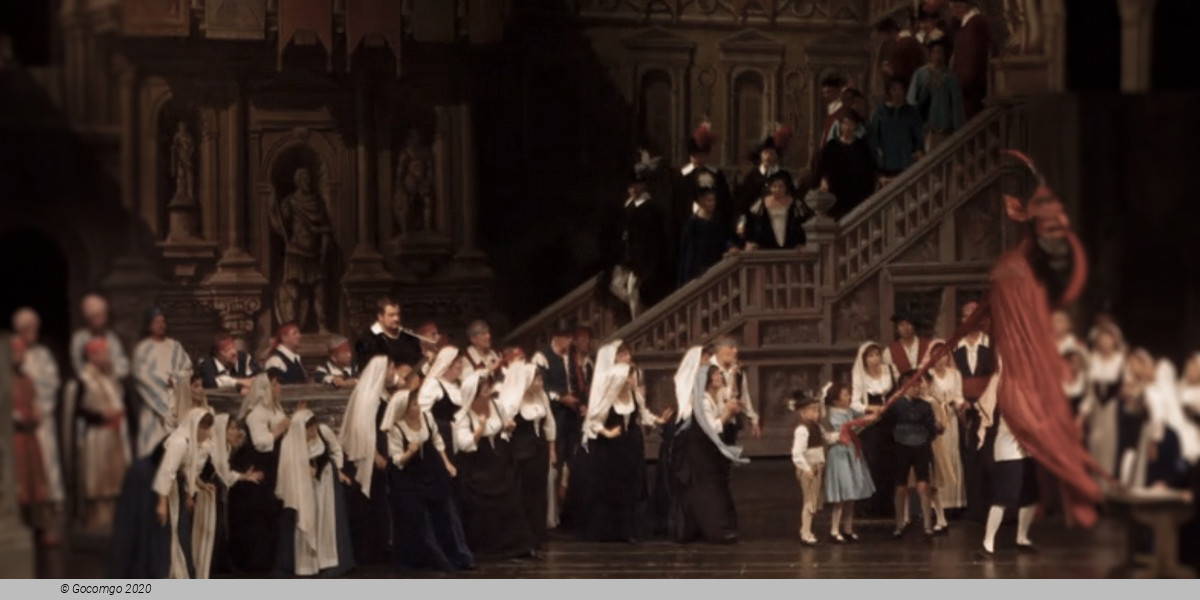
Teatro Alla Scala 11 June 2022 - La Gioconda | GoComGo.com

La Gioconda

Teatro Alla Scala, Milan, Italy
All photos (15)
Select date and time
7:30 PM

E-tickets: Print at home or at the box office of the event if so specified. You will find more information in your booking confirmation email.

You can only select the category, and not the exact seats.
If you order 2 or 3 tickets: your seats will be next to each other.
If you order 4 or more tickets: your seats will be next to each other, or, if this is not possible, we will provide a combination of groups of seats (at least in pairs, for example 2+2 or 2+3).

Important Info
Type: Opera
City: Milan, Italy
Starts at: 19:30
Duration: 3h 40min

E-tickets: Print at home or at the box office of the event if so specified. You will find more information in your booking confirmation email.

You can only select the category, and not the exact seats.
If you order 2 or 3 tickets: your seats will be next to each other.
If you order 4 or more tickets: your seats will be next to each other, or, if this is not possible, we will provide a combination of groups of seats (at least in pairs, for example 2+2 or 2+3).

Overview

New Teatro alla Scala production

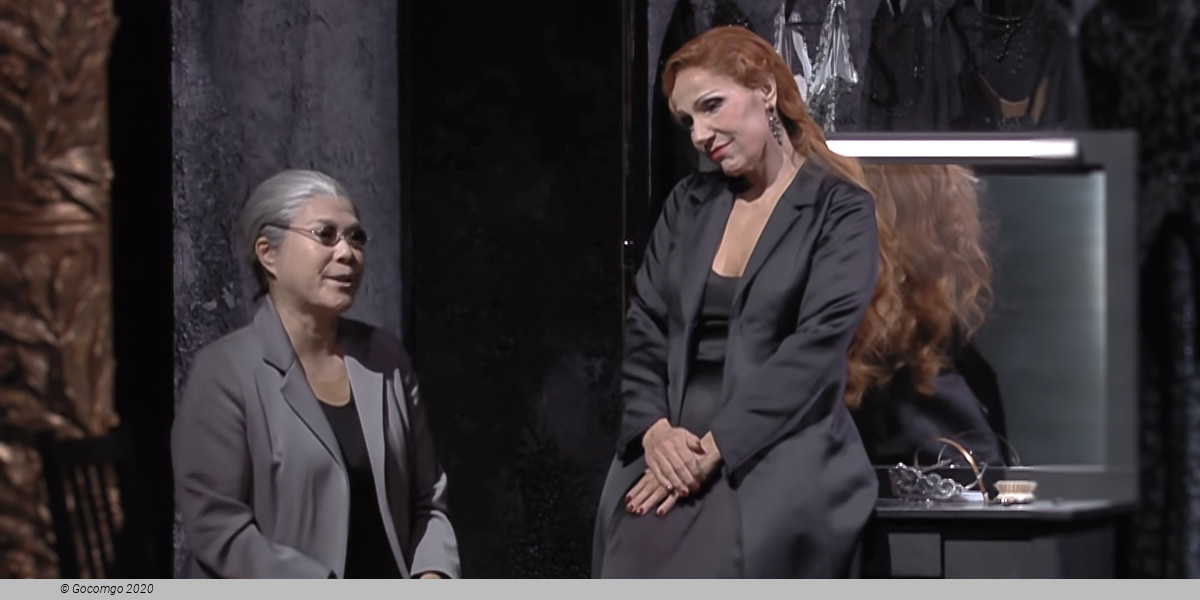
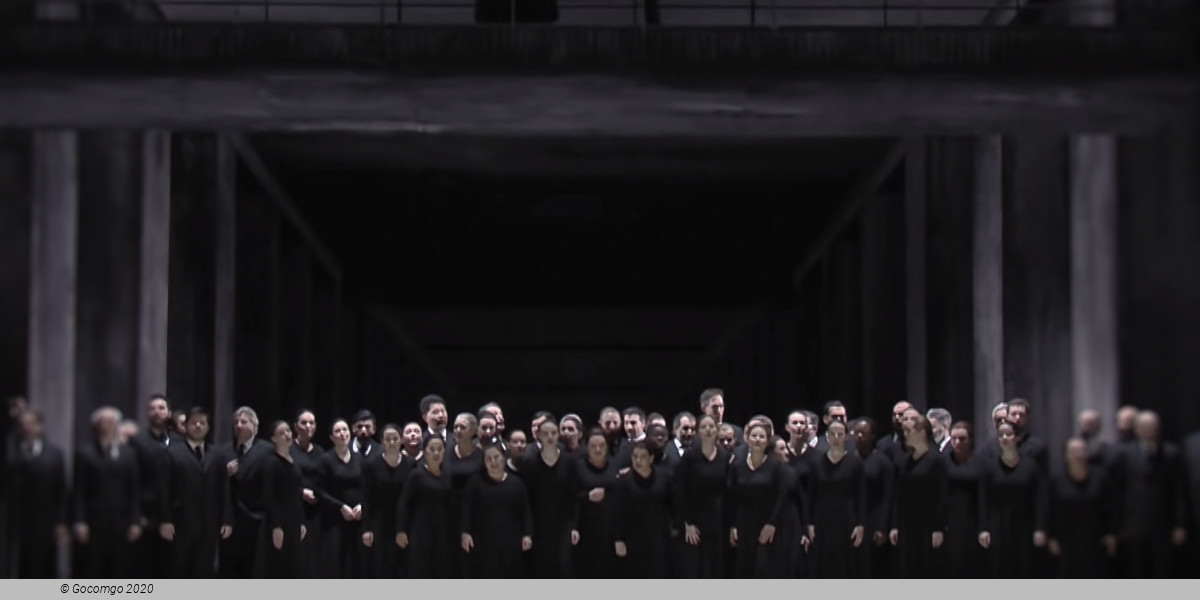
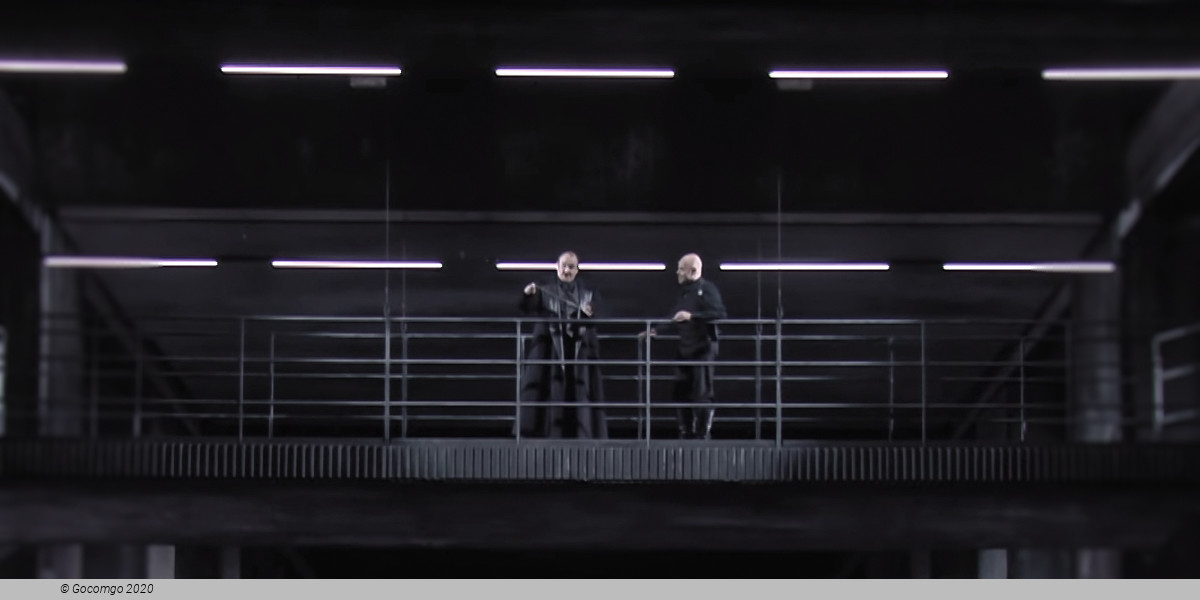
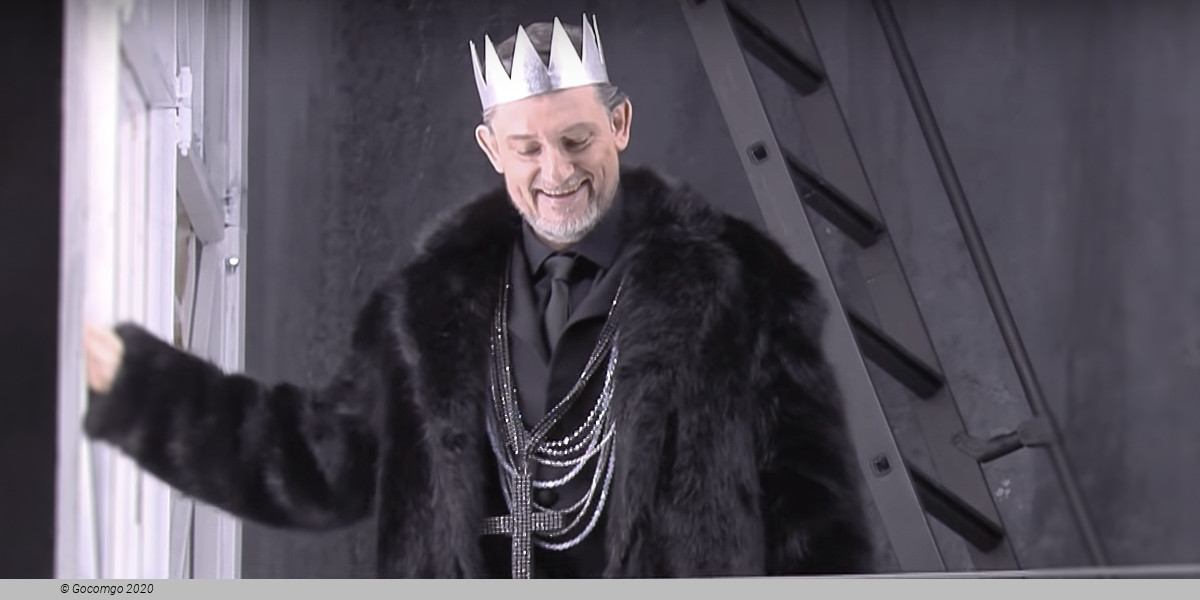
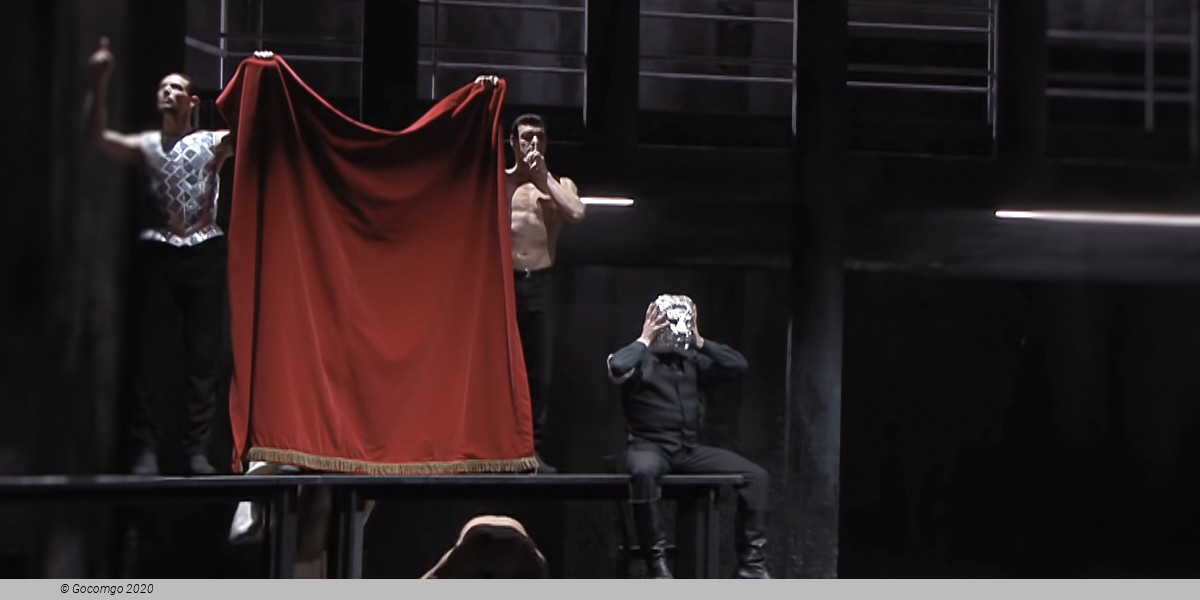
Although unusual and difficult to classify, Ponchielli’s spectacular opera is always felt to be a special event by opera lovers. The libretto by Tovia Gorrio, nom de plume of Arrigo Boito, drawing on Victor Hugo’s prose, sketches a dark and mysterious Venice, theatre of passional excesses and crimes, which is perfectly mirrored by the composer’s generous and captivating melodic vein. A historical fresco with Scapigliatura overtones featuring six protagonists, one for each voice type.

History
Premiere of this production: 08 April 1876, Teatro alla Scala, Milan

La Gioconda is an opera in four acts by Amilcare Ponchielli set to an Italian libretto by Arrigo Boito (as Tobia Gorrio), based on Angelo, Tyrant of Padua, a play in prose by Victor Hugo, dating from 1835. (This is the same source as Gaetano Rossi had used for his libretto for Mercadante's Il giuramento in 1837).

Synopsis

The opera's title translates as The Happy Woman, but is usually given in English as The Ballad Singer. However, as this fails to convey the irony inherent in the original, the Italian is usually used. Each act of La Gioconda has a title.

Place: Venice
Time: 17th century
The story revolves around a woman, Gioconda, who so loves her mother that when Laura, her rival in love for the heart of Enzo, saves her mother's life, Gioconda puts aside her own romantic love to repay her. The villain Barnaba tries to seduce Gioconda, but she prefers death.

Act 1 The Lion's Mouth

The courtyard of the Doge's Palace

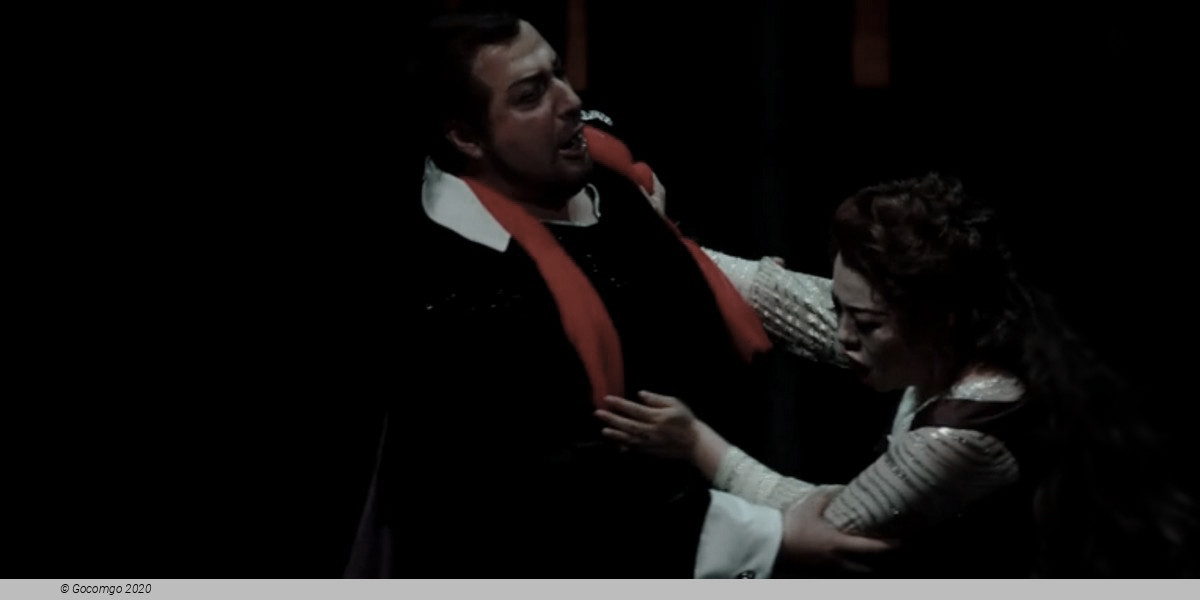
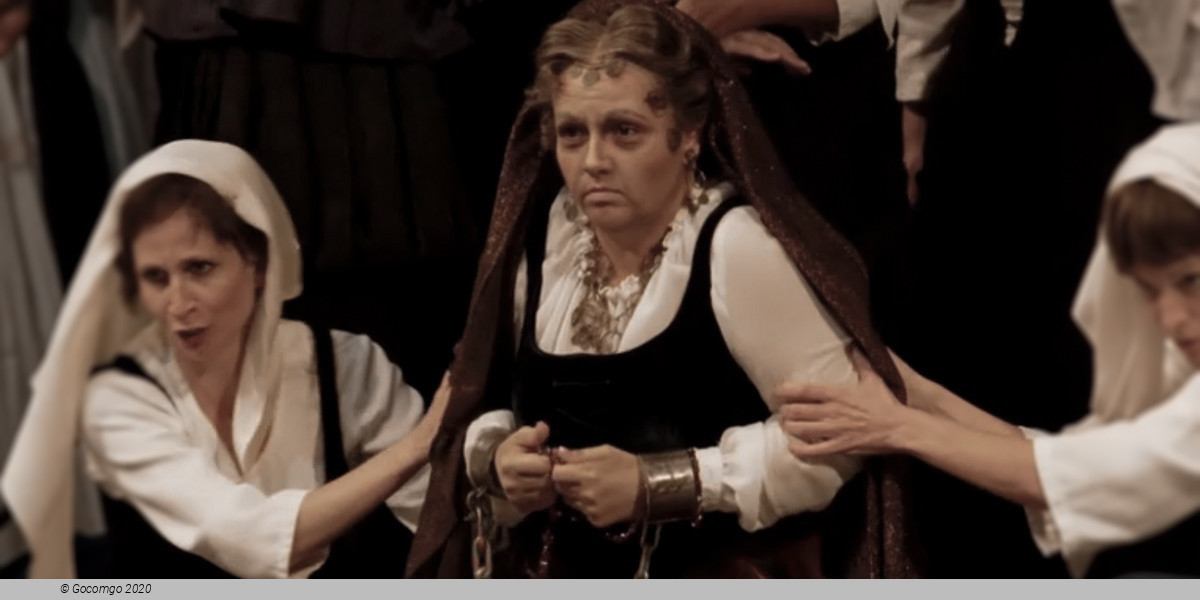
During Carnival celebrations before Lent, while everyone else is preoccupied with a regatta, Barnaba, a state spy, lustfully watches La Gioconda as she leads her blind mother, La Cieca, across the Square. When his amorous advances are firmly rejected, he exacts his revenge by denouncing the old lady as a witch whose evil powers influenced the outcome of the gondola race. It is only the intervention of a young sea captain that keeps the angry mob at bay.

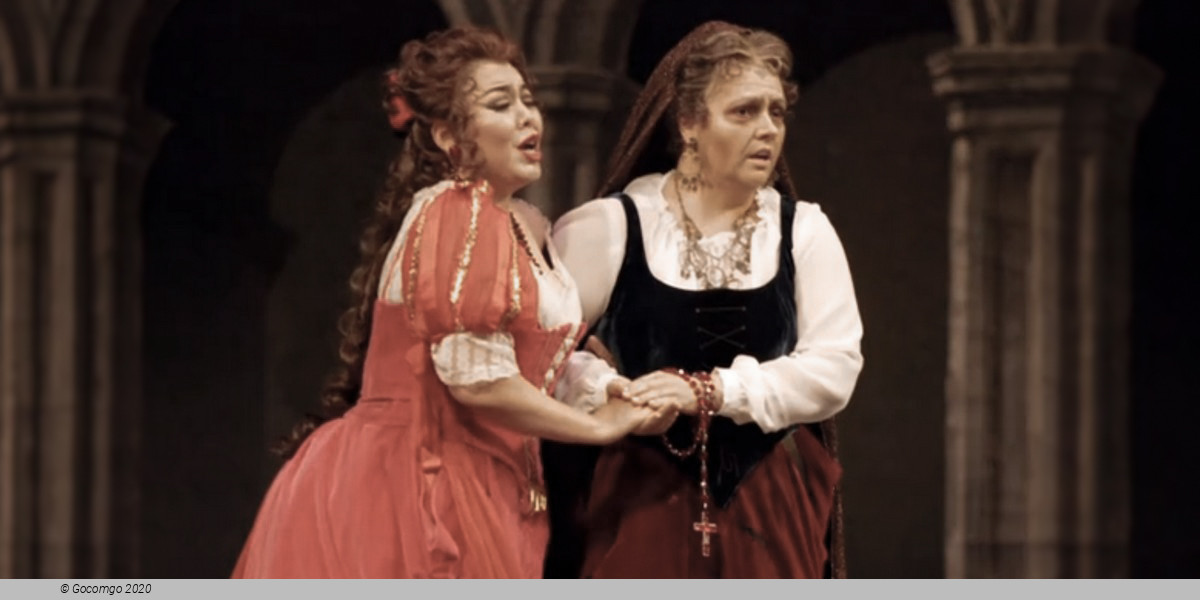
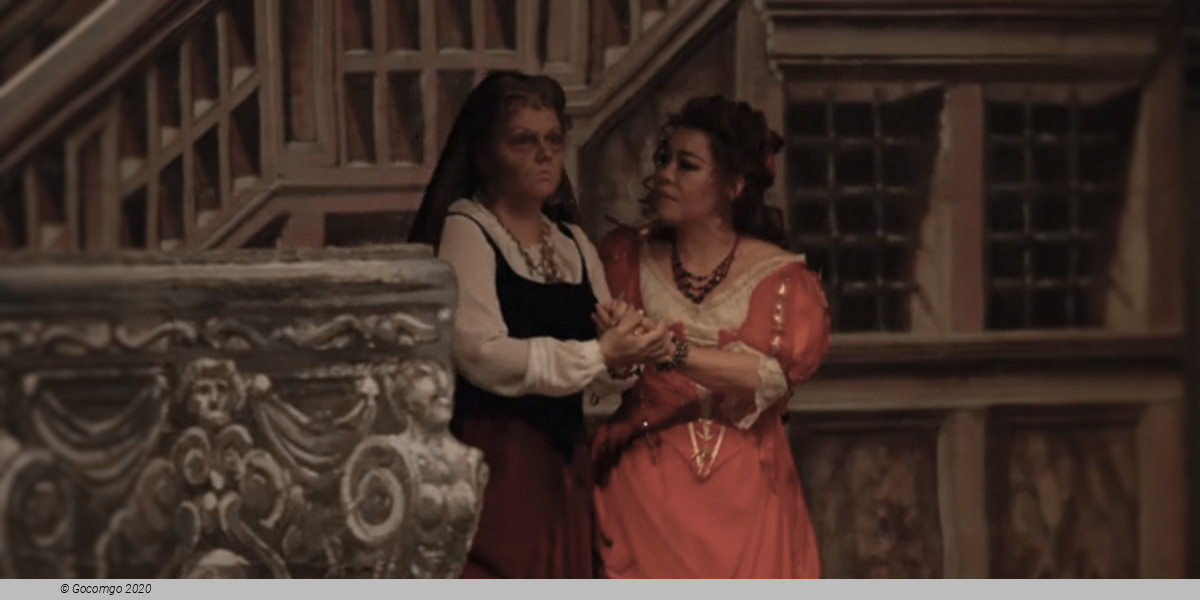
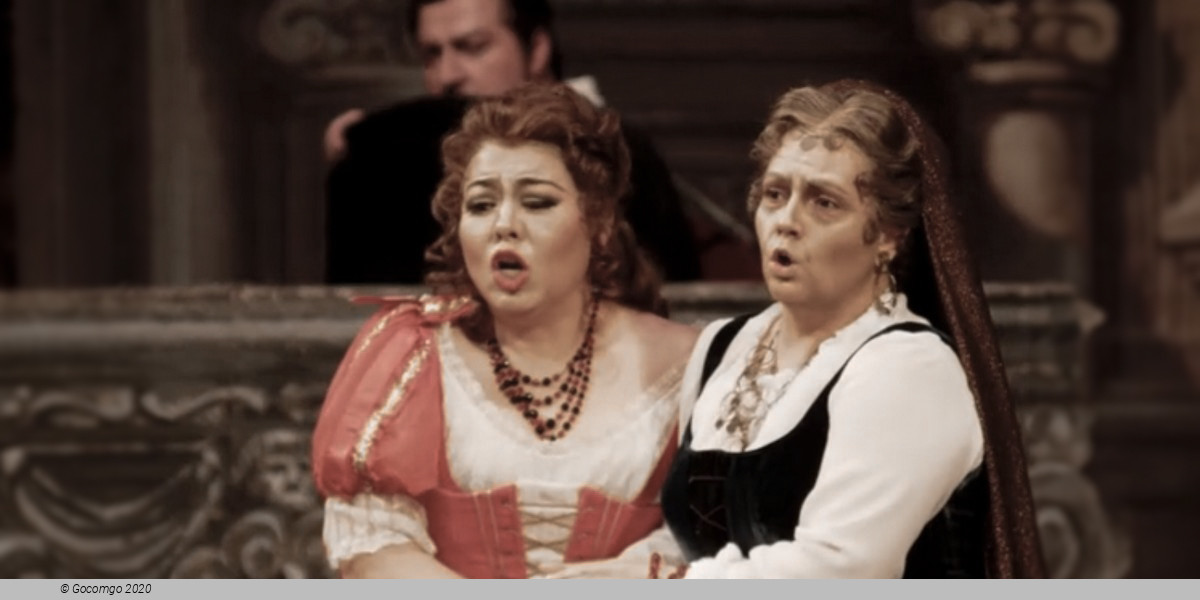
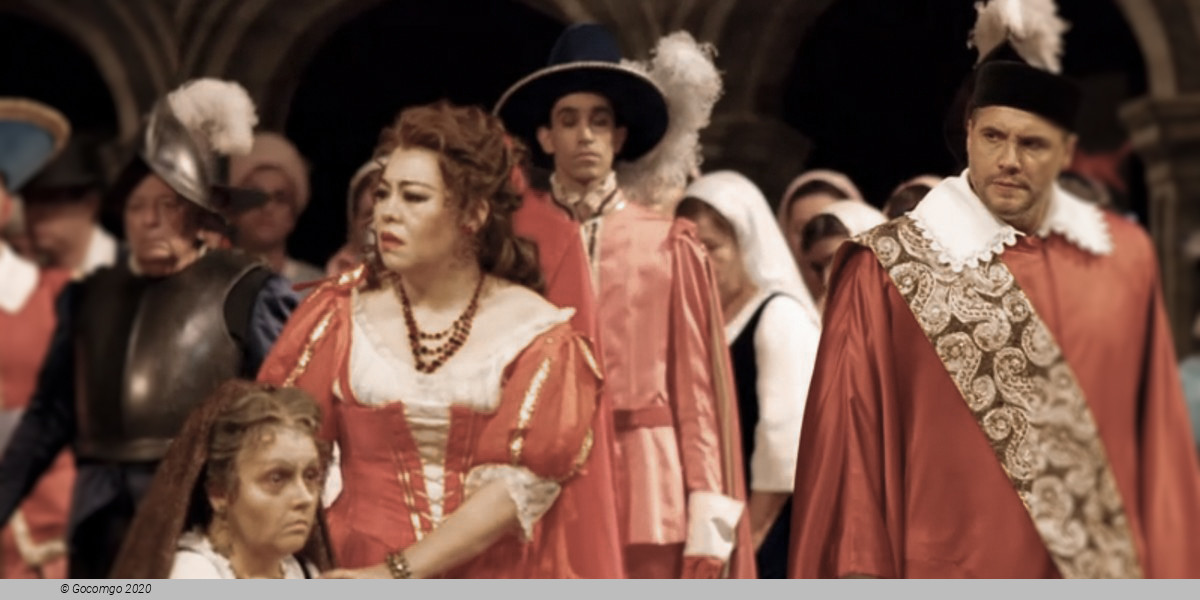
Calm is restored at the approach of Alvise Badoero, a member of the Venetian Inquisition, and his wife, Laura. Laura places La Cieca under her personal protection, and in gratitude the old woman presents her with her most treasured possession, a rosary. The sharp-eyed Barnaba notices furtive behaviour between Laura and the sea captain indicating a secret relationship. Recalling that Laura was engaged to the now banished nobleman Enzo Grimaldo before her forced marriage to Alvise, Barnaba realises that the sea captain is Enzo in disguise.

Barnaba confronts Enzo, who admits his purpose in returning to Venice is to take Laura and begin a new life elsewhere. Barnaba knows that Gioconda is also infatuated with Enzo and he sees an opportunity to improve his chances with her by assisting Enzo with his plan of elopement.

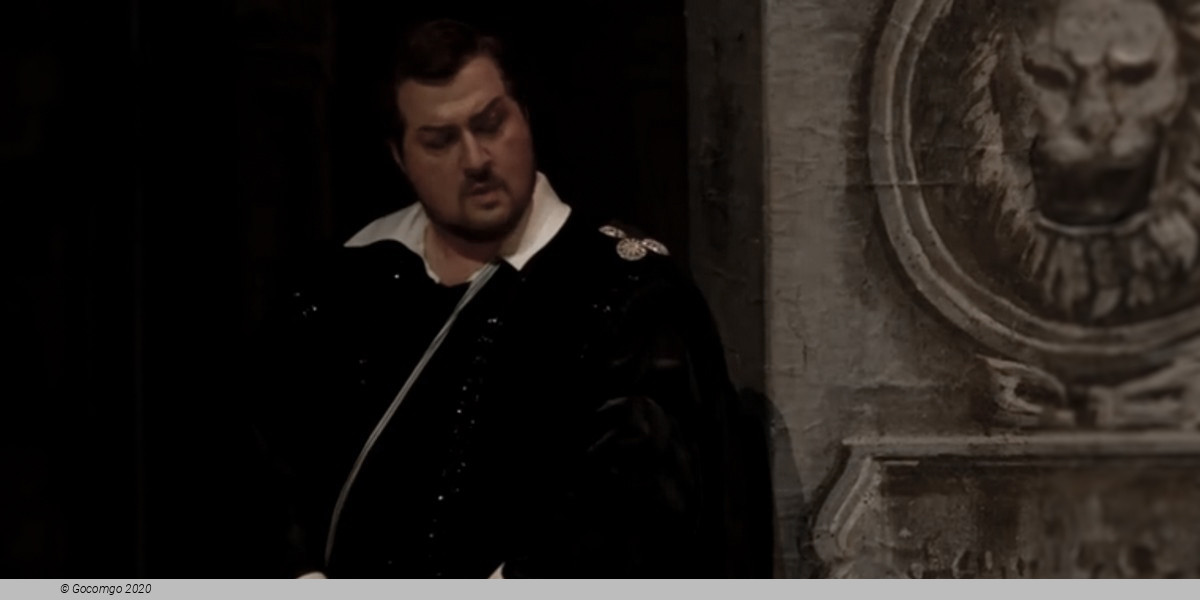
When Enzo has gone, Barnaba dictates a letter to Alvise revealing his wife's infidelity and the lovers' plan of escape. He is unaware that he has been overheard by Gioconda. The act ends with Barnaba dropping the letter into the Lion's Mouth, where all secret information for the Inquisition is posted, while Gioconda laments Enzo's perceived treachery, and the crowd returns to its festivities.

Act 2 The Rosary

The deck of Enzo's ship

Enzo waits for Barnaba to row Laura out from the city to his vessel. Their joyful reunion is overshadowed by Laura's fears as she does not trust Barnaba. Gradually Enzo is able to reassure her, and he leaves her on deck while he goes to prepare for their departure.

La Gioconda has been following Laura with the intention of exacting revenge from her rival. Alvise and his armed men are also in hot pursuit, but as Gioconda is about to stab Laura she sees her mother's rosary hanging round her neck and has an instant change of heart. She hurries Laura into her boat so that she can evade her pursuers.

Enzo returns to the deck to find that Laura has fled leaving Gioconda triumphant. Furthermore, Alvise's men are rapidly approaching. He sets fire to the ship rather than let it fall into the hands of his enemies before diving into the lagoon.

Act 3 The Ca' d'Oro (House of Gold)

Alvise's palace

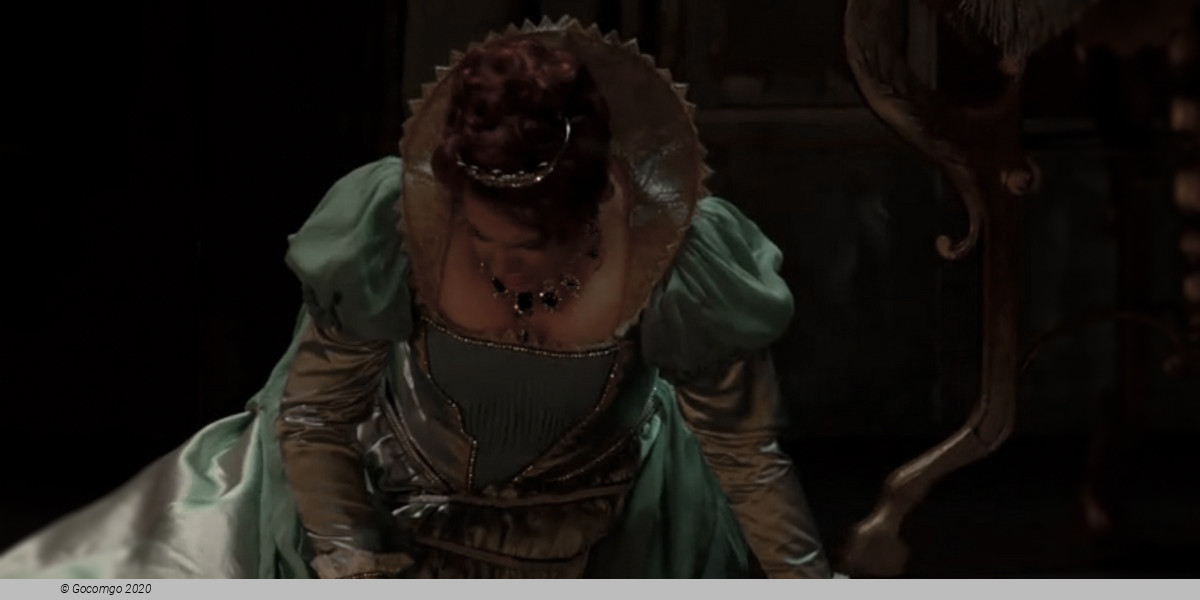
Laura has been captured, and her vengeful husband insists she must die by poisoning herself (effectively committing suicide and condemning herself to Hell). Once again Gioconda has followed and has found her way into the palace, this time with the intention of saving her rival. Finding Laura alone Gioconda replaces the phial of poison with a powerful drug which creates the appearance of death. The second scene begins with Alvise welcoming his fellow members of the nobility to the palace; Barnaba and Enzo are amongst those present. Lavish entertainment is provided and the act ends with the famous ballet Dance of the Hours. The mood of revelry is shattered as a funeral bell begins to toll and the body of Laura is revealed awaiting burial. A distraught Enzo flings off his disguise and is promptly seized by Alvise's men.

Act 4 The Orfano Canal

A crumbling ruin on the island of Giudecca

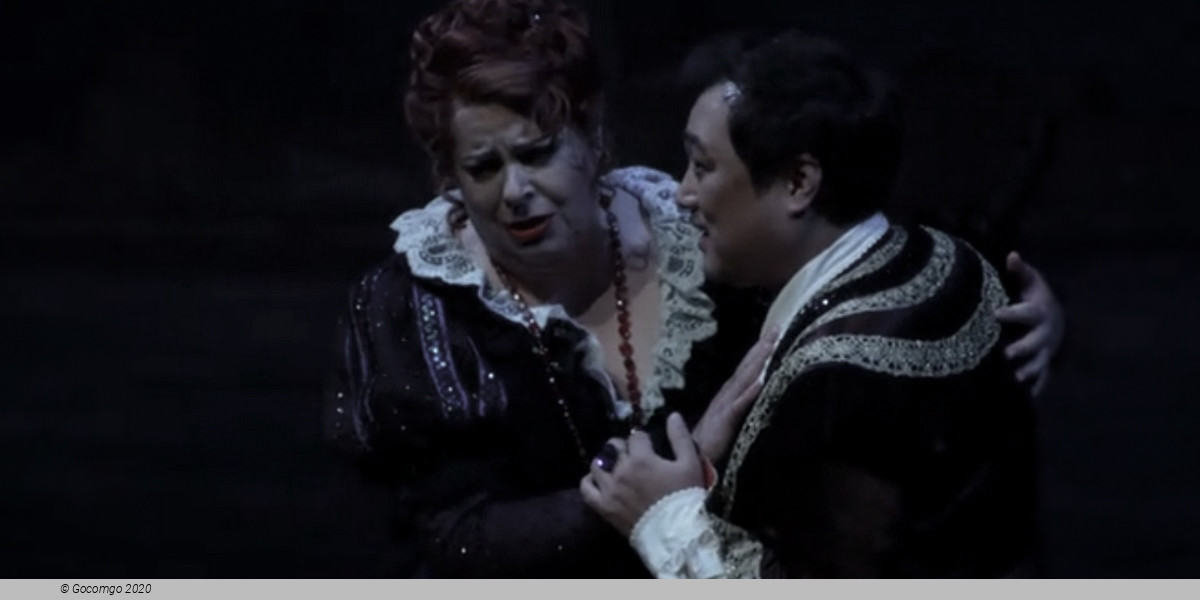
In exchange for Enzo's release from prison, La Gioconda has agreed to give herself to Barnaba. When Enzo is brought in, he is initially furious when Gioconda reveals that she has had Laura's body brought from its tomb. He is about to stab her when Laura's voice is heard and Gioconda's part in reuniting the lovers becomes clear. Enzo and Laura make their escape, leaving La Gioconda to face the horrors awaiting her with Barnaba. The gondoliers' voices are heard in the distance telling that there are corpses floating in the city. When Gioconda tries to leave, she is caught by Barnaba. She then pretends to welcome his arrival, but under cover of decking herself in her jewellery, seizes a dagger and stabs herself to death. In frustrated rage Barnaba tries to perpetrate one last act of evil, screaming at the lifeless body "Last night your mother offended me. I drowned her!"

Famous arias and excerpts
"Voce di donna o d'angelo" (La Cieca)
"O monumento" (Barnaba)
"Cielo e mar" (Enzo)
"Stella del Marinar" (Laura)
"E un anatema!... L'amo come il fulgor creato" (duet Gioconda with Laura)
"Si! Morir ella de!" (Alvise)
Dance of the Hours
"Suicidio!" (Gioconda)
"Ora posso morir... Vo' farmi più gaia" (final duet Gioconda with Barnaba)

Venue Info

Teatro Alla Scala - Milan
Location   Via Filodrammatici, 2

Teatro Alla Scala is an opera house in Milan. Most of Italy's greatest operatic artists, and many of the finest singers from around the world, have appeared at La Scala. The theatre is regarded as one of the leading opera and ballet theatres globally. It is home to the La Scala Theatre Chorus, La Scala Theatre Ballet, La Scala Theatre Orchestra, and the Filarmonica della Scala orchestra.

The Teatro alla Scala was founded, under the auspices of the Empress Maria Theresa of Austria, to replace the Royal Ducal Theatre, which was destroyed by fire on 26 February 1776 and had until then been the home of opera in Milan. The cost of building the new theatre was borne by the owners of the boxes at the Ducal, in exchange for possession of the land on which stood the church of Santa Maria alla Scala (hence the name) and for renewed ownership of their boxes. Designed by the great neoclassical architect Giuseppe Piermarini, La Scala opened on 3 August 1778 with Antonio Salieri's opera L'Europa riconosciuta, to a libretto by Mattia Verazi.

With the advent of Rossini in 1812 (La pietra del paragone), the Teatro alla Scala was to become the appointed place of Italian opera seria: of its history dating back more than a century and of its subsequent tradition up till the present. The catalogue of Rossini's works performed until 1825 included: Il turco in Italia, La Cenerentola, Il barbiere di Siviglia, La donna del lago, Otello, Tancredi, Semiramide and Mosé. During that period the choreographies of Salvatore Viganò (1769-181) and of Carlo Blasis (1795-1878) also widened the theatre's artistic supremacy to include ballet.

An exceptional new season of serious opera opened between 1822 and 1825, with Chiara e Serafina by Gaetano Donizetti (1797-1848) and Il pirata by Vincenzo Bellini (1801-1835). The later operas of Donizetti performed at La Scala were (until 1850) Anna Bolena, Lucrezia Borgia, Torquato Tasso, La fille du régiment, La favorita, Linda di Chamonix, Don Pasquale, and Poliuto. These were followed (until 1836) by Bellini's I Capuleti e i Montecchi, Norma, La sonnambula, Beatrice di Tenda and I puritani.

In 1839 Oberto Conte di San Bonifacio inaugurated the cycle of operas by Giuseppe Verdi (1813-1901), the composer whose name is linked more than any other to the history of La Scala. After the dismal failure of Un giorno di regno, Nabucco was performed in 1842. It was the first, decisive triumph of Verdi's career. At the same time, the strong patriotic feelings stirred by Nabucco founded the "popularity" of opera seria and identified its image with the Scala.

Arturo Toscanini (1867-1957) became the artistic director and introduced radical reform into the theatre, both in its organisational aspects and in its relations with the public. Toscanini, one of the greatest conductors of all time, took up Verdi's musical inheritance and launched a tradition of interpretation that continued uninterruptedly and was renewed during the twentieth century. It was he who reappraised and regularly performed at the Scala the works of Richard Wagner (hitherto only belatedly and inadequately recognised). He also firmly extended the Scala's orchestral repertoire to include symphonic music.

In 1948 maestro Guido Cantelli (1920-1956) made his debut and established himself as one of the leading postwar conductors. Numerous opera performances productions (the Wagnerian cycle conducted in 1950 by Wilhelm Furtwängler, the Verdi repertoire by Victor De Sabata, etc), concerts (Herbert von Karajan, Dimitri Mitropoulos, Bruno Walter, etc), singers (Maria Callas, Renata Tebaldi, Giuseppe Di Stefano, Mario Del Monaco, etc), ballet performances (Margot Fonteyn, Serge Lifar, Maya Plissetskaya, Rudolf Nureyev), and productions (Luchino Visconti, Giorgio Strehler) belong not only to the history of the Scala, but to that of the history of musical theatre since the war.

In 1965 Claudio Abbado made his début at the Scala and in 1972 was named conductor of the Scala Orchestra. Until 1986 he directed among other works Il barbiere di Siviglia, Cenerentola, L'Italiana in Algeri by Rossini, Simon Boccanegra, Macbeth and Don Carlo by Verdi, the recent Al gran sole carico d'amore by Luigi Nono, and Pelléas et Mélisande by Claude Debussy. He also conducted numerous concerts. The chorus-master was Romano Gandolfi. In 1975 the ballet dancer Oriella Dorella debuted at La Scala. Among other contemporary composers, up till 1986 the Theatre continued to give works by Luciano Berio (La vera storia), Franco Donatoni (Atem) and Karlheinz Stockhausen (Samstag aus Licht).

In 1981 Riccardo Muti debuted at the Scala as an opera conductor (Mozart, Le nozze di Figaro). Giulio Bertola was appointed to direct the Chorus. In 1982 the Orchestra Filarmonica della Scala was established. In 1985 Alessandra Ferri made her debut at the Scala. In 1986 Riccardo Muti was appointed musical director. From 1989 to 1998 he reintroduced the best-loved works (Rigoletto, La traviata, Macbeth, La forza del destino) and numerous other titles by Verdi including Falstaff and Don Carlo.

In 1991 Roberto Gabbiani took over the directorship of the chorus. In 1997 La Scala was converted into a Foundation under private ownership, thus opening a decisive phase of modernisation.

On 7 December 2001 a new production of Otello, conducted by Muti, concluded the Verdi Year and, for the time being, performances at Piermarini’s original building in Piazza Scala. Major restoration and modernisation works of the Theatre began in January 2002.

The 2005-2006 Season, dedicated to the 250th anniversary of Mozart’s birth, was inaugurated by Idomeneo conducted by Daniel Harding. The 2006/07 season saw the return on 7 December of an opera by Verdi, Aida, conducted by Riccardo Chailly, and the launch of the Celebrations for the 50th Anniversary of Arturo Toscanini’s Death. On 7 December 2007 the 2007/08 season opened with Tristan und Isolde conducted by Daniel Barenboim. The opera marked the beginning of a closer collaboration between the Teatro alla Scala and the Israeli-Argentinian Maestro.

Important Info
Type: Opera
City: Milan, Italy
Starts at: 19:30
Duration: 3h 40min
Top of page