
Teatro Alla Scala 15 November 2019 - Die Ägyptische Helena | GoComGo.com

Die Ägyptische Helena

Teatro Alla Scala, Milan, Italy
All photos (4)
Select date and time
8 PM
Request for Tickets
Important Info
Type: Opera
City: Milan, Italy
Starts at: 20:00
Acts: 2
Duration:

E-tickets: Print at home or at the box office of the event if so specified. You will find more information in your booking confirmation email.

You can only select the category, and not the exact seats.
If you order 2 or 3 tickets: your seats will be next to each other.
If you order 4 or more tickets: your seats will be next to each other, or, if this is not possible, we will provide a combination of groups of seats (at least in pairs, for example 2+2 or 2+3).

Overview

Teatro alla Scala New Production

First performance at Teatro alla Scala

Notes on the performance

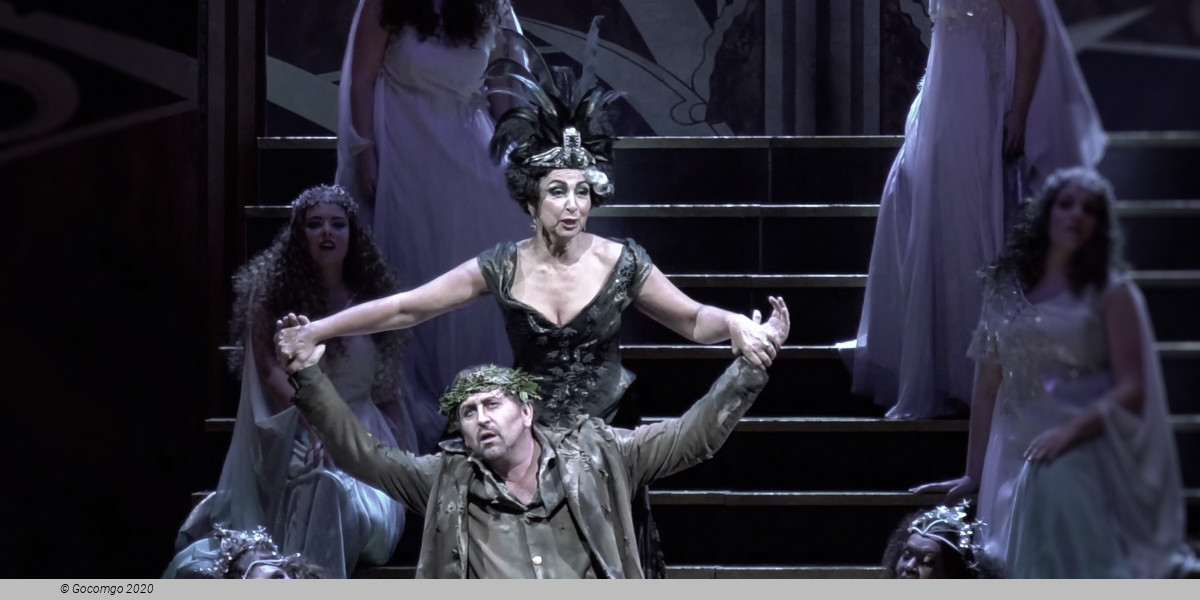
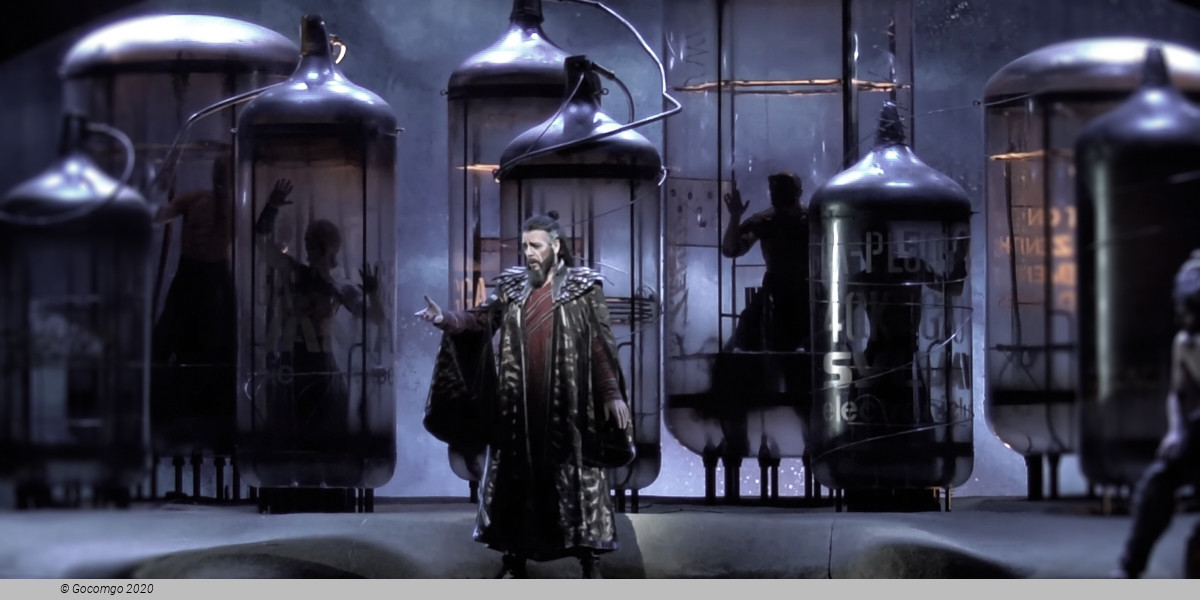
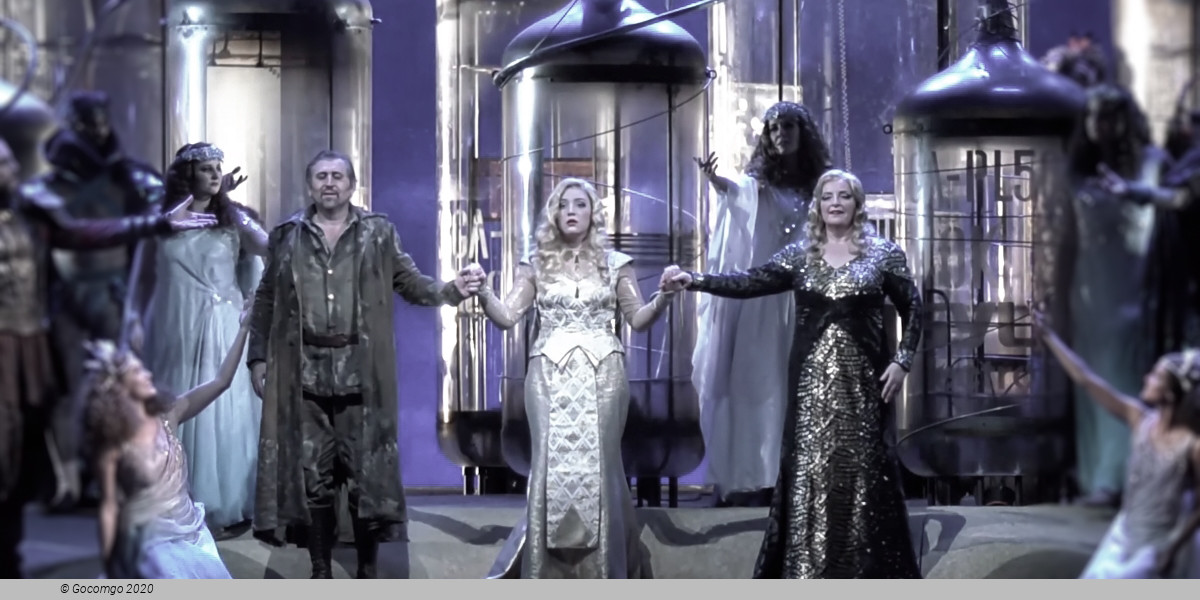
For Die ägyptische Helena, performed for the first time at the Semperoper in Dresden in 1928 but never staged at La Scala until now, Richard Strauss and Hugo von Hofmannstahl drew upon Euripides and Stesichorus, creating a luscious fantasy in which characters of the classical tradition move against an exotic and fairy-tale background. The story of Helen, who escapes the wrath of the betrayed Menelaus thanks to the nymph Aithra, who convinces him that only the phantom of his wife has been taken to Troy while she has stayed safely in Egypt, offers Strauss a wealth of inspiration for this incredibly rich, imaginative score.

History
Premiere of this production: 06 June 1928, Semperoper, Dresden

Die ägyptische Helena (The Egyptian Helen), Op. 75, is an opera in two acts by Richard Strauss to a German libretto by Hugo von Hofmannsthal. It premiered at the Dresden Semperoper on 6 June 1928. Strauss had written the title role with Maria Jeritza in mind but, creating quite a sensation at the time, the Dresden opera management refused to pay Jeritza's large fee and cast Elisabeth Rethberg instead as Helen of Troy. Jeritza eventually created the part in Vienna and New York City.

As inspiration for the story, Hofmannsthal used sources from Euripides (Helen). Strauss made changes to the opera in 1933, five years after the premiere, working with the director Lothar Wallenstein and the conductor Clemens Krauss.

Synopsis

Act 1

The mythological past

In her island palace, the sorceress Aithra waits in vain for Poseidon's return. The oracle-like Omniscient Mussel tells her that though Poseidon is far away, he remains steadfast in his love for her. The Mussel then tells of a ship on which the most beautiful woman in the world, Helena (Helen of Troy), is about to be murdered by her husband, Menelas (Menelaus). To save the woman, Aithra conjures a flash storm to shipwreck the passengers, who soon make their way ashore and appear at the palace. Helena has been trying to save her marriage, but Menelas cannot forgive her for her betrayal with Paris at the start of the Trojan War. Bitterly, he has prevented their daughter, Hermione, from knowing her own mother. On land, Menelas once again plans to stab his wife, but the sight of her beauty by moonlight makes him hesitate. To ensure that he doesn't kill her, Aithra invokes elves to torment him; they make him believe that his rival, Paris, is present, and he rushes out to confront the specter. Aithra's magic then helps Helena regain her original youthful beauty, and a lotus drink banishes her anxiety. Servant girls take her to another room.

When Menelas stumbles back in, raving about having surprised and killed Helena and Paris, Aithra gives him the soothing drink as well. Hearing of his conflicted emotions toward his wife, the sorceress tries to tell him that nine years before, when he lost Helena to Paris, the gods actually substituted a wraith to fool Paris; the real Helena was hidden in the castle of Aithra's father on the slopes of the Atlas Mountains. There she remains, asleep, waiting for her husband to wake her; the woman in the next room is the wraith. Aithra pledges to transport Menelas by magic to the castle. Bewildered and hesitant, he gradually yields to the notion that the original Helena will be restored to him. In a pavilion at the foot of the mountain, the two can be reunited. Aithra suggests he use the lotus potion to keep disturbing memories at bay.

Act 2

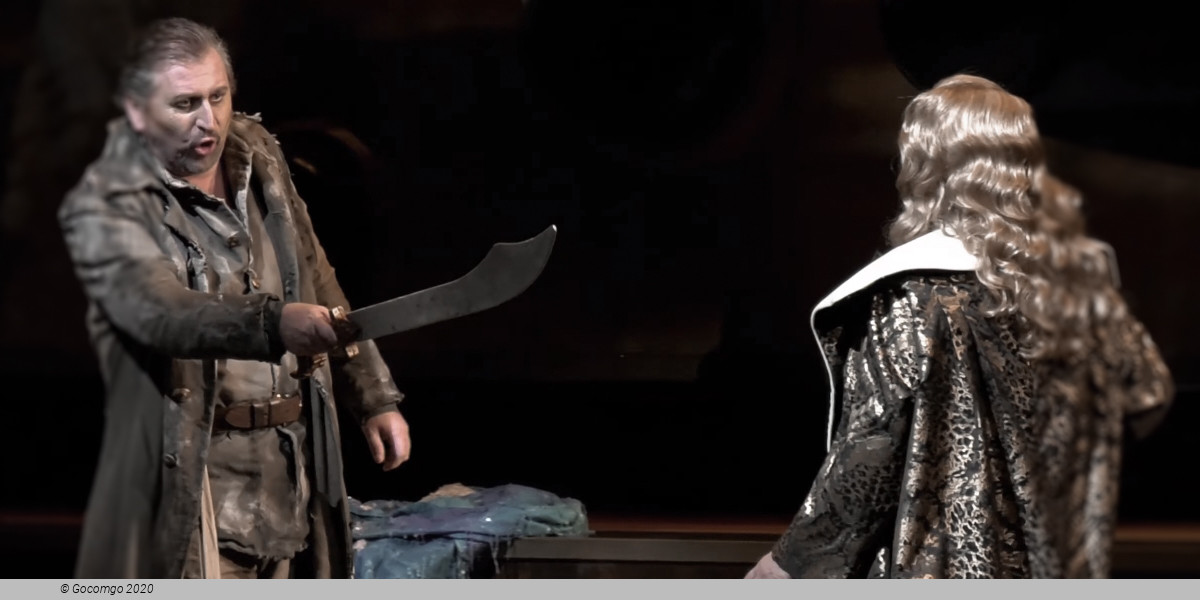
In the pavilion, Helena awakens and hails the couple's second wedding night (“Zweite Brautnacht”). Menelas, also awakening, still mistrusts his senses. His wife tries to soothe him with more lotus juice, but he catches sight of his sword, which revives jarring memories. Is this woman real or an illusion? Desert horsemen appear, and Altair, prince of the mountains, bows before Helena, offering gifts; his son Da-ud joins in praising her beauty. The scene reminds Menelas of a Trojan celebration in honor of Helena, but he tries to conceal his jealousy as Altair and Da-ud invite him to join a hunting party. Bidding farewell to Helena, and still uncertain of her identity, he leaves for the hunt. Aithra appears as one of the serving girls and cautions Helena that one of the vials she has packed contains a potion of forgetfulness but the other a potion of recollection. Against Aithra's strong advice Helena declares that recollection will be necessary to save her marriage; the fantasy of returning to an unblemished past is not a genuine solution.

At a sign from Helena, the maidservants withdraw when Altair returns, paying bold court to her and inviting her to a banquet in her honor. Even when word arrives that Menelas has killed Da-ud during the hunt, Altair continues his suit. He steps away, though, when the youth's body is brought in, followed by Menelas, who remains confused, thinking it is Paris he has killed. Again defying Aithra's counsel, Helena orders the potion of recollection prepared as time for the feast draws near. Menelas now imagines that the real Helena has died, and he resolves to join her in death; the Helena before him is surely the wraith. When he takes what he thinks is the potion of death, however, he sees the dead Helena as the living one: both are united. Altair and his cohorts seize and separate the couple, but Aithra reveals a phalanx of Poseidon's soldiers, who are escorting the child Hermione. Recognizing Aithra the sorceress, Altair bows to her power. Hermione, reunited at last with her parents, will go home with them to begin their life together.

Act 1

The mythological past

In her island palace, the sorceress Aithra waits in vain for Poseidon's return. The oracle-like Omniscient Mussel tells her that though Poseidon is far away, he remains steadfast in his love for her. The Mussel then tells of a ship on which the most beautiful woman in the world, Helena (Helen of Troy), is about to be murdered by her husband, Menelas (Menelaus). To save the woman, Aithra conjures a flash storm to shipwreck the passengers, who soon make their way ashore and appear at the palace. Helena has been trying to save her marriage, but Menelas cannot forgive her for her betrayal with Paris at the start of the Trojan War. Bitterly, he has prevented their daughter, Hermione, from knowing her own mother. On land, Menelas once again plans to stab his wife, but the sight of her beauty by moonlight makes him hesitate. To ensure that he doesn't kill her, Aithra invokes elves to torment him; they make him believe that his rival, Paris, is present, and he rushes out to confront the specter. Aithra's magic then helps Helena regain her original youthful beauty, and a lotus drink banishes her anxiety. Servant girls take her to another room.

When Menelas stumbles back in, raving about having surprised and killed Helena and Paris, Aithra gives him the soothing drink as well. Hearing of his conflicted emotions toward his wife, the sorceress tries to tell him that nine years before, when he lost Helena to Paris, the gods actually substituted a wraith to fool Paris; the real Helena was hidden in the castle of Aithra's father on the slopes of the Atlas Mountains. There she remains, asleep, waiting for her husband to wake her; the woman in the next room is the wraith. Aithra pledges to transport Menelas by magic to the castle. Bewildered and hesitant, he gradually yields to the notion that the original Helena will be restored to him. In a pavilion at the foot of the mountain, the two can be reunited. Aithra suggests he use the lotus potion to keep disturbing memories at bay.

Act 2

In the pavilion, Helena awakens and hails the couple's second wedding night (“Zweite Brautnacht”). Menelas, also awakening, still mistrusts his senses. His wife tries to soothe him with more lotus juice, but he catches sight of his sword, which revives jarring memories. Is this woman real or an illusion? Desert horsemen appear, and Altair, prince of the mountains, bows before Helena, offering gifts; his son Da-ud joins in praising her beauty. The scene reminds Menelas of a Trojan celebration in honor of Helena, but he tries to conceal his jealousy as Altair and Da-ud invite him to join a hunting party. Bidding farewell to Helena, and still uncertain of her identity, he leaves for the hunt. Aithra appears as one of the serving girls and cautions Helena that one of the vials she has packed contains a potion of forgetfulness but the other a potion of recollection. Against Aithra's strong advice Helena declares that recollection will be necessary to save her marriage; the fantasy of returning to an unblemished past is not a genuine solution.

At a sign from Helena, the maidservants withdraw when Altair returns, paying bold court to her and inviting her to a banquet in her honor. Even when word arrives that Menelas has killed Da-ud during the hunt, Altair continues his suit. He steps away, though, when the youth's body is brought in, followed by Menelas, who remains confused, thinking it is Paris he has killed. Again defying Aithra's counsel, Helena orders the potion of recollection prepared as time for the feast draws near. Menelas now imagines that the real Helena has died, and he resolves to join her in death; the Helena before him is surely the wraith. When he takes what he thinks is the potion of death, however, he sees the dead Helena as the living one: both are united. Altair and his cohorts seize and separate the couple, but Aithra reveals a phalanx of Poseidon's soldiers, who are escorting the child Hermione. Recognizing Aithra the sorceress, Altair bows to her power. Hermione, reunited at last with her parents, will go home with them to begin their life together.

Venue Info

Teatro Alla Scala - Milan
Location   Via Filodrammatici, 2

Teatro Alla Scala is an opera house in Milan. Most of Italy's greatest operatic artists, and many of the finest singers from around the world, have appeared at La Scala. The theatre is regarded as one of the leading opera and ballet theatres globally. It is home to the La Scala Theatre Chorus, La Scala Theatre Ballet, La Scala Theatre Orchestra, and the Filarmonica della Scala orchestra.

The Teatro alla Scala was founded, under the auspices of the Empress Maria Theresa of Austria, to replace the Royal Ducal Theatre, which was destroyed by fire on 26 February 1776 and had until then been the home of opera in Milan. The cost of building the new theatre was borne by the owners of the boxes at the Ducal, in exchange for possession of the land on which stood the church of Santa Maria alla Scala (hence the name) and for renewed ownership of their boxes. Designed by the great neoclassical architect Giuseppe Piermarini, La Scala opened on 3 August 1778 with Antonio Salieri's opera L'Europa riconosciuta, to a libretto by Mattia Verazi.

With the advent of Rossini in 1812 (La pietra del paragone), the Teatro alla Scala was to become the appointed place of Italian opera seria: of its history dating back more than a century and of its subsequent tradition up till the present. The catalogue of Rossini's works performed until 1825 included: Il turco in Italia, La Cenerentola, Il barbiere di Siviglia, La donna del lago, Otello, Tancredi, Semiramide and Mosé. During that period the choreographies of Salvatore Viganò (1769-181) and of Carlo Blasis (1795-1878) also widened the theatre's artistic supremacy to include ballet.

An exceptional new season of serious opera opened between 1822 and 1825, with Chiara e Serafina by Gaetano Donizetti (1797-1848) and Il pirata by Vincenzo Bellini (1801-1835). The later operas of Donizetti performed at La Scala were (until 1850) Anna Bolena, Lucrezia Borgia, Torquato Tasso, La fille du régiment, La favorita, Linda di Chamonix, Don Pasquale, and Poliuto. These were followed (until 1836) by Bellini's I Capuleti e i Montecchi, Norma, La sonnambula, Beatrice di Tenda and I puritani.

In 1839 Oberto Conte di San Bonifacio inaugurated the cycle of operas by Giuseppe Verdi (1813-1901), the composer whose name is linked more than any other to the history of La Scala. After the dismal failure of Un giorno di regno, Nabucco was performed in 1842. It was the first, decisive triumph of Verdi's career. At the same time, the strong patriotic feelings stirred by Nabucco founded the "popularity" of opera seria and identified its image with the Scala.

Arturo Toscanini (1867-1957) became the artistic director and introduced radical reform into the theatre, both in its organisational aspects and in its relations with the public. Toscanini, one of the greatest conductors of all time, took up Verdi's musical inheritance and launched a tradition of interpretation that continued uninterruptedly and was renewed during the twentieth century. It was he who reappraised and regularly performed at the Scala the works of Richard Wagner (hitherto only belatedly and inadequately recognised). He also firmly extended the Scala's orchestral repertoire to include symphonic music.

In 1948 maestro Guido Cantelli (1920-1956) made his debut and established himself as one of the leading postwar conductors. Numerous opera performances productions (the Wagnerian cycle conducted in 1950 by Wilhelm Furtwängler, the Verdi repertoire by Victor De Sabata, etc), concerts (Herbert von Karajan, Dimitri Mitropoulos, Bruno Walter, etc), singers (Maria Callas, Renata Tebaldi, Giuseppe Di Stefano, Mario Del Monaco, etc), ballet performances (Margot Fonteyn, Serge Lifar, Maya Plissetskaya, Rudolf Nureyev), and productions (Luchino Visconti, Giorgio Strehler) belong not only to the history of the Scala, but to that of the history of musical theatre since the war.

In 1965 Claudio Abbado made his début at the Scala and in 1972 was named conductor of the Scala Orchestra. Until 1986 he directed among other works Il barbiere di Siviglia, Cenerentola, L'Italiana in Algeri by Rossini, Simon Boccanegra, Macbeth and Don Carlo by Verdi, the recent Al gran sole carico d'amore by Luigi Nono, and Pelléas et Mélisande by Claude Debussy. He also conducted numerous concerts. The chorus-master was Romano Gandolfi. In 1975 the ballet dancer Oriella Dorella debuted at La Scala. Among other contemporary composers, up till 1986 the Theatre continued to give works by Luciano Berio (La vera storia), Franco Donatoni (Atem) and Karlheinz Stockhausen (Samstag aus Licht).

In 1981 Riccardo Muti debuted at the Scala as an opera conductor (Mozart, Le nozze di Figaro). Giulio Bertola was appointed to direct the Chorus. In 1982 the Orchestra Filarmonica della Scala was established. In 1985 Alessandra Ferri made her debut at the Scala. In 1986 Riccardo Muti was appointed musical director. From 1989 to 1998 he reintroduced the best-loved works (Rigoletto, La traviata, Macbeth, La forza del destino) and numerous other titles by Verdi including Falstaff and Don Carlo.

In 1991 Roberto Gabbiani took over the directorship of the chorus. In 1997 La Scala was converted into a Foundation under private ownership, thus opening a decisive phase of modernisation.

On 7 December 2001 a new production of Otello, conducted by Muti, concluded the Verdi Year and, for the time being, performances at Piermarini’s original building in Piazza Scala. Major restoration and modernisation works of the Theatre began in January 2002.

The 2005-2006 Season, dedicated to the 250th anniversary of Mozart’s birth, was inaugurated by Idomeneo conducted by Daniel Harding. The 2006/07 season saw the return on 7 December of an opera by Verdi, Aida, conducted by Riccardo Chailly, and the launch of the Celebrations for the 50th Anniversary of Arturo Toscanini’s Death. On 7 December 2007 the 2007/08 season opened with Tristan und Isolde conducted by Daniel Barenboim. The opera marked the beginning of a closer collaboration between the Teatro alla Scala and the Israeli-Argentinian Maestro.

Important Info
Type: Opera
City: Milan, Italy
Starts at: 20:00
Acts: 2
Duration:
Top of page