








Teatro Regio Torino 2 July 2020 - My Fair Lady | GoComGo.com

My Fair Lady

Teatro Regio Torino, Turin, Italy
All photos (6)
Select date and time
8 PM
Request for Tickets
Important Info
Type: Musical
City: Turin, Italy
Starts at: 20:00
Acts: 2
Intervals: 1
Duration: 3h
Sung in: English
Titles in: English,Italian

E-tickets: Print at home or at the box office of the event if so specified. You will find more information in your booking confirmation email.

You can only select the category, and not the exact seats.
If you order 2 or 3 tickets: your seats will be next to each other.
If you order 4 or more tickets: your seats will be next to each other, or, if this is not possible, we will provide a combination of groups of seats (at least in pairs, for example 2+2 or 2+3).

Overview

A wager resulting in love, an impossible love between teacher and student, against a background of bitter social contrasts and instances of female self-determination. On top of all this is the enthralling verve of one of the most famous and most performed musicals of all time.

History
Premiere of this production: Broadway

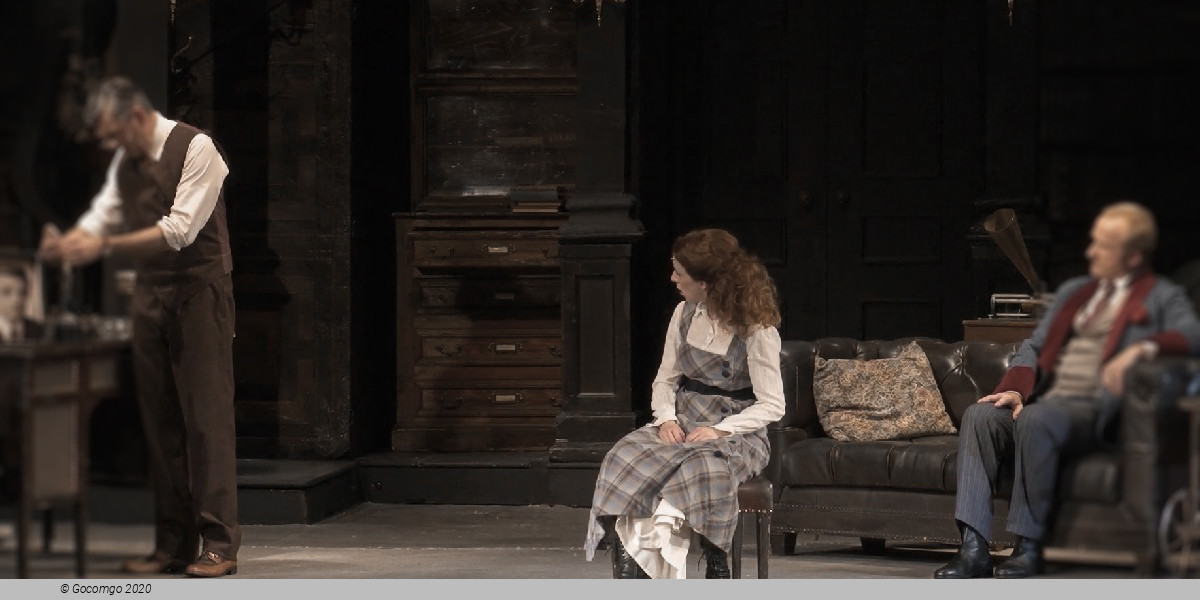
My Fair Lady is a musical based on George Bernard Shaw's Pygmalion, with book and lyrics by Alan Jay Lerner and music by Frederick Loewe. The story concerns Eliza Doolittle, a Cockney flower girl who takes speech lessons from professor Henry Higgins, a phoneticist, so that she may pass as a lady. The original Broadway and London shows starred Rex Harrison and Julie Andrews.

Synopsis

Act I

In Edwardian London, Eliza Doolittle is a Cockney flower girl with a thick, unintelligible accent. The noted phonetician Professor Henry Higgins encounters Eliza at Covent Garden and laments the vulgarity of her dialect ("Why Can't the English?"). Higgins also meets Colonel Pickering, another linguist, and invites him to stay as his houseguest. Eliza and her friends wonder what it would be like to live a comfortable life ("Wouldn't It Be Loverly?").

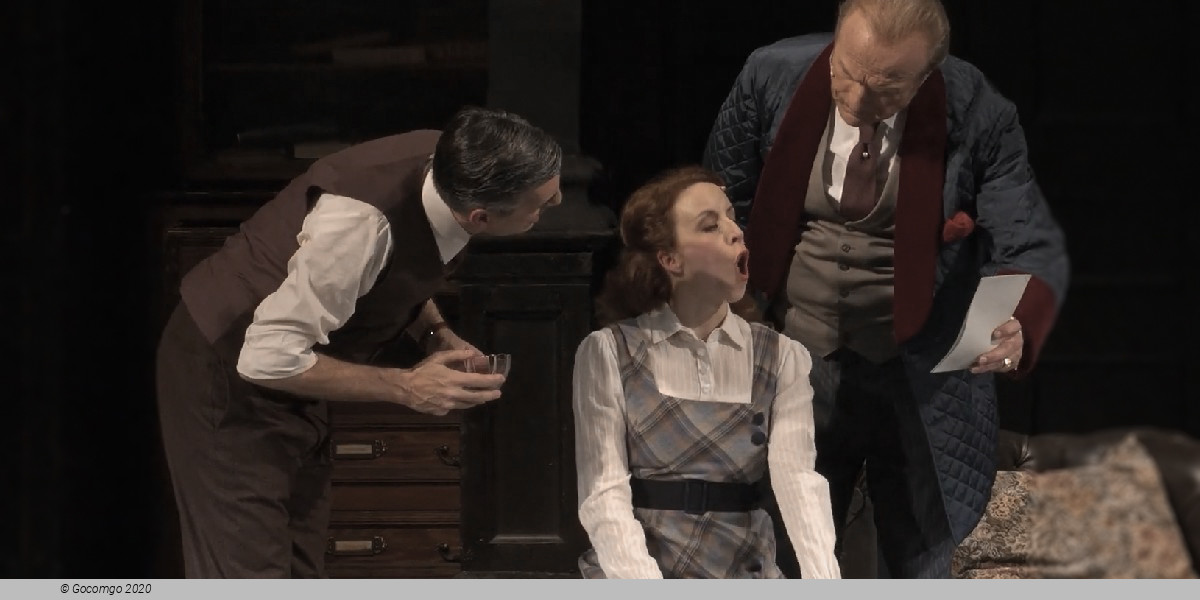
Eliza's father, Alfred P. Doolittle, stops by the next morning searching for money for a drink ("With a Little Bit of Luck"). Soon after, Eliza comes to Higgins's house, seeking elocution lessons so that she can get a job as an assistant in a florist's shop. Higgins wagers Pickering that, within six months, by teaching Eliza to speak properly, he will enable her to pass for a proper lady.

Eliza becomes part of Higgins's household. Though Higgins sees himself as a kindhearted man who merely cannot get along with women ("I'm an Ordinary Man"), to others he appears self-absorbed and misogynistic. Eliza endures Higgins's tyrannical speech tutoring. Frustrated, she dreams of different ways to kill him ("Just You Wait"). Higgins's servants lament the stressful atmosphere ("The Servants' Chorus").

Just as Higgins is about to give up on her, Eliza suddenly recites one of her diction exercises in perfect upper-class style ("The Rain in Spain"). Though Mrs Pearce, the housekeeper, insists that Eliza go to bed, she declares she is too excited to sleep ("I Could Have Danced All Night").

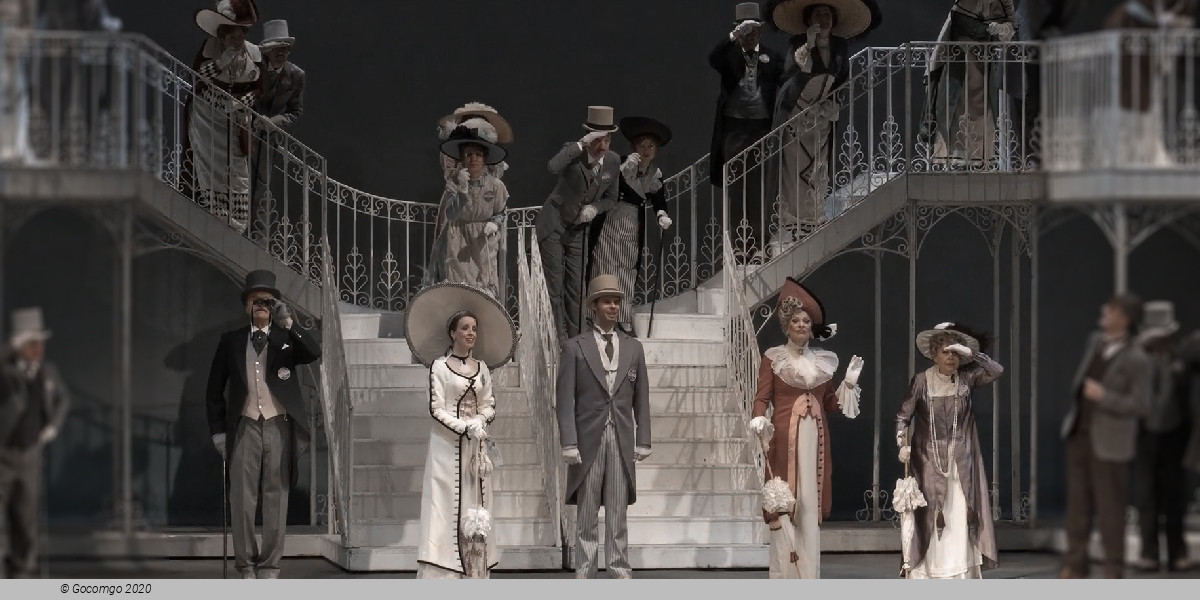
For her first public tryout, Higgins takes Eliza to his mother's box at Ascot Racecourse ("Ascot Gavotte"). Though Eliza shocks everyone when she forgets herself while watching a race and reverts to foul language, she does capture the heart of Freddy Eynsford-Hill. Freddy calls on Eliza that evening, and he declares that he will wait for her in the street outside Higgins' house ("On the Street Where You Live").

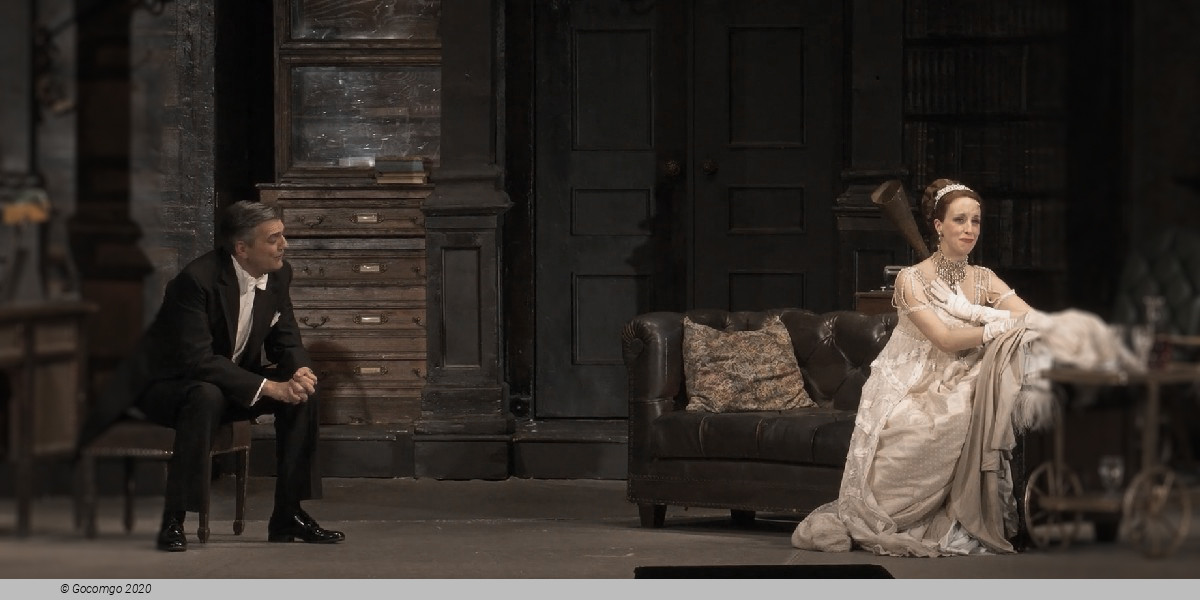
Eliza's final test requires her to pass as a lady at the Embassy Ball. After more weeks of preparation, she is ready. All the ladies and gentlemen at the ball admire her, and the Queen of Transylvania invites her to dance with the prince ("Embassy Waltz"). A Hungarian phonetician, Zoltan Karpathy, attempts to discover Eliza's origins. Higgins allows Karpathy to dance with Eliza.

Act II

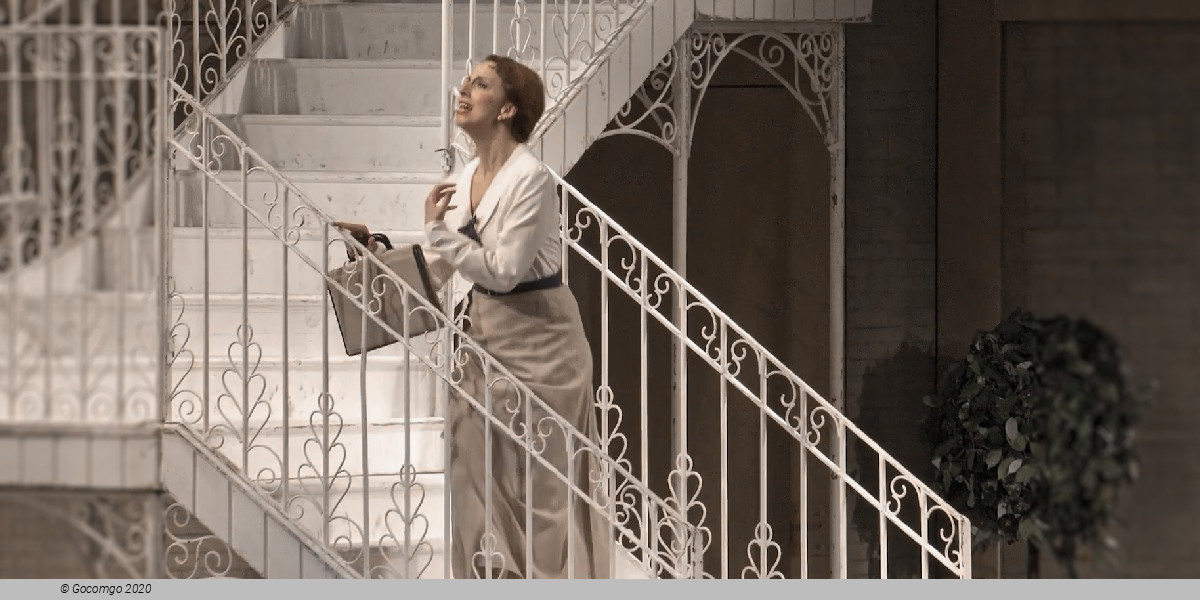
The ball is a success; Karpathy has declared Eliza to be a Hungarian princess. Pickering and Higgins revel in their triumph ("You Did It"), failing to pay attention to Eliza. Eliza is insulted at receiving no credit for her success, packing up and leaving the Higgins house. As she leaves she finds Freddy, who begins to tell her how much he loves her, but she tells him that she has heard enough words; if he really loves her, he should show it ("Show Me").

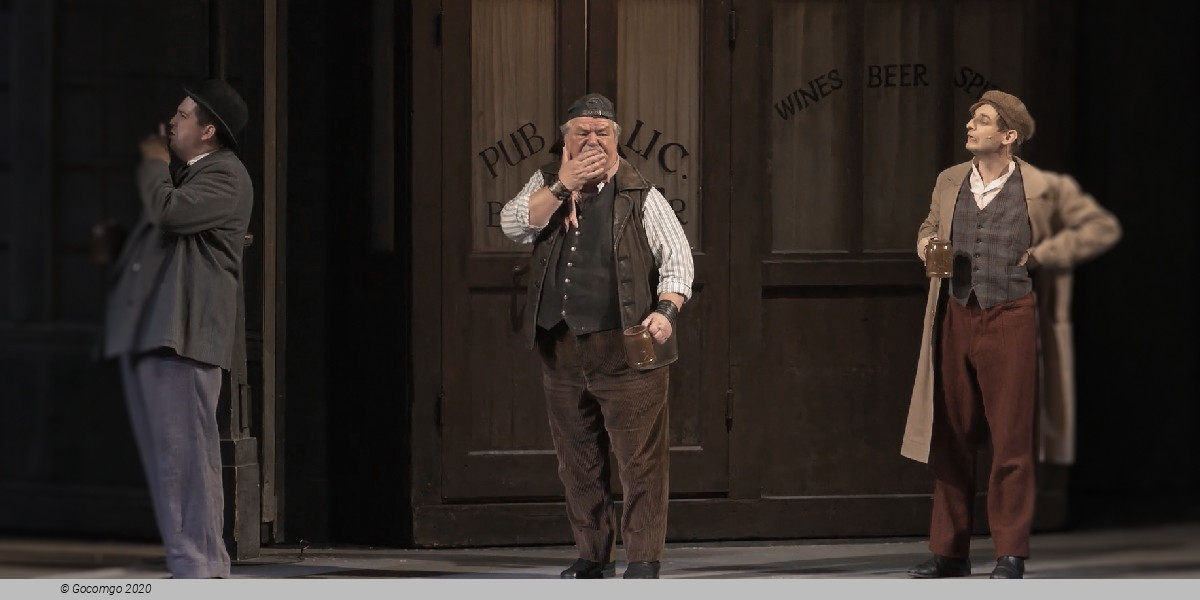
Eliza and Freddy return to Covent Garden but she finds she no longer feels at home there. Her father is there as well, and he tells her that he has received a surprise bequest from an American millionaire, which has raised him to middle-class respectability, and now must marry his lover. Doolittle and his friends have one last spree before the wedding ("Get Me to the Church on Time").

Higgins awakens the next morning. He finds himself out of sorts without Eliza. He wonders why she left after the triumph at the ball and concludes that men (especially himself) are far superior to women ("A Hymn to Him"). Pickering notices the Professor's lack of consideration, and also leaves the Higgins house.

Higgins despondently visits his mother's house, where he finds Eliza. Eliza declares she no longer needs Higgins ("Without You"). As Higgins walks home, he realizes he's grown attached to Eliza ("I've Grown Accustomed to Her Face"). At home, he sentimentally reviews the recording he made the day Eliza first came to him for lessons, hearing his own harsh words. Eliza suddenly appears in his home. In suppressed joy at their reunion, Professor Higgins scoffs and asks, "Eliza, where the devil are my slippers?"

Venue Info

Teatro Regio Torino - Turin
Location   Piazza Castello, 215

The Teatro Regio (Royal Theatre) is a prominent opera house and opera company in Turin, Piedmont, Italy. Its season runs from October to June with the presentation of eight or nine operas given from five to twelve performances of each.

Several buildings provided venues for operatic productions in Turin from the mid-16th century, but it was not until 1713 that a proper opera house was considered, and under the architect Filippo Juvarra planning began. However, the cornerstone was not laid until the reign of Charles Emmanuel III in 1738 after Juvarra's death. The work was supervised by Benedetto Alfieri until the theatre was completed.

Teatro Regio, 1740 to 1936
The Teatro Regio (Royal Theatre) was inaugurated on 26 December 1740 with Francesco Feo's Arsace. It was a sumptuously built facility, seating 1,500 and with 139 boxes located on five tiers plus a gallery.

However, the theatre was closed on royal order in 1792 and it became a warehouse. With the French occupation of Turin during the Napoleonic War the theatre was renamed the Teatro Nazionale and finally, after Napoleon's ascent to Emperor, renamed again as the Teatro Imperiale. Napoleon's fall in 1814 saw the theatre returned to its original name, the Regio. In the following years the opera house went through several periods of financial crisis and it was taken over by the city in 1870.

Other theatres were built and presented seasons of opera in Turin. Among them was the restored Teatro Carignano in 1824. It too was acquired by the municipality in 1932 and, after the destruction by fire of the Teatro Regio in 1936, the Carignano was to serve as the main venue for opera in the city until the Regio reopened in 1973.

Even before it burnt down, discussions about whether to rebuild the Regio or create a brand new theatre preoccupied Turin in the early twentieth century. Two plans were presented and the one selected expanded the seating capacity to 2,415 by removing the fourth and fifth levels of boxes and creating a huge amphitheatre. Work was completed in 1905 but the theatre closed during the First World War and re-opened in 1919. Until February 1936, seasons of opera were presented until fire destroyed all but the facade of the Teatro Regio. It remained closed for thirty-seven years. Arturo Toscanini was the conductor of the Turin Opera from 1895 to 1898, during which time several productions of the works of Wagner were given Italian premieres.

Rebuilt Teatro Regio after 1973
Following the fire, a national competition was launched to find an architect. However, due to the war and the overall financial situation, the foundation stone was laid on 25 September 1963. Even then, work did not start until September 1967 under architect Carlo Mollino.

The rebuilt theatre, with its striking contemporary interior design but hidden behind the original facade, was inaugurated on 10 April 1973 with a production of Verdi's I vespri siciliani directed by Maria Callas and Giuseppe Di Stefano.

The new house seats 1,750 and is elliptical in shape with a large orchestra level and 37 boxes around its perimeter. An acoustic shell was added to improve its sound.

The house presents a wide range of operas during its seasons, including contemporary works, although in the first years of the new century financial pressures have made the programming somewhat more conservative and favoring more 19th-century operas.

Important Info
Type: Musical
City: Turin, Italy
Starts at: 20:00
Acts: 2
Intervals: 1
Duration: 3h
Sung in: English
Titles in: English,Italian
Top of page