
Teatro Real 6 May 2022 - Premiere Siberia Premiere | GoComGo.com

Premiere
Siberia Premiere

Teatro Real, Main Auditorium, Madrid, Spain
All photos (6)
Select date and time
7:30 PM

E-tickets: Print at home or at the box office of the event if so specified. You will find more information in your booking confirmation email.

You can only select the category, and not the exact seats.
If you order 2 or 3 tickets: your seats will be next to each other.
If you order 4 or more tickets: your seats will be next to each other, or, if this is not possible, we will provide a combination of groups of seats (at least in pairs, for example 2+2 or 2+3).

Important Info
Type: Opera
City: Madrid, Spain
Starts at: 19:30
Acts: 3

E-tickets: Print at home or at the box office of the event if so specified. You will find more information in your booking confirmation email.

You can only select the category, and not the exact seats.
If you order 2 or 3 tickets: your seats will be next to each other.
If you order 4 or more tickets: your seats will be next to each other, or, if this is not possible, we will provide a combination of groups of seats (at least in pairs, for example 2+2 or 2+3).

Overview

Concert version of the opera

A point in favour of Siberia was the warm reception in Paris in 1905, where it was met with the favourable opinion of Gabriel Fauré, who saluted the second act as “one of the most remarkable and captivating that modern dramatic music can offer".

The Viennese premiere of Umberto Giordano’s first opera –Mala vita– in September 1892 received an explicit review from the legendary music critic Eduard Hanslick: "His sense of drama is stronger than his musical talent, his temperament is stronger than his art ". This sentence hovers over most of the operatic catalogue of Giordano, a key figure of the giovane scuola verisimo, thanks to the lasting successes of Andrea Chénier and, to a lesser degree, Fedora. As a consequence of the latter, with its Russian setting, Siberia (1903) enjoyed a short lived popularity before falling into oblivion. A contributing factor was the libretto of Luigi Illica which rewrote the love triangle that had already been used in Andrea Chénier and Tosca, integrating an exotic and extravagant aspect into this piece.  
The score by Giordano, on the other hand, plays a more interesting trump card with its copious incorporation of Russian folk songs and the use of dissonance to express paroxysm and desperation.

History
Premiere of this production: 19 December 1903, La Scala, Milan

Siberia is an opera in three acts by Umberto Giordano from a libretto by Luigi Illica. It premiered on 19 December 1903 at La Scala in Milan. There is no direct source for the plot of Siberia and it is quite possible that this is an original work by Illica. It was suggested at the New York premiere that it was based on Leo Tolstoy's 1899 novel Resurrection or one of the novels within it.

Synopsis

Place: Russia
Time: First half of the 19th century.

Act 1: "The Woman"
Saint Petersburg, August, during the Festival of Saint Alexander

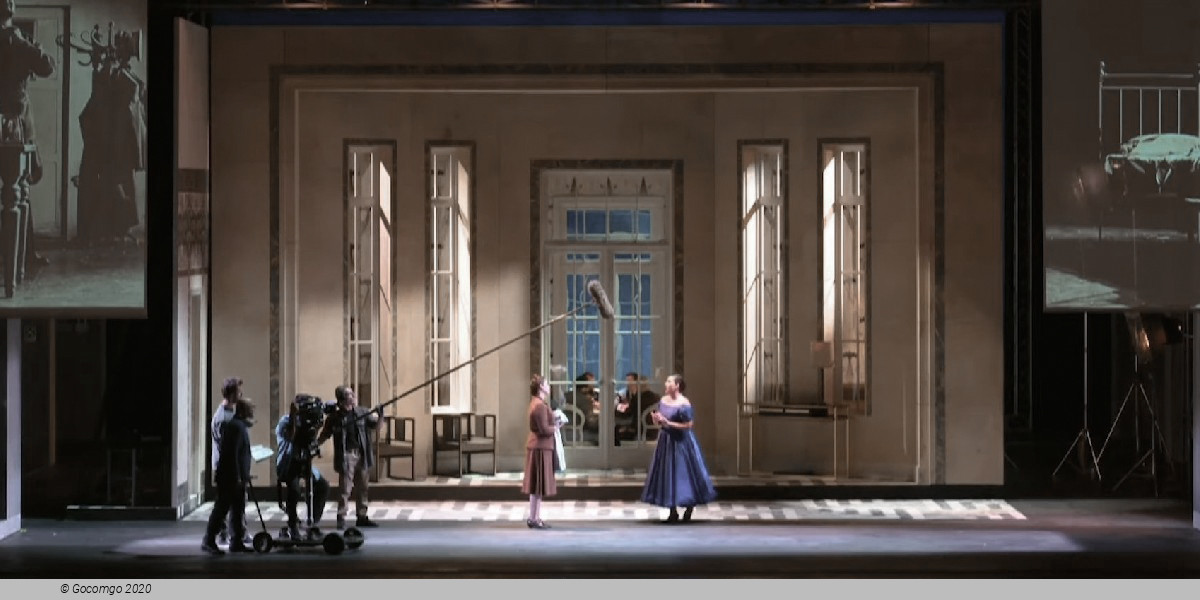
Stephana is the mistress of Prince Alexis, living in an elegant palace, who was once seduced by Gleby, a scoundrel, who sold her to the Prince and has been living off a pension granted to him by the Prince. Stephana loves Vassili, a Lieutenant who corresponds with her but assumes she is a simple working girl, because they always meet in disguise outside her house. When summoned to war he goes to meet Stephana and learns the truth about her, but he is still smitten with her. The Prince enters and demands an explanation which develops into a duel during which Vassili kills the Prince with his sword; he is detained and sent to the police.

Act 2: "The Lover"
The frontier between Russia and Siberia in winter

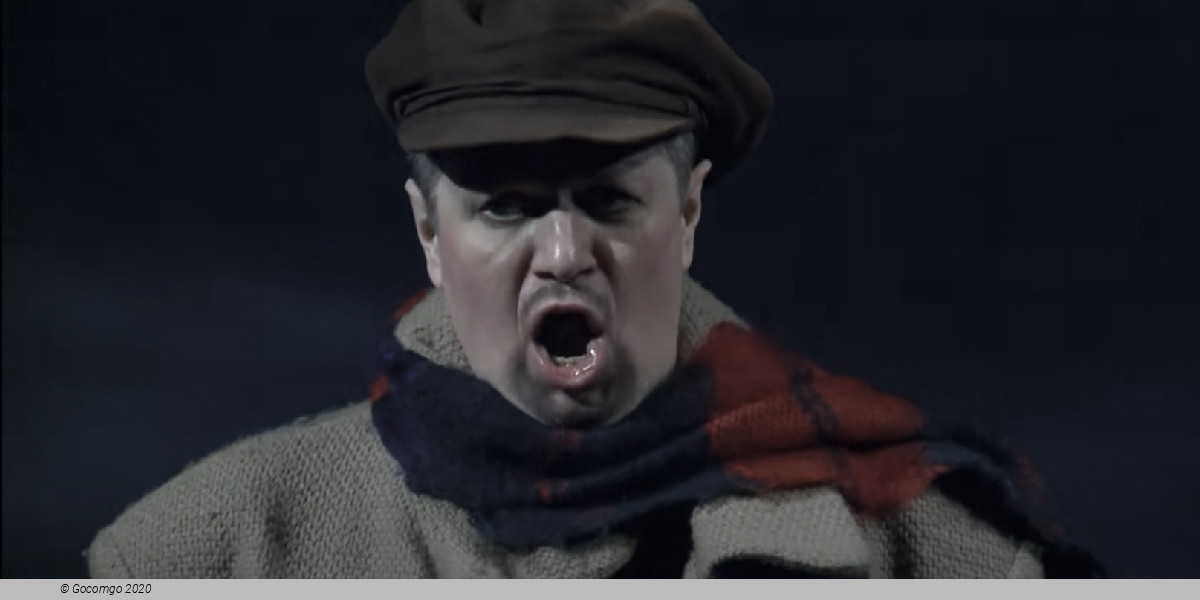
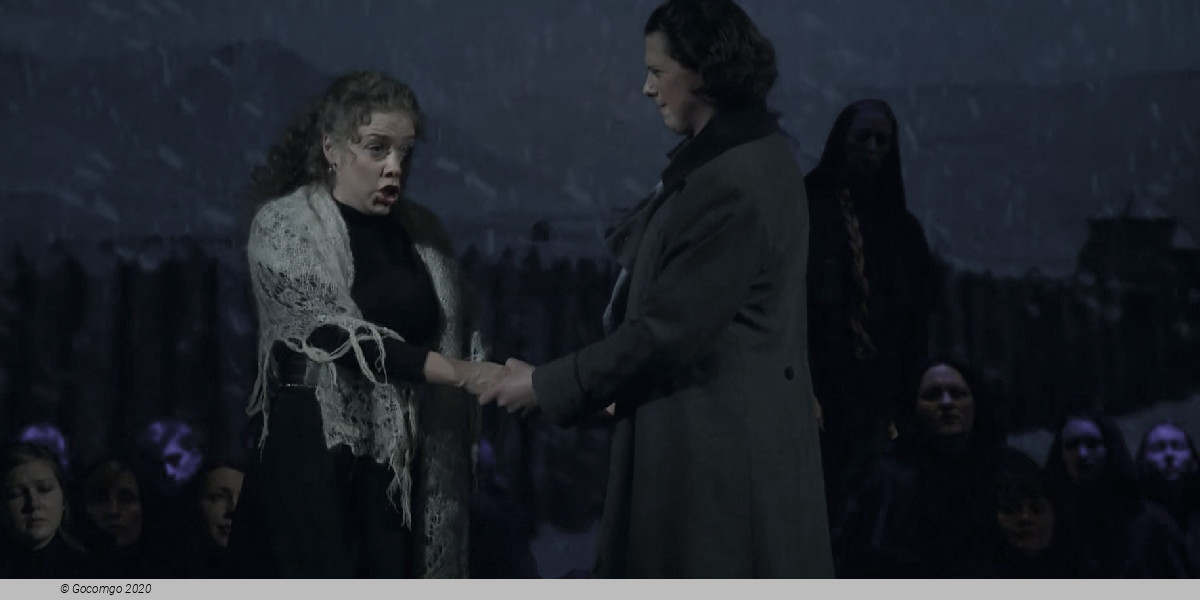
Several prisoners are making their way through the snow on foot to the mines where they are forced to work. Amongst them is Vassili worn almost out, he is despairing, a group of women and children are waiting along the road to bid farewell to the prisoners. Stephana arrives in a sleigh, she has left all to join her beloved in whatever fate awaits him, she does not listen to his pleas to return, when ordered to, they both march into the vastness of Siberia.

Act 3: "The Heroine"
A hut of convicts in the mines of Trans-Baikal on the eve of Russian Easter

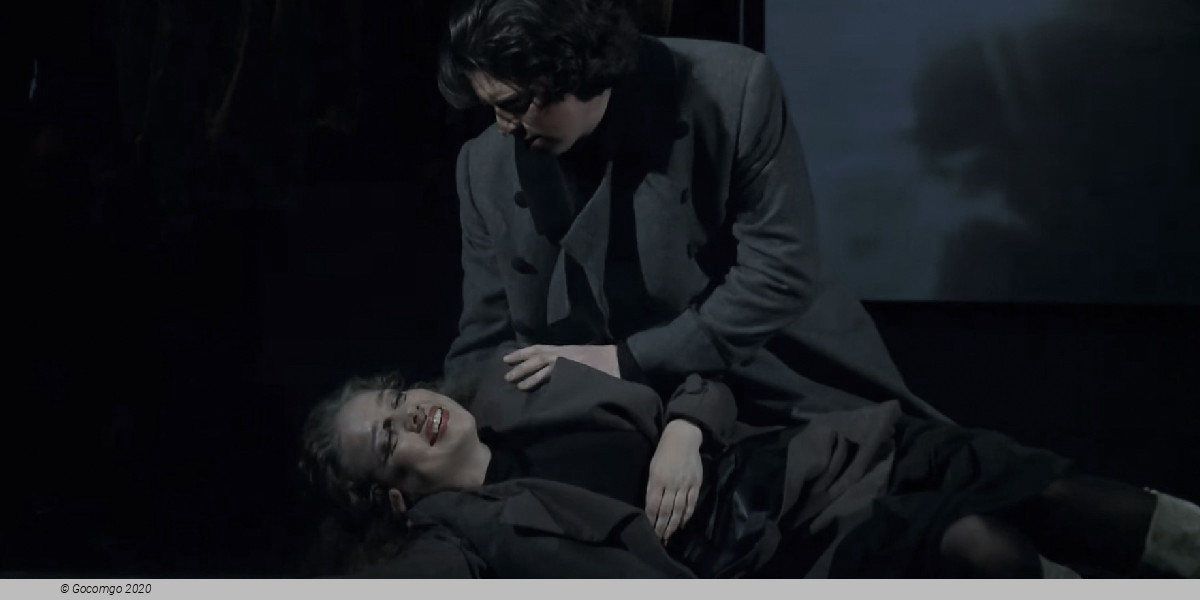
Due to the upcoming festivities, the prisoners are allowed to organize a feast. Stephana, excited by this, devises a scheme with an old convict to escape with Vassili, but Gleby has arrived to the prison camp after finally being arrested in one of his many crimes. He recognizes Stephana and insults her in front of everybody, including Vassili, who tries to defend her but is stopped by the other inmates. The church bell rings and prayers start. During the night Vassili and Stephana execute their plan to escape, but Gleby gives the alarm, the troops pursue the prisoners and a shot is heard, they bring Vassili back and carry Stephana, who was wounded, she bids farewell to Vassili and dies.

Venue Info

Teatro Real - Madrid
Location   Isabel II Square, s / n.

Teatro Real is a major opera house located in Madrid. Today the Teatro Real opera is one of the great theaters of Europe hosting large productions involving leading international figures in opera singing, musical direction, stage direction, and dance. Founded in 1818 and inaugurated on 19 November 1850, it closed in 1925 and reopened in 1966. Beginning in 1988 it underwent major refurbishing and renovation works and finally reopened in 1997 with a capacity of 1,746 seats. The theater offers visitors guided tours in several languages, including the auditorium, stage, workshops, and rehearsal rooms.

Founded by King Ferdinand VII in 1818, and after thirty-two years of planning and construction, a Royal Order on 7 May 1850 decreed the immediate completion of the "Teatro de Oriente" and the building works were finished within five months. The Opera House, located just in front of the Palacio Real, the official residence of the Queen who ordered the construction of the theatre, Isabel II, was finally inaugurated on 19 November 1850, with Donizetti's La Favorite.

The Teatro soon became one of the most prestigious opera houses in Europe. For over five decades it hosted the most renowned singers and composers of the time. In the early period, it saw famous opera singers such as Alboni, Frezzolini, Marietta Gazzaniga, Rosina Penco, Giulia Grisi, Giorgio Ronconi, Italo Gardoni, Mario de Candia and Antonio Selva among many others. In 1863, Giuseppe Verdi visited the theatre for the Spanish premiere of his La Forza del Destino. At its peak, in the last quarter of the 19th century, the Teatro hosted world renowned artists such as Adela Borghi, Marie Sasse, Adelina Patti, Christina Nilsson, Luisa Tetrazzini, Mattia Battistini, Julián Gayarre, Angelo Masini, Francesco Tamagno and Enrico Tamberlick. In 1925, the Ballets Russes of Diaghilev performed in the theatre with the presence of Nijinsky and Stravinsky.

From 1867 to 1925 the Teatro Real also housed the Madrid Royal Conservatory. In December of 1925 a Royal Order ordered its activities to be discontinued owing to the damage that the construction of the Metro de Madrid had caused to the building. The government set out to restore it and ordered numerous projects to be drawn out for its renovation, such as that from architect Urdanpilleta Flórez, who proposed a monumental remodeling of the building. However, financial difficulties prevented the completion of these projects and led to a simple restoration, sponsored by the Juan March Institute, and carried out first by the architect Manuel Gonzalez Valcárcel, and later by architects Miguel Verdú Belmonte and Francisco Rodriguez Partearroyo.

The theatre reopened in 1966 as a concert hall as well as the main concert venue for the Spanish National Orchestra and the RTVE Symphony Orchestra. The reopening was celebrated with a concert of the Spanish National Orchestra conducted by Rafael Frühbeck de Burgos, and the Orfeón Donostiarra. In 1969, the 14th Eurovision Song Contest was held at the theatre, featuring an onstage metal sculpture created by surrealist Spanish artist Salvador Dalí.

Important Info
Type: Opera
City: Madrid, Spain
Starts at: 19:30
Acts: 3
Top of page