
Teatro Real 16 November 2020 - Rusalka | GoComGo.com

Rusalka

Teatro Real, Madrid, Spain
All photos (9)
Select date and time
8 PM
Important Info
Type: Opera
City: Madrid, Spain
Starts at: 20:00
Acts: 3
Titles in: Spanish,English

E-tickets: Print at home or at the box office of the event if so specified. You will find more information in your booking confirmation email.

You can only select the category, and not the exact seats.
If you order 2 or 3 tickets: your seats will be next to each other.
If you order 4 or more tickets: your seats will be next to each other, or, if this is not possible, we will provide a combination of groups of seats (at least in pairs, for example 2+2 or 2+3).

Overview

New production of the Teatro Real, in co-production with the Säschsische Staatsoper of Dresden, the Teatro Comunale of Bolonia, the Gran Teatre del Liceu of Barcelona and the Palau de les Arts Reina Sofia of Valencia

Titular Chorus and Orchestra of the Teatro Real

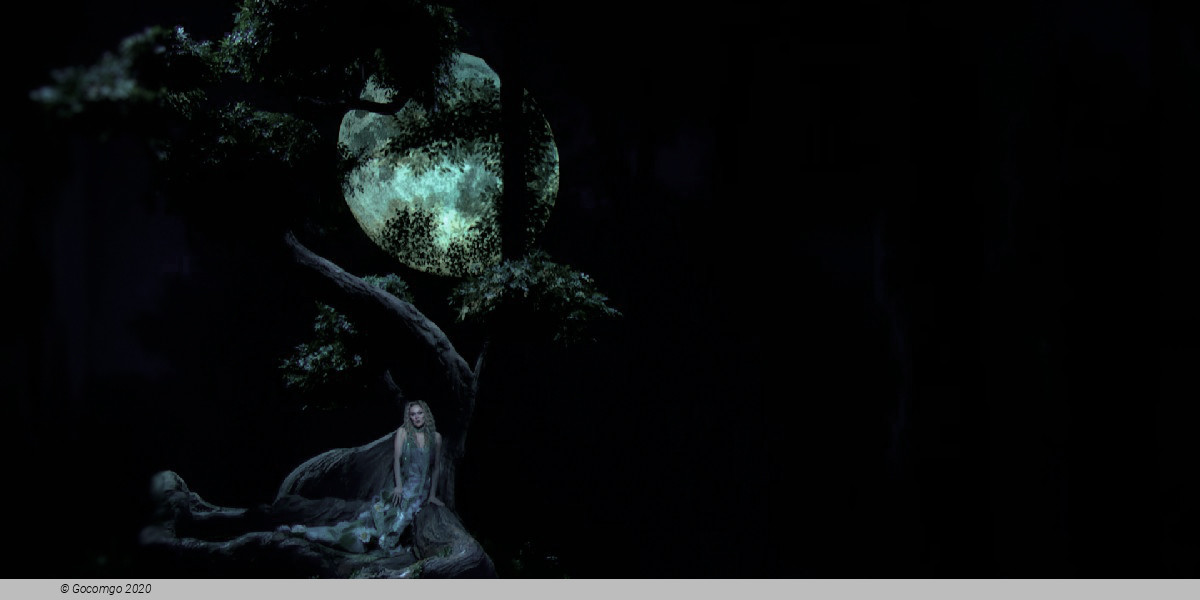
The libretto of the most well known opera by Dvořak, which premiered in Prague in 1901, is inspired by the Czech version of the Central European folktale, one we also know as Undine (1811) by Friedrich de la Motte Fouqué or The Little Mermaid (1837) by Hans Christian Andersen. The original story is perfectly translated into a musical score full of colour and magic where it is possible to perceive a Wagnerian influence, especially in the river currents of Der Ring des Nibelungen. There are also considerable similarities with another wonderful aquatic fable of sacrifice and redemption: Sadko (1898) by Rimski-Kórsakov. Notwithstanding,  the composer did not renounce his Bohemian roots for he left a mark on a large part of his creations as an artist committed to Czech music and culture. Rusalka triumphed quickly in German speaking countries but international acceptance took time, in spite of the famous “Song to the Moon”. As of the last decades of the 20th century, its presence on the world stage has consolidated and today Rusalka is one of the twenty most performed operas; surprisingly it has never been performed since the re-inauguration of the Teatro Real. 

History
Premiere of this production: 31 March 1901, Prague

Rusalka is an opera by Antonín Dvořák. The Czech libretto was written by the poet Jaroslav Kvapil (1868–1950) based on the fairy tales of Karel Jaromír Erben and Božena Němcová. A rusalka is a water sprite from Slavic mythology, usually inhabiting a lake or river. Rusalka is one of the most successful Czech operas and represents a cornerstone of the repertoire of Czech opera houses.

Synopsis

Act 1

A meadow by the edge of a lake

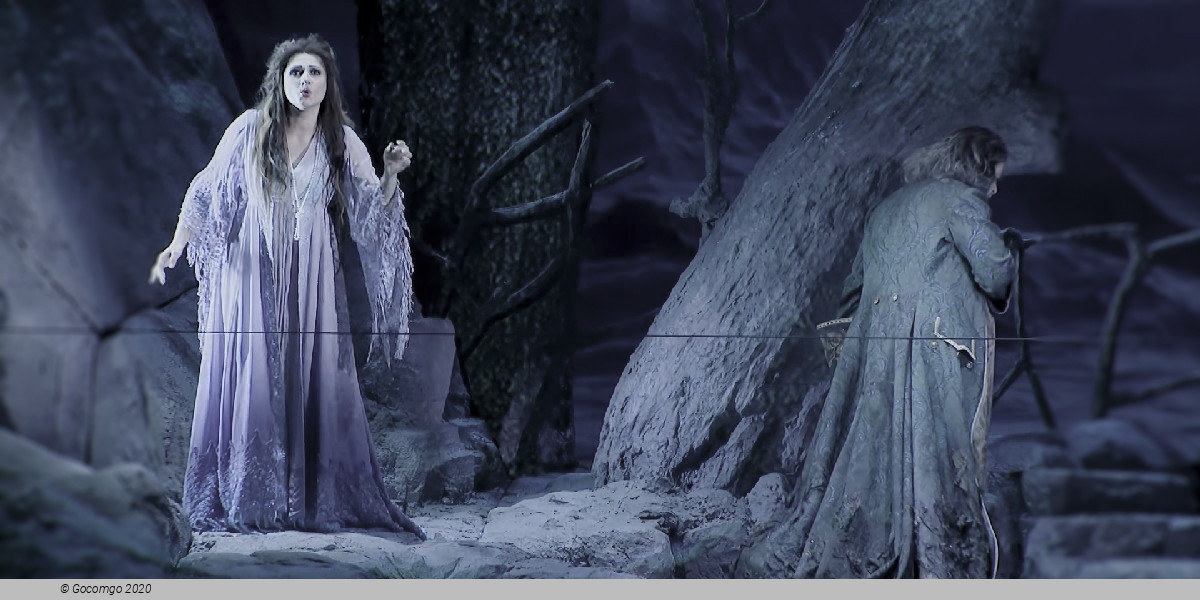
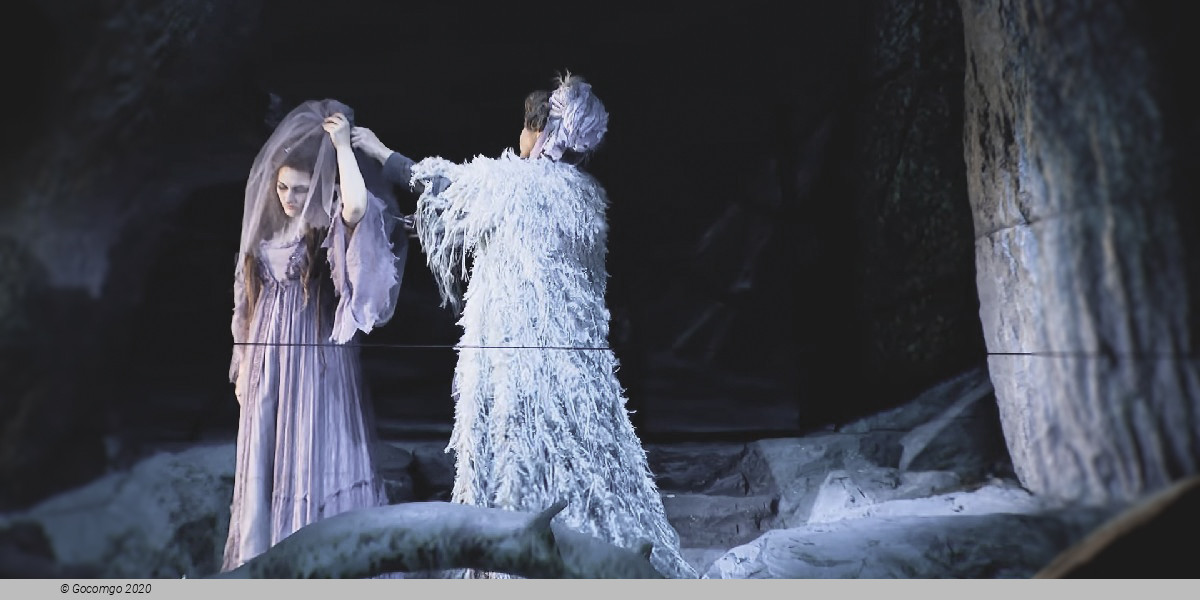
Three wood-sprites tease the Water-Gnome, ruler of the lake. Rusalka, the Water-Nymph, tells her father she has fallen in love with a human Prince who comes to hunt around the lake, and she wants to become human to embrace him. He tells her it is a bad idea, but nonetheless steers her to a witch, Ježibaba, for assistance. Rusalka sings her "Song to the Moon", asking it to tell the Prince of her love. Ježibaba tells Rusalka that, if she becomes human, she will lose the power of speech and immortality; moreover, if she does not find love with the Prince, he will die and she will be eternally damned. Rusalka agrees to the terms and drinks a potion. The Prince, hunting a white doe, finds Rusalka, embraces her, and leads her away, as her father and sisters lament.

Act 2

The garden of the Prince's castle

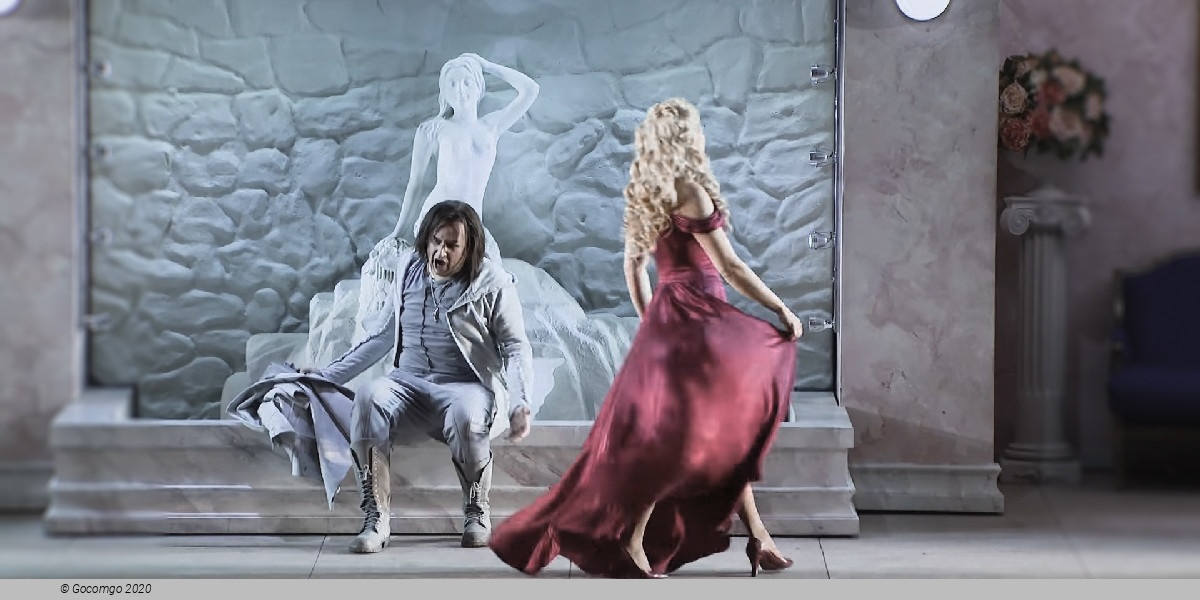
A Gamekeeper and his nephew, the Kitchen-Boy, note that the Prince is to be married to a mute and nameless bride. They suspect witchcraft and doubt it will last, as the Prince is already lavishing attentions on a Foreign Princess who is a wedding guest. The Foreign Princess, jealous, curses the couple. The prince rejects Rusalka. Rusalka then goes back to the lake with her father the Water Gnome. Though she has now won the Prince's affections, the Foreign Princess is disgusted by the Prince's fickleness and betrayal and she scorns him, telling him to follow his rejected bride to Hell.

Act 3

A meadow by the edge of a lake

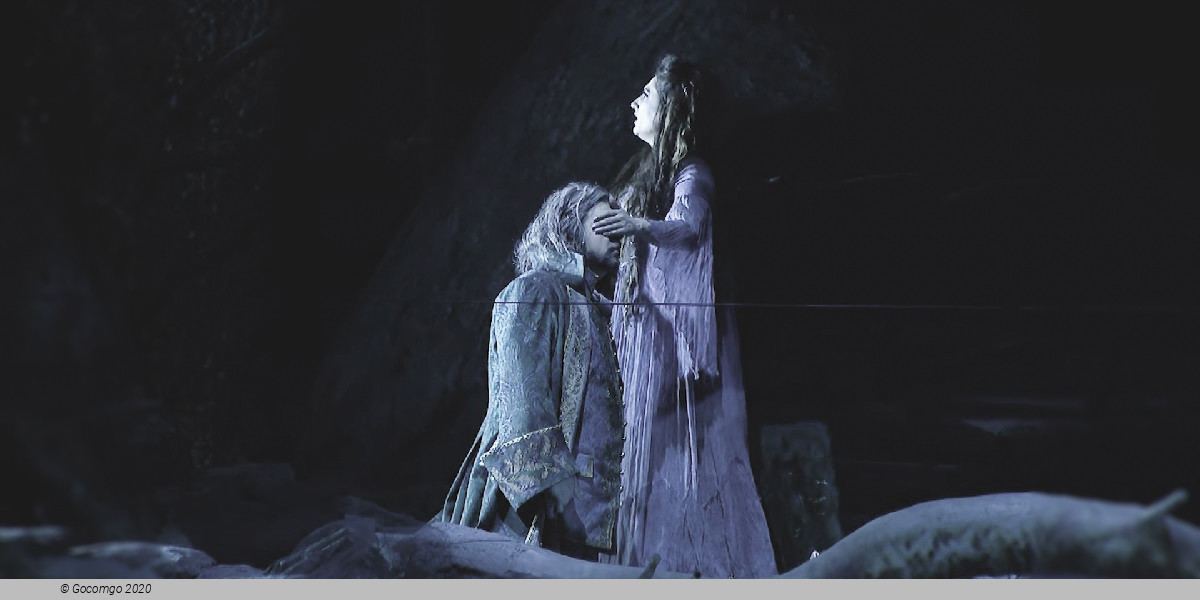
Rusalka asks Ježibaba for a solution to her woes and is told she can save herself if she kills the Prince with the dagger she is given. Rusalka rejects this, throwing the dagger into the lake. Rusalka becomes a bludička, a spirit of death living in the depths of the lake, emerging only to lure humans to their deaths. The Gamekeeper and the Kitchen Boy consult Ježibaba about the Prince, who, they say, has been betrayed by Rusalka. The Water-Goblin says that it was actually the Prince that betrayed Rusalka. The wood-sprites mourn Rusalka's plight. The Prince, searching for his white doe, comes to the lake, senses Rusalka, and calls for her. He asks her to kiss him, even knowing her kiss means death and damnation. They kiss and he dies; and the Water-Goblin comments that "All sacrifices are futile." Rusalka thanks the Prince for letting her experience human love, commends his soul to God, and returns to her place in the depths of the lake as a demon of death.

Venue Info

Teatro Real - Madrid
Location   Isabel II Square, s / n.

Teatro Real is a major opera house located in Madrid. Today the Teatro Real opera is one of the great theaters of Europe hosting large productions involving leading international figures in opera singing, musical direction, stage direction, and dance. Founded in 1818 and inaugurated on 19 November 1850, it closed in 1925 and reopened in 1966. Beginning in 1988 it underwent major refurbishing and renovation works and finally reopened in 1997 with a capacity of 1,746 seats. The theater offers visitors guided tours in several languages, including the auditorium, stage, workshops, and rehearsal rooms.

Founded by King Ferdinand VII in 1818, and after thirty-two years of planning and construction, a Royal Order on 7 May 1850 decreed the immediate completion of the "Teatro de Oriente" and the building works were finished within five months. The Opera House, located just in front of the Palacio Real, the official residence of the Queen who ordered the construction of the theatre, Isabel II, was finally inaugurated on 19 November 1850, with Donizetti's La Favorite.

The Teatro soon became one of the most prestigious opera houses in Europe. For over five decades it hosted the most renowned singers and composers of the time. In the early period, it saw famous opera singers such as Alboni, Frezzolini, Marietta Gazzaniga, Rosina Penco, Giulia Grisi, Giorgio Ronconi, Italo Gardoni, Mario de Candia and Antonio Selva among many others. In 1863, Giuseppe Verdi visited the theatre for the Spanish premiere of his La Forza del Destino. At its peak, in the last quarter of the 19th century, the Teatro hosted world renowned artists such as Adela Borghi, Marie Sasse, Adelina Patti, Christina Nilsson, Luisa Tetrazzini, Mattia Battistini, Julián Gayarre, Angelo Masini, Francesco Tamagno and Enrico Tamberlick. In 1925, the Ballets Russes of Diaghilev performed in the theatre with the presence of Nijinsky and Stravinsky.

From 1867 to 1925 the Teatro Real also housed the Madrid Royal Conservatory. In December of 1925 a Royal Order ordered its activities to be discontinued owing to the damage that the construction of the Metro de Madrid had caused to the building. The government set out to restore it and ordered numerous projects to be drawn out for its renovation, such as that from architect Urdanpilleta Flórez, who proposed a monumental remodeling of the building. However, financial difficulties prevented the completion of these projects and led to a simple restoration, sponsored by the Juan March Institute, and carried out first by the architect Manuel Gonzalez Valcárcel, and later by architects Miguel Verdú Belmonte and Francisco Rodriguez Partearroyo.

The theatre reopened in 1966 as a concert hall as well as the main concert venue for the Spanish National Orchestra and the RTVE Symphony Orchestra. The reopening was celebrated with a concert of the Spanish National Orchestra conducted by Rafael Frühbeck de Burgos, and the Orfeón Donostiarra. In 1969, the 14th Eurovision Song Contest was held at the theatre, featuring an onstage metal sculpture created by surrealist Spanish artist Salvador Dalí.

Important Info
Type: Opera
City: Madrid, Spain
Starts at: 20:00
Acts: 3
Titles in: Spanish,English
Top of page