Time: Antiquity or "Some 2,000 Years before the Christian era"
Place: Babylon
Overture
Semiramide has its own overture, which was almost certainly composed last. Unlike many operatic overtures of the day, it borrowed musical ideas from the opera itself, thus making it unsuitable for use with another score. The range and balance of musical ideas, from the hushed, rhythmic opening through the Andantino for four horns (drawn from the opera itself) and the repetition with pizzicato countermelodies in the strings to the lively allegro, make the overture to Semiramide one of Rossini's finest contributions to the genre and deservedly one of the most popular.
Act 1
Temple of Baal, Babylon
The High Priest Oroe invites all to enter the temple, and Babylonians (along with others from abroad, including Idreno the Indian King) do so carrying offerings to Baal. Assur states that the day has come for the Queen to choose a successor and he reminds all of his own valour. Idreno expresses surprise at Assur's aspirations and all express their individual concerns and fears.
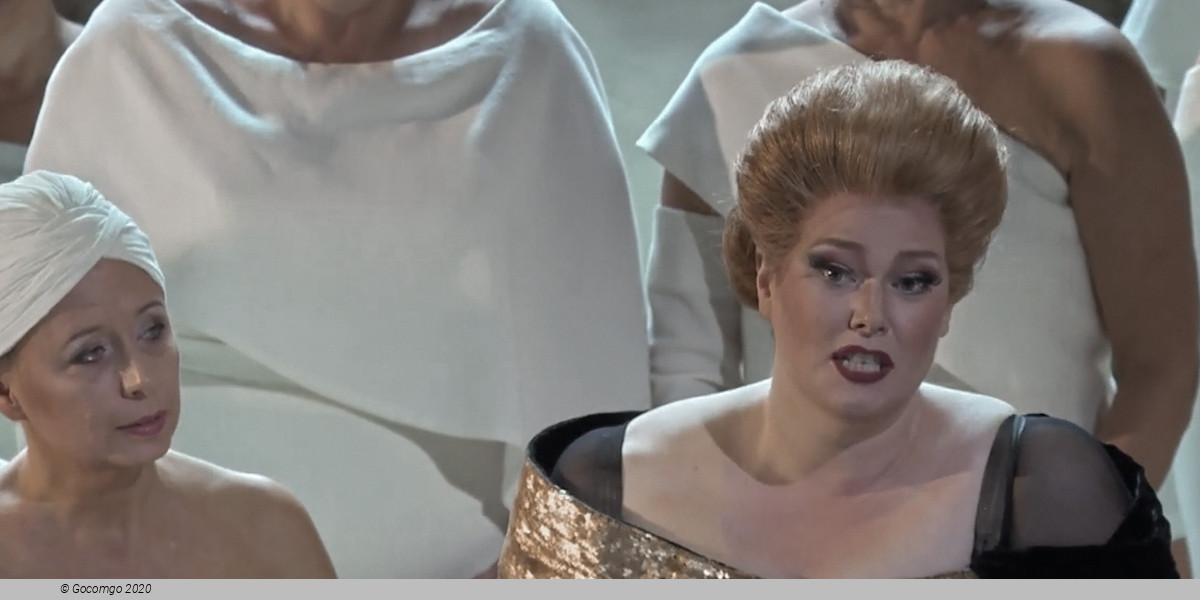
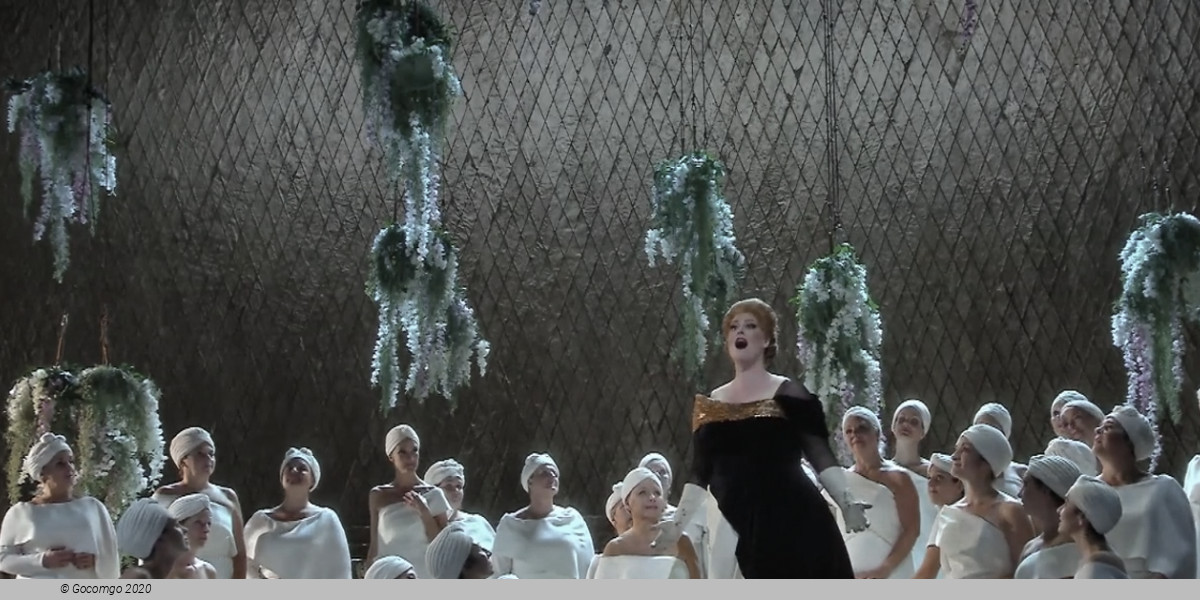
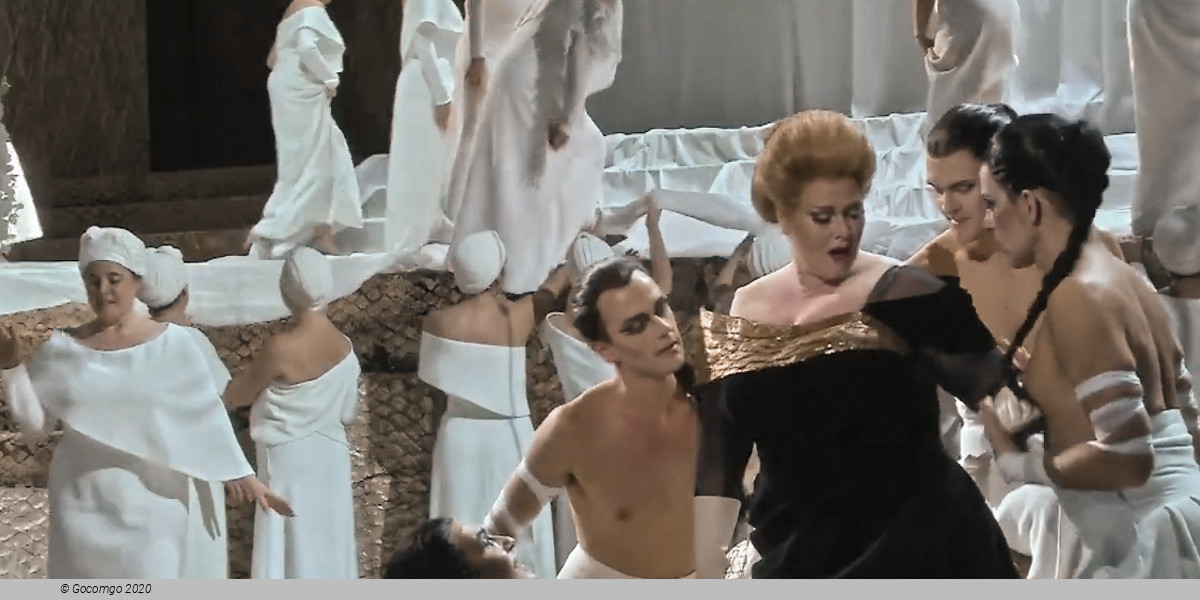
Semiramide enters to the acclaim of all, but Idreno and Assur individually speculate as to who will be chosen. They press the queen to announce her decision, but at the same time Semiramide herself is fearful about making that decision, especially as she appears to be expecting someone's arrival. Suddenly, the temple is plunged into darkness and there is general consternation amidst fears of its imminent collapse. All desert the temple.
Arsace, a warrior, enters. He has been told by his dying father to go to the temple in Babylon, and he was also urgently sent for by Semiramide. He brings with him a casket belonging to his father, but he is puzzled as to why he has been called back to Babylon. He declares his love for Princess Azema who loves him though she has been promised to the dead King Nino's lost son, Ninia. Arsace states his unwillingness to support Assur in his bid for the throne: (Aria: Eccomi alfine in Babilonia... Ah! quel giorno ognor rammento / "Oh, I shall ever remember the day of glory and happiness...").
Arsace asks to see the High Priest. Oroe enters, opens the casket, and exclaims upon seeing it that it contains the holy relics of the dead king. He hints to Arsace about some treachery that had been involved. Seeing Assur approach, Oroe leaves with the relics. Assur arrives and questions the reason for Arsace's return. The two men discuss Azema, with Arsace reaffirming his love for her (Duet: Bella imago degli dei / "Beautiful, divine image, Azema alone do I adore") while Assur states that he too loves her. "You have no idea what love is", the younger man tells the older: (Aria/duet: D'un tenero amor / "That fierce heart of yours is not capable of tender love...")
The entrance hall of the palace
Azema enters, happy that Arsace is now in Babylon. Idreno follows her and asks for her hand; she tells him that this must be Semiramide's decision. "What of your heart?" he asks, assuming that his rival can only be Assur. Scornfully told that it will never be Assur, Idreno is comforted, although he expresses his desire "to punish the wicked boldness of a rival" and continues to express desire for Azema: (Aria: E, se ancor libero / "And, if your fair heart is still free, at least feel some pity in your breast...")
The Hanging Gardens
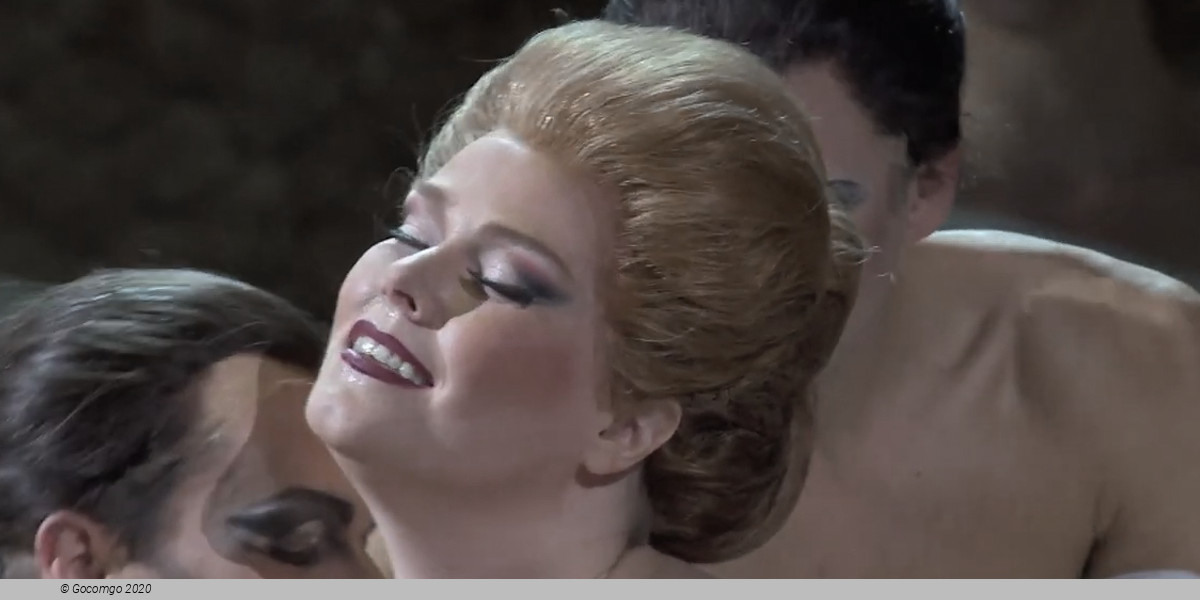
Having fallen in love with Arsace and believing that he loves her, Semiramide waits for his arrival: (Aria: Bel raggio lusinghier / "A beautiful, enchanting ray of hope and contentment has shone for me at last"). She receives a message from the Oracle, telling her that a wedding will make a new king. She believes this to be a sign from the gods that they approve of her plans, and orders preparations for a wedding. When Arsace arrives, he alludes to his love for Azema without specifically naming her, but he also declares that he will die for his queen if necessary. Semiramide still believes that he really loves her, and vows that she will give him all he desires: (Aria: Serbami ognor sì fido / "Keep your head and your affections ever as devoted to me"). They leave separately.
The Palace Throne Room
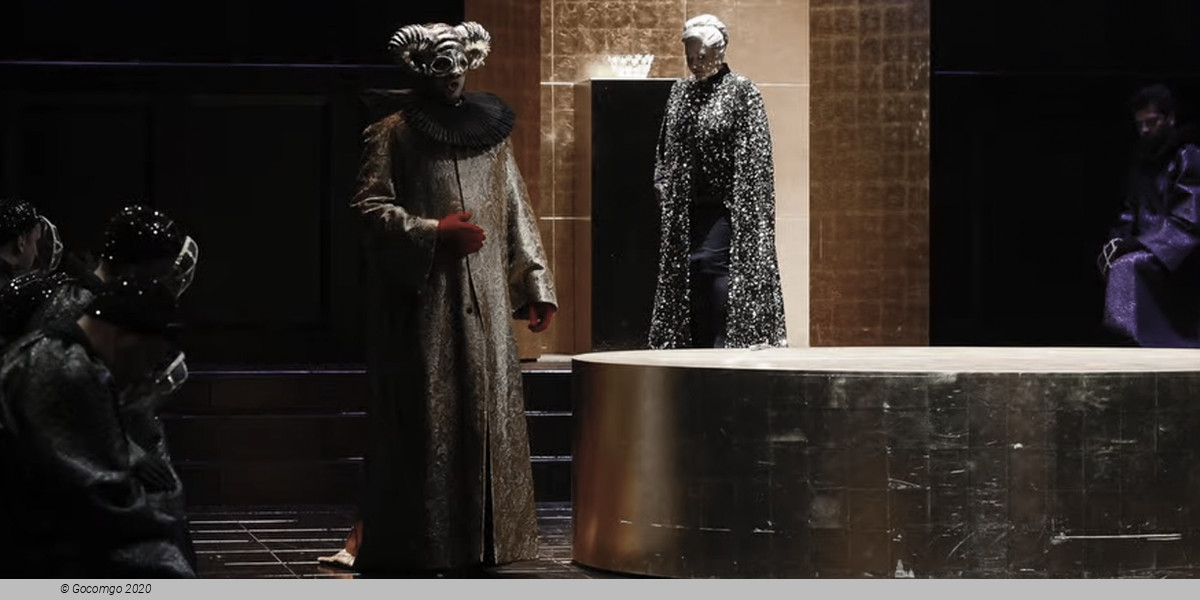
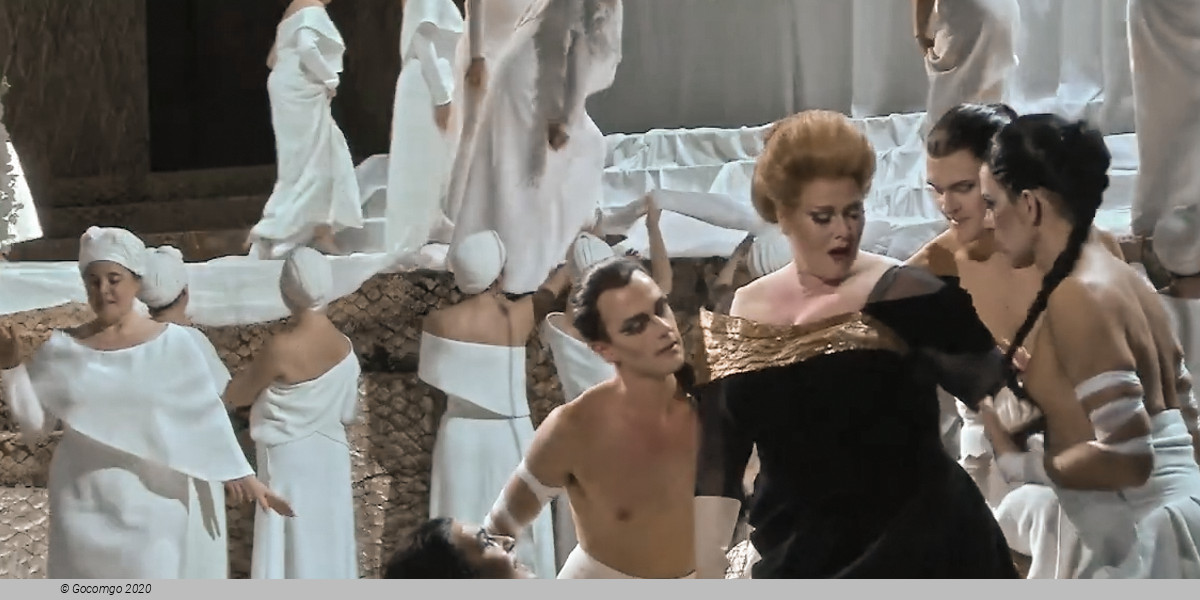
All enter to await Semiramide's arrival and her announcement of her choice of successor. Arsace, Idreno, Oroe, and Assur all swear to obey her command, no matter what she decides: (Ensemble: Semiramide, Arsace, Idreno, Oroe and Assur: ( Giuri ognuno, a' sommi Dei / "Let each of you swear to the most high gods to obey my commands..."). She demands loyalty to the man she chooses and they are told that he will also be the queen's husband. When Semiramide names Arsace as her chosen one, Assur is outraged and Idreno accepts the decision but requests Azema's hand, which is granted. After asking Oroe to unite Semiramide and Arsace, Semiramide is horrified by the uproar which emits from the near-by tomb of King Nino: (Aria: Qual mesto gemito Da quella tomba / "What a melancholy groaning from the tomb there..."). All are horrified as King Nino's ghost appears, warning of the crimes to be expiated, telling Arsace that he will reign and to respect the High Priest's wisdom, and commanding him to come down into his tomb. Each character expresses his or her own anguish.
Act 2
A hall in the palace
In a brief encounter, Mitrane warns the royal guard to keep Assur under surveillance and not to allow him to leave the palace. Then Semiramide enters, followed shortly after by Assur.
Conflict between the two soon emerges. She reminds him that it was he who gave the cup of poison to Nino, thus causing his death, and he reminds her that it was she who had prepared it: "Who handed me the cup of death?" he asks. Recalling that at that time she had a son, Ninia, she speculates that he might have been killed by the same man who killed Nino. Assur continues to pressure Semiramide to make him king. In turn, she threatens to reveal the crime, and they sing an extended duet: (Se la vita ancor t'è cara / "If you still hold life dear, go, get yourself out of my sight") recalling the terror and retribution that each could inflict upon the other if the truth came to light. Semiramide continues to demand that Assur acknowledge Arsace as his king.
Rejoicing is heard in the distance, and while Semiramide regains some of her former happiness, Assur becomes resigned to his fate.
King Nino's tomb
Oroe and the Magi are assembled in the tomb. The High Priest urges Arsace to come forward but makes him aware that there may be some unpleasant news awaiting him. Upon his arrival, Oroe tells him that he is Ninia, Nino's son, who had been saved by Fradate (one of the priests) and brought up as his own. Aghast at this news, Arsace then learns that Semiramide is his mother. To reinforce this news, Oroe hands him a scroll, written by the King before his death, the reading of which confirms the Priest's statements. The final blow comes when Arsace reads Nino's words, and realises that his mother and Assur were the ones who killed his father: "Assur was the traitor".
Almost collapsing in grief into Oroe's arms, he asks for comfort: (Aria: In sì barbara sciagura / "In such barbarious misfortune"), but the priests quickly reinforce his need to take immediate revenge. They equip him with armour and a sword and give him the determination to proceed: (cabaletta: Si, vendicato, il genitore / "Yes, my father avenged"). Sword in hand, Arsace leaves.
Semiramide's apartments
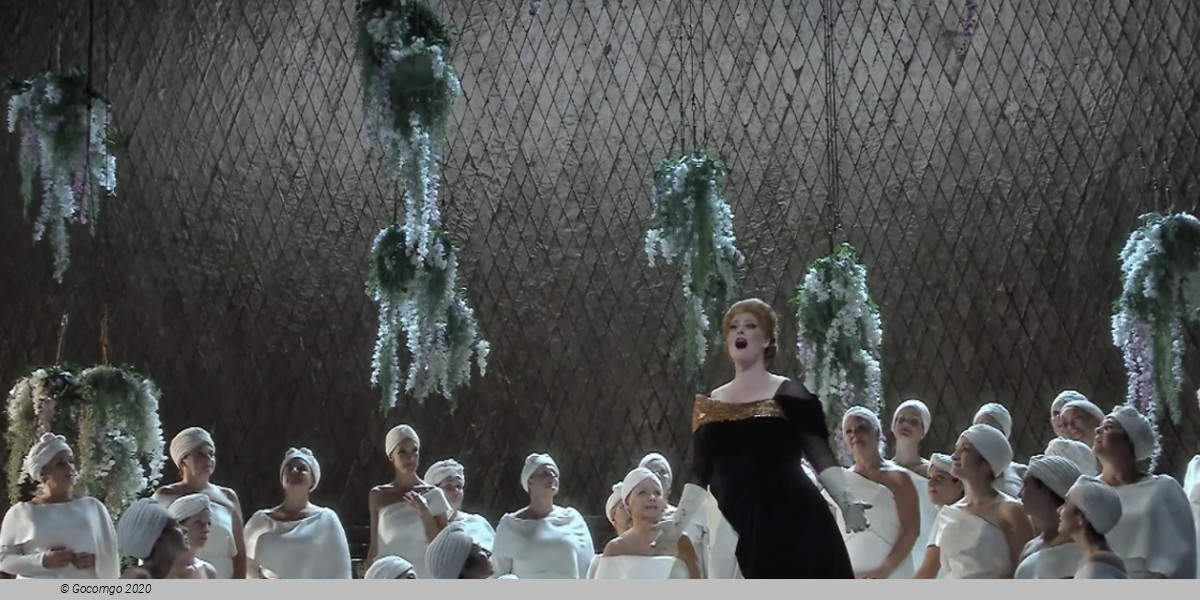
Azema and Mitrane are alone, the former complaining that she has lost everything now that Arsace, the love of her life, is due to marry the queen. Entering, Idreno overhears this and is distraught. Azema promises him her hand if he so desires it, but he wishes that she would love him: (Aria: La speranza più soave / "This soul of mine once entertained the fondest hopes"). Two choruses of Maids, Lords, and Indians lead them all to the temple.
In the temple
Semiramide confronts Arsace, who finally hands her the scroll which has revealed all. Horrified, she then understands Arsace's real identity, and becomes remorseful, offering herself to his revengeful blows. He swears filial loyalty, expressing the wish to spare his mother: (Duet: Ebben, a te... Giorno d'orrore... Madre, addio! / "Well then – go on, strike; fulfill a god's behest!/ Let the gods vent their entire wrath upon me first"). Together, they each accept the reality: (Giorno d'orror! E di contento / "Day of horror...and of joy!"), but Arsace declares that he must go to his father's tomb and take whatever action is necessary. Knowing what is in store, Semiramide urges him to "Return to me victorious".
Adjacent to Nino's tomb
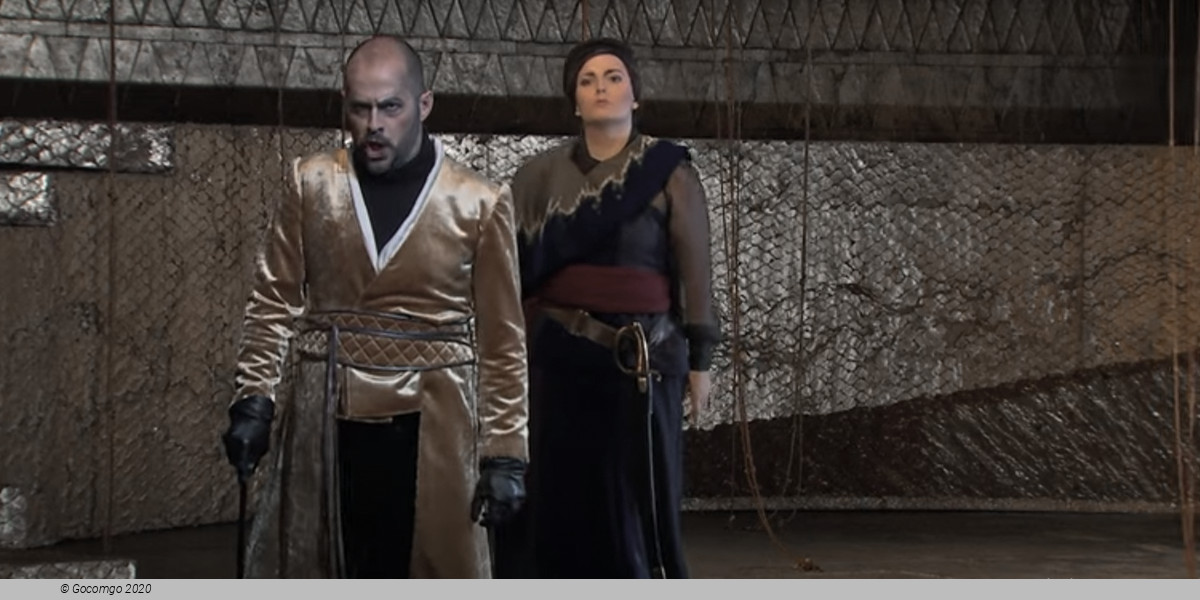
Defiantly, Assur enters and proclaims that this will be Arsace's last day on earth. Learning from his men that the people have turned against him, he still vows to kill Arsace. He moves towards the tomb only to find some unknown force, some apparition holding him back: (Deh ti ferma...Que numi furenti / "Oh, stay, be pacified, forgive"). His men urge him on, but still the apparition remains in his mind. His men are puzzled, until he seems to recover and then, with his men beside him, vows to fight on: (cabaletta: Que' Numi furenti, Quell' ombre fremente / "Those wrathful gods, those quivering shades").
Along with Oroe, Arsace enters the tomb. He awaits his rival. Assur enters, also awaiting Arsace. Semiramide then comes in to pray at Nino's tomb, asking for forgiveness and protection for her son: Aria: Al mio pregar t'arrendi: il figlio tuo diffendi / "Yield to my prayer: protect your son"). In the confusion of the darkness, all three – Arsace, Semiramide, and Assur – express some bewilderment as to the loss of their courage at this crucial moment: (Trio: L'usato ardir / "My wonted daring, my courage, where has it gone?"). But in the darkness and seeking to strike Assur, Arsace strikes Semiramide as she steps between them to stop the fight. Surprised to learn Arsace's real identity, Assur is arrested, Semiramide dies, and to general acclaim by the people, Arsace reluctantly accepts that he shall be King.











 Concertgebouwplein 10