
Teatro Real 1 March 2022 - Lakmé | GoComGo.com

Lakmé

Teatro Real, Main Auditorium, Madrid, Spain
All photos (10)
Select date and time
7:30 PM

E-tickets: Print at home or at the box office of the event if so specified. You will find more information in your booking confirmation email.

You can only select the category, and not the exact seats.
If you order 2 or 3 tickets: your seats will be next to each other.
If you order 4 or more tickets: your seats will be next to each other, or, if this is not possible, we will provide a combination of groups of seats (at least in pairs, for example 2+2 or 2+3).

Important Info
Type: Opera
City: Madrid, Spain
Starts at: 19:30
Acts: 3
Sung in: French
Titles in: Spanish,English

E-tickets: Print at home or at the box office of the event if so specified. You will find more information in your booking confirmation email.

You can only select the category, and not the exact seats.
If you order 2 or 3 tickets: your seats will be next to each other.
If you order 4 or more tickets: your seats will be next to each other, or, if this is not possible, we will provide a combination of groups of seats (at least in pairs, for example 2+2 or 2+3).

Overview

Opera in Concert Version

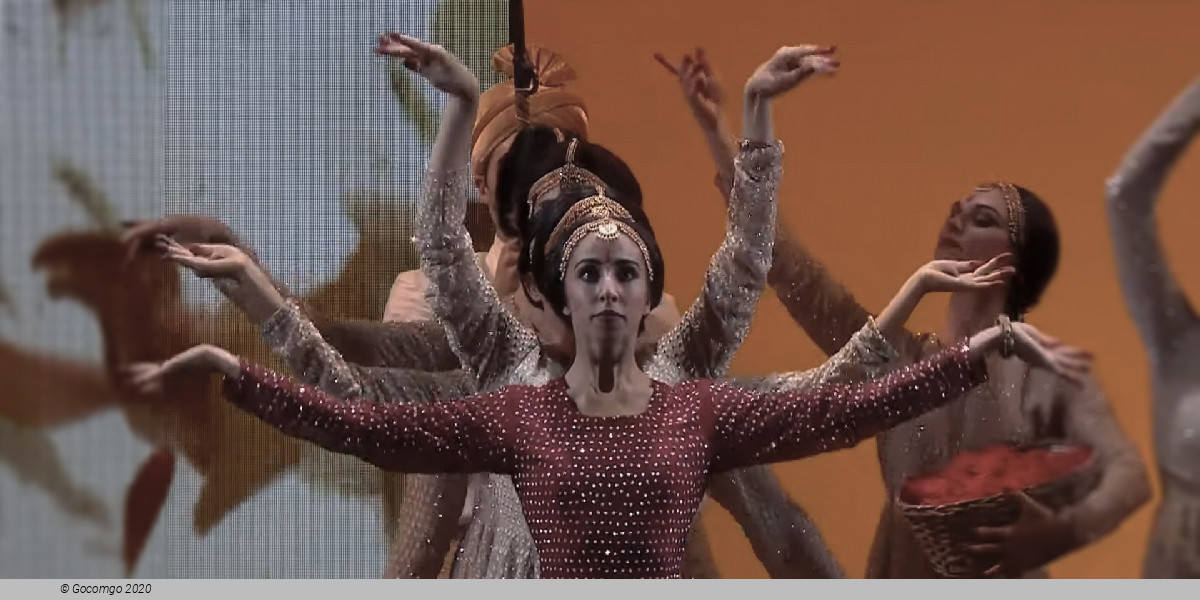
Lakmé - as with L'africaine beforehand or Madama Butterfly afterwards, each one with its particular success and sensibility - developed a tremendously delicate archetype of a romantic relationship, generally with a tragic finale, between a Western colonizer and a beautiful and sacrificial Easterner.

Reducing oriental cultures to simplistic exotic decoration –or "fictional essences", in post -colonial terminology– is one of the characteristic traits of 19th century exoticism. Beyond this debate, the approach permitted European composers to tint their scores with an evocative fragrance. Such is the case of Lakmé, where the "Flower Duet", over time, has become a crossover of universal proportions in the same way that the "Bell Song" aria of the protagonist became, from the moment the opera premiered, 

Fortunately, Lakmé is much more than these two moments. Not in vain, Delibes can be considered, along with Tchaikovsky, as the leading composer of ballet in the 19th century. His splendid score shows us just how much remains to discover of French opera.

History
Premiere of this production: 14 April 1883, Opéra-Comique, Paris

Lakmé is an opera in three acts by Léo Delibes to a French libretto by Edmond Gondinet and Philippe Gille. Set in British India in the mid-19th century, Lakmé is based on Théodore Pavie's story "Les babouches du Brahmane" and novel Le Mariage de Loti by Pierre Loti. Gondinet proposed it as a vehicle for the American soprano Marie van Zandt.

Synopsis

Place: India
Time: Late nineteenth century, during the British Raj.

Act 1
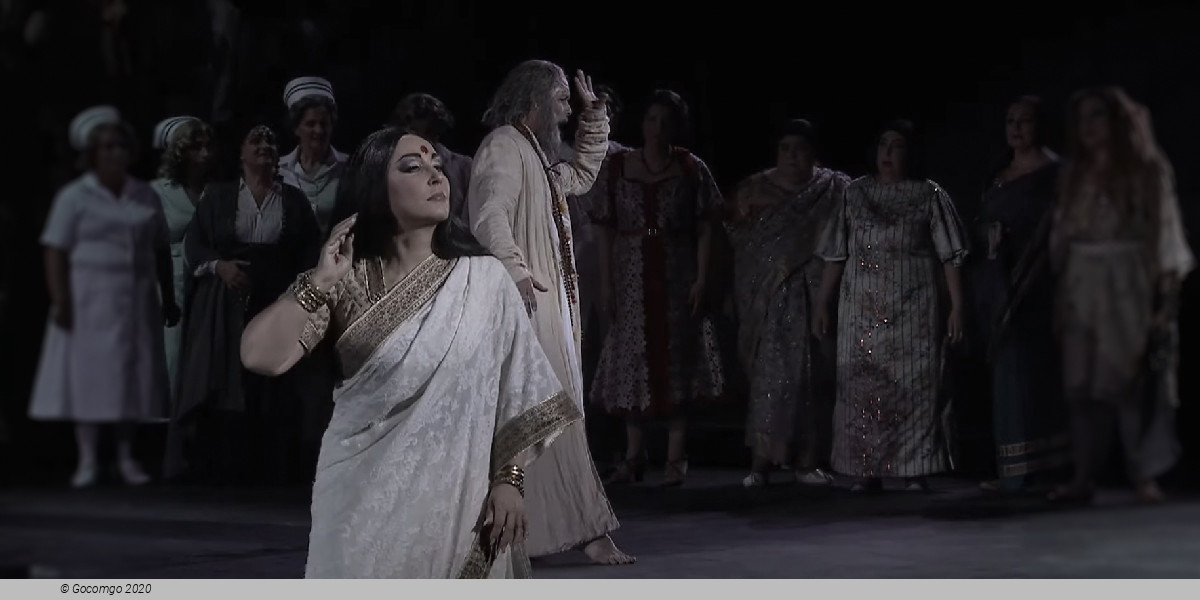
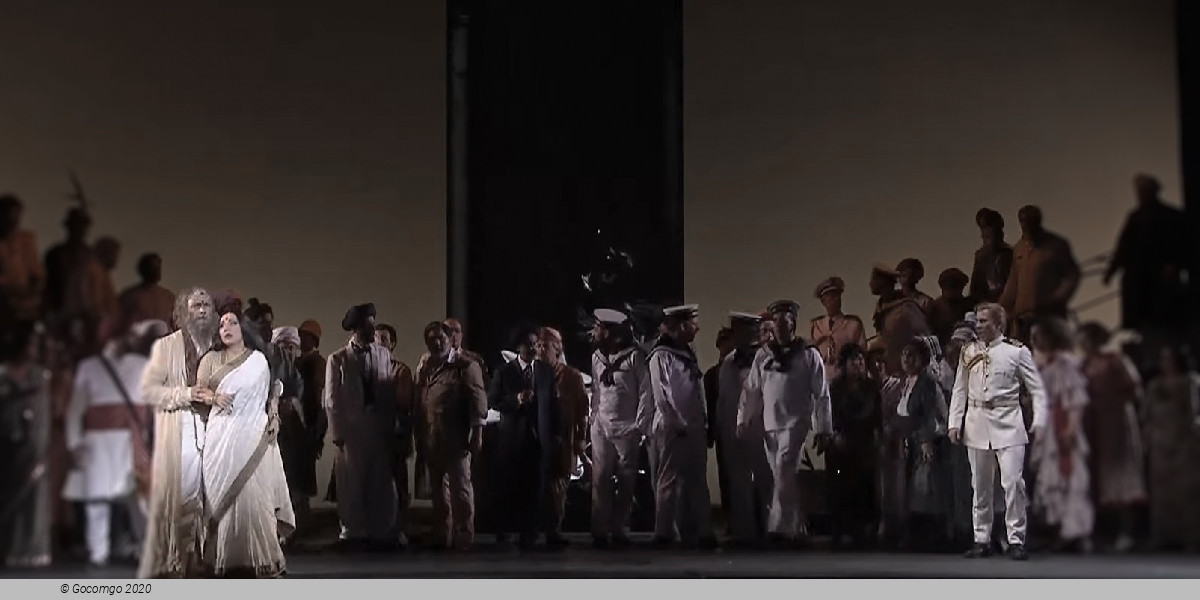
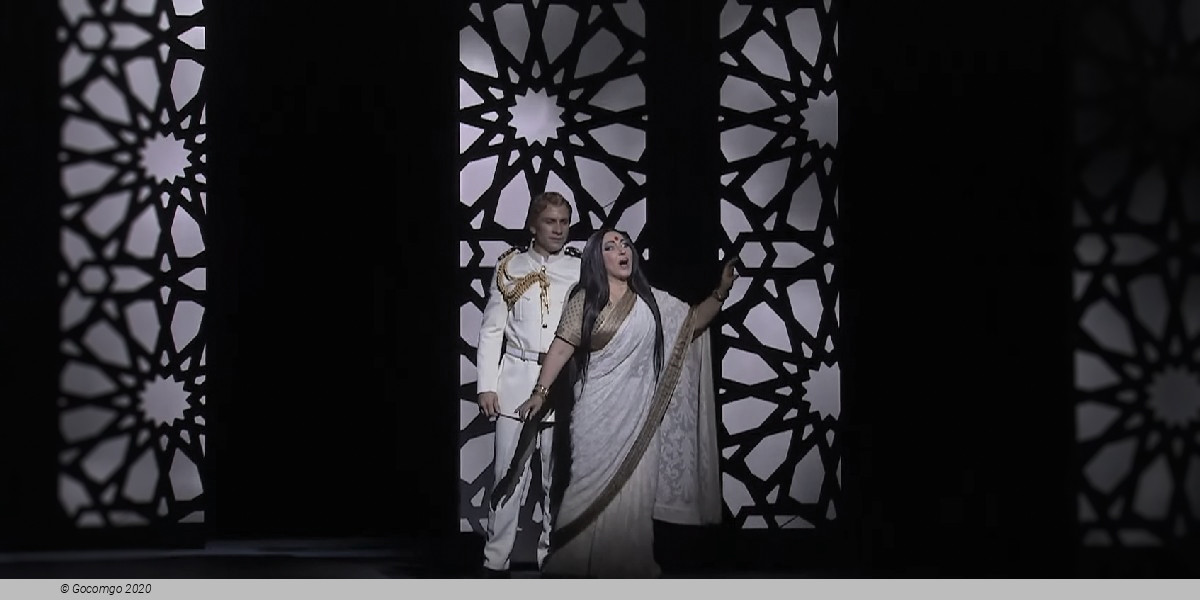
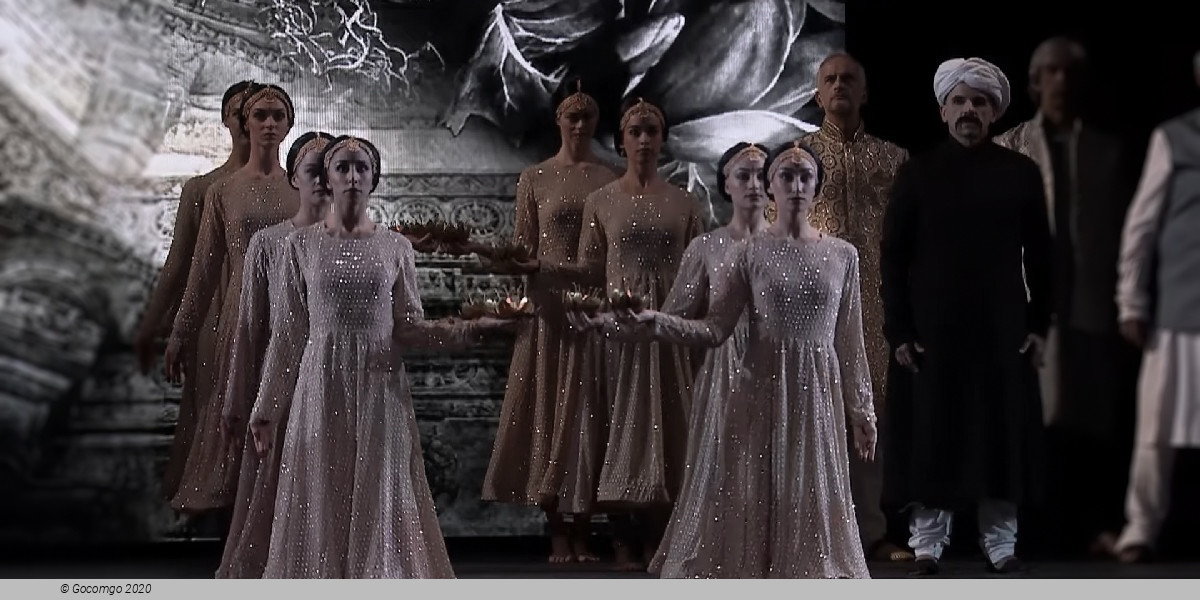
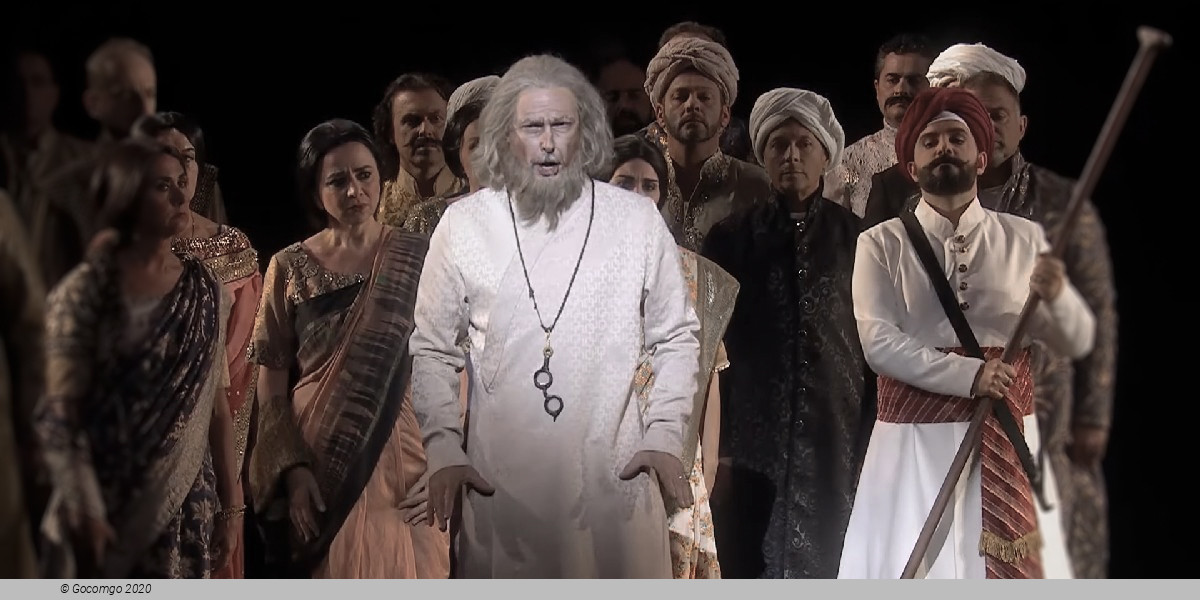
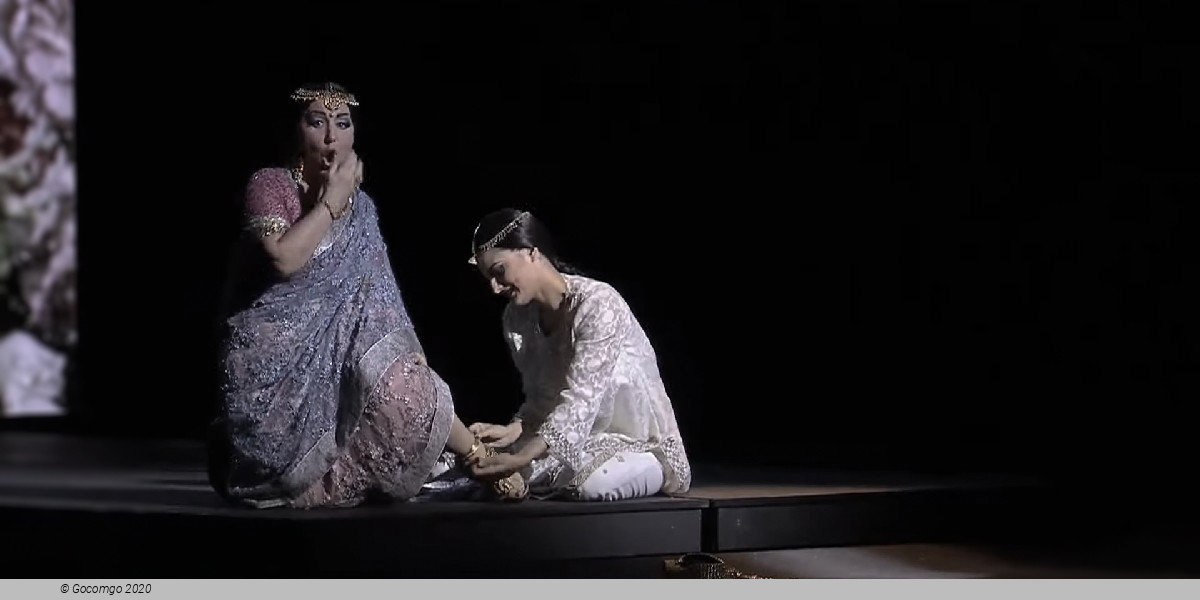
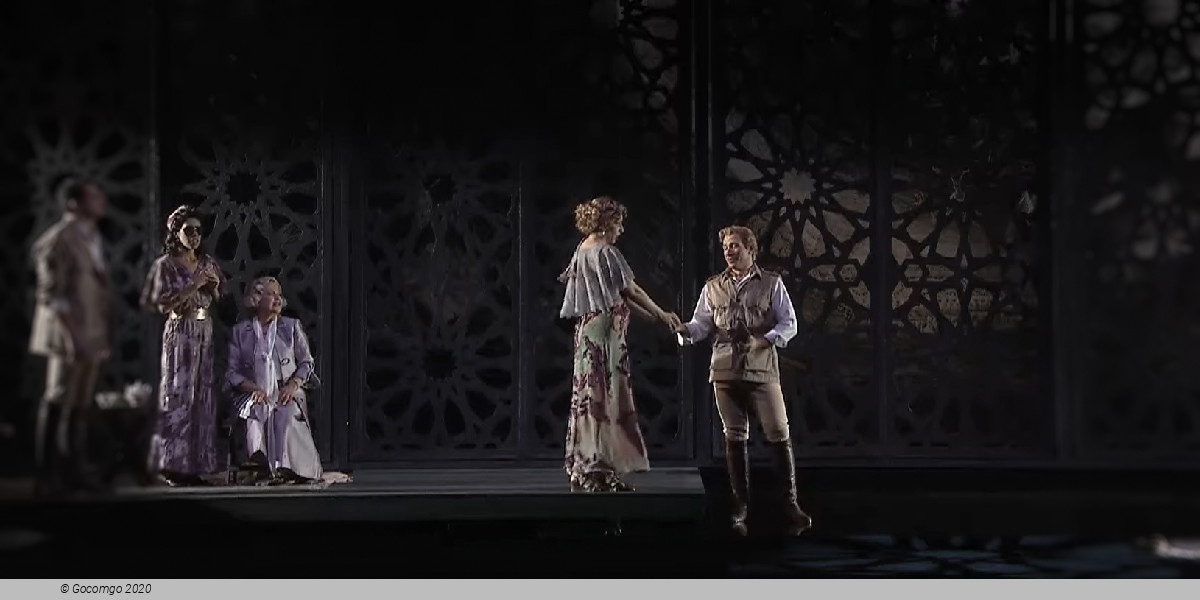
The Hindus go to perform their rites in a sacred Brahmin temple under the high priest, Nilakantha. Nilakantha's daughter Lakmé (which derives from the Sanskrit Lakshmi), and her servant Mallika, are left behind and go down to the river to gather flowers where they sing together the Flower Duet. As they approach the water at the river bank, Lakmé removes her jewellery and places it on a bench. Two British officers, Frederic and Gérald (Delibes uses Frenchified versions of the then common English names Frederick and Gerald), arrive nearby on a picnic with two British girls and their governess. The British girls see the jewellery and, impressed with it, request sketches of it; Gérald volunteers to stay and make sketches of the jewellery. He spots Lakmé and Mallika returning and hides. Mallika leaves Lakmé for a while; while alone Lakmé sees Gérald and, frightened by the foreigner's incursion, cries out for help. However, simultaneously, she is also intrigued by him and so she sends away those who had responded to her call for help when they come to her aid. Lakmé and Gérald begin to fall in love with each other. Nilakantha returns and learns of the British officer's trespassing, vowing revenge on him for what he assumes to be an affront to Lakmé's honour.

Act 2
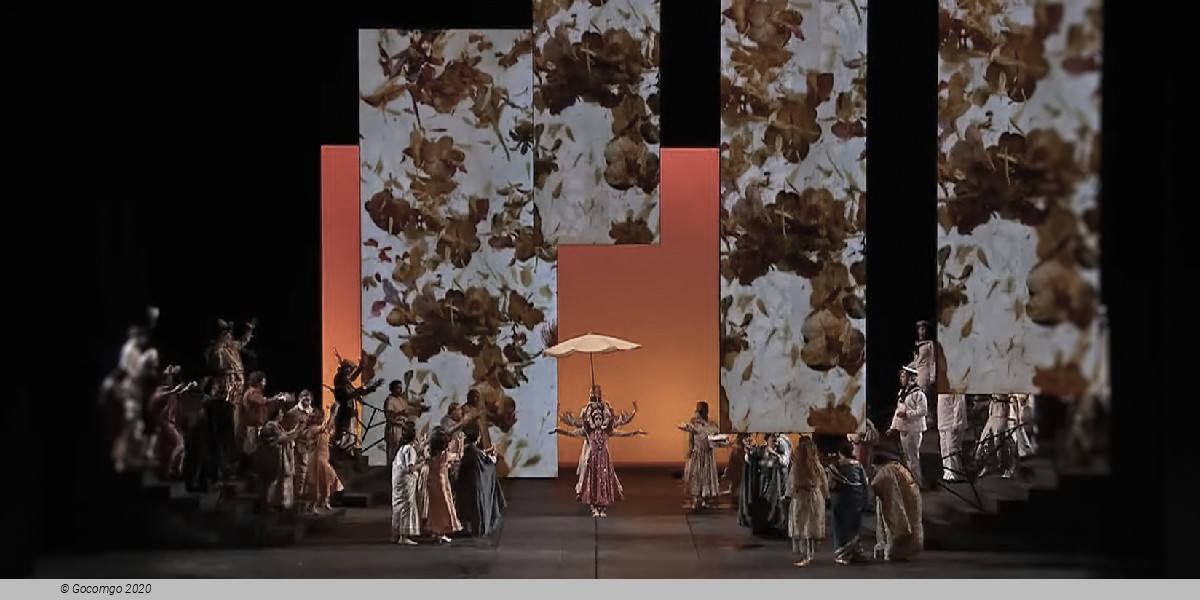
At a busy bazaar, Nilakantha forces Lakmé to sing (the Bell Song) in order to lure the trespasser into identifying himself. When Gérald steps forward, Lakmé faints, thus giving him away. Nilakantha stabs Gérald, wounding him. Lakmé takes Gérald to a secret hideout in the forest, where she lovingly nurses him back to health.

Act 3
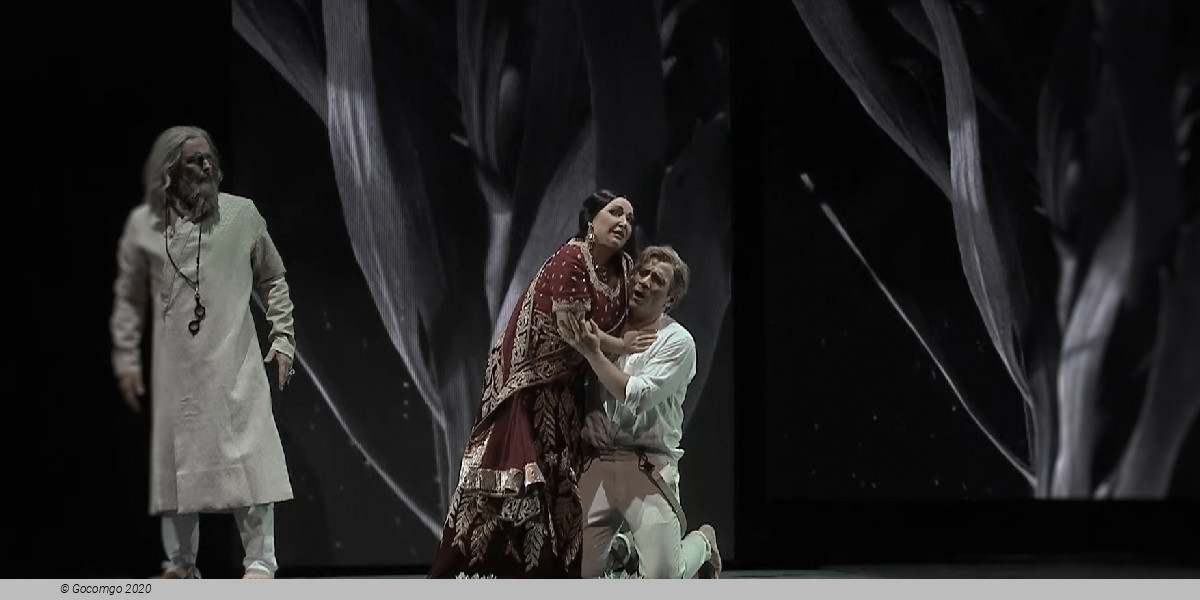
While Lakmé fetches sacred water that will confirm the vows of the lovers, Fréderic, Gérald's fellow British officer, appears before Gérald and reminds him of his military duty to his regiment. Gérald sadly accepts that his colleague is correct. After Lakmé returns, she senses the change in Gérald and realises that she has lost him. She dies with honour, rather than live with dishonour, killing herself by eating the poisonous datura leaf.

Venue Info

Teatro Real - Madrid
Location   Isabel II Square, s / n.

Teatro Real is a major opera house located in Madrid. Today the Teatro Real opera is one of the great theaters of Europe hosting large productions involving leading international figures in opera singing, musical direction, stage direction, and dance. Founded in 1818 and inaugurated on 19 November 1850, it closed in 1925 and reopened in 1966. Beginning in 1988 it underwent major refurbishing and renovation works and finally reopened in 1997 with a capacity of 1,746 seats. The theater offers visitors guided tours in several languages, including the auditorium, stage, workshops, and rehearsal rooms.

Founded by King Ferdinand VII in 1818, and after thirty-two years of planning and construction, a Royal Order on 7 May 1850 decreed the immediate completion of the "Teatro de Oriente" and the building works were finished within five months. The Opera House, located just in front of the Palacio Real, the official residence of the Queen who ordered the construction of the theatre, Isabel II, was finally inaugurated on 19 November 1850, with Donizetti's La Favorite.

The Teatro soon became one of the most prestigious opera houses in Europe. For over five decades it hosted the most renowned singers and composers of the time. In the early period, it saw famous opera singers such as Alboni, Frezzolini, Marietta Gazzaniga, Rosina Penco, Giulia Grisi, Giorgio Ronconi, Italo Gardoni, Mario de Candia and Antonio Selva among many others. In 1863, Giuseppe Verdi visited the theatre for the Spanish premiere of his La Forza del Destino. At its peak, in the last quarter of the 19th century, the Teatro hosted world renowned artists such as Adela Borghi, Marie Sasse, Adelina Patti, Christina Nilsson, Luisa Tetrazzini, Mattia Battistini, Julián Gayarre, Angelo Masini, Francesco Tamagno and Enrico Tamberlick. In 1925, the Ballets Russes of Diaghilev performed in the theatre with the presence of Nijinsky and Stravinsky.

From 1867 to 1925 the Teatro Real also housed the Madrid Royal Conservatory. In December of 1925 a Royal Order ordered its activities to be discontinued owing to the damage that the construction of the Metro de Madrid had caused to the building. The government set out to restore it and ordered numerous projects to be drawn out for its renovation, such as that from architect Urdanpilleta Flórez, who proposed a monumental remodeling of the building. However, financial difficulties prevented the completion of these projects and led to a simple restoration, sponsored by the Juan March Institute, and carried out first by the architect Manuel Gonzalez Valcárcel, and later by architects Miguel Verdú Belmonte and Francisco Rodriguez Partearroyo.

The theatre reopened in 1966 as a concert hall as well as the main concert venue for the Spanish National Orchestra and the RTVE Symphony Orchestra. The reopening was celebrated with a concert of the Spanish National Orchestra conducted by Rafael Frühbeck de Burgos, and the Orfeón Donostiarra. In 1969, the 14th Eurovision Song Contest was held at the theatre, featuring an onstage metal sculpture created by surrealist Spanish artist Salvador Dalí.

Important Info
Type: Opera
City: Madrid, Spain
Starts at: 19:30
Acts: 3
Sung in: French
Titles in: Spanish,English
Top of page