
Teatro Real: Fedora. Concert version. Tickets | Event Dates & Schedule | GoComGo.com

Fedora. Concert version. Tickets

Teatro Real, Madrid, Spain
All photos (9)
1 / 9
Available Dates: 7 - 10 Jan, 2027 (2 events)
Important Info
Type: Opera
City: Madrid, Spain
Acts: 3
Sung in: Italian
Titles in: English,Spanish

E-tickets: Print at home or at the box office of the event if so specified. You will find more information in your booking confirmation email.

You can only select the category, and not the exact seats.
If you order 2 or 3 tickets: your seats will be next to each other.
If you order 4 or more tickets: your seats will be next to each other, or, if this is not possible, we will provide a combination of groups of seats (at least in pairs, for example 2+2 or 2+3).

Cast
Performers
Choose the date to see the peformers
Creators
Composer: Umberto Giordano
Librettist: Arturo Colautti
Chorus Master: José Luis Basso
Dramaturge: Victorien Sardou
Overview

Widely regarded as one of the most compelling works of the verismo repertoire, Fedora is based on the play by Arturo Colautti, whose writing also inspired Giacomo Puccini’s Tosca.

Under the musical direction of Daniel Oren, this powerful opera by Umberto Giordano features acclaimed soprano Sonya Yoncheva in the title role. She is joined by a distinguished cast including Sabina Puértolas, Luciano Ganci, and George Petean, among others.

A gripping drama of passion, intrigue, and revenge, Fedora exemplifies the emotional intensity and theatrical immediacy of Italian verismo.

History
Premiere of this production: 17 November 1898, Teatro Lirico, Milan

Fedora is an opera in three acts by Umberto Giordano to an Italian libretto by Arturo Colautti, based on the play Fédora by Victorien Sardou. Along with Andrea Chénier and Siberia, it is one of the most notable works of Giordano.

Synopsis

Set in late 19th-century Europe, Fedora is a gripping tale of love, revenge, and tragic misunderstanding.

Princess Fedora mourns the murder of her fiancé, Count Vladimir. Determined to avenge his death, she suspects the revolutionary Count Loris Ipanov and sets out to expose him. When she finally confronts Loris, he reveals the truth: he killed Vladimir after discovering him in a compromising situation with Loris’s own wife. Shocked by this revelation, Fedora begins to question her assumptions—and finds herself unexpectedly drawn to Loris.

As their relationship deepens, Fedora secretly denounces Loris to the authorities, leading to the arrest and exile of his innocent brother and the death of his mother. Unaware of Fedora’s role in this tragedy, Loris confesses his love, and she returns his feelings, torn by guilt.

In the final act, Fedora reveals her actions. Devastated, Loris is overcome with grief and anger. Realizing the irreversible consequences of her revenge, Fedora takes poison, choosing death as the only escape from her remorse. She dies in Loris’s arms, sealing the opera’s tragic arc of passion and fate.

Act 1

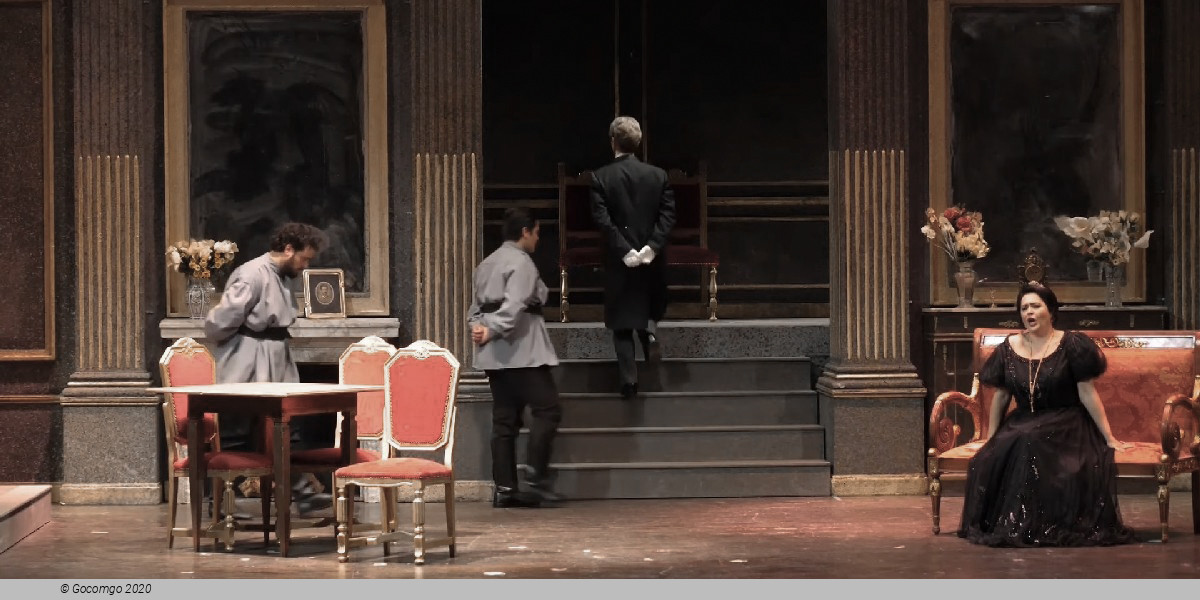
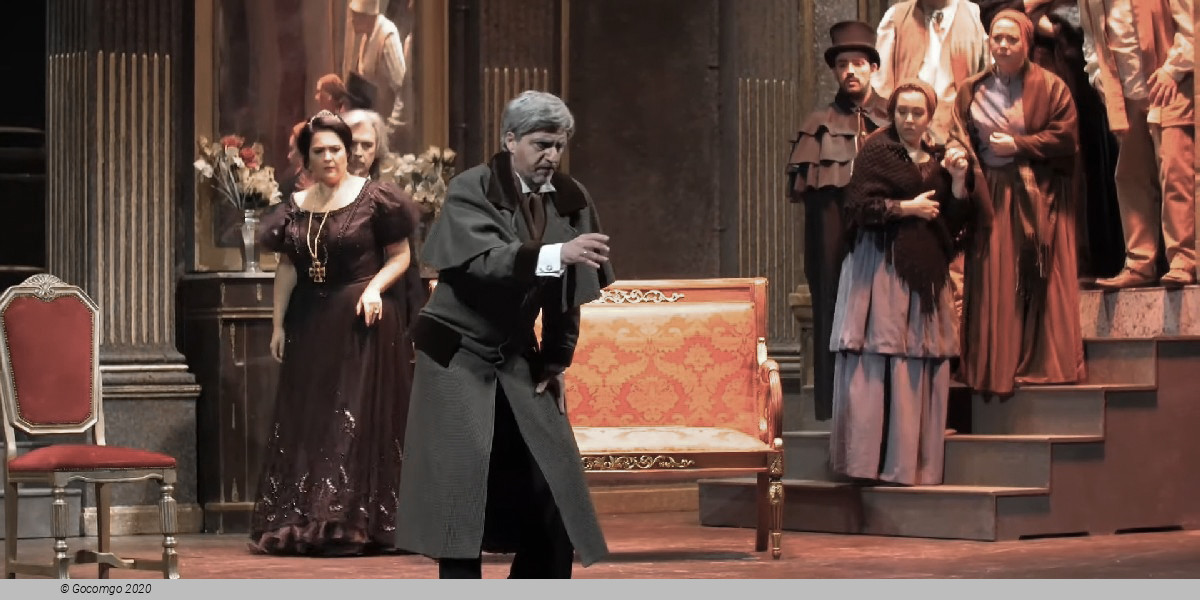
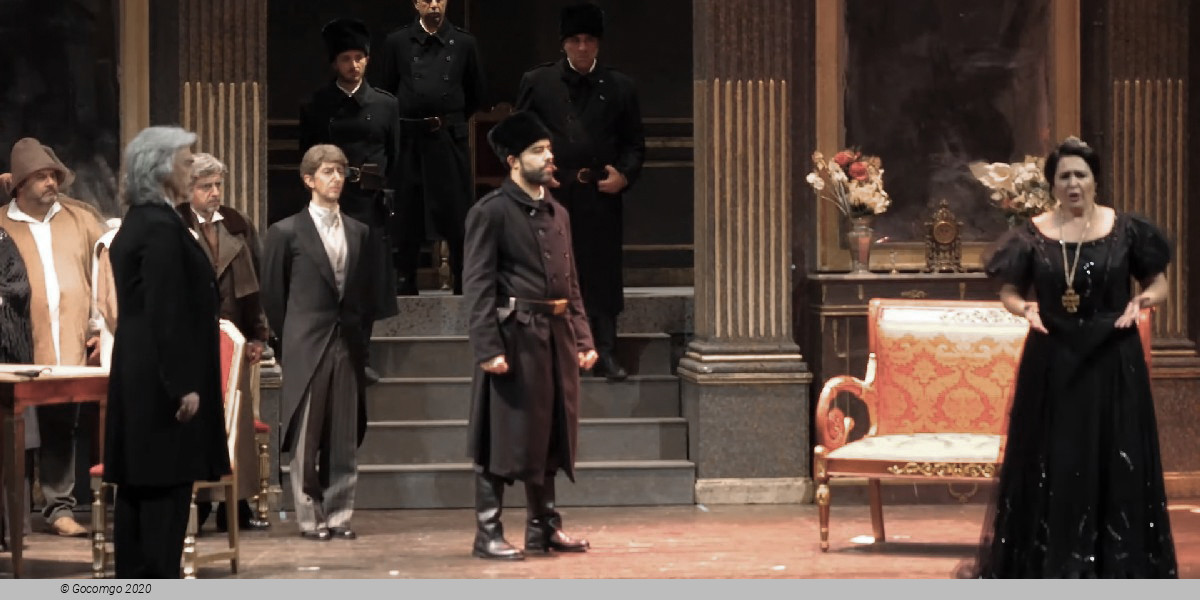
St. Petersburg, 1881. A winter's night in the palace of Count Vladimir Andrejevich

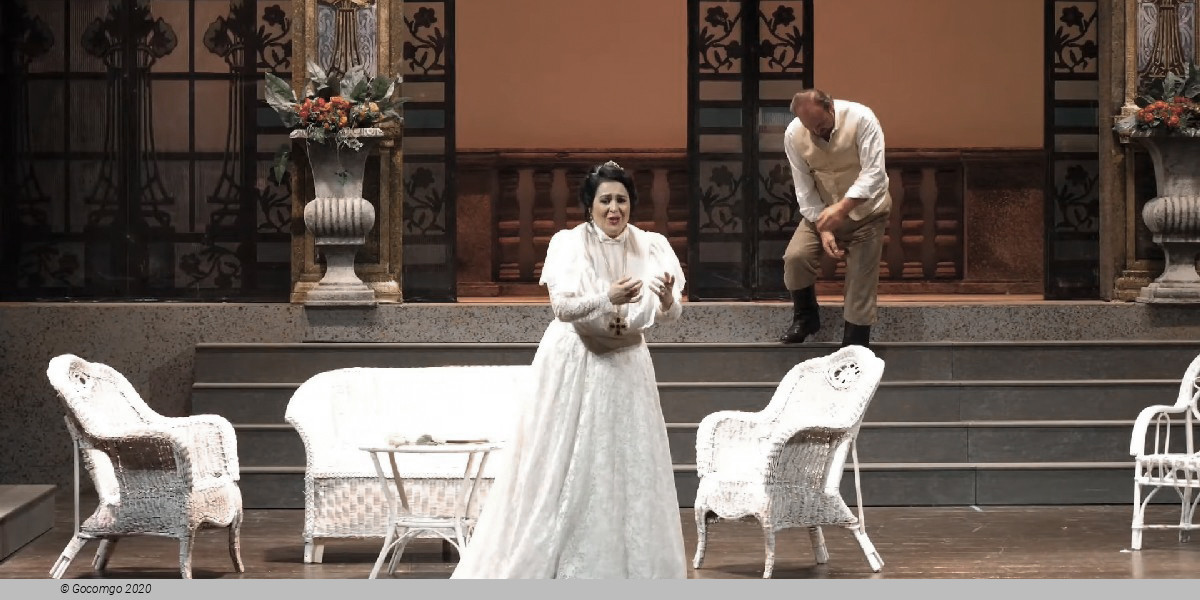
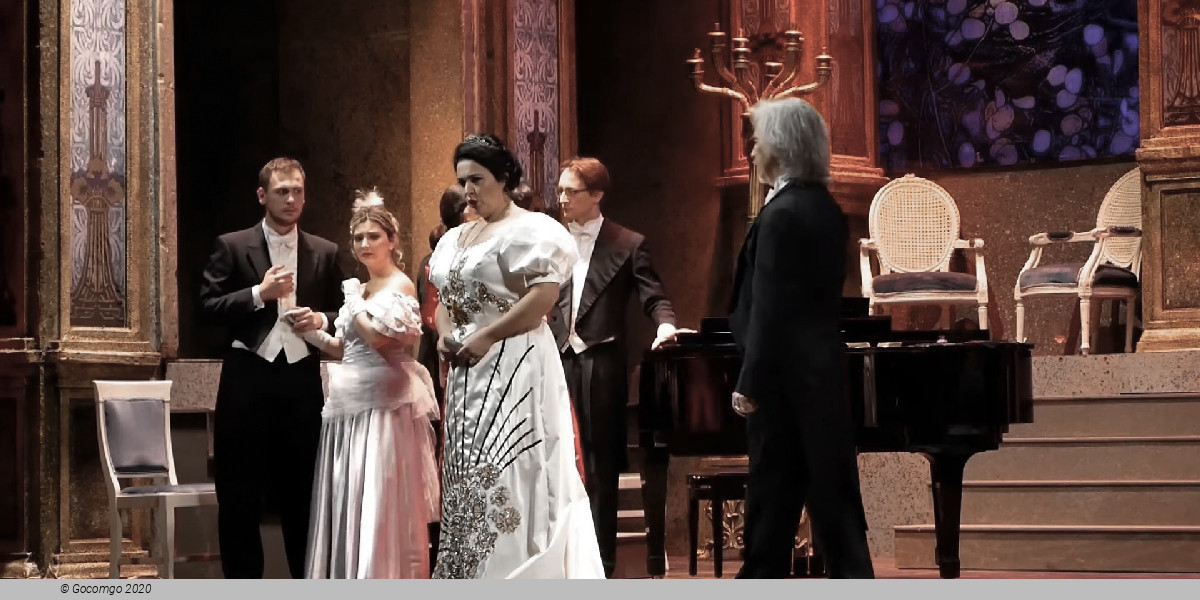
Princess Fedora, who is to marry the Count the following day, arrives and sings of her love for him, unaware that the dissolute Count has betrayed her with another woman. The sound of sleigh-bells is heard, and the Count is brought in mortally wounded. Doctors and a priest are summoned, and the servants are questioned. It is proposed that Count Loris Ipanov, a suspected Nihilist sympathizer, was probably the assassin. De Siriex (a diplomat), and Grech (a police inspector) plan an investigation. Fedora swears on the jeweled Byzantine cross she is wearing that Count Andrejevich's death will be avenged.

Act 2

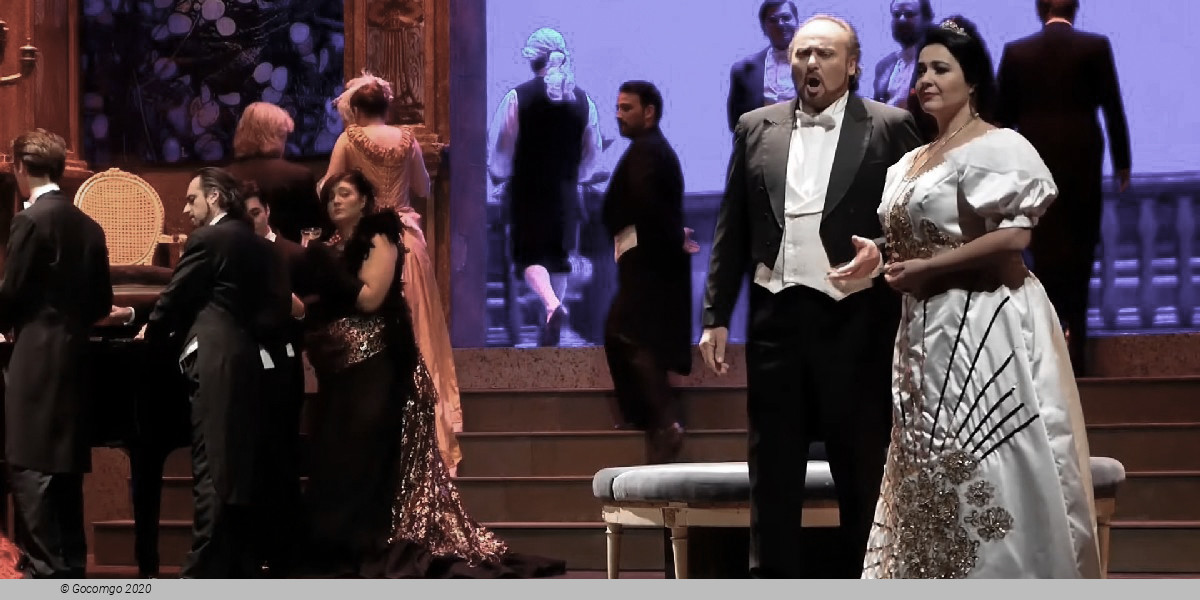
Paris

Fedora has followed Loris Ipanov there to avenge her fiancé's death. There is a reception at Fedora's house. Boleslao Lazinski, a virtuoso pianist is playing for the party-goers. Ipanov arrives and declares his love for Fedora. She tells him that she is returning to Russia the following day. Loris is desperate because he has been exiled from Russia and cannot follow her. He confesses to Fedora that it was he who had killed Count Vladimir. Fedora asks him to return after the reception is over to tell her the whole story. When she is alone, Fedora writes a letter to the chief of the Imperial Police in Russia accusing Ipanov of Count Vladimir's murder. Loris returns and confesses that he killed Count Vladimir because he had discovered that he and his wife were lovers. The night of the homicide, Ipanov had discovered them together. Vladimir shot at Ipanov and wounded him. Ipanov returned fire, killing Vladimir. Fedora realizes that she has fallen in love with Ipanov, and that he killed not for political ends, but to defend his honor. They embrace and she convinces him to spend the night with her.

Act 3

The Bernese Oberland in Switzerland

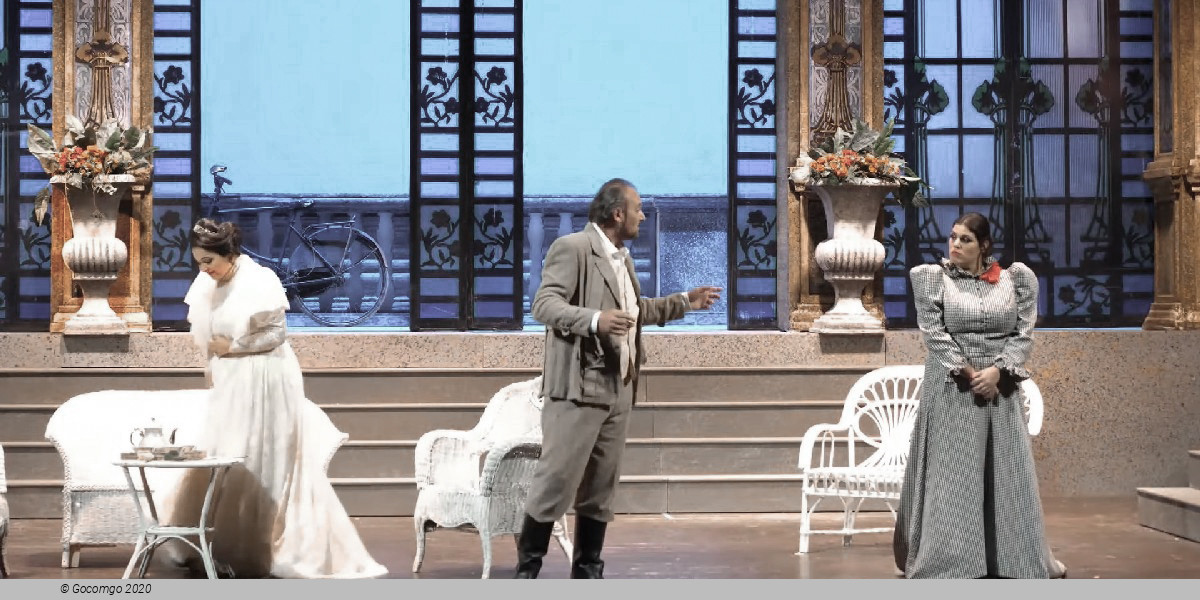
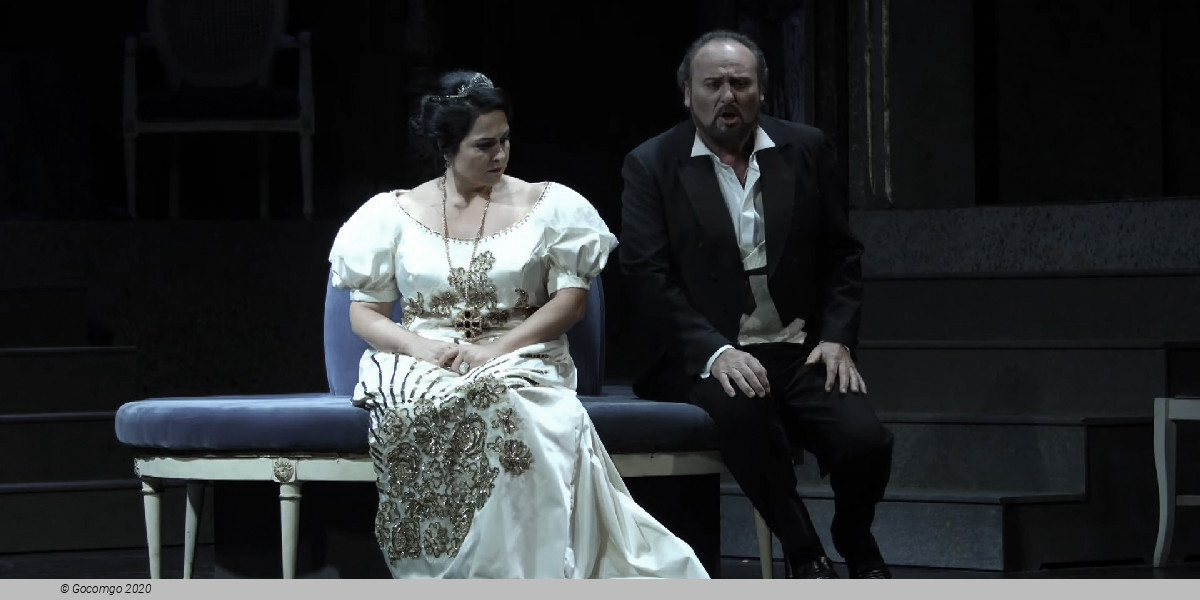
Loris and Fedora are now lovers and living in her villa. With them is her friend, Countess Olga Sukarev. De Siriex arrives to invite Olga on a bicycle ride. He tells Fedora that as a result of the letter she had written to the police chief, Loris's brother, Valeriano, was arrested for being part of the plot to murder Count Andrejevich and imprisoned in a fortress on the Neva river. One night the river flooded and the young man was drowned. When Loris's mother heard the news, she collapsed and died. Fedora is anguished – she has been the cause of two deaths. Loris receives a letter from a friend in Russia who tells him of the deaths of his mother and brother and that the cause was a woman living in Paris who had written a letter denouncing him to the police. Fedora confesses to Loris that she had written the letter and begs his forgiveness. When he initially refuses and curses her, Fedora swallows poison which she had hidden in the Byzantine cross she always wore around her neck. Loris begs the doctor to save her, but it is too late. Fedora dies in Loris's arms.

Venue Info

Teatro Real - Madrid
Location   Isabel II Square, s / n.

Teatro Real is a major opera house located in Madrid. Today the Teatro Real opera is one of the great theaters of Europe hosting large productions involving leading international figures in opera singing, musical direction, stage direction, and dance. Founded in 1818 and inaugurated on 19 November 1850, it closed in 1925 and reopened in 1966. Beginning in 1988 it underwent major refurbishing and renovation works and finally reopened in 1997 with a capacity of 1,746 seats. The theater offers visitors guided tours in several languages, including the auditorium, stage, workshops, and rehearsal rooms.

Founded by King Ferdinand VII in 1818, and after thirty-two years of planning and construction, a Royal Order on 7 May 1850 decreed the immediate completion of the "Teatro de Oriente" and the building works were finished within five months. The Opera House, located just in front of the Palacio Real, the official residence of the Queen who ordered the construction of the theatre, Isabel II, was finally inaugurated on 19 November 1850, with Donizetti's La Favorite.

The Teatro soon became one of the most prestigious opera houses in Europe. For over five decades it hosted the most renowned singers and composers of the time. In the early period, it saw famous opera singers such as Alboni, Frezzolini, Marietta Gazzaniga, Rosina Penco, Giulia Grisi, Giorgio Ronconi, Italo Gardoni, Mario de Candia and Antonio Selva among many others. In 1863, Giuseppe Verdi visited the theatre for the Spanish premiere of his La Forza del Destino. At its peak, in the last quarter of the 19th century, the Teatro hosted world renowned artists such as Adela Borghi, Marie Sasse, Adelina Patti, Christina Nilsson, Luisa Tetrazzini, Mattia Battistini, Julián Gayarre, Angelo Masini, Francesco Tamagno and Enrico Tamberlick. In 1925, the Ballets Russes of Diaghilev performed in the theatre with the presence of Nijinsky and Stravinsky.

From 1867 to 1925 the Teatro Real also housed the Madrid Royal Conservatory. In December of 1925 a Royal Order ordered its activities to be discontinued owing to the damage that the construction of the Metro de Madrid had caused to the building. The government set out to restore it and ordered numerous projects to be drawn out for its renovation, such as that from architect Urdanpilleta Flórez, who proposed a monumental remodeling of the building. However, financial difficulties prevented the completion of these projects and led to a simple restoration, sponsored by the Juan March Institute, and carried out first by the architect Manuel Gonzalez Valcárcel, and later by architects Miguel Verdú Belmonte and Francisco Rodriguez Partearroyo.

The theatre reopened in 1966 as a concert hall as well as the main concert venue for the Spanish National Orchestra and the RTVE Symphony Orchestra. The reopening was celebrated with a concert of the Spanish National Orchestra conducted by Rafael Frühbeck de Burgos, and the Orfeón Donostiarra. In 1969, the 14th Eurovision Song Contest was held at the theatre, featuring an onstage metal sculpture created by surrealist Spanish artist Salvador Dalí.

Important Info
Type: Opera
City: Madrid, Spain
Acts: 3
Sung in: Italian
Titles in: English,Spanish

E-tickets: Print at home or at the box office of the event if so specified. You will find more information in your booking confirmation email.

You can only select the category, and not the exact seats.
If you order 2 or 3 tickets: your seats will be next to each other.
If you order 4 or more tickets: your seats will be next to each other, or, if this is not possible, we will provide a combination of groups of seats (at least in pairs, for example 2+2 or 2+3).

From
$ 129
Top of page