Prologue
Two kings separated as children are reunited in adulthood. One king, Leontes of Sicilia, marries Hermione, giving her a beautiful emerald. They have a son, Mamilllius, and are blissfully happy. The other king, Polixenes of Bohemia, visits the court of Leontes. He is delighted to be reunited with his old friend and stays for nine months. By the time of his departure, Hermione is about to give birth to her second child.
Act I
The court of Sicilia
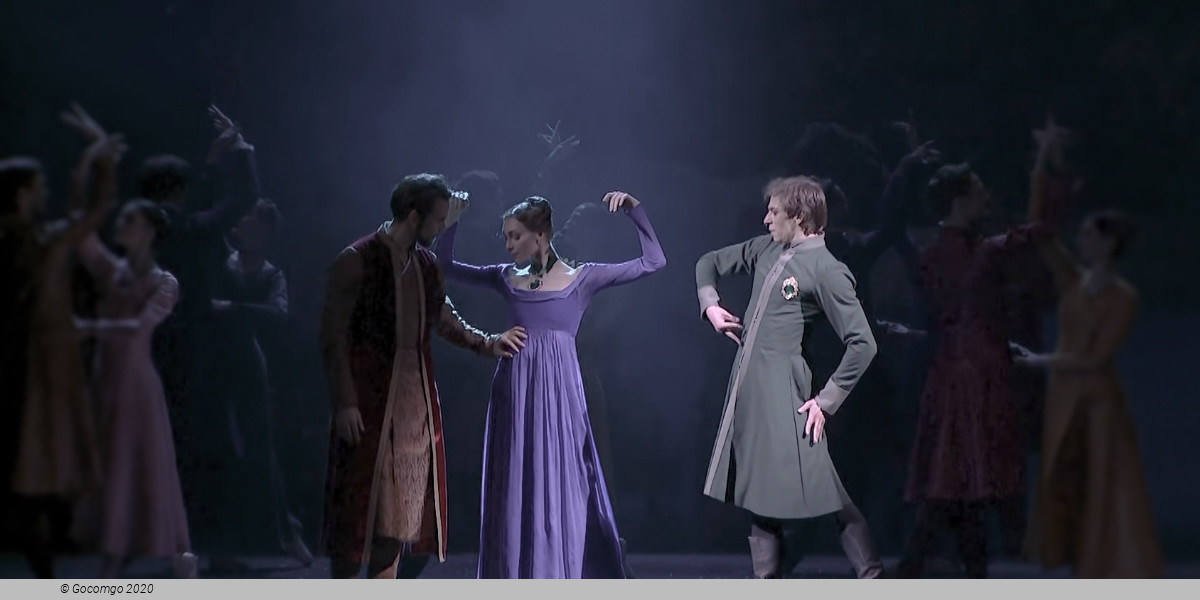
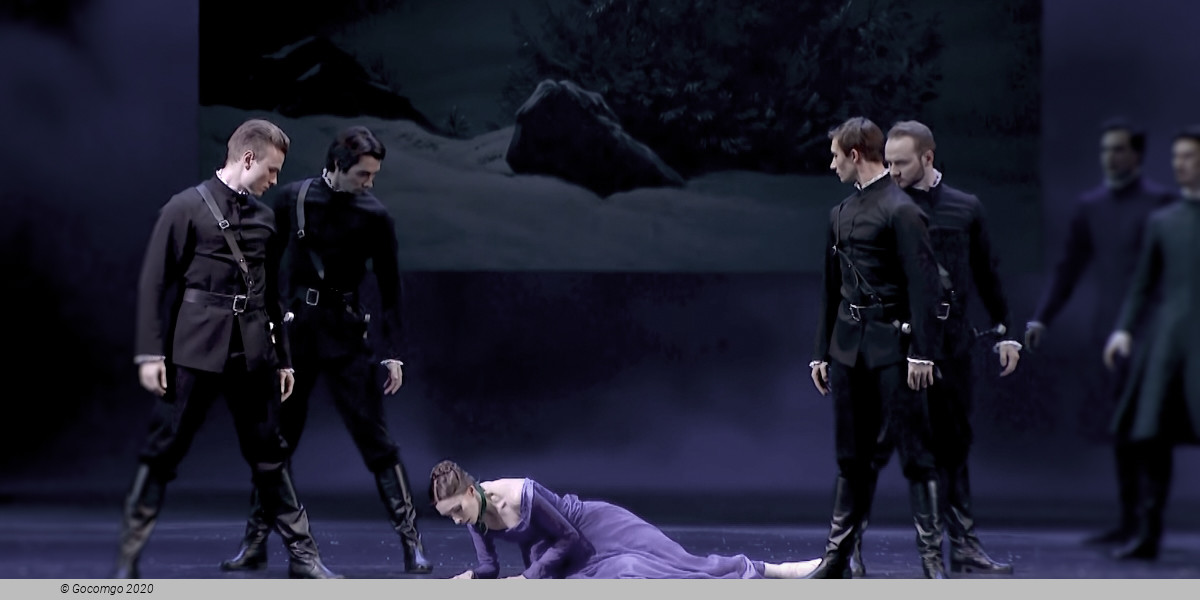
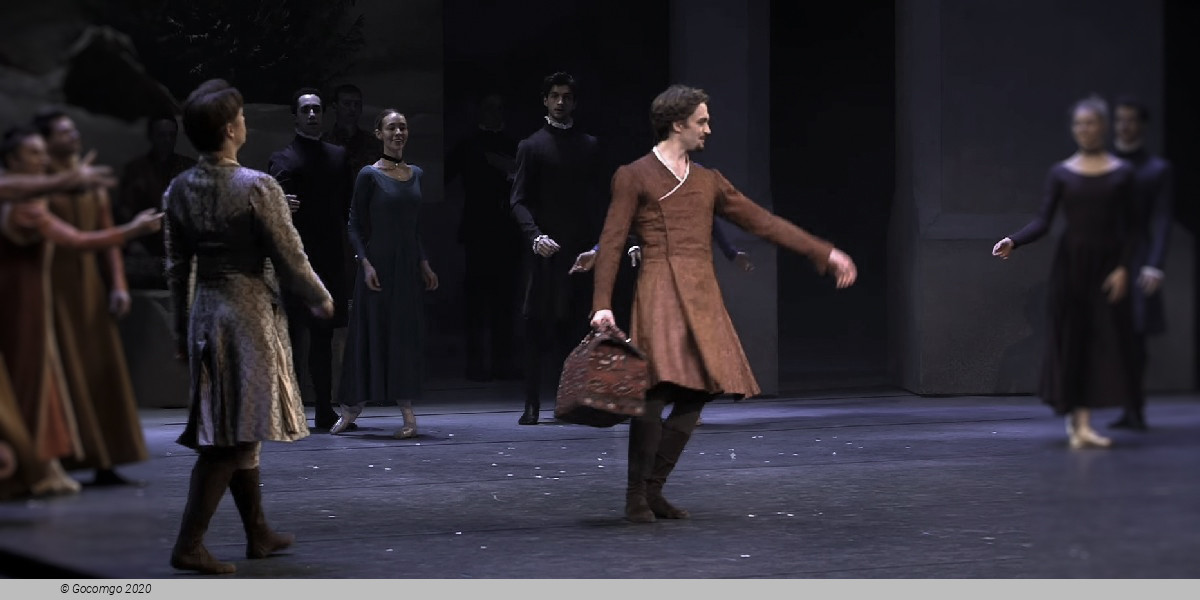
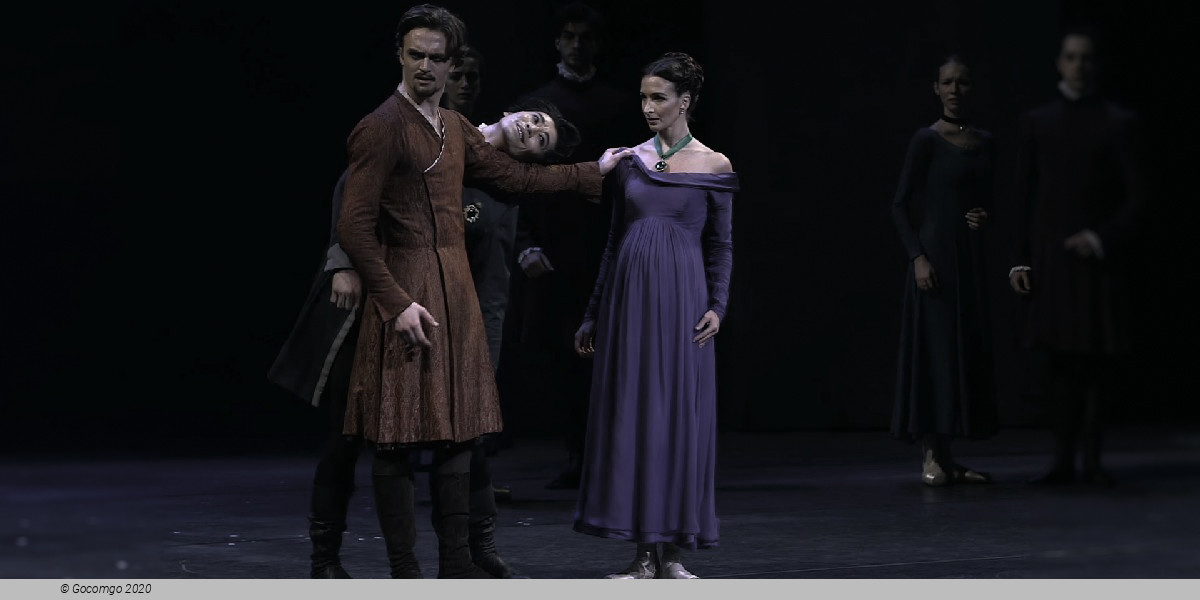
It is the day of Polixenes’ departure. The Bohemian court say goodbye to their Sicilian friends. At Hermione’s request, Polixenes agrees to stay on another week. In a flash of jealousy, Leontes becomes convinced that his wife has been unfaithful and is carrying Polixenes’ child. Jealousy turns to rage and he attacks Polixenes, who flees back
to Bohemia. Leontes publicly accuses Hermione of adultery and treason, then has her arrested. This so distresses Mamillius that he falls seriously ill.
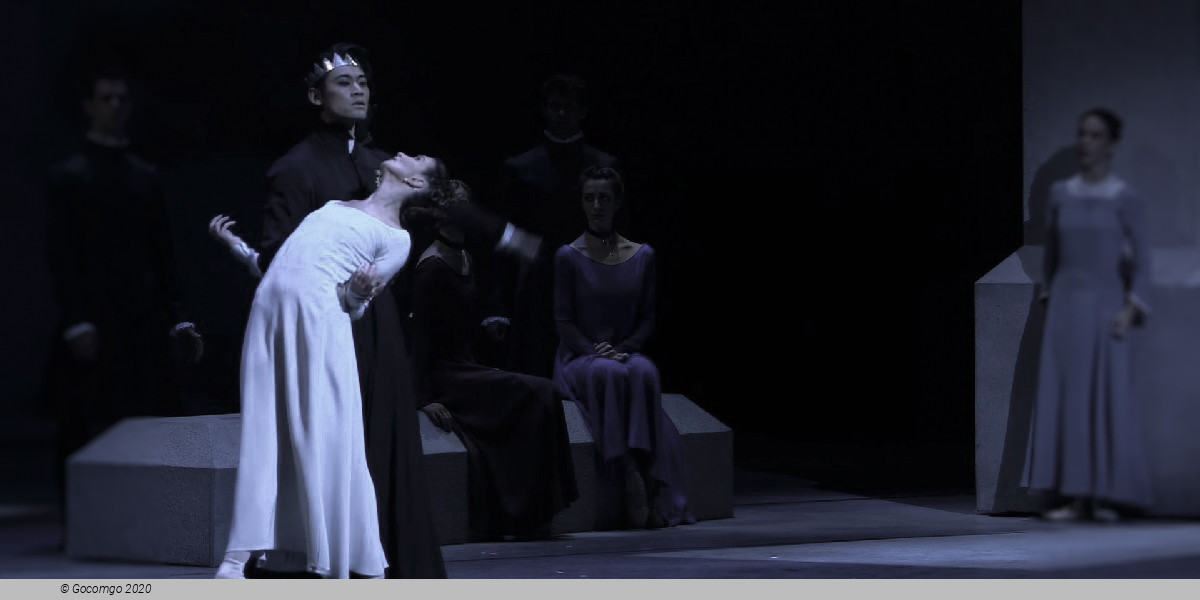
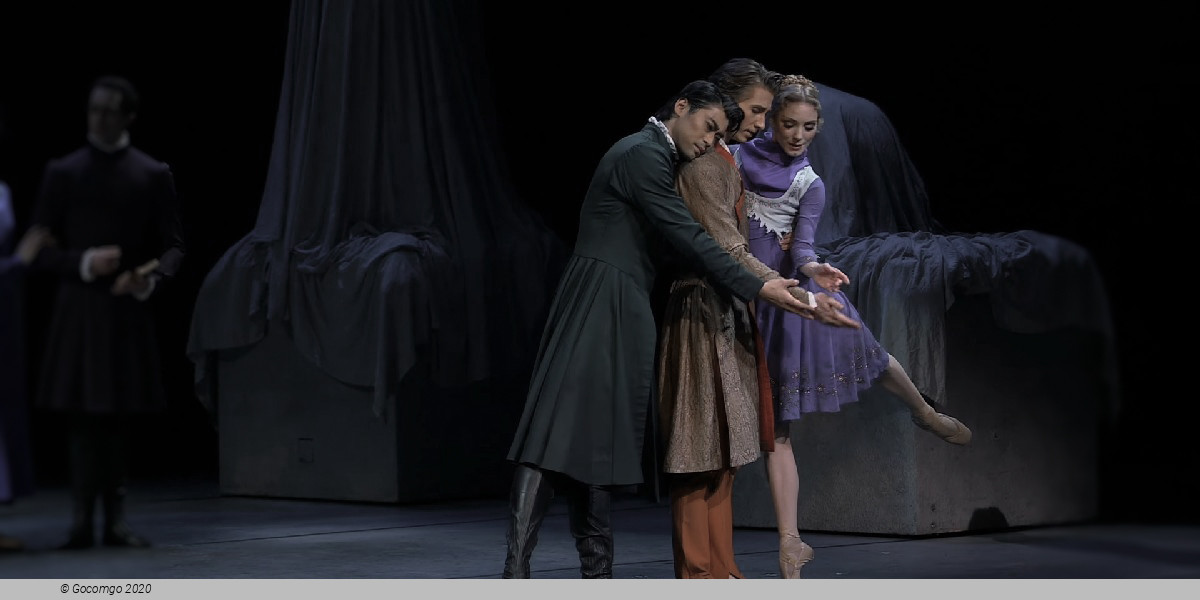
In prison, Hermione has given birth to a daughter. The head of her household, Paulina, brings the newborn to Leontes, hoping to convince him that the baby is his daughter. Instead, Leontes violently rejects the child, then orders Paulina’s husband Antigonus to abandon the baby in a remote place. Antigonus sets sail into a brewing storm with the baby and some treasure, including the emerald once given to Hermione by Leontes. Hermione is brought to trial and pleads her innocence. Leontes, now quite mad, refuses to believe her. Dazed and feverish, Mamillius enters the courtroom and, upon witnessing the unfolding tragedy, he collapses and dies from distress. Seeing the death of her child, Hermione too collapses dead and is taken away. Only now does Leontes realize the disastrous consequences of his terrible mistake.
The shores of Bohemia
Battling the storm, Antigonus struggles ashore to abandon the baby princess. As he leaves, he is pursued and killed by a wild bear. His ship, waiting at sea, is smashed to pieces on the rocks. As day breaks, a shepherd and his son Clown discover the baby girl and the treasure.
Act II
A hillside in Bohemia. Sixteen years later.
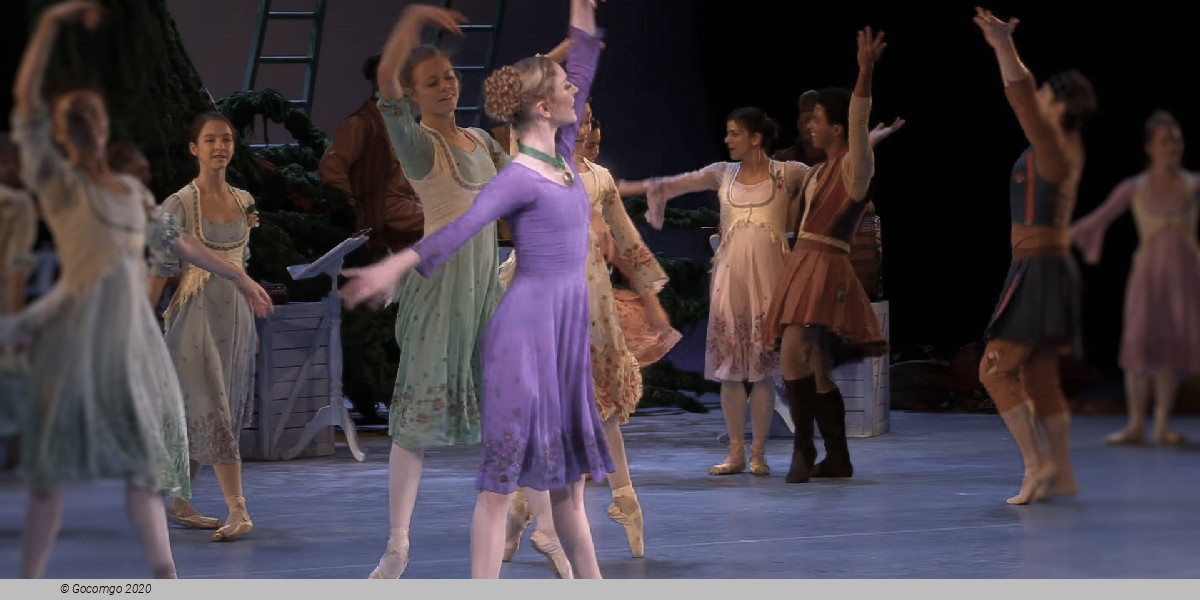
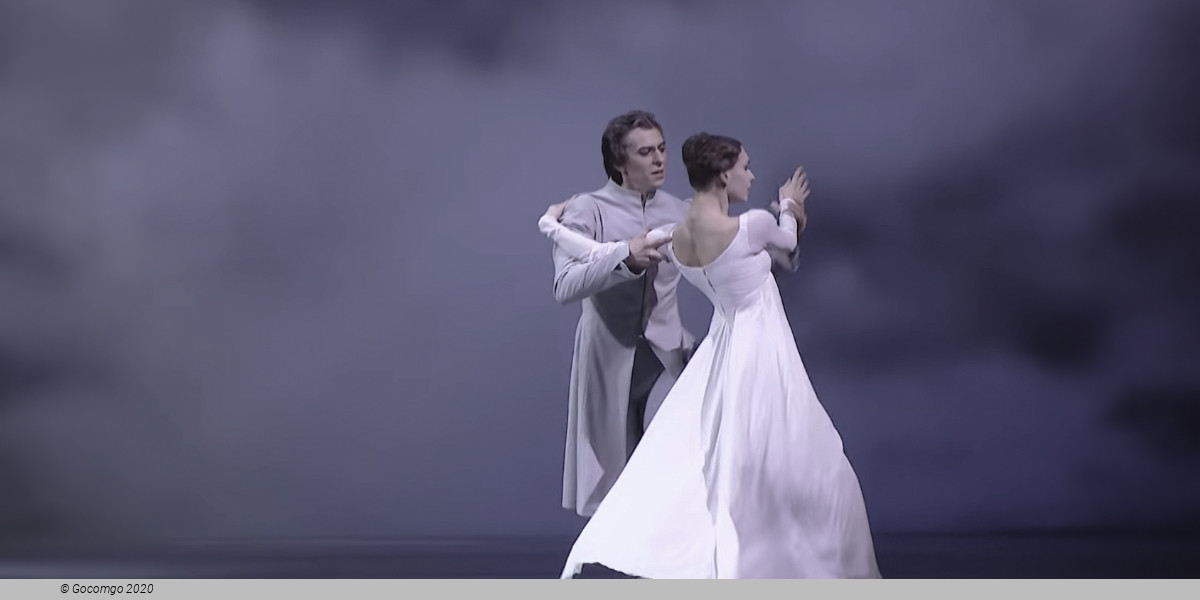
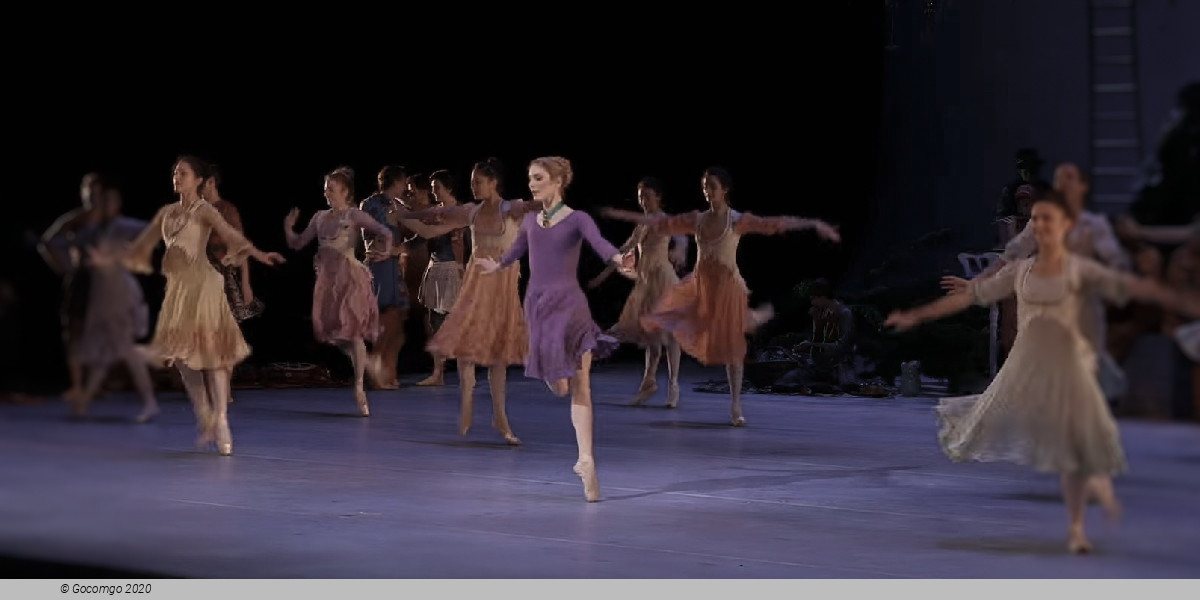
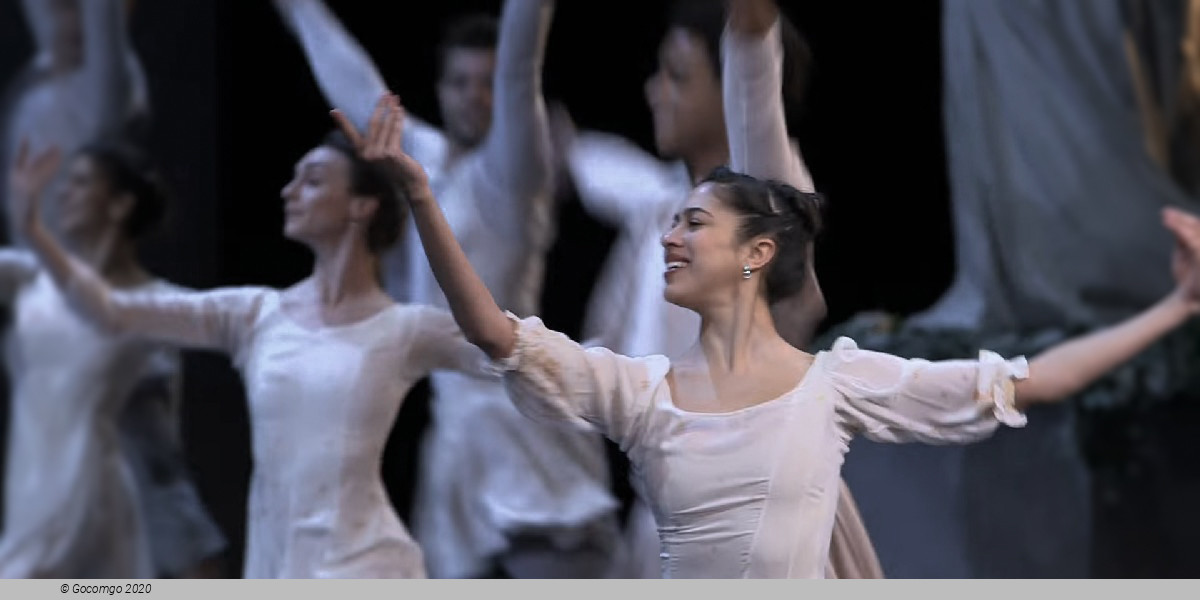
Perdita, the abandoned daughter of King Leontes and Queen Hermione, has been raised by the shepherd who found her. She dances beneath the great tree with her love, Prince Florizel, the son of Polixenes, whom the other villagers know only as a shepherd boy. The villagers arrive for the annual springtime festival. King Polixenes, who has heard that his son has been cavorting with a shepherdess, sends his steward to spy on the young prince. When the steward confirms his suspicions, Polixenes is enraged, and demands to see for himself.
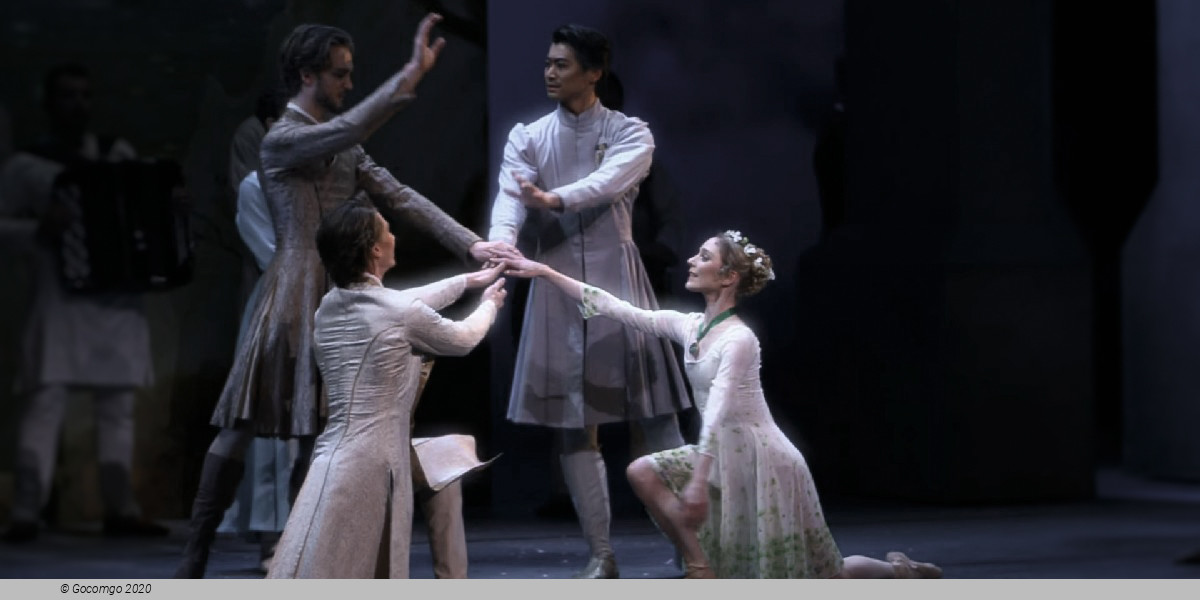
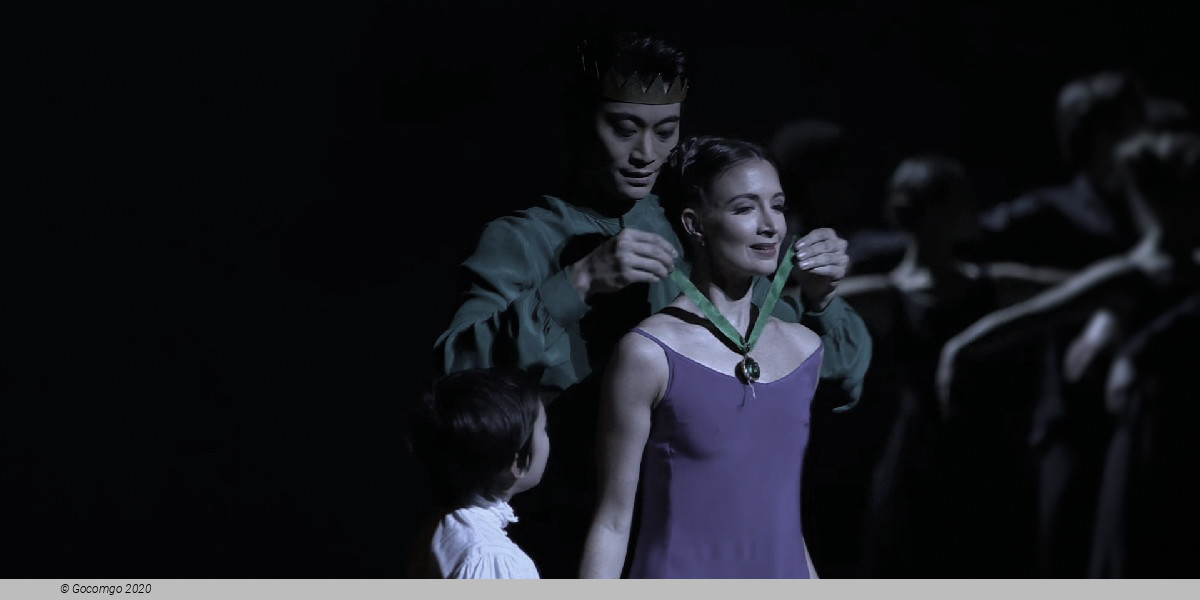
At the festival, Perdita is to be crowned May Queen. In honour of the occasion, Father Shepherd presents her with the emerald necklace he found with her on the beach. Polixenes and his steward arrive in disguise, keen to see what Florizel is up to. On witnessing Florizel’s engagement to a mere shepherdess, Polixenes reveals himself. He is furious with Florizel, and condemns Perdita and her family to death. They all flee by boat to Sicilia, pursued by Polixenes.
Act III
A clifftop in Sicilia
King Leontes mourns by the clifftop graves of his wife and son, watched over by Paulina. Perdita and Florizel’s ship approaches Sicilia.
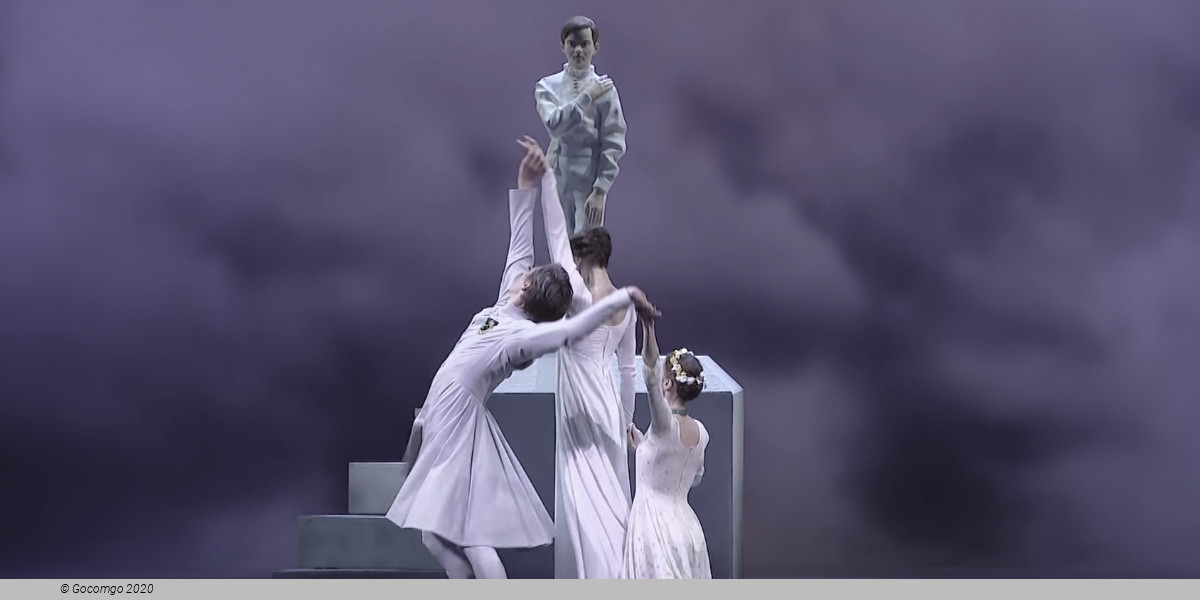
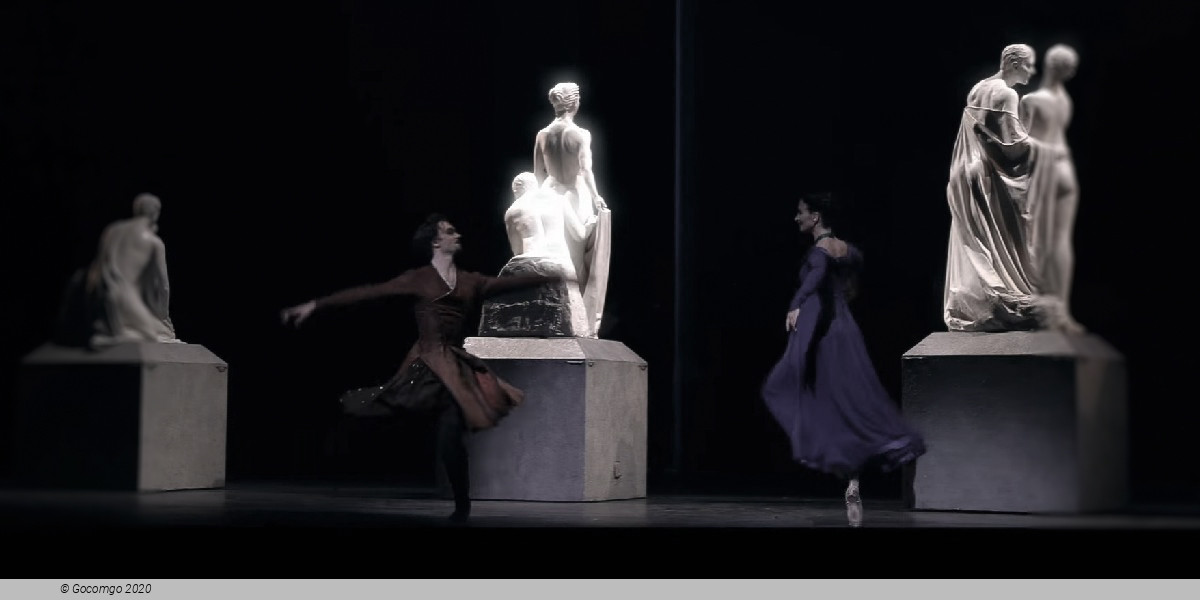
The palace in Sicilia Perdita and Florizel appeal to Leontes to allow their union, and to intercede with the enraged Polixenes on their behalf. Leontes is taken with the likeness of Florizel to Polixenes. He agrees to help the young couple, who remind him of his lost children. Polixenes arrives and Leontes tries to reason with him, but he violently handles Perdita, revealing the emerald. The long lost Princess of Sicilia is miraculously alive and the two kings are reunited. The Palace celebrates the wedding of Florizel and Perdita. As the festivities die down, Leontes is led by Paulina to see a new statue of Hermione. Deeply remorseful, he kneels at its base. Suddenly, the statue comes to life – it is Hermione, who is alive and has been kept in hiding by Paulina for 16 years. She embraces Leontes, and the family is reunited.
Following a brief setup scene the play begins with the appearance of two childhood friends: Leontes, King of Sicilia, and Polixenes, the King of Bohemia. Polixenes is visiting the kingdom of Sicilia, and is enjoying catching up with his old friend. However, after nine months, Polixenes yearns to return to his own kingdom to tend to affairs and see his son. Leontes desperately attempts to get Polixenes to stay longer, but is unsuccessful. Leontes then decides to send his wife, Queen Hermione, to try to convince Polixenes. Hermione agrees and with three short speeches is successful. Leontes is puzzled as to how Hermione convinced Polixenes so easily, and so he begins to suspect that his pregnant wife has been having an affair with Polixenes and that the child is Polixenes'. Leontes orders Camillo, a Sicilian Lord, to poison Polixenes. Camillo instead warns Polixenes and they both flee to Bohemia.
Furious at their escape, Leontes now publicly accuses his wife of infidelity, and declares that the child she is bearing must be illegitimate. He throws her in prison, over the protests of his nobles, and sends two of his lords, Cleomenes and Dion, to the Oracle at Delphos for what he is sure will be confirmation of his suspicions. Meanwhile, the queen gives birth to a girl, and her loyal friend Paulina takes the baby to the king, in the hopes that the sight of the child will soften his heart. He grows angrier, however, and orders Paulina's husband, Lord Antigonus, to take the child and abandon it in a desolate place. Cleomenes and Dion return from Delphos with word from the Oracle and find Hermione publicly and humiliatingly put on trial before the king. She asserts her innocence, and asks for the word of the Oracle to be read before the court. The Oracle states categorically that Hermione and Polixenes are innocent, Camillo is an honest man, and that Leontes will have no heir until his lost daughter is found. Leontes shuns the news, refusing to believe it as the truth. As this news is revealed, word comes that Leontes' son, Mamillius, has died of a wasting sickness brought on by the accusations against his mother. At this, Hermione falls in a swoon, and is carried away by Paulina, who subsequently reports the queen's death to her heartbroken and repentant husband. Leontes vows to spend the rest of his days atoning for the loss of his son, his abandoned daughter, and his queen.
Antigonus, meanwhile, abandons the baby on the coast of Bohemia, reporting that Hermione appeared to him in a dream and bade him name the girl Perdita. He leaves a fardel (a bundle) by the baby containing gold and other trinkets which suggest that the baby is of noble blood. A violent storm suddenly appears, wrecking the ship on which Antigonus arrived. He wishes to take pity on the child, but is chased away in one of Shakespeare's most famous stage directions: "Exit, pursued by a bear." (It is not known whether Shakespeare used a real bear from the London bear-pits, or an actor in bear costume.) Perdita is rescued by a shepherd and his son, also known as "Clown."
"Time" enters and announces the passage of sixteen years. Camillo, now in the service of Polixenes, begs the Bohemian king to allow him to return to Sicilia. Polixenes refuses and reports to Camillo that his son, Prince Florizel, has fallen in love with a lowly shepherd girl: Perdita. He suggests to Camillo that, to take his mind off thoughts of home, they disguise themselves and attend the sheep-shearing feast where Florizel and Perdita will be betrothed. At the feast, hosted by the Old Shepherd who has prospered thanks to the gold in the fardel, the pedlar Autolycus picks the pocket of the Young Shepherd and, in various guises, entertains the guests with bawdy songs and the trinkets he sells. Disguised, Polixenes and Camillo watch as Florizel (under the guise of a shepherd named Doricles) and Perdita are betrothed. Then, tearing off the disguise, Polixenes angrily intervenes, threatening the Old Shepherd and Perdita with torture and death and ordering his son never to see the shepherd's daughter again. With the aid of Camillo, however, who longs to see his native land again, Florizel and Perdita take ship for Sicilia, using the clothes of Autolycus as a disguise. They are joined in their voyage by the Old Shepherd and his son who are directed there by Autolycus.
In Sicilia, Leontes is still in mourning. Cleomenes and Dion plead with him to end his time of repentance because the kingdom needs an heir. Paulina, however, convinces the king to remain unmarried forever since no woman can match the greatness of his lost Hermione. Florizel and Perdita arrive, and they are greeted effusively by Leontes. Florizel pretends to be on a diplomatic mission from his father, but his cover is blown when Polixenes and Camillo, too, arrive in Sicilia. The meeting and reconciliation of the kings and princes is reported by gentlemen of the Sicilian court: how the Old Shepherd raised Perdita, how Antigonus met his end, how Leontes was overjoyed at being reunited with his daughter, and how he begged Polixenes for forgiveness. The Old Shepherd and Young Shepherd, now made gentlemen by the kings, meet Autolycus, who asks them for their forgiveness for his roguery. Leontes, Polixenes, Camillo, Florizel and Perdita then go to Paulina's house in the country, where a statue of Hermione has been recently finished. The sight of his wife's form makes Leontes distraught, but then, to everyone's amazement, the statue shows signs of vitality; it is Hermione, restored to life. As the play ends, Perdita and Florizel are engaged, and the whole company celebrates the miracle. Despite this happy ending typical of Shakespeare's comedies and romances, the impression of the unjust death of young prince Mamillius lingers to the end, being an element of unredeemed tragedy, in addition to the years wasted in separation.










 Teatralnaya Square 1