
Teatro Colón tickets 23 June 2026 - Premiere I Capuleti e i Montecchi | GoComGo.com

Premiere
I Capuleti e i Montecchi

Teatro Colón, Buenos Aires, Argentina
All photos (6)
Select date and time
8 PM
From
US$ 109

E-tickets: Print at home or at the box office of the event if so specified. You will find more information in your booking confirmation email.

You can only select the category, and not the exact seats.
If you order 2 or 3 tickets: your seats will be next to each other.
If you order 4 or more tickets: your seats will be next to each other, or, if this is not possible, we will provide a combination of groups of seats (at least in pairs, for example 2+2 or 2+3).

Important Info
Type: Opera
City: Buenos Aires, Argentina
Starts at: 20:00
Acts: 2
Sung in: Italian

E-tickets: Print at home or at the box office of the event if so specified. You will find more information in your booking confirmation email.

You can only select the category, and not the exact seats.
If you order 2 or 3 tickets: your seats will be next to each other.
If you order 4 or more tickets: your seats will be next to each other, or, if this is not possible, we will provide a combination of groups of seats (at least in pairs, for example 2+2 or 2+3).

Cast
Performers
Conductor: Evelino Pidò
Choir: Coro Estable del Teatro Colón
Orchestra: Orquesta Estable del Teatro Colón
Creators
Composer: Vincenzo Bellini
Librettist: Felice Romani
Chorus Master: Miguel Martínez
Director: Pablo Maritano
Overview

A tale of love and loss, reborn with dramatic intensity and lyrical beauty — only at Teatro Colón.

Experience the tragic beauty of Vincenzo Bellini’s I Capuleti e i Montecchi in a stunning new production at the legendary Teatro Colón. This bel canto masterpiece, inspired not by Shakespeare but by earlier Italian sources of the Romeo and Juliet tale, unfolds with Bellini’s signature melodies — long, arching phrases filled with longing, tenderness, and emotional fire.

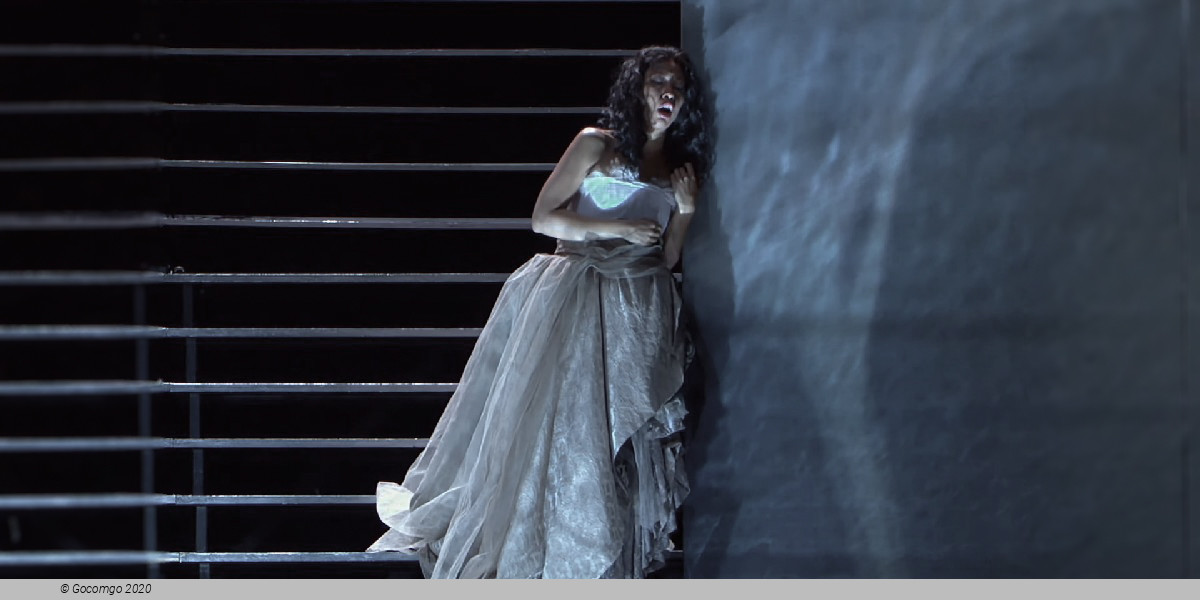
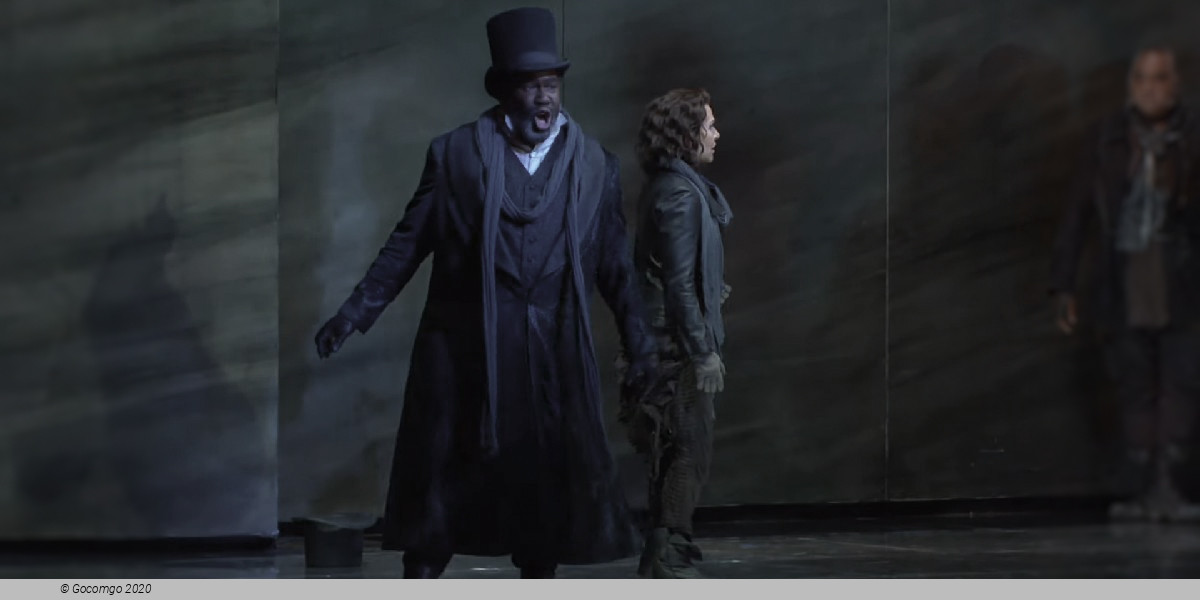
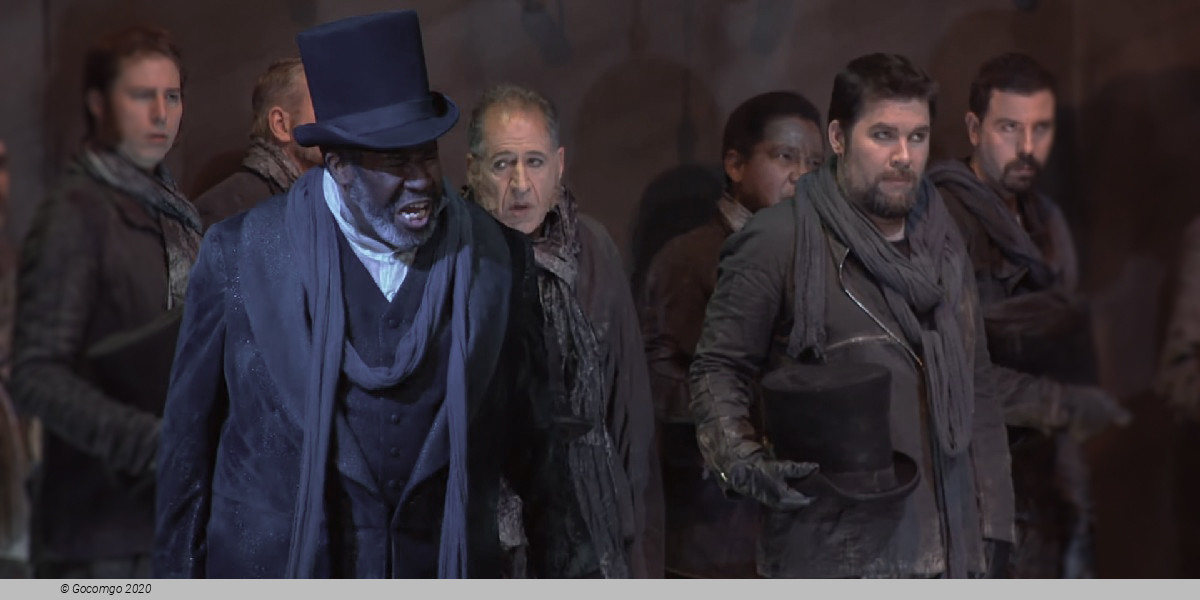
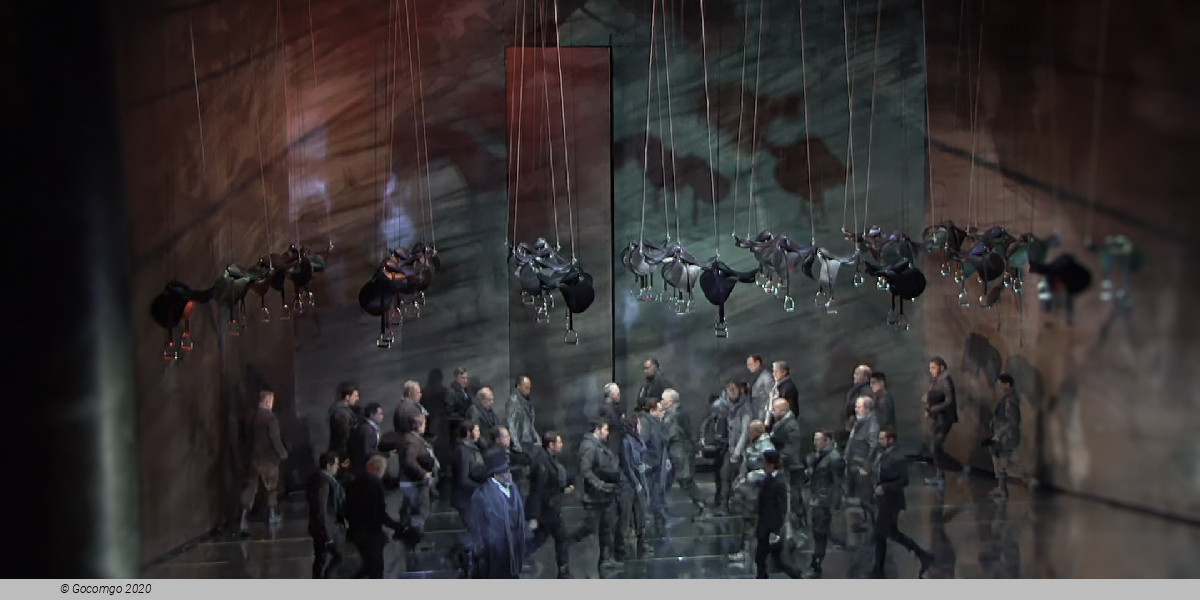
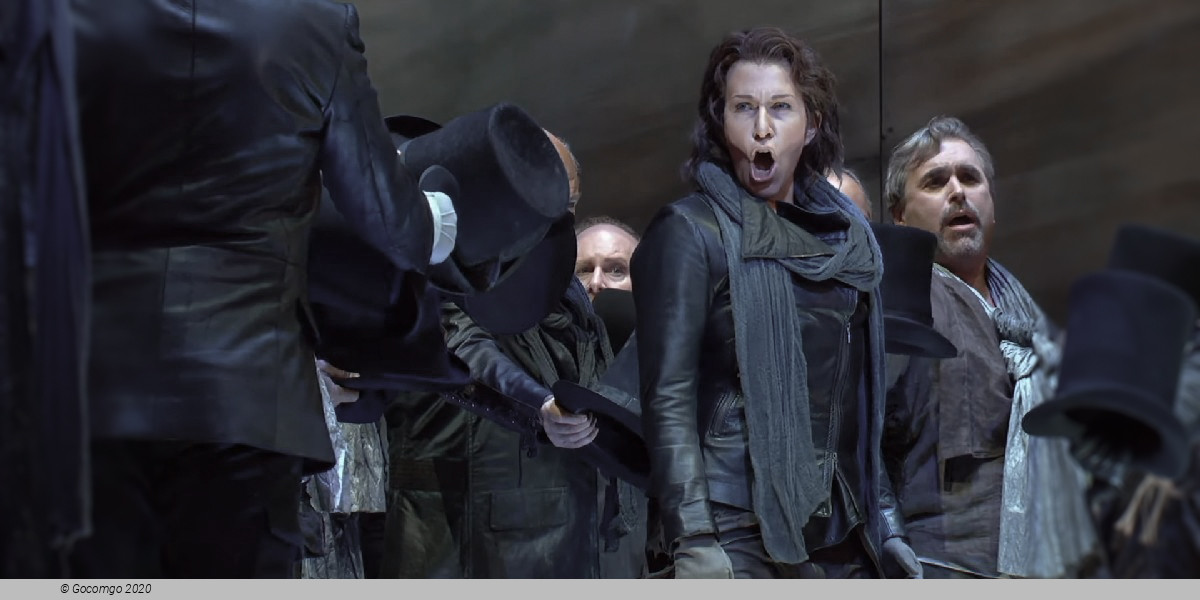
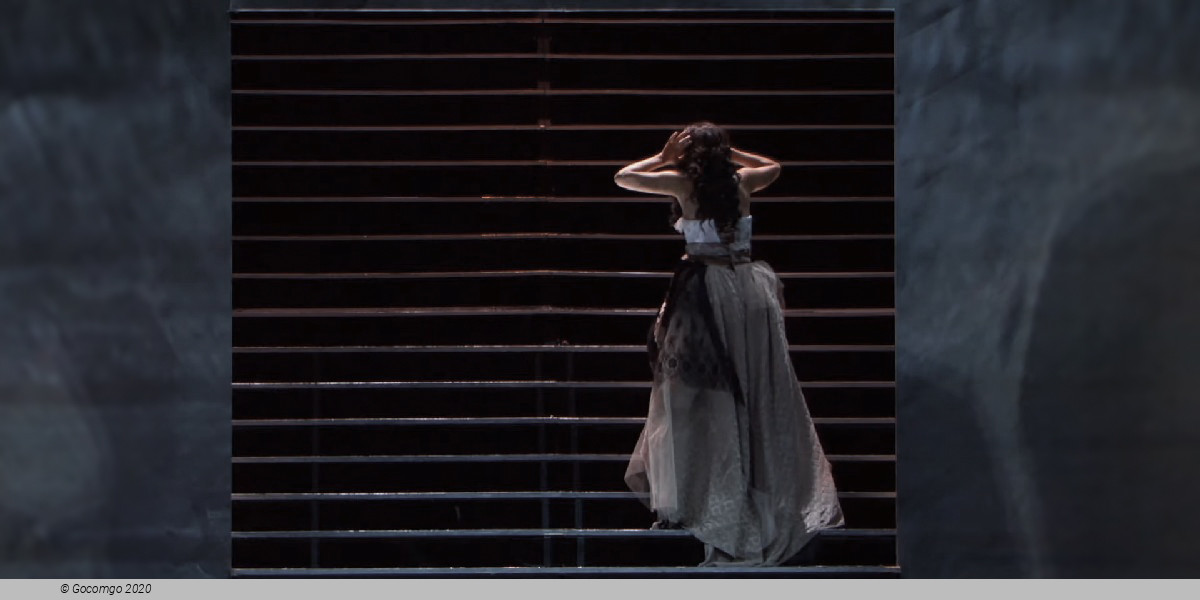
The new staging at Teatro Colón reimagines the centuries-old feud between the Capuleti and Montecchi with bold visual storytelling, contemporary dramatic insight, and an atmosphere that heightens both the intimacy of forbidden love and the violence of political conflict. Striking sets, evocative lighting, and elegant costumes craft a world where beauty and danger coexist at every moment.

At the heart of the production is Bellini’s unforgettable music: the impassioned duet between Romeo and Giulietta, the fierce confrontations between rival factions, and the heartbreaking final scene that seals their fate. Under the leadership of an accomplished conductor and a cast of exceptional soloists, this performance promises vocal artistry of the highest level — delicate, refined, and deeply moving.

Presented in one of the world’s most acoustically revered opera houses, this new Teatro Colón production invites audiences to rediscover Bellini’s masterpiece through fresh eyes and ears.

New production of the Teatro Colón

History
Premiere of this production: 11 March 1830, Teatro La Fenice, Venice

I Capuleti e i Montecchi (The Capulets and the Montagues) is an Italian opera (Tragedia lirica) in two acts by Vincenzo Bellini. The libretto by Felice Romani was a reworking of the story of Romeo and Juliet for an opera by Nicola Vaccai called Giulietta e Romeo and based on the play of the same name by Luigi Scevola written in 1818, thus an Italian source rather than taken directly from William Shakespeare.

Synopsis

In this version of the story the Capuleti and Montecchi are rival political factions (Guelph and Ghibelline respectively) rather than Shakespeare's "two households, both alike in dignity". Capellio is the father of Giulietta (Juliet) and the leader of the Capuleti. Giulietta is betrothed to Tebaldo (Tybalt), however she has already met and fallen in love with Romeo, leader of the Montecchi (Montagues). This is a secret to all but Lorenzo (Lawrence), her doctor and confidant. Complicating matters, Romeo has inadvertently killed the son of Capellio (Giulietta's brother) in battle.

Place: around the palace of Capellio (Capulet) in Verona
Time: 13th century
Sinfonia

Act 1

Scene 1: The Palace

Capellio and Tebaldo address their followers advising rejection of an offer of peace to be brought by an envoy from Romeo, the man who had killed Capellio's son. Tebaldo states that he will avenge the killing to celebrate his marriage to Giulietta: (Cavatina: È serbata a questo acciaro / "And reserved for this sword / is the vengeance of your blood") and he urges Capellio to hasten the moment when he may marry Giulietta and then avenge Capellio, who wants the marriage to take place immediately, brushing aside the objections of Lorenzo that Giulietta is ill with a fever. Tebaldo proclaims his love for Giulietta: Sì: M'Abbraccia / "I love her so much / She is so dear to me". Capellio's men urge him on and arrangements are made to have the wedding take place that day.

While the men proclaim their hatred of the Montecchi, Romeo enters in the guise of a Montecchi envoy, offering peace to be guaranteed by the marriage of Romeo and Giulietta. He explains that Romeo regrets the death of Capellio's son (Cavatina: Ascolta: Se Romeo t'uccise un figlio / "Listen: If Romeo killed your son / he brought him death in battle / And you must blame fate"), and offers to take his place as a second son for the old man. Capellio indicates that Tebaldo has already taken on that role and—together with all his men—rejects all idea of peace: "War! War", the men proclaim. Romeo accepts their challenge of war: (Cabaletta: La tremenda ultrice spada/ "Romeo will prepare to brandish the dread avenging sword / Romeo accepts your challenge of war.)

Scene 2: Giulietta's room

Giulietta enters proclaiming her frustration against all the wedding preparations which she sees about her. Recitative: "I burn, a fire consumes me wholly. In vain do I seek solace from the winds... Where are you Romeo?". Cavatina: Oh! quante volte / "Oh how many times do I weep and beg heaven for you". Lorenzo enters, explaining that he has arranged for Romeo to come to her by a secret door and, when Romeo enters, he tries to persuade Giulietta to escape with him. Duetto: Romeo: Sì, fuggire: a noi non resta / "Yes, flee, for us there is no other escape"; he demands: "What power is greater for you than love?", but she resists in the name of duty, law, and honour, declaring that she would prefer to die of a broken heart. Romeo is distraught: Cantabile: Romeo: Ah crudel, d'onor ragioni / "Oh cruel one, you speak of honour when you were stolen from me?" Giulietta responds "Ah what more you ask of me?", then, in a tempo di mezzo in which each expresses his/her conflicting emotions, the situation becomes more and more impossible for them both.

The sounds of wedding preparations are heard: she urges him to flee; he declares that he will stay and, in a final cabaletta in which Romeo pleads "Come, ah Come! Rely on me", Giulietta continues to resist. Each leaves.

Scene 3: Another part of the palace

The Capuleti are celebrating the forthcoming marriage. All those assembled join in. Romeo enters in disguise and tells Lorenzo, who immediately recognises him, that he is awaiting the support of his soldiers, one thousand of whom are assembled dressed as Ghibelines and who are intent on preventing the wedding. Lorenzo remonstrates with him, but suddenly, the armed attack by the Montecchi takes place as they surge into the palace, Romeo with them. Giulietta is alone, lamenting the state of affairs, Tace il fragor / "The tumult has ended". Then she sees Romeo, who has appeared, and again he urges her to run away with him: "I ask this in the name of promised love", he declares. Capellio, Tebaldo and the Ghibelines discover them, and believe that Romeo is still the Montecchi envoy. As Giulietta tries to shield him from her father, Romeo proudly tells them his true name. The Montecchi enter to protect him and, in a concerted finale involving all from both factions, the lovers are separated by their family members, finally proclaiming: Al furor che si ridesta / "If all hope of ever seeing each other again in life / this will not be the last farewell". Capellio, Tebaldo, and Lorenzo become part of the quintet finale, as the ranks of the supporters of both sides join in the swell.

Act 2

Scene 1: Another part of the Palace

Introduced by a solo for cello, Giulietta awaits news of the fighting. Lorenzo enters and immediately tells her that Romeo lives, but she will soon be taken away to Tebaldo's castle. He offers a solution: that she must take a sleeping potion which will make it appear that she has died. She will then be taken to her family's tomb where he will arrange for Romeo and himself to be present when she awakes. In a state of indecision, she contemplates her options. (Aria: Morte io non temo, il sai / "You know that I do not fear death, / I have always asked death of you...") and she expresses doubts while Lorenzo urges her to take the potion, given that her father is about to come into the room. Taking the bottle, she declares that "only death can wrest me from my cruel father".

With his followers, Capellio comes to order her to leave with Tebaldo at dawn. Her ladies beg her father to be kinder towards her. Proclaiming that she is close to death, she begs her father's forgiveness: Cabaletta: Ah! non poss'io partire / "Ah, I cannot leave without your forgiveness.....Let your anger turn just once to peace", but Capellio rejects her and orders her to her room. He then instructs his men to keep watch on Lorenzo of whom he is suspicious; they are ordered not to allow Lorenzo to have contact with anyone.

Scene 2: The grounds of the palace

An orchestral introduction precedes Romeo's entrance and introduces what Weinstock describes as "his bitter recitative", Deserto è il loco / "This place is abandoned", in which he laments Lorenzo's apparent forgetfulness in failing to meet him as planned. He then hears the noise of someone entering. It is Tebaldo, and the two men begin an angry duet (Tebaldo: Stolto! a un sol mio grido / "With one cry a thousand men will arrive". Romeo: "I scorn you. You will wish the alps and the sea stood between us"). As they are about to begin fighting, the sound of a funeral procession is heard (Pace alla tua bell'anima). They stop and listen, only then realising that it is a procession for Giulietta. In a cabaletta finale, the rivals are united in remorse, asking each other for death as they continue to fight.

Scene 3: The tombs of the Capuleti

Along with his Montecchi followers, Romeo enters the tomb of the Capuleti. The followers mourn Giulietta's death. At her tomb and in order to bid her farewell, Romeo asks for it to be opened. He also asks that the Montecchi leave him alone with Giulietta: Romanza: Deh! tu, bell'anima / "Alas! You, fair soul / Rising up to heaven / turn to me, bear me with you". Realising his only course of action will be death, he swallows poison and, lying down beside her, he hears a sigh, then the sound of her voice. Giulietta wakes up to find that Romeo knew nothing of her simulated death and had been unaware of Lorenzo's plan. Urging him to leave with her, Giulietta gets up but Romeo states that he must remain there forever, explaining that he has already acted to end his life. In a final cabaletta, the couple clings to each other. Then he dies and Giulietta, unable to live on without him, falls dead onto his body. The Capuleti and Montecchi rush in to discover the dead lovers, with Capellio demanding who is responsible: "You, ruthless man", they all proclaim.

Venue Info

Teatro Colón - Buenos Aires
Location   Cerrito 628

The Teatro Colón (Spanish: Columbus Theatre) is the main opera house in Buenos Aires, Argentina. It is considered one of the ten best opera houses in the world by National Geographic, and is acoustically considered to be amongst the five best concert venues in the world. The present Colón replaced an original theatre which opened in 1857. Towards the end of the century it became clear that a new theatre was needed and, after a 20-year process, the present theatre opened on 25 May 1908, with Giuseppe Verdi's Aïda.

History

The Colón theater operated in two buildings, the first located in the Plaza de Mayo until 1888 and the second located in front of the Plaza Lavalle, which took 20 years to be built until its inauguration in 1908. This land formerly housed the Park Station, the first railway station of the Argentine Republic as head of the Western Railway of Buenos Aires.

Throughout its history the main figures of opera, classical music and world ballet have performed in the Colón theater, such as Arturo Toscanini, Nijinski, Caruso, Regina Pacini, Anna Pavlova, Maya Plisetskaya, Margot Fonteyn, Mikhail Barishnikov, Antonio Gades, Richard Strauss, Igor Stravinsky, Camille Saint-Saens, Manuel de Falla, Aaron Copland, Herbert von Karajan, Leonard Bernstein, Mstislav Rostropovich, Zubin Mehta, Maria Callas, Renata Tebaldi, Yehudi Menuhin, Pau Casals, Rudolf Nureyev, Maurice Béjart, Plácido Domingo, José Carreras, Luciano Pavarotti, Lily Pons, Marina de Gabaráin, Victoria de los Ángeles, Montserrat Caballé, Kiri Te Kanawa, among others, and Argentine artists such as Adelaida Negri, Héctor Panizza, Alberto Ginastera, Jorge Donn, Norma Fontenla, José Neglia, Olga Ferri, Julio Bocca, Maximiliano Guerra, Paloma Herrera, Daniel Barenboim, Martha Argerich, Astor Piazzolla, Aníbal Troilo and Osvaldo Pugliese. In the last decade other popular artists such as Chris Cornell, Katherine Jenkins, Sarah Brightman, Joss Stone, Branford Marsalis, play here.

Among the main events of its history are the creation of stable bodies in the 1920s and its municipalization in 1931. In 1946, Peronism promoted a policy of openness to popular music and greater democratization of the public, which was reverted after its overthrow in 1955 and again resumed when democracy recovered in 1983.

In 2006 a full restoration work was started that would extend until 2010, when it was reopened on May 24 in commemoration of the Bicentennial of Argentina.

The first Teatro Colón

The first Teatro Colón was designed by Charles Pellegrini, and proved to be a successful venue for over 30 years, with 2,500 seats with the inclusion of a separate gallery reserved only for people who were in mourning. The construction started in 1856 and completed in 1857. This was celebrated with an opening on April 27, 1857, with Verdi's La traviata, just four years after its Italian premiere. The production starred Sofia Vera Lorini as Violetta and Enrico Tamberlik as Alfredo.

This theater was closed on September 13, 1888 to step aside for a new improved building, which was opened twenty years later on Libertad street, overlooking Plaza Lavalle. In that period of time, the 1890 crisis and its effects were the cause for the delay in the completion of this second theater.

Before the construction of the current Teatro Colón, opera performances were given in several theatres, of which the first Teatro Colón and the Teatro Opera were the most important. The principal company that performed at the Teatro Opera moved to the Teatro Colón in 1908. However, major companies also performed at the Teatro Politeama and the Teatro Coliseo which opened in 1907.

The present Teatro Colón

The theatre is bounded by the wide 9 de Julio Avenue (technically Cerrito Street), Libertad Street (the main entrance), Arturo Toscanini Street, and Tucumán Street. It is in the heart of the city on a site once occupied by Ferrocarril Oeste's Plaza Parque station.

The auditorium is horseshoe-shaped, has 2,487 seats (slightly more than the Royal Opera House in Covent Garden, London), standing room for 1,000 and a stage which is 20 m wide, 15 m high and 20 m deep. The low-rise building has 6 floors above ground and 3 below ground, 7 elevators with a facade of applied masonry. It has a large central chandelier with 700 light bulbs. The original architect was the Italian Francesco Tamburini; after his death it was completed by the Belgian architect Julio Dormal. The original auditorium "had eight boxes with metal grilles and a separate entrance, so that those in mourning could still attend performances, but remain dignifiedly sequestered from public view".

The Colon's acoustics are considered to be so good as to place it in the top five performance venues in the world. Luciano Pavarotti held a similar opinion.

Opening and subsequent history

The present theatre, the second with that name, opened on 25 May 1908, after twenty years under construction, and was inaugurated with Aida by the Italian company directed by Luigi Mancinelli and tenor Amedeo Bassi, soprano Lucia Crestani (as Aida). The second presentation was Thomas' Hamlet with the baritone Titta Ruffo During the inaugural season seventeen operas were performed with famous stars such as Ruffo, Feodor Chaliapin in Boito's Mefistofele, Antonio Paoli in Verdi's Otello.

The cornerstone of the present Teatro Colón was laid in 1889 under the direction of architect Francesco Tamburini and his pupil, Vittorio Meano, who designed a theatre in the Italian style on a scale and with amenities which matched those in Europe. However, delays followed due to financial difficulties, arguments regarding the location, the death of Tamburini in 1891, the murder of Meano in 1904 and the death of Angelo Ferrari, an Italian businessman who was financing the new theatre. The building was finally completed in 1908 under the direction of the Belgian architect Julio Dormal who made some changes in the structure and left his mark in the French style of the decoration. The bas-reliefs and busts on the facade are the work of sculptor Luigi Trinchero.

The theatre's opening on 25 May, the Día de la Patria in Argentina, featured a performance of Verdi's Aida and it quickly became a world-famous operatic venue rivaling La Scala and the Metropolitan Opera in attracting most of the world's best opera singers and conductors.

The Teatro was bombed by anarchists in 1910; Georges Clemenceau was present in Argentina during the attack. The bomb landed in the middle of the orchestra. Clemenceau describes the attack as follows: "The horror can not be exaggerated. A senior official told me that he had never seen such puddles of blood. The wounded were carried off as best as possible, and the room was emptied by the cries of fury, and the material damage repaired during the day which followed, not a woman of society missed the representation of the morrow. It is a fine trait of character that particularly honors the female element of the Argentine nation. I am not quite sure that in Paris the hall would have been full in such cases."

Ballet stars performed at the Colón alongside Argentine dancers and classical instrumentalists. This included the prima ballerina, Lida Martinoli. When she retired from dancing, Martinoli began to choreograph. She died in Santa Fe. The tragic 1971 aviation death of two of the best known of these, Norma Fontenla and José Neglia, was commemorated with a monument in neighbouring Lavalle Square.

With excellent acoustics and modern stage areas, the theatre's interior design features a rich scarlet and gold decor. The cupola contains canvas painted in 1966 by the 20th-century artist Raúl Soldi during renovation work.

Refurbishment, 2005 – 2010

In recent years, given the political and economic circumstances of Argentina, the Teatro Colón has suffered considerably, but a period of slow recovery began. The theatre underwent massive phased remodelling of both interior and exterior, initially while the house was still open, but production activities ceased at the end of December 2006 to allow full refurbishment.

Initially, "what had been planned as an 18-month, $25-million renovation with 500 workers, scheduled for a May 2008 reopening with Aida, became a three-year $100-million extravaganza with 1,500 workers including 130 professional architects and engineers." In addition, an exterior open-air stage was planned for an opening in 2011. In all, 60,000 square metres (645,835 sq ft) underwent updating, both inside and out.

Some of the last performances immediately before closure of the theatre's building were Swan Lake on 30 September with the Ballet Estable del Teatro Colón and the Buenos Aires Philharmonic (Orquesta Filarmónica de Buenos Aires). and, on 28 October, the opera Boris Godunov was given featuring Orquesta Estable del Teatro Colón and the house chorus.

The theatre's final performance before its closure for refurbishment works in 2005 was a concert on 1 November starring folklore singer Mercedes Sosa in performance with the Argentine National Symphony Orchestra, conducted by Pedro Ignacio Calderón.

While it was originally planned to reopen in time for the centenary on 25 May 2008, delays prevented this, and the house was finally reopened with a gala concert and 3D animations on 24 May 2010, the eve of its own 102nd birthday and the Argentina Bicentennial. Tchaikovsky's Swan Lake and Act 2 of Puccini's La bohème were performed. A private concert to test the acoustics attended by employees, architects, and others involved in the renovation occurred on 6 May 2010.

Important Info
Type: Opera
City: Buenos Aires, Argentina
Starts at: 20:00
Acts: 2
Sung in: Italian
Top of page