








Teatro Argentina 7 November 2019 - Se questo è un uomo | GoComGo.com

Se questo è un uomo

Teatro Argentina, Rome, Italy
All photos (1)
Select date and time
5 PM
Request for Tickets
Important Info
Type: Opera
City: Rome, Italy
Starts at: 17:00

E-tickets: Print at home or at the box office of the event if so specified. You will find more information in your booking confirmation email.

You can only select the category, and not the exact seats.
If you order 2 or 3 tickets: your seats will be next to each other.
If you order 4 or more tickets: your seats will be next to each other, or, if this is not possible, we will provide a combination of groups of seats (at least in pairs, for example 2+2 or 2+3).

Overview

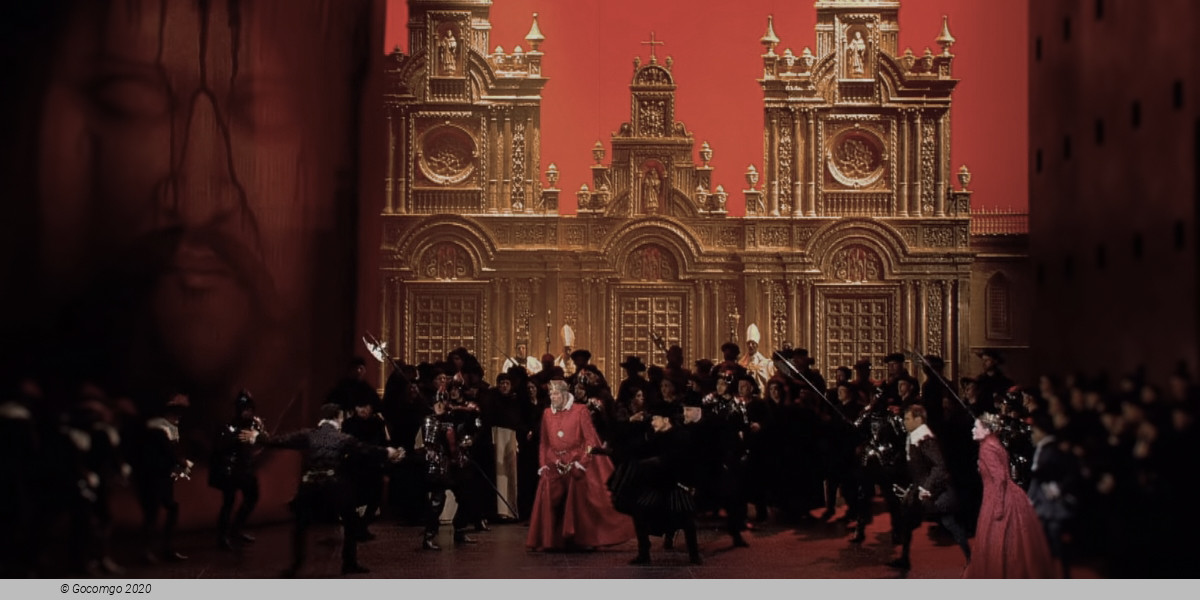
Valter Malosti brings to the stage, for the first time without mediation, the unmistakable steadfast and mild voice of Primo Levi's If This is a Man. An uninterrupted monologue that makes the word protagonist and returns to this unrepeatable work its first dimension of acoustic work: a bare voice that reproduces the babel of the concentration camp, orchestrating it on the languages ​​spoken in that perimeter of barbed wire.

Valter Malosti transposes the voice that more than any other has been able to make Auschwitz speak, that of Primo Levi in ​​If this is a man, relying on the power of speech to illuminate the atrocious journey towards the demolition of man by the man. On the stage the gentle and firm voice of the writer and witness of the Lager unmistakable resounds, which for over seventy years has been telling the world the horror and folly of the Nazi extermination with the most atrocious and most beautiful book of adventures of the twentieth century, for the first time on stage without any mediation. The scenic condensation of the text, edited by Domenico Scarpa and by Malosti himself, reverberates through an uninterrupted monologue that makes the word protagonist, very strong, inexhaustible and indelible in the consciences. And it is precisely the voice of Levi that echoes in that of Malosti, giving back to this unrepeatable first work its dimension of acoustic work: a naked voice that reproduces the babel of the concentration camp - the sounds, the threats, the orders, the noise of the death factory - orchestrating it on the languages ​​spoken in that perimeter of barbed wire. Survive and tell.
The voice of If this is a man distills a multitude of expressive, narrative, perceptive registers, the "apart" meditative, moral, political and even scientific, that Malosti converts on stage into a polyphonic quantity of dimensions and chiaroscuro. If this is a man he brings the horror of humanity back into sound and image: that historical "misery" that has allowed us to erase human dignity - the denial of the right to consider ourselves "man" affirmed by Levi.

With an interpretation of powerful and rough, Valter Malosti known to return the babel of the field – the sounds, the threats, the orders, the noise of the factory of death – and turns the pages of the “book of adventures most terrible and most beautiful of the twentieth century” in a work of acoustics, supported by the talent of sound designer G. U. P. Alcaro.

The three original madrigals created by Carlo Boccadoro starting from the poems Levi wrote in 1945-46, immediately after his return from the annihilation camp, are a counterpoint of pure and perfect form.

In a visual short-circuit between the memory of the camps, and our "warm houses" (scenes by Margherita Palli) the voice of the witness-protagonist, unfolds in a variety of expressive registers, narrative, perception and thought that are the true action of the text and of the show.

Venue Info

Teatro Argentina - Rome
Location   Largo di Torre Argentina, 52

The Teatro Argentina is an opera house and theatre located in Largo di Torre Argentina, a square in Rome, Italy. One of the oldest theatres in Rome, it was constructed in 1731 and inaugurated on 31 January 1732 with Berenice by Domenico Sarro. It is built over part of the curia section of the Theatre of Pompey. This curia was the location of the assassination of Julius Caesar.

The house was commissioned by the Sforza-Cesarini family and designed by the architect Gerolamo Theodoli with the auditorium laid out in the traditional horseshoe shape. Duke Francesco Sforza-Cesarini, who ran the Argentina Theatre from 1807 to 1815, was a "theatre fanatic" who continued until his death to run up debts. Rossini's The Barber of Seville was given its premiere on 20 February 1816, just after Duke Francesco's death and, in the 19th century, the premieres of many notable operas took place in the theatre, including Verdi's I due Foscari on 3 November 1844 and La battaglia di Legnano on 27 January 1849.

From 1919 to 1944, more musical offerings than dramatic ones were presented, although the theatre premiered works by Luigi Pirandello, Henrik Ibsen and Maxim Gorky during this time. As well, a series of operas was presented in the winter of 1944–45 in honor of the American and British troops.

The venue was used for classical-music recordings by the Santa Cecilia orchestra in the 1950s.

In 1994, the theatre became the home of the Teatro Stabile company of Rome, currently directed by Mario Martone. It offers a variety of programmes, some being large-scale productions, although more plays than music or opera are presented today.

The inside of the theatre is constructed of wood with six levels of boxes characterizing the design, and has been restored many times. It seats 696 people, including 344 in the stalls and with 40 boxes on five levels seating an additional 352.

Plantamura notes that the theatre's acoustics were regarded as being excellent and that the architect who designed the La Fenice opera house in Venice, Gianantonio Selva, modeled his design after the Argentina.

Important Info
Type: Opera
City: Rome, Italy
Starts at: 17:00
Top of page