
Teatro Argentina: Intolleranza 1960 Tickets | Event Dates & Schedule | GoComGo.com

Intolleranza 1960 Tickets

Teatro Argentina, Rome, Italy
Important Info
Type: Opera
City: Rome, Italy

E-tickets: Print at home or at the box office of the event if so specified. You will find more information in your booking confirmation email.

You can only select the category, and not the exact seats.
If you order 2 or 3 tickets: your seats will be next to each other.
If you order 4 or more tickets: your seats will be next to each other, or, if this is not possible, we will provide a combination of groups of seats (at least in pairs, for example 2+2 or 2+3).

Cast
Performers
Choose the date to see the peformers
History
Premiere of this production: 13 April 1961, La Fenice, Venice

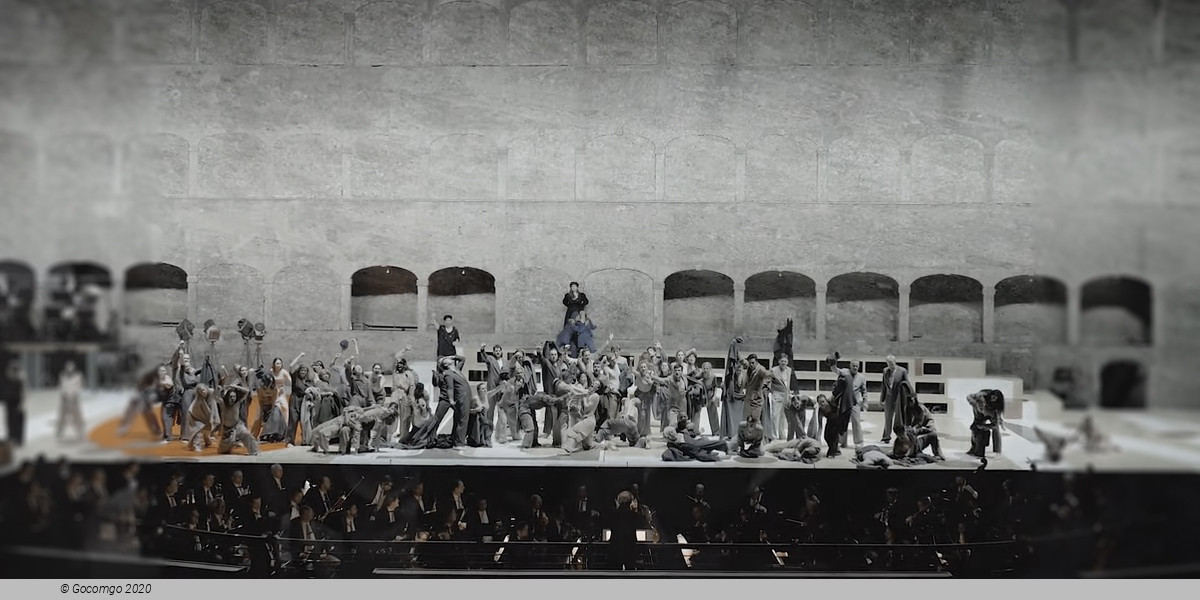
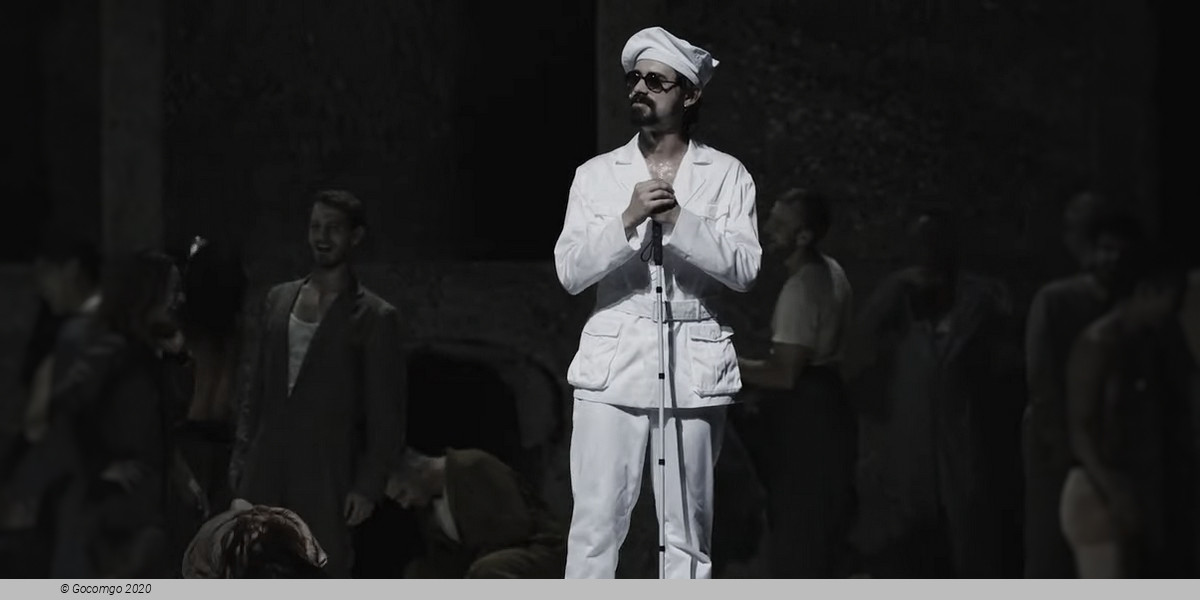
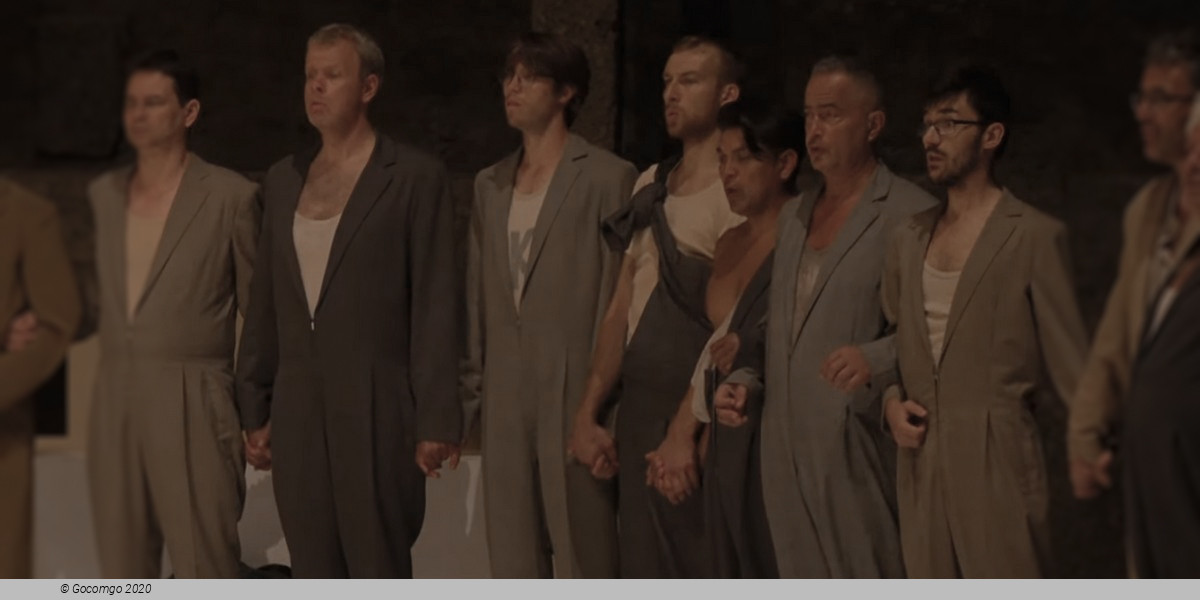
Intolleranza 1960 (Intolerance 1960) is a one-act opera in two parts by Luigi Nono, and is dedicated to his father-in-law, Arnold Schoenberg. The plot concerns a migrant, who travels from Southern Italy looking for work. Along the way, he encounters protests, arrests and torture. He ends up in a concentration camp, where he experiences the gamut of human emotions. He reaches a river, and realises that everywhere is his home. The opera premiered on 13 April 1961 at the Teatro La Fenice in Venice.

Synopsis

Setting: Fictional place in the present

Part one

Opening chorus (Coro iniziale)

Instead of an overture, a large-scale a cappella chorus, "Live and be vigilant", is heard from behind a closed curtain.

1st scene: In a mining village

A migrant is tired of the hard work in the mines in a foreign land. He is consumed by desire to return to his homeland from which he once fled.

2nd scene: A woman rushes in

A woman who had given the stranger in the mining village warmth and peace and love, tries to persuade him to stay. When she realizes that her lover is determined to go, she insults him and swears revenge. Nevertheless, she leaves with the migrant.

3rd scene: In a city

He has reached a city while a large unauthorized peace demonstration is taking place. The police intervene and arrest some demonstrators, including the migrant, although he was not participating in the rally. His attempt to defend himself remains unsuccessful.

4th scene: in a police station

Four police officers set to work to force the prisoners to confess. The man, however, stands firm to his story that he was on the way to his home, which goes through the city, and he therefore had nothing to confess.

5th scene: The torture

All those arrested are brought to torture. The chorus of the tortured cries to the audience, asking whether it was deaf and would behave just like cattle in the pen of shame.

6th scene: In a concentration camp

The chorus of prisoners desperately cries for freedom. The four policemen taunt their victims. The hero makes friends with another prisoner from Algeria. They plan to escape together.

7th scene: After the escape

The migrant manages to escape with the Algerians from the concentration camp. While originally it had been only his wish to see his home, now his heart burns only with the desire for freedom.

Part two

1st scene: Some absurdities of contemporary life

From all sides voices press upon the hero, voices which not only disturb and confuse him, but almost overpower him. The absurdities of contemporary life, such as the bureaucracy – for example, "registration required", "Documents are the soul of the state", "certify, authenticate, notarize" – and sensational newspaper headlines like "mother of thirteen children was a man" increase, and the scene ends with a big explosion.

2nd scene: a meeting between a refugee and his companion

A silent crowd suffers from the impression of the slogans and the explosion. When a woman begins to speak out against war and disaster, it appears to the emigrant as a source of hope in his solitude. Henceforth, the two want to fight together for a better world.

3rd scene: Projections of episodes of terror and fanaticism

To the hero appears the woman he has left in the mining village, and this confuses him. Together with his companion (compagna) he sends her away. Then the woman transforms herself along with a group of fanatics into ghosts and shadows. In the dream, she sees the migrant, the mine, the mocking slogan "Arbeit macht frei" over the entrance of the camp, and she sees the nightmares of the intolerance he holds with his companion, "Never, never again". The choir sings Mayakovsky's "Our march".

4th scene: In the vicinity of a village on the banks of a great river

The hero and his companion have reached the great river, which forms the border of his native country. It is flooding; its level increases more and more. The deluge swallows roads, broken bridges, barracks, and crushes houses. Even the migrant and his companion are unable to save themselves. They die an agonizing death.

Final chorus (Coro finale) set to excerpts from Brecht's poem "To Posterity", again without orchestral accompaniment.

Venue Info

Teatro Argentina - Rome
Location   Largo di Torre Argentina, 52

The Teatro Argentina is an opera house and theatre located in Largo di Torre Argentina, a square in Rome, Italy. One of the oldest theatres in Rome, it was constructed in 1731 and inaugurated on 31 January 1732 with Berenice by Domenico Sarro. It is built over part of the curia section of the Theatre of Pompey. This curia was the location of the assassination of Julius Caesar.

The house was commissioned by the Sforza-Cesarini family and designed by the architect Gerolamo Theodoli with the auditorium laid out in the traditional horseshoe shape. Duke Francesco Sforza-Cesarini, who ran the Argentina Theatre from 1807 to 1815, was a "theatre fanatic" who continued until his death to run up debts. Rossini's The Barber of Seville was given its premiere on 20 February 1816, just after Duke Francesco's death and, in the 19th century, the premieres of many notable operas took place in the theatre, including Verdi's I due Foscari on 3 November 1844 and La battaglia di Legnano on 27 January 1849.

From 1919 to 1944, more musical offerings than dramatic ones were presented, although the theatre premiered works by Luigi Pirandello, Henrik Ibsen and Maxim Gorky during this time. As well, a series of operas was presented in the winter of 1944–45 in honor of the American and British troops.

The venue was used for classical-music recordings by the Santa Cecilia orchestra in the 1950s.

In 1994, the theatre became the home of the Teatro Stabile company of Rome, currently directed by Mario Martone. It offers a variety of programmes, some being large-scale productions, although more plays than music or opera are presented today.

The inside of the theatre is constructed of wood with six levels of boxes characterizing the design, and has been restored many times. It seats 696 people, including 344 in the stalls and with 40 boxes on five levels seating an additional 352.

Plantamura notes that the theatre's acoustics were regarded as being excellent and that the architect who designed the La Fenice opera house in Venice, Gianantonio Selva, modeled his design after the Argentina.

Important Info
Type: Opera
City: Rome, Italy

E-tickets: Print at home or at the box office of the event if so specified. You will find more information in your booking confirmation email.

You can only select the category, and not the exact seats.
If you order 2 or 3 tickets: your seats will be next to each other.
If you order 4 or more tickets: your seats will be next to each other, or, if this is not possible, we will provide a combination of groups of seats (at least in pairs, for example 2+2 or 2+3).

Top of page