
Teatro Argentina 5 March 2020 - Alla ricerca di Orfeo | GoComGo.com

Alla ricerca di Orfeo

Teatro Argentina, Rome, Italy
All photos (1)
Select date and time
9 PM
Request for Tickets
Important Info
Type: Classical Concert
City: Rome, Italy
Starts at: 21:00
Duration:

E-tickets: Print at home or at the box office of the event if so specified. You will find more information in your booking confirmation email.

You can only select the category, and not the exact seats.
If you order 2 or 3 tickets: your seats will be next to each other.
If you order 4 or more tickets: your seats will be next to each other, or, if this is not possible, we will provide a combination of groups of seats (at least in pairs, for example 2+2 or 2+3).

Programme
Johann Sebastian Bach: Alla ricerca di Orfeo
Overview

The Myth of Orpheus has always inspired the imagination of artists and writers, musicians and playwrights. It immediately evokes the link between word, music, love and death, and with poetry has an exclusive relationship witnessed by countless literary works from antiquity to the contemporary era. But Orpheus is also one of the fathers of music; the sounds emanating from his lyre enhance the poetic singing of his voice and create an effect of great suggestion on those who listen to them jointly. There are many artists who have been inspired by The Myth of Orpheus: from Monteverdi to Gluck, from Haydn to Roberto Vecchioni, from Poliziano to Rilke, from Pavese to Carol Ann Duffy, from Bufalino to Buzzati's Comic poem. Many transpositions of painting and sculpture, among the many: the Landscape with Orpheus and Euridice by Nicolas Poussin, the two statues of Orpheus and Eurydice sculpted by Antonio Canova, the remarkable painting of Gustave Moreau Orpheus at the tomb of Euridice, the masterpiece of John William Watherhouse, The Nymphs find the head of Orpheus.

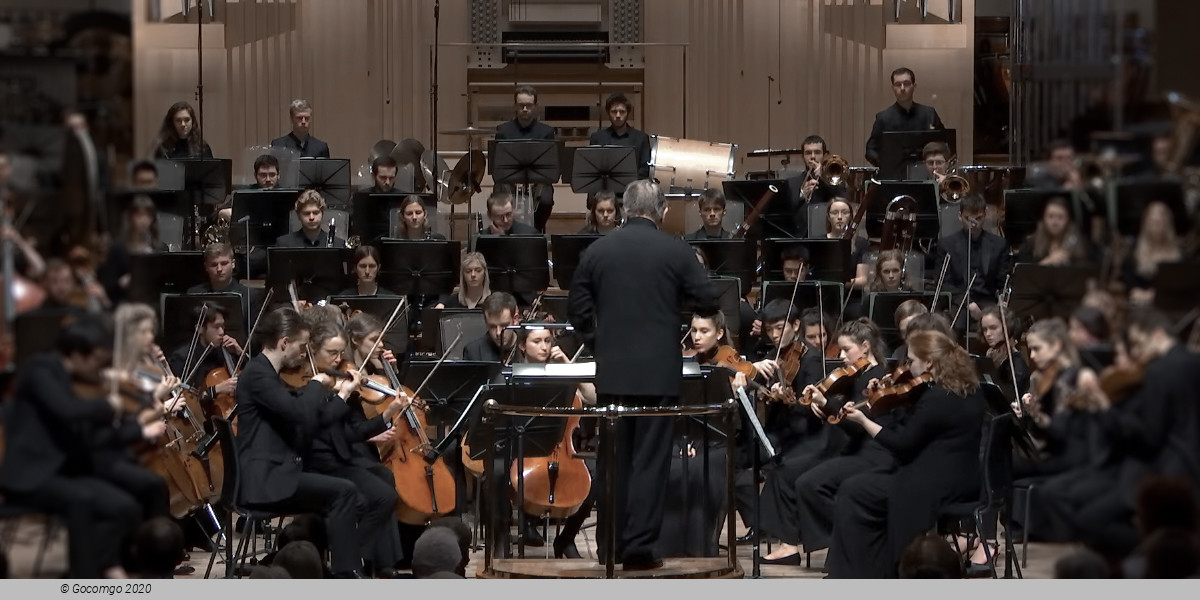
In search of Orfeo who proposes the Astrée-training Turin born in 1991 specialized in the repertoire six-eighteenth century according to historical criteria and with the use of original instruments ‒ with the narrating voice of actress Laura Torelli and the direction of Giorgio Tobacco, is inspired by precisely this great variety of versions and states of mind, through a path that, starting from classical (with readings from Ovid, Poliziano, Striggio, and Marino, alternating and overlapping with the music of Monteverdi and Corelli), arrives in a vast territory, modern and contemporary (from Rilke to Duffy through Pavese, with music by Vivaldi, Gluck, and Berio), where the fable of Orpheus and Eurydice still manages to surprise and excite the viewer today for its current events that flow at times (as in the case of the text of Duffy) in illuminating and scratching irony.

Readings from
Angelo Poliziano the Fabula of Orpheus
Barry McDowell
Ovid Metamorphoses
Giovan Battista Marino La Sampogna
Rainer Maria Rilke 
Orpheus, Eurydice, Hermes
Cesare Pavese dialogues with leuco
Carol Ann Duffy Eurydice

Venue Info

Teatro Argentina - Rome
Location   Largo di Torre Argentina, 52

The Teatro Argentina is an opera house and theatre located in Largo di Torre Argentina, a square in Rome, Italy. One of the oldest theatres in Rome, it was constructed in 1731 and inaugurated on 31 January 1732 with Berenice by Domenico Sarro. It is built over part of the curia section of the Theatre of Pompey. This curia was the location of the assassination of Julius Caesar.

The house was commissioned by the Sforza-Cesarini family and designed by the architect Gerolamo Theodoli with the auditorium laid out in the traditional horseshoe shape. Duke Francesco Sforza-Cesarini, who ran the Argentina Theatre from 1807 to 1815, was a "theatre fanatic" who continued until his death to run up debts. Rossini's The Barber of Seville was given its premiere on 20 February 1816, just after Duke Francesco's death and, in the 19th century, the premieres of many notable operas took place in the theatre, including Verdi's I due Foscari on 3 November 1844 and La battaglia di Legnano on 27 January 1849.

From 1919 to 1944, more musical offerings than dramatic ones were presented, although the theatre premiered works by Luigi Pirandello, Henrik Ibsen and Maxim Gorky during this time. As well, a series of operas was presented in the winter of 1944–45 in honor of the American and British troops.

The venue was used for classical-music recordings by the Santa Cecilia orchestra in the 1950s.

In 1994, the theatre became the home of the Teatro Stabile company of Rome, currently directed by Mario Martone. It offers a variety of programmes, some being large-scale productions, although more plays than music or opera are presented today.

The inside of the theatre is constructed of wood with six levels of boxes characterizing the design, and has been restored many times. It seats 696 people, including 344 in the stalls and with 40 boxes on five levels seating an additional 352.

Plantamura notes that the theatre's acoustics were regarded as being excellent and that the architect who designed the La Fenice opera house in Venice, Gianantonio Selva, modeled his design after the Argentina.

Important Info
Type: Classical Concert
City: Rome, Italy
Starts at: 21:00
Duration:
Top of page