









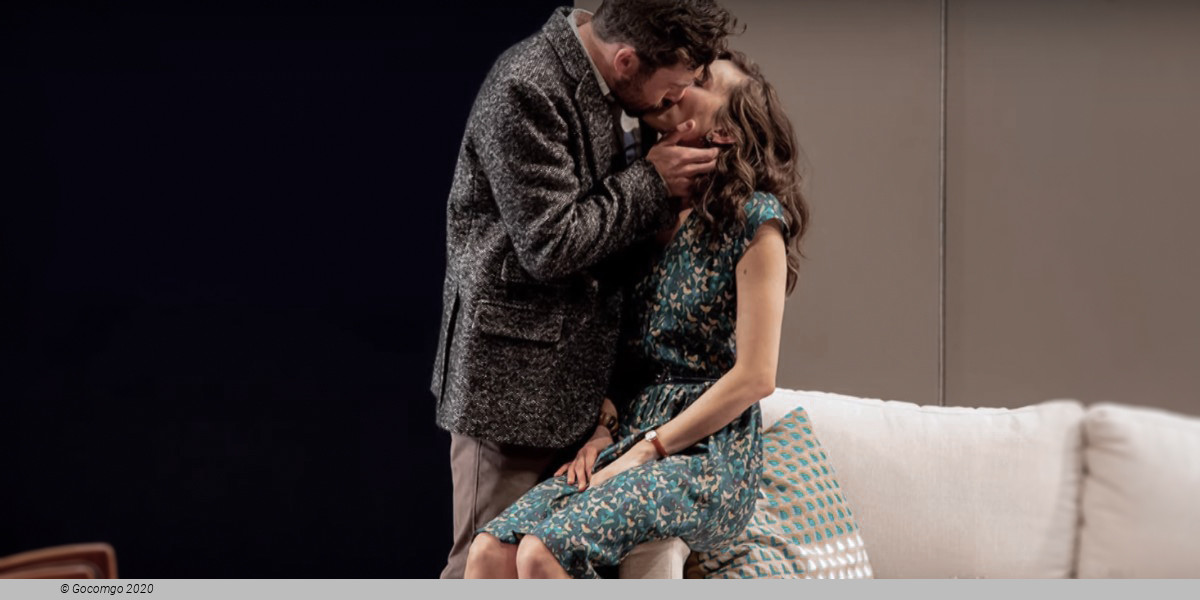


Staatsoper Unter den Linden (Berlin State Opera): The Real Thing (by Tom Stoppard) Tickets | Event Dates & Schedule | GoComGo.com

The Real Thing (by Tom Stoppard) Tickets

Staatsoper Unter den Linden (Berlin State Opera), Berlin, Germany
Important Info
Type: Theatre
City: Berlin, Germany
Duration: 2h with 1 interval
Intervals: 1
Sung in: English

E-tickets: Print at home or at the box office of the event if so specified. You will find more information in your booking confirmation email.

You can only select the category, and not the exact seats.
If you order 2 or 3 tickets: your seats will be next to each other.
If you order 4 or more tickets: your seats will be next to each other, or, if this is not possible, we will provide a combination of groups of seats (at least in pairs, for example 2+2 or 2+3).

Cast
Performers
Choose the date to see the peformers
Overview

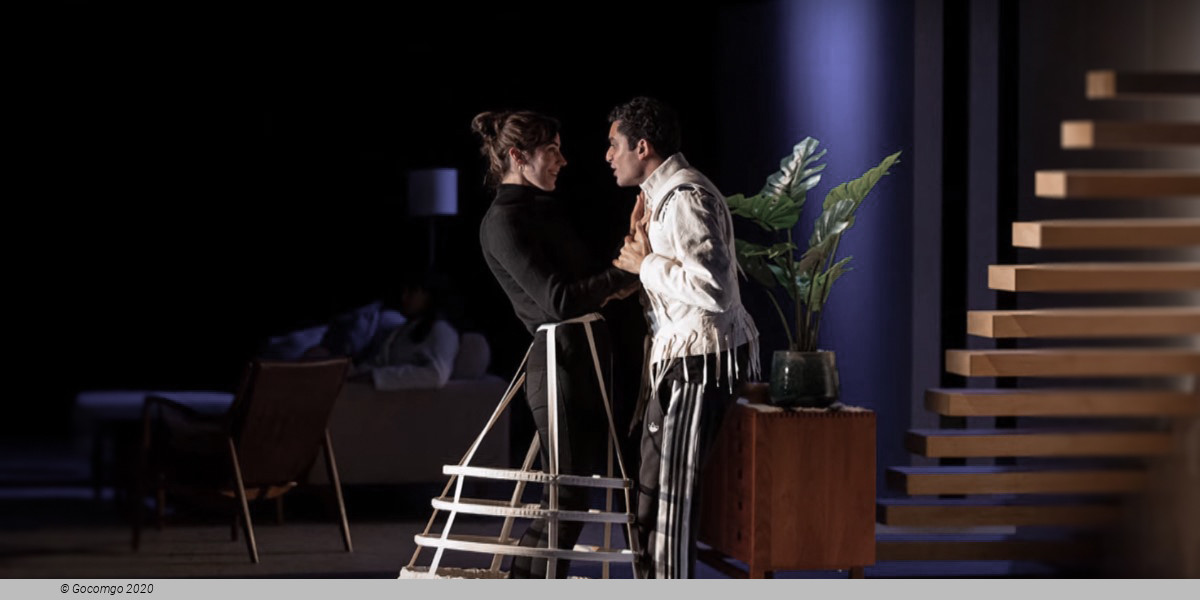
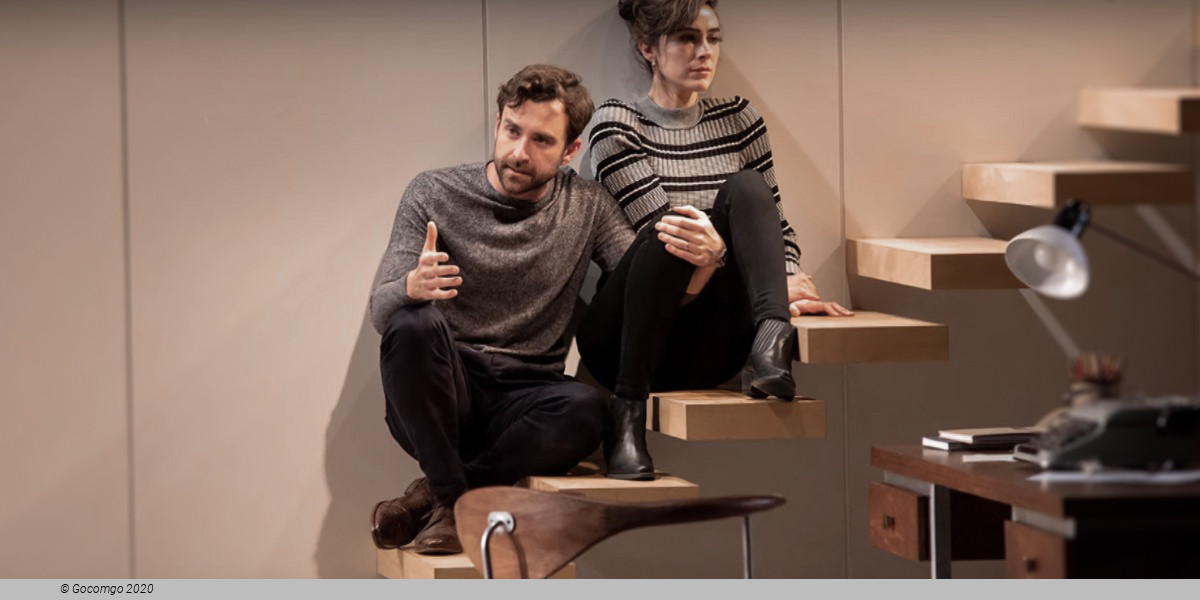
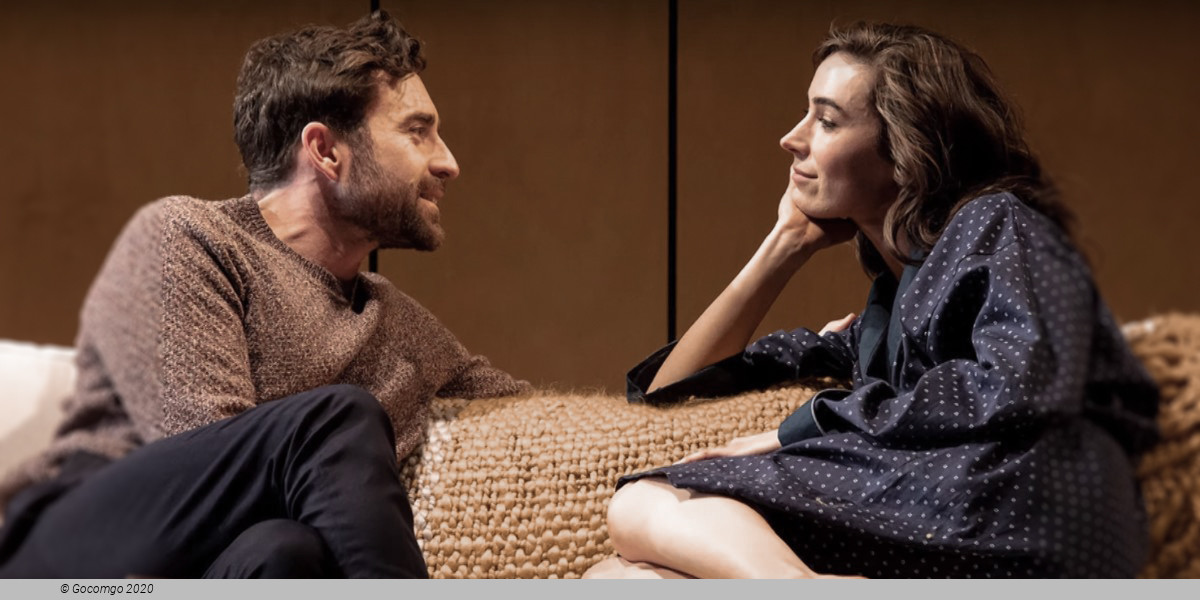
Amidst unhappy marriages and infidelity, Henry and Annie have fallen in love. Could this, at last, be the real thing? This is playwright Tom Stoppard at his dazzling best. 

Through the demise of two marriages, the bloom of new relationships and the pain of infidelity, Stoppard’s characters debate and dissect what love is, what it gives and what it takes. Expertly constructed, erudite and funny, The Real Thing is a modern classic.

Simon Phillips (Muriel’s Wedding the Musical) returns to direct an irresistible cast including Geraldine Hakewill (Chimerica) and Johnny Carr in this hugely entertaining and deeply affecting play.

Presented by Sydney Theatre Company.

History

The Real Thing is a play by Tom Stoppard that was first performed in 1982. The play focuses on the relationship between Henry and Annie, an actress and member of a group fighting to free Brodie, a Scottish soldier imprisoned for burning a memorial wreath during a protest.

The Real Thing examines the nature of honesty and uses various constructs, including a play within a play, to explore the theme of reality versus appearance. It has been described as one of Stoppard's "most popular, enduring and autobiographical plays."

Synopsis


Setting: London in 1982

Act I
In the first scene, Max accuses his distant and travelling wife, Charlotte, of adultery. Upset, she leaves.

In the second scene, Charlotte's personality appears to have changed and she is now married to a playwright named Henry. The audience is gradually led to realize that Charlotte is an actress, and the first scene was her performance in a play that Henry, her husband, wrote. In the play, the character of Max is played by the husband of a married couple with whom Henry and Charlotte are friends, also named Max. The scene reveals that Charlotte is unhappy with the play. She believes that Henry gives limited development to the female lead in order to show off his wit through the male lead's lines.

Max and his wife Annie drop by for a social visit with Charlotte and Henry. Without the benefit of Henry's dialogue, the real-life Max seems superficial. By contrast, his wife Annie is, according to the script, "very much like the woman Charlotte has ceased to be." Annie is a devoted activist on behalf of an imprisoned soldier, Brodie, who has been arrested for setting fire to the wreath on the Tomb of the Unknown Warrior. Henry mocks her as a sentimental do-gooder, giving offence to Max. But when Annie and Henry are left alone, the scene reveals that their fight was also a performance: they are having an affair, and she agrees to meet him later on the pretext of visiting Brodie in prison.

Max discovers the affair, and Annie leaves him to be with Henry. Soon, Henry is reduced to writing television scripts in order to pay alimony to Charlotte. He struggles to write a play about his love for Annie, but finds it difficult to find the right language to express sincere emotion: he can vocalize his feelings but has difficulty expressing them honestly in writing.

Act II
Two years later, Henry's play about Annie remains unwritten. Annie asks him to ghost-write a play by the prisoner Brodie, whom she continues to visit. Brodie's anarchist politics, anti-intellectualism, and lack of writing ability are the antithesis of everything Henry values. Annie discounts Henry's distaste and states that what matters is the passion behind the writing. Henry defends the importance of beauty in language and skill in writing using an analogy with a cricket bat: good writing is like hitting a ball with a cricket bat (i.e. something that has been carefully designed and crafted to hit balls in the best manner possible); bad writing is like hitting it with a plank of wood (i.e., something that has the same composition as a cricket bat, and bears it some resemblance, but is ultimately random and inferior). Henry accuses Annie of being attracted to Brodie, and instantly realizes his mistake.

When Annie is cast in a production of 'Tis Pity She's a Whore in Glasgow, she must be away from Henry for some time, and Henry visits Charlotte and their daughter Debbie. The teenage Debbie declares that monogamy is a thing of the past, a form of colonization. Henry gently cautions the girl against his own vice of making clever phrases for their own sake, but he is shaken by her cynicism. For her part, Charlotte breezily admits to multiple affairs during their marriage, and tells him that his affair with Annie only caused trouble because he treated it romantically instead of as a source of fun.

Henry returns home in a frenzy of jealousy and ransacks his and Annie's apartment searching for evidence of infidelity. His confrontation with Annie echoes the scene from the play he wrote that was performed in the first act of The Real Thing, but Annie has more to say than his imaginary wife did. She admits that she is having an emotional affair with her young co-star Billy, though she claims it is not a physical one; but she refuses to either give Billy up or leave Henry: both romances have a moral claim on her, and Henry must accept this. With pain, he does. Her relationship with Billy seems to come to an end, but there remains a notable distance between her and Henry.

Adding strain to the already difficult relationship between Henry and Annie, Brodie is released from prison and visits them. He turns out to be a prize oaf, with all of Henry's arrogance and elitism, but none of the playwright's eloquence. He is highly critical of Henry's ghost work on his television play, and makes several crass comments about Annie. It is revealed that Annie's crusade to free Brodie had not been based on a belief in the righteousness of his cause but rather on a sense of guilt over Brodie's intention in committing his crime, which was to impress her. In the end, Annie throws Brodie out of the house, and peace between her and Henry is restored. The play ends with a phone call from Max, who tells Henry that he is newly engaged.

Venue Info

Staatsoper Unter den Linden (Berlin State Opera) - Berlin
Location   Unter den Linden 7

The Staatsoper Unter den Linden is one of the oldest and largest musical theaters in Germany. Founded in 1742 as the Royal Court Opera (German: Königliche Hofoper) under Frederick II. Located in Berlin, on the main street Unter den Linden.

King Frederick II of Prussia shortly after his accession to the throne commissioned the original building on the site. Construction work began in July 1741 with what was designed by Georg Wenzeslaus von Knobelsdorff to be the first part of a "Forum Fredericianum" on present-day Bebelplatz. Although not entirely completed, the Court Opera (Hofoper) was inaugurated with a performance of Carl Heinrich Graun's Cesare e Cleopatra on December 7, 1742. This event marked the beginning of the successful, 250-year co-operation between the Staatsoper and the Staatskapelle Berlin, the state orchestra, whose roots trace back to the 16th century.

In 1821, the Berlin Opera—hosted at the Schauspielhaus Berlin—gave the premiere of Weber's Der Freischütz. In 1842, Wilhelm Taubert instituted the tradition of regular symphonic concerts. In the same year, Giacomo Meyerbeer succeeded Gaspare Spontini as General Music Director. Felix Mendelssohn also conducted symphonic concerts for a year.

On August 18, 1843 the Linden Opera was destroyed by fire. The reconstruction of the building was supervised by architect Carl Ferdinand Langhans, and the Königliches Opernhaus (Royal Opera House) was inaugurated the following autumn by a performance of Meyerbeer's Ein Feldlager in Schlesien. In 1849, Otto Nicolai's Die lustigen Weiber von Windsor was premiered at the Royal Opera House, conducted by the composer.

1945: The Lindenoper was once again destroyed on February 3. The concerts were relocated to the Admiralspalast and the Schauspielhaus. On 18 February, Karajan conducted his last symphonic concert with the Staatskapelle in the Beethoven hall.

The second rebuilding took a long time. From 1945, the opera company played in the former Admiralspalast (today's Metropoltheater). From 1949, the company served as the state opera of East Germany. It moved back to its original home after the rebuilding in freely adapted baroque forms was finally completed in 1955. The newly rebuilt opera house was opened, again, with Wagner's Die Meistersinger von Nürnberg. The capacity is now about 1,300. After the Berlin Wall was built in 1961, the Opera was somewhat isolated, but still maintained a comprehensive repertoire that featured the classic and romantic period together with contemporary ballet and operas.

After reunification, the Linden Opera rejoined the operatic world. Important works that had already performed in the past were rediscovered and discussed anew within the framework of a "Berlin Dramaturgy". Baroque Opera in particular was at the center of attention, with Graun's Cleopatra e Cesare, Keiser's Croesus, Florian Leopold Gassmann's L'opera seria and Scarlatti's Griselda. These works were performed by Belgian conductor René Jacobs together with the Akademie für Alte Musik Berlin and the Freiburger Barockorchester on period instruments. In the 1990s, the opera was officially renamed Staatsoper Unter den Linden.

In 1992, the Argentine-Israeli conductor Daniel Barenboim was appointed Music Director. In 2000, the orchestra (according to its official website) elected Barenboim "conductor for life." During the 2002 Festtage, he led a Wagner cycle in ten parts, a production created in collaboration with director Harry Kupfer.

Since 2009, the Berlin State Opera has been undergoing considerable renovation work led by German architect HG Merz. The roof of the opera building was raised and the proscenium prolonged to improve the acoustics. Other renovation and extension works include the director's building, the below-ground connection building and the depot building. The latter will house the new rehearsal center.

The house was reopened in 2017 with premieres of Humperdinck's Hänsel und Gretel and Monteverdi's L'incoronazione di Poppea on one weekend.

Important Info
Type: Theatre
City: Berlin, Germany
Duration: 2h with 1 interval
Intervals: 1
Sung in: English

E-tickets: Print at home or at the box office of the event if so specified. You will find more information in your booking confirmation email.

You can only select the category, and not the exact seats.
If you order 2 or 3 tickets: your seats will be next to each other.
If you order 4 or more tickets: your seats will be next to each other, or, if this is not possible, we will provide a combination of groups of seats (at least in pairs, for example 2+2 or 2+3).

Top of page