
Staatsoper Hamburg tickets 10 December 2026 - Ruslan and Lyudmila | GoComGo.com

Ruslan and Lyudmila

Staatsoper Hamburg, Main Stage, Hamburg, Germany
Select date and time
7 PM
From
US$ 103

E-tickets: Print at home or at the box office of the event if so specified. You will find more information in your booking confirmation email.

You can only select the category, and not the exact seats.
If you order 2 or 3 tickets: your seats will be next to each other.
If you order 4 or more tickets: your seats will be next to each other, or, if this is not possible, we will provide a combination of groups of seats (at least in pairs, for example 2+2 or 2+3).

Important Info
Type: Opera
City: Hamburg, Germany
Starts at: 19:00
Acts: 5
Intervals: 1
Duration: 3h 10min
Sung in: Russian
Titles in: English,German

E-tickets: Print at home or at the box office of the event if so specified. You will find more information in your booking confirmation email.

You can only select the category, and not the exact seats.
If you order 2 or 3 tickets: your seats will be next to each other.
If you order 4 or more tickets: your seats will be next to each other, or, if this is not possible, we will provide a combination of groups of seats (at least in pairs, for example 2+2 or 2+3).

Cast
Performers
Tenor: Nicky Spence (Bayan)
Conductor: Azim Karimov
Bass: Alexei Botnarciuc (Farlaf)
Soprano: Barno Ismatullaeva (Lyudmila)
Bass: Ilia Kazakov (Ruslan)
Creators
Composer: Mikhail Glinka
Director: Alexandra Szemerédy
Opera Company: Hamburg State Opera
Director: Magdolna Parditka
Librettist: N. A. Markevich
Librettist: Nestor Kukolnik
Librettist: Valerian Shirkov
Overview

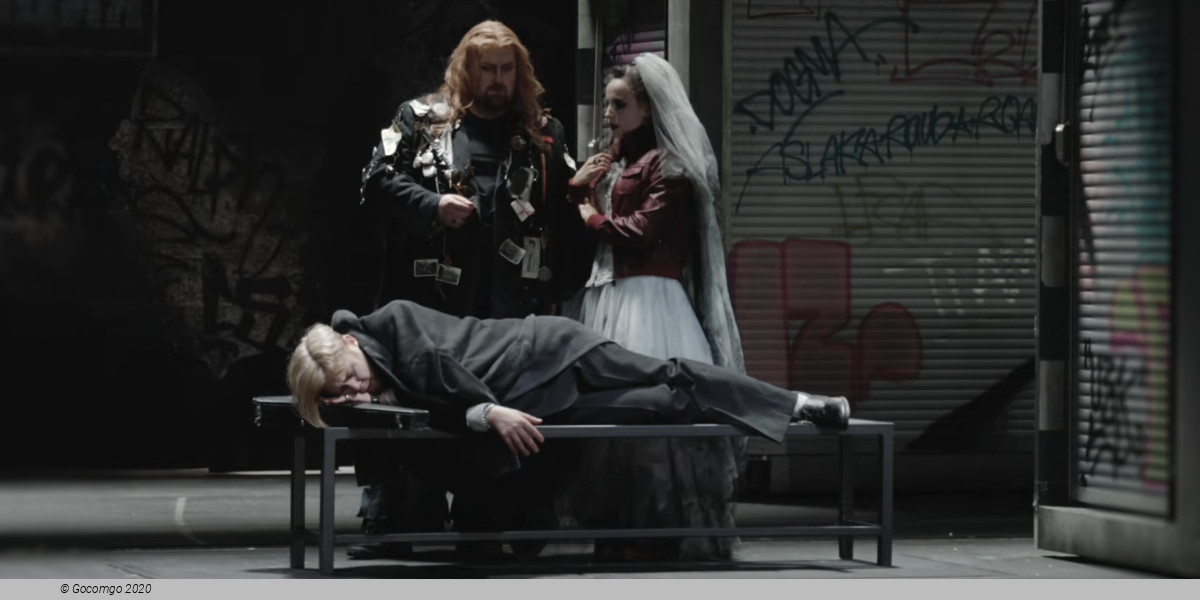
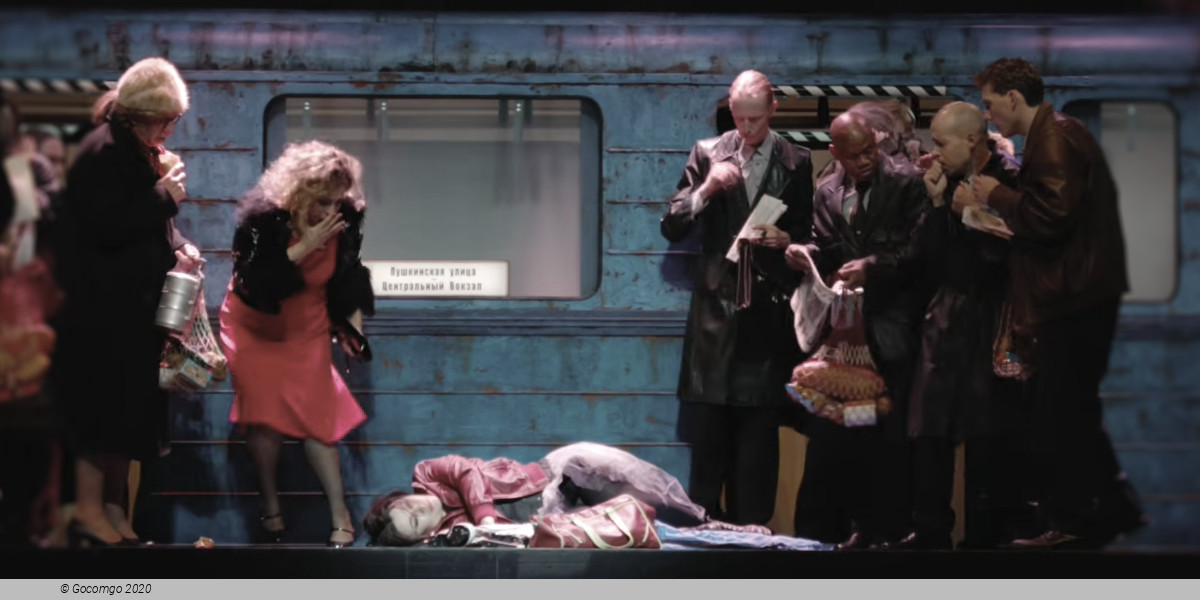
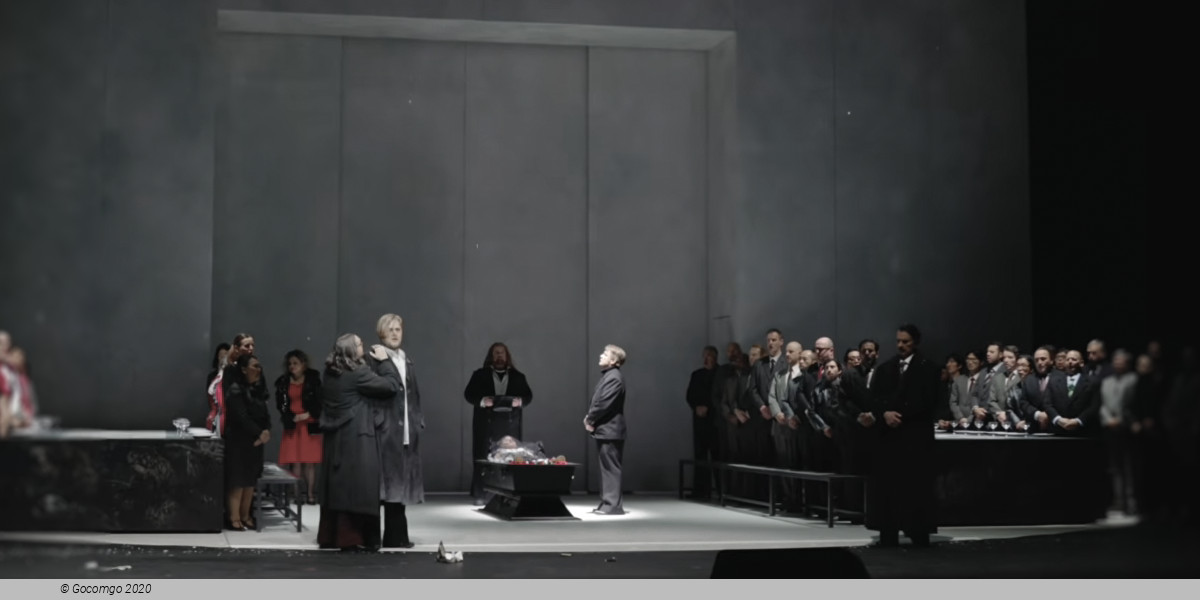
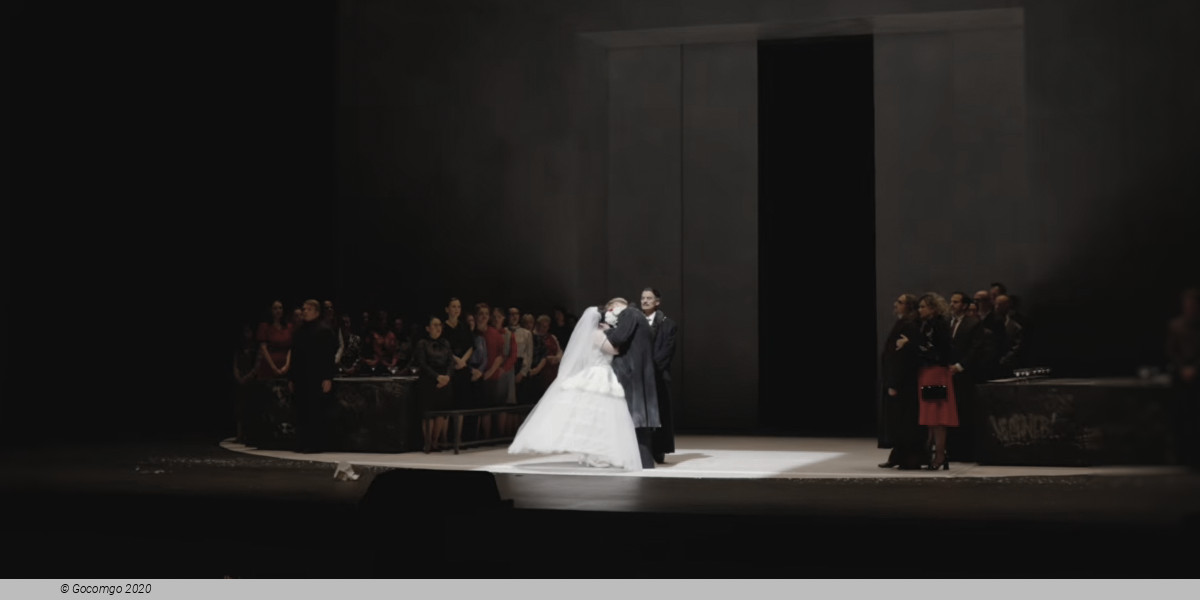
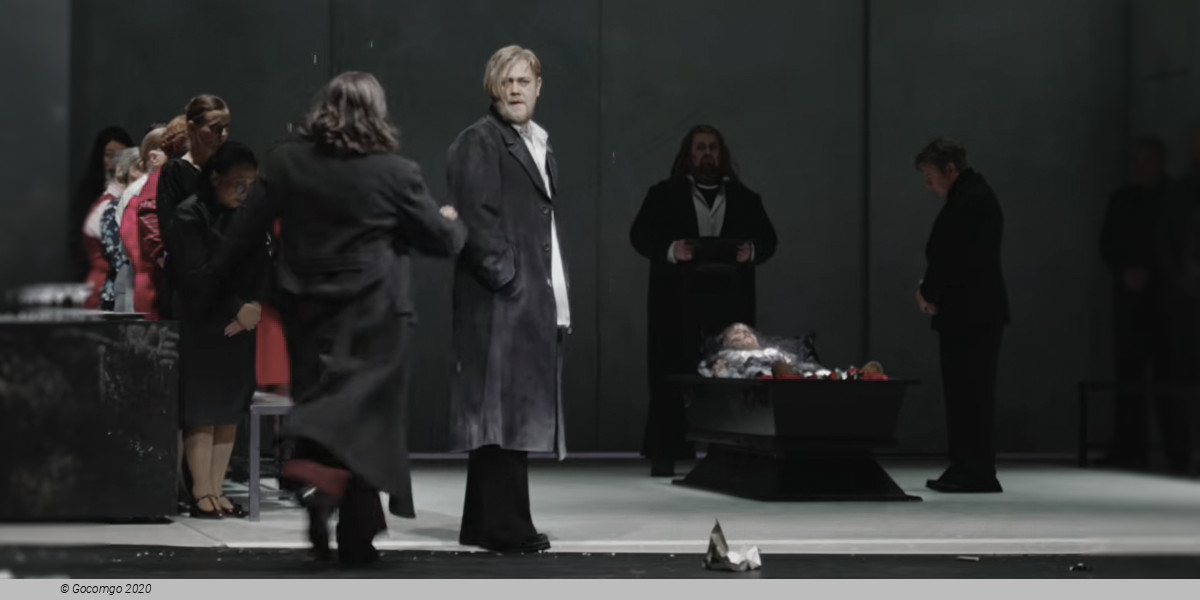
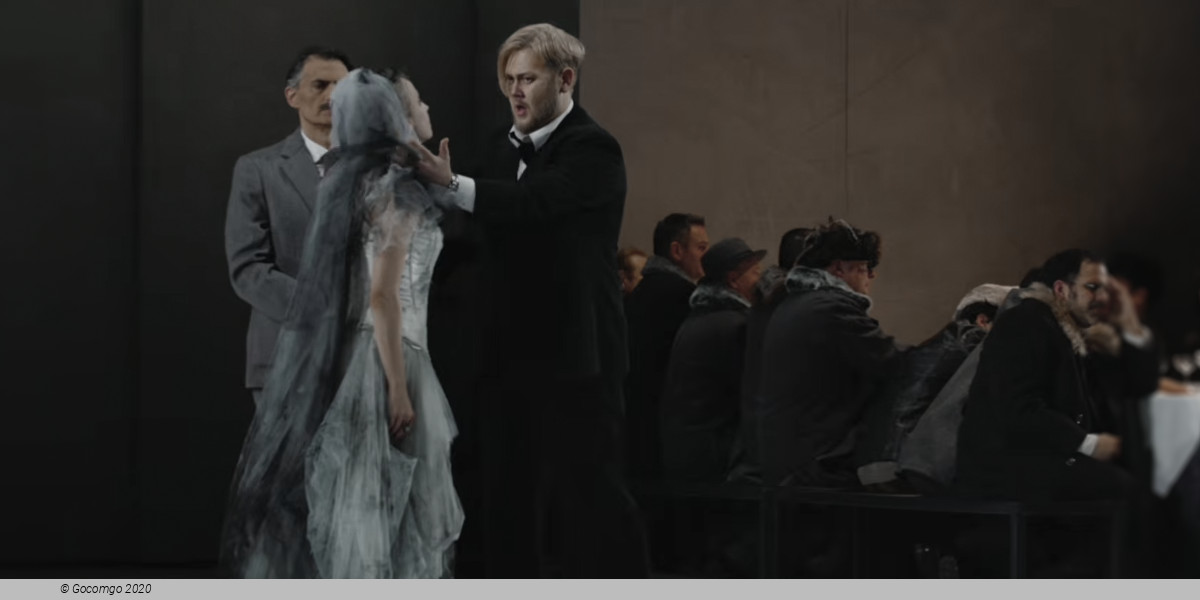
Mikhail Glinka’s fairy-tale opera is reimagined as a contemporary story of emancipation. Two Hungarian directors, Alexandra Szemerédy and Magdolna Parditka, transform Pushkin’s romantic fantasy into a drama about freedom, equality and the struggle against a restrictive social system. The production explores the tension between traditional expectations and the right to determine one’s own life.

Ruslan und Ljudmila is one of Mikhail Glinka’s major operatic works, based on Alexander Pushkin’s celebrated fairy-tale poem. Combining Italian bel canto with Slavic, Finnish and Arabic musical influences, the opera brings together magic, romance, rivalry and adventure.

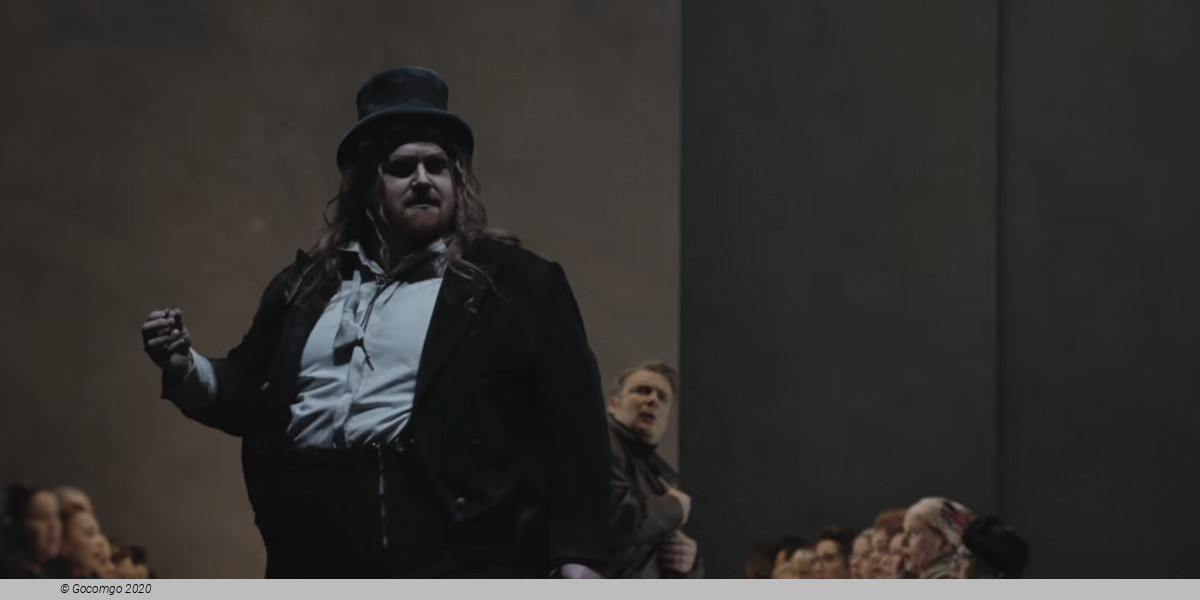
In the Hamburg production, directors Alexandra Szemerédy and Magdolna Parditka reinterpret the fairy tale as a contemporary story about personal autonomy and social pressure. The traditional quest to rescue a princess becomes a reflection on a society that promises security while restricting freedom and equality. The fantastical dwarfs of the original story are transformed into symbols of social constraints, while the conventional heroic journey becomes a struggle for self-determination.

History
Premiere of this production: 27 November 1842, Bolshoi Kamenny Theatre, Saint Petersburg

Ruslan and Lyudmila is an opera in five acts (eight tableaux) composed by Mikhail Glinka between 1837 and 1842. The opera is based on the 1820 poem of the same name by Alexander Pushkin. The Russian libretto was written by Valerian Shirkov, Nestor Kukolnik, and N. A. Markevich, among others. Pushkin's death in the famous duel prevented him from writing the libretto himself as planned.
Today, the best-known music from the opera is its overture.

Synopsis

Time: The time of Kievan Rus' (9th to 13th centuries)
Place: Kiev; various imaginary and fantastic locations

Act 1

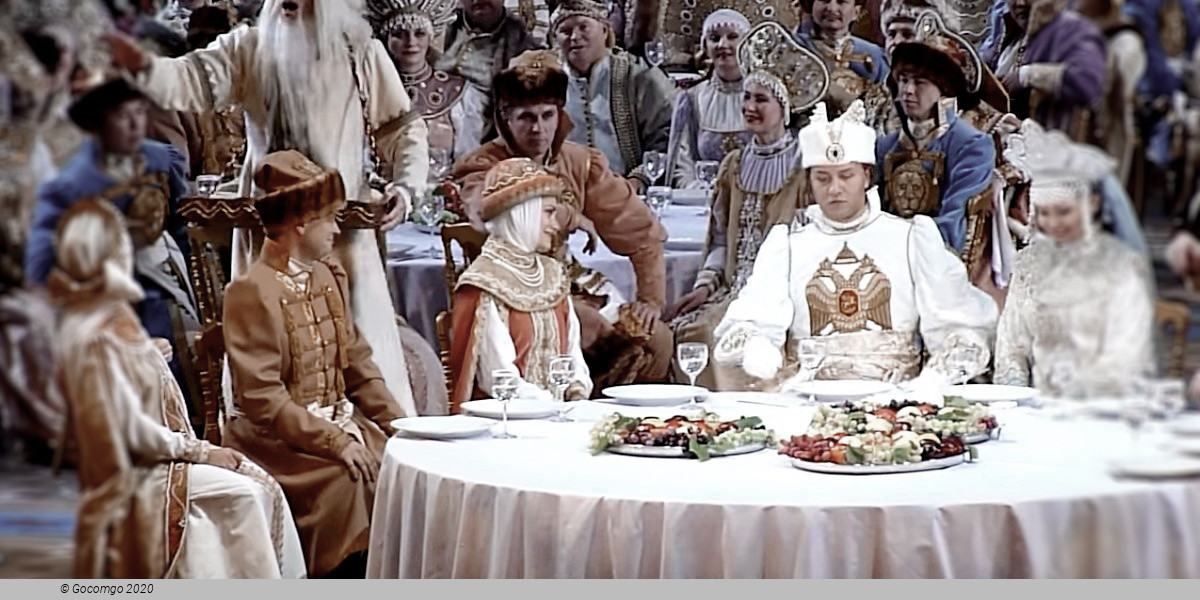
In Svetozar's banquet hall, the wedding feast for Ruslan and Lyudmila is taking place. The guests listen to Bayan sing a song foretelling misfortune for the bride and groom, followed by happiness from true love. Lyudmila, saddened by the prospect of leaving her father, offers words of comfort to her unsuccessful suitors, Farlaf and Ratmir, and then pledges herself to Ruslan. Svetozar blesses the couple. All of a sudden everything goes dark and there is a crash of thunder. The people are paralysed by a spell while two monsters carry Lyudmila away. When light returns and everyone recovers, they panic over Lyudmila's disappearance. Svetozar promises half his kingdom and Lyudmila's hand to the man who brings her back. The three suitors ready themselves for the journey to find Lyudmila.

Act 2

Tableau 1

Ruslan comes upon the cave of the kindly wizard Finn, who tells him that the evil sorcerer Chernomor has absconded with Lyudmila and that Ruslan is the man who will destroy him. Ruslan asks Finn why he lives in this deserted place, and Finn relates the story of many years ago, when he was a shepherd in his distant homeland (he says he is "a Finn") and fell in love with a beautiful girl named Naina. When she rejected his declaration of love, he went off to do battle with enemies for booty. Returning with this booty, he presented it to Naina, but she yet again spurned him. Then he resolved to study magic to win her; many years went by, and through sorcery he finally summoned an old, grey-haired, humpbacked woman – it was Naina, who now was mad with passion for him. He ran away from her and has been hiding from her ever since. For abandoning her, Naina is consumed by vengeful hatred, which will likewise fall upon Ruslan. Assuring him that Lyudmila will not be harmed, Finn instructs Ruslan to head north, and the two of them exit in opposite directions.

Tableau 2

In a deserted place, the cowardly Farlaf wonders whether he should continue searching for Lyudmila, when the decrepit Naina approaches him. She promises to get Lyudmila for him and send Ruslan far away. She disappears, and Farlaf rejoices in his triumph.

Tableau 3

Ruslan, having come upon a foggy desert strewn with weapons and bones from a past battle, wonders at the cause of this scene and whether he, too, may end up the same way. He chooses a new shield and spear from the ground to replace his broken weaponry, but cannot find a sword heavy enough to complete his new set of armor. When the fog lifts, a giant Head is revealed and blows through its lips to bring up a storm so as to drive Ruslan away. When Ruslan strikes the head with his spear, the Head falls back and reveals a sword underneath. He takes it and asks the Head whence it came. As it is dying, the Head explains that it once was a giant, and his dwarf brother is the evil sorcerer Chernomor. The sword was destined to kill both of them; so, in order to forestall fate, Chernomor tricked the giant, beheaded him, and flew his live head away to the distant desert to keep the sword protected underneath it. With the sword now in Ruslan's hands, the Head calls for vengeance on Chernomor.

Act 3

Young maidens are luring passing travelers to enter Naina's magical castle. Gorislava appears, looking for Ratmir, who had taken her captive and then abandoned her. After she goes away for a moment, Ratmir himself comes on the scene and falls under the spell of the maidens, who seduce him with dance. The final guest attracted to the castle is Ruslan, who finds himself forgetting Lyudmila upon seeing Gorislava. Suddenly Finn appears; and, after pronouncing a happy fate for Ratmir with Gorislava, and for Ruslan with Lyudmila, the castle turns into a forest as they resolve to rescue Lyudmila.

Act 4

Within Chernomor's magical gardens, Lyudmila longs for Ruslan and resists the influence of the enchanted surroundings. Chernomor with his retinue arrives; dances are performed. A trumpet call signals a challenge from Ruslan. Chernomor puts Lyudmila under a sleeping spell and goes off to fight Ruslan, who shortly comes on the scene triumphantly wearing Chernomor's beard around his helmet. Although he is disheartened by Lyudmila's condition, Ruslan, along with Ratmir and Gorislava, resolve to return to Kiev with Lyudmila to seek the aid of the magicians there. Chernomor's former slaves freely come along.

Act 5
Tableau 1

In a moonlit valley, Ruslan, Ratmir, and Gorislava, with Lyudmila, have camped for the night. Ratmir, who is standing guard, worries about Ruslan, and then expresses his happiness at his reunion with Gorislava. Suddenly the slaves report that Lyudmila once again has been abducted and that Ruslan has left in search of her. Finn appears, gives a magic ring to Ratmir that will awaken Lyudmila when she is brought back to Kiev.

Tableau 2

Lyudmila lies asleep in Svetozar's banquet hall. It turns out that Farlaf, with Naina's assistance, kidnapped Lyudmila and brought her to Kiev so as to appear to have been her rescuer. However, he cannot waken her. Horses approach, and Ruslan, Ratmir, and Gorislava arrive. Ruslan brings the magic ring to Lyudmila, and she awakens. As the tableau opens onto a view of Kiev, the people rejoice in their gods, their motherland, and the young couple.

Venue Info

Staatsoper Hamburg - Hamburg
Location   Große Theaterstraße 25

Staatsoper Hamburg is the oldest publicly accessible musical theater in Germany, located in Hamburg. It was founded in 1678. With the emergence of the Hamburg Opera House, researchers attribute the formation of a national German opera school.

Opera in Hamburg dates to 2 January 1678 when the Oper am Gänsemarkt was inaugurated with a performance of a biblical Singspiel by Johann Theile. It was not a court theatre but the first public opera house in Germany established by the art-loving citizens of Hamburg, a prosperous member of the Hanseatic League.

The Hamburg Bürgeroper resisted the dominance of the Italianate style and rapidly became the leading musical center of the German Baroque. In 1703, George Friedrich Handel was engaged as violinist and harpsichordist and performances of his operas were not long in appearing. In 1705, Hamburg gave the world première of his opera Nero.

In 1721, Georg Philipp Telemann, a central figure of the German Baroque, joined the Hamburg Opera, and in subsequent years Christoph Willibald Gluck, Johann Adolph Hasse and various Italian companies were among the guests.

To replace the aging wooden structure, the first stone was laid on 18 May 1826 for the Stadt-Theater on the present-day site of the Staatsoper Hamburg. The new theater, with seating for 2,800 guest, was inaugurated less than a year later with Beethoven's incidental music to Egmont.

In 1873, both the exterior and interior of the structure were renovated in the reigning "Gründerzeit" style of the time, and again in 1891, when electric lighting was introduced.

Under the direction of Bernhard Pollini, the house mounted its first complete Ring Cycle in 1879. In 1883, the year of Wagner's death, a cycle comprising nine of his operas commenced. The musical directors Hans von Bülow (from 1887 to 1890) and Gustav Mahler (from 1891 to 1897) also contributed to the fame of the opera house.

In the beginning of the 20th century, opera was an important part of the theatre's repertoire; among the 321 performances during the 1907–08 season, 282 were performances of opera. The Stadt-Theater performed not only established repertoire but also new works, such as Paul Hindemith's Sancta Susanna, Igor Stravinsky's The Soldier's Tale, Ernst Krenek's Jonny spielt auf, and Leoš Janáček's Jenůfa. Ferruccio Busoni's Die Brautwahl (1912) and Erich Wolfgang Korngold's Die tote Stadt (1920) both had their world premieres in Hamburg. In the 1930s, after Hitler came to power, the opera house was renamed Hamburgische Staatsoper.

On the night of 2 August 1943, both the auditorium and its neighbouring buildings were destroyed during air raids by fire-bombing; a low-flying airplane dropped several petrol and phosphorus containers onto the middle of the roof of the auditorium, causing it to erupt into a conflagration.

The current Staatsoper opened on 15 October 1955 with Mozart's Die Zauberflöte. Hamburg continued to devote itself to new works, such as Hans Werner Henze's The Prince of Homburg (1960), Stravinsky's The Flood (1963), Gian Carlo Menotti's Help, Help, the Globolinks! (1968), and Mauricio Kagel's Staatstheater (1971).

In 1967, under the direction of Joachim Hess, the Staatsoper Hamburg became the first company to broadcasts its operas in color on television, beginning with Die Hochzeit des Figaro (a German translation of Le Nozze di Figaro). Ten of these television productions have been released on DVD by ArtHaus Musik as Cult Opera of the 1970s, as well as separately. All of these were performed in German regardless of the original language (six were written in German, one in French, two in English, and one in Italian).

More recently, Hamburg gave the world premières of Wolfgang Rihm's Die Eroberung von Mexico (1992) and Helmut Lachenmann's Das Mädchen mit den Schwefelhölzern (1997), for which it received much international acclaim. The company has won the "Opera House of the Year" award by the German magazine Opernwelt in 1997 and in 2005.

Important Info
Type: Opera
City: Hamburg, Germany
Starts at: 19:00
Acts: 5
Intervals: 1
Duration: 3h 10min
Sung in: Russian
Titles in: English,German
Top of page