









Staatsoper Hamburg 21 February 2024 - Peter Grimes | GoComGo.com

Peter Grimes

Staatsoper Hamburg, Main Stage, Hamburg, Germany
All photos (6)
Select date and time
7 PM

E-tickets: Print at home or at the box office of the event if so specified. You will find more information in your booking confirmation email.

You can only select the category, and not the exact seats.
If you order 2 or 3 tickets: your seats will be next to each other.
If you order 4 or more tickets: your seats will be next to each other, or, if this is not possible, we will provide a combination of groups of seats (at least in pairs, for example 2+2 or 2+3).

Important Info
Type: Opera
City: Hamburg, Germany
Starts at: 19:00
Duration: 3h
Sung in: English
Titles in: German

E-tickets: Print at home or at the box office of the event if so specified. You will find more information in your booking confirmation email.

You can only select the category, and not the exact seats.
If you order 2 or 3 tickets: your seats will be next to each other.
If you order 4 or more tickets: your seats will be next to each other, or, if this is not possible, we will provide a combination of groups of seats (at least in pairs, for example 2+2 or 2+3).

Overview

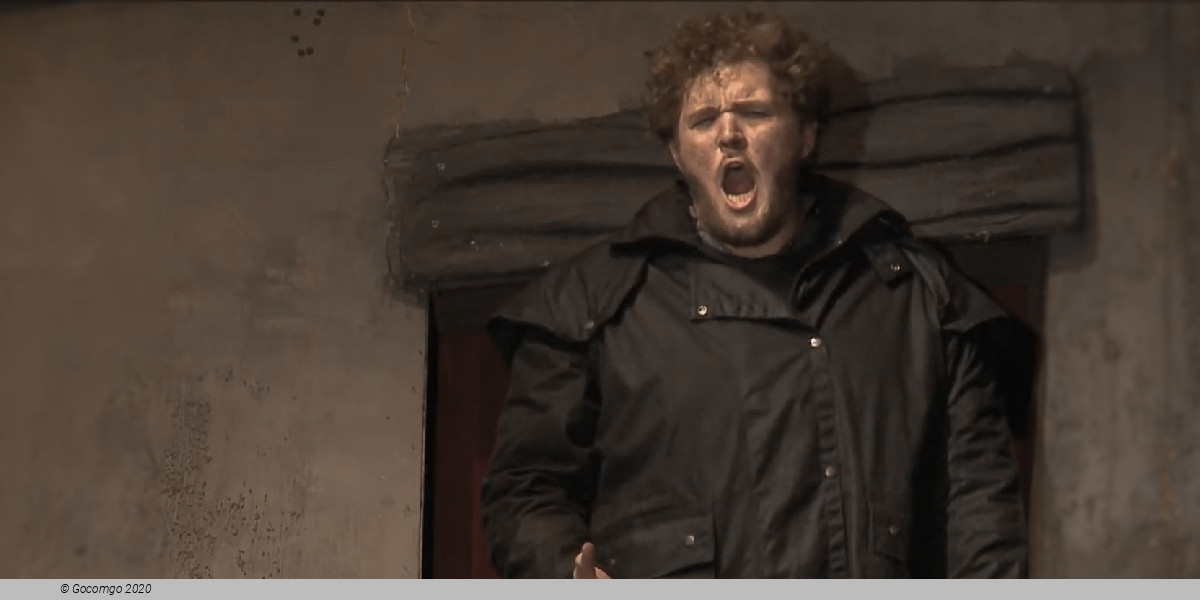
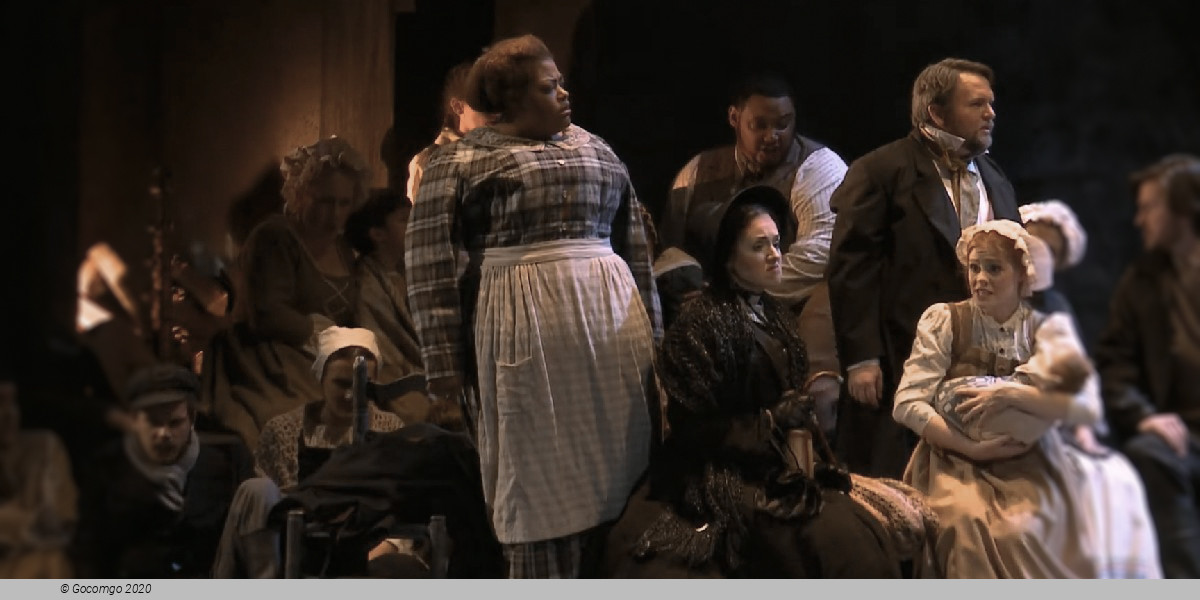
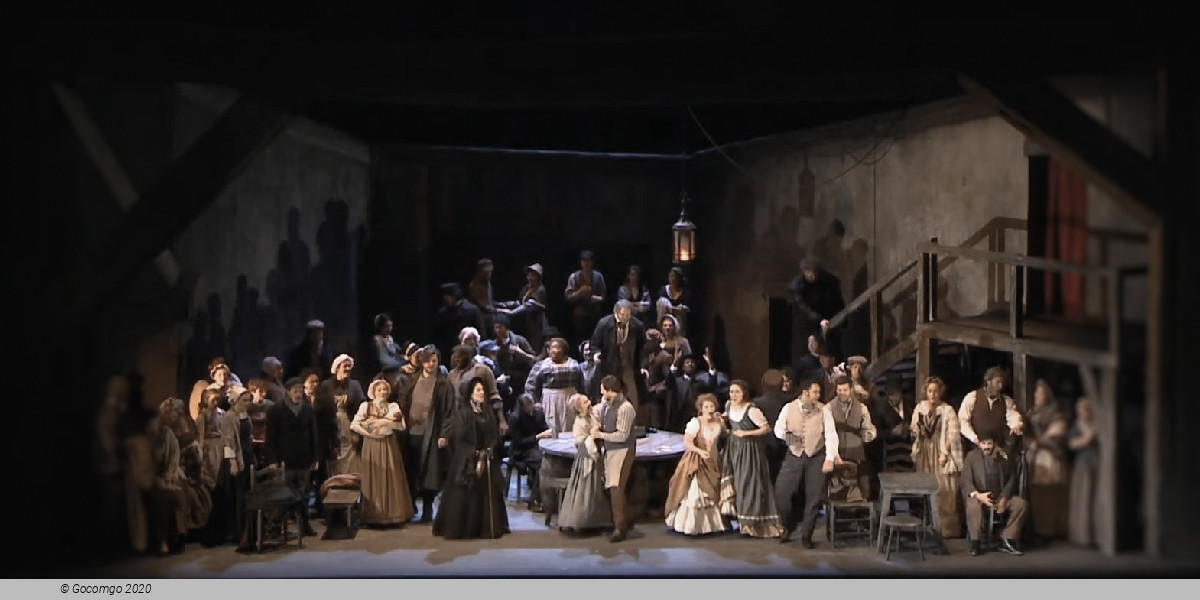
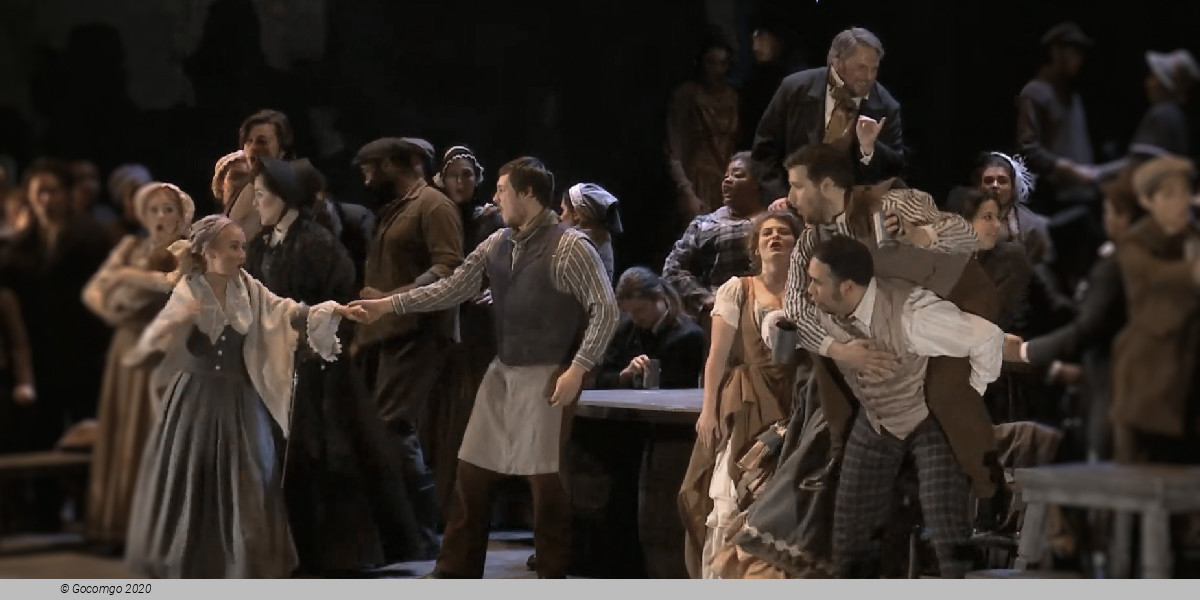
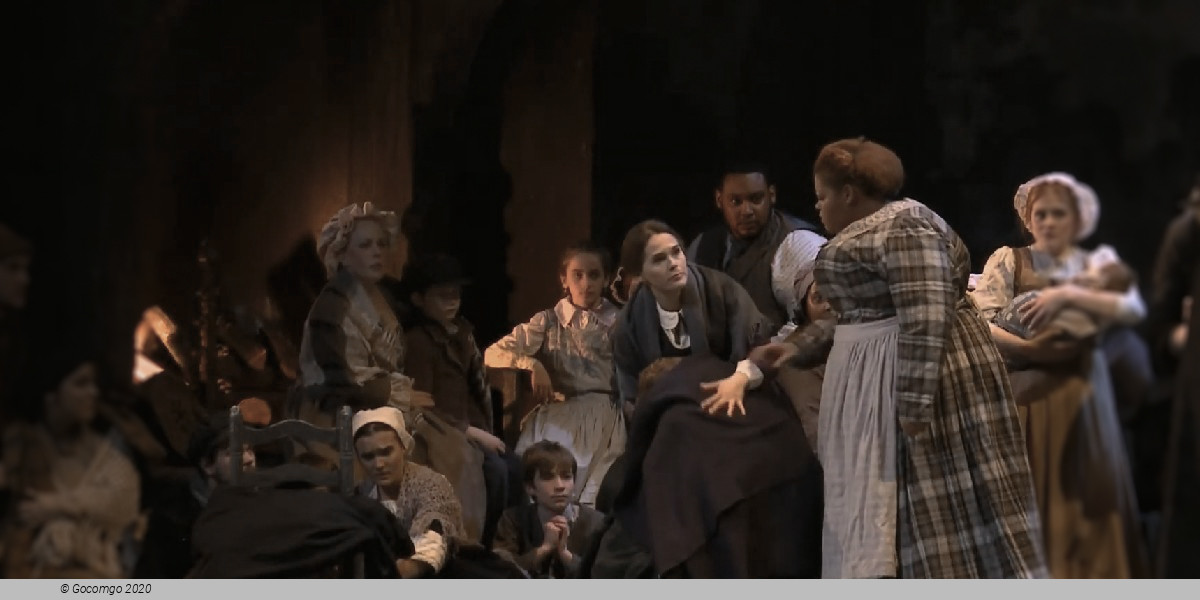
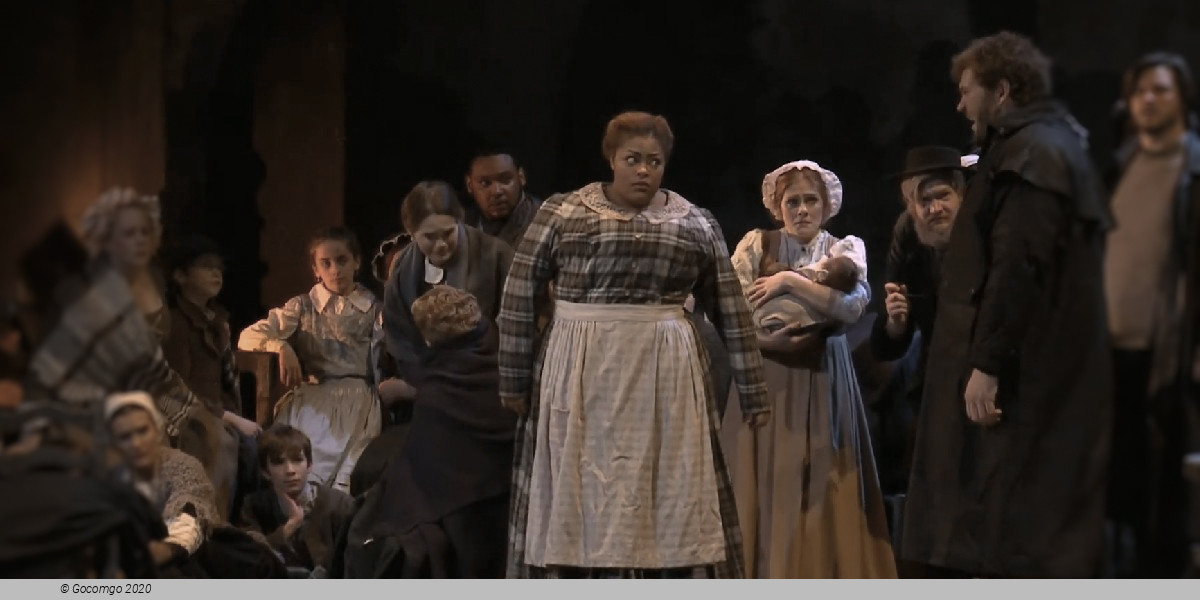
Sabine Hartmannshenn's production focuses on the opposition between the individual and the masses. The opera choir stands impressively as a powerful society next to the excluded Grimes and is one of the main protagonists of the work - stage design and lighting reflect the inner conflict of the fisherman.

When mistrust and rumors start doing the rounds in a village, it's hard to fight them. Peter Grimes, a fisherman, has to experience this as well. He is said to be responsible for the death of his apprentice. In the course of the opera, the misfortunes pile up. For the villagers, only the question of guilt remains in the foreground - for the opera's audience, the realization of what collective exclusion can do.
"When I wrote 'Peter Grimes,' I was concerned with giving expression to my knowledge of the eternal struggle of the men and women who wrested their lives, their livelihoods, from the sea," the composer said in describing his subject. The sea is not only a central theme of Benjamin Britten's composition, but also Grimes' last desperate refuge...

History
Premiere of this production: 07 June 1945, Sadler`s Wells, London

Peter Grimes is an opera by Benjamin Britten, with a libretto adapted by Montagu Slater from the narrative poem, "Peter Grimes", in George Crabbe's book The Borough. The "borough" of the opera is a fictional village which shares some similarities with Crabbe's, and later Britten's, own home of Aldeburgh, a town on England's east coast.

Synopsis

Prologue

A Suffolk coastal village, mid-19th century (The date is not specified, but the foghorn in Act III places it later than the date of Crabbe's poem)

Peter Grimes is questioned at an inquest over the death at sea of his apprentice. The townsfolk, all present, make it clear that they think Grimes is guilty and deserving of punishment. Although the coroner, Mr Swallow, determines the boy's death to be accidental and clears Grimes without a proper trial, he advises Grimes not to get another apprentice—a proposal against which Grimes vigorously protests. As the court is cleared, Ellen Orford, the schoolmistress whom Grimes wishes to marry as soon as he gains the Borough's respect, attempts to comfort Grimes as he rages against what he sees as the community's unwillingness to give him a true second chance.

Act 1

The same, some days later

After the first orchestral Interlude (in the Four Sea Interludes concert version entitled "Dawn"), the chorus, who constitute "the Borough", sing of their weary daily round and their relationship with the sea and the seasons. Grimes calls for help to haul his boat ashore, but is shunned by most of the community. Belatedly, Balstrode and the apothecary, Ned Keene, assist Grimes by turning the capstan. Keene tells Grimes that he has found him a new apprentice (named John) from the workhouse. Nobody will volunteer to fetch the boy, until Ellen offers ("Let her among you without fault...").

As a storm approaches, most of the community—after securing windows and equipment—take shelter in the pub. Grimes stays out, and alone with Balstrode confesses his ambitions: to make his fortune with a "good catch", buy a good home and marry Ellen Orford. Balstrode suggests "without your booty Ellen will have you now", only to provoke Grimes's furious "No, not for pity!" Balstrode abandons Grimes to the storm, as the latter ruminates "What harbour shelters peace?" The storm then breaks with a vengeance (second orchestral Interlude).

In the pub, tensions are rising due both to the storm and to the fiery Methodist fisherman, Bob Boles, getting increasingly drunk and lecherous after the pub's main attraction, the two "nieces". Grimes suddenly enters ("Now the Great Bear and Pleiades..."), and his wild appearance unites almost the entire community in their fear and mistrust of his "temper". Ned Keene saves the situation by starting a round ("Old Joe has gone fishing"). Just as the round reaches a climax, Ellen arrives with the apprentice, both drenched. Grimes immediately sets off with the apprentice to his hut, despite the terrible storm.

Act 2

The same, some weeks later

On Sunday morning (the third orchestral Interlude), while most of the Borough is at church, Ellen talks with John, the apprentice. She is horrified when she finds a bruise on his neck. When she confronts Grimes about it, he brusquely claims that it was an accident. Growing agitated at her mounting concern and interference, he strikes her and runs off with the boy. This does not go unseen: first Keene, Auntie, and Bob Boles, then the chorus comment on what has happened, the latter developing into a mob to investigate Grimes's hut. As the men march off, Ellen, Auntie, and the nieces sing sadly of the relationship of women with men. The fourth interlude (Passacaglia) follows as the scene changes.

At the hut, Grimes impatiently drives the ever silent John into changing out of his Sunday clothes and into fisherman's gear, and then becomes lost in his memories of his previous, now dead apprentice, reliving the boy's death of thirst. When he hears the mob of villagers approaching, he quickly comes back to reality, stirred both by a paranoid belief that John has been "gossiping" with Ellen, so provoking the "odd procession", and at the same time feeling defiant. He gets ready to set out to sea, and he tells John to be careful climbing down the cliff to his boat, but to no avail: the boy falls to his death. When the mob reaches the hut Grimes is gone, and they find nothing out of order, so they disperse.

Act 3

The same, two days later, night time in the Borough ("Moonlight" in the Sea Interludes).

While a dance is going on, Mrs Sedley tries to convince the authorities that Grimes is a murderer, but to no avail. Ellen and Captain Balstrode confide in each other: Grimes has disappeared, and Balstrode has discovered a jersey washed ashore: a jersey that Ellen recognises as one she had knitted for John. Mrs Sedley overhears this, and with the knowledge that Grimes has returned, she is able to instigate another mob. Singing "Him who despises us we'll destroy", the villagers go off in search of Grimes. The sixth interlude, not included in the Sea Interludes, covers the change of scene.

While the chorus can be heard searching for him, Grimes appears onstage, singing a long monologue sparsely accompanied by cries from the off-stage chorus, and a fog horn (represented by a solo tuba): John's death has seemingly shattered Grimes's sanity. Ellen and Balstrode find him, and the old captain encourages Grimes to take his boat out to sea and sink it. Grimes leaves. The next morning, the Borough begins its day anew, as if nothing has happened. There is a report from the coastguard of a ship sinking off the coast. This is dismissed by Auntie as "one of these rumours."

Venue Info

Staatsoper Hamburg - Hamburg
Location   Große Theaterstraße 25

Staatsoper Hamburg is the oldest publicly accessible musical theater in Germany, located in Hamburg. It was founded in 1678. With the emergence of the Hamburg Opera House, researchers attribute the formation of a national German opera school.

Opera in Hamburg dates to 2 January 1678 when the Oper am Gänsemarkt was inaugurated with a performance of a biblical Singspiel by Johann Theile. It was not a court theatre but the first public opera house in Germany established by the art-loving citizens of Hamburg, a prosperous member of the Hanseatic League.

The Hamburg Bürgeroper resisted the dominance of the Italianate style and rapidly became the leading musical center of the German Baroque. In 1703, George Friedrich Handel was engaged as violinist and harpsichordist and performances of his operas were not long in appearing. In 1705, Hamburg gave the world première of his opera Nero.

In 1721, Georg Philipp Telemann, a central figure of the German Baroque, joined the Hamburg Opera, and in subsequent years Christoph Willibald Gluck, Johann Adolph Hasse and various Italian companies were among the guests.

To replace the aging wooden structure, the first stone was laid on 18 May 1826 for the Stadt-Theater on the present-day site of the Staatsoper Hamburg. The new theater, with seating for 2,800 guest, was inaugurated less than a year later with Beethoven's incidental music to Egmont.

In 1873, both the exterior and interior of the structure were renovated in the reigning "Gründerzeit" style of the time, and again in 1891, when electric lighting was introduced.

Under the direction of Bernhard Pollini, the house mounted its first complete Ring Cycle in 1879. In 1883, the year of Wagner's death, a cycle comprising nine of his operas commenced. The musical directors Hans von Bülow (from 1887 to 1890) and Gustav Mahler (from 1891 to 1897) also contributed to the fame of the opera house.

In the beginning of the 20th century, opera was an important part of the theatre's repertoire; among the 321 performances during the 1907–08 season, 282 were performances of opera. The Stadt-Theater performed not only established repertoire but also new works, such as Paul Hindemith's Sancta Susanna, Igor Stravinsky's The Soldier's Tale, Ernst Krenek's Jonny spielt auf, and Leoš Janáček's Jenůfa. Ferruccio Busoni's Die Brautwahl (1912) and Erich Wolfgang Korngold's Die tote Stadt (1920) both had their world premieres in Hamburg. In the 1930s, after Hitler came to power, the opera house was renamed Hamburgische Staatsoper.

On the night of 2 August 1943, both the auditorium and its neighbouring buildings were destroyed during air raids by fire-bombing; a low-flying airplane dropped several petrol and phosphorus containers onto the middle of the roof of the auditorium, causing it to erupt into a conflagration.

The current Staatsoper opened on 15 October 1955 with Mozart's Die Zauberflöte. Hamburg continued to devote itself to new works, such as Hans Werner Henze's The Prince of Homburg (1960), Stravinsky's The Flood (1963), Gian Carlo Menotti's Help, Help, the Globolinks! (1968), and Mauricio Kagel's Staatstheater (1971).

In 1967, under the direction of Joachim Hess, the Staatsoper Hamburg became the first company to broadcasts its operas in color on television, beginning with Die Hochzeit des Figaro (a German translation of Le Nozze di Figaro). Ten of these television productions have been released on DVD by ArtHaus Musik as Cult Opera of the 1970s, as well as separately. All of these were performed in German regardless of the original language (six were written in German, one in French, two in English, and one in Italian).

More recently, Hamburg gave the world premières of Wolfgang Rihm's Die Eroberung von Mexico (1992) and Helmut Lachenmann's Das Mädchen mit den Schwefelhölzern (1997), for which it received much international acclaim. The company has won the "Opera House of the Year" award by the German magazine Opernwelt in 1997 and in 2005.

Important Info
Type: Opera
City: Hamburg, Germany
Starts at: 19:00
Duration: 3h
Sung in: English
Titles in: German
Top of page