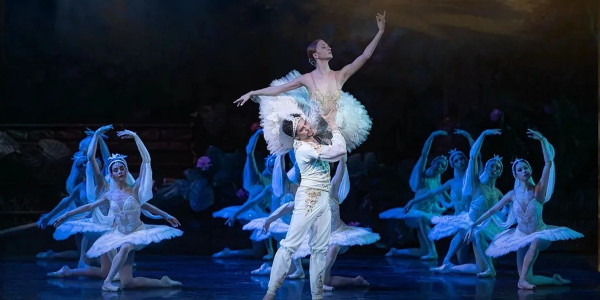
Three literary worlds meet in Eifman Ballet's programme of Crime and Punishment, Eugene Onegin and Anna Karenina.
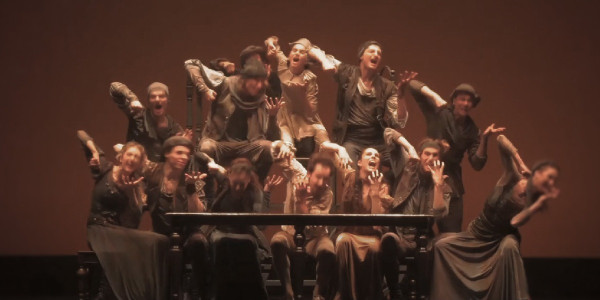
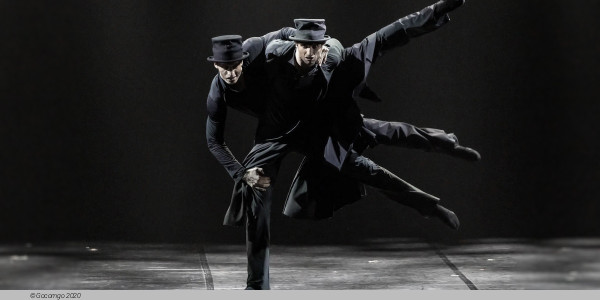
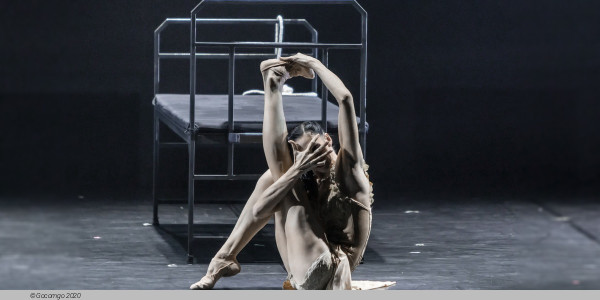
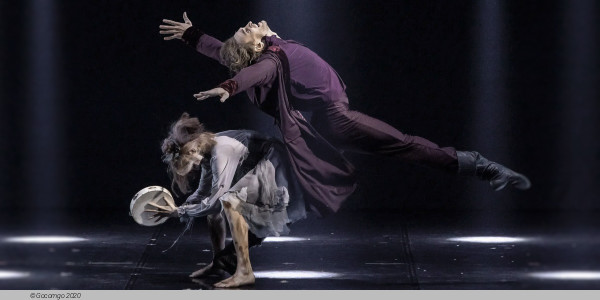
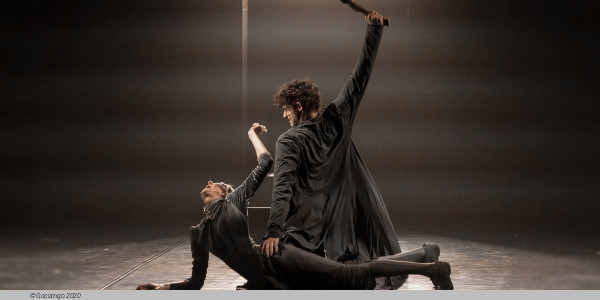
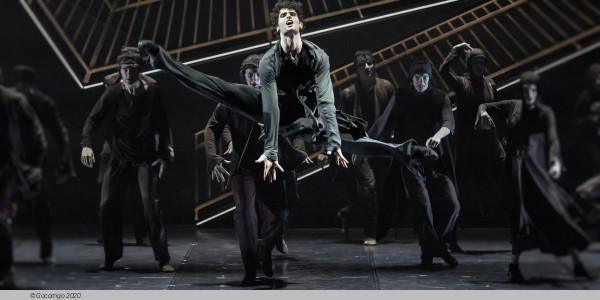
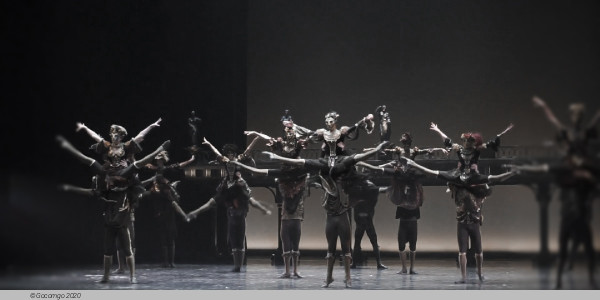
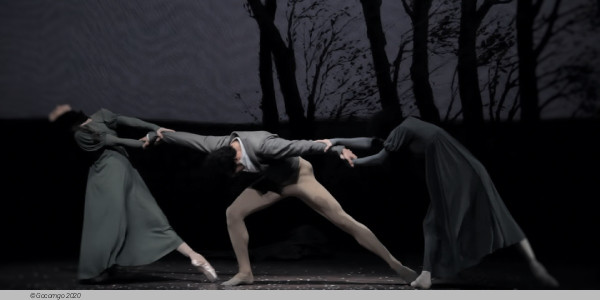
In Crime and Punishment, Boris Eifman turns Dostoevsky's novel into contemporary ballet, set to music by Mahler, Tishchenko and Metropolitan Hilarion (Alfeyev). The production received the 32nd Golden Mask Award, Russia's highest theatrical honour, and this tour marks its Chinese premiere. The trilogy also includes Eugene Onegin and Anna Karenina.
To music by Gustav Mahler, Boris Tishchenko
“I turn to literary masterpieces not so much in search of plotlines, but rather in a quest to enrich the production with philosophical and intellectual ideas – those that do not lie on the surface of the text, but reveal themselves upon a deep dive into the essence of the work.” This creative manifesto, as expressed by Boris Eifman, eloquently explains his enduring fascination with the works of great writers, especially Fyodor Dostoevsky, who stands as one of the foremost thinkers and artists in global culture.
The first ballet inspired by the work of the Russian author, The Idiot, was created by the choreographer as far back as 1980. In later years, choreographic interpretations of The Brothers Karamazov were born. The last masterpiece by Dostoevsky inspired two of Eifman’s creations: the 1995 production The Karamazovs and the ballet Beyond Sin, which premiered 18 years later.
Crime and Punishment is the third novel of the “Great Five Books” interpreted by the choreographer through the expressive medium of dance. Remaining true to his artistic principles, Boris Eifman does not merely illustrate the canonical text. Instead, he accumulates the expressive and exploratory tools he has honed over decades of creative work to offer his own answers to profound questions about the inner nature of humanity, the significance of universal moral compasses, and the consequences of their downfall.
“Fyodor Dostoevsky’s creations serve as an endless source of wisdom, capable of brightening the darkest corners of existence with the light of innermost truth. “He that hath ears to hear, let him hear.”
Crime and Punishment marks the beginning of the author’s series of “big” novels, and it is to this work that I have been drawn throughout my conscious life, at times approaching it as if it were an impregnable citadel, and at other times retreating in doubt and indecision.
Our production does not recount the storyline of the book; rather, it interprets through dance the emotional and conceptual universe of Dostoevsky’s central characters. Each of them is a microcosm, brimming with transcendent passions and facing insoluble metaphysical contradictions.
The ballet Crime and Punishment reconstructs the arduous journey of spiritual rebirth of the novel’s protagonist, Rodion Raskolnikov, whose heightened moral sensitivity and empathy for others’ suffering provoke the emergence of a theory about the right of great individuals to “wade through blood” for the greater good. A horrific concept, taking root in the mind of a former student, evolves into his demonic compulsion and urges him toward the act of murder. In the act of committing his crime, Raskolnikov violates the ultimate moral code, but the failed Napoleon cannot overcome the essence of humanity. The downfall of the inhumane theory is inevitable. It is the selfless love of Sonya Marmeladova that brings healing to the protagonist. Passing through the crucible of redemptive suffering, this saintly sinner, like Raskolnikov, moves toward resurrection.
“Thou shalt not kill,” proclaims one of the fundamental commandments. Anyone who defies it negates the absolute value of life, the untouchable gift bestowed by God.”
Boris Eifman’s name is usually linked to the most innovative artistic experiments and interpretations or stage renditions of classical works of literature. The choreographer constantly revitalizes and enriches the form and content of contemporary ballet.
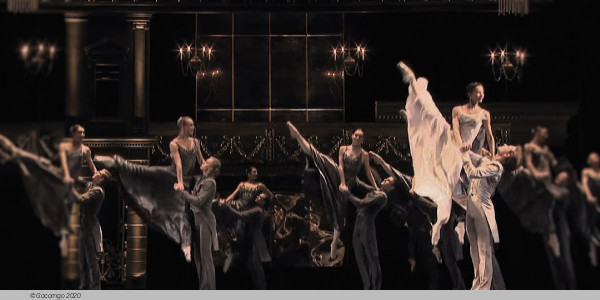
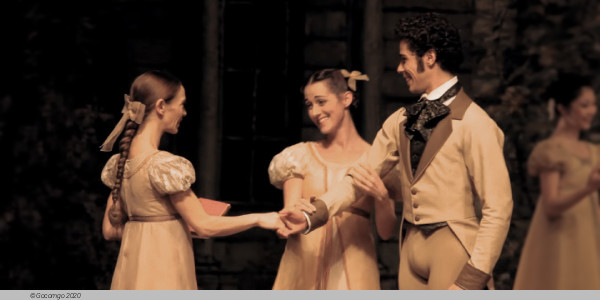
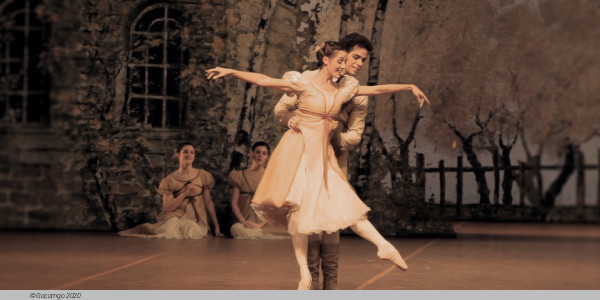
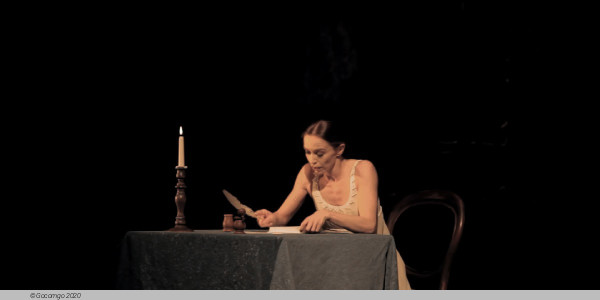
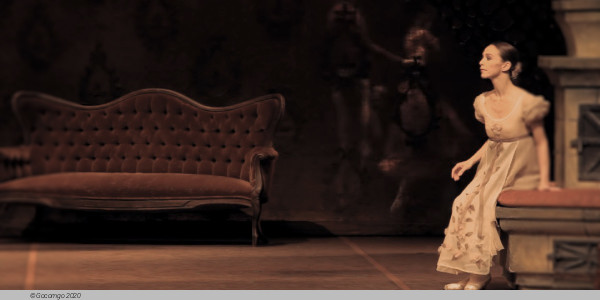
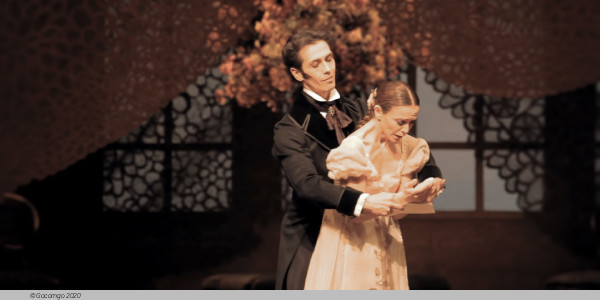
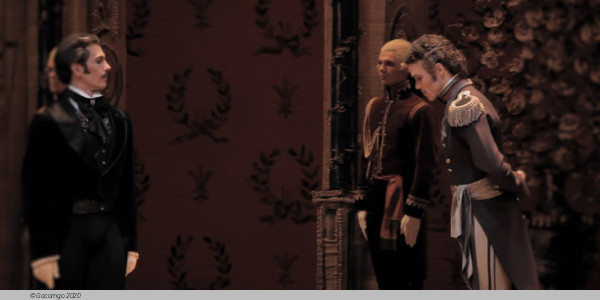
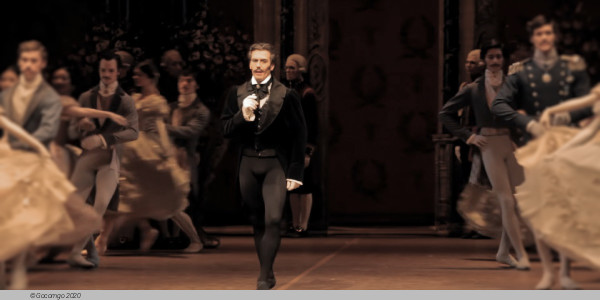
Eugene Onegin – is a dance version of Eugene Onegin novel in verse by Alexander Pushkin. Here Eifman combines classics and modernity. Pushkin's heroes impersonalize men and women of today in a symbolic way: they are those who have gone through a drastic social change, who are living in the time of crisis, at the turn of the century. An unexpected combination of classical music by Pyotr Tchaikovsky and of rock music by Alexander Sitkovetsky is something that surprisingly helps the viewers get inspired by the original creative concept of Boris Eifman.
Eugene Onegin ballet is a unique opportunity to see the paradigmatic, textbook literary plot through the eyes of the modern man.
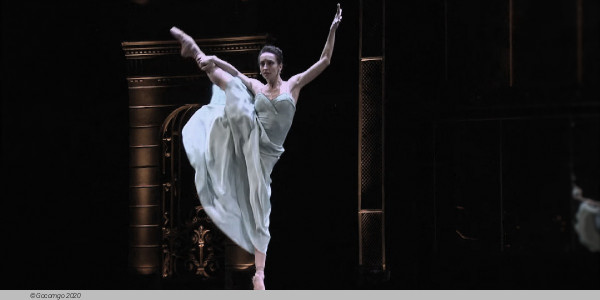
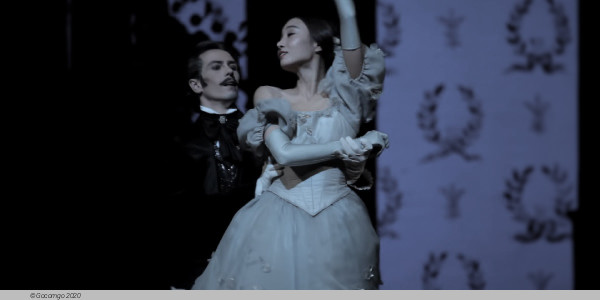
Boris Eifman’s ballet Anna Karenina is a true burst of inner psychological energy and is amazingly precise in delivering emotional impact upon its viewers. By setting aside all secondary storylines in Leo Tolstoy’s novel, the choreographer focused on the love triangle Anna – Karenin – Vronsky.
Using dance language, Boris Eifman in his ballet managed to portray the drama of a woman being reborn. According to the choreographer, it is the love passion, the “basic instinct” which has led the heroine to the breach of the then current norms of social morality, killed motherly love in Anna Karenina and destroyed her inner world. Being so completely consumed and crushed by passion, a woman is ready for any sacrifice.
The choreographer says that his ballet speaks not of previous times but of today: the timeless emotional content of the performance and obvious parallels to reality can’t leave the contemporary viewer indifferent. The brilliant technical mastery of the company’s dancers and Boris Eifman’s astounding choreography present to us in a remarkably impressive way all the aspects and peripeteias of the Tolstoy’s novel.
Boris Eifman
The founder of the Eifman Ballet, he created his own unique ballet style and ballet world, and is known as "one of the world's important choreographers" and "a master of dramatic magic."
Born in Siberia in 1946, Eifman has been expressing his feelings and thoughts through body language in dance since childhood. He once said: "Ballet is not only a profession for me, it is the meaning of my existence and my mission in this world. I can't help but want to use ballet to convey the inspiration I get from the heights. Most likely, if I don't have the possibility to express them through art, I will stifle these emotions. For me, choreography is an art with a profound religious color in the broadest sense."
After completing his studies at the Leningrad Conservatory and the Vaganova Ballet School, Eifman founded his own ballet company, the Leningrad New Ballet, in 1977, the predecessor of today's famous St. Petersburg Eifman Ballet. He and his dancers not only had a solid foundation in classical ballet, but also continued to innovate and enrich the ballet language, and were soon regarded as the backbone of the new generation of Russian ballet.
Eifman combines his cutting-edge achievements in the world of ballet with his original Russian classical ballet background. He defines his dance style as "psychological ballet". "All my dance creations are about seeking a broader space for ballet and a body language that can express the spiritual life of human beings."
St. Petersburg Eifman Ballet
In 1977, Boris Eifman founded the St. Petersburg Eifman Ballet (formerly known as the Leningrad New Ballet), and began a new artistic exploration. Since its inception, the company's artistic creation has updated the concept of Russian classical ballet, pushing the emotional expression and dramatic conflict of ballet to the limit, and is regarded as a choreographer's ballet theater.
The innovation of Eifman's ballets lies in his choice of literature and music, as well as the boldness of his body movement vocabulary, which earned him a reputation as an "unconventional choreographer".
From the late 1970s to the early 1980s, the company's unique style of work gradually took shape, with more and more repertoires based on the world's classical literary treasures. Eifman worked closely with his company, and with his unique style that not only maintained the rigorous norms of the Russian ballet school, but also was skilled in technique and lyrical, and combined it with the expression of film, he shocked every audience. The company explored new dance schools and development trends, and new works included "Defiance", "Fools", "March Madness", "The Marriage of Figaro", "Legend", "Twelfth Night", "The Master and Margherita", "The Murderer", etc., all of which featured elite choreography, interpreted the passion of ballet characters, and had extremely high artistic attainments.
Today, the works of the Efman Ballet have been embraced and praised by ballet lovers from Europe, America, Asia and Australia: "I, Don Quixote", "Red Giselle", "Russian Hamlet", "Anna Karenina", "The Seagull", "Eugene Onegin", "Rodin - The Eternal Idol", "The Brothers Karamazov", "Requiem", "Tender Is the Night", "Tchaikovsky" and other ballet works not only show the highest level of contemporary Russian ballet art, but also contain Russia's immortal spiritual heritage and the wisdom of world culture. The Efman Ballet continues to interpret the connotation of culture in an innovative way, leading the audience into an elegant art world.
For decades, the Eifman Ballet has achieved great success in the world's top theaters. Eifman's profound understanding and revelation of human nature and his interpretation of intricate and sharp contradictions immerse the audience in the boundless world of human passion. He has established a strong spiritual bond and demonstrated a choreographer's unique view of dance and his talent in controlling dance through his plasticity and amazing, just-right energy.
“Ballet is a very specific realm where psychological drama is reenacted and fulfilled; it is a chance to get an insight into the subconscious. Every new production is a search for the unknown.
The Anna Karenina novel by Tolstoy has always been the object of my keen interest. While reading Tolstoy, one can see how fully and intimately the author understands the inner world and psychology of his heroes, how keenly and precisely describes he the life in Russia. In the novel one will find a plunge into the psychological world of the chief character and also a psycho-erotic interpretation of her personality. Even in our contemporary literature we won’t find similar passions, metamorphoses and phantasmagoria. All this has become the gist and essence of my choreographic reflections upon the book.
The measured, regular life of the Karenin family – the husband’s public service, the strict high society conventions – produced an illusion that harmony and peace reign there. Anna’s passionate love for Vronsky destroyed the “matter of course” in their existence. Sincerity of the lovers’ feelings was doubted and rejected, their frankness was afraid of. Karenin’s hypocrisy was acceptable to everyone but Anna. She preferred the all-absorbing love for Vronsky to mother’s duties regarding her son. And thus she doomed herself to lead the life of an outcast. She saw no pleasure in traveling or in habitual high society entertainments. There was a feeling that a woman is tragically constrained by sensual relationships with a man. This sort of dependence – as any other one – brings pain and suffering. Anna committed suicide to set herself free, to end her dreadful and agonizing life.
For me Anna was sort of a “shape shifter” because two persons lived within her: externally she was a high society lady known to her husband Karenin, to her son and to everyone around. The other one was a woman immersed into the world of passions.
What is a more important goal in life: to maintain the conventional illusion of existing harmony between duty and feelings, or surrender to a sincere passion?.. Do we have a right to destroy our family, to deprive a child of his mother’s care just for the sake of what our flesh lusts for?..
All these questions haunted Tolstoy in his times, and we can’t avoid thinking them over again and again today. But answers are still far-off! What remains there is only our thirst for being understood both in our life and death…”
Boris Eifman














 World Expo Cultural Park, Pudong New Area, Shanghai (上海市浦东新区世博文化公园; house number — Не могу подтвердить это)