Time: 15th century
Place: Mountains of southern France
Scene 1
Princess Iolanta has been blind from birth. No one has ever told her (nor does she know) that she is a princess. She lives in a beautiful enclosed garden on the king's estate, secluded from the world, in the care of Bertrand and Martha. Her attendants bring flowers and sing to her. She declares her sadness, and her vague sense that she is missing something important that other people can experience. Her father, King René insists that she not discover she is blind, or that her betrothed, Duke Robert, find out about this.
Scene 2
After announcing the king's arrival, Alméric is warned by Bertrand not to speak of light with Iolanta or to reveal that Iolanta's father is the king. The king arrives with Ibn-Hakia, a famed Moorish physician who states that Iolanta can be cured, but the physical cure will only work if she is psychologically prepared by being made aware of her own blindness. Ibn-Hakia sings the monologue "Two worlds", explaining the interdependence of the mind and the body within the divinely ordained universe, which merges spirit and matter. The king refuses the treatment, fearing for Iolanta's happiness if the cure should fail after she has learned what she is missing.
Scene 3
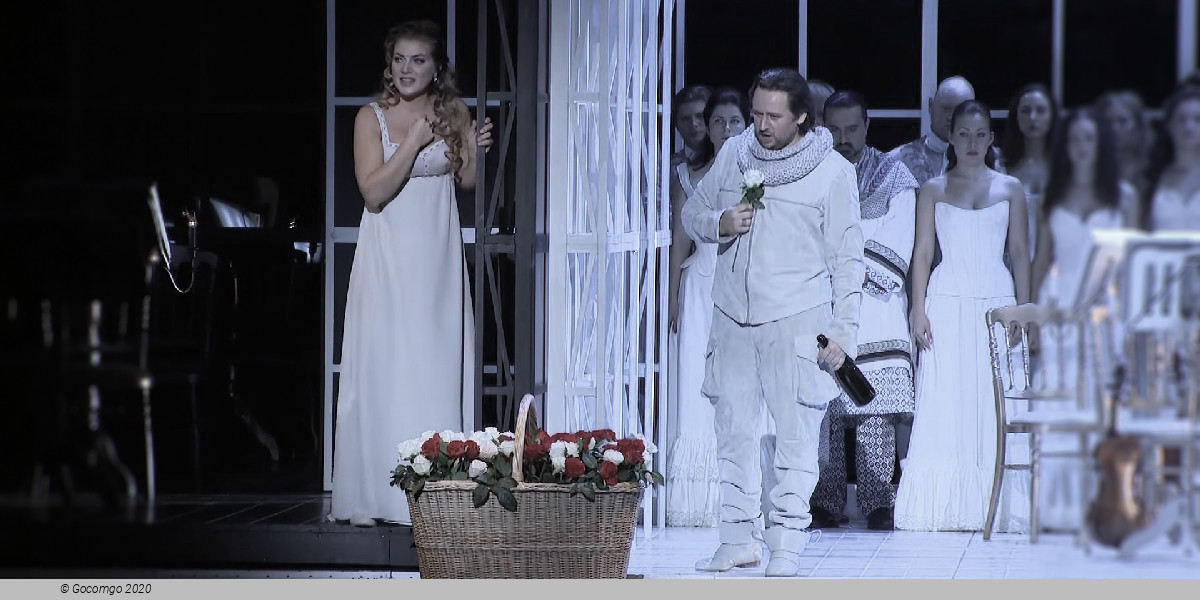
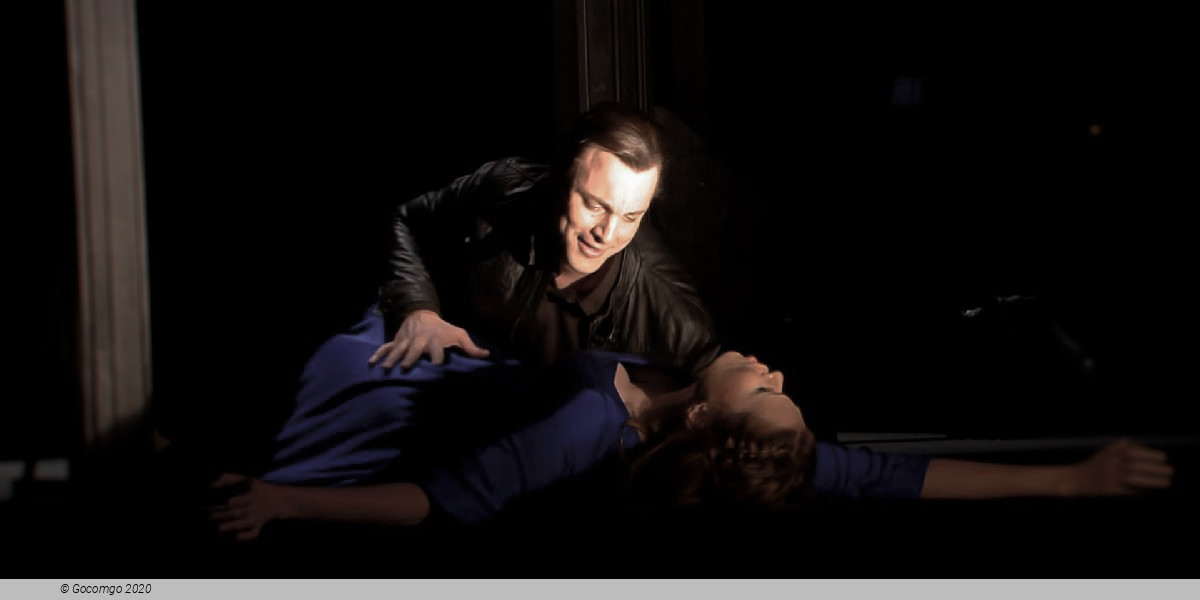
Robert arrives at the court with his friend Count Vaudémont. Robert tells Vaudémont that he wishes to avoid the marriage as he has fallen in love with Countess Matilde. He sings of his love in his aria "Who can compare with my Mathilde" (Кто может сравниться с Матильдой моей). Vaudémont finds the entrance to Iolanta's secret garden, ignoring the sign which threatens death to anyone who enters. He sees the sleeping Iolanta, without realising who she is and instantly falls in love. Robert, astounded by his friend's behavior, is convinced she is a sorceress who has bewitched Vaudémont. He tells him to leave, but Vaudémont is too entranced. Robert departs to bring troops to rescue him. Iolanta awakes and Vaudémont, who asks her to give him a red rose as a keepsake, realizes she is blind when she twice offers him a white one. She has no concept of light, vision or blindness. They fall in love, after he explains light and color to her.
Scene 4
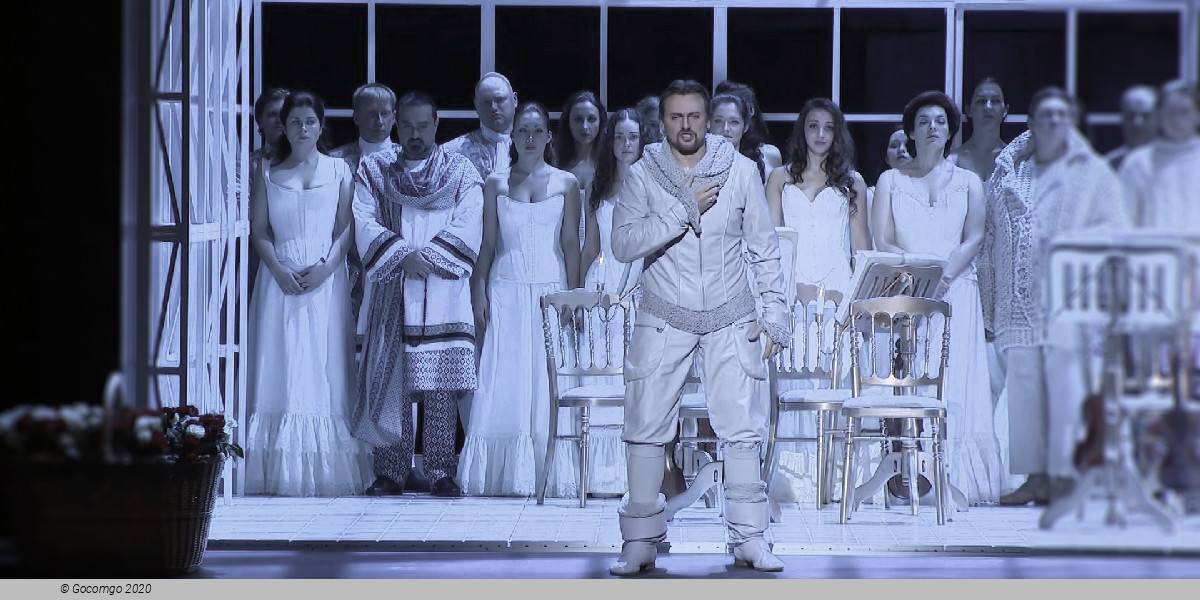
The couple are discovered by the king. Vaudémont pledges his love, whether Iolanta is blind or not. Ibn-Hakia tells the king that as Iolanta is now aware of her blindness, the treatment might be a success. Iolanta who has no will to see, is unsure therefore whether she should agree to treatment or not. Ibn-Hakia points out that the lack of will proves that, without inner desire, change cannot take place.
After Vaudémont admits seeing the warning sign at the garden entrance, the furious king threatens to execute him for revealing the truth to Iolanta. He tells Iolanta Vaudémont will die if the physician fails to restore her sight, in the hope that this will restore her will. Iolanta is horrified, and agrees to the treatment. After Ibn-Hakia leaves with Iolanta, the king explains to Vaudémont that he was feigning in order to motivate Iolanta. Robert returns with his troops. He admits to the king he has fallen in love with another, but is still willing to go ahead with the agreed marriage. The king cancels the wedding contract, and gives Iolanta to Vaudémont. Ibn-Hakia and Iolanta return. The treatment has worked and Iolanta can see. At first uncertain of her new gift, she eventually sings of the magical new world now visible to her. The court rejoices.
Plot
Below is a synopsis based on the original 1892 libretto by Marius Petipa. The story varies from production to production, though most follow the basic outline. The names of the characters also vary. In the original E. T. A. Hoffmann story, the young heroine is called Marie Stahlbaum and Clara (Klärchen) is her doll's name. In the adaptation by Dumas on which Petipa based his libretto, her name is Marie Silberhaus. In still other productions, such as Baryshnikov's, Clara is Clara Stahlbaum rather than Clara Silberhaus.
Act I
Scene 1: The Stahlbaum Home
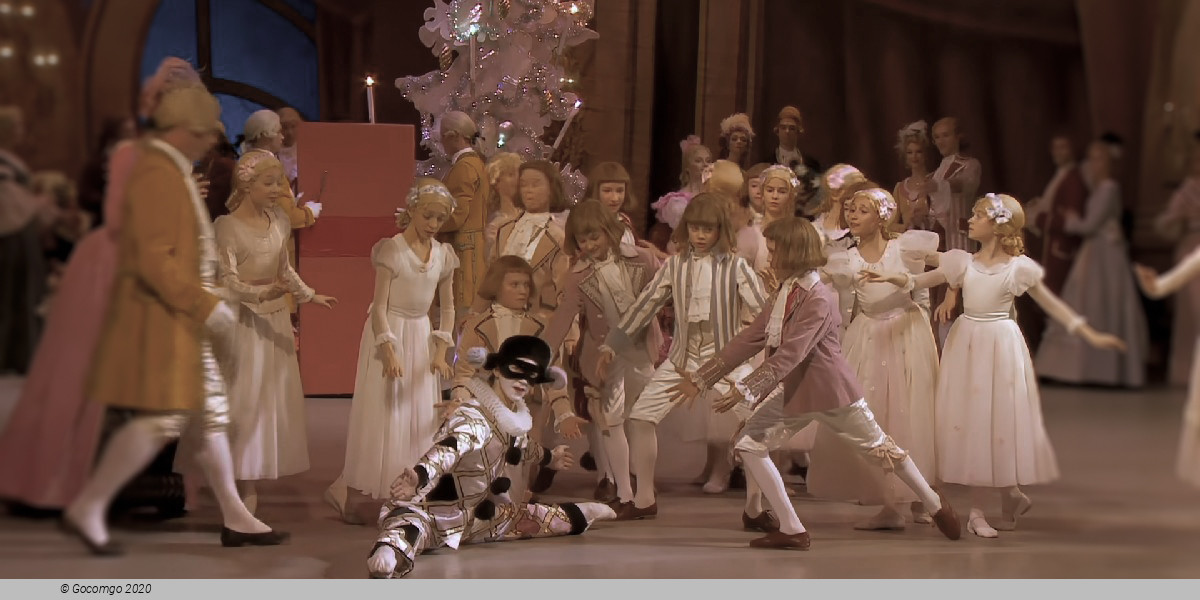
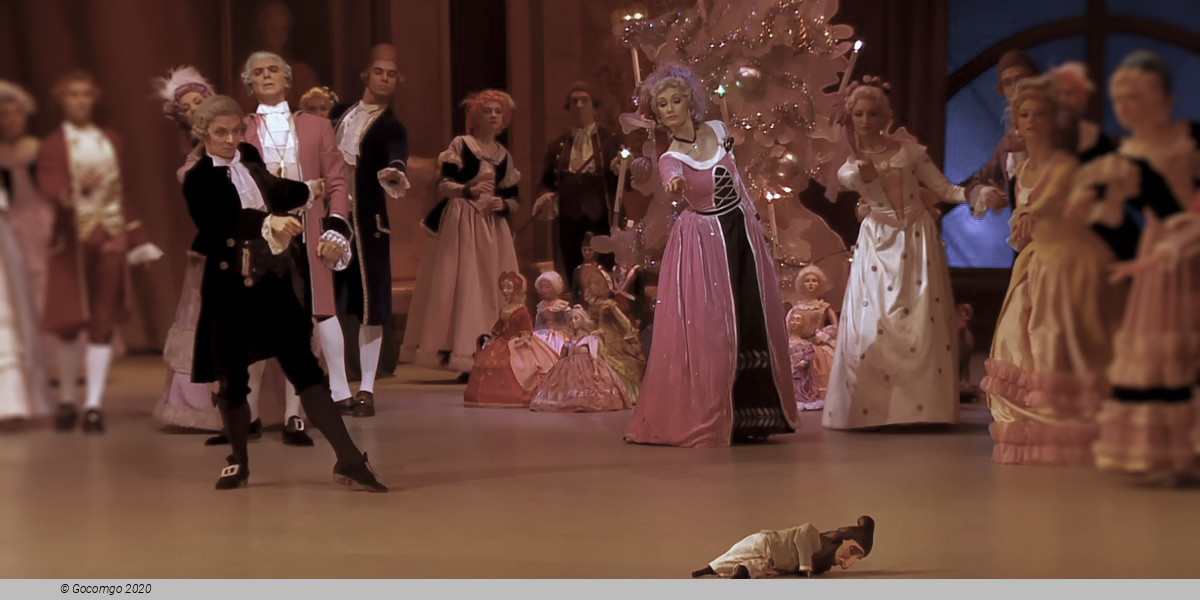
It is Christmas Eve. Family and friends have gathered in the parlor to decorate the beautiful Christmas tree in preparation for the party. Once the tree is finished, the children are sent for. They stand in awe of the tree sparkling with candles and decorations.
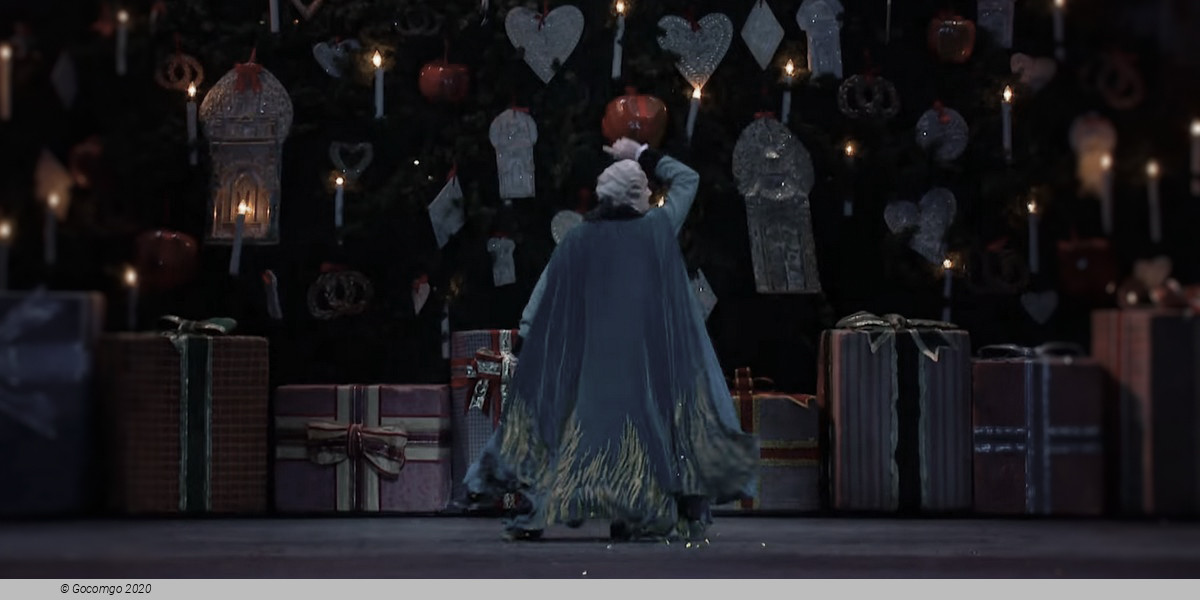
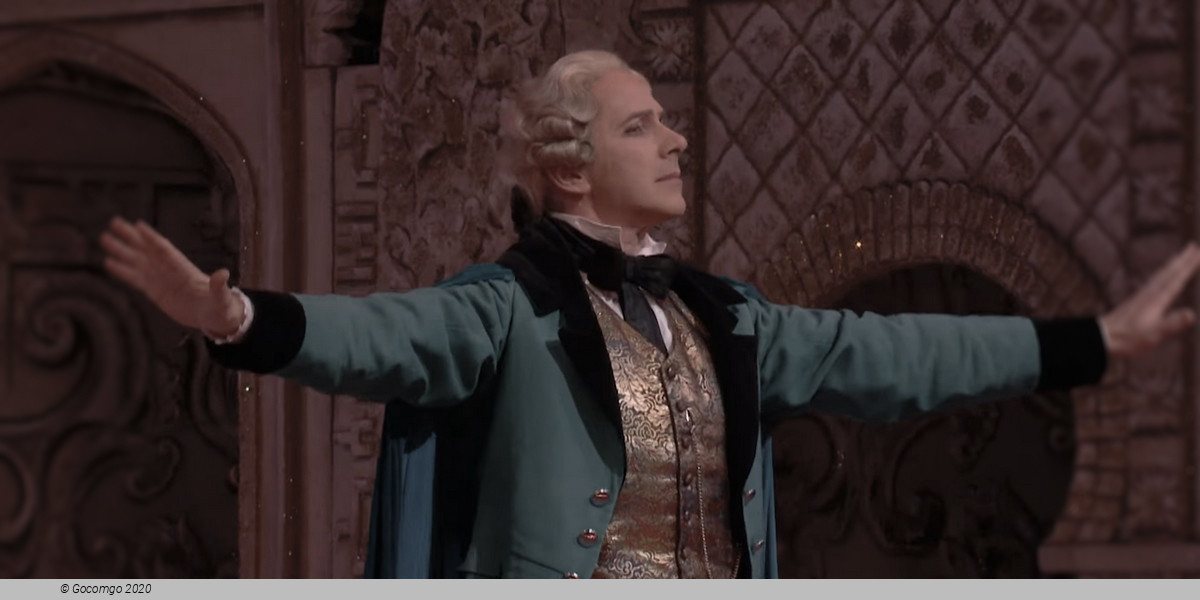
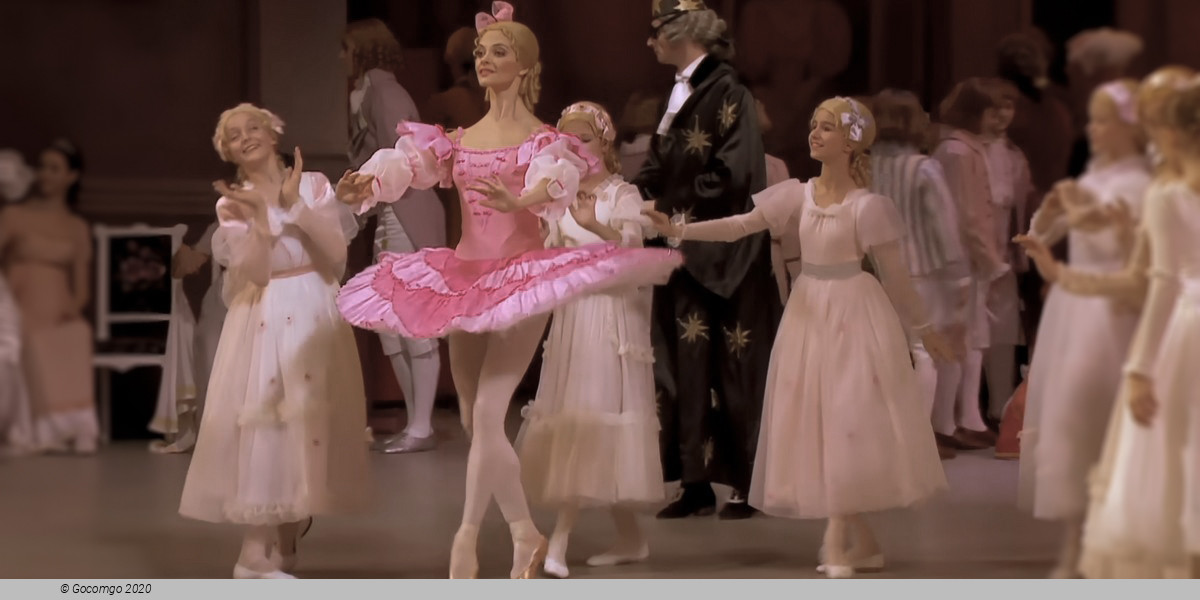
The party begins. A march is played. Presents are given out to the children. Suddenly, as the owl-topped grandmother clock strikes eight, a mysterious figure enters the room. It is Drosselmeyer, a local councilman, magician, and Clara's godfather. He is also a talented toymaker who has brought with him gifts for the children, including four lifelike dolls who dance to the delight of all. He then has them put away for safekeeping.
Clara and Fritz are sad to see the dolls being taken away, but Drosselmeyer has yet another toy for them: a wooden nutcracker carved in the shape of a little man. The other children ignore it, but Clara immediately takes a liking to it. Fritz, however, breaks it, and Clara is heartbroken.
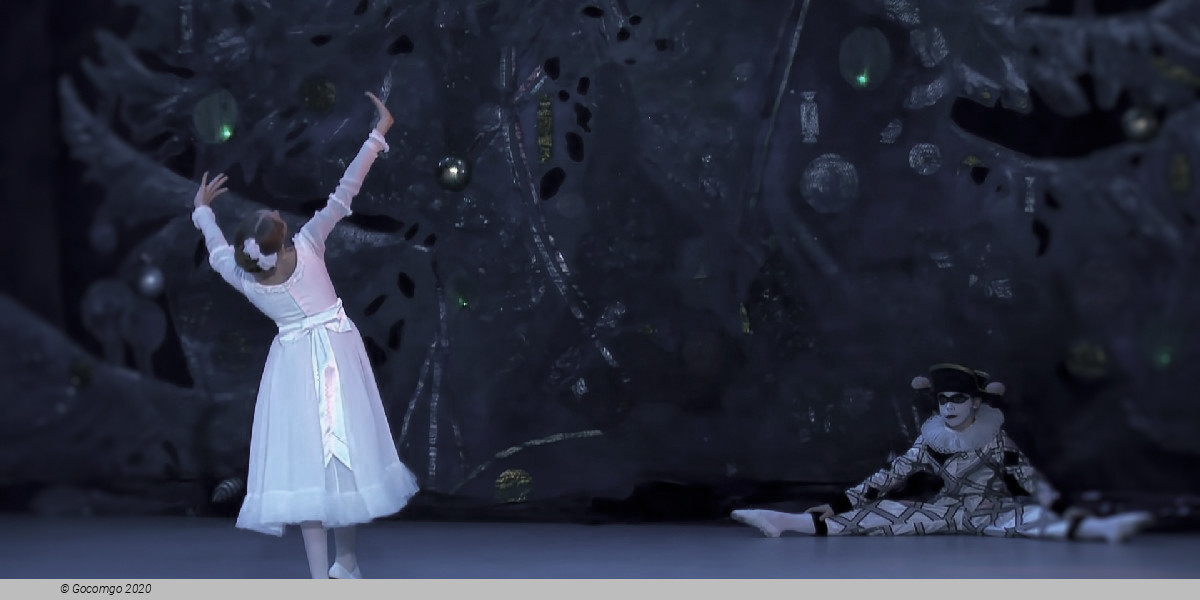
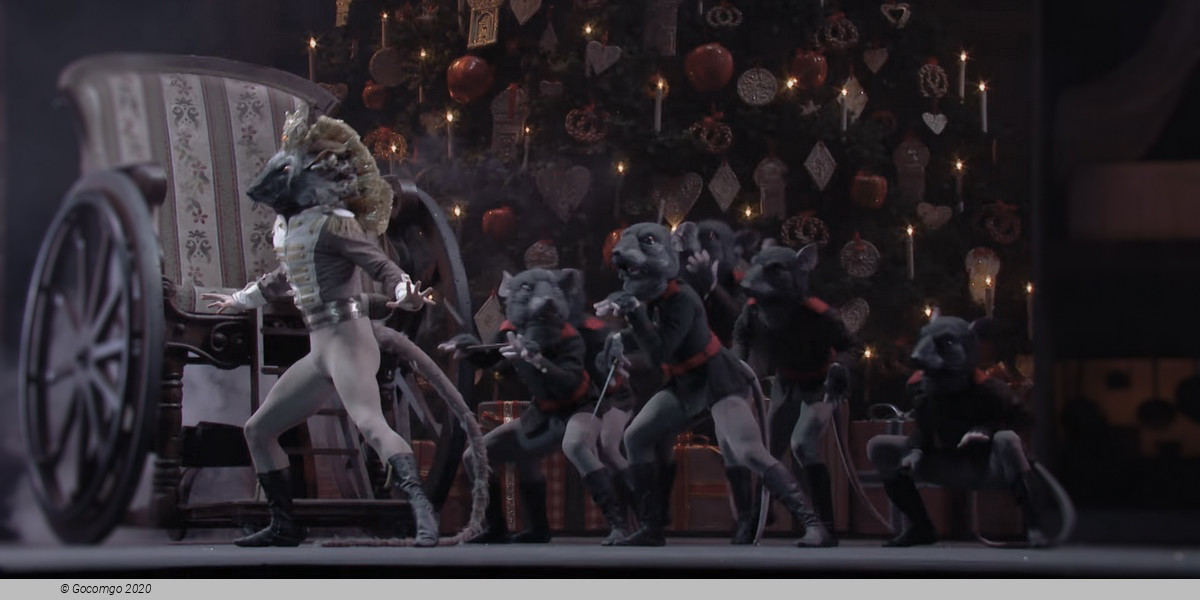
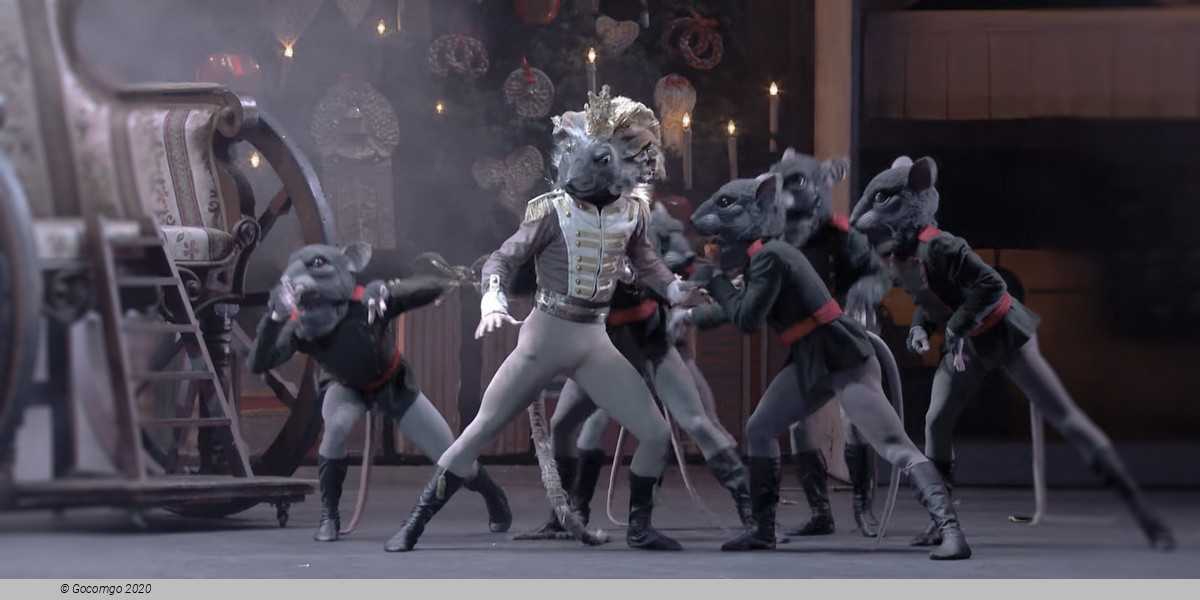
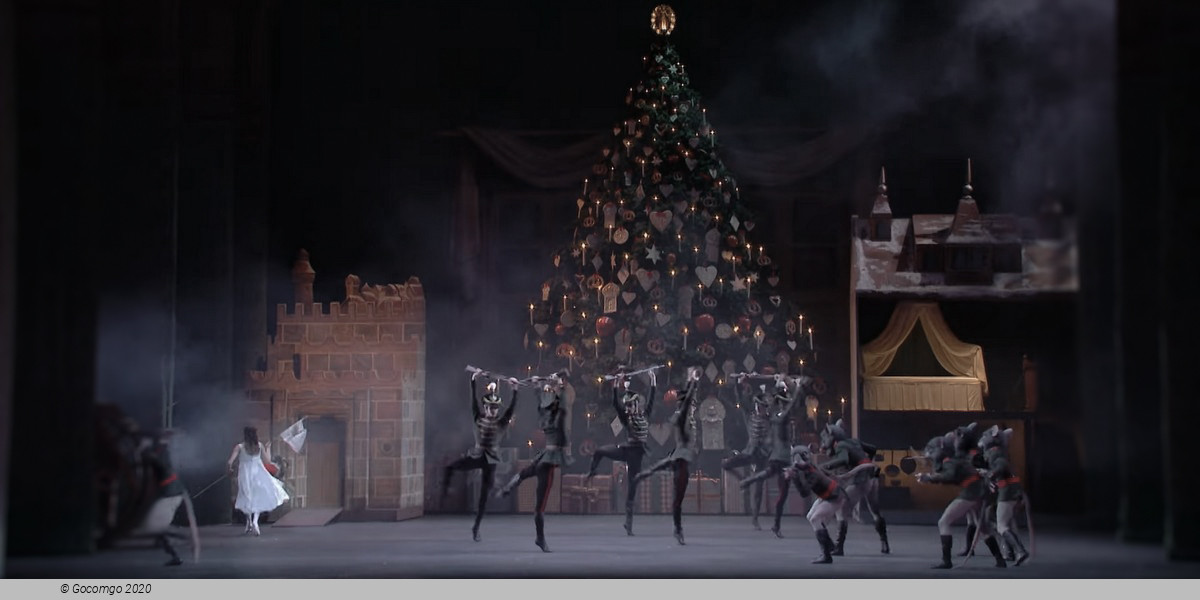
During the night, after everyone else has gone to bed, Clara returns to the parlor to check on her beloved nutcracker. As she reaches the little bed, the clock strikes midnight and she looks up to see Drosselmeyer perched atop it. Suddenly, mice begin to fill the room and the Christmas tree begins to grow to dizzying heights. The nutcracker also grows to life size. Clara finds herself in the midst of a battle between an army of gingerbread soldiers and the mice, led by their king. They begin to eat the soldiers.
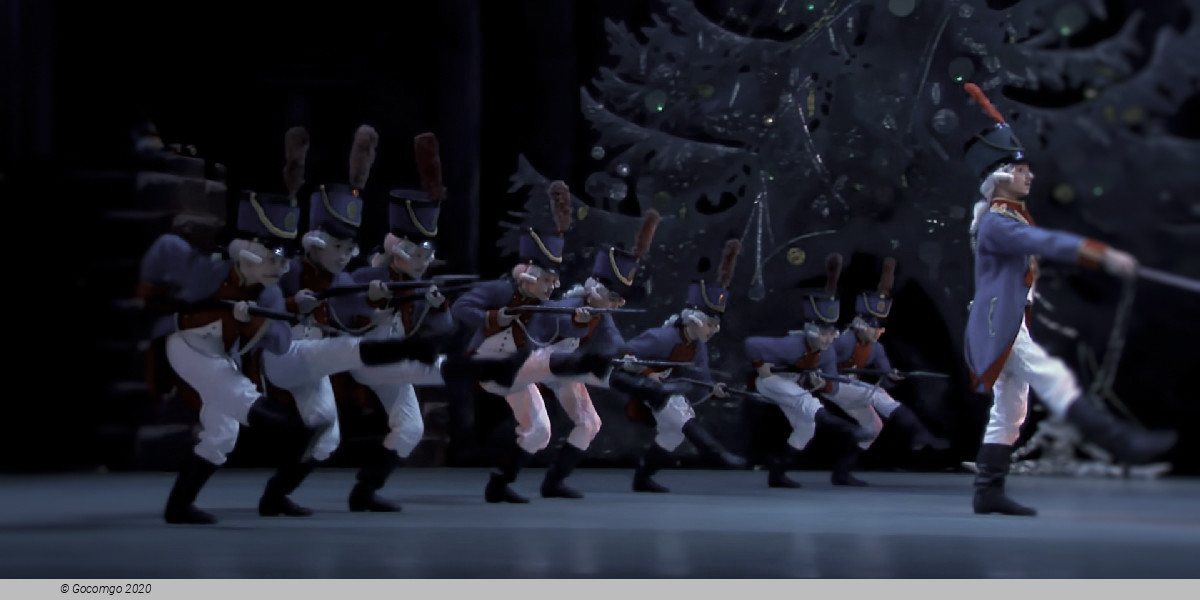
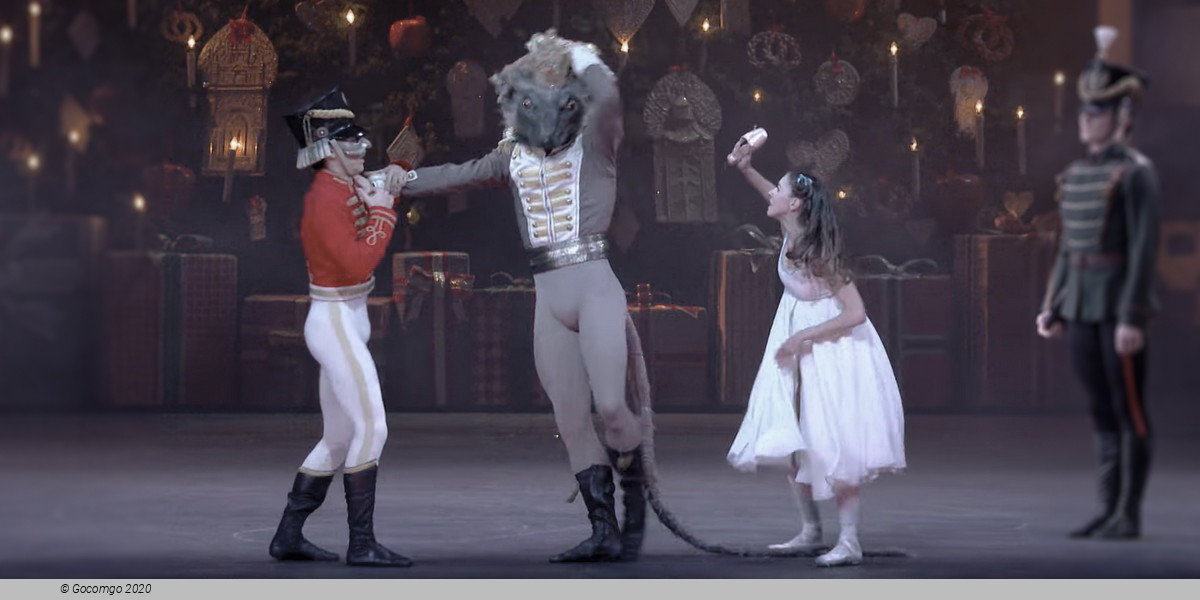
The nutcracker appears to lead the soldiers, who are joined by tin soldiers, and by dolls who serve as doctors to carry away the wounded. As the Mouse King advances on the still-wounded nutcracker, Clara throws her slipper at him, distracting him long enough for the nutcracker to stab him.
Scene 2: A Pine Forest
The mice retreat and the nutcracker is transformed into a handsome Prince. He leads Clara through the moonlit night to a pine forest in which the snowflakes dance around them, beckoning them on to his kingdom as the first act ends.
Act II
Scene 1: The Land of Sweets
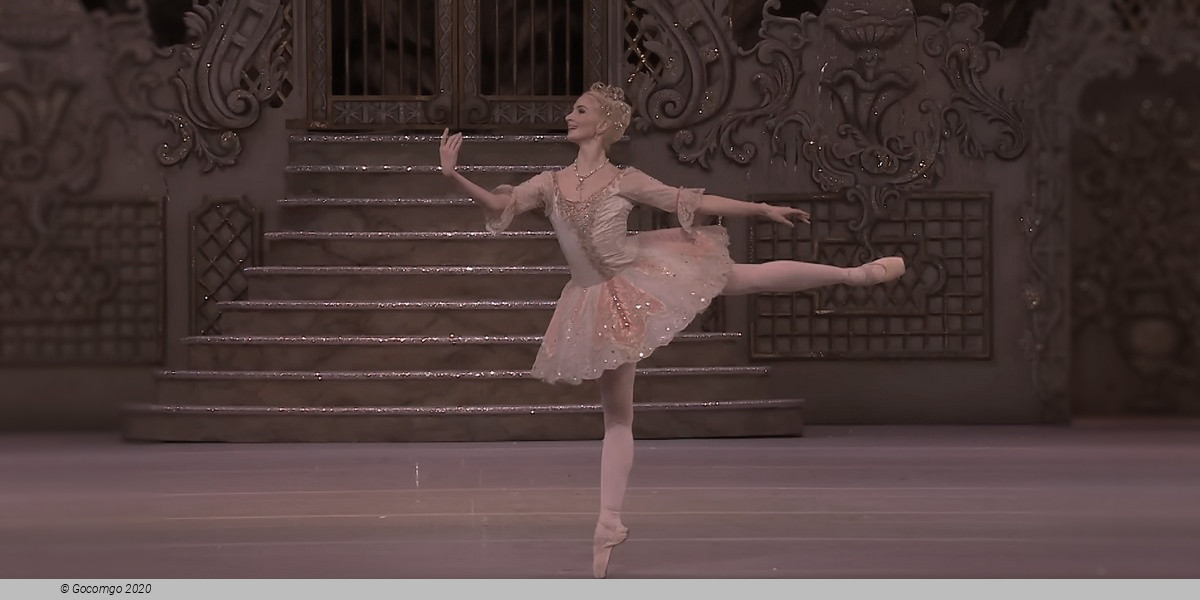
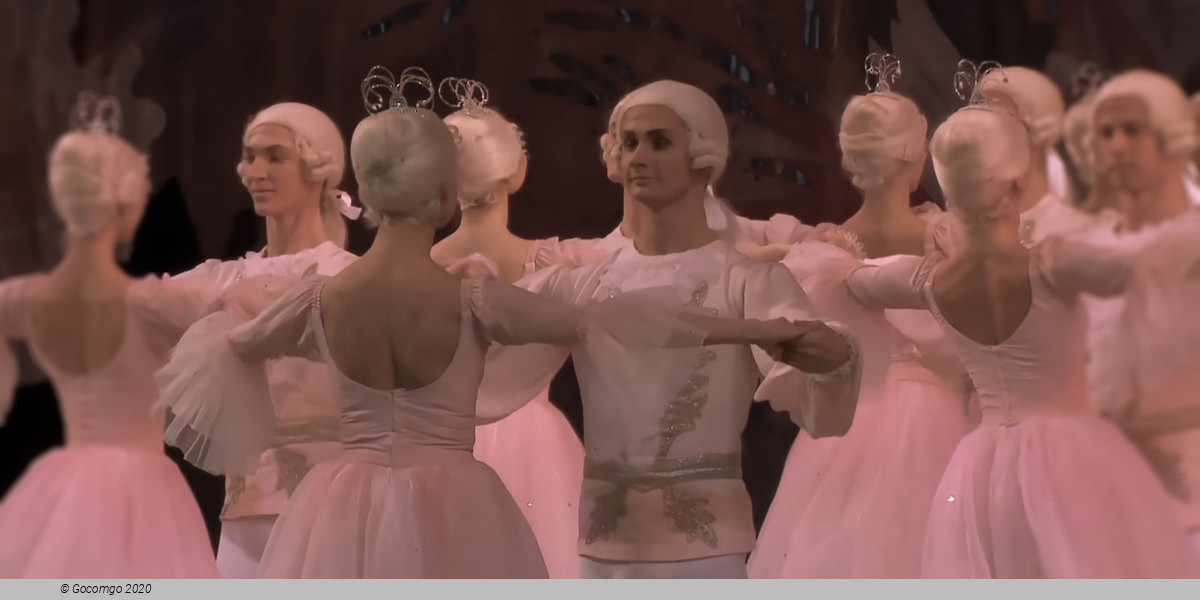
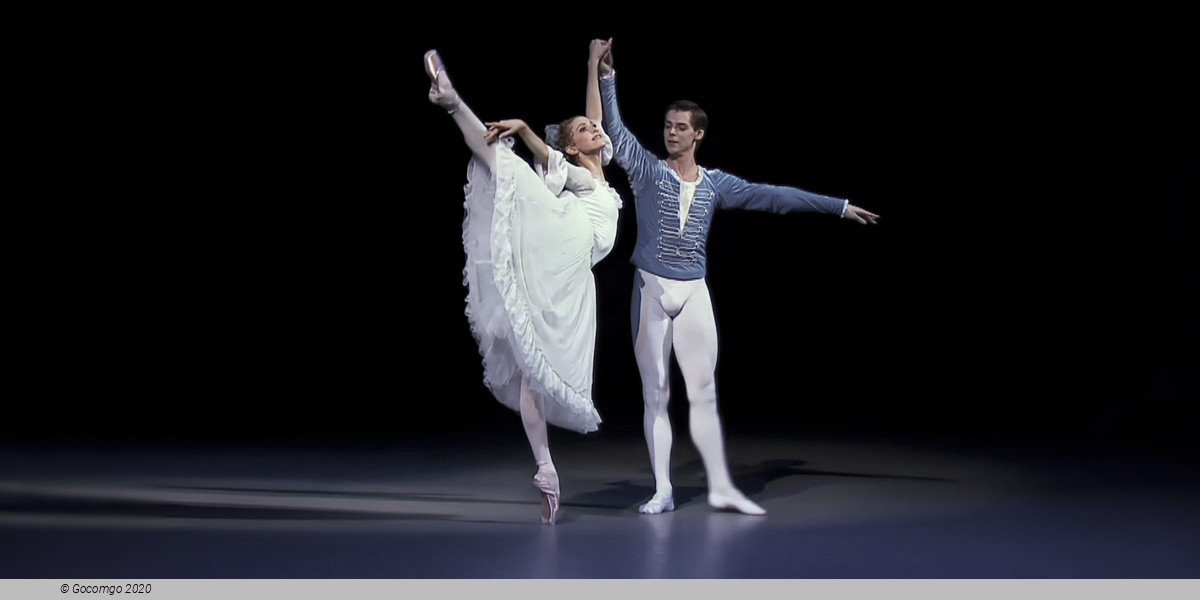
Clara and the Prince travel to the beautiful Land of Sweets, ruled by the Sugar Plum Fairy in the Prince's place until his return. He recounts for her how he had been saved from the Mouse King by Clara and transformed back into himself. In honor of the young heroine, a celebration of sweets from around the world is produced: chocolate from Spain, coffee from Arabia, tea from China, and candy canes from Russia all dance for their amusement; Danish shepherdesses perform on their flutes; Mother Ginger has her children, the Polichinelles, emerge from under her enormous hoop skirt to dance; a string of beautiful flowers perform a waltz. To conclude the night, the Sugar Plum Fairy and her Cavalier perform a dance.
A final waltz is performed by all the sweets, after which the Sugar Plum Fairy ushers Clara and the Prince down from their throne. He bows to her, she kisses Clara goodbye, and leads them to a reindeer drawn sleigh. It takes off as they wave goodbye to all the subjects who wave back.
In the original libretto, the ballet's apotheosis "represents a large beehive with flying bees, closely guarding their riches". Just like Swan Lake, there have been various alternative endings created in productions subsequent to the original.











 Schwarzstrasse 22